Josef Matthias Hauer: Compositional Tropes Techniques: Zwölftonspiel

Hi Guys,

Today, a look this great but lesser known Austrian composer:
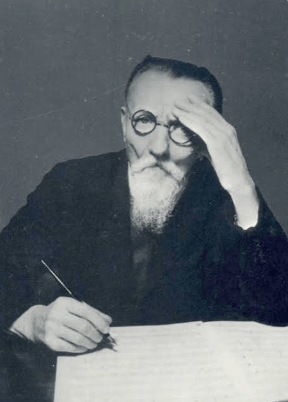
Many people associate the abandonment of traditional tonality, wether 12 tone/serialism or some other form with the second Viennese school of composers, especially that of Arnold Schoenberg.

But, there was another thinker, composing at the same period of time [some say before] creating in his own unique atonal form…..

His name was Josef Matthias Hauer.

Hauer took a different approach by exploiting atonality and employing “Tropes”.

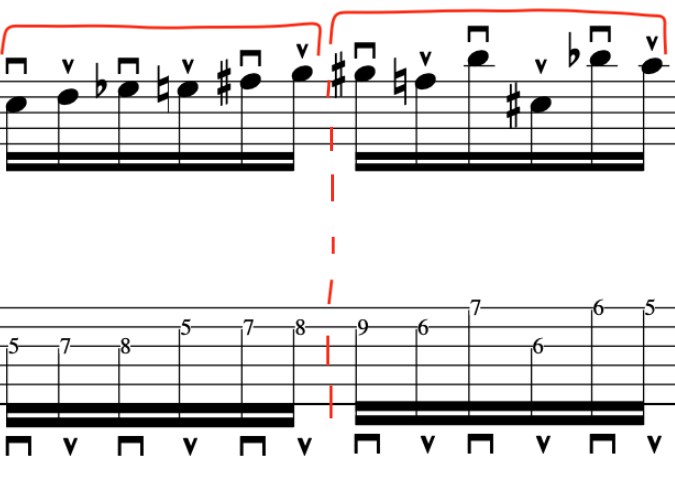
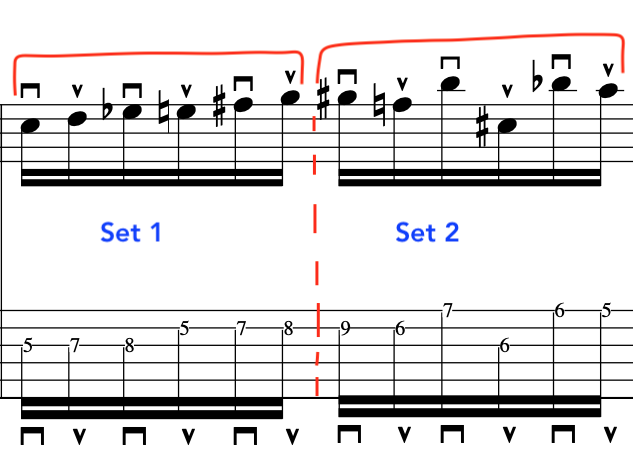
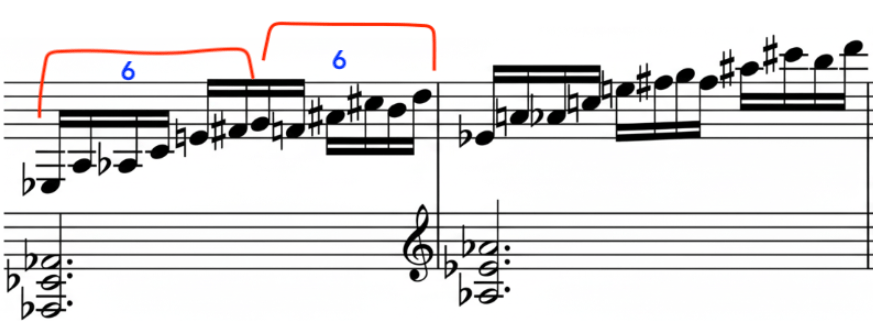
These consist of an “unordered pair” of complementing “Hexatonic” six note sets/groupings that employ all 12 notes of the chromatic scale. [The key being to play the first 6 notes before moving onto the next 6 notes].

EXAMPLE 1:

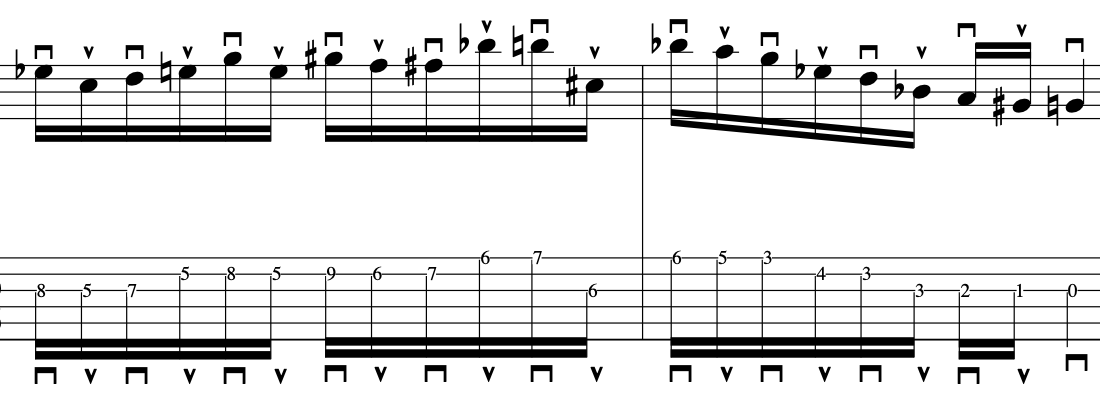
image showing Hauer tropes in 2 hexatonic sets

Guitar Version:[Sextuplets]

Image demonstrating an example of Joseph Mattius Hauer tropes for music composition.

EXAMPLE 2: [Exploiting Both Whole Tone Scales]
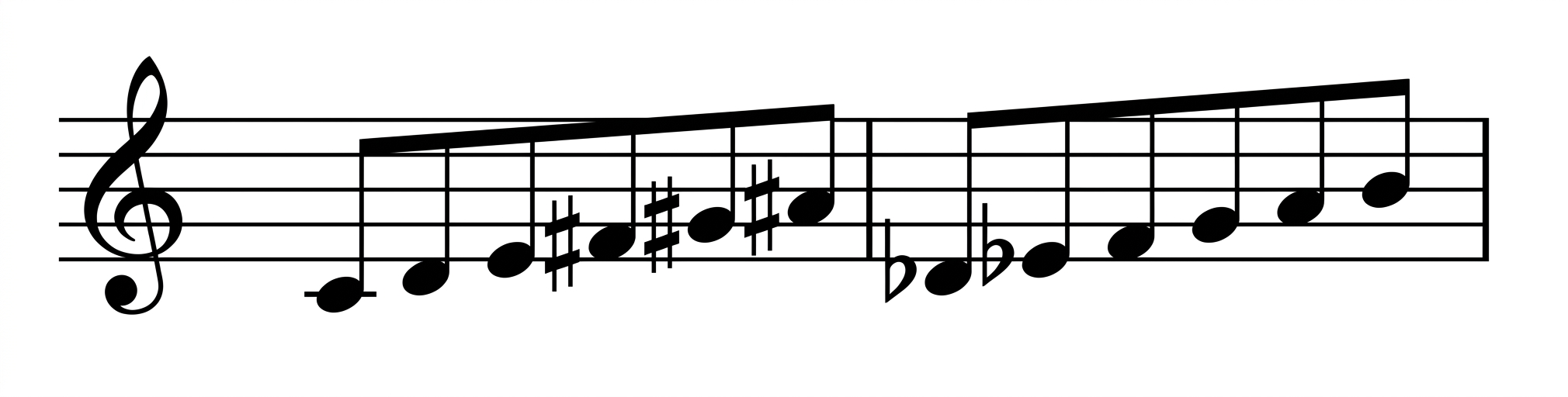
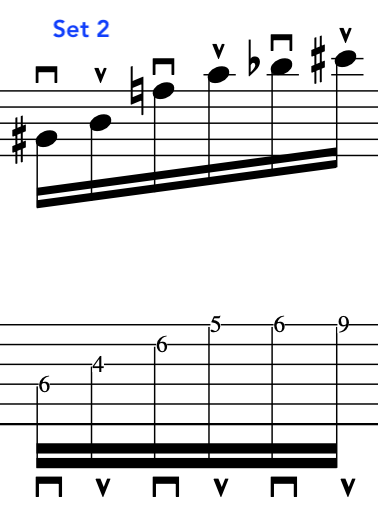
Although, they are hexachords these tropes can also work well divided into three 4 note groupings of “Tetrachords”
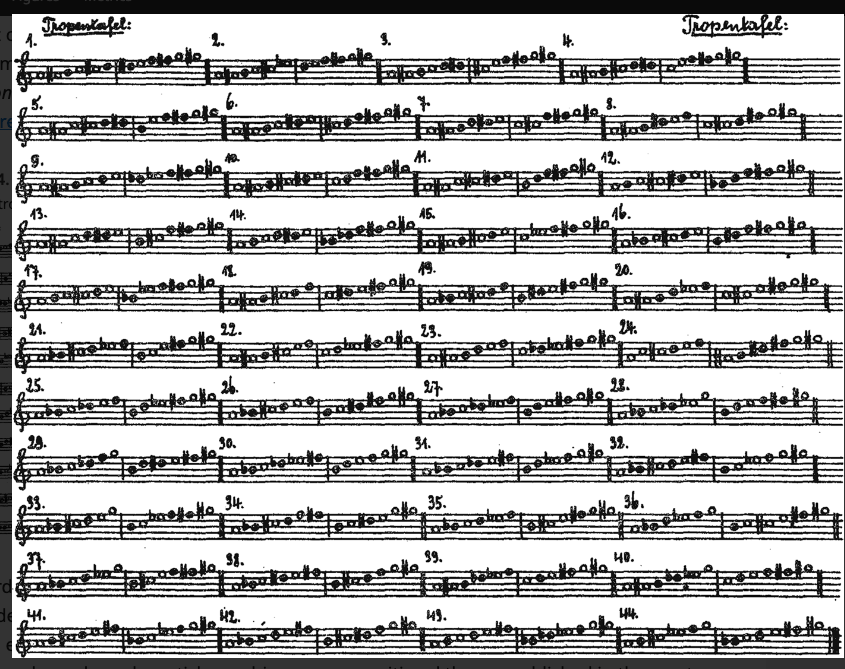
HAUER’S 44 TROPES: [479 million permutations into 44]
Example of Hauer’s personal writing’s:
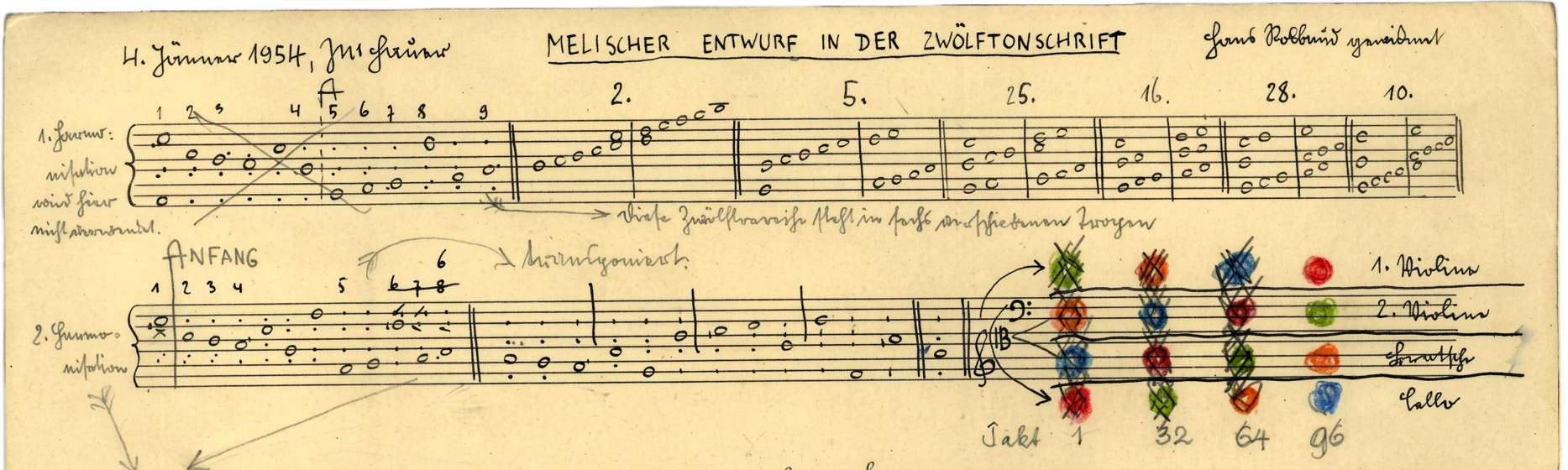
We, will take this as our “Trope”

image depicting Hauer's trope sets

Now, let’s extend this to two octaves:
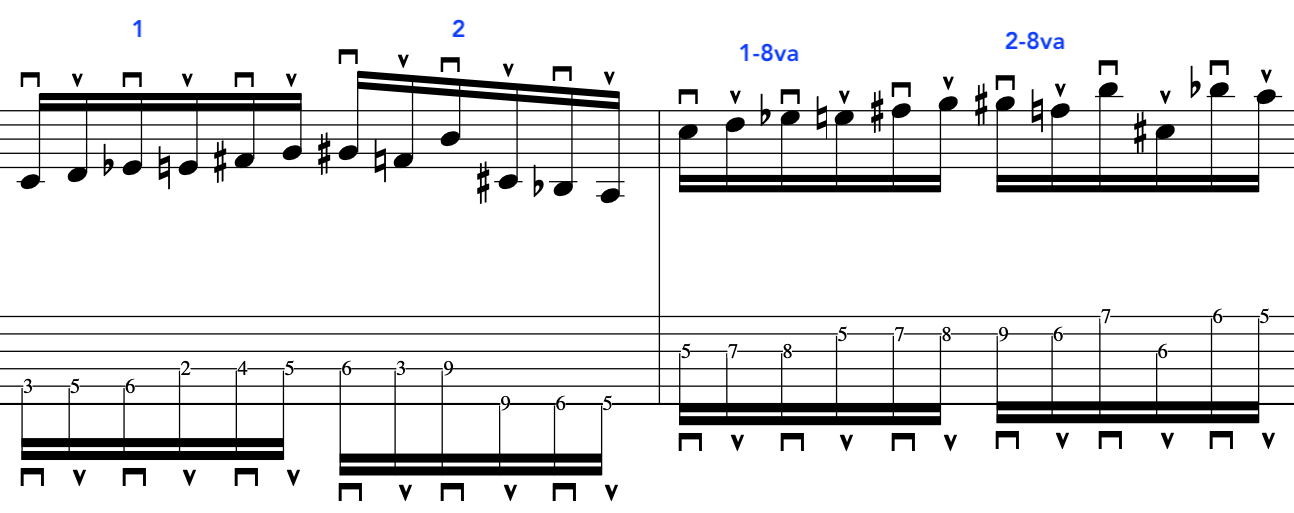
Image showing an example of Josef Mattias Hauer tropes for music composition.

From here, we will play the same trope in an intervallic manner: [Strict-each note in order ]
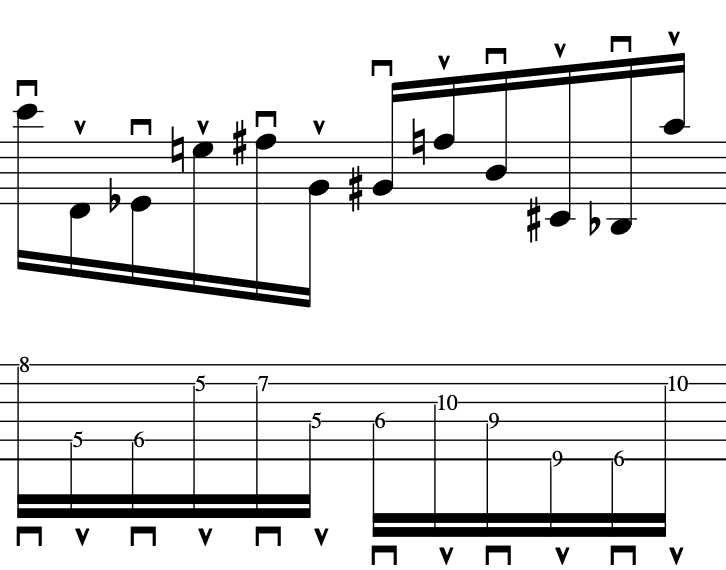
Image showing Josef Mattias Hauer tropes in intervallic form for music composition and improvisation

This time, let’s play each trope with the notes in a different order: [Not strict]
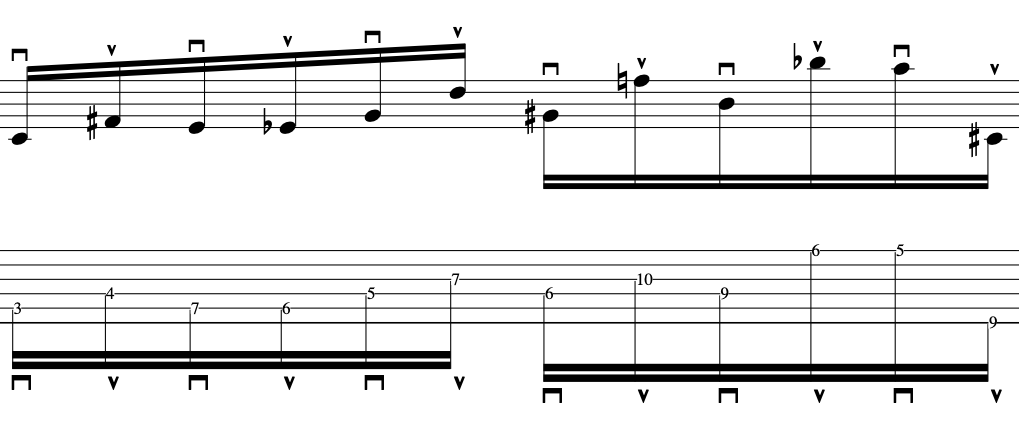
Josef Mattias Hauer's intervallic music tropes fro composition and improvisation

Here, we have “Trope”-in an Arpeggio Form;

Example.1
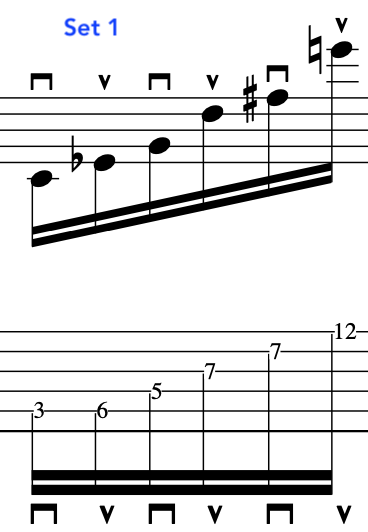
image of Josef Mattias Hauer arpeggio tropes for music composition

Example. 2

demonstration that shows JJosef Mattias Hauer tropes as arpeggios for music composition technique.

Example. 3

Demonstration image of Josef Mattias Hauer tropes as arpeggios for music composition technique.

Finally, the trope as a lick:

image for Josef Mattias Hauer improvised line
Josef Matthias Hauer Guitar Examples of Trope manipulation

From, our tropes we can create chords.

These can be,

Dyads–2note chords,

Tri-chords–3 note chords,

Quartal–4 note chords,

Penta–5 note chords

Hexatonic–6 note chords.

For this short blog we will exploit 2 note voicing’s.

Here, is an example of our two hexatonic’s as “Dyads”
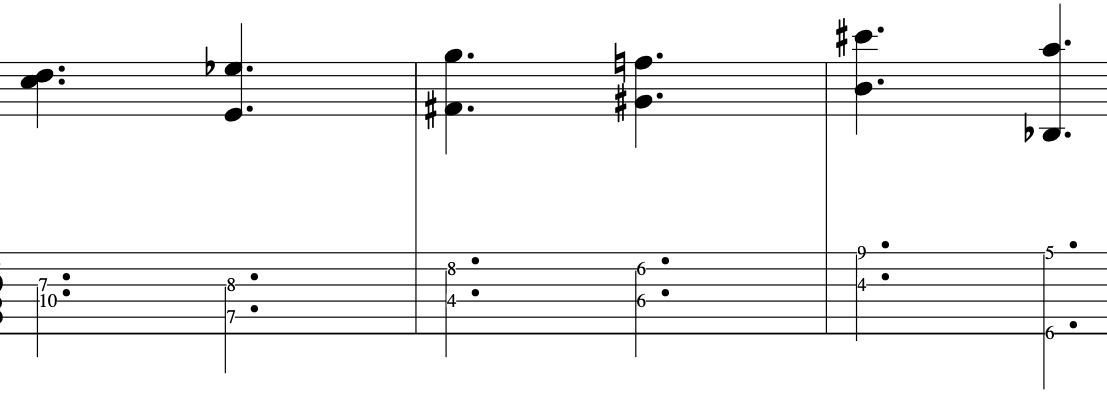
image demonstrating an example of Josef Mattias Hauer dyad ic2 note chordal tropes for music composition. Music theory lesson guitar tablature and music notation.

We could also superimpose the retrograde of our trope on top of our trope:
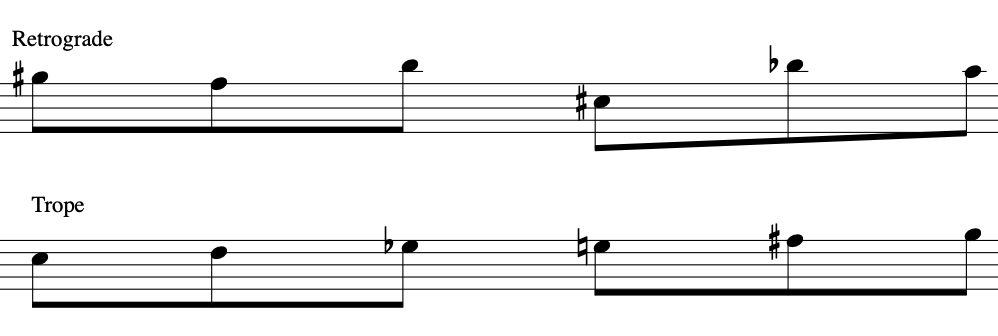
image example of Joseph Mattius Hauer superimposing music tropes

From this, we can exploit some more harmony with dyads:
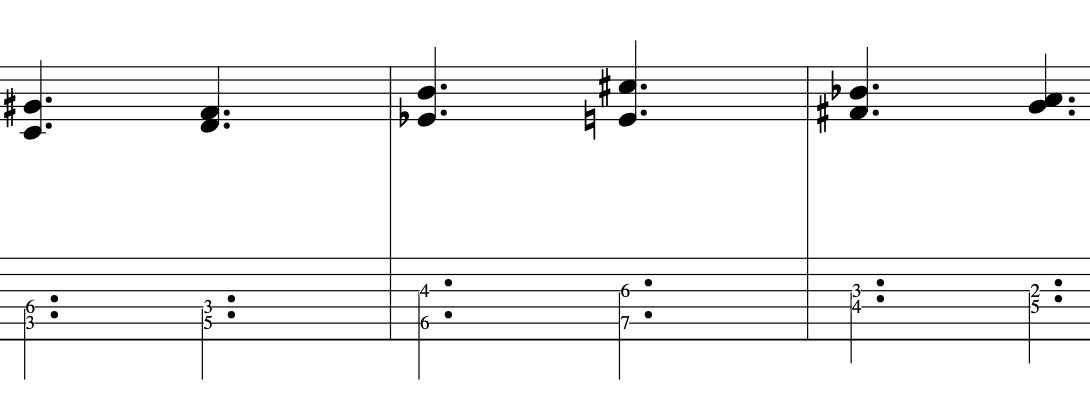
image demonstrating an example of Josef Mattias Hauer superimposition dyads

Here, is an example displaying some harmonic movement and chordal development that I quickly manipulated form our trope. [See-Chords in video chapter above]
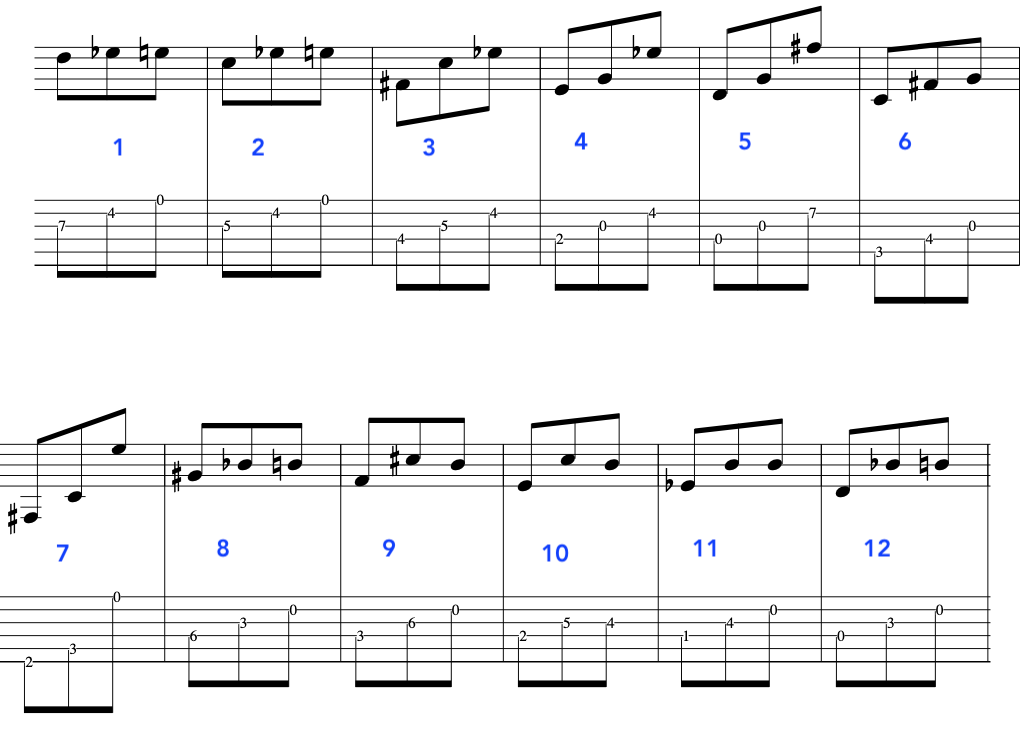
image of Josef Mattias Hauer musical tri -chords
Hauer Compositon Tropes Example

This was just a very brief look at Hauer’s tropes. It’s an amazing concept because original harmonic content and original ideas develop naturally as the material reveals itself.
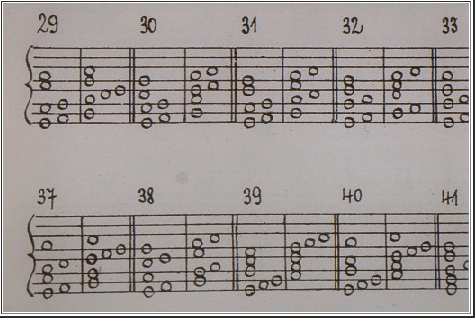
These simple tropes give birth to a wealth of creative content that can lead one into directions that may not have ever been taken or otherwise thought of or even considered.
Hexatonic Scale building from the Harmonic Minor Scale Part 1

John McLaughlin Hexatonic Harmonic minor Guitar Scales Lesson and Explanation

Hi Guys,

Today, a quick look at creating a 6 note Hexatonic scale from the harmonic minor scale.

This works really well on the guitar as the harmonic minor scale is generally a clumpy and awkward affair in regards to the fingering.

So, if we take a look at the Harmonic minor scale in its classic, stock form, we have:

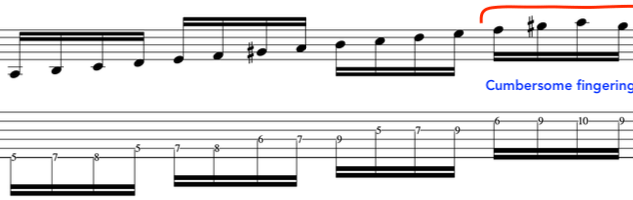
But, for effective guitar fingering, especially on a clean guitar or acoustic guitar this is not the most fluid way for the fretting hand.

Well, the key is to break it up in the most Shakti way possible:

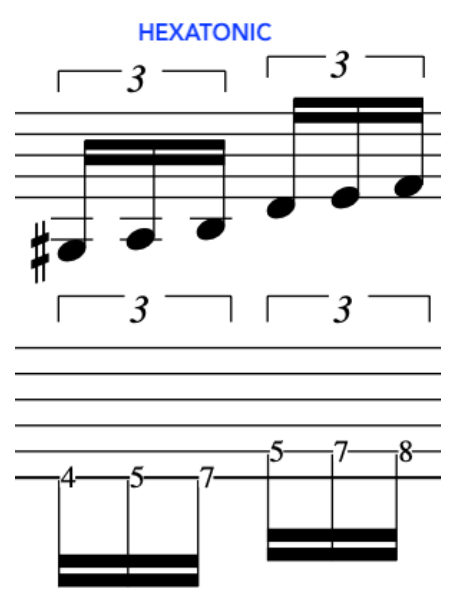
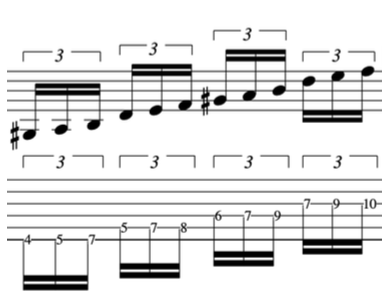
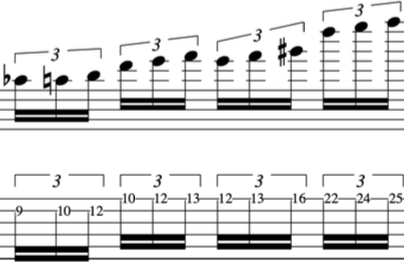
Here’s what we will do: We will employ 6 notes only of the scale. These will be: G# A B D E F

Musical notation illustrating a hexatonic scale built from the harmonic minor scale for music theory.
Hexatonic scale diagram with notation showing finger placements for guitar.

This simple 6 note Hexatonic scale gives us an easy 3 notes per string repetitive figure/pattern to alternate pick.

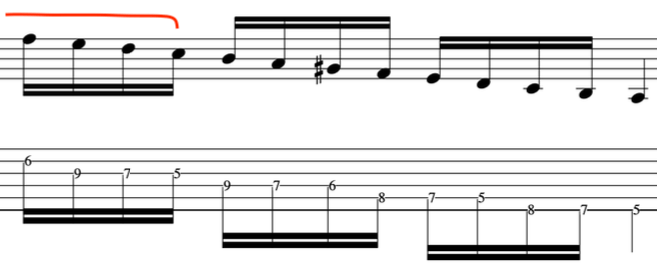
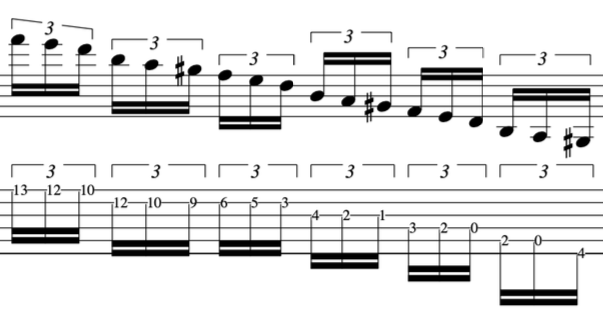
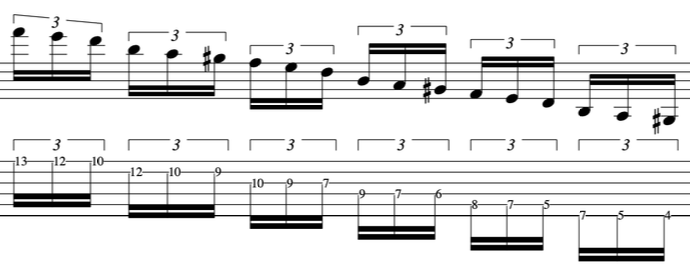
We can now play this across all 6 strings and create a nice line/phrase/scale that is easy to execute, pick and fret.

Sheet music displaying musical notes and tablature for a hexatonic guitar scale built from the harmonic minor scale.
Notated example of ascending and descending patterns for the Hexatonic scale on guitar.
Sheet music featuring a sequence of musical notes form the hexatonic harmonic minor scale.
Hexatonic scale notation for guitar, showcasing ascending and descending patterns.

Way 1:

Sheet music featuring guitar tablature and standard notation, for the hexatonic guitar scale built from the harmonic minor scale.
Musical notation illustrating the descending pattern for the Hexatonic scale in harmonic minor.

WAY 2:

Sheet music displaying John McLaughlin's hexatonic guitar scale built form the harmonic minor scale
Notation for the Hexatonic scale, illustrating finger placement and notes on guitar.

In Part 2 we will look at composition and improvisational techniques with the Hexatonic.

Exploring Messiaen’s Mode 1: Musical Concepts and Colorful Creations

Unlocking Messiaen’s Mode 1: Guitar Explorations

Hi Guys,

Today a look at Messiaen’s first mode of limited transposition:

This is the Whole tone scale and has two transpositions and one mode. It is a “Hexatonic” scale that has a dreamy, enigmatic air to it due to lack of resolution as all of the tones are the same distance apart.

The goal of this blog post is to create something interesting out of this scale.

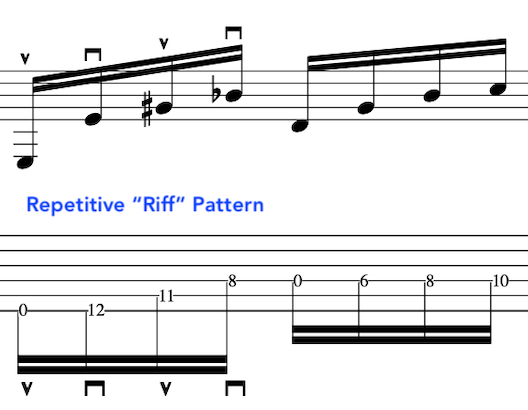
Here is the first bar: This employs a Fripp-esque repetitive picking “Riff”

exploring-messiaen-mode-one-Fripp-guitar-style

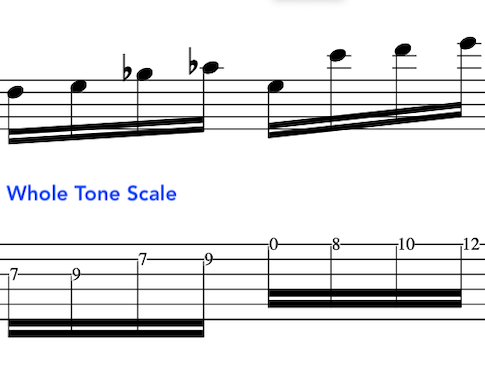
From here, let’s make a smooth transition with an ascending whole tone scale:

exploring-messiaen-mode-one

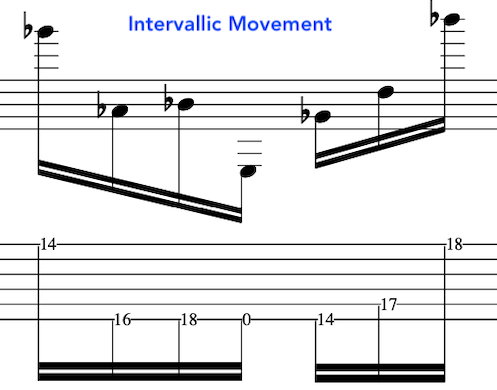
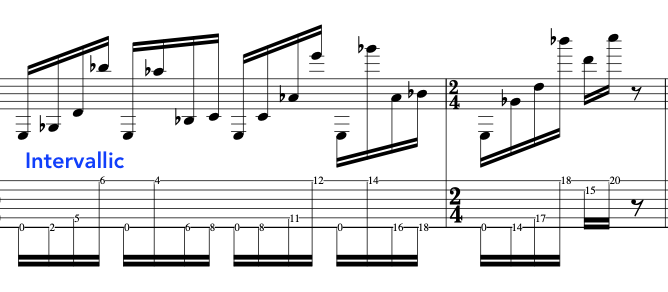
Now, let’s employ some 20c Classical Messiaen style “Intervallic” movement to complete the phrase:

exploring-messiaen-mode-one-intervallic-guitar

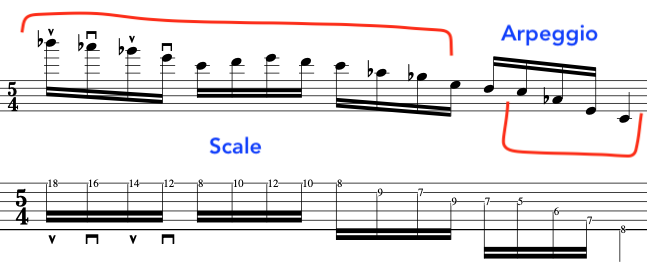
From here, we will descend with the whole tone scale and connect it to the augmented arpeggio:

exploring-messiaen-mode-one

Let’s now return to and exploit our intervallic movement as we ascend the guitar fingerboard:

exploring-messiaen-mode-one-intervallic-guitar

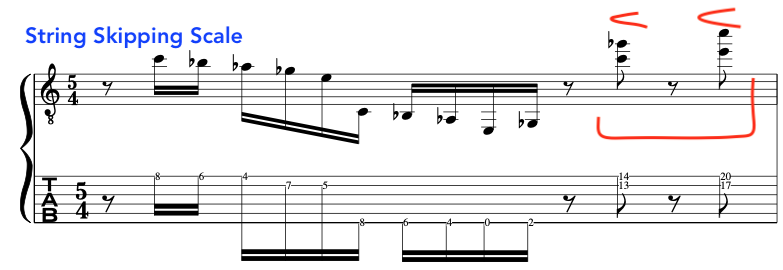
Finally, let’s finish with some string skipping whole tone scale and a couple of plucks up high:

exploring-messiaen-mode-one-string-skipping-guitar

This was just an example of playing around with musical concepts and creating something colourful and interesting from Messiaen’s Mode 1.

Although, this is only a six note scale it has plenty to offer due to it’s non resolving/non diatonic nature. It works really well for riffs, motifs and hooks and really draws the listeners ear in. Even when used sparingly it can really add colour and texture to a composition [or part of] .

FREE PDF DOWNLOAD:

Exploring Messiaen’s 5th Mode of limited transposition
Messiaen’s modes of limited transposition: