Alternate Picking Leverage:Open String Concept:

Hi Guys,

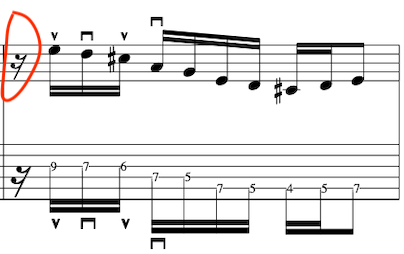
Just, a quick response Blog to a video I made about employing the “Open” [2nd] string ascending with alternate picking guitar technique.

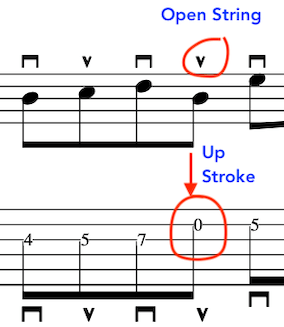
The main reason that this works, is because it is an “Even” grouping, and, by plucking the open 2nd string it gives the fretting hand a fraction of a second to relax and get into position.

This in turn gives us some natural and excellent leverage. This also, means that we have the “Up” stroke to descend with.

This technique works really well for the precise picking passages both in Fusion and World Music, like, for example the precise lines of McLaughlin’s “Shakti” compositions.

This extra note, or even pattern, works in principle like a Be bop scale in that the extra note creates a smooth picking line for the right hand.

alternate_picking_guitar_technique_expalained

This gives us, the 4 note “Even” grouping.
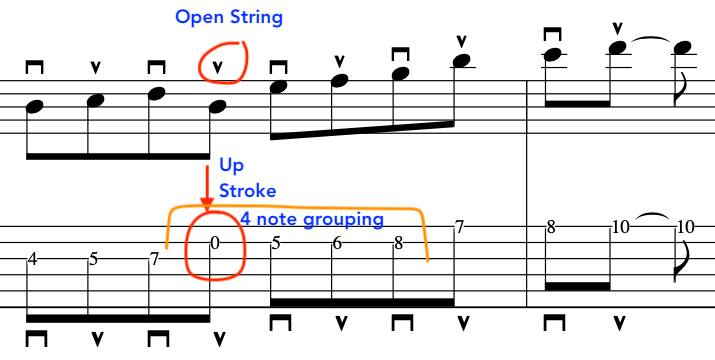
alternate_picking_guitar_technique_expalained

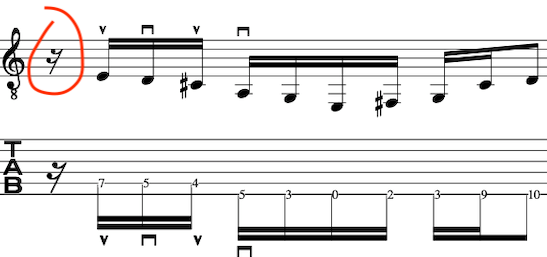
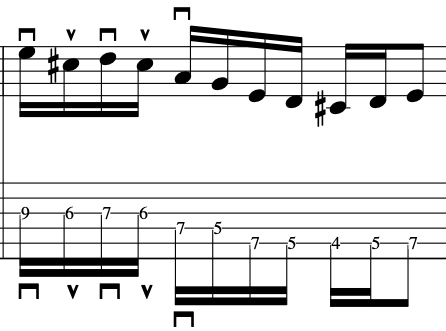
In this example, we can see where the “Up” stroke occurs, which, sets us up nicely to descend:
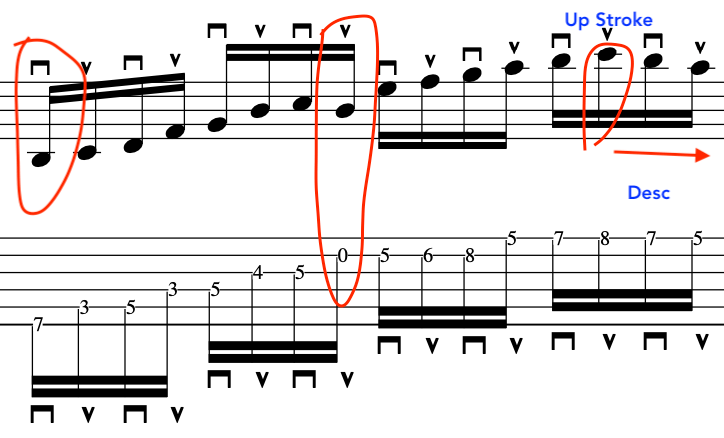
Here, is the whole scale passage.

Also, notice that the open B string is “Off” the beat.

alternate_picking_guitar_technique_expalained

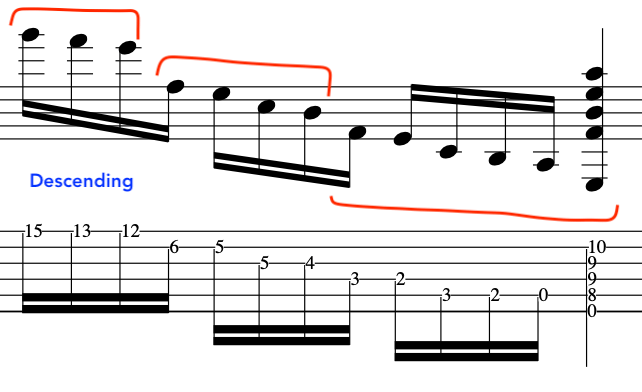
There are, other open strings that we can exploit. But, for the sake of a quick response blog we will just look at one more idea and that is for descending:

Here, will will pluck the open G string and then add a chord. [Again, notice the the open string is off the beat]
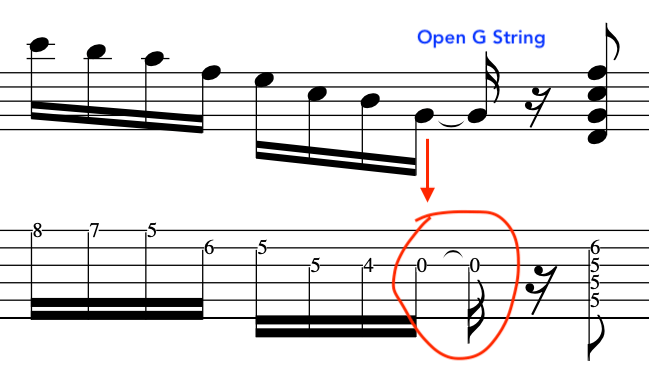
alternate_picking_guitar_technique_expalained

Finally, let’s extend this:

alternate_picking_guitar_technique_expalained

This is only touching the surface. There are many variations on this and any string can be employed both ascending and descending.

Now, you might say what if the open B note isn’t in the key? Well, this doesn’t matter as it is only one note and can add colour. John McLaughlin does this to great effect. Also, due to the picking and the velocity the ear of the listener is not really affected, it’s very difficult to tell.

Lastly, this is not a shred gimmick or a means of tremolo picking and trying to play fast. It is a concept for really precise picking awkward lines, when, for instance you are doubling with a Sax or Piano or as a Rhythmic “Shakti” style line with a tight drum/drummer/percussionist.

How to play Shakti Indian Guitar Scales

Hi Guys,

Today, a quick look at the first of a few Shakti Indian guitar scales for tabla and guitar improvisation.

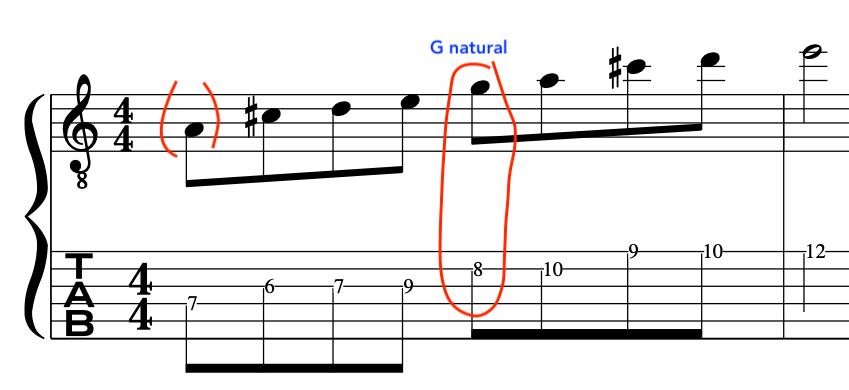
The first one that we will look at today is the A Mixolydian Mode exploited in a pentatonic form.

Here, is the basic scale ascending. The G natural gives the unique flavour and colour as it possesses the dominant sound, but, in a non resolving from.

how_to_play_shakti_indian_guitar_scales_lesson

In this first exercise we will descend with the A mixolydian mode and employ imitation with the pentatonic form.

This example exploits strict alternate picking guitar technique. And, it works really well for two reasons:

A] It start on an “Up stroke”

B] It starts in the bar and on the “Off” beat

This creates a nice, smooth phrasing and is easy to copy and repeat down the octave.

how_to_play_shakti_indian_guitar_scales_lesson

As you can see below, it is repeated, and copied down an octave starting on the upstroke and on the off beat:

how_to_play_shakti_indian_guitar_scales_lesson

Finally, a variation/implication of this is played, due to the guitar running out of notes to fully copy it.

how_to_play_shakti_indian_guitar_scales_lesson

In this next example we will vary what we have just played in the example above.

But,

with two differences,

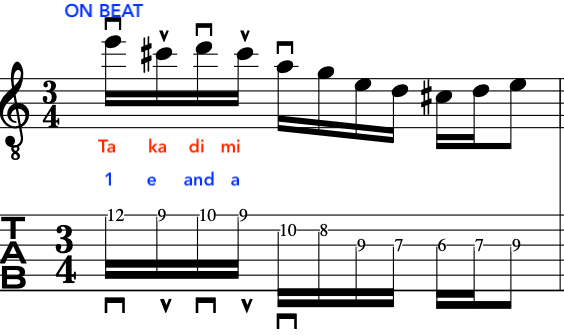
A] We will start on a “Down” stroke

B] We will play “On” the beat.

how_to_play_shakti_indian_guitar_scales_lesson

As with the previous example, we will now imitate what we have just played and copy it exactly down an octave:

how_to_play_shakti_indian_guitar_scales_lesson

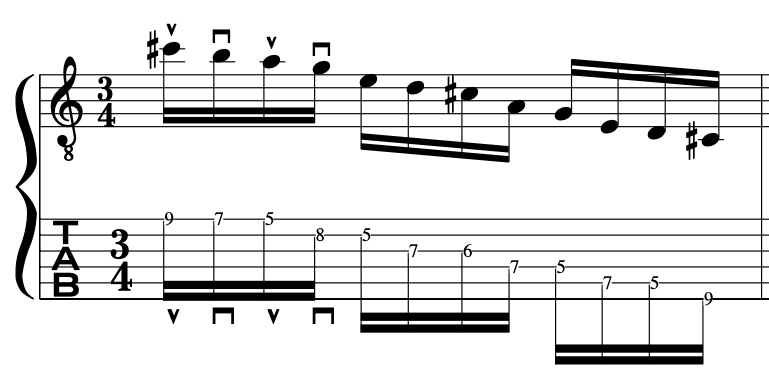
Here, is another form/fingering of the scale in descent: Notice that this is starting on an “Up” stroke.

how_to_play_shakti_indian_guitar_scales_lesson

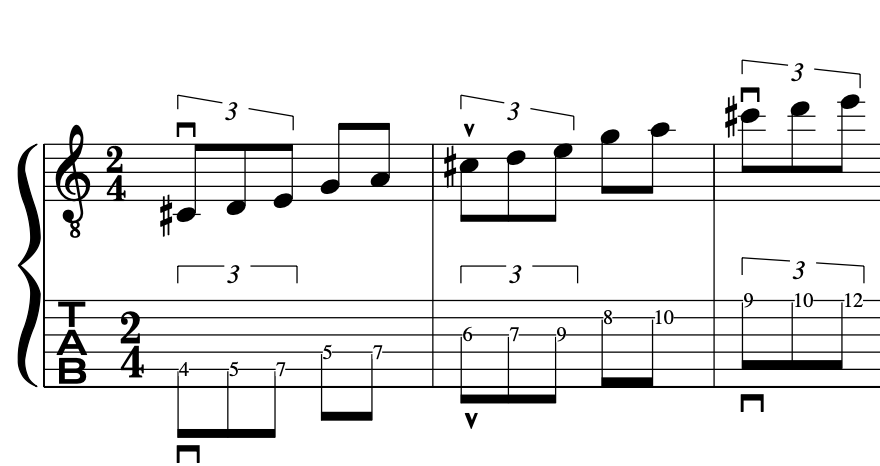
And finally, an ascending form/sequence starting on a “Down” stroke.

how_to_play_shakti_indian_guitar_scales_lesson

Counting Rhythms for Alternate Picking Guitar “Right Hand” Technique:

Hi Guys,

Here are a few of the Rhythms that I like to count and/or practice when alternate picking:

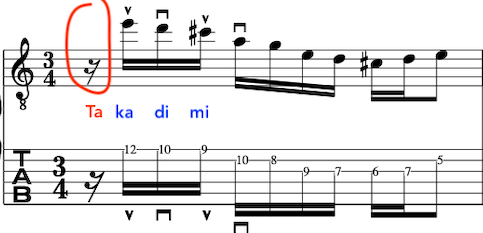
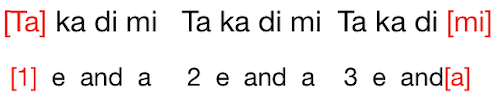
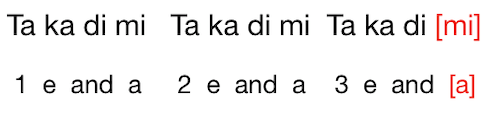
These are based around Indian Konokol: But: I am using them to INTERNALISE patterns. This could be Ta ka di mi but felt/internalised as du du du du

These, I find help me enormously with the right hand picking, as I can connect phrases together from the internalised beats/syllables.

These are NOT cast in stone and are only a few ideas that I use personally, and are not aiming at strict Indian classical music technique, but, are employed as reference points/patterns/beats in the way that they are enunciated.

1] Ta ka di mi [1 2 3 4]

2] Ta ki ta Ta [more as 123 1]

1] Ta ka di mi thom [1 2 3 4 5]

2] Ta ka di mi Ta [1 2 3 4+1]

3] Ta ki ta Ta ka [1 2 3 1 2]

1] Ta ka di mi Ta ki ta [4+3]

2] Ta ka di mi thom Ta ka [5+3]

1] Ta ka di mi Ta ka di mi [4+4]

1] Ta ki ta Ta ki ta Ta ki ta [3×3]

2] Ta ka di mi Ta ka di mi Ta [4+4+1]

1] Ta ka di mi Ta ka di mi Ta ki ta [4+4+3]

1] Ta ka di mi Ta ka di mi Ta ka di mi Ta [4+4+4+1]

1] Ta ka di mi Ta ka di mi Ta ka di mi Ta ka di mi [4×4]

These are only ideas that I personally find useful, and, as I say they are not for strict Indian classical music. But, they do function well as reference points and a way of enunciating beats for the picking hand to pluck at a fast [alternate picking] tempo.