Exploring Messiaen’s Mode 1: Musical Concepts and Colorful Creations

Unlocking Messiaen’s Mode 1: Guitar Explorations

Hi Guys,

Today a look at Messiaen’s first mode of limited transposition:

This is the Whole tone scale and has two transpositions and one mode. It is a “Hexatonic” scale that has a dreamy, enigmatic air to it due to lack of resolution as all of the tones are the same distance apart.

The goal of this blog post is to create something interesting out of this scale.

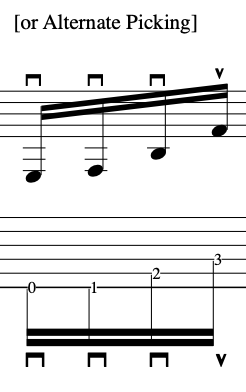
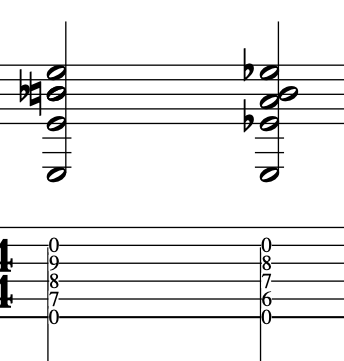
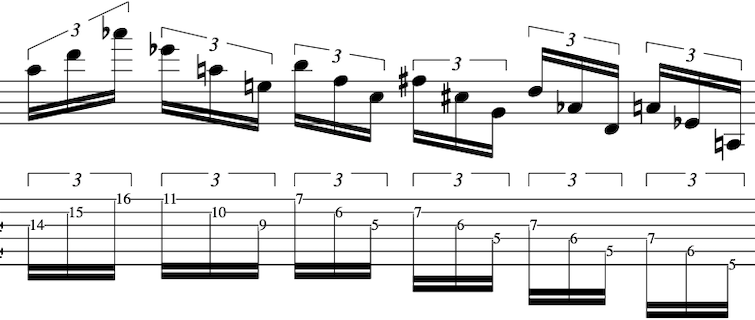
Here is the first bar: This employs a Fripp-esque repetitive picking “Riff”

exploring-messiaen-mode-one-Fripp-guitar-style

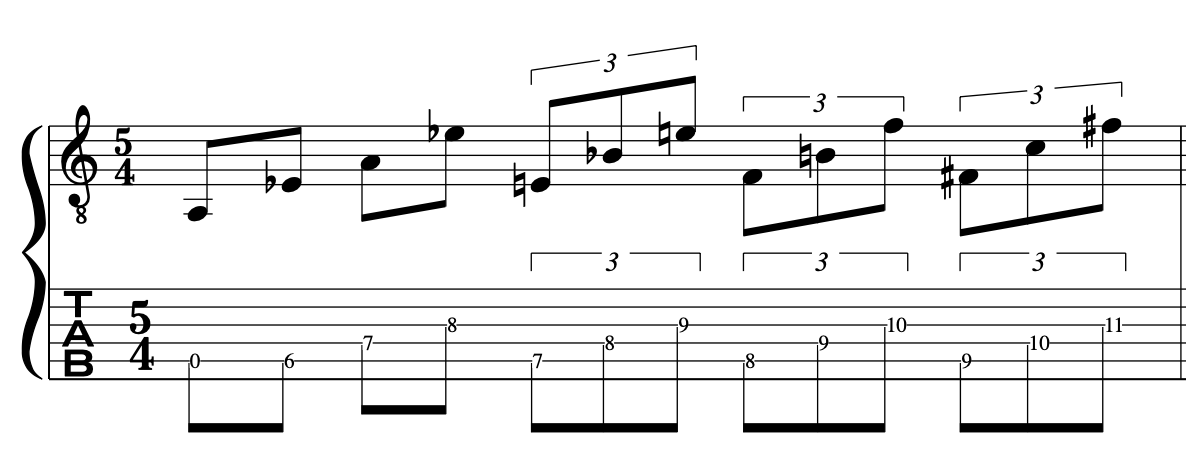
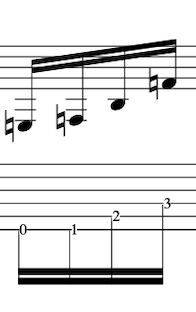
From here, let’s make a smooth transition with an ascending whole tone scale:

exploring-messiaen-mode-one

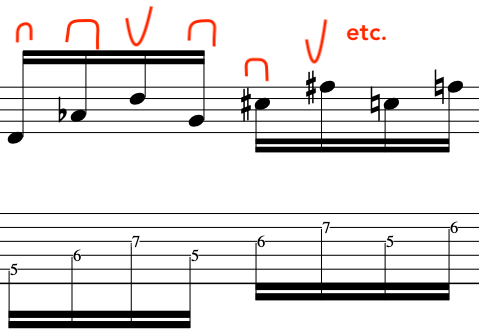
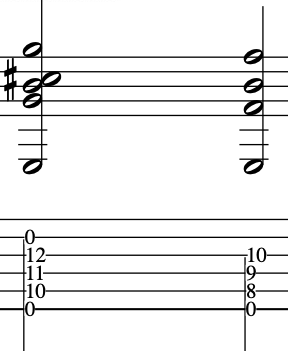
Now, let’s employ some 20c Classical Messiaen style “Intervallic” movement to complete the phrase:

exploring-messiaen-mode-one-intervallic-guitar

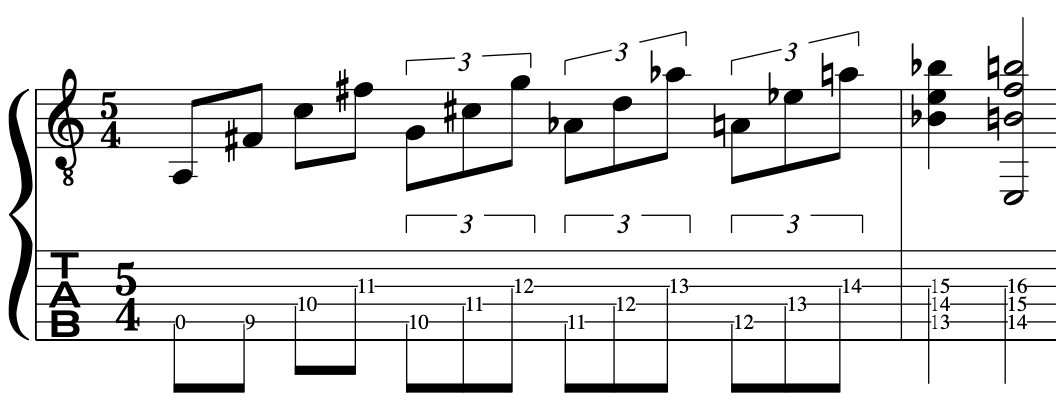
From here, we will descend with the whole tone scale and connect it to the augmented arpeggio:

exploring-messiaen-mode-one

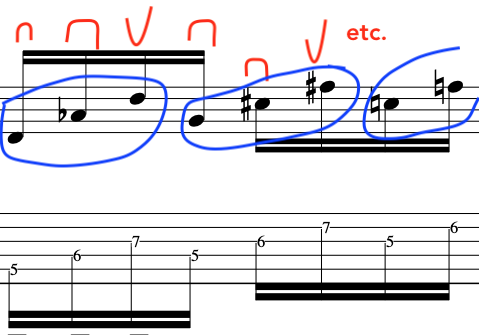
Let’s now return to and exploit our intervallic movement as we ascend the guitar fingerboard:

exploring-messiaen-mode-one-intervallic-guitar

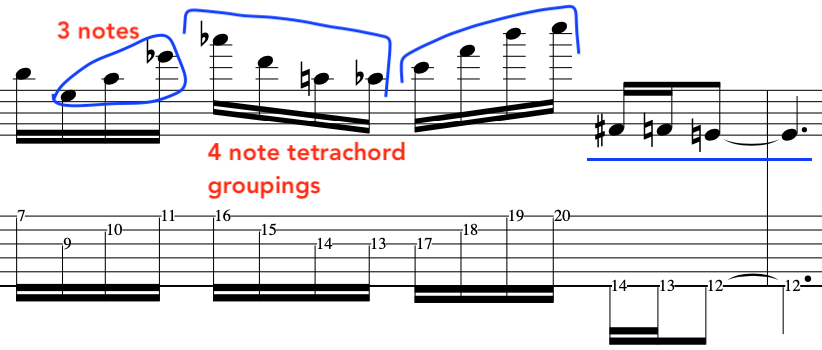
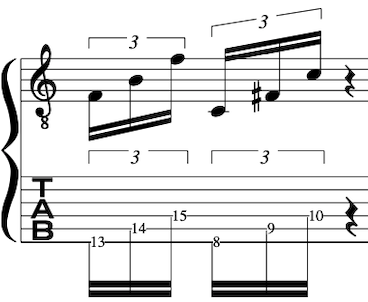
Finally, let’s finish with some string skipping whole tone scale and a couple of plucks up high:

exploring-messiaen-mode-one-string-skipping-guitar

This was just an example of playing around with musical concepts and creating something colourful and interesting from Messiaen’s Mode 1.

Although, this is only a six note scale it has plenty to offer due to it’s non resolving/non diatonic nature. It works really well for riffs, motifs and hooks and really draws the listeners ear in. Even when used sparingly it can really add colour and texture to a composition [or part of] .

FREE PDF DOWNLOAD:

Exploring Messiaen’s 5th Mode of limited transposition
Messiaen’s modes of limited transposition:

Modern Jazz Fusion Chords:How to create them from scales

CLICK SUBSCRIBE!

Hi Guys,

Today, a look at how to create colourful and interesting jazz/fusion chords:

Because, we are dealing with jazz/fusion we will manipulate a scale in modal form. This will be C Mixolydian:

Now, let’s add one note above each note of the mode and create 3rds. [Here we can hear the mode in double stops].

Now, we will add another note a 5th above the root and create triads.

jazz-fusion-chords-lesson

We have now harmonised the Mixolydian mode.

As you will hear it doesn’t sound very jazzy or have a fusion-esque sound.

Well, we will add another note and manipulate the chord “Voicing’s”. Let’s exploit 4ths, flattened 5ths and Major 3rds.

Ascending Chord Scale:

jazz-fusion-chords-lesson

Descending chord scale:

jazz-fusion-chords-lesson

Now, we will apply this to the C Dorian Mode which has another flat note, this being Eb.

jazz-fusion-chords-lesson

C Dorian Chord Scale : Harmonisation idea:

jazz-fusion-chords-lesson

Now, let’s play these chords in a sequence and make a bit of music from them:

EXAMPLE: Notice-Motifs and melodic movement from the chord voicings:

jazz-fusion-chords-lesson

Finally, to really get that “Fusion” exoticism let’s now exploit the melodic minor scale:

Below, we have the A melodic minor scale: Notice it’s just like the A Major scale but with the 3rd flattened: [In this case C natural]

jazz-fusion-chords-lesson

Again, we will try out some ideas to harmonise the scale with some interesting chord voicing’s:

jazz-fusion-chords-lesson

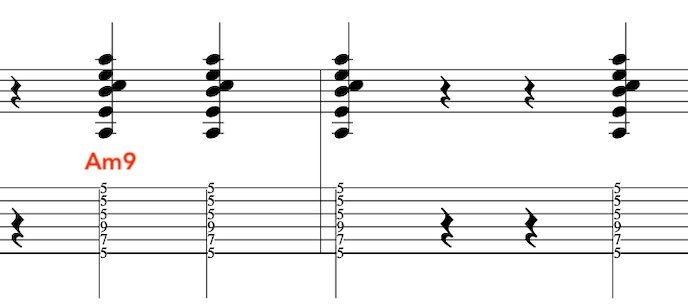
Here is a really nice set of chords built from from the scale.

jazz-fusion-guitar-chords-lesson-melodic-minor

From here it’s a good idea to play re-harmonised chords from chord scales in sequences like:

ii V7 I

Vi ii V I

iii Vi ii V7 I

This was just a basic look at how to create interesting chords from scales and modes and how to create interesting and unique voicing’s.

At the end of the day it really comes down to your own ears and imagination and sense of creativity. But, this is how easy it is to create chords from scales and then put them into sequences for composition and re-harmonisation.

“Minor-isation”For Backing Track Improvisation:

Modern Jazz Fusion Chords part 2. Steely Dan, Dan Chord and Slash Chords

CLICK SUBSCRIBE!

“Minor-isation”or the minor topic.[Backing Track]

Hi Guys,

Today, a quick look at applying minor-isation for improvisation over a backing track:

This is a very useful way to play over ambiguous harmony or Jazz fusion chord progressions, slash chords and sometimes illogical movement/chord shifts.

ANSWER=Employ the minor key for everything!

minor-topic-pat-martino-minorisation-track

Let’s apply the same principle to DbMaj7#11

If we apply chord iii we have F minor:

minor-topic-pat-martino-minorisation-track

This time we will apply it to B Maj7#11

Chord iii being D#minor [Although I have notated it enharmonically with Eb minor as some people find that easier to visualise on the guitar fingerboard]

minor-topic-pat-martino-minorisation-track

In bars 9 to 12 you will see slash chords. For these we will go to chord Vi. So for instance on Db/Eb we will use Bb minor.

minor-topic-pat-martino-minorisation-track

Bars 9 to 11: Chord Vi:

minor-topic-pat-martino-minorisation-track

And on C/D chord Vi will be A minor:

minor-topic-pat-martino-minorisation-track

We could also use chord iii as we did in the first 8 bars:

Bars 9 to 11: Chord iii Employed:

For the last part we will employ chord iii of Db Major throughout: This of course being F minor:

minor-topic-pat-martino-minorisation-track

Here is the chart for the full backing track and you will see how all of this works:

minor-topic-pat-martino-minorisation-track

This is just a basic example of how “minor-isation” can be exploited to create really fluid improvisation especially on the guitar in a modern smooth jazz fusion context:

FREE PDF DOWNLOAD:

Modern Jazz Fusion Chords part 2. Steely Dan, Dan Chord and Slash Chords