Mastering Chromatic Guitar Techniques Inspired by John McLaughlin

Hi Guys,

Today, a quick look at adding colourful chromatics to your playing.

I am employing the concepts/style of guitar great John McLaughlin.
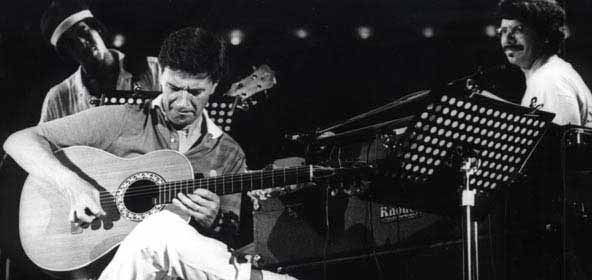
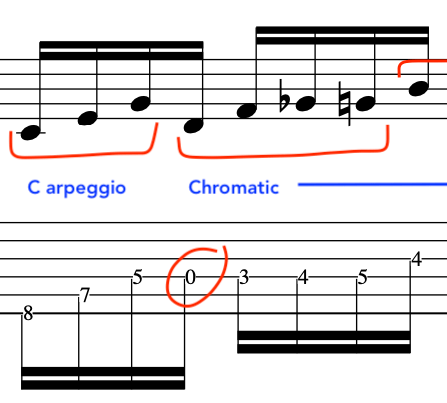
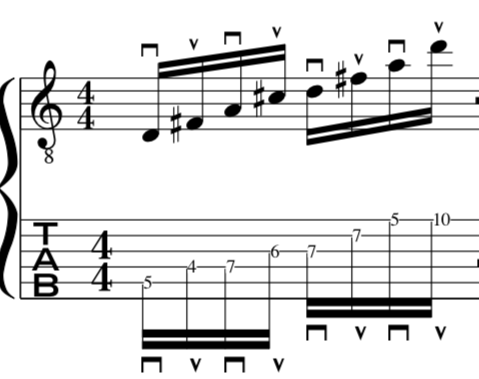
For many guitar players that employ the pick, ascending chromatics seem to be more awkward and rhythmically difficult to phrase and play than descending.

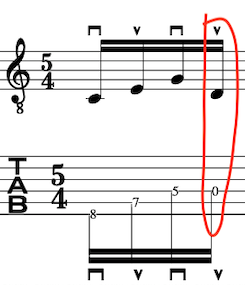
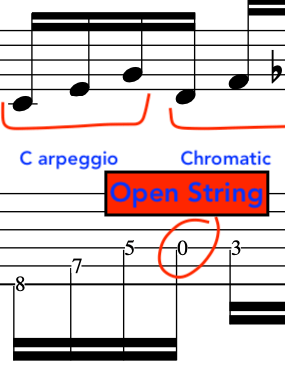
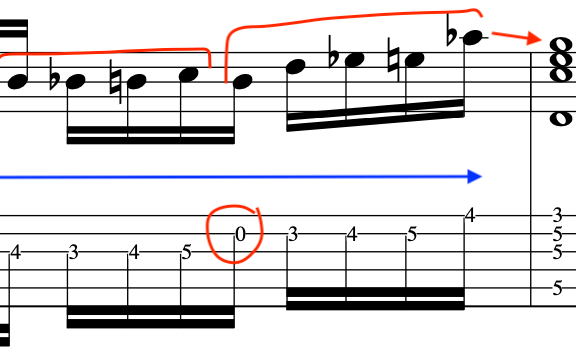
One, of the great secrets, that John exploits, is the use of the open string to connect everything together smoothly.
john_mclaughlin_chromatic_guitar_improvising_techniques

This, is unbelievably useful at up-beat tempos and with odd time signatures.

Because, the open string gives the fretting hand a fraction of a second to get into position…. and so, the picking right hand doesn’t have to rush or fight against the fretting hand and interrupt the synchronisation.

This makes it easy, to count time and play in a natural and fluent manner.

john_mclaughlin_chromatic_guitar_improvising_techniques

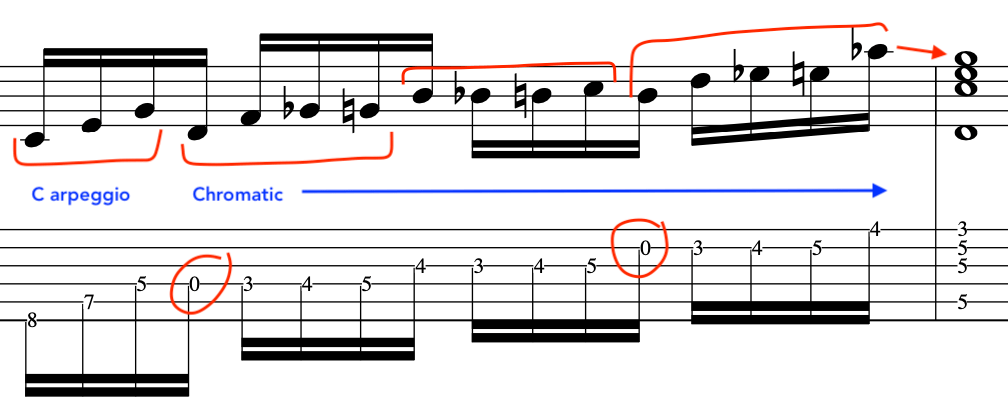
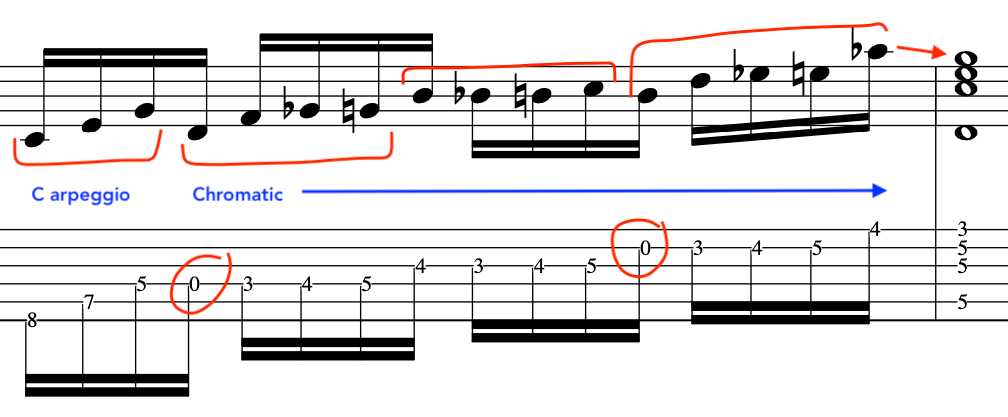
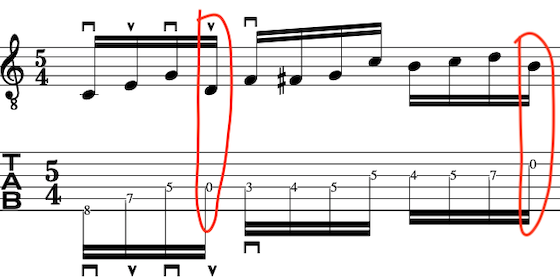
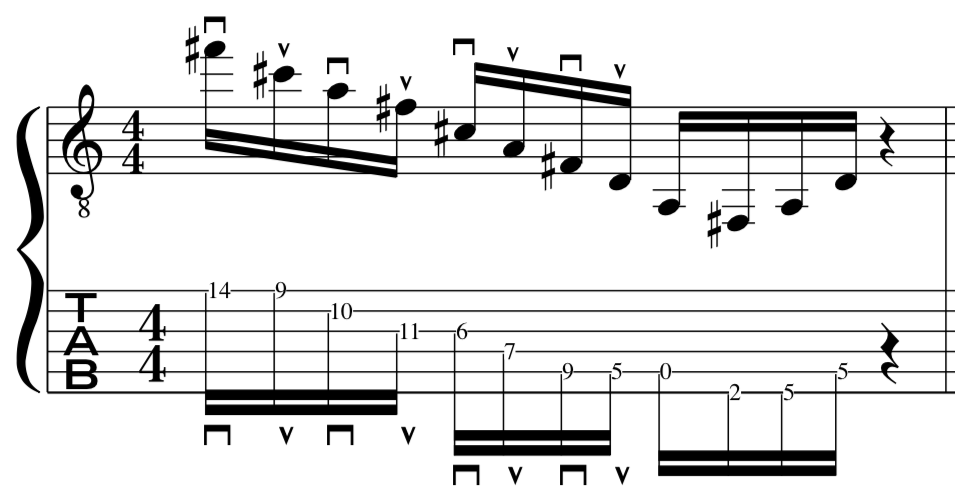
Let’s, now complete the ascending phrase by employing another open string:

Notice: The way the pick brings out the chromatics naturally in this way.
john_mclaughlin_chromatic_guitar_improvising_techniques

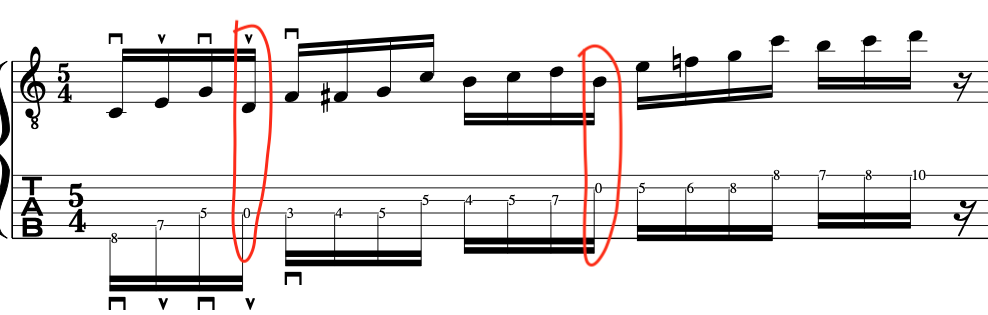
[Although, these can be classed as synthetic or symmetrical scales and some may deem them “Unemotional” or “Un-melodic” they serve an important purpose and weave beautifully in the improvised line].

john_mclaughlin_chromatic_guitar_improvising_techniques

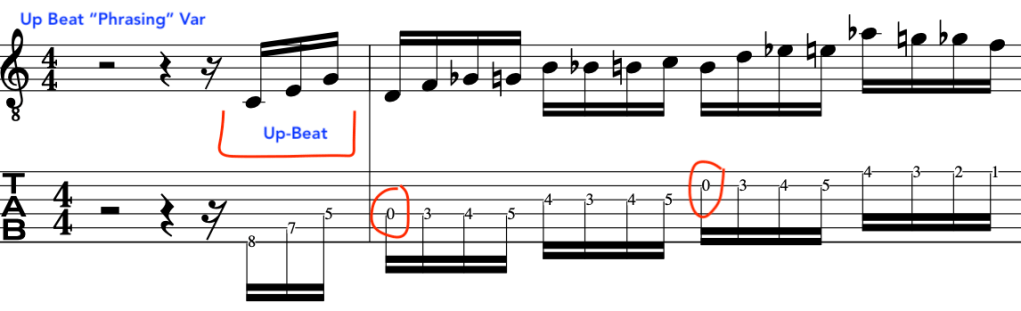
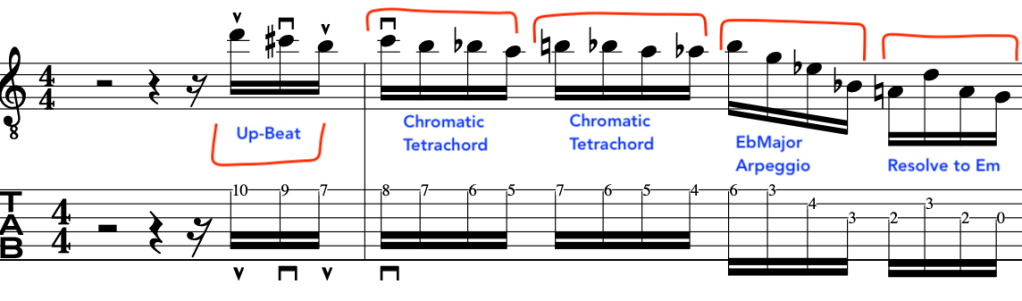
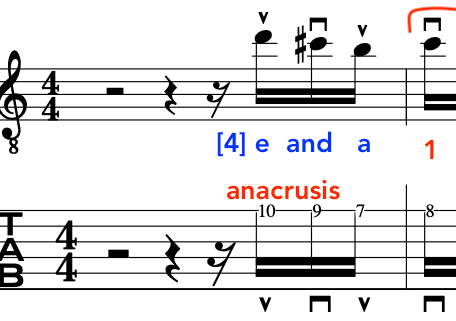
VARIATION: [With Up-Beat]

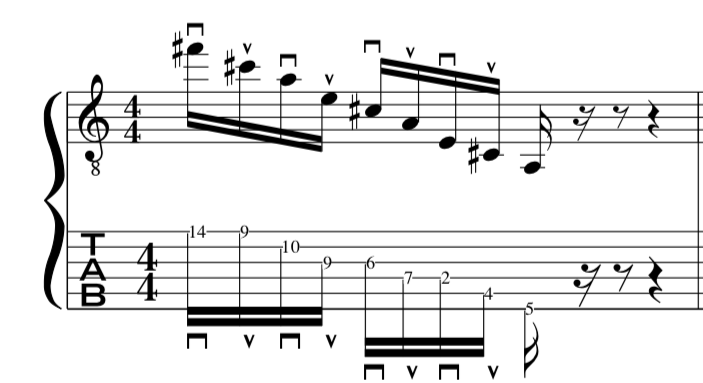
In the answering phrase we will employ Target Tones [Enclosure/Approach notes].

We will set up the phrase with an anacrusis, this being [4] e and a
john_mclaughlin_chromatic_guitar_improvising_techniques

NOTE: I am starting this on an “Up” stroke, so that when I start on the beat of the first bar I can employ the “Down” stroke” for “Even” tetrachord [4 note] groupings.
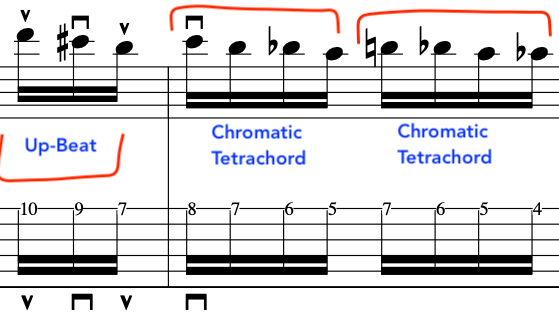
john_mclaughlin_chromatic_guitar_improvising_techniques

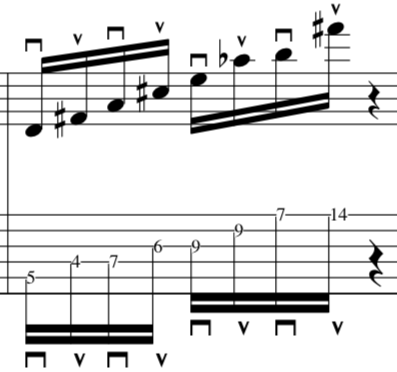
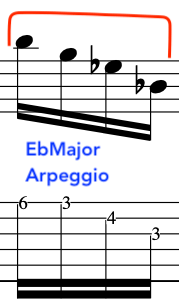
On the third beat, I am exploiting the use of the EbMajor arpeggio to get out of the key.
john_mclaughlin_chromatic_guitar_improvising_techniques

But, this then resolves nicely, back to Em. [Notice, the Bb resolves a half step down to the note A]
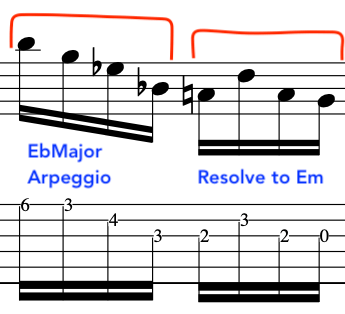
john_mclaughlin_chromatic_guitar_improvising_techniques

john_mclaughlin_chromatic_guitar_improvising_techniques

This was just a brief, but informative look at how easy chromatics can be brought into anyone’s guitar playing.

The key, is not the notes themselves so much, but, “How” they are done.

McLaughlin’s chromatic guitar techniques are actually quite simple and amazingly effective as they work at any tempo with the crafted alternate picking guitar technique.

“Shakti/McLaughlin” Mid Tempo Guitar Exercise [Alternate Picking]

Hi Guys,

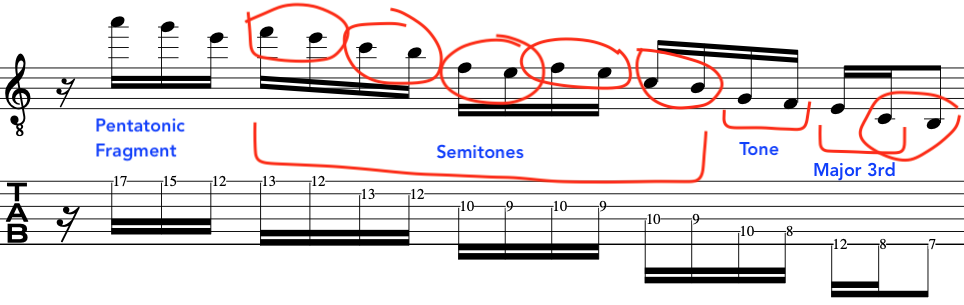
Today, a short “Mid-Tempo” [around 140bpm] JohnMcLaughlin/Shakti style alternate picking guitar exercise for scale connections in the fretting hand.

This is in regard to crossing the strings and connecting different scale fragments together.

The first concept is that of employing the open string. This gives the fretting hand a hundredth of a second to rest and hence easily get into position to fret the next note at a mid and fast tempo.

Note: fourth 16th note = Open String

shakti-mclaughlin-indo-jazz-guitar-exercise

In the next part, we can see both open strings employed to make it easy for the fretting hand to get into position and connect to the next scale fragment.

The last note in the bar, the open B natural, makes it easy for us to cross the string smoothly.

shakti-mclaughlin-indo-jazz-guitar-lesson

shakti-mclaughlin-indo-jazz-guitar-exercise

In this bar, we employ semitones as they are easy to finger/fret, and, also to cross the guitar strings when descending.

shakti-mclaughlin-indo-jazz-guitar-exercise

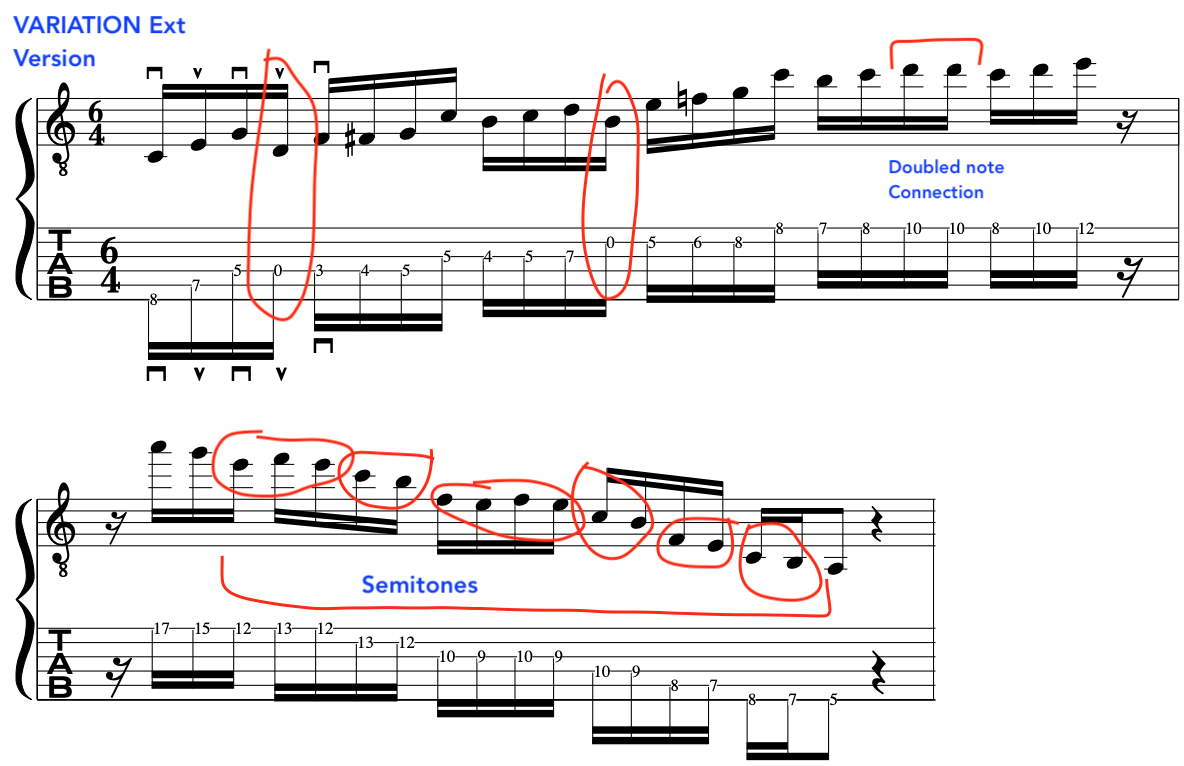
Here, is an extended variation that employs the same alternate picking John McLaughlin concepts that we have just looked at:

john-mclaughlin-indian-guitar-scales

These simple concepts for the fretting hand when alternate picking might not seem much, but, they are the little hinges that swing the big door when holding the tempo together. Especially, when playing with a tabla/drum.

It also makes it easier for the right picking hand to pluck the strings as the fretting hand is not under pressure, and, there are spaces for the fretting hand to rest and get into position.

PDF DOWNLOAD:

Alternate Picking Arpeggios Guitar [One note per string]John Mclaughlin

yt_logo_rgb_light

CLICK SUBSCRIBE!

Please watch video the for the John Mclaughlin fingering etc. I start all of these arpeggios on a down stroke with strict alternate picking for rhythmic precision. I am counting in 16ths 1 e and a etc. Most of the arpeggios are one note per string.

Example 1: John Mclaughlin D major 7th arpeggio.

John Mclaughlin D major 7th Alternate Picking Arpeggios Guitar [One note per string]

Example 2: Adding Lydian [and 9th and 13th] to John Mclaughlin’s D Major 7th alternate picking arpeggio

John Mclaughlin Alternate Picking Arpeggios Guitar [One note per string]

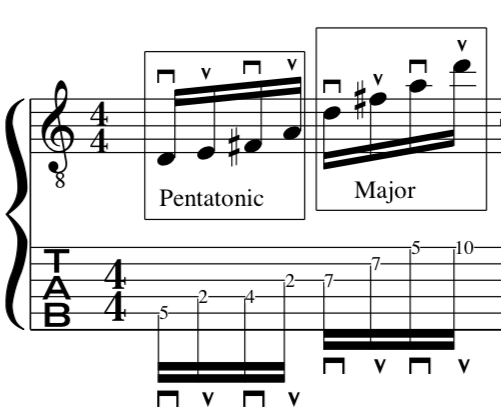
Example 3: Starting Arpeggio with Pentatonic John Mclaughlin style

Alternate Picking Arpeggios Guitar John Mclaughlin [One note per string]

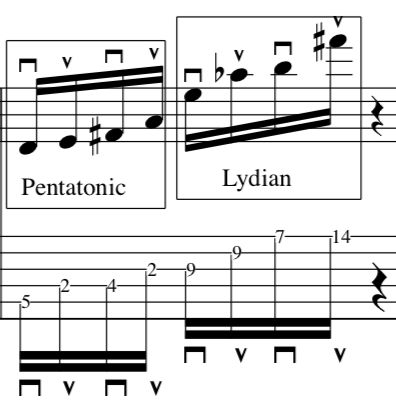
Example 4: Pentatonic to Lydian John Mclaughlin guitar style

Alternate Picking Arpeggios John Mclaughlin Guitar [One note per string]

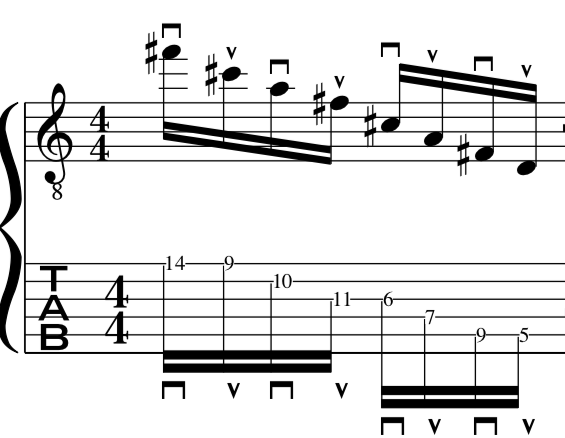
Example 5: Descending Arpeggio with simple John Mclaughlin fingering counting 1 e and a etc.

John Mclaughlin Alternate Picking Arpeggios Guitar [One note per string]

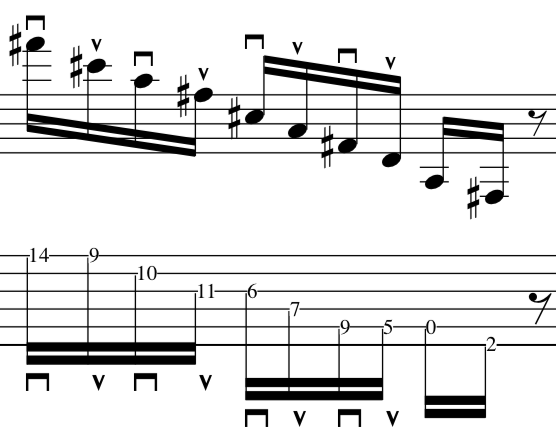
Example 6: Extension

Alternate Picking Arpeggios Guitar [One note per string]

Example 7: Variation

Alternate Picking Arpeggios Guitar [One note per string]

Example 8: Simple fingering descending concept.

Alternate Picking Arpeggios Guitar [One note per string]

If you enjoyed this blog then please Subscribe to us on Youtube below, Thanks!

yt_logo_rgb_light

CLICK SUBSCRIBE!