Please watch video above for detailed info:
Hi Guy’s,
Today, a look at how jazz guitar legend Pat Martino approaches jazz improvisation.
This unique insight is strictly for guitar players, [although, players of other instruments may well find some of this extremely interesting and probably useful].
Pat’s approach to guitar improvisation is also a brilliant method for any guitarists that find playing through complex chord changes difficult or confusing
EXAMPLE 1: “Coltrane Changes”
Okay, let’s say we are given this set of chord changes to improvise over.

Well, this is a lot of chords in different keys and with harmonic shifts to get through. This is 3 Chords per bar!!!
At a fast tempo this is a lot of different scales and arpeggios to connect together quickly!!!
So, what do we do???
Here’s where Pat’s unique approach comes into play.
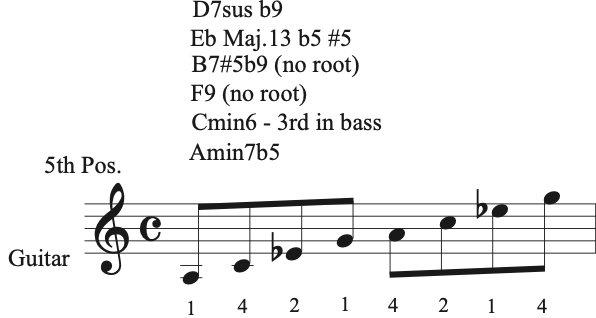
Pat would approach this by employing the minor.
So, if we take a closer look at our sequence we will notice three sets of ii V7 I’s.

Now that we have this, let’s exploit Pat’s minor topic/minorisation improvisational technique:
To do this we will employ the dominant chord and make it minor:
So for Bbm7 we will use Fm,
for F#m7 we will use C#m
and for Dm7 we will use Am.
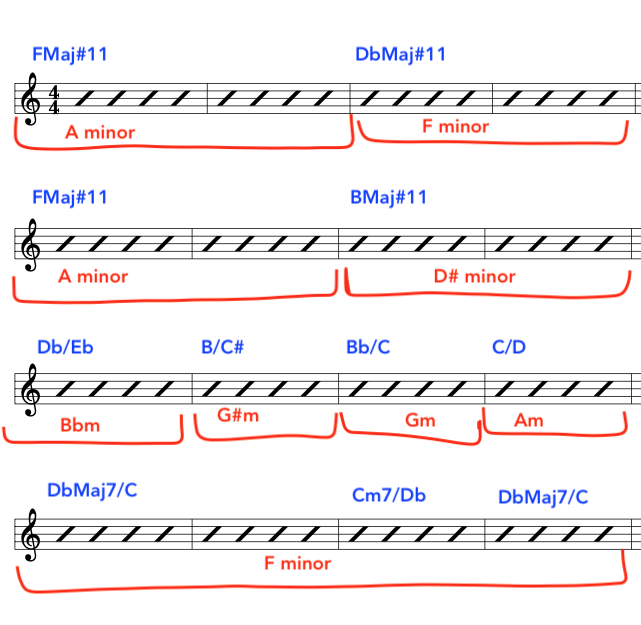
In the example below we can visually see it all set up.

EXAMPLE: “minor” shapes to build from:
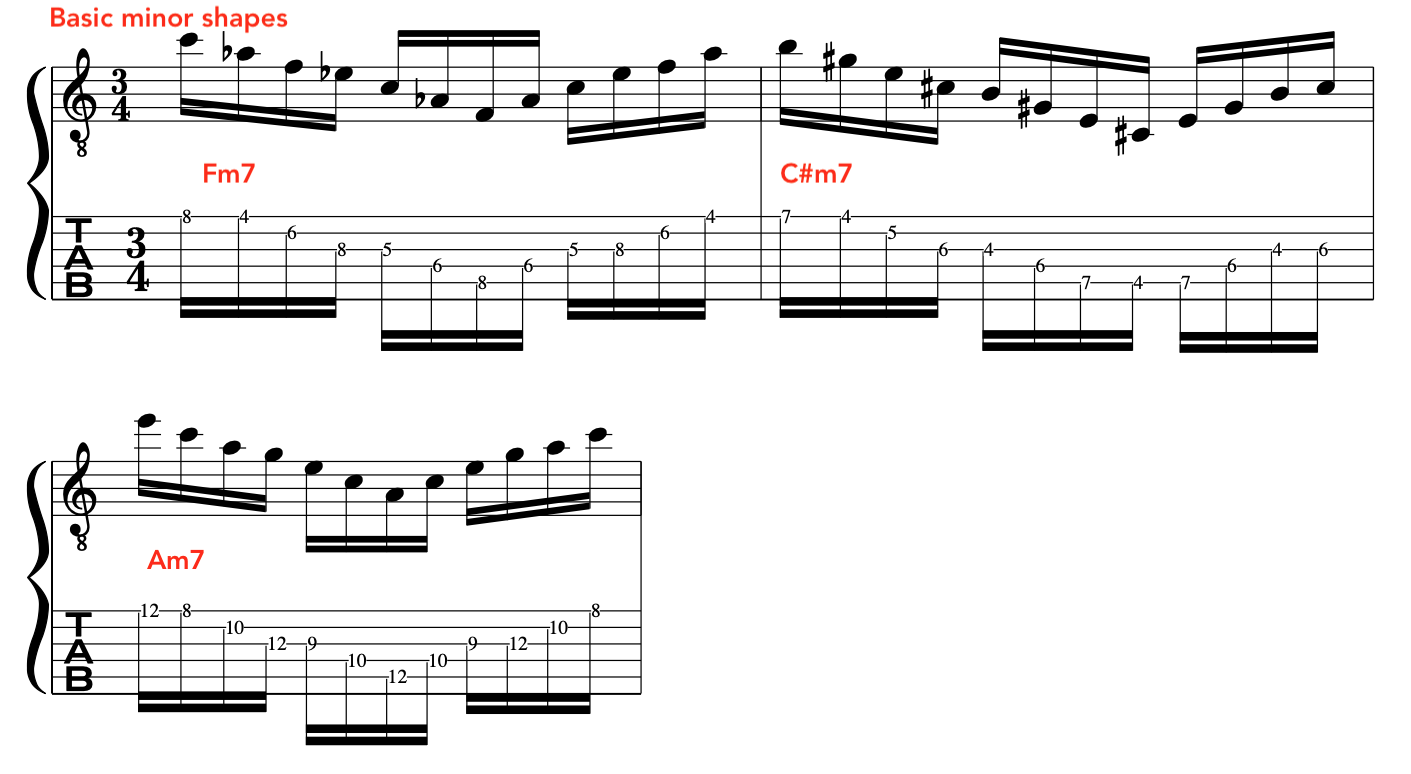
This allows us to play freely and easily without worrying about messing up harmonically or rhythmically when connecting/playing through the changes.
EXAMPLE 2–Modal slash chord application:
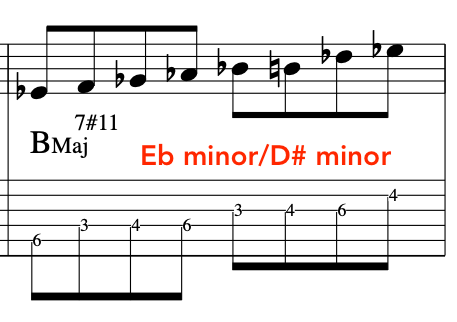
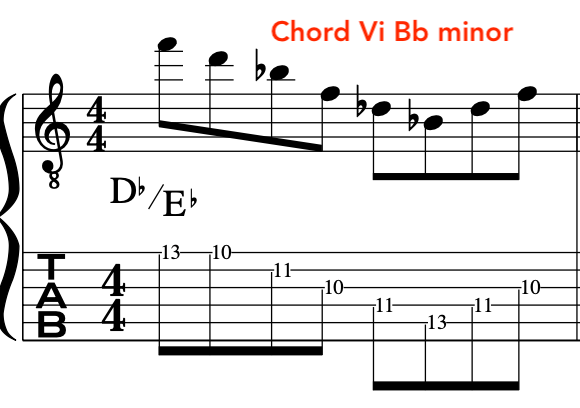
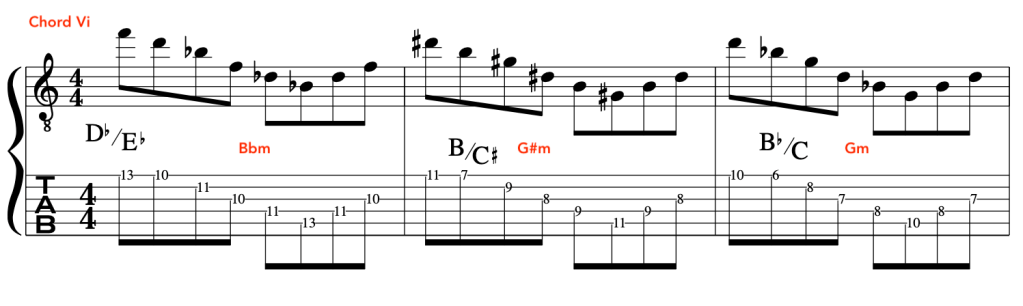
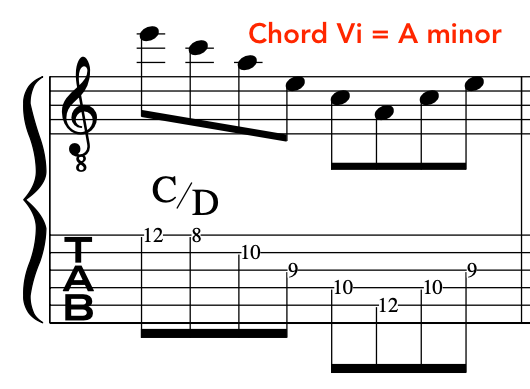
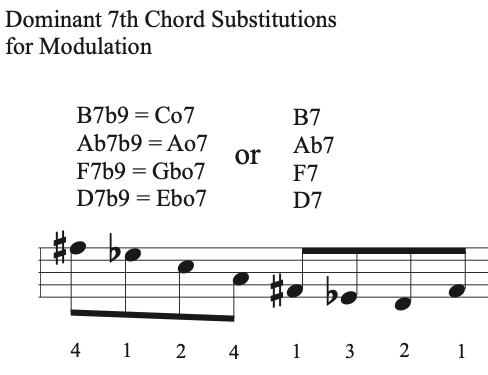
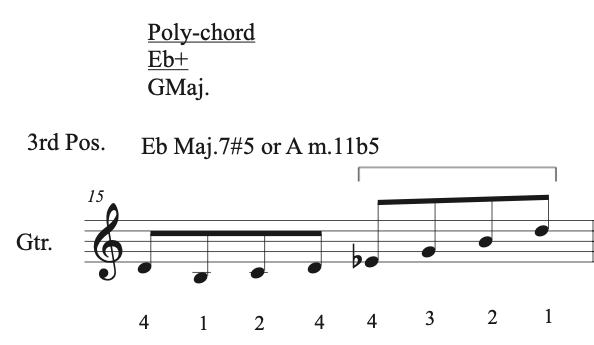
Let’s now exploit this with 7sus4 chordal movement and slash chords.
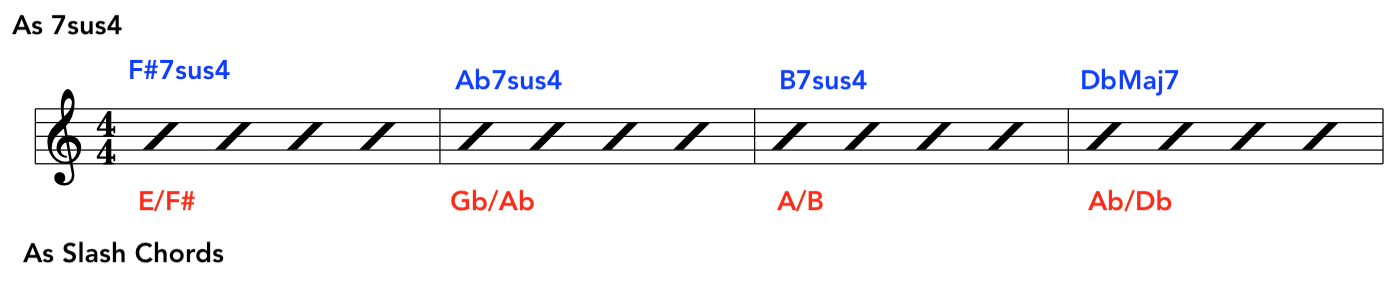
As before w will make the dominants minor:
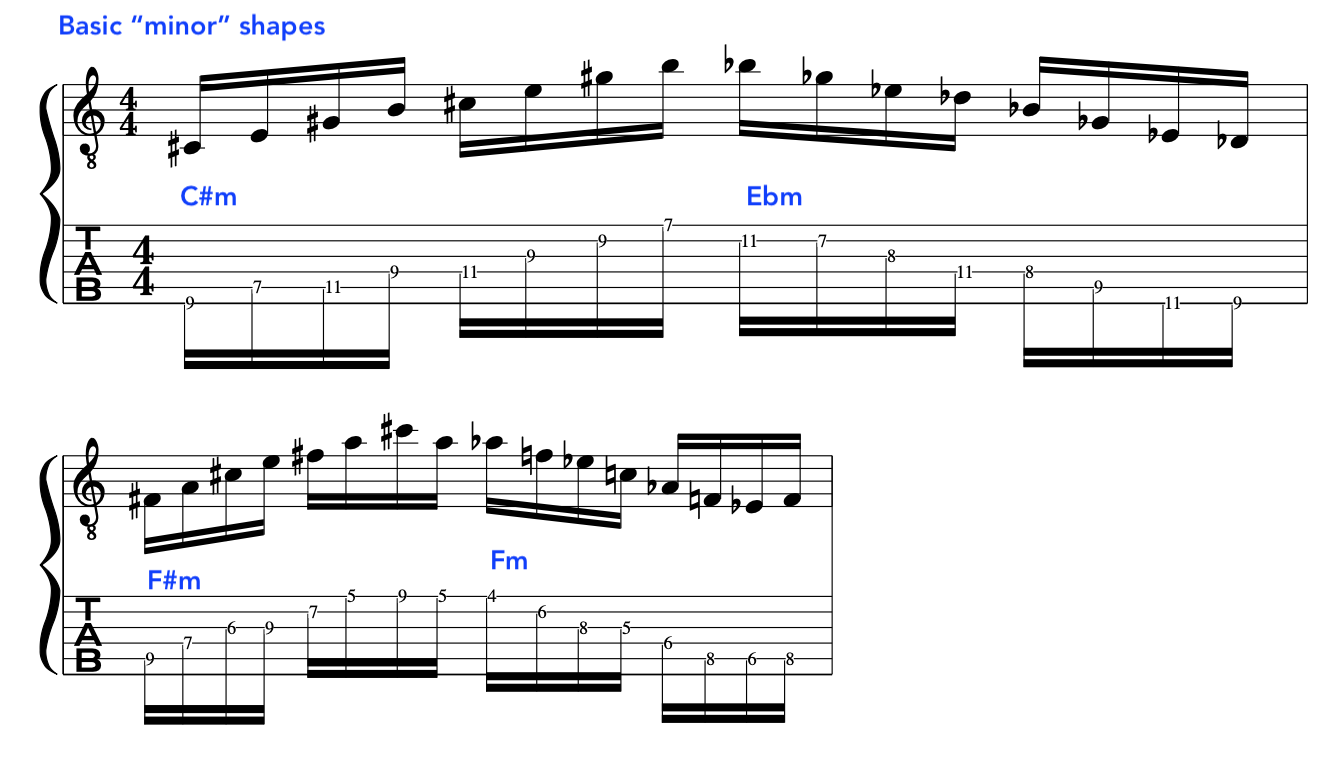
F#7sus7 = C#minor
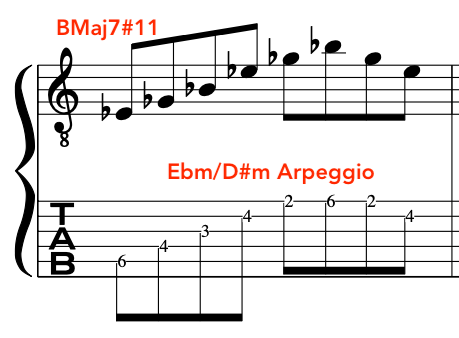
Ab7sus4 = Ebminor
B7sus4 = F#minor
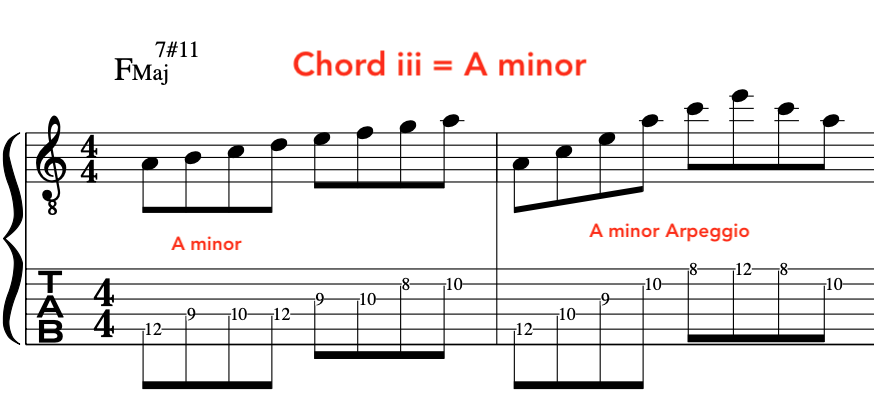
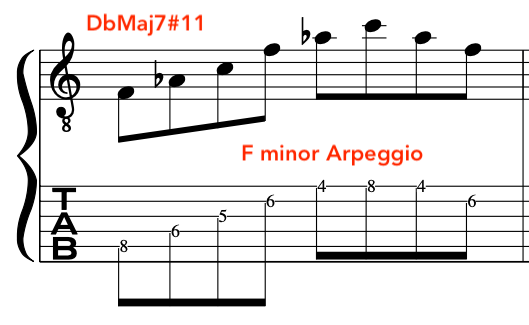
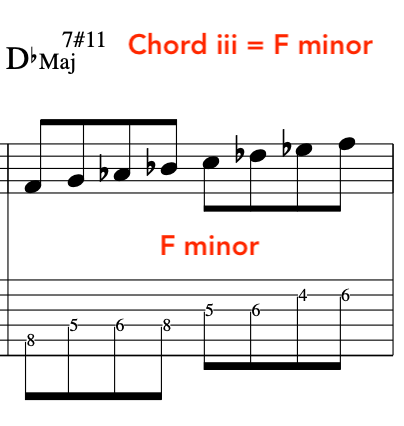
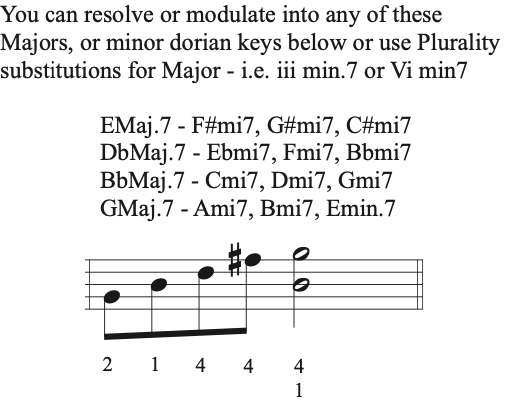
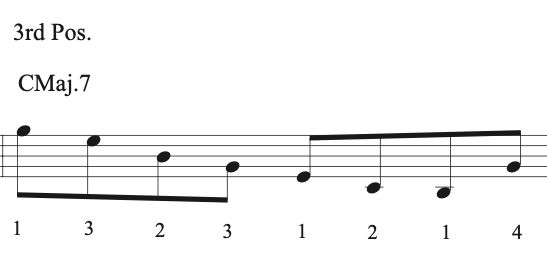
[DbMaj7 = Fminor or Bbm7]
VISUAL CHART: with dominant minor application below.

BASIC minor shape examples to build from:
EXAMPLE 3:
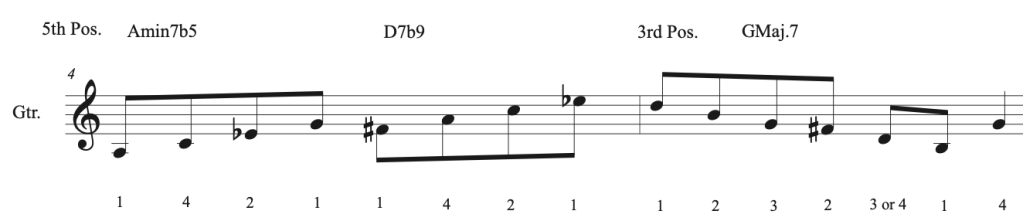
Minor ii V7 Application:
Finally, let’s add a chain of minor ii V7’s
Here we will employ biii as our minor-isation for easy improvisation:

For example with F#m7b5 the biii will be Am. [F# to A is a flattened 3rd or minor 3rd]
To make this really authentic we will add the 6th to the minor arpeggio:
So,
F#m7b5 = Am6
Em7b5 = Gm6
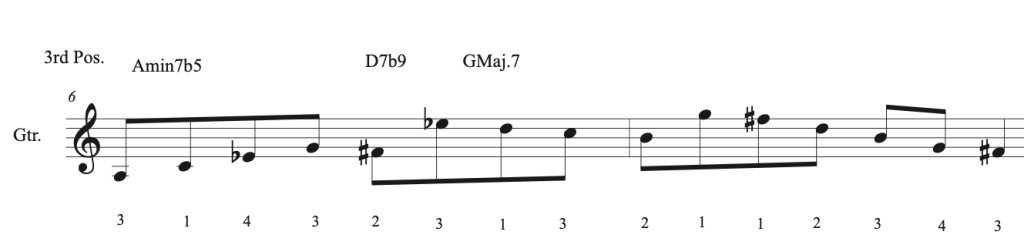
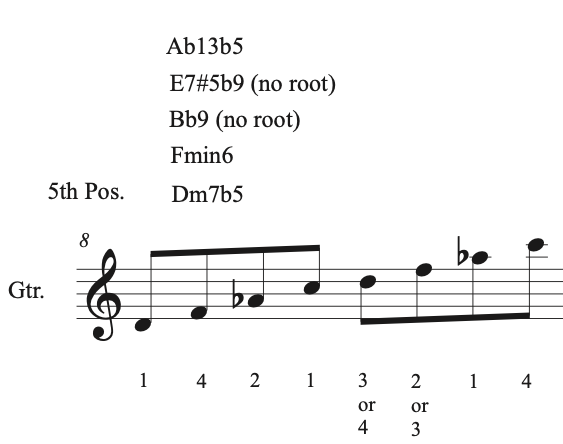
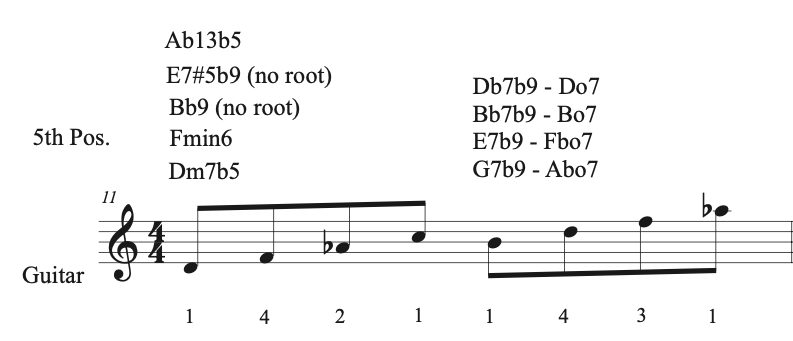
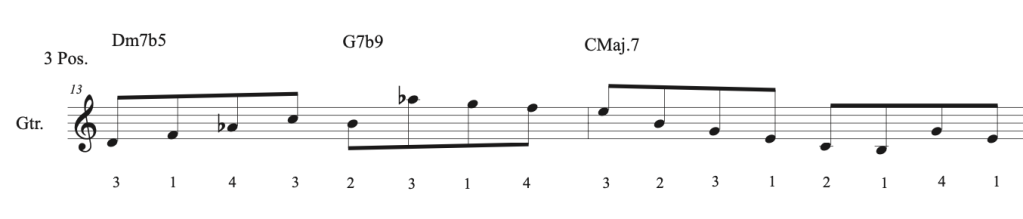
Dm7b5 = Fm6
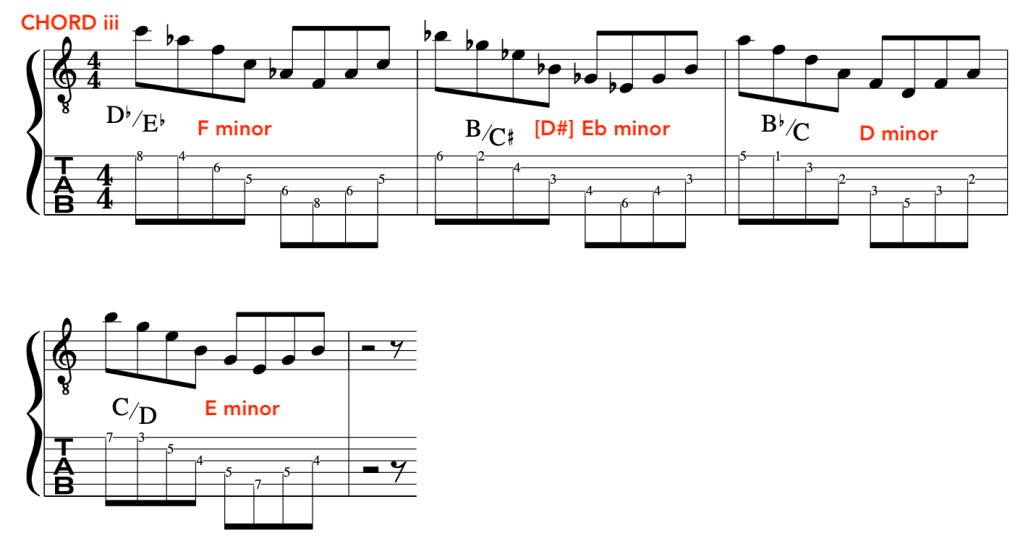
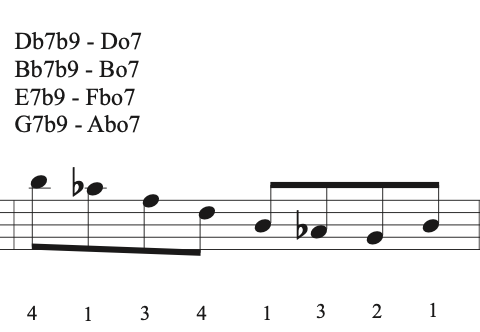
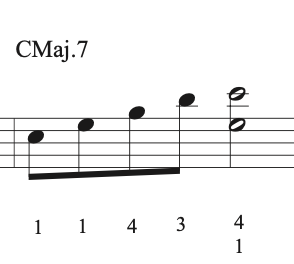
Example: Classic Jazz Seq Lick:
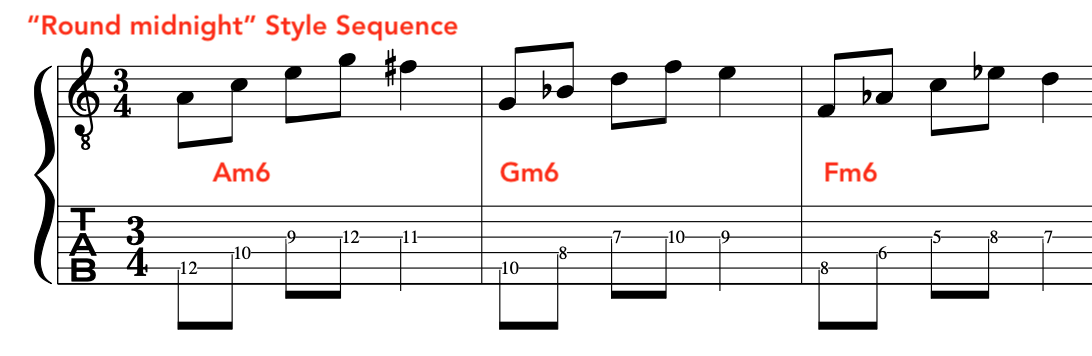
With this in mind we can either sequence our way through the chain of chords or play freely by exploiting minor biii

IN CONCLUSION
In conclusion this was a brief look at Pat Martino’s brilliant approach to jazz improvisation through any chord changes on the guitar.
The guitar unlike the piano cannot play the same shape through countless octaves, so, when improvising on the guitar we need to be selective [in what actually works] so that ironically we have the freedom to let go and just play.
The minor topic [minorisation] technique allows us to achieve the guitar improvisers aim in a short period of time. For any student frustrated or seeing no end in sight, Pat’s methodology is a shining light. This method can save you 20 years of practice and frustration.
FREE PDF DOWNLOAD;
IF THIS LESSON WAS OF USE TO YOU THEN PLEASE SUBSCRIBE TO US BELOW ON YOUTUBE, THANKS!