Polytonality:For Concerto/Orchestral Writing

Modern Jazz Fusion Chords part 2. Steely Dan, Dan Chord and Slash Chords

CLICK SUBSCRIBE!

Polytonality: For Concerto/OrchestralWriting lesson

Hi Guys

Today, a quick look at composing with Polytonality for orchestral and concerto writing.

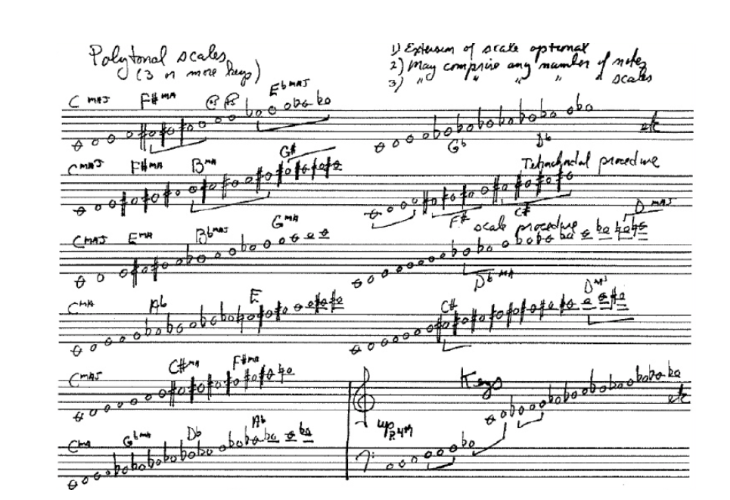
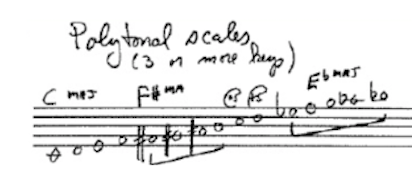
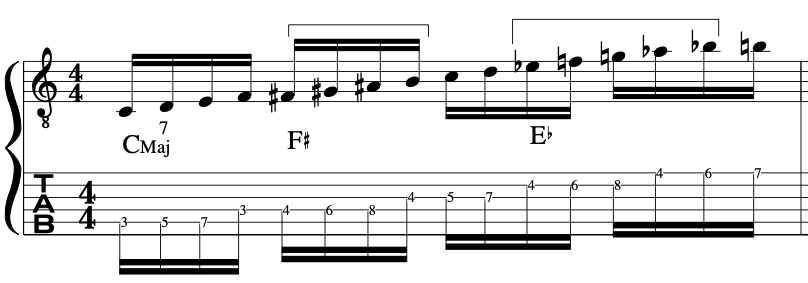
Polytonality is the use of two or more keys at the same time:

poly-tonality-orchestral-composing-chords-example

In this first example we have 4 bars of Polytonality with Eminor/DbMajor and EbMajor/CMajor

poly-tonality-orchestral-composing-chords-example

This then resolves itself with a “Tonal” diatonic cadence of B7/D# to Em:

Polytonality-Orchestral Example

This example explores “Implication”. In this case it is implying the melodic minor but avoiding the cliche by employing the richness of Polytonality:

polytonality-orchestral-composing-chords-example

From here, we will again employ diatonic harmony for a cadence.

To complete this short orchestral example we will go back into Polytonality with another melodic minor implication by employing Dminor/DbMajor:

polytonality-orchestral-composing-chords-example

Here is the chart:

poly-tonality-orchestral-composing-example

Polytonality-Orchestral Example

In this final example we will just “Reverse” the chords. This time it is DbMajor/Cmajor which is then played the other way around with CMajor/DbMajor.

polytonality-orchestral-composing-chords-example

finally, we will employ a slash chord for an “Implied” cadence: This will also lighten the harmony:

Here is the Chart:

polytonality-orchestral-composing-example

FREE PDF DOWNLOAD:

Modern Jazz Fusion Chords part 2. Steely Dan, Dan Chord and Slash Chords

Mirror Harmony [Negative Harmony] Music Theory Lesson

CLICK SUBSCRIBE!

Negative Harmony Mirror Harmony Lesson: How and Why it works

Here we will take a brief look at the major scale modes and their “Mirror” effect via inversion. When we employ contrary motion we get the same intervals descending as we do ascending. So for example if the Lydian scale ascends  T T T S the scale below descends exactly the same with TTTS.

Mirror-harmony-modes-Inversion

Other way around:

Mirror-harmony-reversed-modes-Inversion

The Dorian mode being “Palindromic” produces the same scale either way.

Palindromic-dorian-mode-mirror-harmony

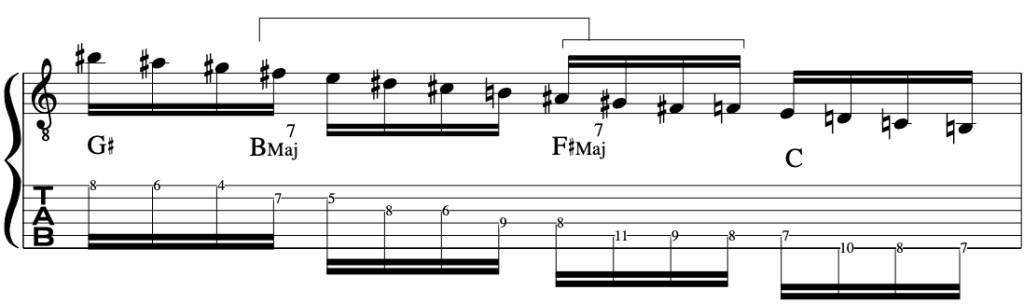
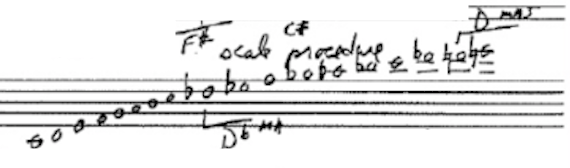
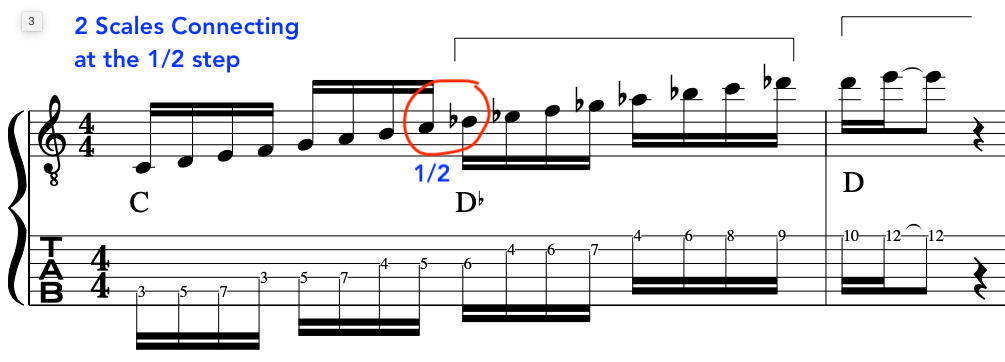
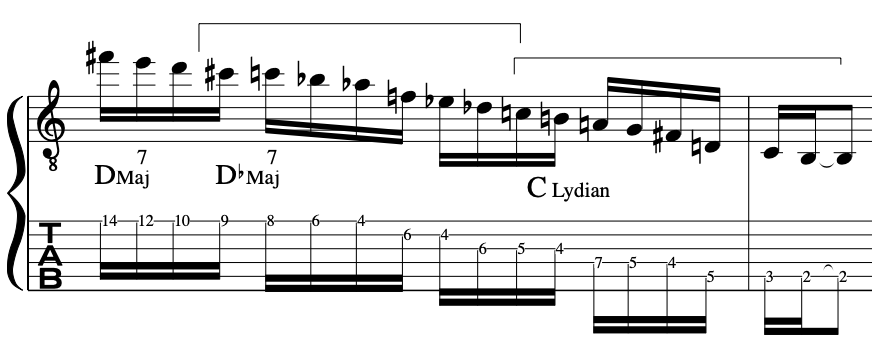
Scale extension: 13 note scale

allan-holdsworth-13-note-music-scale

AUDIO of SCALE extension:

Polytonality and Polymodality Mirror Harmony with Scale:

Each mode of the major scale has it’s mirror [modal] opposite because the whole diatonic scale system can be symmetrically inverted.

Inverted Symmetrical Reflection. The intervals are the same both in harmonisation and contrary motion.

mirror-harmony-polytonality-music-scales

OR:

mirror-harmony-modal-music

modessss

Major scale mirrors

polytonality-major-scales-lesson

Polymodality modal mirrors

polymodality-modal-music-scale lesson

Hungarian Minor Polytonal mirrors

hunmgarian-minor-scale-poly-tonal

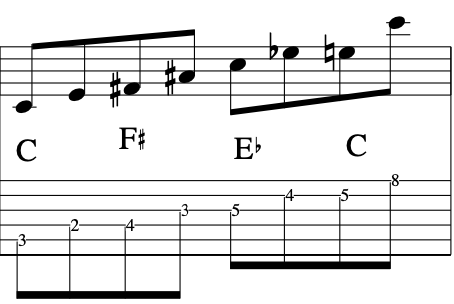
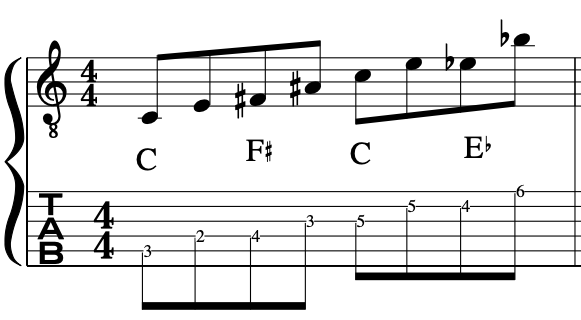
Polytonality exotic scales

enigmatic-scales-Superlocrian-scale- lesson
Polytonal Exotic Scales

Polymodality Modes in contrary motion

polymodal-scale-example
Polymodal “Contrary Motion” example

NEGATIVE HARMONY

negative-Harmony-major-phrygian
Negative Harmony or “INVERSION”

Here we see the opposites in the chords with Minor Reflecting Major and Major reflecting Minor. Diminished stays the same though.

negative-Harmony-chords-music
 

3/4 Re Harmonisation-Jazz/Fusion Triads/Bass

yt_logo_rgb_light

CLICK SUBSCRIBE!

jazz-fusion-reharmonisation-triads-example

Hi Guys,

Today we will have a look at re harmonising with extra dominant substitutions and a chord ii variant…..

jazz-fusion-reharmonisation-triads-example

The first bar employs a C6/9 in place of the basic tonic chord of C major.

Also, note that this has a 3/4 time signature and starts with an up beat.

jazz-fusion-reharmonisation-triads-example

The next two bars alter the Dominant chord of G7. This is achieved by thinking of G as a 1st inversion and changing the harmony on top.

jazz-fusion-reharmonisation-triads-example

The BbmMaj7/B has the flattened 3rd like a #9 a flattened 5th [altered] but has the 9th and the 7th of G7. The first 4 notes of the improvised line establishes the BbmMaj7/B harmony whilst the next eight notes employ the A whole tone scale.

jazz-fusion-reharmonisation-triads-example

The next substitution is a Db chord over the B bass establishing the flattened 5th and a flattened 9th. But, what is really happening is that we are taking a triad a tritone away form the dominant chord G7 and superimposing that on the B [as a 1st inversion] bass note.

jazz-fusion-reharmonisation-triads-example

Next, we use a chord ii substitution. Again, thinking of F as the bass [1st inversion] we play an E triad over the top. This has the raised 6th and the flattened 5th as a sort of m7b5/Dorian mix.

jazz-fusion-reharmonisation-triads-example

The final Dominant substitution employs another triad from G altered. This time we use the Eb triad over the B [as 1st inversion] bass. [This has an added 9th acting as the 7th note of G]

jazz-fusion-reharmonisation-triads-example

Improvised line over the top,

jazz-fusion-reharmonisation-triads-example

Finally, we arrive back to C6/9

jazz-fusion-reharmonisation-triads-example

LICK PDF DOWNLOAD:

CHORDS PDF:

IF THIS LESSON WAS OF USE TO YOU THEN PLEASE SUBSCRIBE TO US BELOW ON YOUTUBE, THANKS