Easier way to improvise with Music Modes [Guitar]

CLICK SUBSCRIBE!

IMPORTANT: Please watch video above for detailed info:

Hi Guys,

Today, a quick look at another way of exploiting modes/improvisation on the guitar fingerboard.

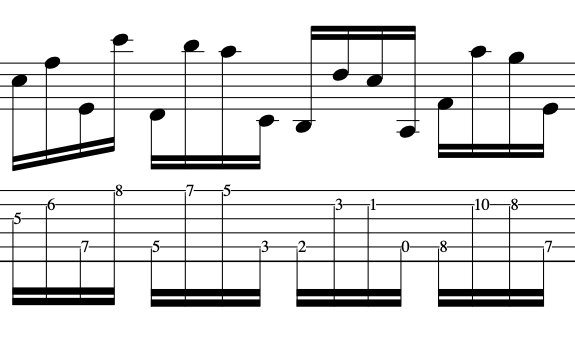
We will be creating music via concepts/musical tools based on this minor shape.

minor-topic-pat-martino
simplified-modal-guitar-explanation

Why do this?

Because with this 5 fret shape arpeggio we can easily create:

simplified-modal-guitar-explanation

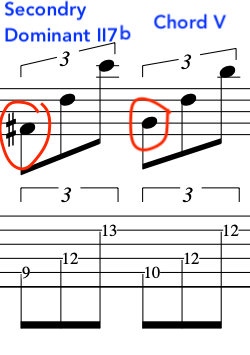
So, for instance in C Major [Ionian] we can take chord iii and Vi arpeggio shapes as a solid base and create/develop improvisation-as opposed to learning millions of scale/mode shapes/patterns etc.

minor-topic-guitar-modes
simplified-modal-guitar-tablature

With this as a base we can develop proper musical lines and rhythmic phrasing

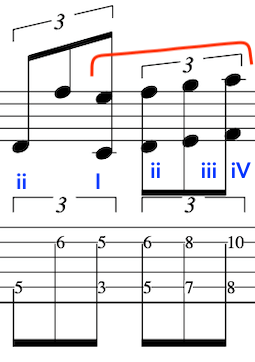
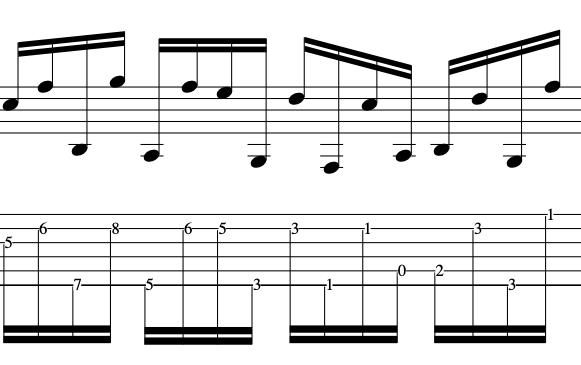
Before we start it’s important to see how easily chords iii and Vi link together:

simplified-modal-guitar-explanation

Example:

modes-guitar-simplified-tab

The first thing to be aware of is the basic pentatonic’s right under our fingertips with this arpeggio shape:

[These pentatonic’s give us some basic building blocks from the outset]:

guitar-modes-pentatonics
guitar-modes-pentatonics-simplified

QUARTAL SOUNDS

Next let’s add some 4ths for a Quartal jazz/fusion-esque sound:

Descending:

guitar-modes-4ths-jazz-simplified

Ascending:

guitar-modes-4ths-jazz-simplified

With extension

guitar-modes-4ths-jazz-simplified

Basic Quartal fingerboard movement:

guitar-modes-4ths-jazz-simplified

CYLE OF 4THS

Another thing to take into consideration is the cycle of 4ths under our fingertips:

cycle-4ths-guitar-modes

Remember that we can also make these, major, minor, diminished or augmented:

For instance all major:

cycle-4ths-guitar-modes

All minor

cycle-4ths-guitar-modes

[This gives us even more colour and choices for chromaticism/chromatic movement right under our fingertips once again]

TARGET TONES/APPROACH NOTES [JAZZ CHROMATICS]

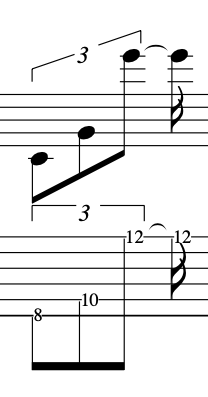
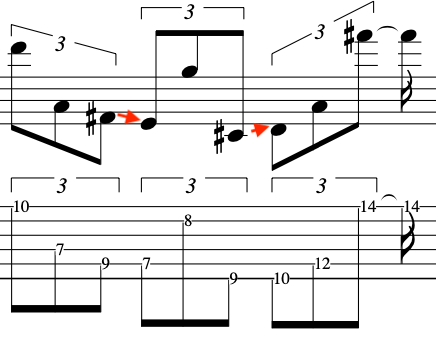
Below, we can see the set-up for target tones with this Em arpeggio shape:

target-tones-modal-guitar-explained

We can also add some chromatic notes to this to create a longer jazzy-esque line:

target-tones-modal-guitar-explained

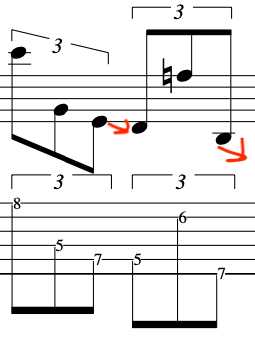
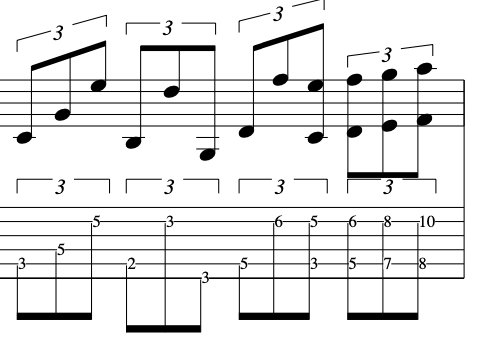
String Skipping Petnatonic’s

String skipping works well because it removes familiarity/cliches from the ear:

Here are two examples:

modal-guitar-string-skipping

Example 2:

modal-guitar-string-skipping

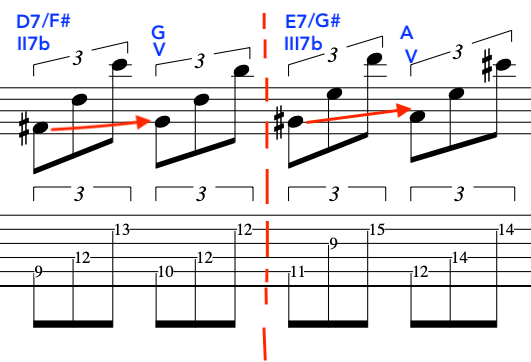
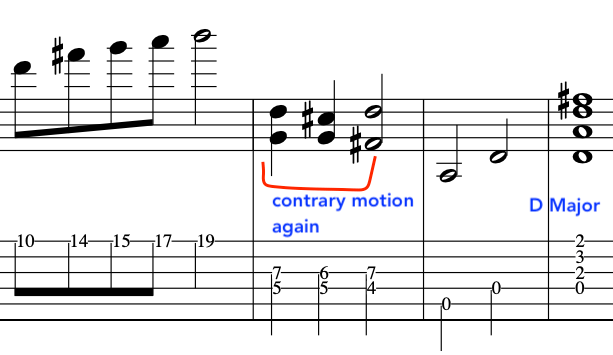
PAIRING TRIADS

Lastly pairing triads works really. Here is a Lydian example:

triad-pairs-modes-guitar-simplified

conclusion

This blog has only really touched on this way of thinking, but, you can see how easy it is to make connecting lines and musical phrasing and how to exploit improvisation tools from this simple minor arpeggio shape.

THANKS FOR VIEWING!…IF THIS LESSON WAS OF USE TO YOU THEN PLEASE SUBSCRIBE TO US BELOW ON YOUTUBE, THANKS!

Exploring Modal Chord Progressions in C Major

CLICK SUBSCRIBE!

Hi Guys,

Today, a quick look at modal chords.

The chords are from the backing track [below in this page] and they are “Transposed” with C as the root note.

These are exploited in the 12 bar form of a fusion blues.

modal_chords_guitar_lesson_explained_easily

To begin with, we will take the first chord for the basic Ionian/Major sound. Here we have a chord/triad of G Major over the bass note C as a substitution for Cmaj7:

modal_chords_guitar_lesson_explained_easily

Next, we have a C Dorian tonality. For this I am employing a 7sus4 chord with a triad of Bb over a C bass once again

modal_chords_guitar_lesson_explained_easily

From here, we will create a C Lydian sound. We will do this by employing a triad of D Major over a C Bass.

modal_chords_guitar_lesson_explained_easily

Now, we will move back to Ionian with another 7sus4 chord. This time it’s a triad of C Major over a D Bass.

modal_chords_guitar_lesson_explained_easily

To create interest, we will now make this tonality minor by adding a triad of Eb Major over a C Bass [a la C minor 7th]. [Aeolian/Dorian]

modal_chords_guitar_lesson_explained_easily

For, the Phrygian/Aeolian sound, we will employ a 1st inversion triad of Ab Major over a C bass.

modal_chords_guitar_lesson_explained_easily

To create some dissonance, and a more ethereal sound it’s a good idea to add a Locrian chord. In this instance, I am employing a triad of Db Major over the C Bass.

modal_chords_guitar_lesson_explained_easily

For the mixolydian sound I am employing a simple C7 chord. [You could also add a 4-3 suspension]

Now, let’s add a couple of Dorian chords.

These will be another 7sus4 chord of an Eb triad over an F bass.

modal_chords_guitar_lesson_explained_easily

And, a Major 9 [or sus2] no 3rd chord. For this we will add a triad of F major over a Bb bass.

modal_chords_guitar_lesson_explained_easily

For the penultimate Mixolydian chord, we will create a 3rd inversion [Dominant]. This will be a C Major triad over a [the 7th] Bb bass.

modal_chords_guitar_lesson_explained_easily

And finally, an Aeolian sound with an Fm6 chord over a G bass.

modal_chords_guitar_lesson_explained_easily

Modes Backing Track Transposed in C Major with Chart and Scale Suggestions.
modal_chords_guitar_lesson_explained_easily

modal_chords_guitar_lesson_explained_easily

IF THIS LESSON WAS OF USE TO YOU THEN PLEASE SUBSCRIBE TO US BELOW ON YOUTUBE, THANKS!

Mastering String Skipping: Fripp/Martino-Style Guitar Techniques

Hi Guys!

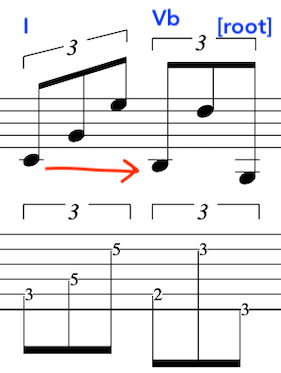
Here is the TAB/Notation for the “String Skipping” exercise in the style of guitar great Robert Fripp.

This 12 tone concept was taken from the brilliant 12 chromatic forms of jazz great Pat Martino.

string-skipping-guitar-lesson-example

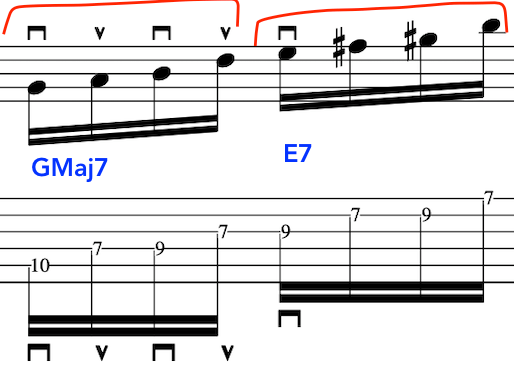
I am staring this little etude/exercise on an “Up” stroke with alternate picking guitar technique.

string-skipping-guitar-lesson-example

As an example here is the first part:

string-skipping-guitar-lesson-example

The key to be aware of, is the exploitation of “Octave displacement”. This creates unique harmonies and S.A.T [B] style lines.

string-skipping-guitar-lesson-example

As you can see, in the diagram above this is just the chromatic scale, but, moving/resolving through the different registers.

This octave displacement technique, offers us a way to create/extract interesting colourful music from the chromatic scale, whilst, keeping us far away from one string banality.

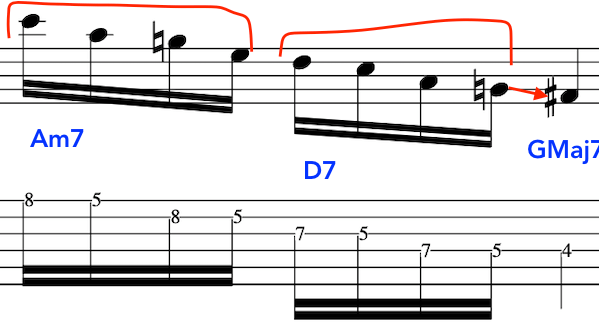
Although, there is octave displacement, there is also some basic scale parts to link it all together:

I am starting both of these scale fragments on an“Up” stroke with strict alternate picking once again:

fripp-guitar-scales-exercise-alternate-picking-guitar-technique

Also, the last part descends back into the chromatic scale to tie the [Composition] etude back together and give clarity to the ear, and let it know that we are still in an atonal chromatic form.

string-skipping-guitar-lesson-example
fripp-guitar-scales-exercise-alternate-picking-guitar-technique