As requested, here is the revisited version of the original blog I made regarding the video above. I hope it’s still useful,
ALTERNATE PICKING GROUPINGS:
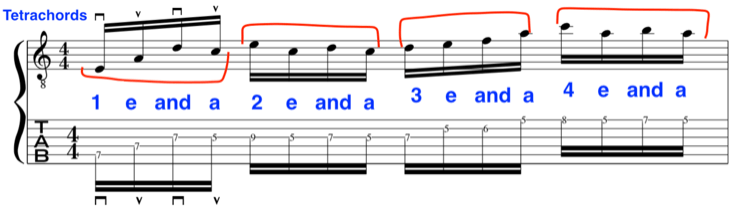
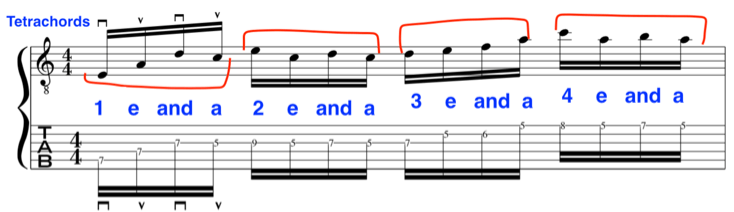
The key to this mid tempo alternate picking style is to divide the groupings into “Tetrachords” [or four note cells] and count the BPM[e,g 130-140] time as you pluck the notes with the guitar pick.
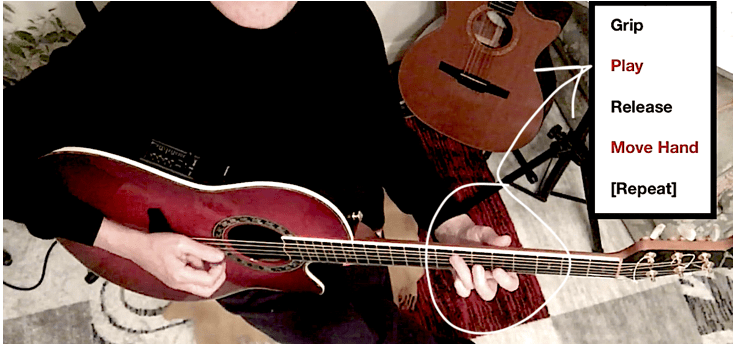
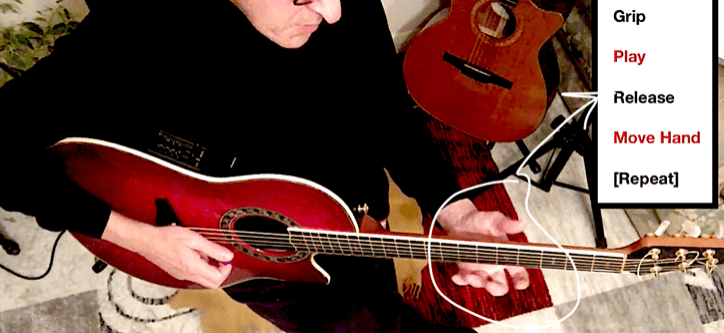
In the video at the top of the page you will see how the fretting hand grips and releases in order to connect the line together, so, that the fretting hand is not stuck or glued in one positions and has the freedom to shift positions in a relaxed and quick manner.
Fretting Hand Consideration:
Release: For the next Connection or position shift:
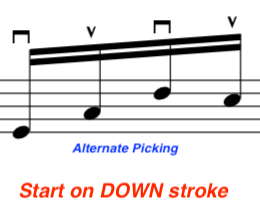
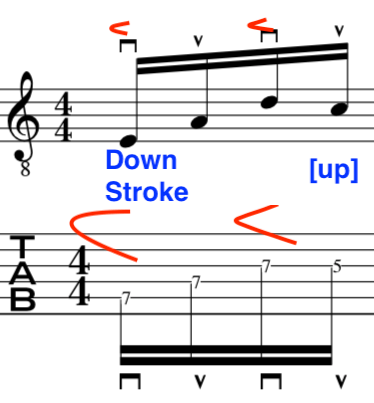
In regards to the alternate picking the first tetrachord/cell starts on a “Down Stroke”.
It’s also useful to accent the 1st beat/note[and also the 3rd note if possible ]
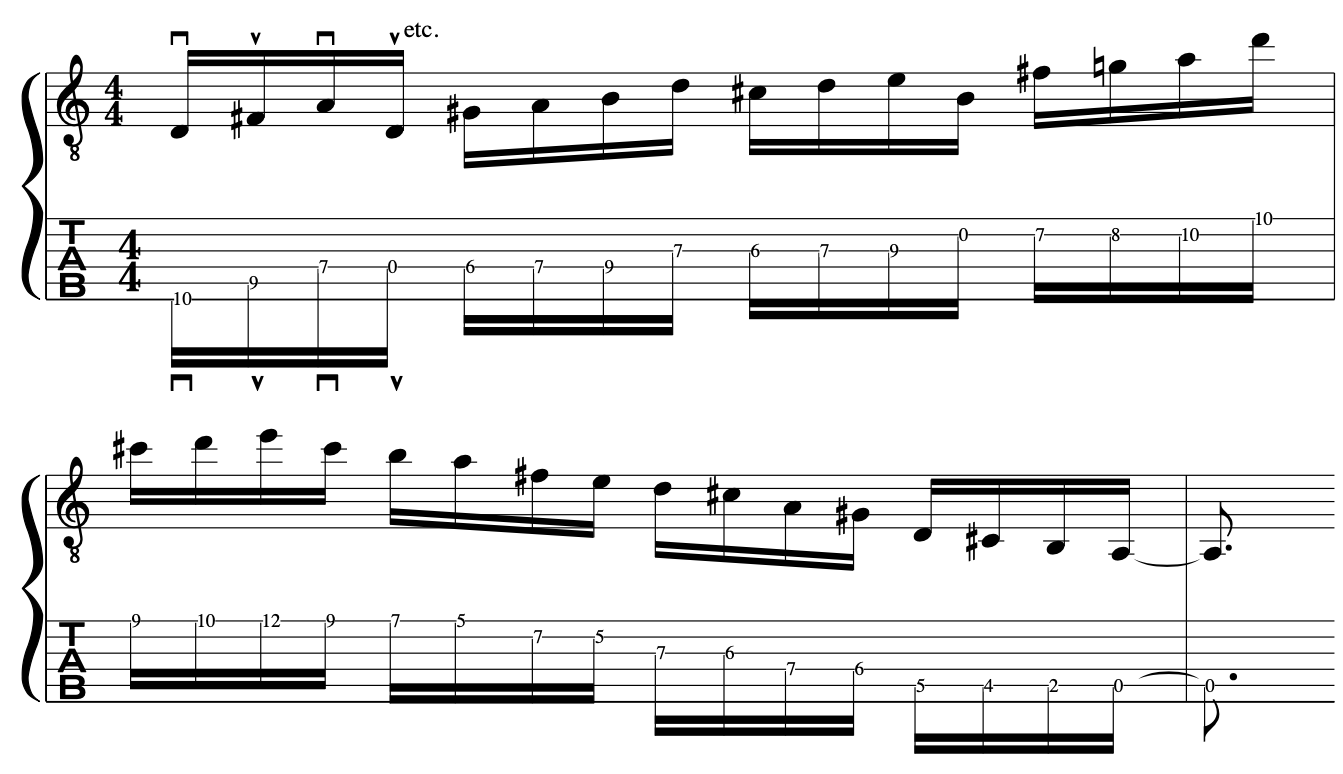
Today, a short “Mid-Tempo” [around 140bpm] JohnMcLaughlin/Shakti style alternate picking guitar exercise for scale connections in the fretting hand.
This is in regard to crossing the strings and connecting different scale fragments together.
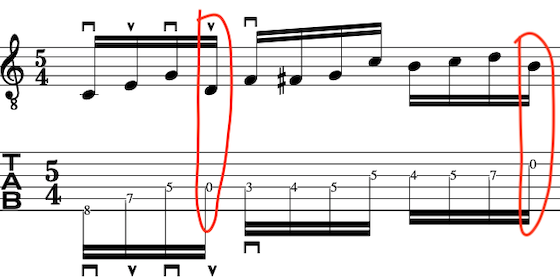
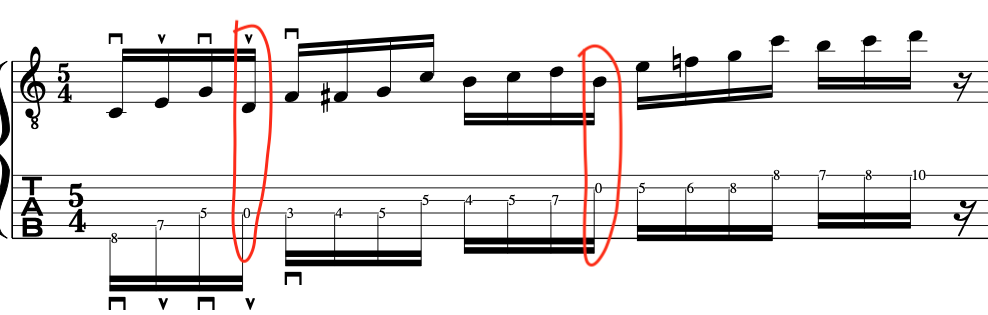
BAR 1:
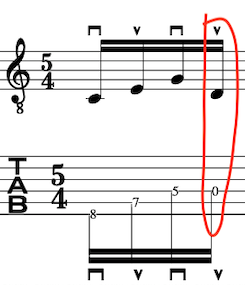
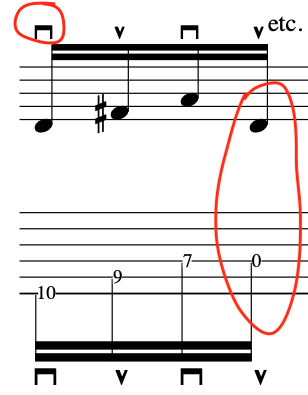
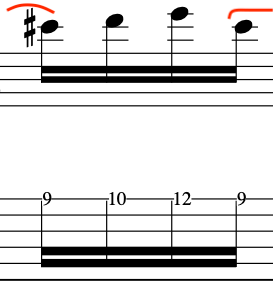
The first concept is that of employing the open string. This gives the fretting hand a hundredth of a second to rest and hence easily get into position to fret the next note at a mid and fast tempo.
Note: fourth 16th note = Open String
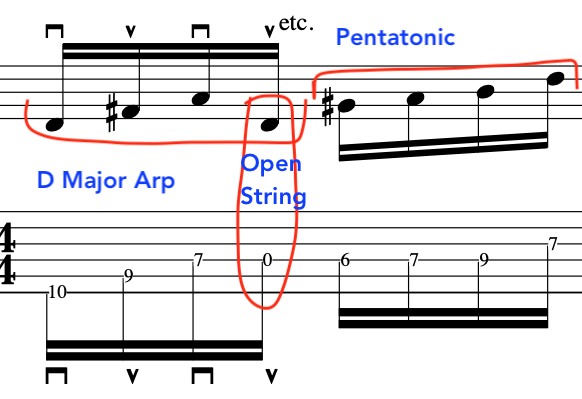
In the next part, we can see both open strings employed to make it easy for the fretting hand to get into position and connect to the next scale fragment.
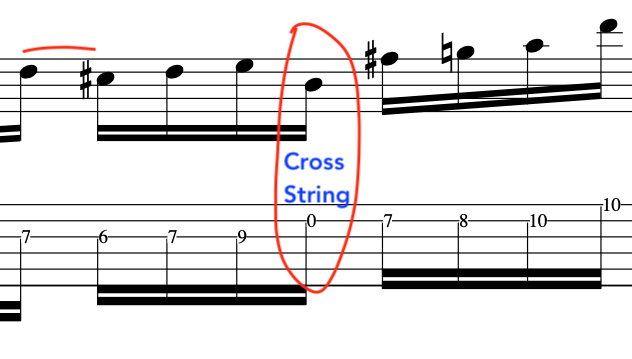
The last note in the bar, the open B natural, makes it easy for us to cross the string smoothly.
Here, is the first bar complete:
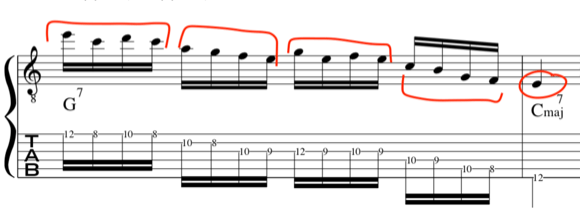
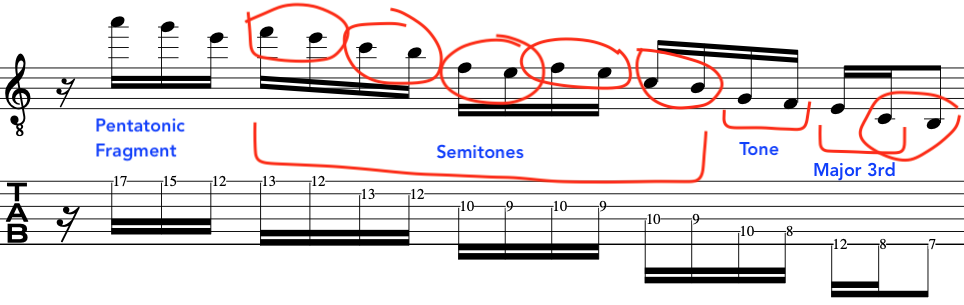
BAR 2:
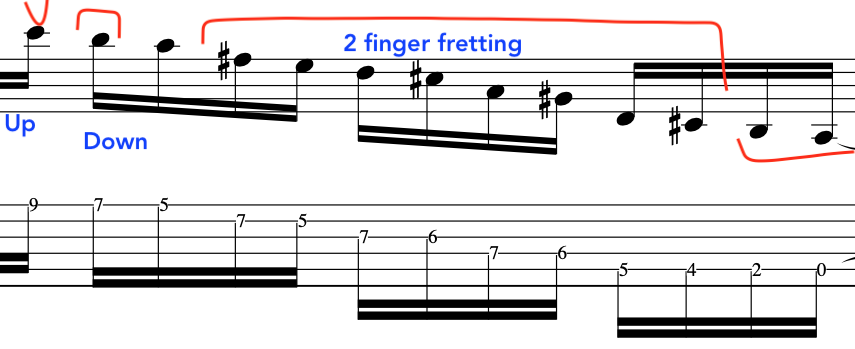
In this bar, we employ semitones as they are easy to finger/fret, and, also to cross the guitar strings when descending.
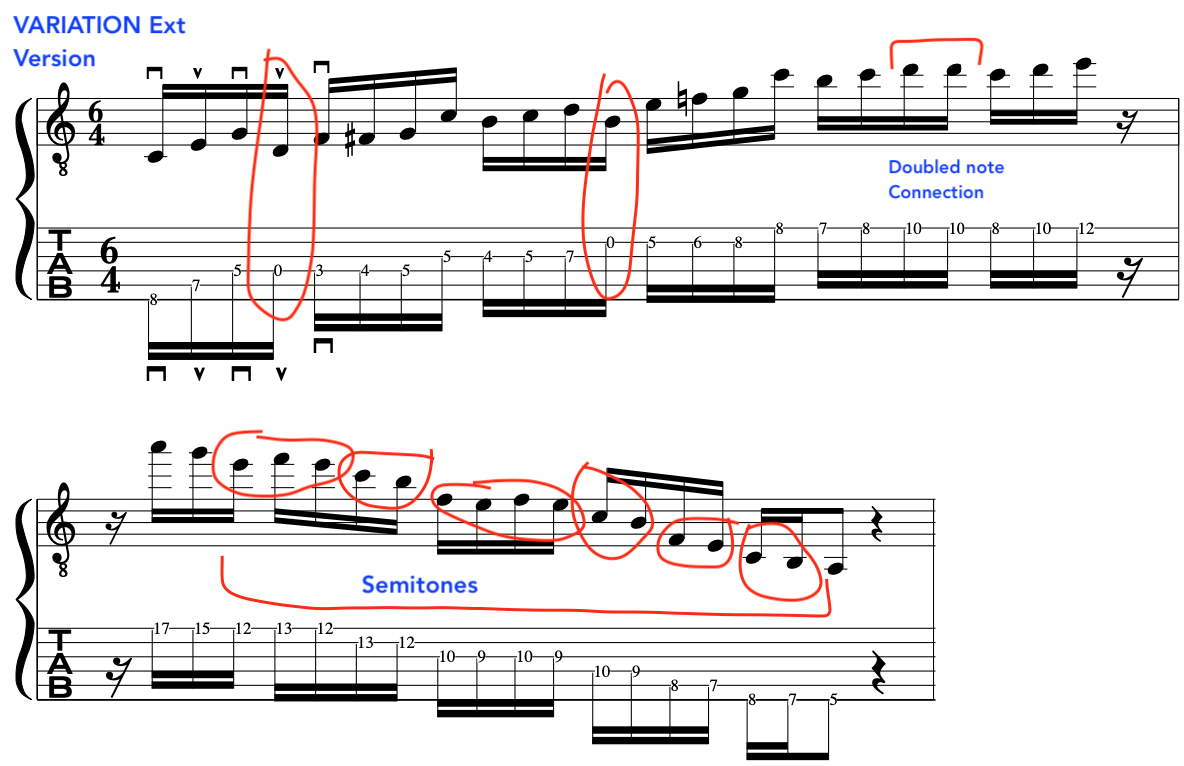
Extended Variation:
Here, is an extended variation that employs the same alternate picking John McLaughlin concepts that we have just looked at:
INCONCLUSION:
These simple concepts for the fretting hand when alternate picking might not seem much, but, they are the little hinges that swing the big door when holding the tempo together. Especially, when playing with a tabla/drum.
It also makes it easier for the right picking hand to pluck the strings as the fretting hand is not under pressure, and, there are spaces for the fretting hand to rest and get into position.
Today, a quick delve into what makes John McLaughlin’s alternate picking guitar style work so easily and fluidly.
Many, focus on the right hand technique, but, much of it comes from the way the fretting hand works.
So, let’s look at a couple of simple secrets to John’s approach and why it is so fluid and effective
#1 OPEN STRING APPLICATION:
In this example, we will create an effective line that is not tremolo picking on cliche shred scales but a continuous colourful and creative improvised line in a world music style.
Here is the full line. Starting on a “Down stroke”
If we take this apart we will find a couple of reasons why this is fluid and very natural for the alternate picking guitar technique.
First of all notice: The arpeggio that starts the phrase. The last note of this 4 note tetrachord grouping is an open D string!
This open string gives the fretting hand a hundredth of a second to do absolutely nothing as it prepares for the next 4 note grouping to fret.
This gives us time to get into position and so we are NOT rushing about, and, we are in control
CROSSING THE STRING:
We will now employ the use of an open string once again, but, this time for “Crossing” the string:
This makes it easy to cross the string smoothly and connect to the next tetrachord.
From here we will extract a partial John McLaughlin scale/fingering by sliding it into position.
To end this line, we will descend with some simple scale starting on an “Up stroke”. Also, notice the simple 2 finger fingering for the fretting hand.
EXERCISE 2: SEXTUPLETS: 6 NOTE GROUPINGS:
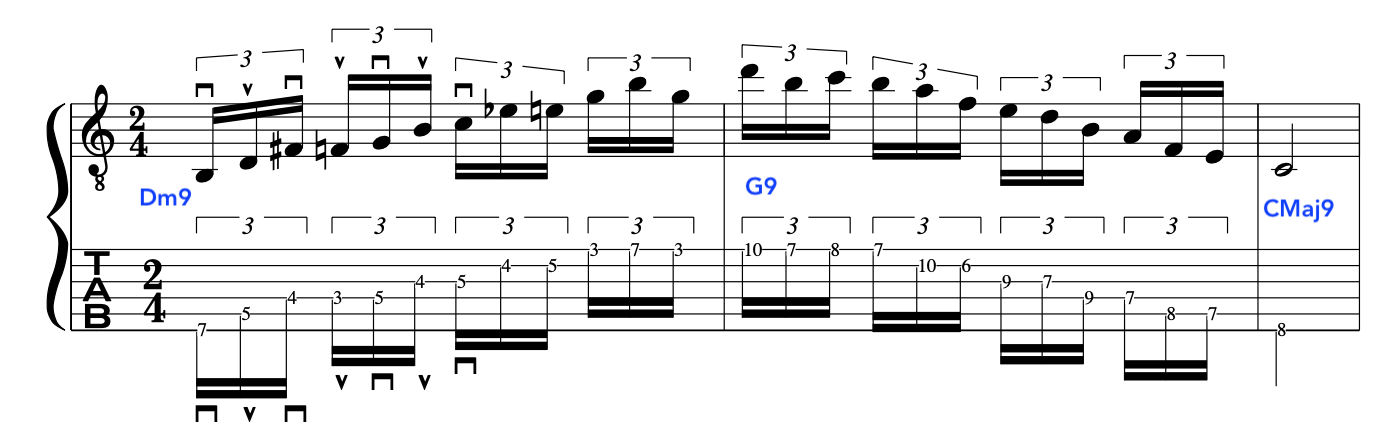
In this exercise we will employ groupings of 6 notes. This is based upon an improvised acoustic jazz fusion line, like that of “Belo Herozonte:
This is played over a ii V7 I of Dm9 G7 CMaj9:
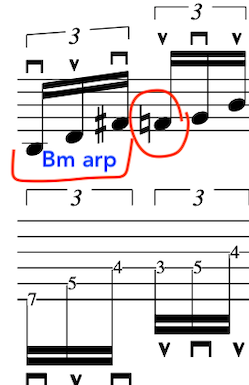
If we take this apart we will notice that we exploit a Bm arpeggio going to a B dim arpeggio that then goes to the 4th and 6th notes of D Dorian: This creates a nice colourful sound.
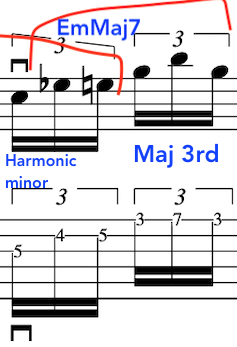
For the next 6 note hexatonic grouping we employ an E harmonic/melodic minor sound over the Dm9 chord: Notice the Major 3rd interval:
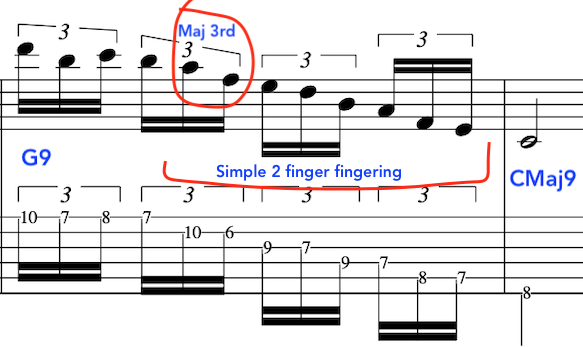
From here, we will “Slide” the fretting hand up to the next position: Notice the use of the Major 3rd interval once again, as this breaks up the monotonous scale sound and creates distance and melodicism.
Finally, we have simple 2 finger pentatonic descending scale application that finally rest on the noteC for the CMaj9 chord.