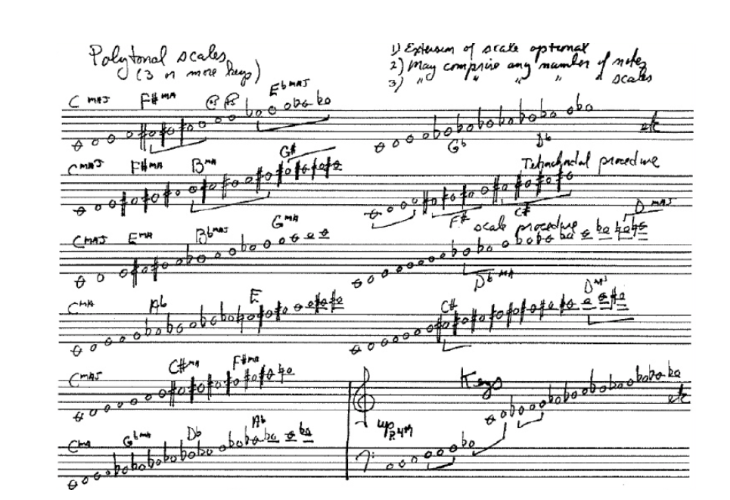
Today, a look at the unique scale formations/superimpositions of Dennis Sandole.
Dennis Sandole
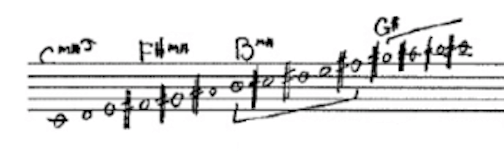
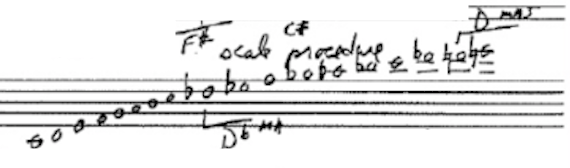
We will take three examples from a handwritten page of polytonal scales by Dennis Sandole and apply them to the guitar:
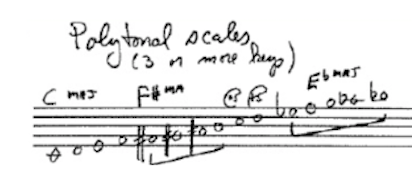
SCALE 1:
Dennis Sandole’s Handwritten Polytonal Scale:
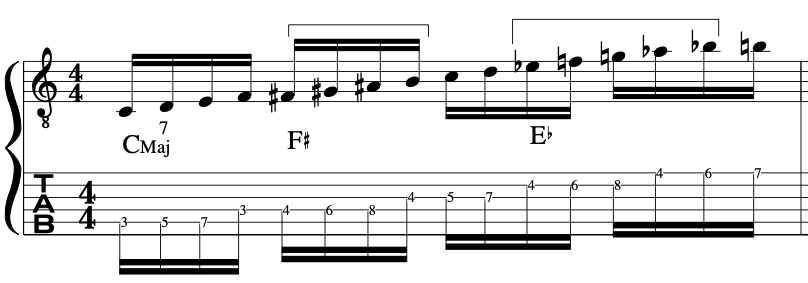
Same scale applied to the Guitar:
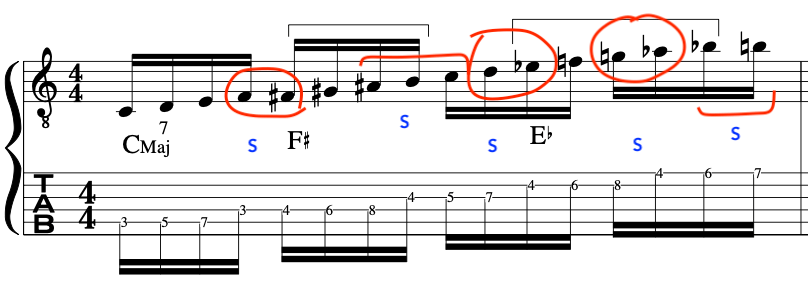
In this example notice how the different major scales connect via semitones creating a unique chromatic connection.
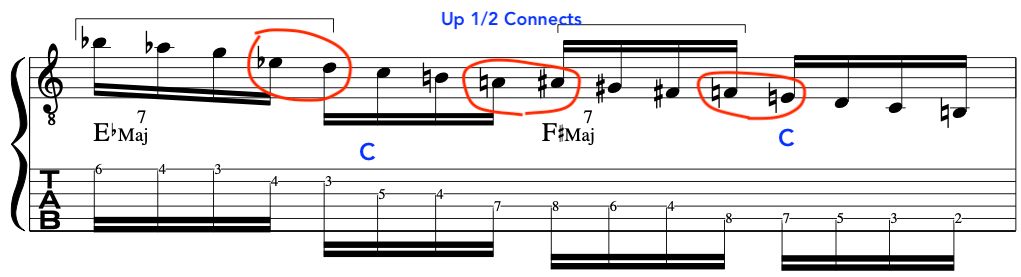
Now, let’s apply a descending version with a more pentatonic/fingering guitar format:
Again, notice the half step chromatic connections that make this run smoothly.
SCALE 2:
Dennis Sandole’s Handwritten Polytonal Scale:
Same scale applied to the Guitar:
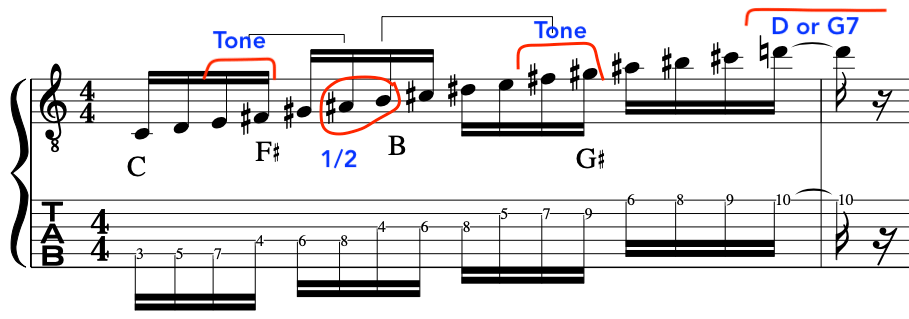
Here, we have whole tone connections as well as half step connections creating a colourful set of sounds:
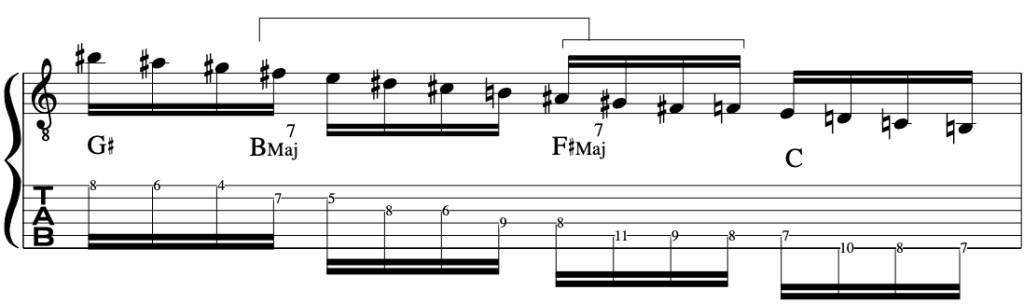
Let’s now create a descending version:
SCALE 3:
Dennis Sandole’s Handwritten Polytonal Scale:
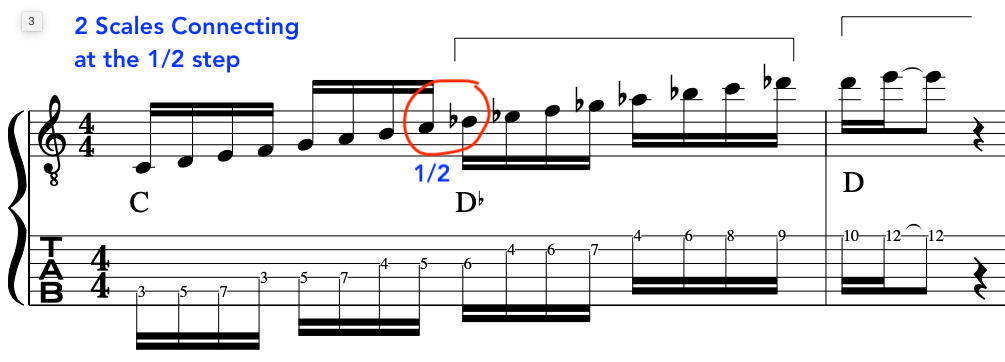
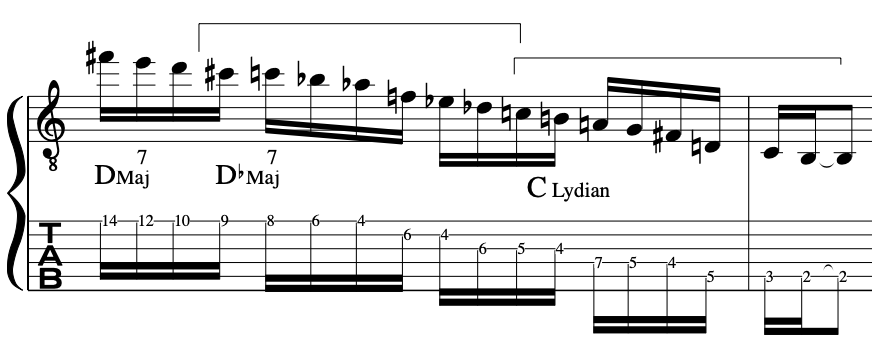
Same scale applied to the Guitar:
In this example we have a full C major scale connecting to a full Db major scale via the halfstep of C to Db. And finally, up another half step to the note D.
Finally, let’s descend:
Arpeggio/Motifs from Polytonal Scales:
There are also many concepts that you can make out of these polytonal scales:
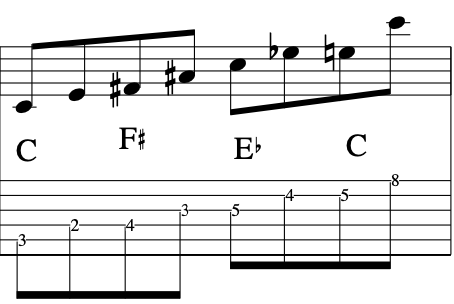
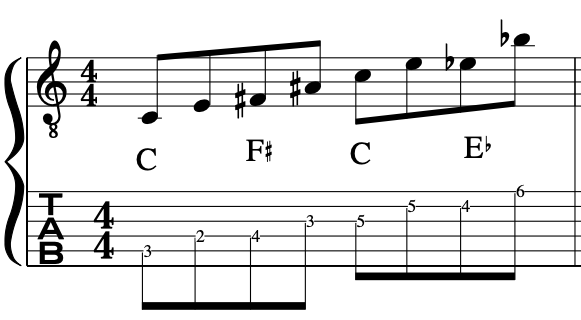
For instance, we can imply triads/arpeggios with dyads and create little licks, motifs and hook lines.
EXAMPLE:
Slight Var:
IN CONCLUSION
This was just a very brief look at Dennis Sandole’s concept of polytonal scales.
In terms of the guitar these are very useful for creating a mixed harmonic palette and creating seamless lines where any scale can connect to any other scale regardless of non diatonicism and ambiguity.
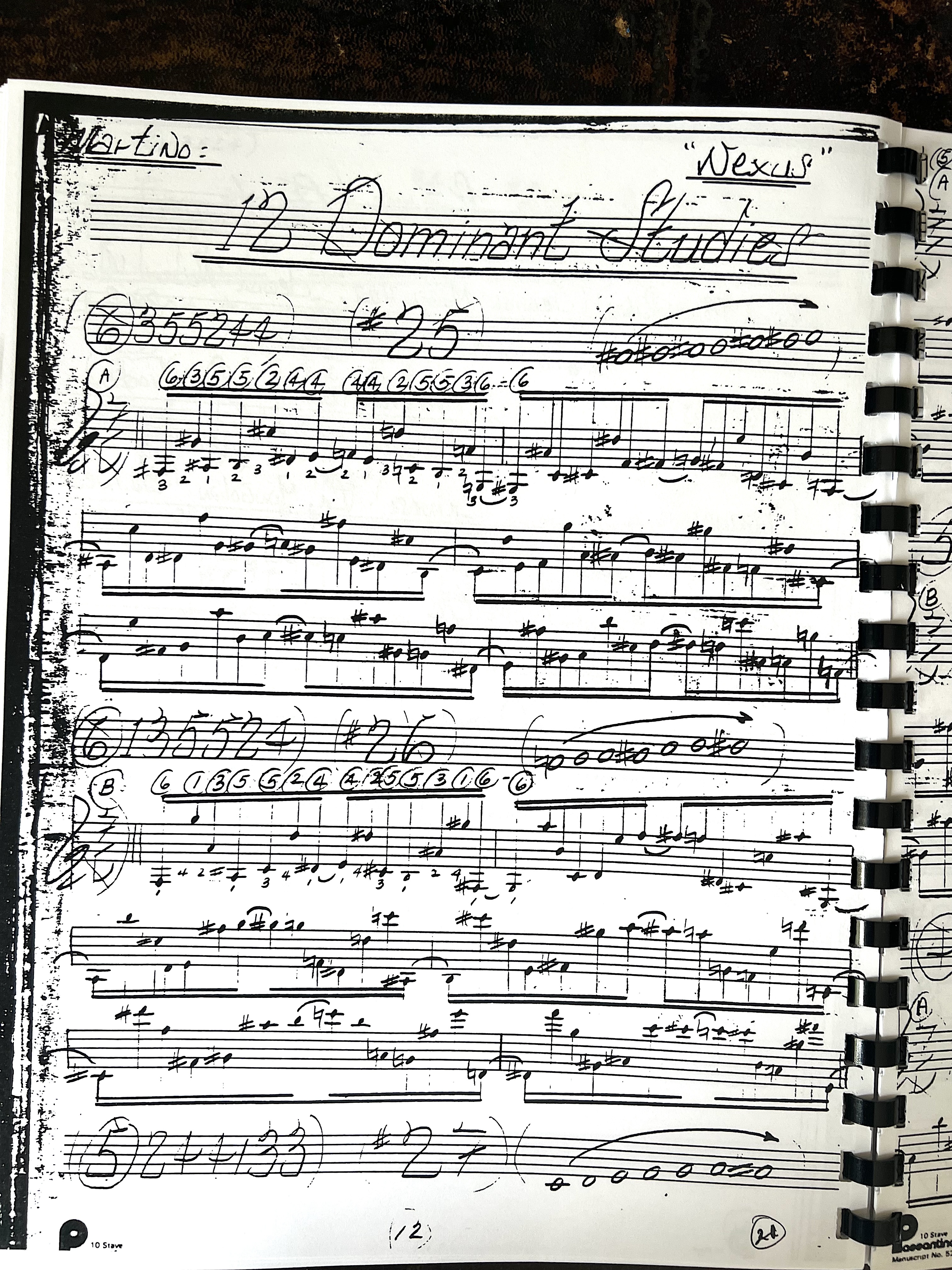
Many of you have asked me to publish more pages from the unpublished book on intervallic studies by jazz guitar legend Pat Martino:
Here are some excerpts/pages from the book that you might find interesting/insightful and useful:
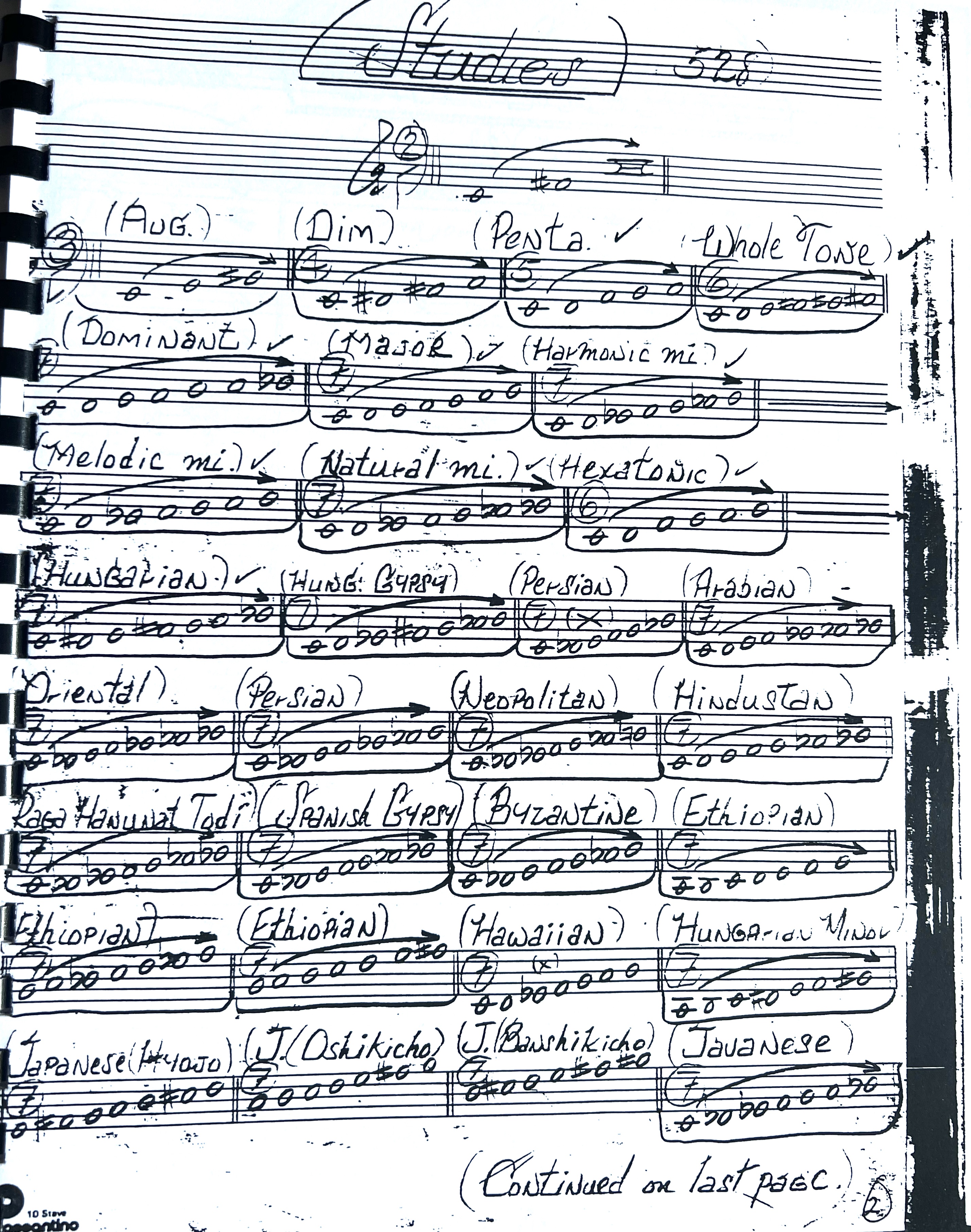
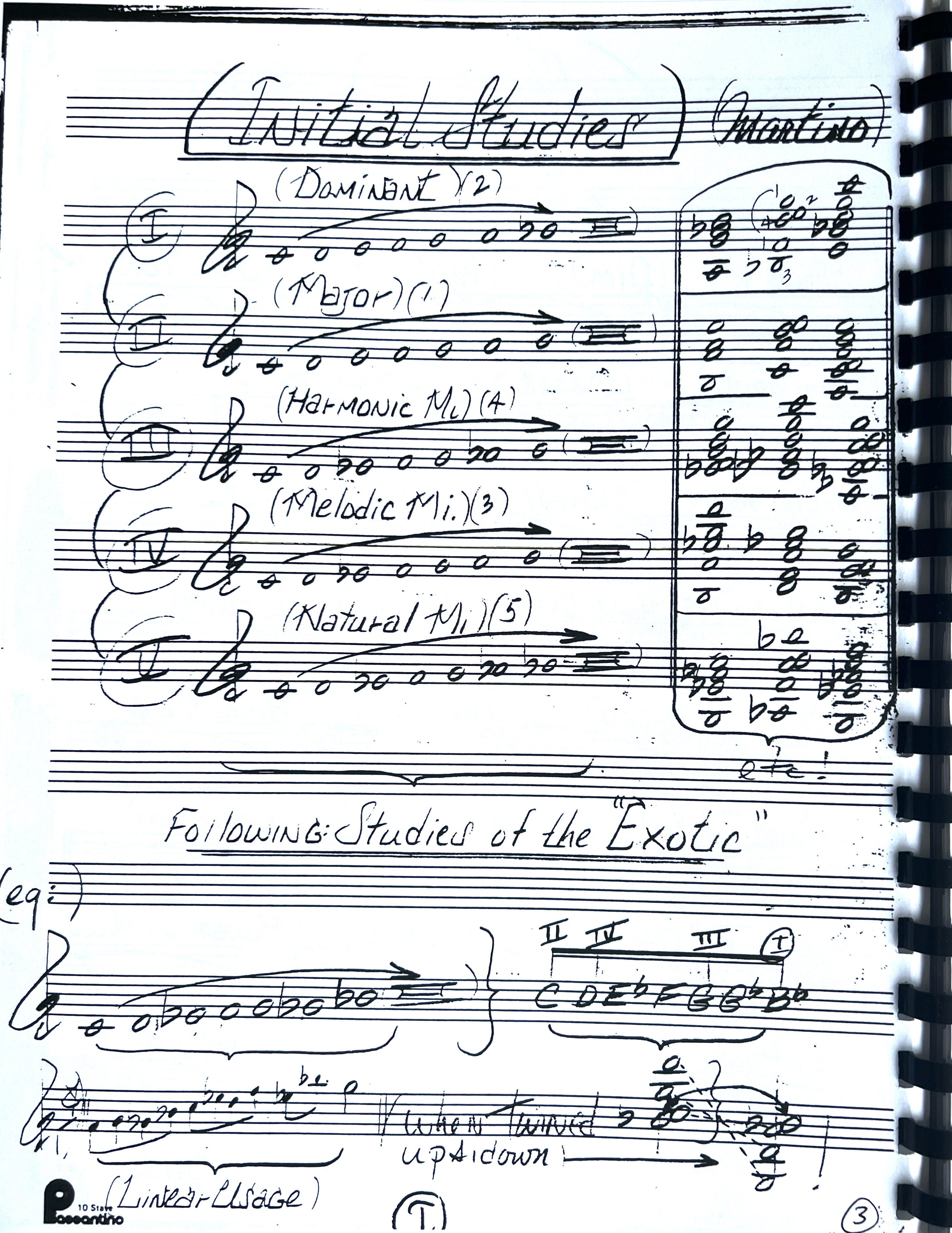
SCALES:
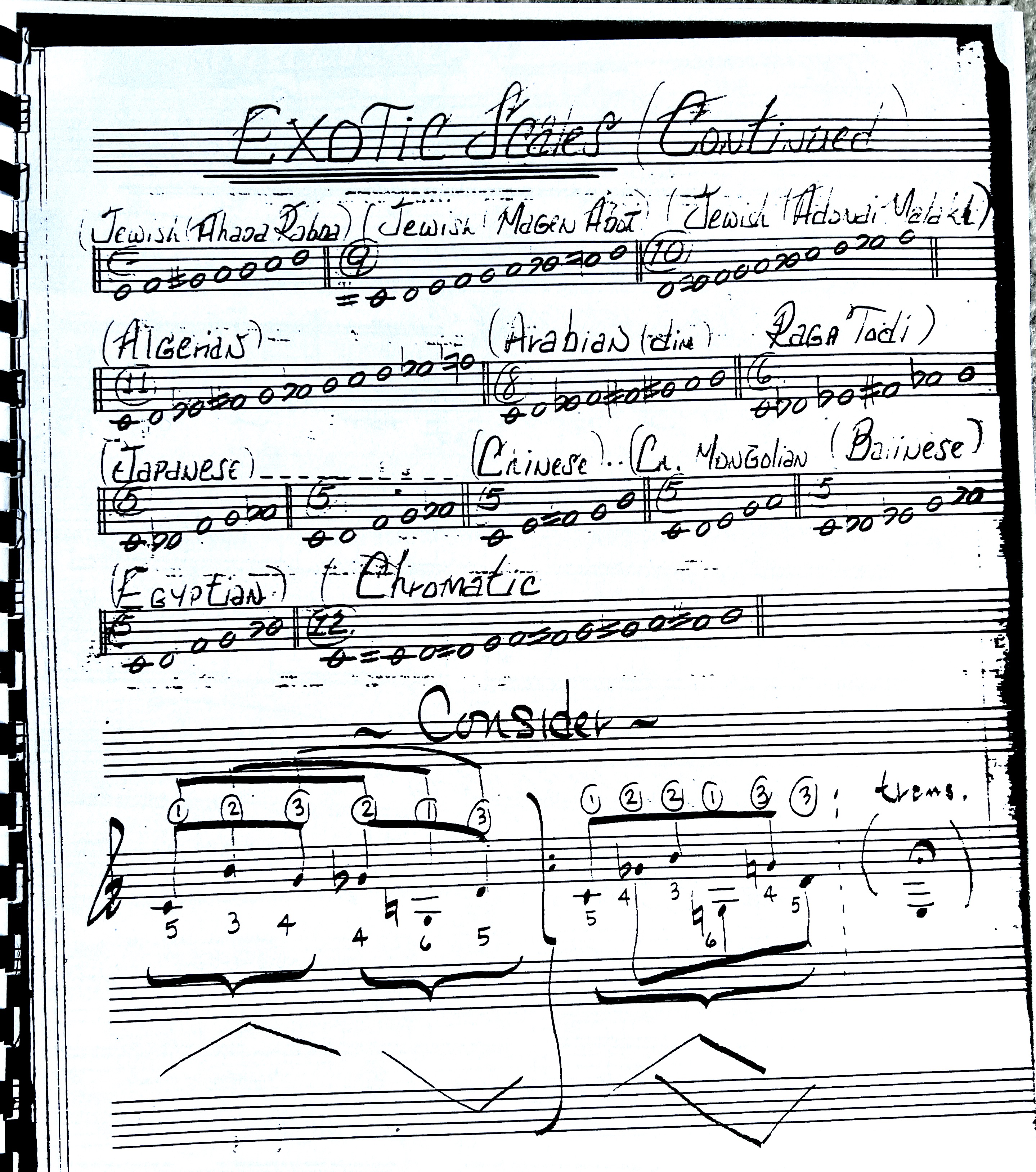
Firstly, we see Pats thoughts on the many scales available to create his intervallic studies:[He seems to have had an impressive encyclopaedic knowledge ofscales].
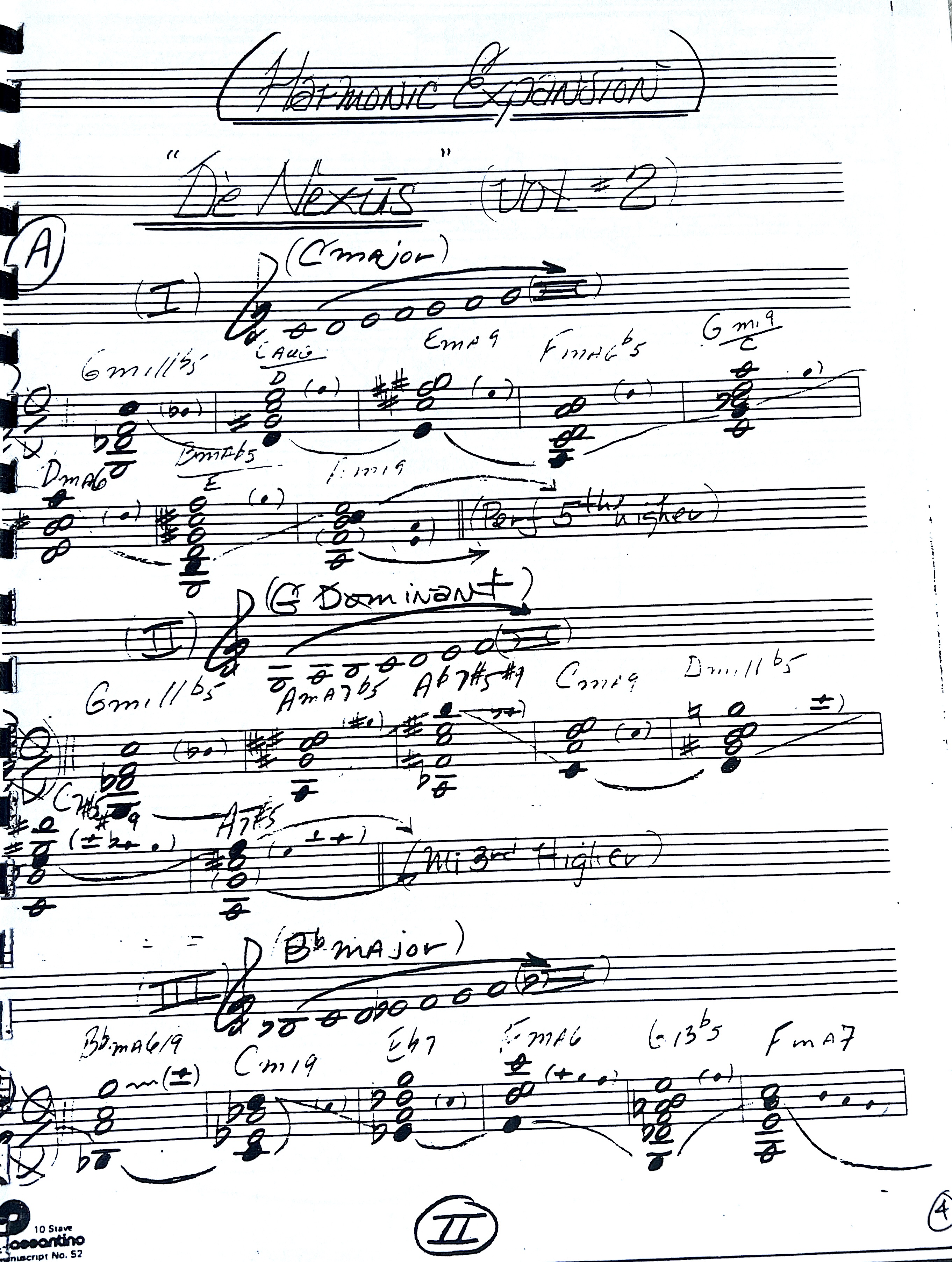
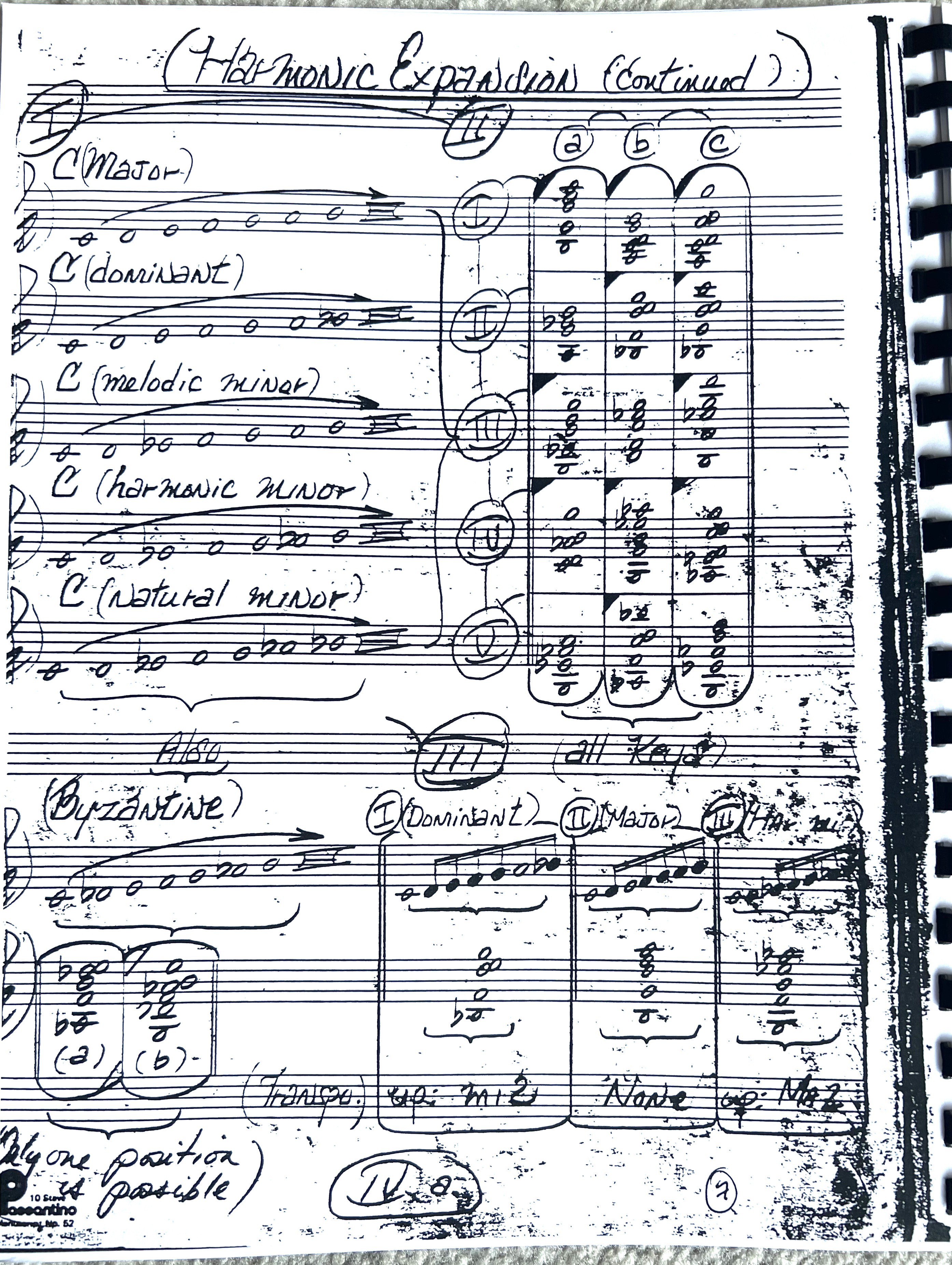
Here, Pat lays out the main/commonly used scales to his preferred/choice of harmony [inversions/voicing’s]
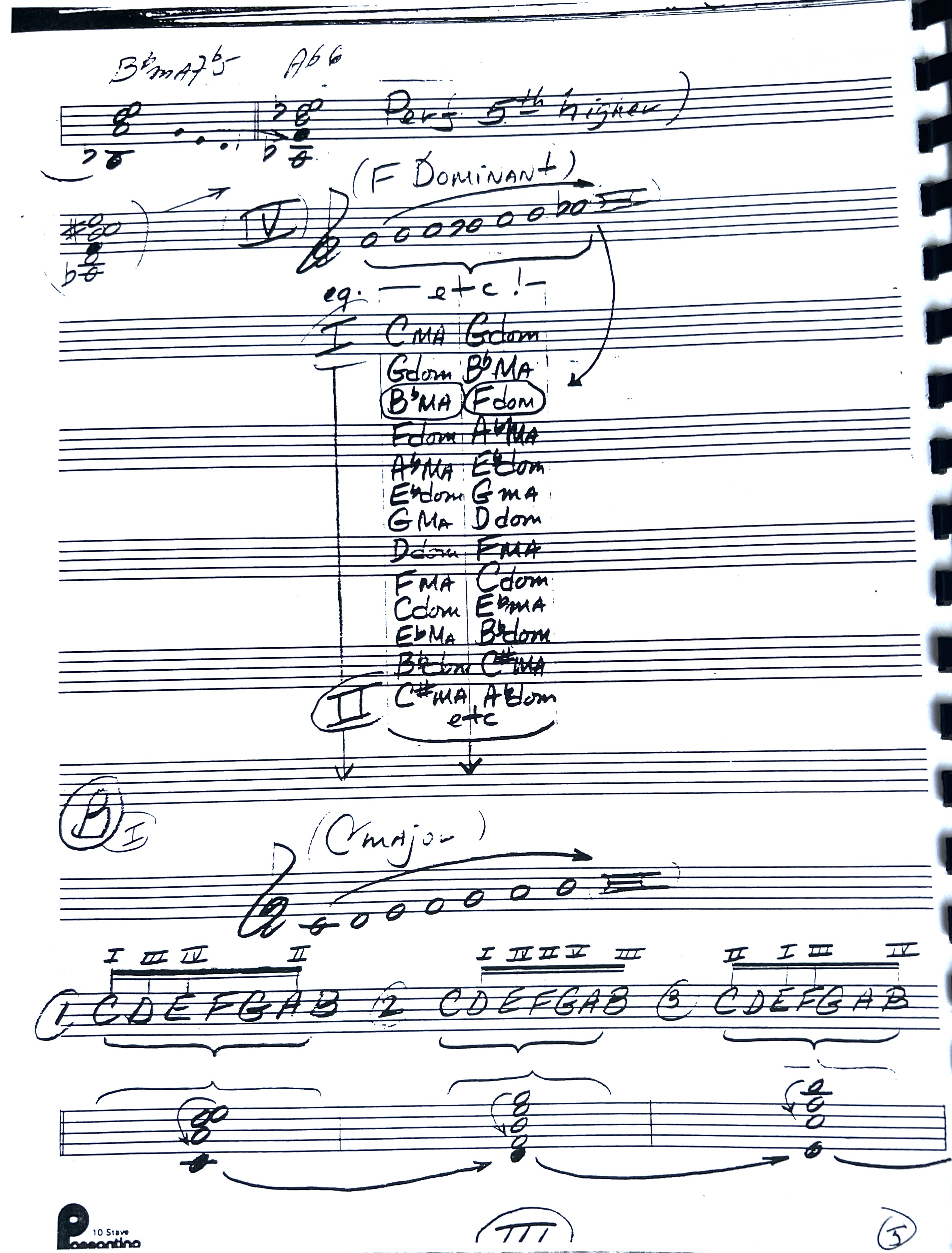
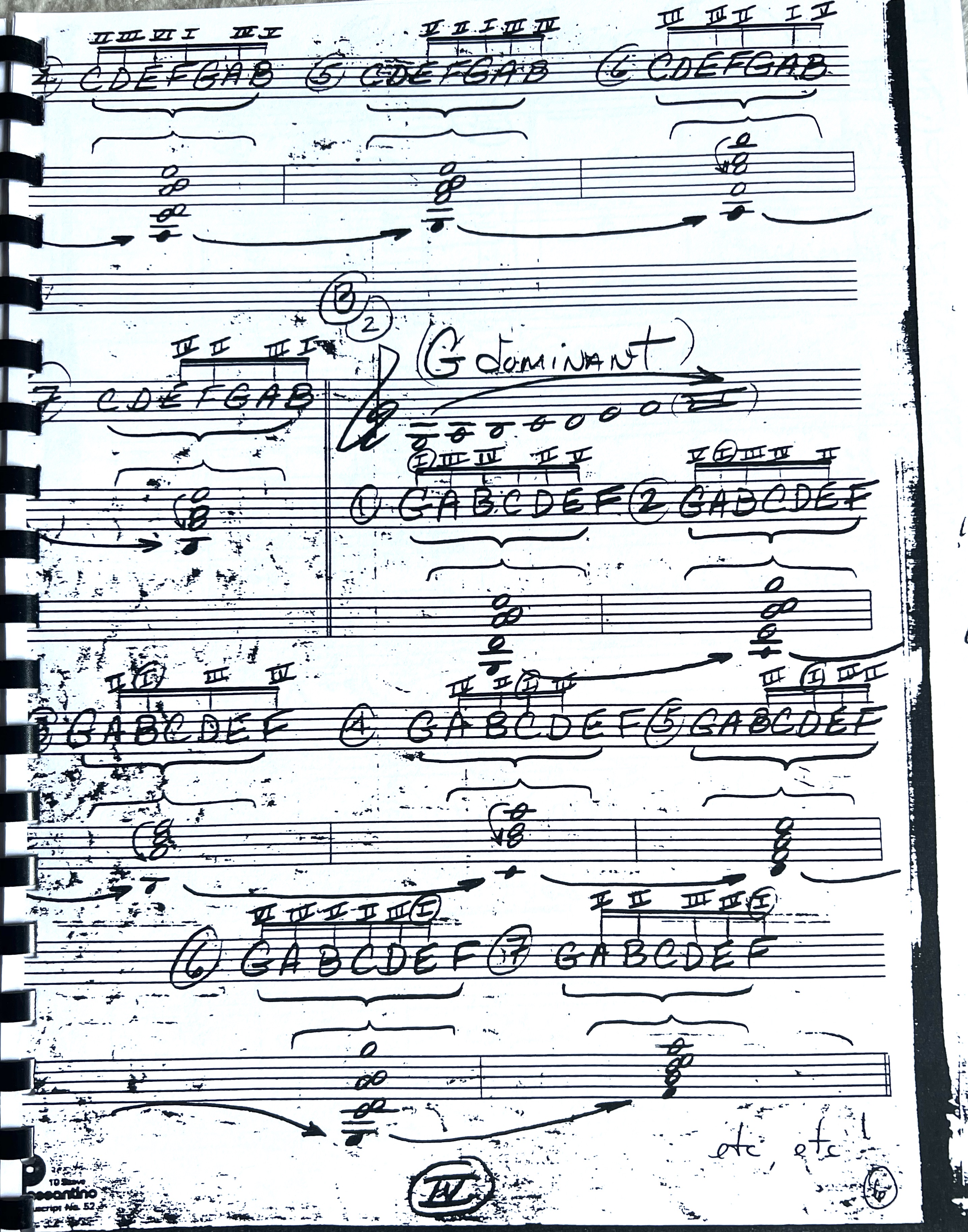
Here, his harmonicexpansion is continued: Again, scale to harmony [chord voicing’s].
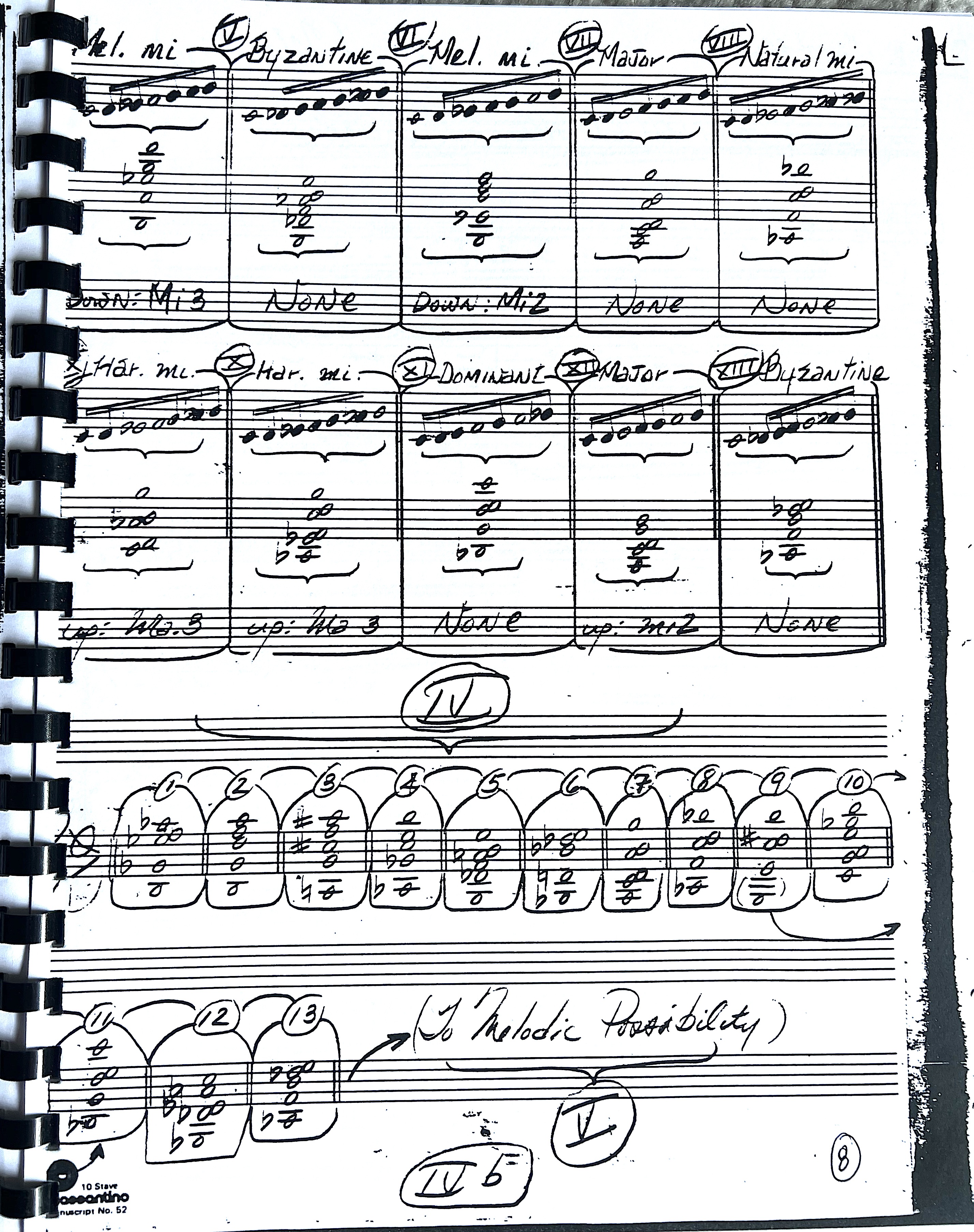
This page demonstrates once again, scales and harmony with possibilities and personal choices. It’s interesting to see Pats chord voicing’s available for development with his unique intervallic concept:
[It presenst a unique glimpse into Pat’s theoretical outlook, considerations and harmonic outlook].
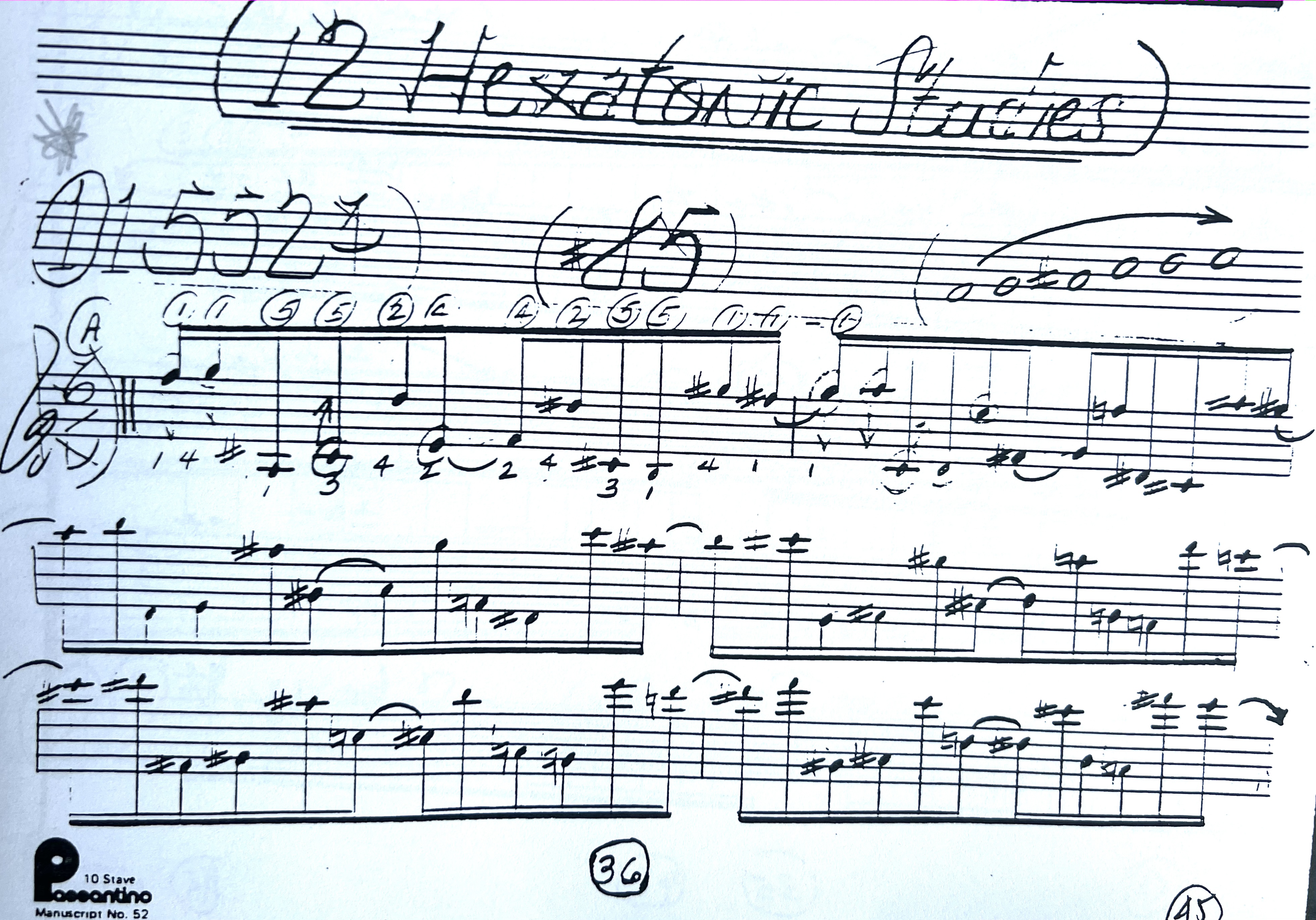
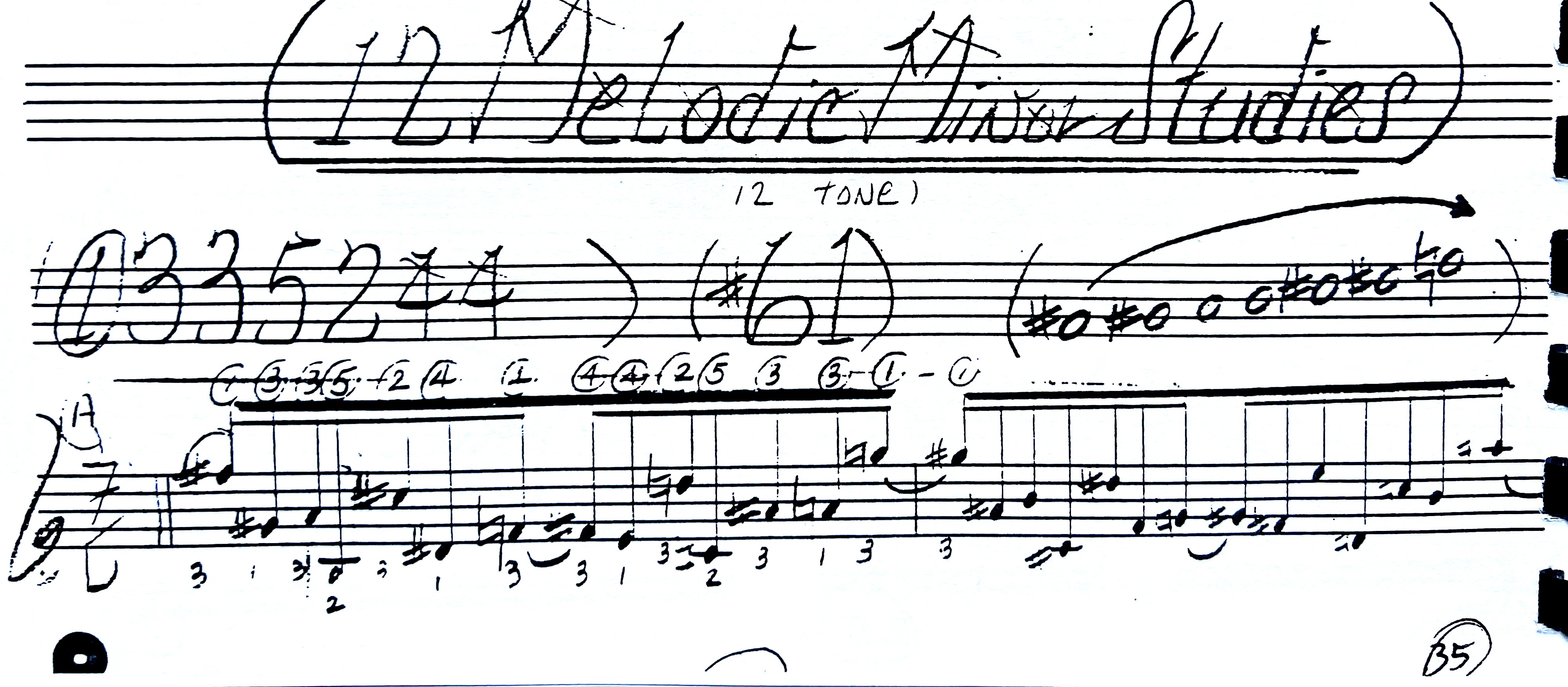
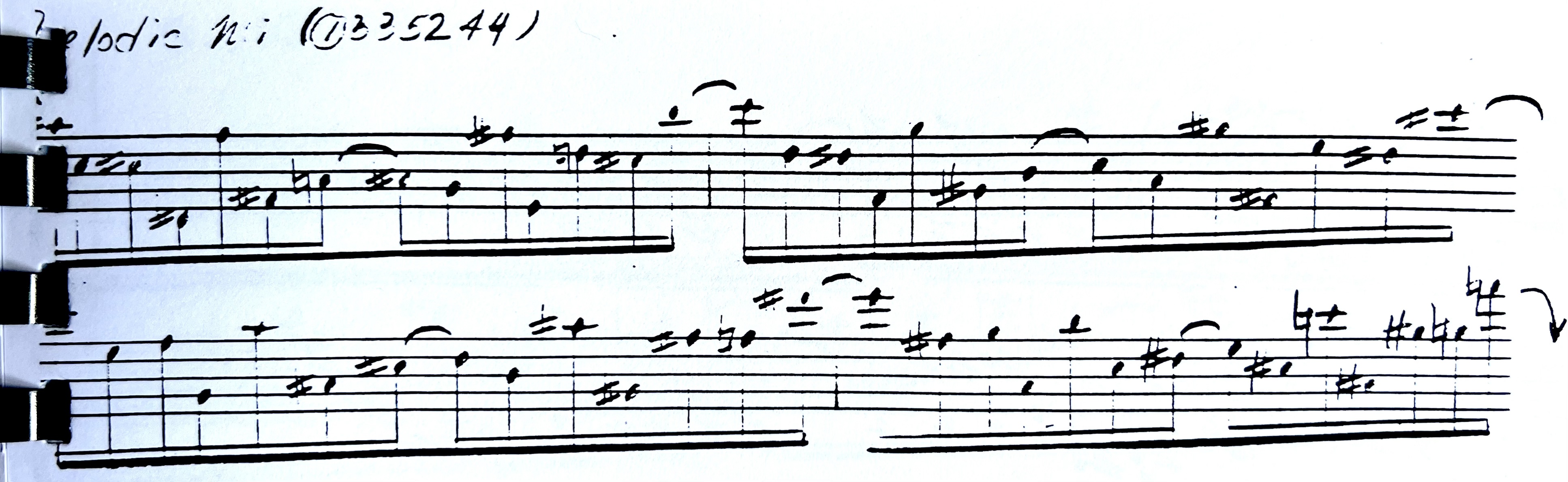
Full Study: The Melodic minor scale EXAMPLE:
Now, let’s take a complete study. Here is the first one of the melodic minor set :
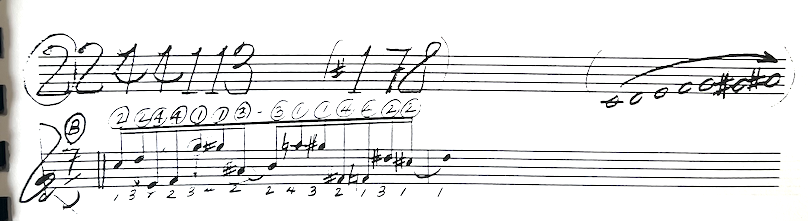
Pat’s studies to be completed:
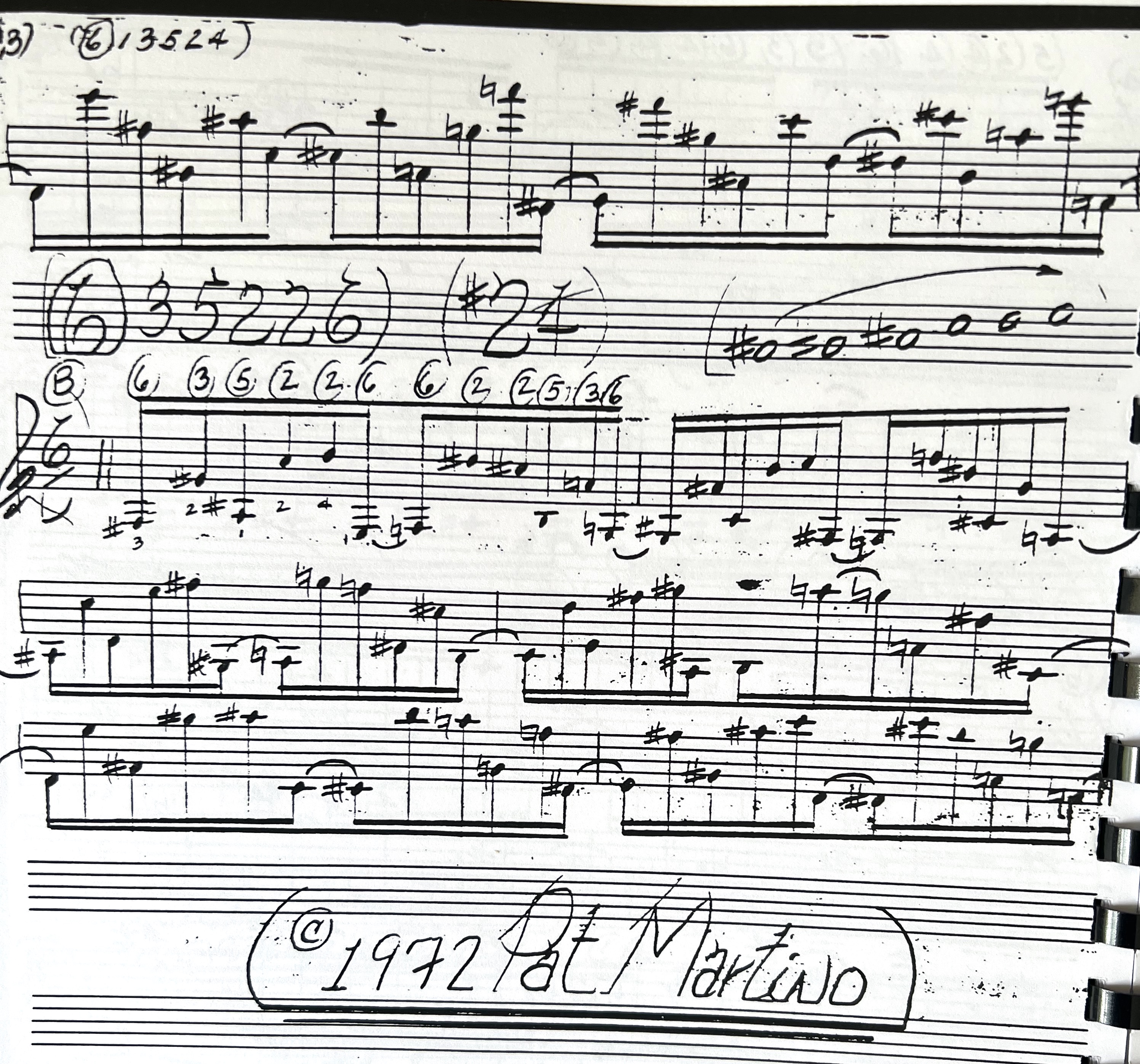
Towards the end of the book we find that Pat was either still working on the book or he didn’t have time to complete [in all 12 keys] everything that was in his mind.
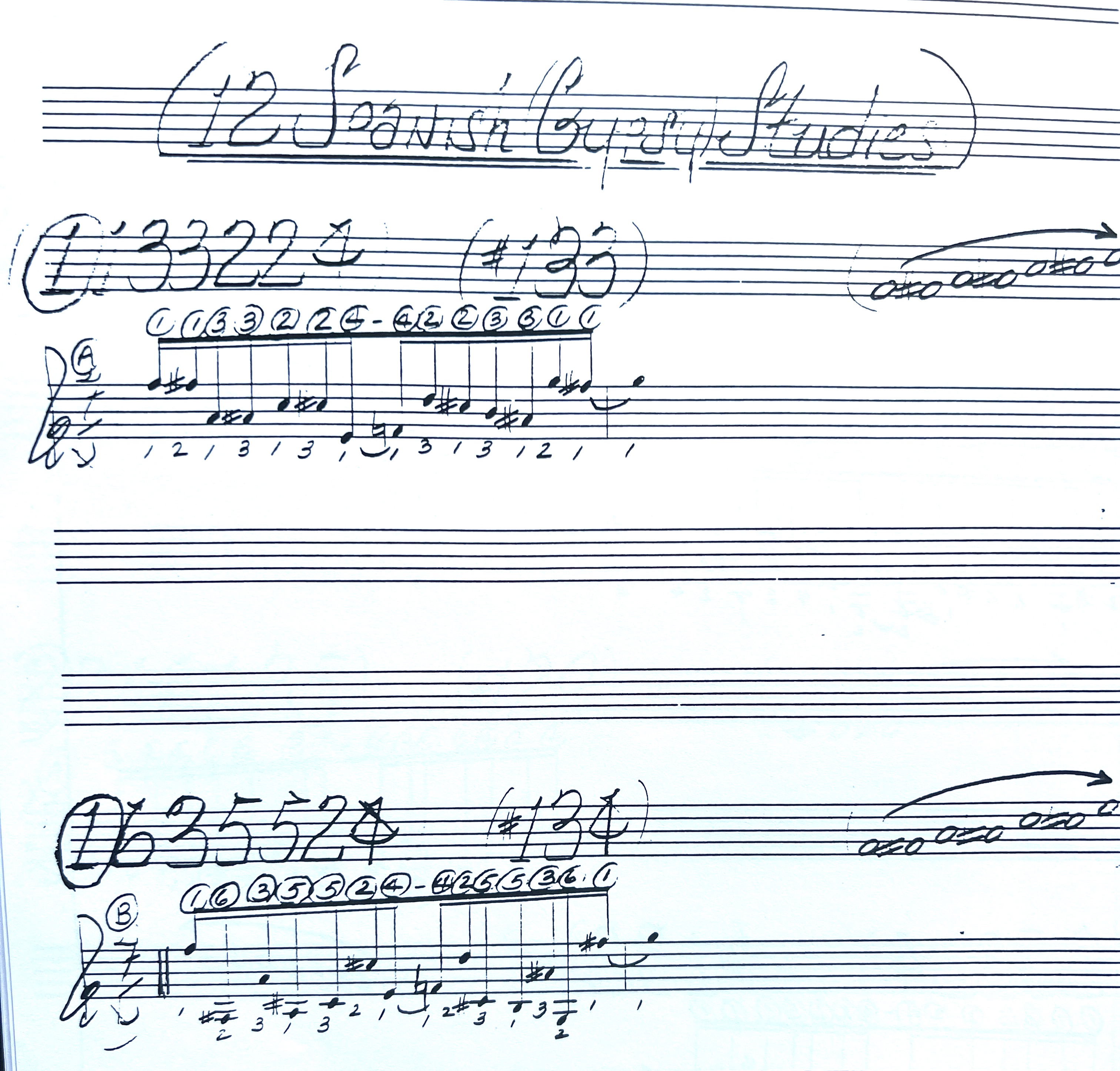
Here is an Example:
Although incomplete, here we see Pat preparing studies for the Spanish Gypsy scale, with the key points of string order and correct guitar fingering:
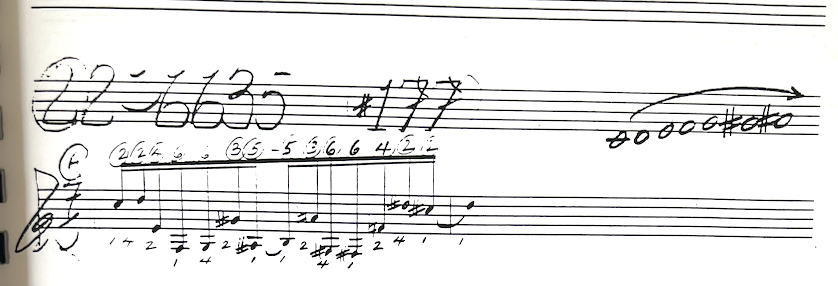
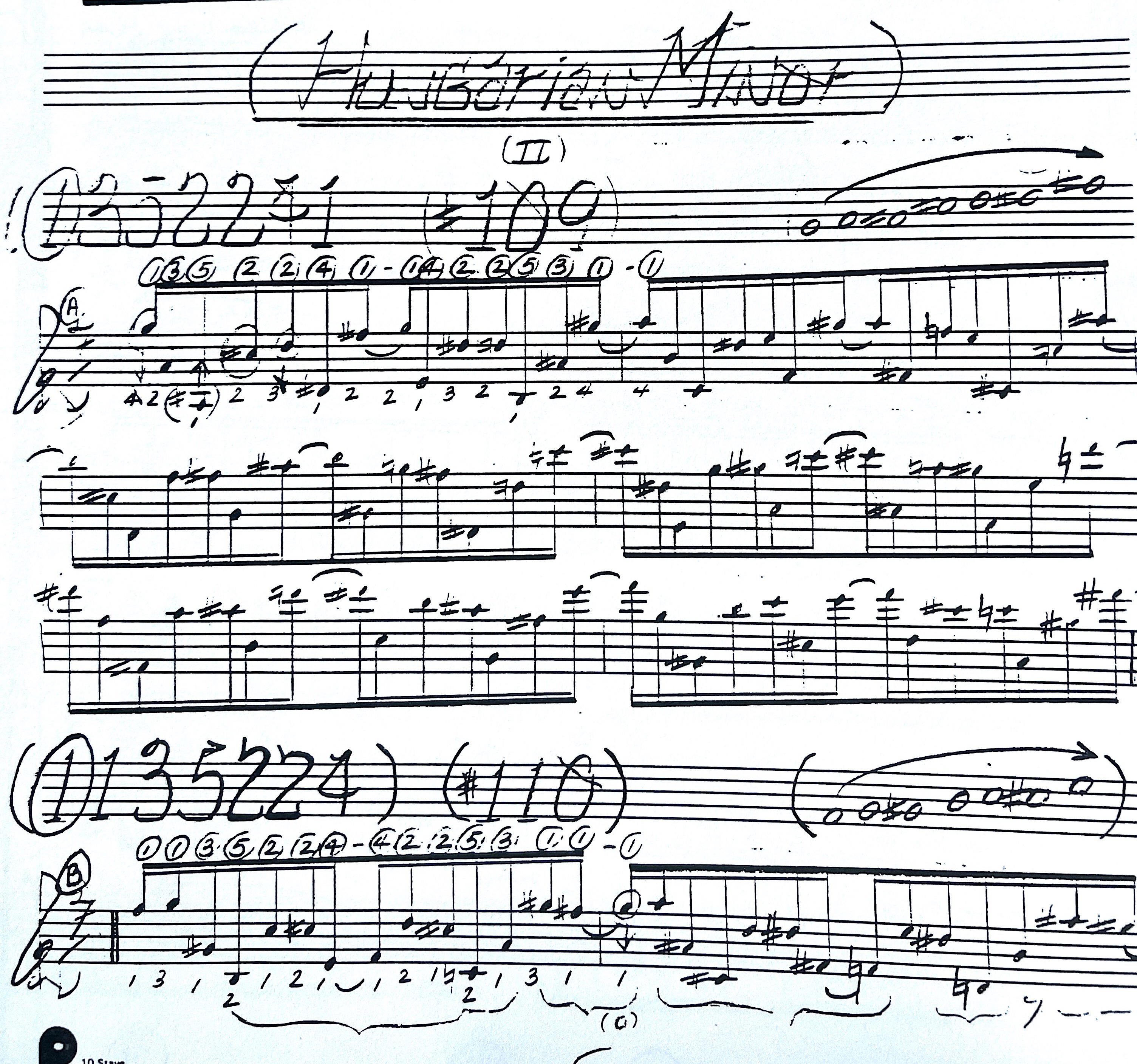
LAST EXAMPLE: FULL STUDY
Lastly, we have a full study with the Hungarian minor scale: Once again notice the string order and Pat’s choice/recommended guitar fingering.
IN CONCLUSION:
In conclusion, these are some of the important pages of the book, although there are lots more studies of interest and some more interesting pages [chords/scales] that I will publish in a later blog. But, this is the main core for those interested.
Judging by this book, although, Pat was an amazing jazz guitarist/composer and improviser he also seems to have been a great theoretician and super creative individual with a vast knowledge of music and not just jazz:
Finally, I would like to say a big thanks to Mark Koch for sending me the book and making all of this possible.