Robert Fripp “Tetratonic” Scale and Tritone Guitar Picking
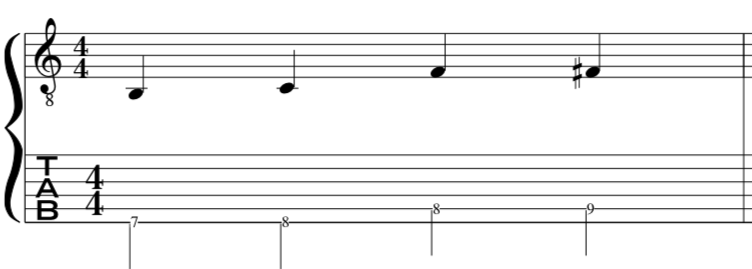
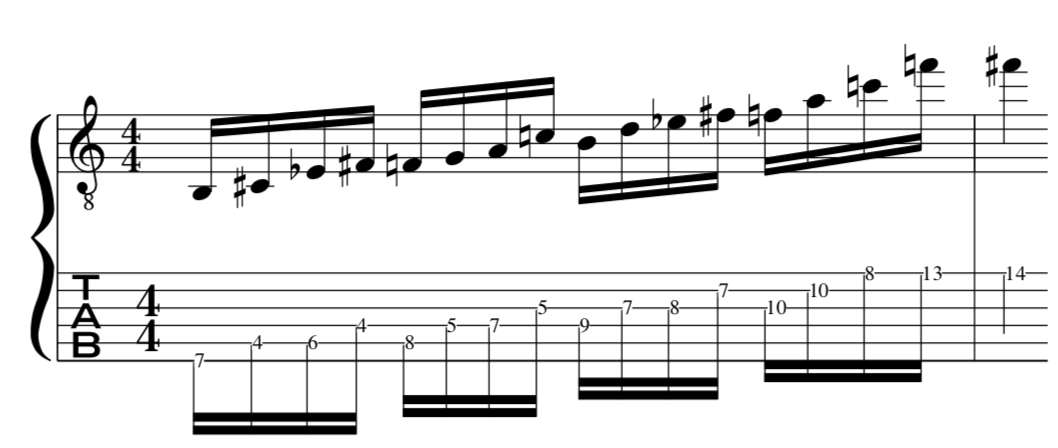
There are 6 “Tetra-tonic” Scales. They all have four notes. Below, is our scale for this blog and video and will be the Tetratonic scale starting on the note B.
Robert Fripp “Tetratonic” Scale and Tritone Picking
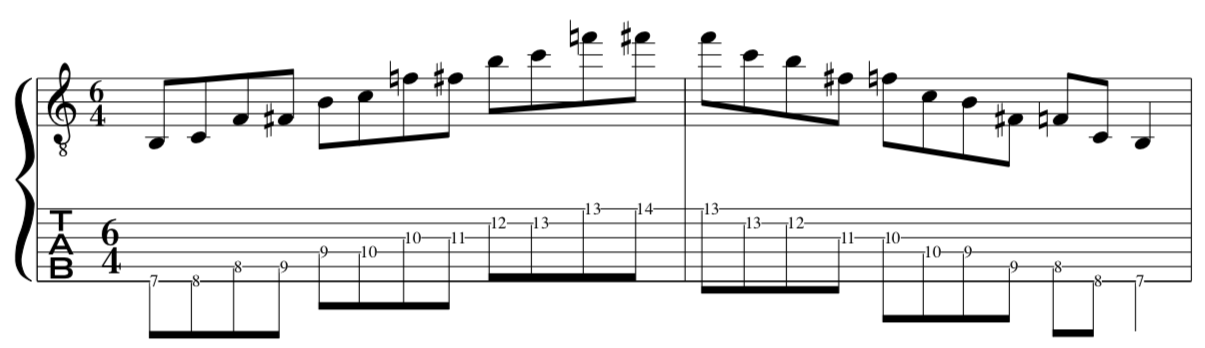
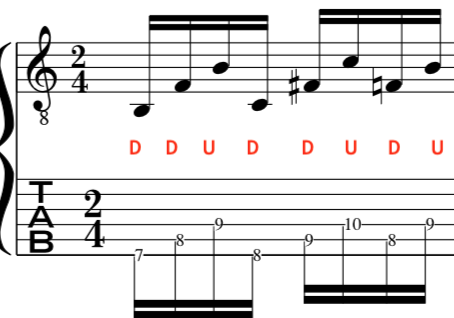
Alternate Picking the Scale: Starting on a “Downstroke”
Robert Fripp “Tetratonic” Scale and Tritone Guitar Picking
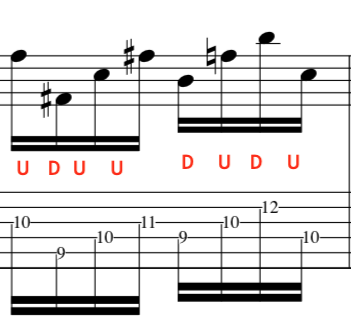
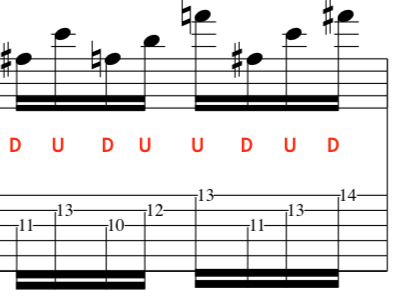
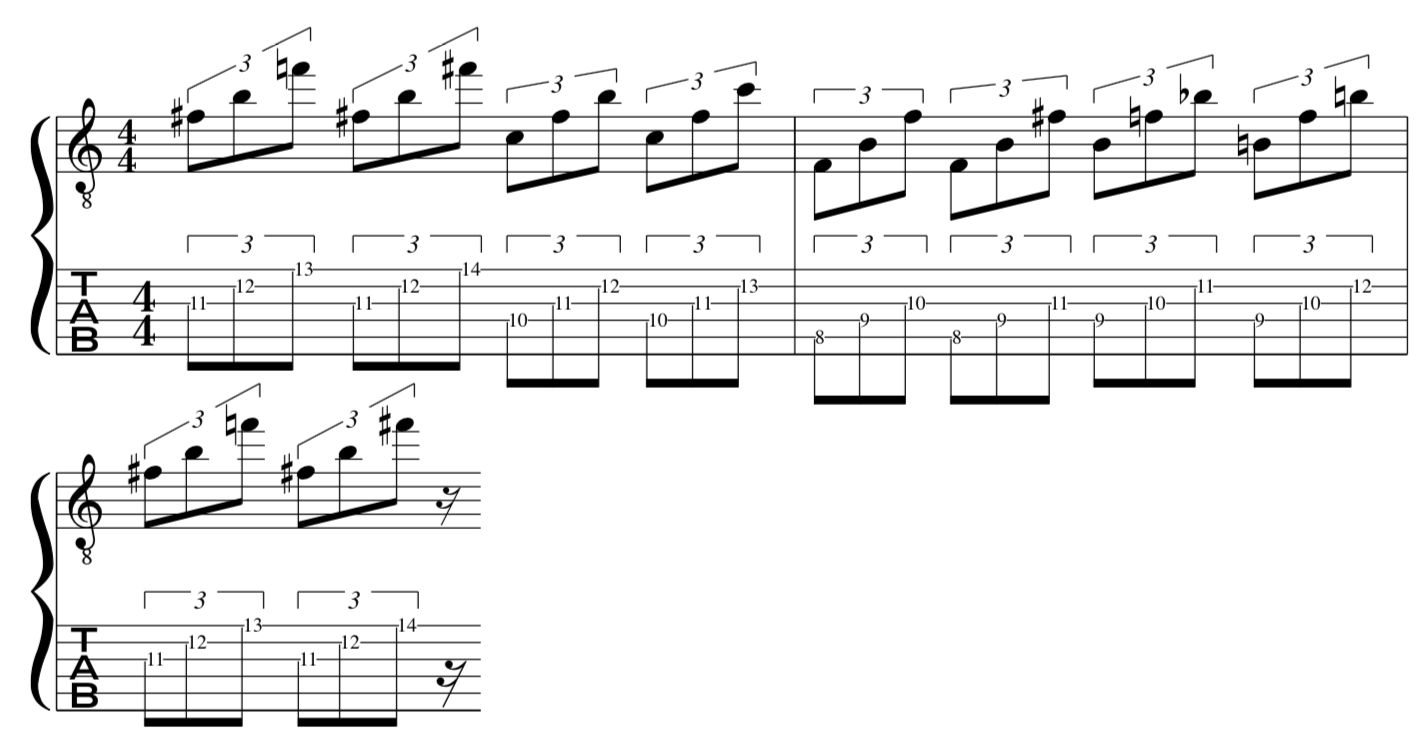
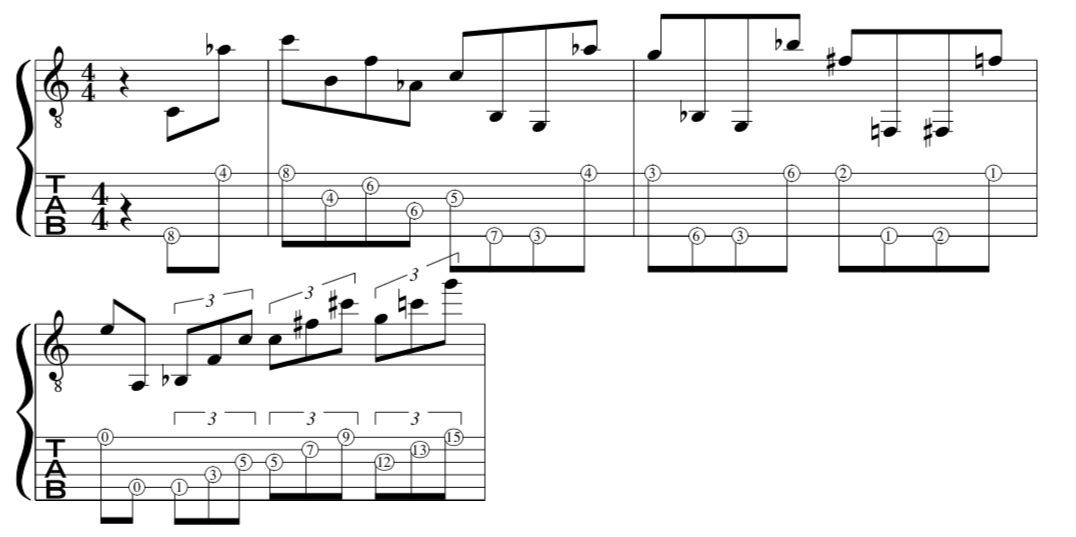
We will make a short Robert Fripp-esque line from this scale and employ “Cross Picking” Guitar Technique.
Robert Fripp “Tetratonic” Scale and Tritone Guitar
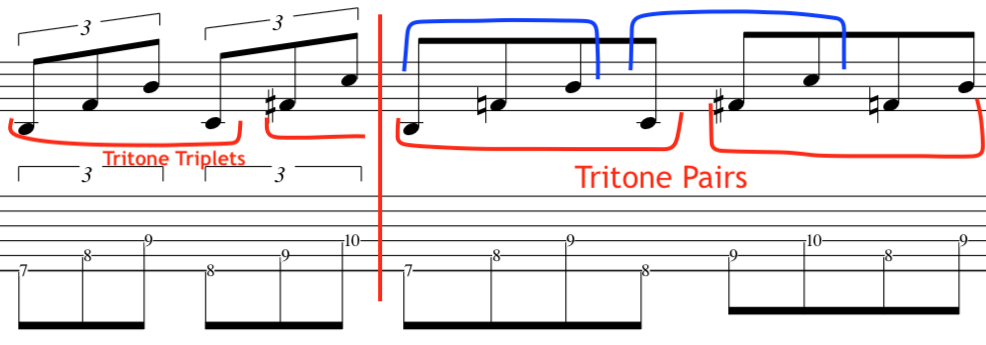
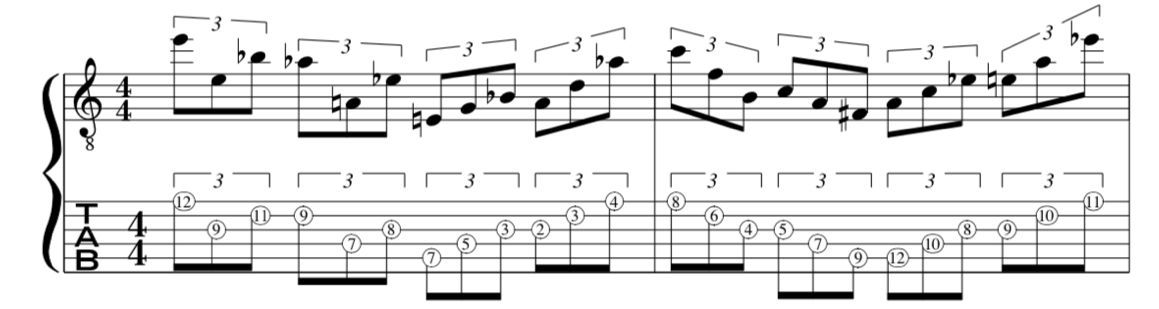
In order to create a line like this it is a good idea to take “Triplets” and make them into chord pairs.
Robert Fripp “Tetratonic” Tritone chord pairs
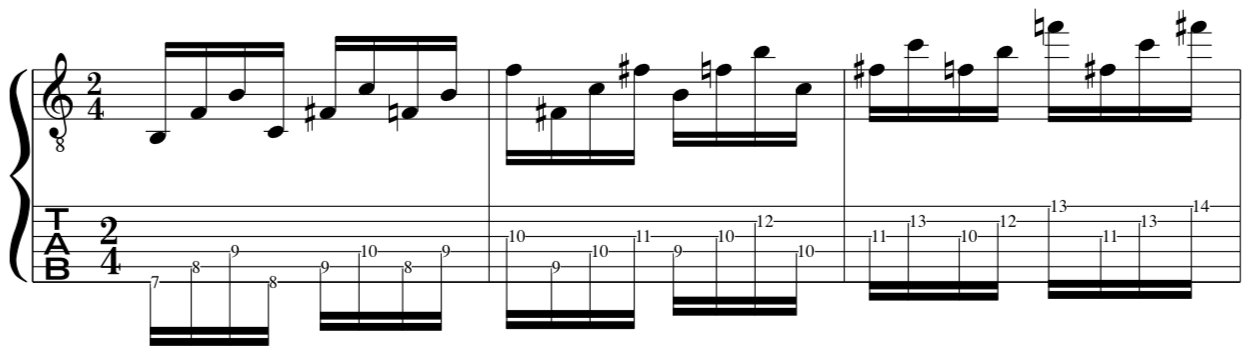
Here are the Guitar Picking patterns that I used. They are very Fripp-esque as they employ Alternate picking and Crosspicking.
Robert Fripp “Tetratonic” Scale and Tritone GuitarRobert Fripp “Tetratonic” Scale and Tritone Guitar
Robert Fripp “Tetratonic” Scale and Tritone Guitar
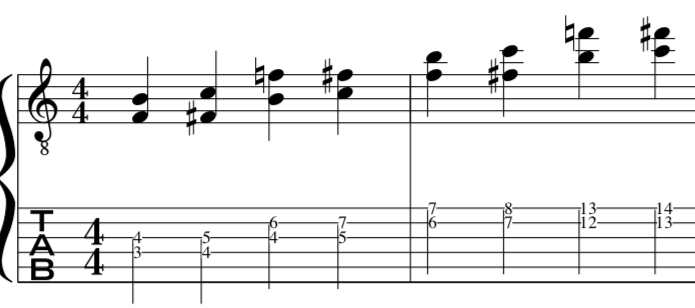
We can also make “Chords” out of this scale.
Robert Fripp “Tetratonic” Guitar chords
Triplet Chordal/Cross picking Robert Fripp style “Tetratonic” Chords
Robert Fripp “Tetratonic” Guitar chords Cross Picking
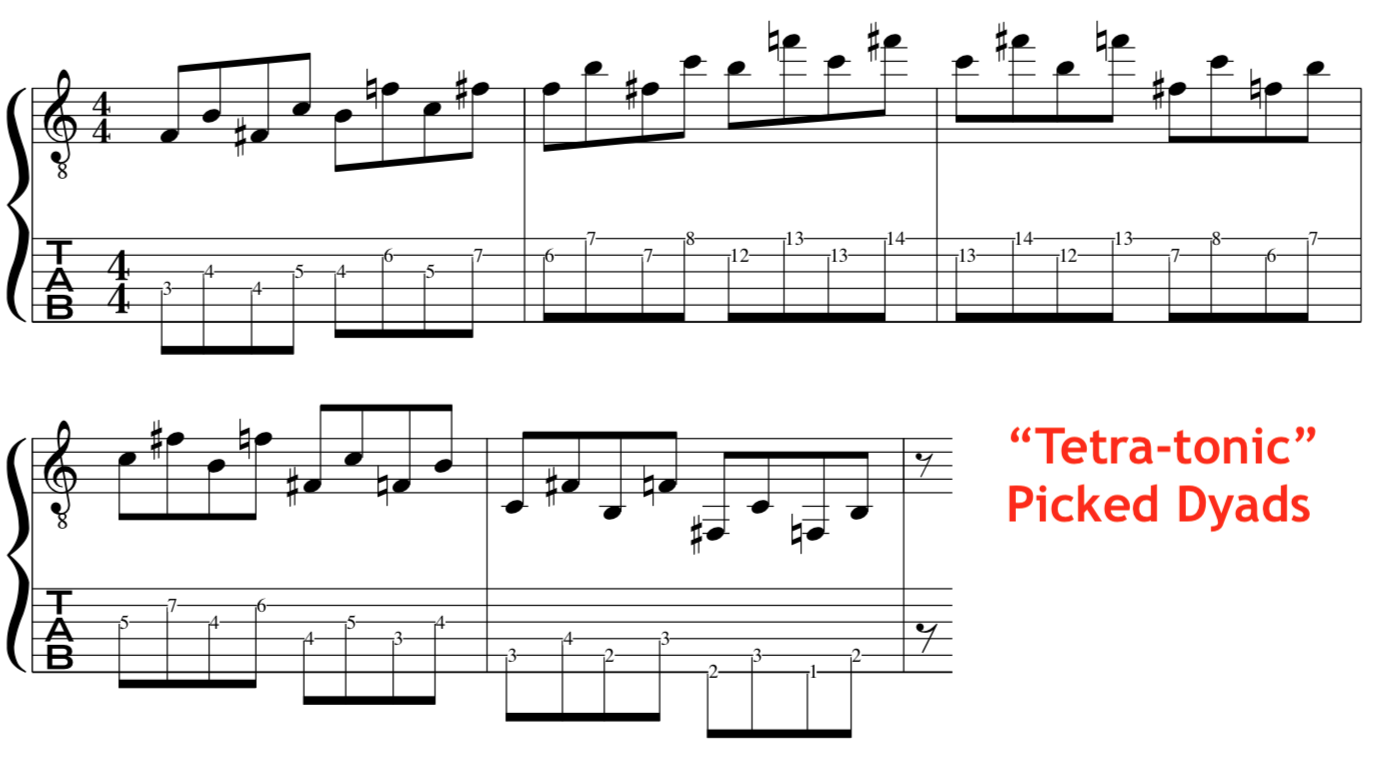
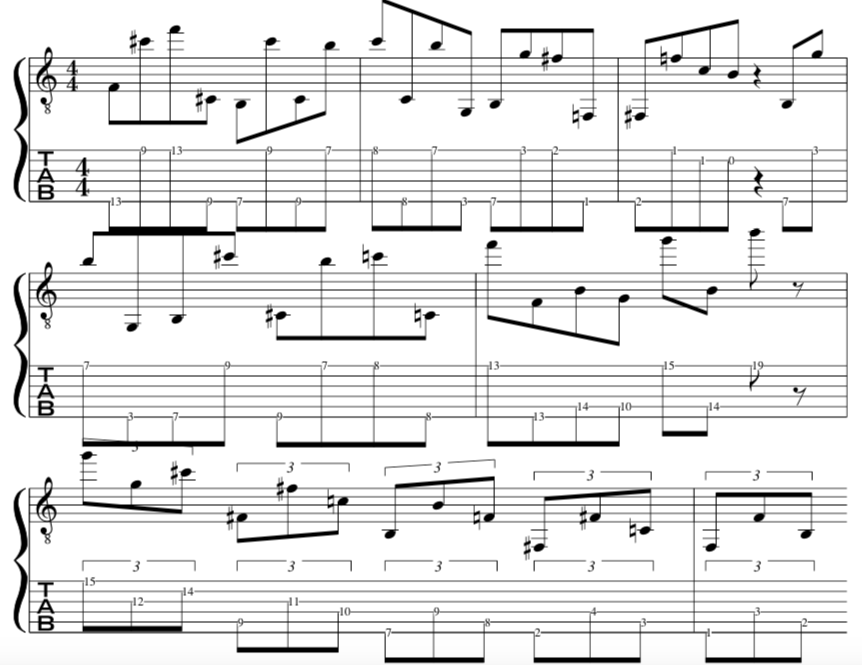
This next Robert Fripp lick employs “Dyads” which are 2 note chords made from this Tetra-tonic scale.
Robert Fripp Guitar “Dyads’
Next, we will use alternate picking and play the “Dyads” in a single note fashion:
Robert Fripp Guitar “Dyads’
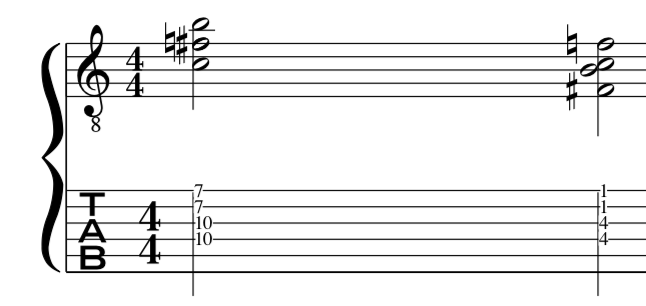
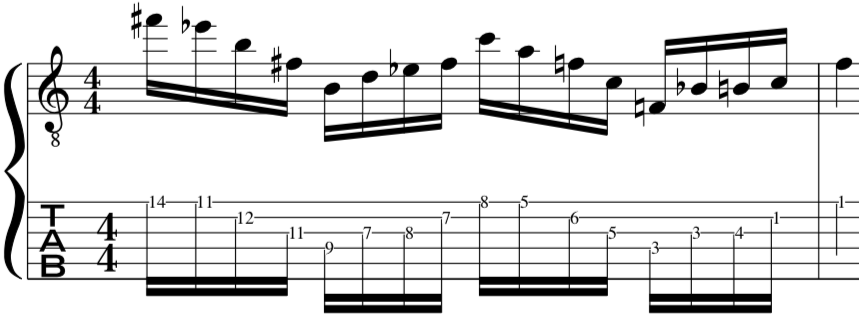
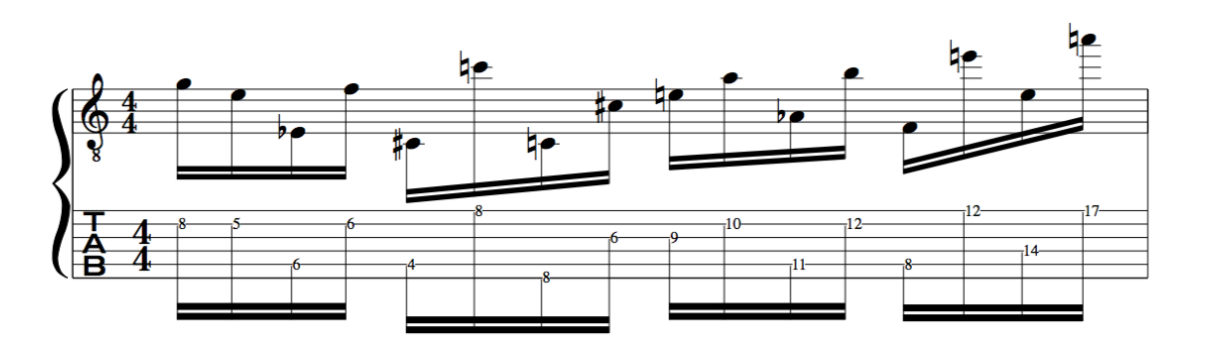
Lastly, we will take 2 chords “NOT” from the Tetratonic Scale but a “Tri-tone” apart. These will be B and F.
Descending:
Robert Fripp Tritone Guitar Arpeggios
Ascending:
Robert Fripp Tritone Guitar Arpeggios
IF THIS LESSON WAS OF USE TO YOU THEN PLEASE SUBSCRIBE TO US BELOW ON YOUTUBE, THANKS!
Messiaen, Fripp, Mclaughlin, Schoenberg, 21st century harmonic concepts
In this blog we will look at improvising over one chord. This will be D minor [D Dorian].
Messiaen, Fripp, Mclaughlin, Schoenberg, 21st century harmonic concepts
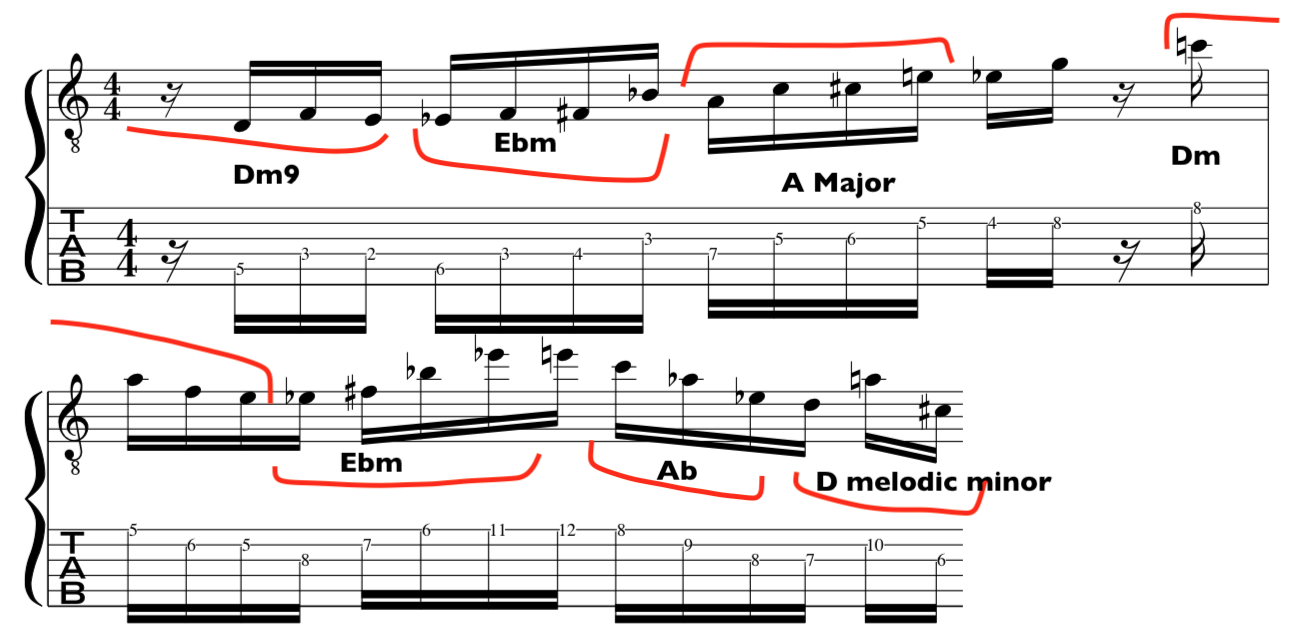
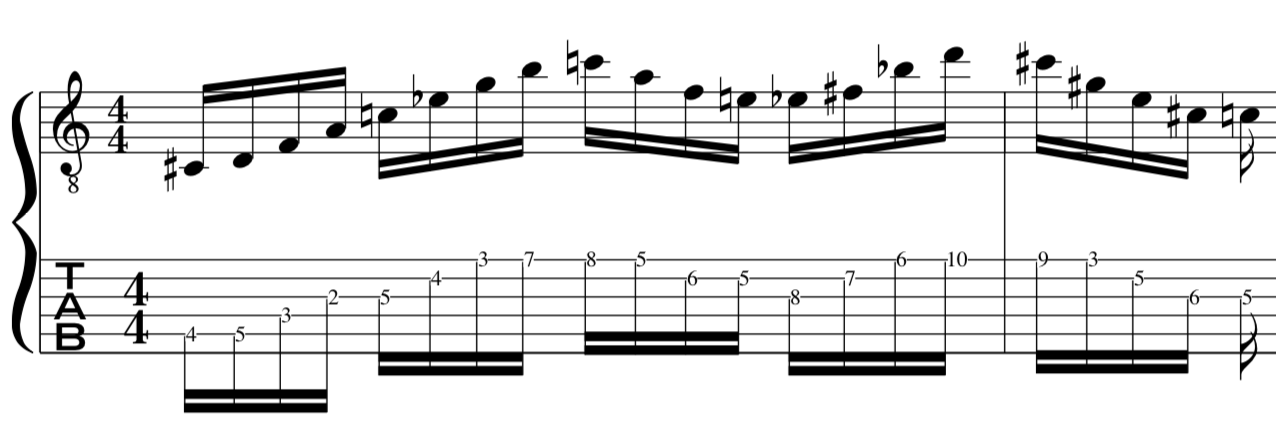
The key is to use chromaticism, tertian harmony, superimposition and outside harmonic content in order to create interesting improvised lines and move away from the cliches of scales and modes to create originality.
For example:
Messiaen, Fripp, Mclaughlin, Schoenberg, 21st century harmonic concepts
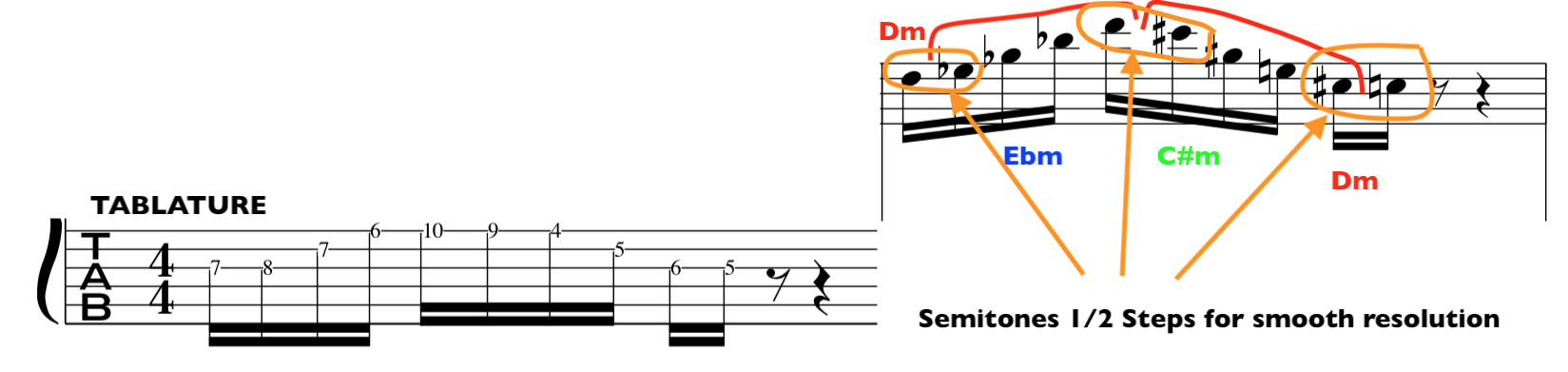
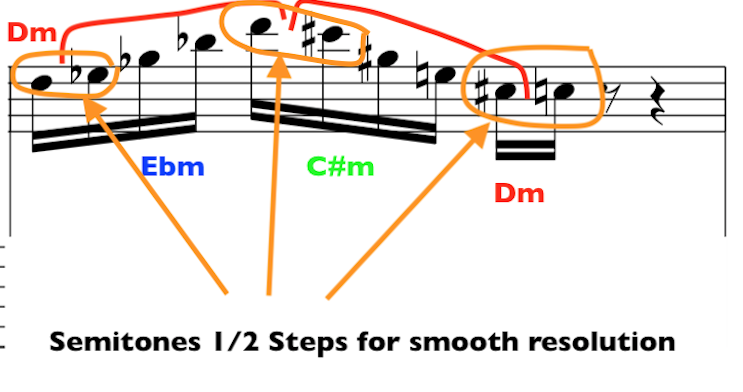
The key for smoothness is to be aware of where the 1/2 steps [Semitones]are in the “Connections”.
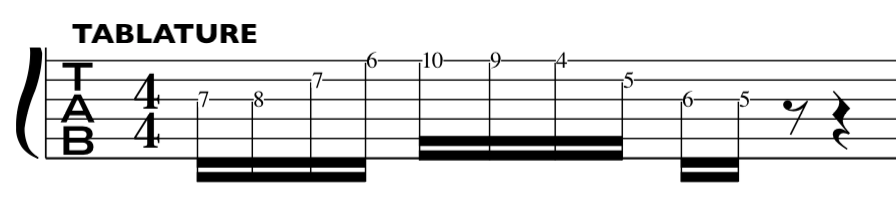
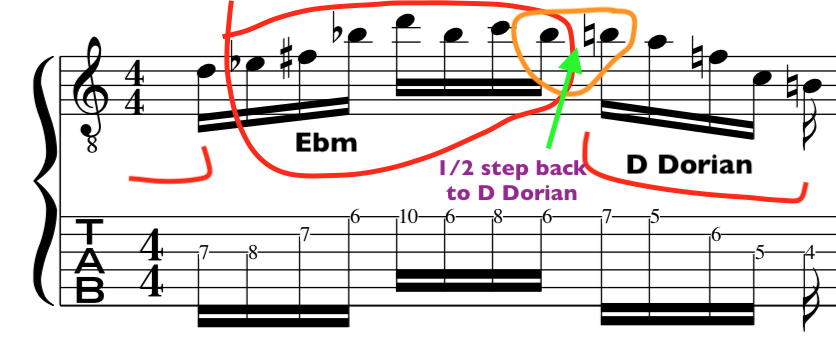
If we look below we can see where the 1/2 steps connect and how to play off of the tonic note with this. In this case we play off of the tonic D note resolving straight into the Eb note for Eb melodic minor. We can then resolve down a half step to C#m and back down into D Dorian
Messiaen, Fripp, Mclaughlin, Schoenberg, 21st century harmonic conceptsFripp ,Brecker, Mclaughlin chromatic Improvising method for jazz fusion improvisationChromatic jazz improvisation Brecker, Mclaughlin and creative Fripp improvising concepts
So as you can see it is easy to weave in and out of the harmony and get back to D Dorian via the 1/2 step.
Fripp ,Brecker, Mclaughlin chromatic Improvising method for jazz fusion improvisation
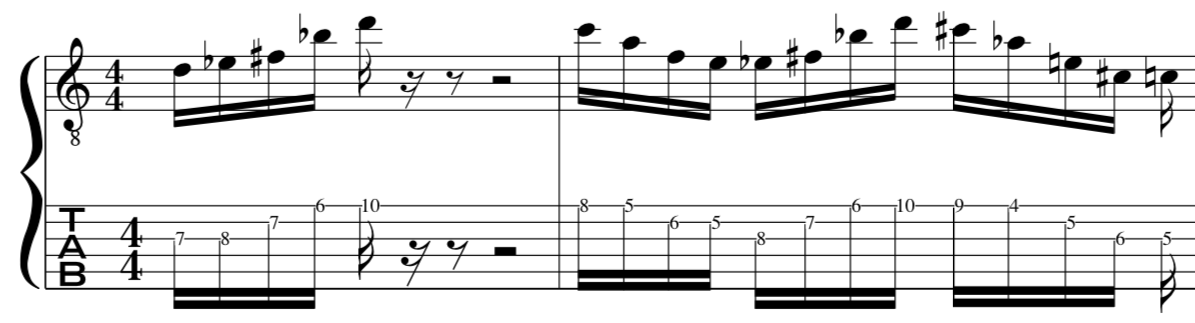
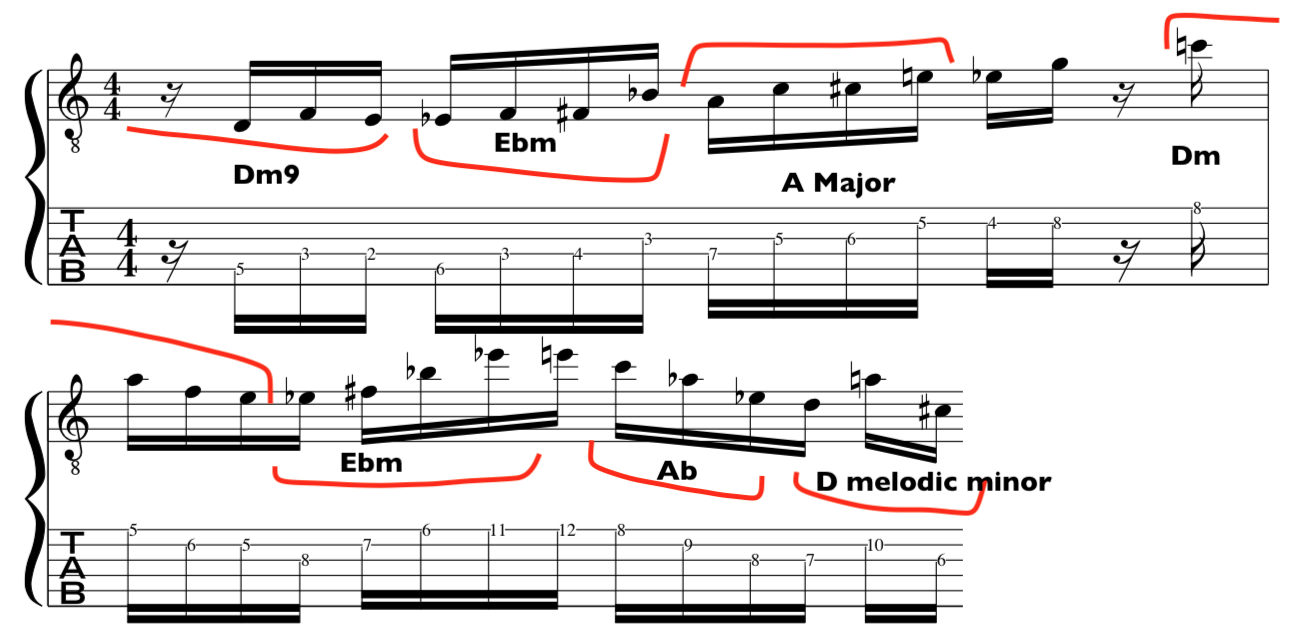
Below is a line that beautifully weaves in and out of D minor
Messiaen, Fripp, Mclaughlin, Schoenberg, 21st century harmonic concepts
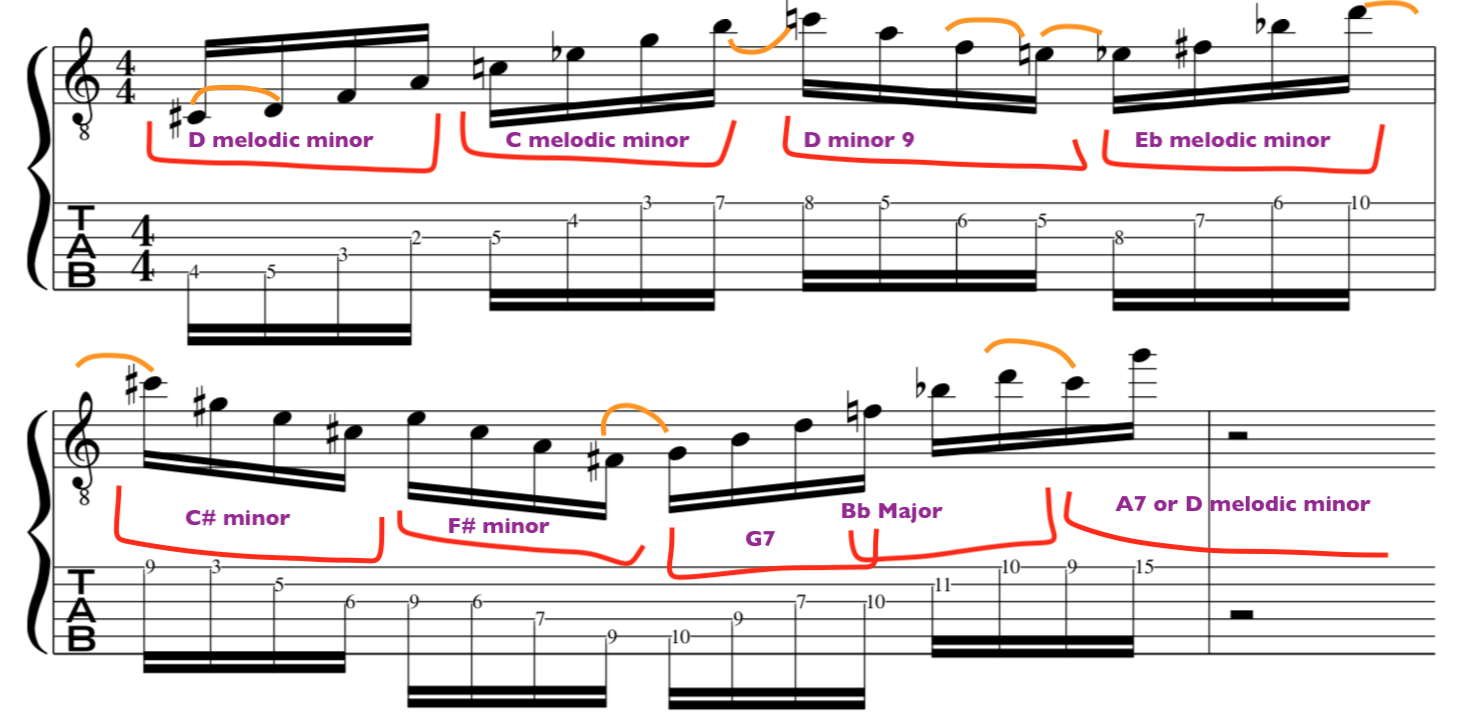
In this next example we will use tertian harmony and exploit superimposition. We will employ D melodic minor and and keep extending via C melodic minor.
Fripp ,Brecker, Mclaughlin chromatic Improvising method for jazz fusion improvisation
Now we will extend the whole line:
Fripp ,Brecker, Mclaughlin chromatic Improvising method for jazz fusion improvisation
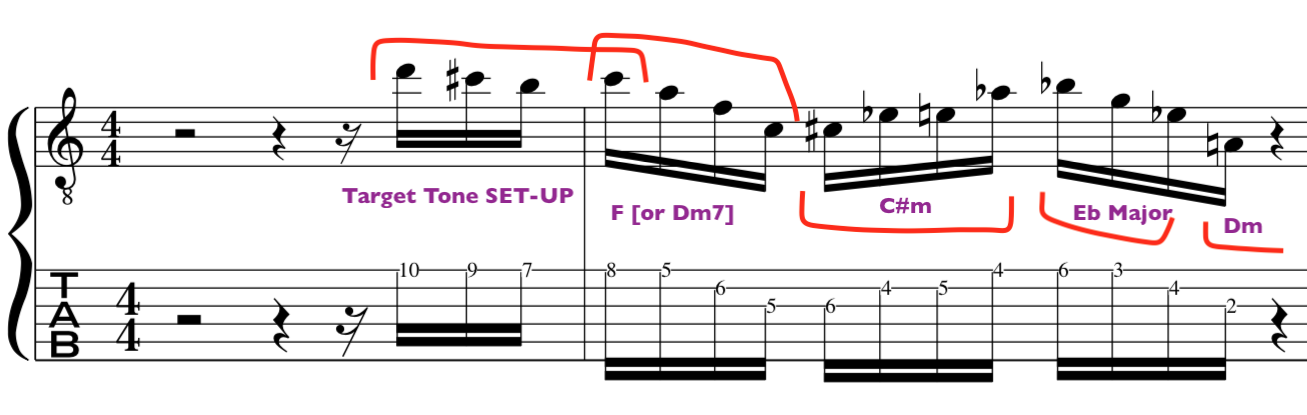
As another idea, there are still useful concepts like “Target Tones”. These can be manipulated without resorting to cliches.
Fripp ,Brecker, Mclaughlin chromatic Improvising method for jazz fusion improvisation
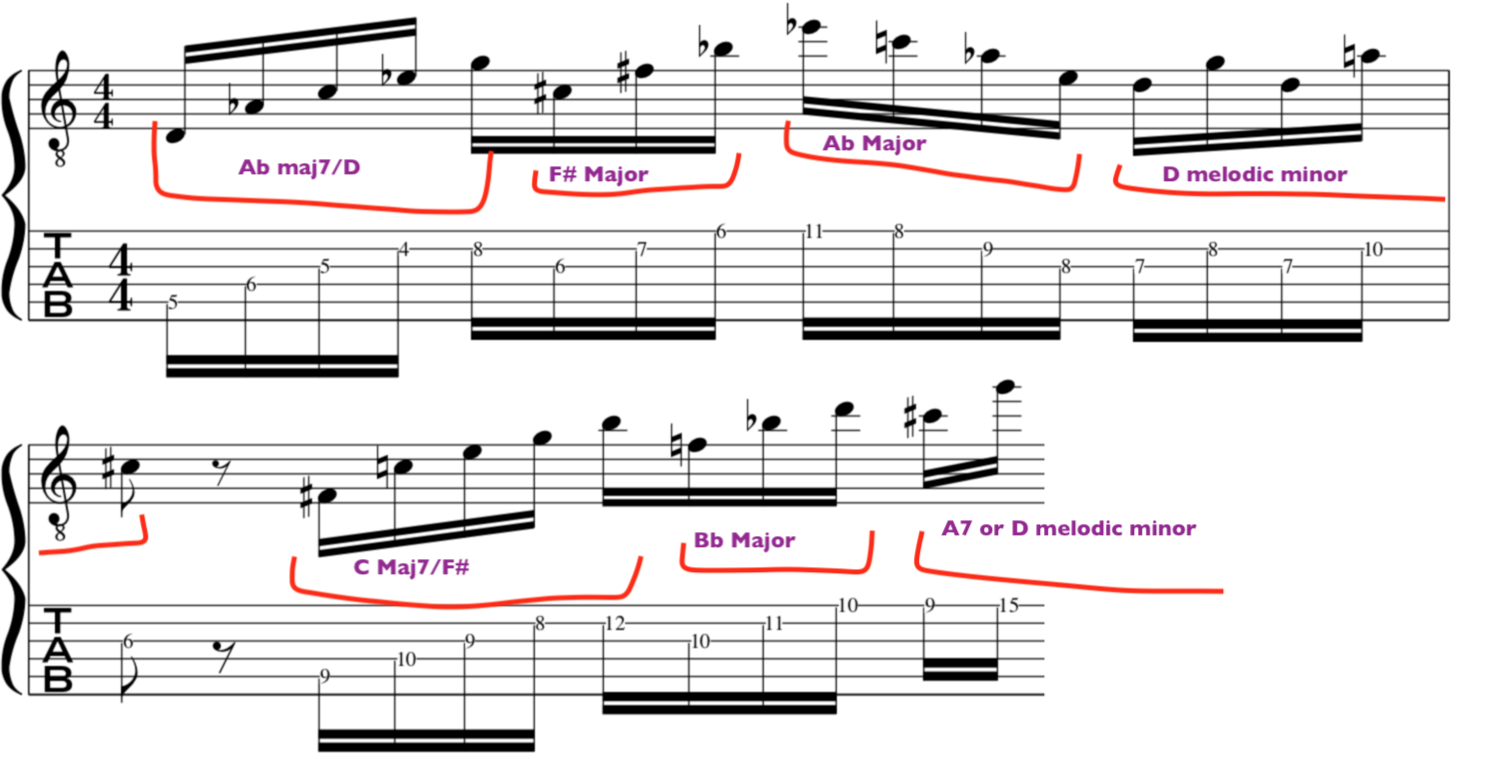
Lastly we will exploit the use flat 5 concepts. In this case there is an Abmaj7/D and a Cmaj7/F# with which we can be creative.
Fripp ,Brecker, Mclaughlin chromatic Improvising method for jazz fusion improvisation
Thanks for viewing this blog. Please SUBSCRIBE to us on Youtube below!
Today we will look at a concept that I have been asked about a lot recently. This is a contrapuntal string skipping intervallic “Mirroring” technique. It is intervallic by design and employs a Bachian Atonal “Question and answer” effect between the “Bass and Treble” with wide intervals. The string skipping inherent within this works especially well for atonal music, awkward intervals and polytonal scales.