Guitar Counterpoint Techniques Using Plectrum/Pick

Hi Guys,

Today, a look at using the guitar pick/plectrum to create contrapuntal/counterpoint ideas.

In this first part, [This lesson] we will look at treble to bass and bass to treble and how to make the non consecutive 3rds, 5ths and octaves and harmony work.

In the next part [next lesson] we will look at how to create “Resonance”, especially in regards to scales.

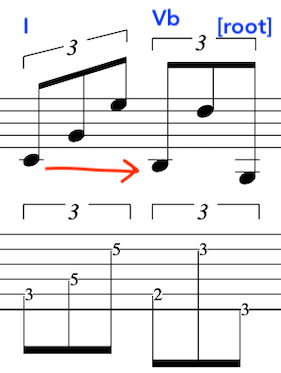
Musical notation showing chords I and Vb with an arrow indicating movement from I to the root of Vb for counterpoint guitar picking techique.
Musical notation for plectrum guitar illustrating the progression from chord I to Vb, emphasizing harmonic structure.
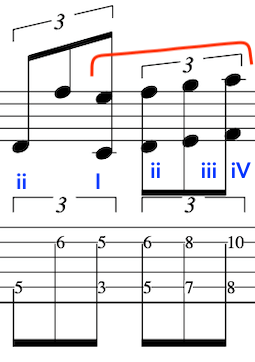
Sheet music displaying musical notation for guitar, featuring chord notations 'ii', 'I', 'ii', 'iii', and 'iv' along with corresponding tabs.

In order to keep the harmony ascending with clear movement, we will now take the F natural up a semitone to F# and create a secondary dominant first inversion-II7b

This chord ii [Dm] is now, made Major with the added seventh [D7].

This in turn, resolves up another semitone to G for the dominant chord of G Major.
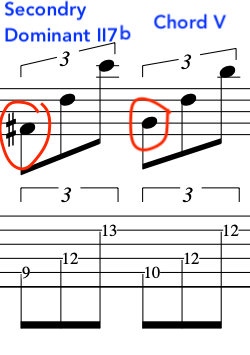
A musical score showing a 'Secondary Dominant II7b' and 'Chord V', with annotations highlighting specific notes.
Musical notation depicting the secondary dominant II7b and chord V for guitar pick practice.

We will now, exploit a perfect cadence of I V I to complete this section of the composition:
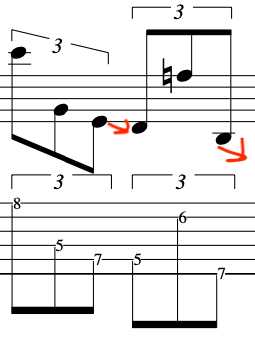
Musical sheet displaying notes and indicators for guitar playing, including directional arrows for phrasing and finger placement.
Musical notation showing guitar tablature and standard notation, with notes and rests for a melody in guitar counterpoint.

Now, to create contrast, we will employ scale movement, double stops and imitation:
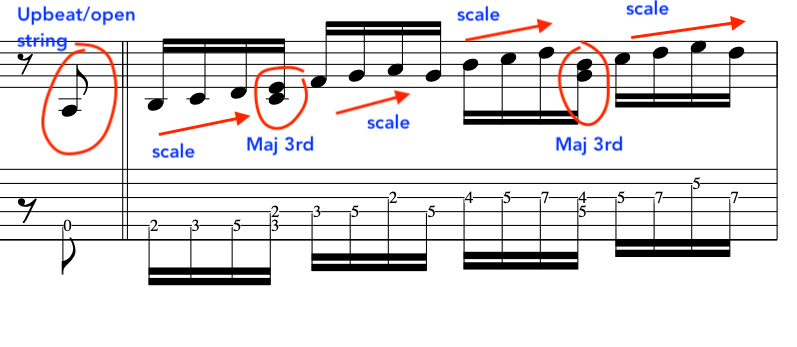
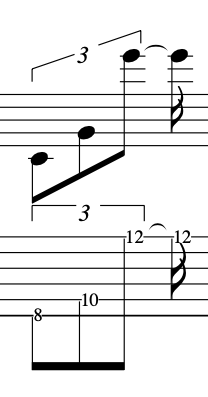
Musical notation showing an upbeat/open string along with notes indicating scale movements and major thirds, highlighted for instructional purposes.

The technique to keep this ascending is “Imitation”, using and implying what we have already played up an octave.
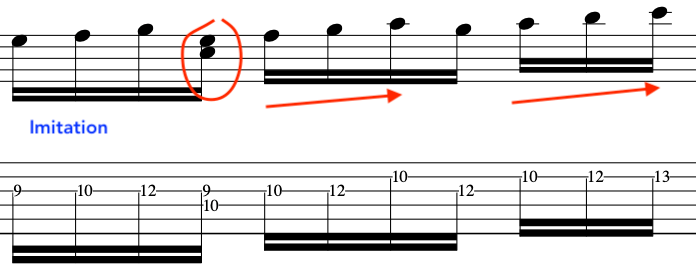
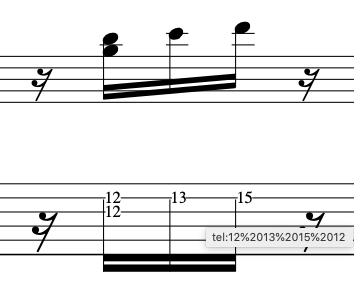
Musical notation showing imitation technique for guitar picking counterpoint with labeled sections and highlighted notes.

Finally, the cadence is created with “Contrary Motion” technique. And, once again we will imitate this, but, an octave lower this time, to complete the cadence.
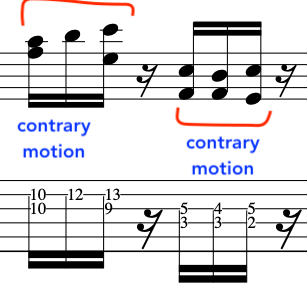
Musical sheet music displaying notes in contrary motion, with labeled sections indicating 'contrary motion' technique for guitar pciking counterpoint
Musical notation illustrating the technique of contrary motion, highlighting specific notes and finger positions and imitation.

In the coming part, we will exploit much string skipping and intervallic movement.

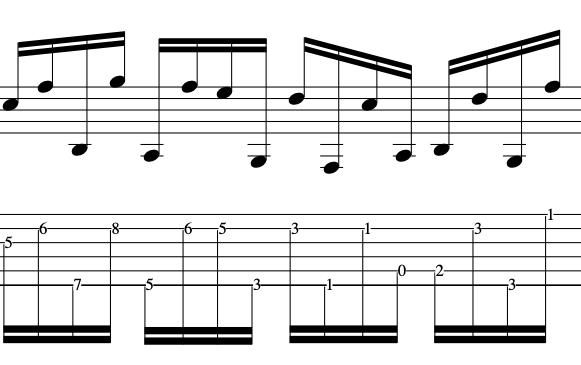
This technique is great for Low High Low with the Bass to Treble or Treble to bass.

This is an amazing way, to perform a contrapuntal effect and map out and perform crystalline clear harmony that resonates beautifully when fretted on the guitar. [See Video Above].
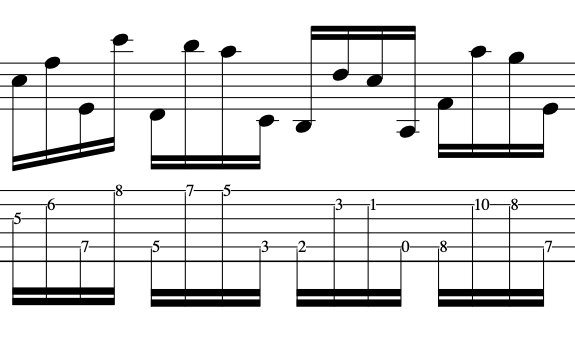
Musical notation displaying a contrpuntal sequence for guitar picking, featuring treble and bass clefs and tab with notes and measures.
Sheet music illustrating plectrum techniques and contrapuntal ideas for guitar.

Second Part:

Sheet music showing a series of notes and a guitar tablature for a prelude, illustrating counterpoint ideas for the plectrum guitar picking techniques
Musical notation showing notes and finger placements for contrapuntal guitar picking.

The last part employs our original little tune, but will change key at the finale.
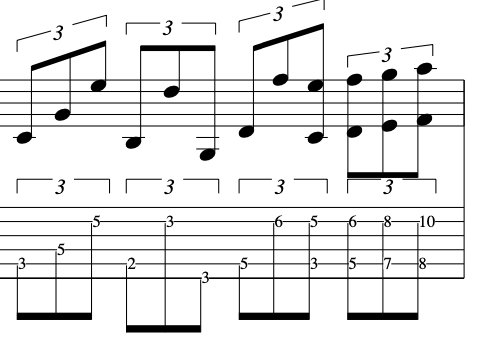
Musical notation for a guitar piece featuring notes and tablature, illustrating a series of musical ideas and chord progressions for plectrum guitar techniques.

In order to change the key and “Uplift” the end, we will exploit two secondary dominants: The first being chord ii as II7b [D7 to G].

And the second being Chord iii. So, we have III7b [E7 to A Major]
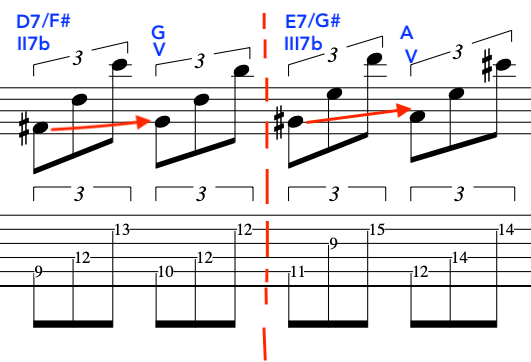
Musical notation featuring chords D7/F#, II7b, G, V, E7/G#, III7b, A, and V, with arrows indicating movement between notes.
Musical notation illustrating the progression from D7/F# G to E7/G# A, highlighting the transitions in chord structure and secondary dominants for guitar.

This, means that we now have to cadence with D Major as the new tonic key.
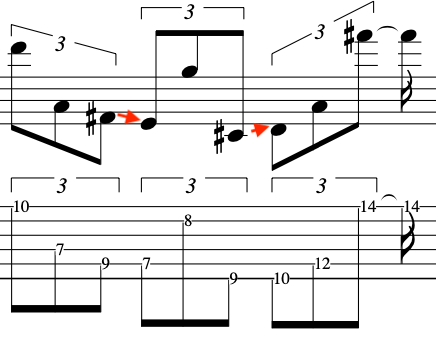
A sheet of music notation featuring musical notes, symbols, and markings that indicate rhythm and pitch for a guitar piece.

To wind down the composition we will outline a D Major [13/sus4] arpeggio and cadence with some simple contrary motion emphasising the new key and chord of D Major.
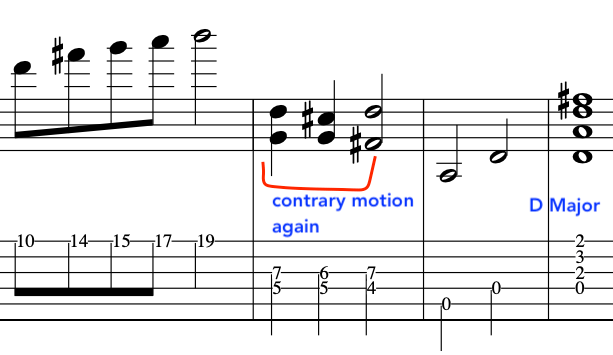
Musical notation showing a piece in D Major for guitar with a highlighted section indicating 'contrary motion again'.

This, was just a quick look at the fretting side of plectrum contrapuntal guitar writing and playing.

This style, encompasses the no consecutive 3rds, 5ths and octaves approach, taken from the Bach’s chorales.

In the next part, we will look at how to create resonance and a much bigger sound with more colourful plectrum techniques.

Right Hand: Alternate Picking Guitar Technique

Please watch video above for detailed info:

Hi Guys,

Today, a quick look at the “Right Hand” aspect of alternate picking guitar technique:

This is not cast in stone, but, to serve as a useful reference/guide to anyone that might be having problems.

alternate-picking-right[hand-guitar-technique-diagram

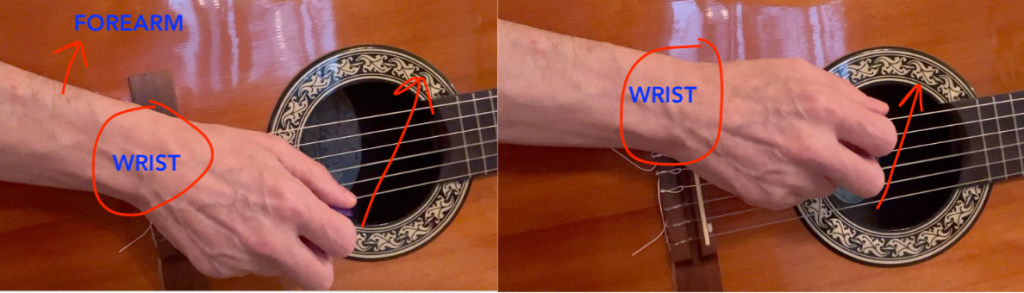
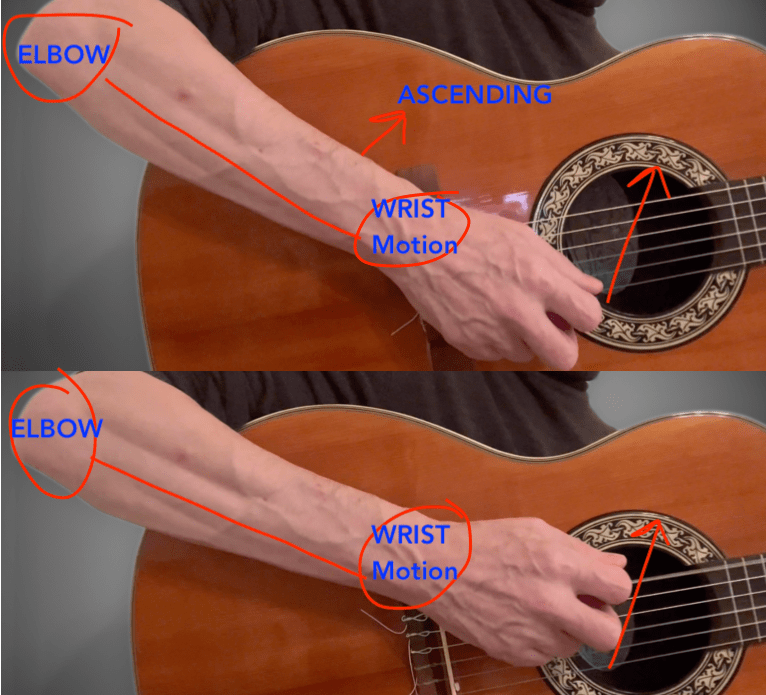
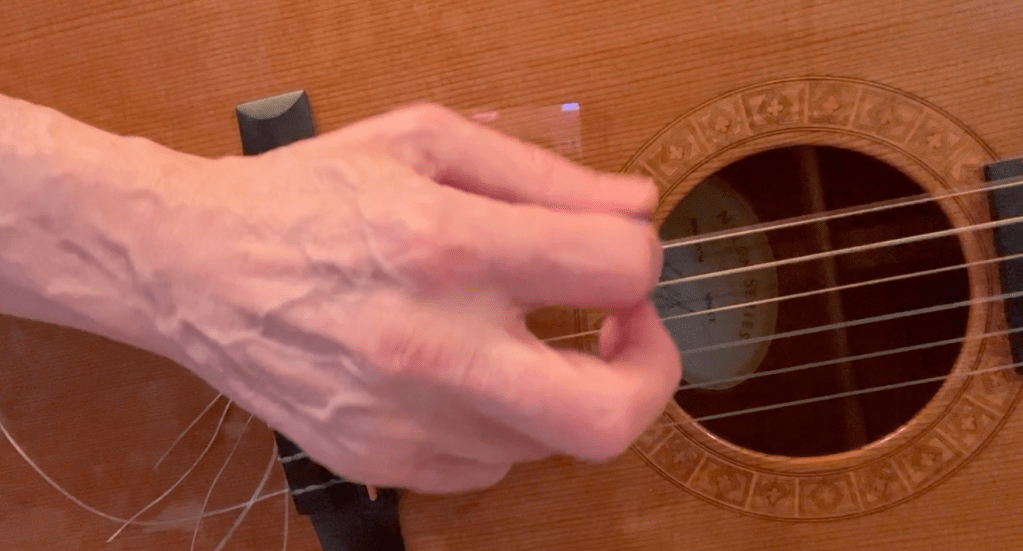
Picking works best for the jazz/fusion [McLaughlin] style when picking from the wrist. Having said this, there is relative movement from the elbow to the wrist as the forearm follows through.

This becomes one motion that connects the music/phrase [we are playing] together as we alternate strictly down/up or up/down aligned with the strings we wish to pluck.

alternate-picking-right[hand-guitar-technique-diagram

The Fripp style is more for “Pre-learnt” playing 100-152 Bpm [Yes, there will be some improvisation] But, the McLaughlin style is really geared towards “In the moment” improvisation around the 130-200 bpm. With Al di Meola being a combination of both [Think “Hotel Splendido” to “Cielo et Terra”.

This in turn means that each are approached in a slightly different manner, but this would be a whole blog in itself. So, for the sake of time I am addressing the all round basic concepts for the Right Hand in this post.

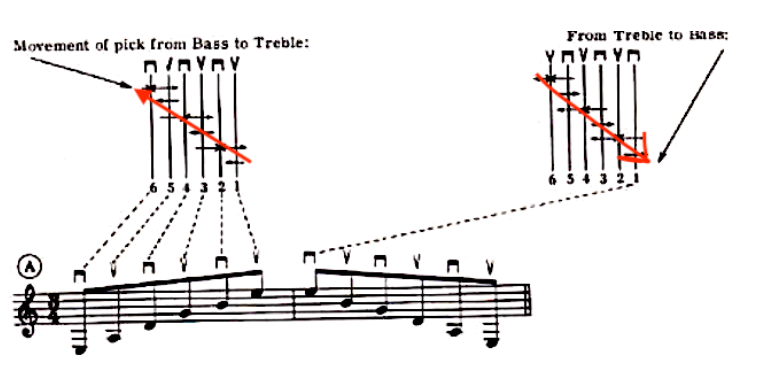
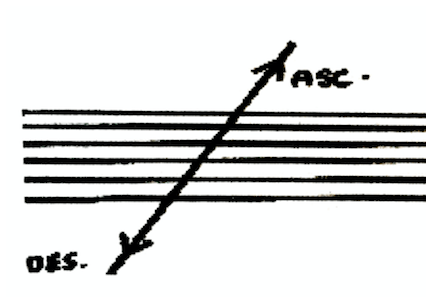
When crossing strings I like to follow a straight line as is taught in Ivor Mairants brilliant book “Perfect Pick Technique”.

Below, is the diagram that demonstrates this.

alternate-picking-right[hand-guitar-technique-diagram

This is extremely useful as it means that we are aligned with the string we wish to pluck at the moment we wish to pluck it and the forearm wrist and pick are in line and ready to pluck.

Feeling, and knowing this gives us confidence for ascending and descending naturally without any interrupting from unnecessary nervous or tense movements.

alternate-picking-right[hand-guitar-technique-diagram

alternate-picking-right[hand-guitar-technique-diagram

alternate-picking-right[hand-guitar-technique-diagram

alternate-picking-right[hand-guitar-technique-diagram

alternate-picking-right[hand-guitar-technique-diagram

alternate-picking-right[hand-guitar-technique-diagram

As you can see from the 6 diagram alignments above, the wrist and forearm follow naturally as they cross the six guitar strings.

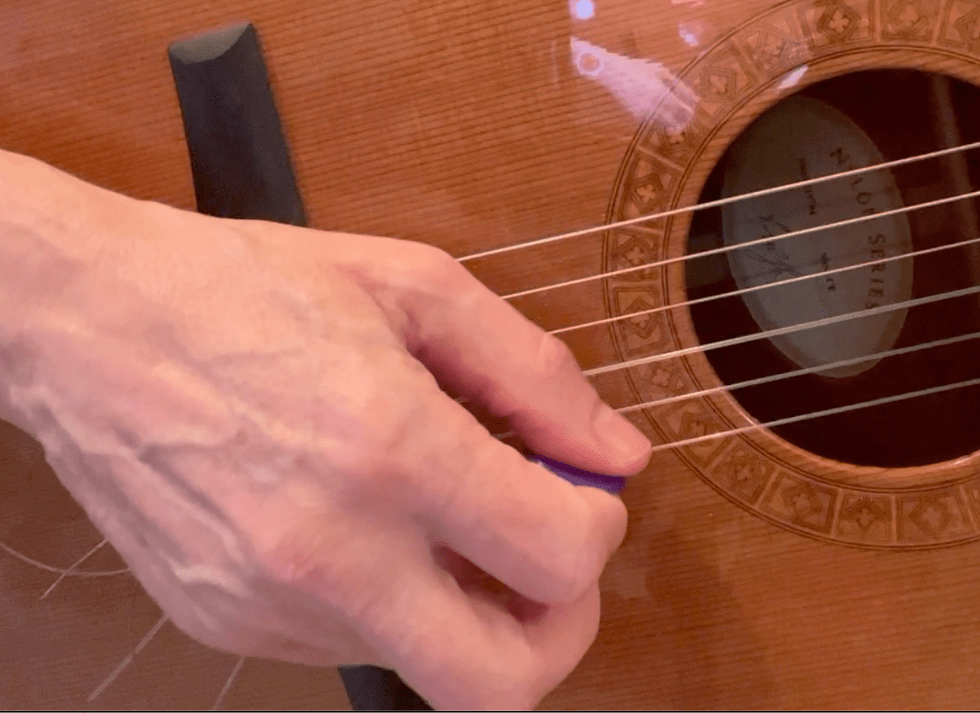
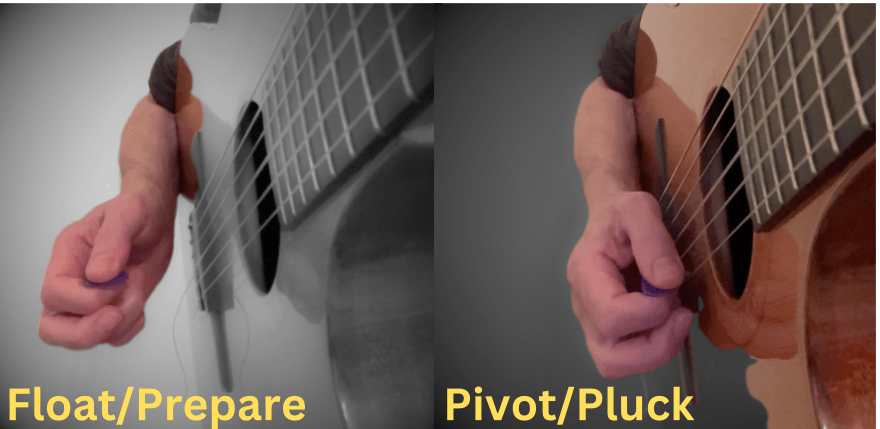
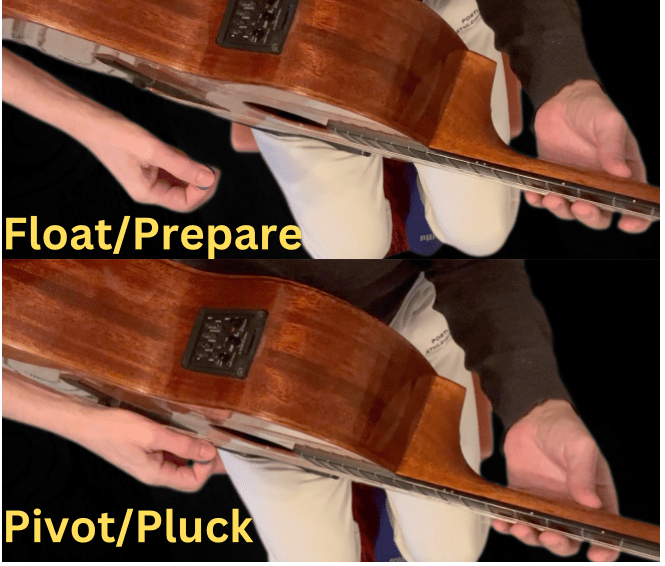
Floating, is literally as it sounds and means floating with the right hand above and not resting whilst plucking the strings.

Pivoting, on the other hand means resting on [generally] the bridge of the guitar and plucking.

I like to be in a floating position and then pivot on either the first note and then float or……float and pivot on the “Down” strokes:

[Please not that the floating is overly emphasised in the photo’s as it is the only way I found to show it].

alternate-picking-right[hand-guitar-technique-diagram

From Above:

alternate-picking-right[hand-guitar-technique-diagram

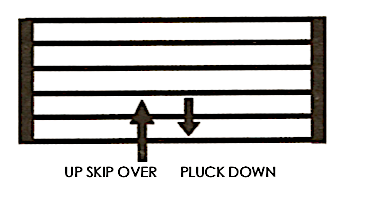
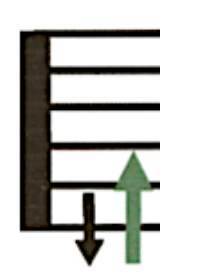
Always, remember with Alternate Picking we are either picking:

“Up” skip over pluck down.

alternate-picking-right[hand-guitar-technique-diagram

Or:

“Down” skip over pluck up.

alternate-picking-right[hand-guitar-technique-diagram

Simple as this is it’s essential to take into account so that you don’t get confused or do two of the same stroke.

IN CONCLUSION:

In conclusion, this was just a brief examination of good solid alternate picking right hand technique. Much of it depends on what you wish to play. Many just wish to play guitar fast, which, ironically defeats the task.

To play at fast tempos one needs to be able to articulate phrases slowly, and, for the prog or jazz fusion improviser this means 8th note to 16th note to 32nd note. Forms of double timing. Because, from that the musical phrasing emerges and so does the speed.

In summation I would say that alternate picking technique is really a simple technique to play complex music and not a complex technique to play simple music.

Modern Jazz Fusion Chords:How to create them from scales

CLICK SUBSCRIBE!

Hi Guys,

Today, a look at how to create colourful and interesting jazz/fusion chords:

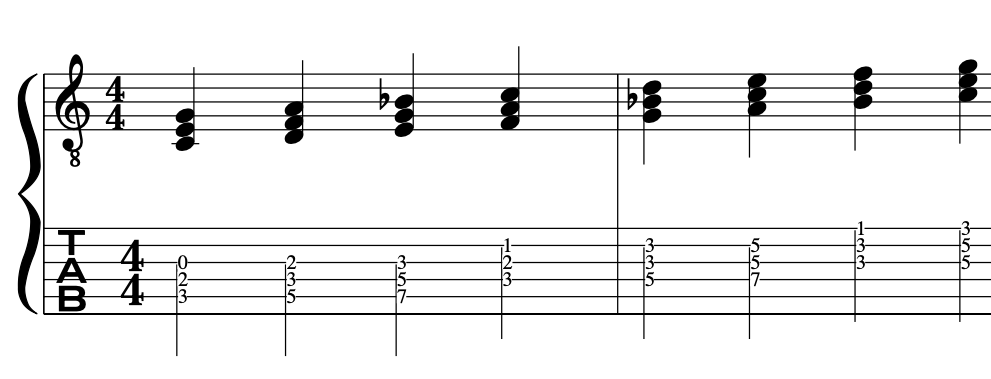
Because, we are dealing with jazz/fusion we will manipulate a scale in modal form. This will be C Mixolydian:

Now, let’s add one note above each note of the mode and create 3rds. [Here we can hear the mode in double stops].

Now, we will add another note a 5th above the root and create triads.

jazz-fusion-chords-lesson

We have now harmonised the Mixolydian mode.

As you will hear it doesn’t sound very jazzy or have a fusion-esque sound.

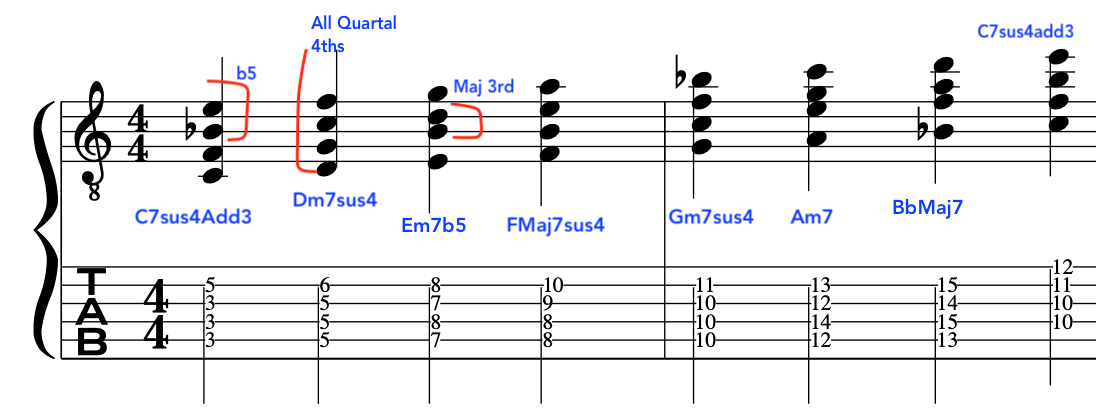
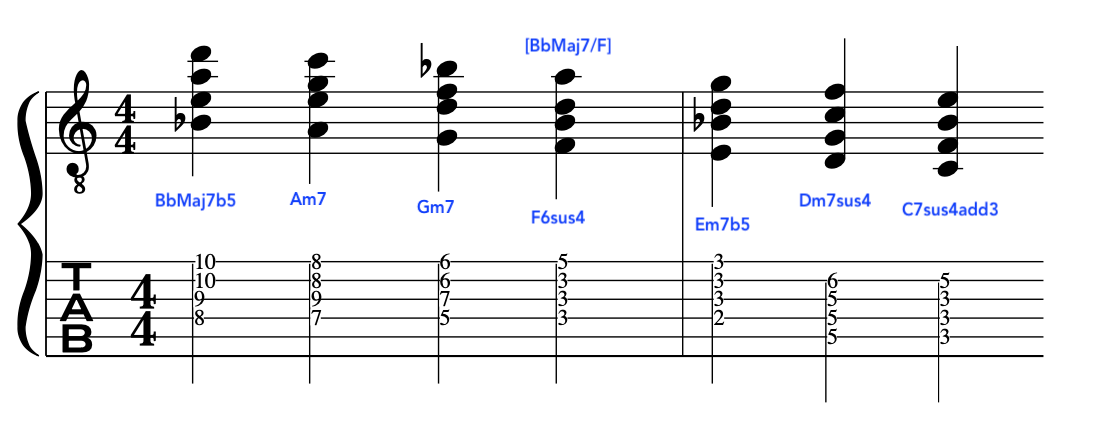
Well, we will add another note and manipulate the chord “Voicing’s”. Let’s exploit 4ths, flattened 5ths and Major 3rds.

Ascending Chord Scale:

jazz-fusion-chords-lesson

Descending chord scale:

jazz-fusion-chords-lesson

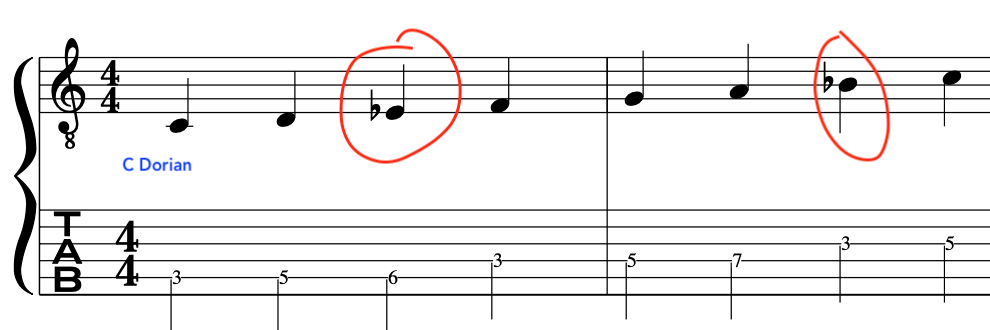
Now, we will apply this to the C Dorian Mode which has another flat note, this being Eb.

jazz-fusion-chords-lesson

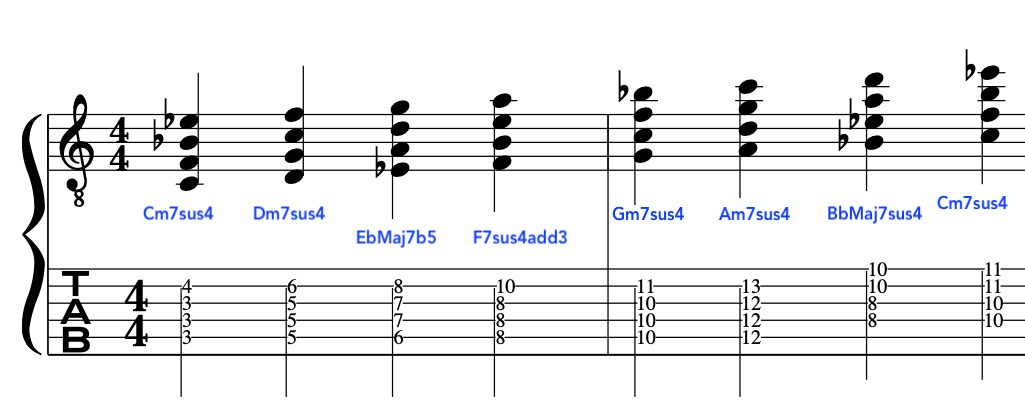
C Dorian Chord Scale : Harmonisation idea:

jazz-fusion-chords-lesson

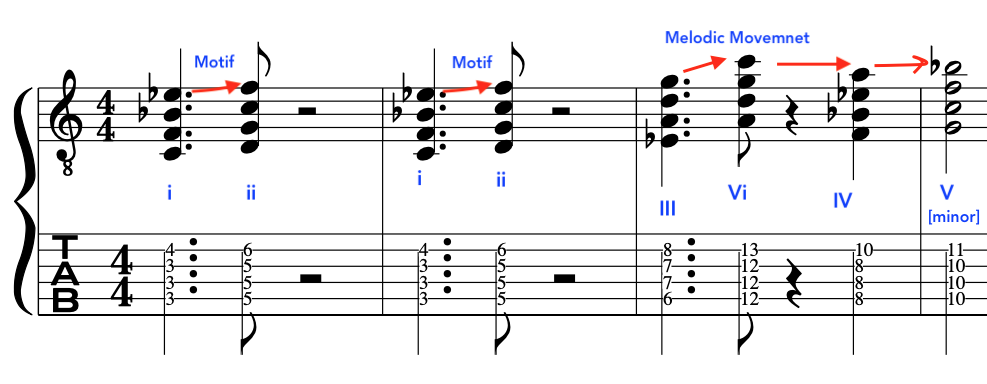
Now, let’s play these chords in a sequence and make a bit of music from them:

EXAMPLE: Notice-Motifs and melodic movement from the chord voicings:

jazz-fusion-chords-lesson

Finally, to really get that “Fusion” exoticism let’s now exploit the melodic minor scale:

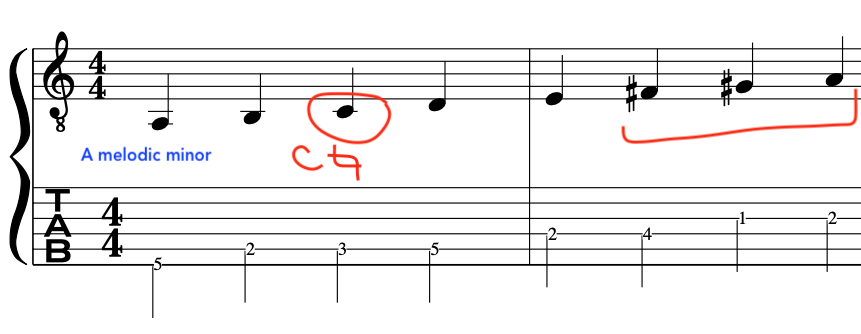
Below, we have the A melodic minor scale: Notice it’s just like the A Major scale but with the 3rd flattened: [In this case C natural]

jazz-fusion-chords-lesson

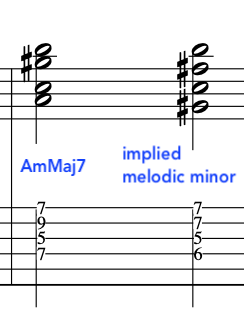
Again, we will try out some ideas to harmonise the scale with some interesting chord voicing’s:

jazz-fusion-chords-lesson

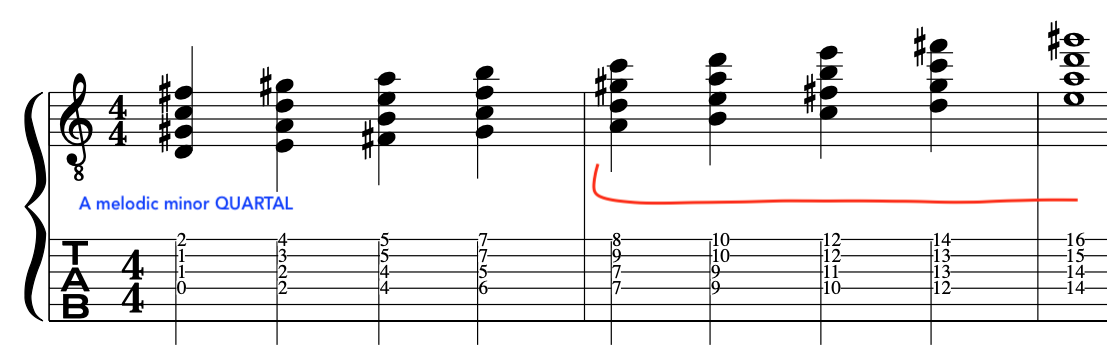
Here is a really nice set of chords built from from the scale.

jazz-fusion-guitar-chords-lesson-melodic-minor

From here it’s a good idea to play re-harmonised chords from chord scales in sequences like:

ii V7 I

Vi ii V I

iii Vi ii V7 I

This was just a basic look at how to create interesting chords from scales and modes and how to create interesting and unique voicing’s.

At the end of the day it really comes down to your own ears and imagination and sense of creativity. But, this is how easy it is to create chords from scales and then put them into sequences for composition and re-harmonisation.