Mastering String Skipping: Fripp/Martino-Style Guitar Techniques

Hi Guys!

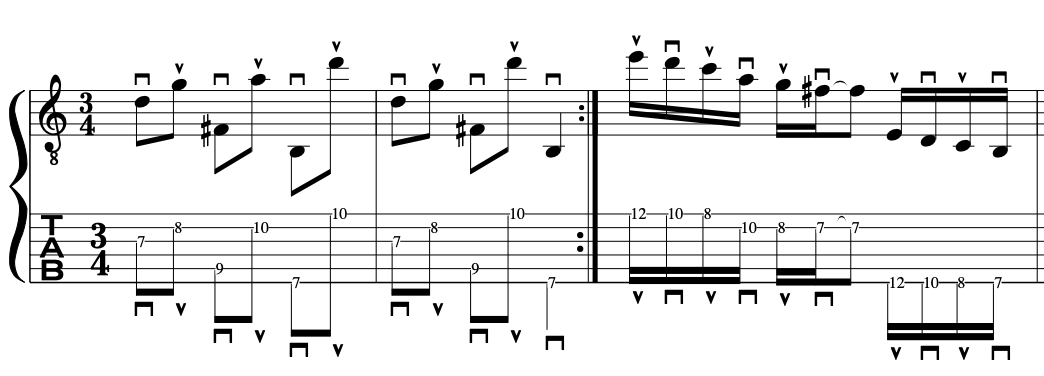
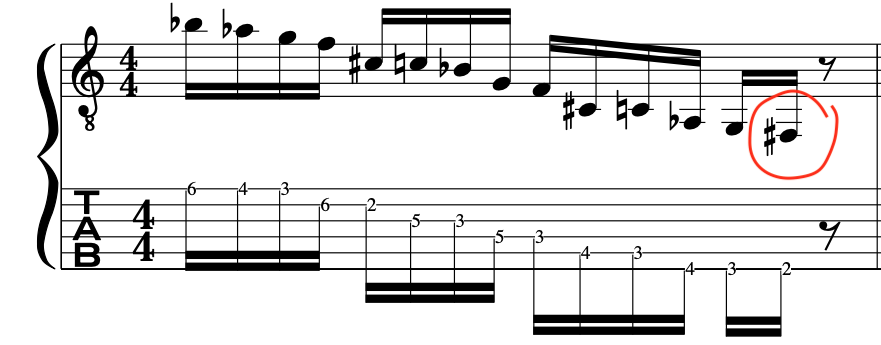
Here is the TAB/Notation for the “String Skipping” exercise in the style of guitar great Robert Fripp.

This 12 tone concept was taken from the brilliant 12 chromatic forms of jazz great Pat Martino.

string-skipping-guitar-lesson-example

I am staring this little etude/exercise on an “Up” stroke with alternate picking guitar technique.

string-skipping-guitar-lesson-example

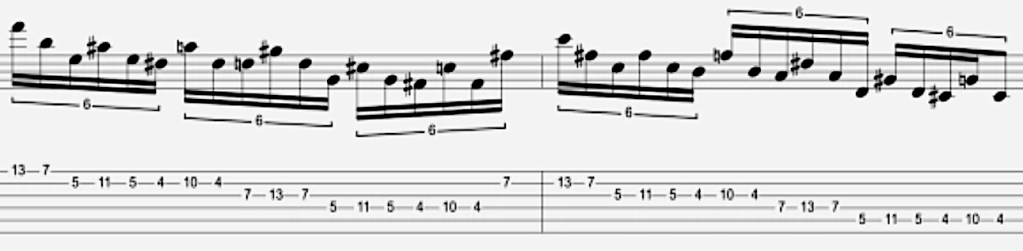
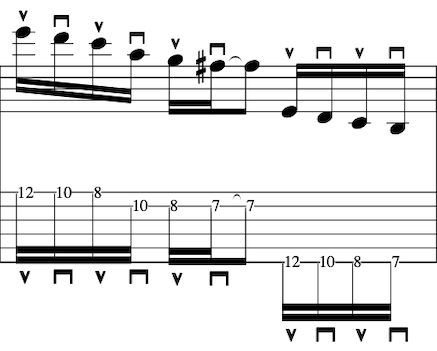
As an example here is the first part:

string-skipping-guitar-lesson-example

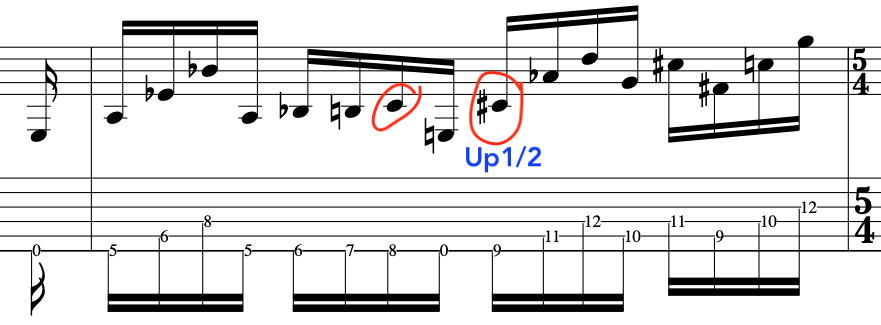
The key to be aware of, is the exploitation of “Octave displacement”. This creates unique harmonies and S.A.T [B] style lines.

string-skipping-guitar-lesson-example

As you can see, in the diagram above this is just the chromatic scale, but, moving/resolving through the different registers.

This octave displacement technique, offers us a way to create/extract interesting colourful music from the chromatic scale, whilst, keeping us far away from one string banality.

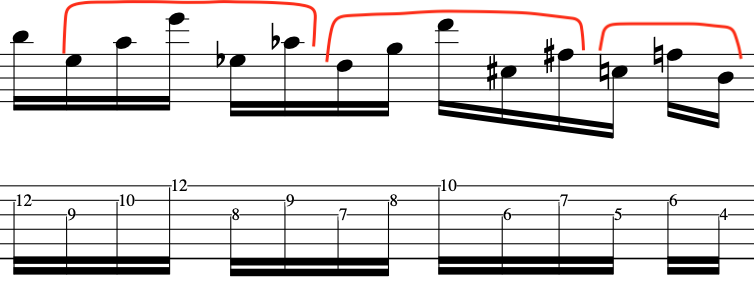
Although, there is octave displacement, there is also some basic scale parts to link it all together:

I am starting both of these scale fragments on an“Up” stroke with strict alternate picking once again:

fripp-guitar-scales-exercise-alternate-picking-guitar-technique

Also, the last part descends back into the chromatic scale to tie the [Composition] etude back together and give clarity to the ear, and let it know that we are still in an atonal chromatic form.

string-skipping-guitar-lesson-example
fripp-guitar-scales-exercise-alternate-picking-guitar-technique

12 Tone Pattern: Scott Collins Guitar Line:

Hi Guys,

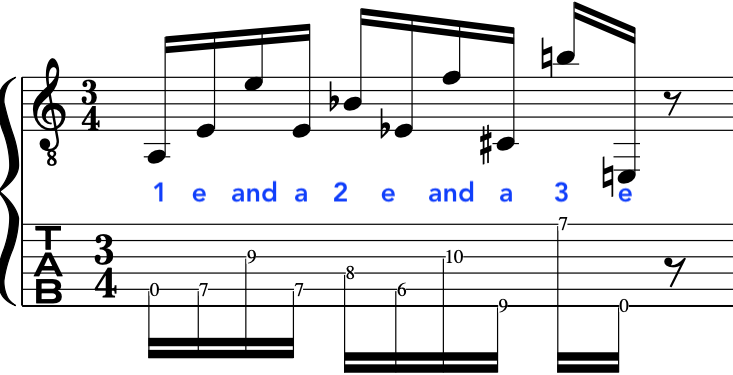
Today, a quick look at a Scott Collins 12 tone guitar pattern and applying it to alternate picking guitar technique as an exercise in descending intervallic movement.

First of all, let’s look at the pattern.

I am thinking of these motifs as 3 note “Tri-chords” [as in John ‘O” Gallagher’s book 12 tone improvisation].

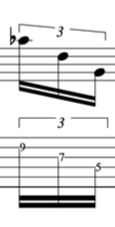
Here, are the first 3 pitches as a tri-chord.

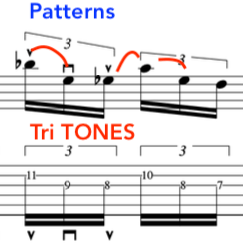
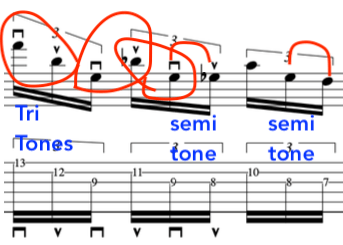
What makes this line interesting is that the “Tri- Chords” move in “Tri-Tones”.

You could view this from a diminished perspective but from a picking perspective it is more like tritones and semitones. This gives it that unique angular sound.

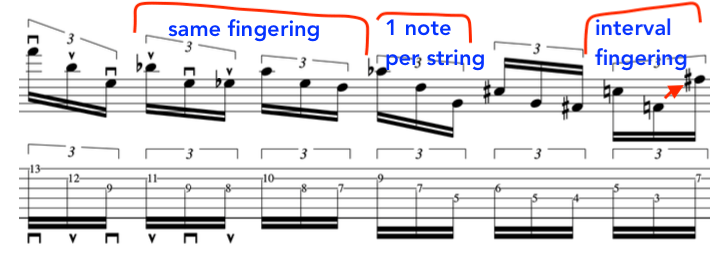
If we look at the example below we can see a classic example of a tri-chord pattern/sequence with the same guitar fingering.

scott-collins-12-tone-symmetrical-guitar-patterns

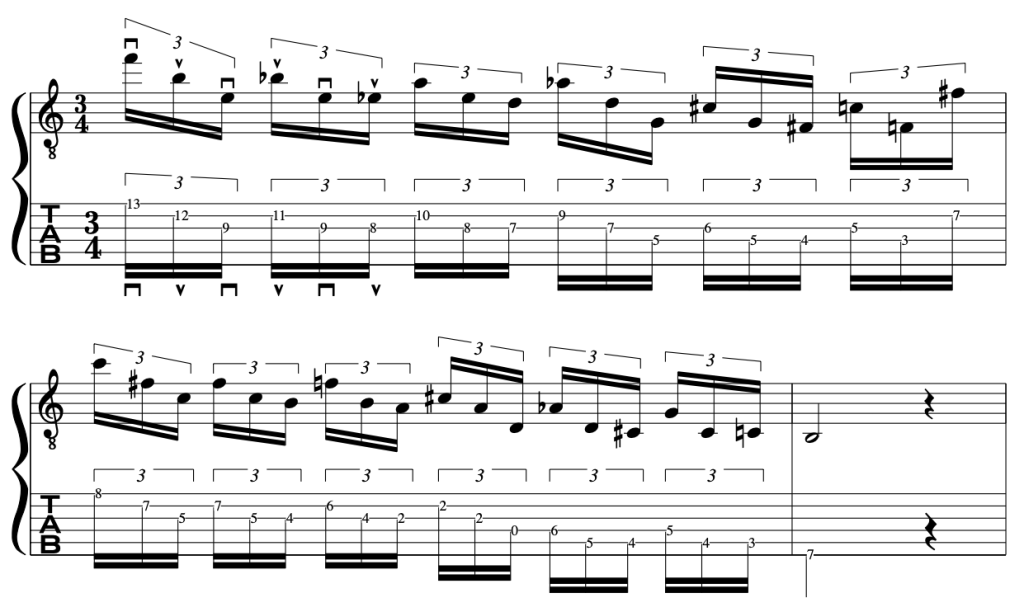
In the next example, we can see the tri-chords, the tritones and the semitone movement.

scott-collins-12-tone-symmetrical-guitar-patterns

I am using strict alternate picking guitar technique for this exercise starting this on a “Downstroke”.

I am counting in groups of three note triplets, although, you could count in sextuplets.

There is a lot of one note per string and two notes per string picking. So, remember when you pluck down to pluck back up equally. This very much Robert Fripp style picking and hence you need to be aligned with the string you wish to pluck.

scott-collins-12-tone-symmetrical-guitar-patterns

scott-collins-12-tone-symmetrical-guitar-patterns

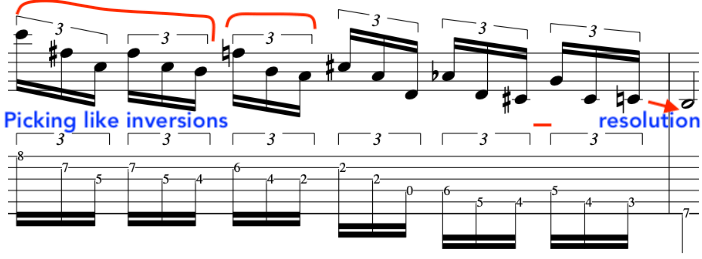
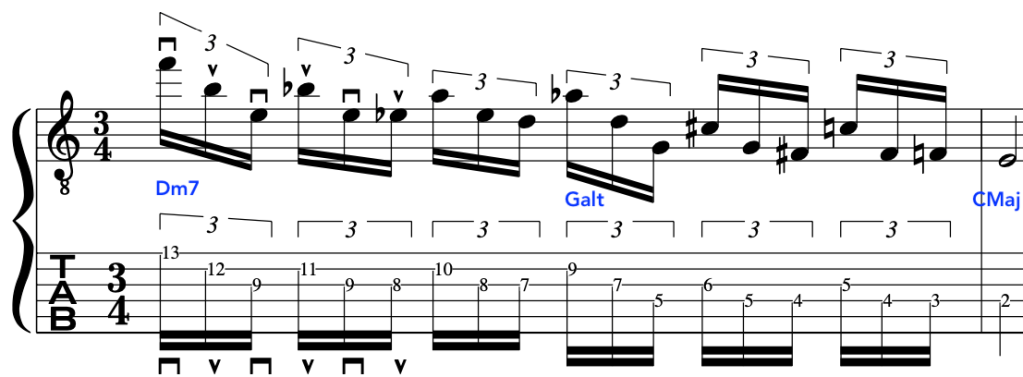
Lastly, we will use half of the patten and play it over a traditional ii V7 I

scott-collins-12-tone-symmetrical-guitar-patterns

scott-collins-12-tone-symmetrical-guitar-patterns

Below, is the original line I took this from. As, you can see from the fingering, this was more of a symmetrical pattern with tapping.

scott-collins-12-tone-guitar-pattern

scott-collins-12-tone-guitar-pattern-book

Fripp Intervallic Guitar Alternate Picking Exercise: Right Hand Technique

Fripp Intervallic Guitar Alternate Picking Exercise: Right Hand Technique

Hi Guys,

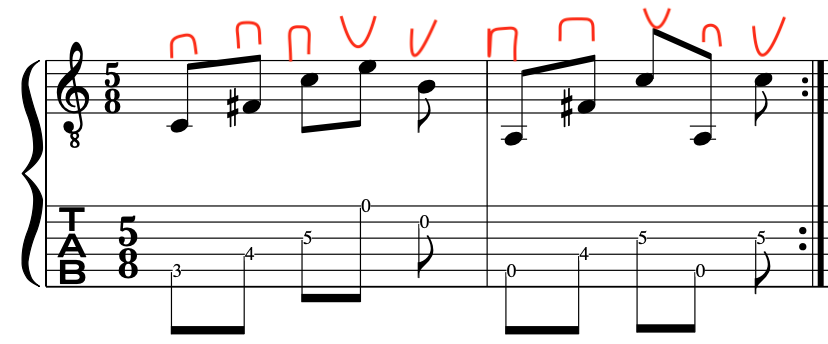
Today, a look at some Fripp style “Intervallic” guitar alternate picking exercise/vamps.

First, we will employ 8th notes and then extend this by adding a double timed bar moving from 8th notes to 16th notes.

In the first exercise we will perform a repetitive loop or vamp. This will start on a “Downstroke” with strict alternate picking throughout.

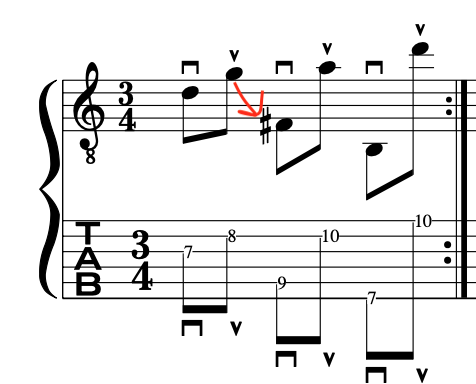
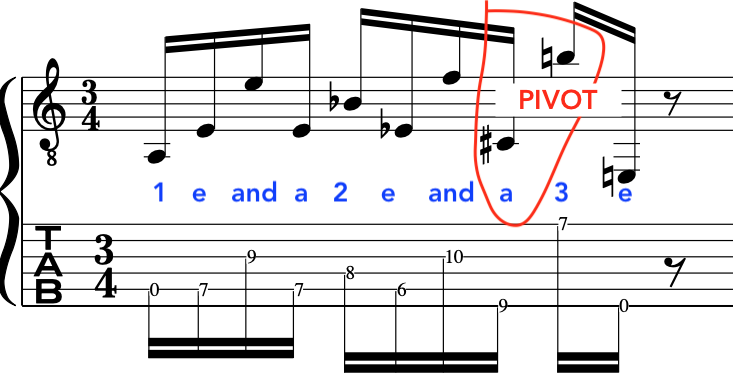
In regards to the fretting hand, be aware of the necessary“Pivoting” when string skipping to the F# note. It is only a small movement but it makes all the difference for a clean execution of the exercise. [see video above]

robert-fripp-king-crimson-guitar-lesson

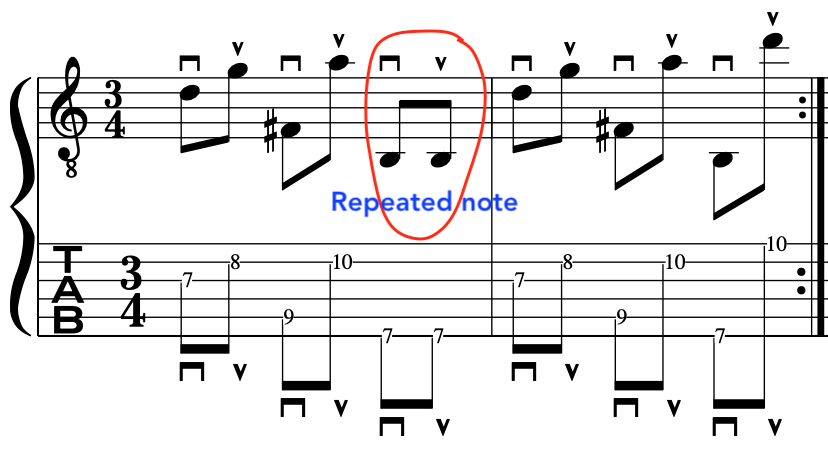
Here we have 2 bars of music. Notice the double/repeated note B natural. This is good for control of your right hand plucking/picking technique.

robert-fripp-king-crimson-guitar-lesson

This loop/vamp is great to train alternate picking repetition of notes and right and left hand synchronisation and consistency: [See video above].

This time we will add 16th notes to double the time and create rhythmic interst and melodic movement. This is also reminiscent of guitarist Al Di Meola’s picking technique.

robert-fripp-king-crimson-guitar-lesson

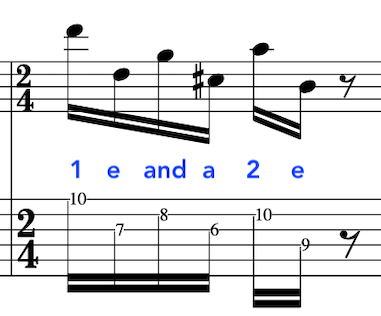
In this example we move from 2 bars of 8th notes to 1 bar of 16th notes.

robert-fripp-king-crimson-guitar-lesson

robert-fripp-king-crimson-guitar-lesson

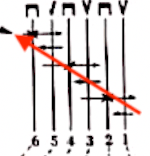
If we look at the above diagram we will see that the strings are being crossed and alternate picked along a “Straight” line.

This ensures that we are always “Aligned” with the string/note that we wish to pluck.

It is not guess work but a relaxed right hand that knows where to pick along that line and hence we can pick complex patterns regardless of time and intervallic distance with confidence and clarity.

These exercises are very good at revealing the right hand picking to the left hand fretting and creating an awareness of “Alignment” and synchronisation.

Following the straight line is so helpful as it means that we can get on with the playing of the music and not concern ourselves with anything outside of that, like “Will I play the correct note”, or “Here is the awkward bit”, etc.

Just align with the string along the straight line, pivot with the fretting hand if needed and just play.

FREE PDF DOWNLOAD: