John Coltrane and McCoy Tyner Style Quartal Guitar Line | Jazz Improvisation Lesson

Hi Guys,

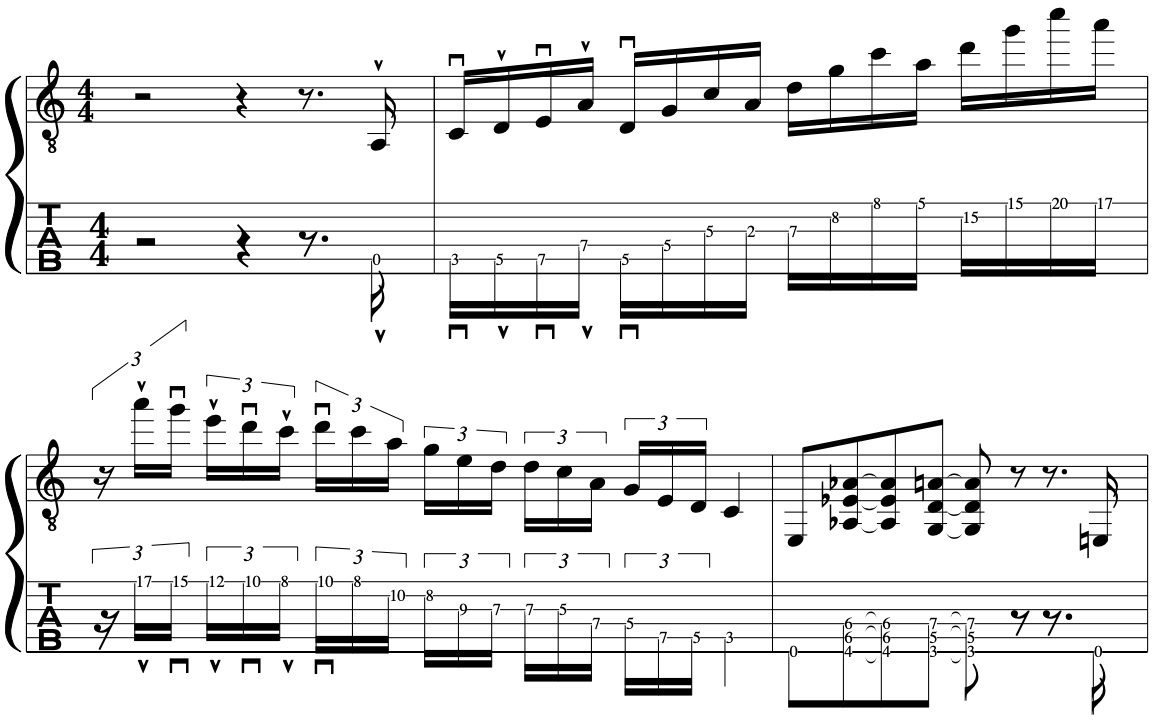
Today, a short John Coltrane/McCoy Tyner Style unison jazz quartal guitar line/ jazz head/riff.

This line starts with an anacrusis/upbeat. From here we employ a short pentatonic scale phrase that leads to quartal harmony that resolves down a minor 3rd interval.

I am starting this on an upstroke with strict alternate picking guitar technique.
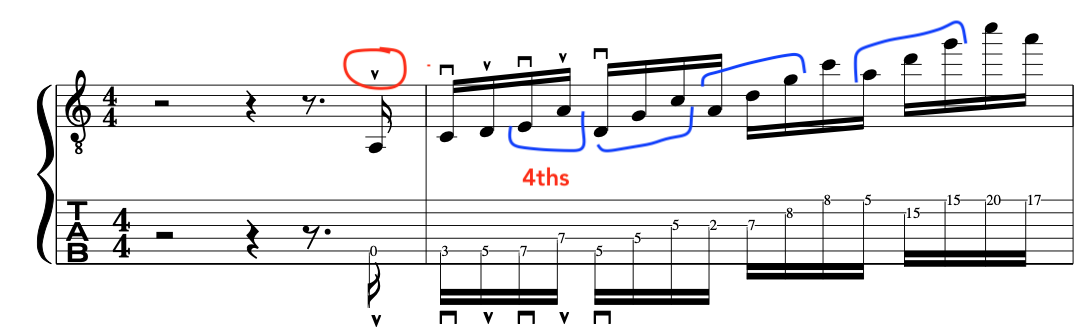
coltrane-jazz-guitar-lick-lesson

The key to the first phrase is that it plays upon this “Motif” as it gets imitated up the octaves:
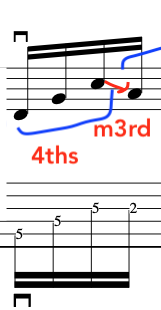
coltrane-jazz-guitar-lick-lesson-example

From here, we create contrast by descending with a pentatonic scale and push hard on a sextuplets feel for rhythmic colour and drive.
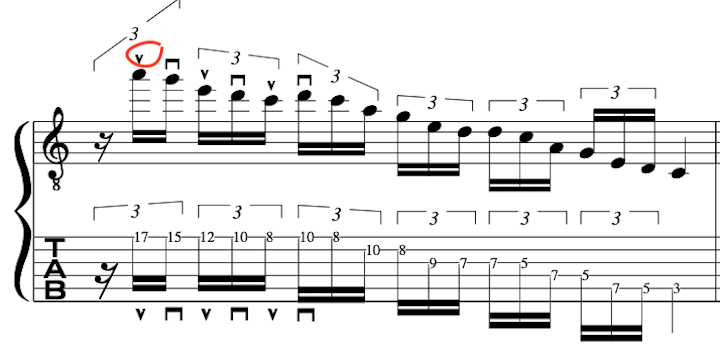
coltrane-jazz-guitar-lick-lesson

To complete the first part of this phrase, we round it off with two chords of Ab and G9
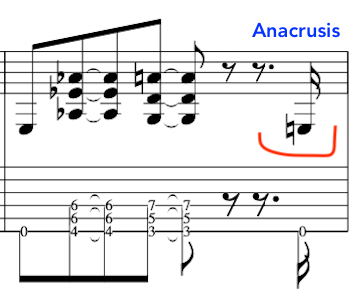
coltrane-jazz-guitar-lick-lesson

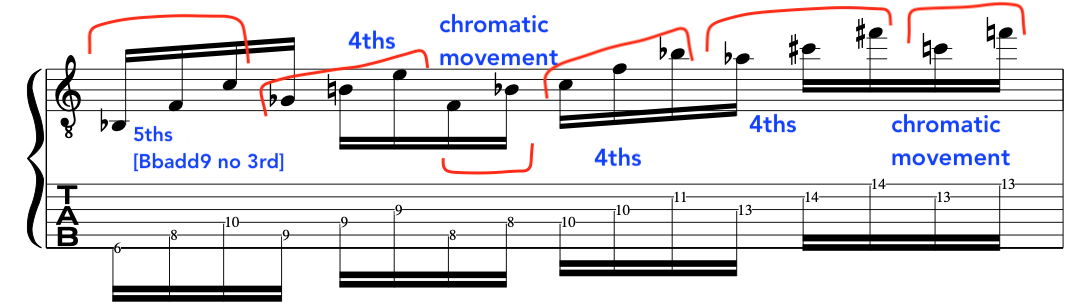
We, will now ascend and frame some interesting intervallic sounds: Opening with 5ths to 4ths with chromatic movement:
Finally, we will play the motif up a semitone one more time and ascend up in semitones to complete the phrase:
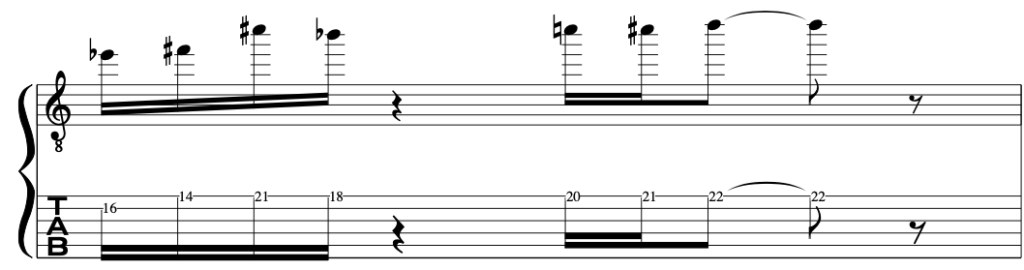
coltrane-jazz-guitar-lick-lesson

coltrane-jazz-guitar-lick-lesson

This was just a brief look at what can be done with this modal pentatonic quartal jazz style.

It’s a style very well suited to the guitar in terms of fretting and picking and it’s amazing what interesting music you can easily make from this even just by means of imitation.

Jazz Fusion Alternate Picking Guitar Exercise Analysis

Hi Guys

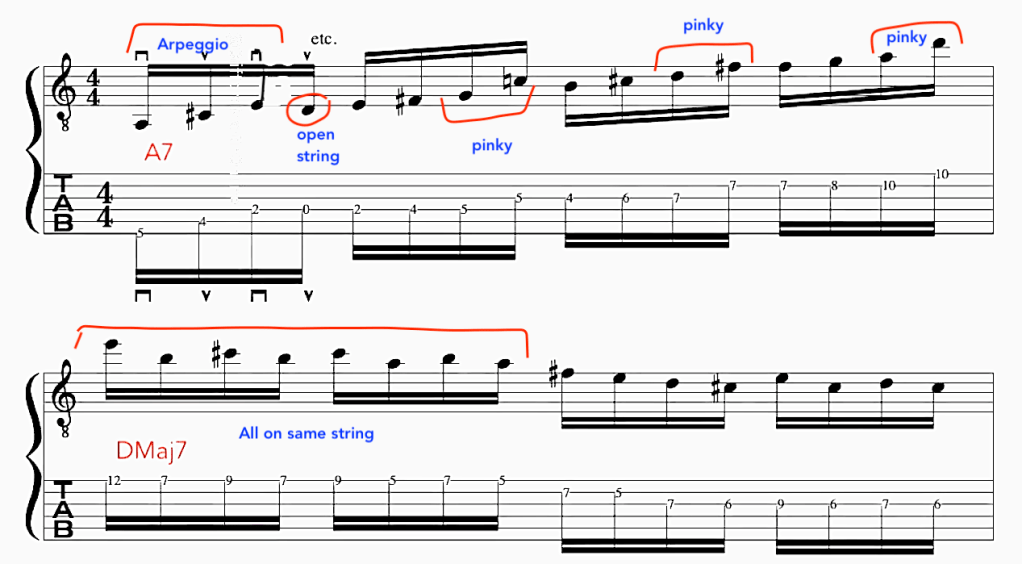
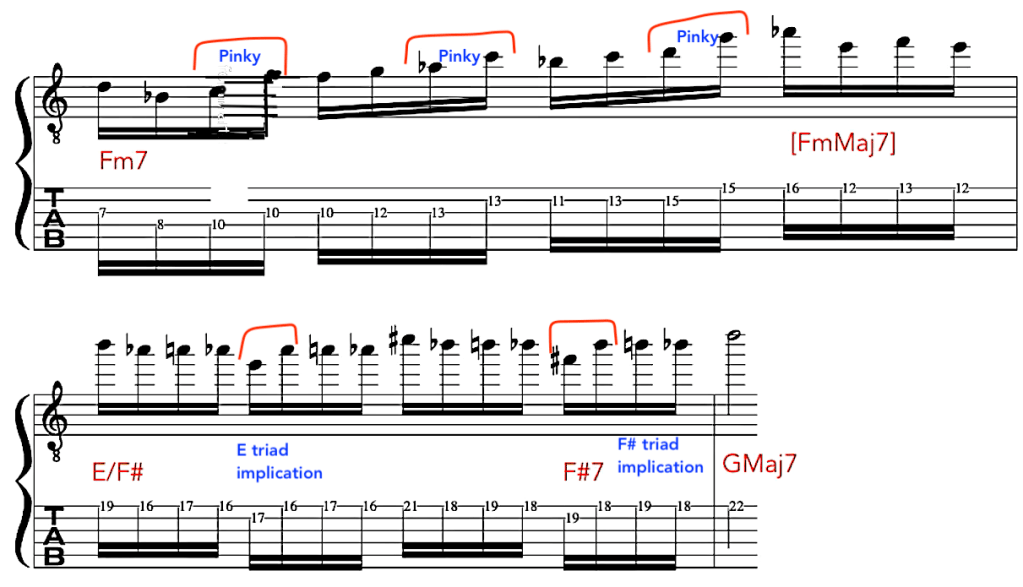
As requested, here are the two youtube shorts [uploaded horizontal] with the Tab/Notation. [Sorry, some notation is a bit messy]

Alternate Picking guitar exercise. Jazz Fusion music mid tempo. Lesson/How to:

PLEASE NOTE: These are only exercises to connect and get familiar with the jazz tools of improvisation in regards to alternate picking:

This exercise starts on a down stroke with strict alternate picking around 130-140 Bpm:

The point of the exercise is to “Connect” lots of jazz improvisation concepts together.

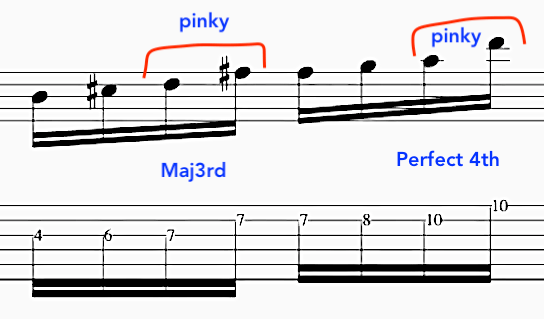
The first being barring 4ths and 3rds with the little finger [or pinkie]. This breaks up the monotony of the scale sound and creates a melodic inflection. It also makes it easy to play quickly as two notes are fretted with the same finger.

alternate-picking-guitar-jazz-fusion-lesson

This exercise is also good for exploiting phrasing on one string:

alternate-picking-guitar-jazz-fusion-lesson

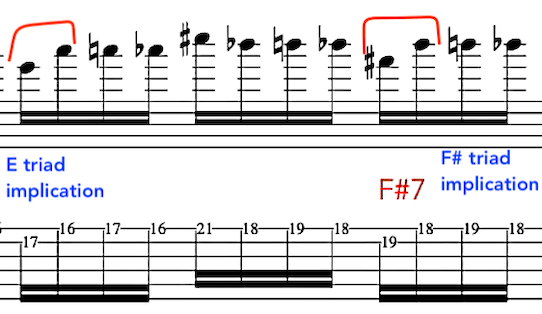
It’s also good for triad implications or sus 4-3 to lengthen the line.

alternate-picking-guitar-jazz-fusion-lesson

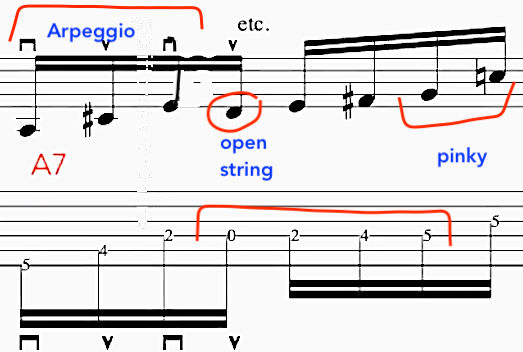
Lastly, another tool that works really well for both the alternate picking right hand and the sound of the phrase is to employ an arpeggio. In this exercise we have also manipulated the open string to set up the next fragment of scale on the same string.

alternate-picking-guitar-jazz-fusion-lesson

alternate-picking-guitar-jazz-fusion-lesson

Alternate Picking mid tempo guitar exercise

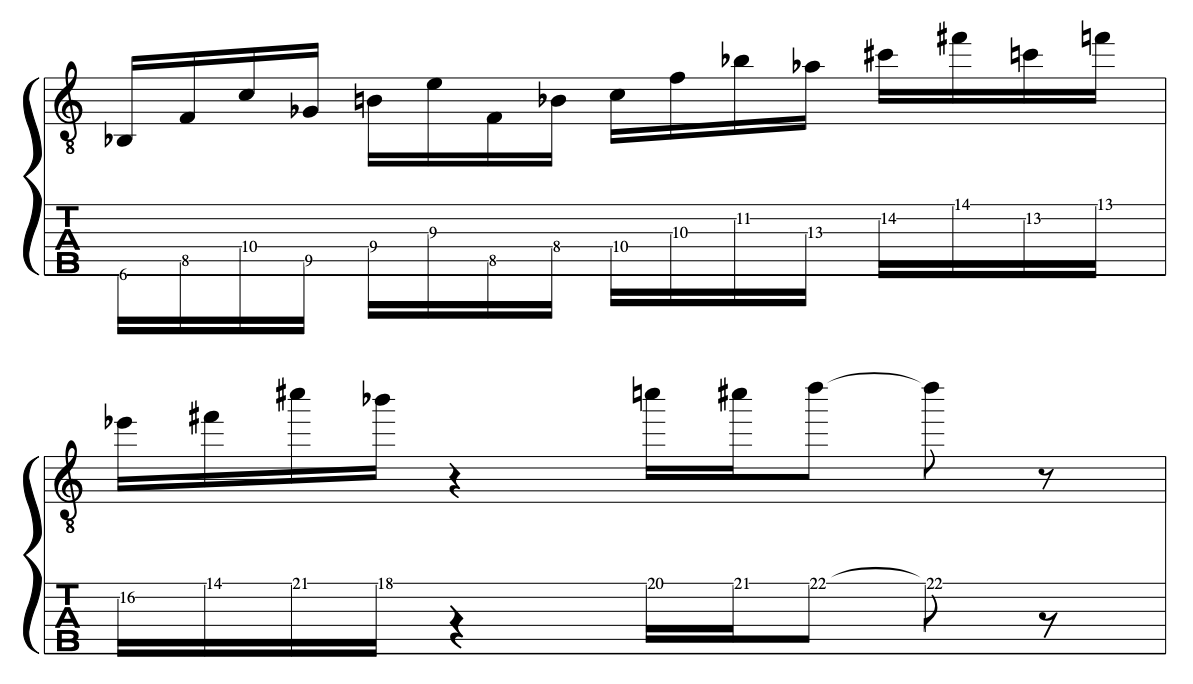
This exercise starts on a downstroke once again, but, this time we descend:

The same improvisational tools are applied.

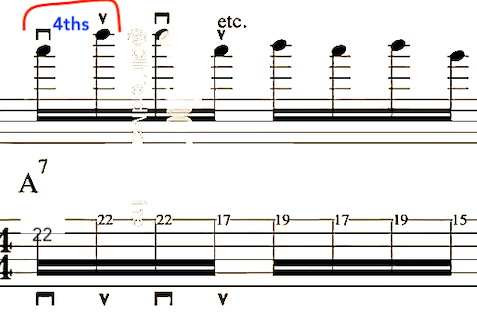
We start the line with some 4ths barred with the little finger into a bit of broken scale.

alternate-picking-guitar-jazz-fusion-lesson

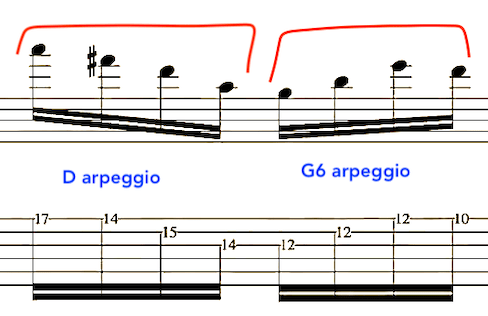
This leads us nicely into the employment of two arpeggios. These arpeggios create melodic colour over the A7 Dominant chord.

alternate-picking-guitar-jazz-fusion-lesson

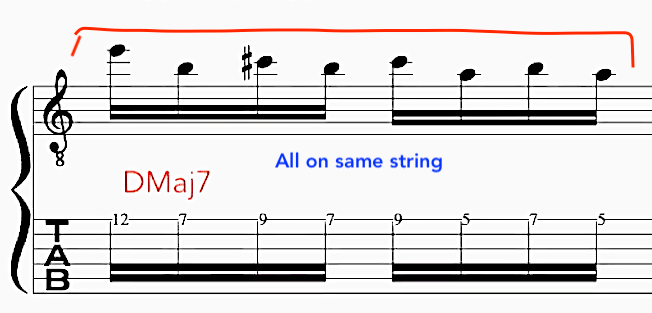
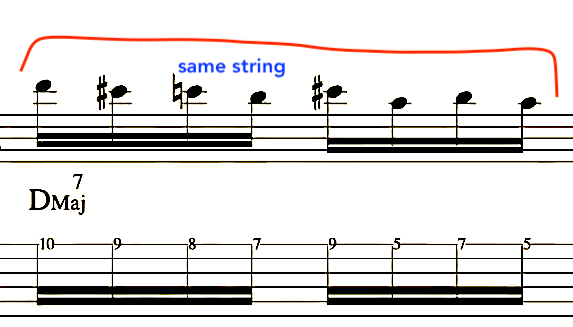
Next we exploit the alternate picking on the same string for two beats over the D Major 7 chord:

alternate-picking-guitar-jazz-fusion-lesson

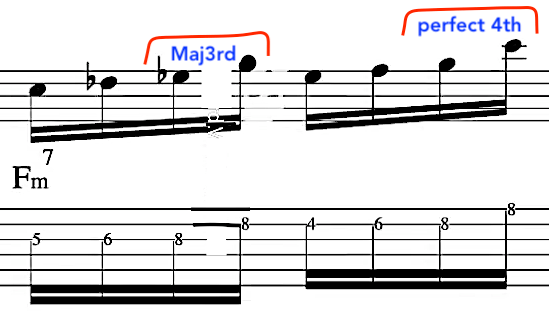
As with the previous exercise we exploit the Major 3rd and perfect 4th intervals, which means that we can alternate pick two notes quickly without having to change our fretting fingers.

alternate-picking-guitar-jazz-fusion-lesson

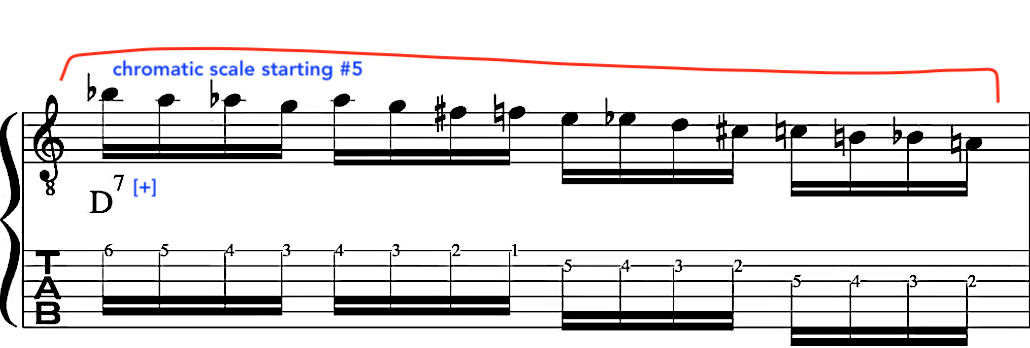
Finally, we employ the chromatic scale starting on the #5 [Bb] of D7augmented chord:

alternate-picking-guitar-jazz-fusion-lesson

In conclusion it’s through exploiting these improvisational devices that we can alternate pick and create long quick fluid lines lines that make improvisational sense.

In terms of jazz fusion this means that we can play smoothly through ambiguous harmony as well as standard chord changes at a quick tempo.

FREE PDF DOWNLOAD:

Modern Jazz Fusion Chords:How to create them from scales

CLICK SUBSCRIBE!

Hi Guys,

Today, a look at how to create colourful and interesting jazz/fusion chords:

Because, we are dealing with jazz/fusion we will manipulate a scale in modal form. This will be C Mixolydian:

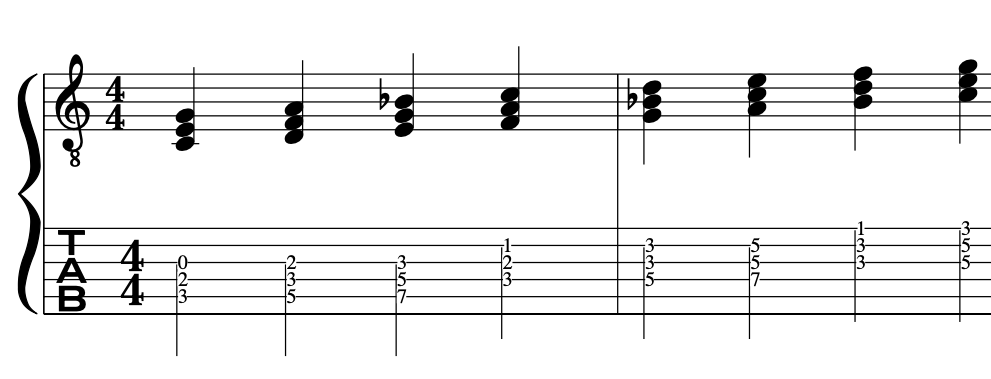
Now, let’s add one note above each note of the mode and create 3rds. [Here we can hear the mode in double stops].

Now, we will add another note a 5th above the root and create triads.

jazz-fusion-chords-lesson

We have now harmonised the Mixolydian mode.

As you will hear it doesn’t sound very jazzy or have a fusion-esque sound.

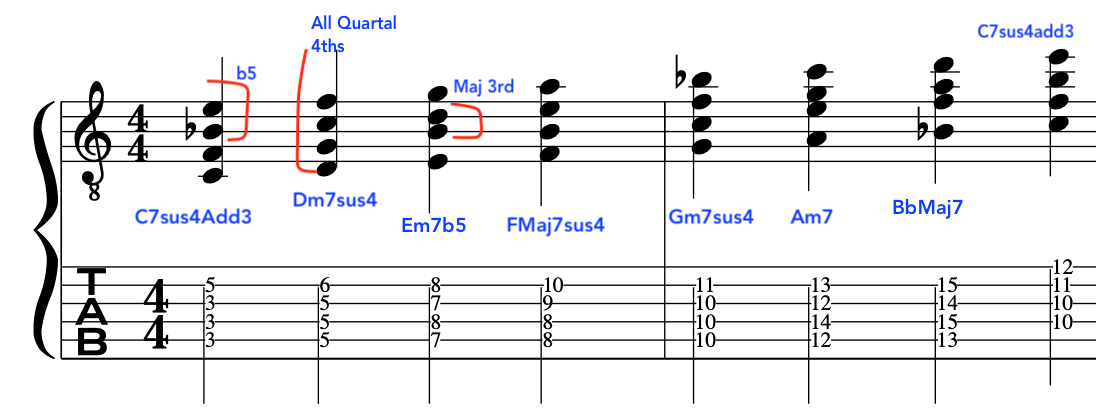
Well, we will add another note and manipulate the chord “Voicing’s”. Let’s exploit 4ths, flattened 5ths and Major 3rds.

Ascending Chord Scale:

jazz-fusion-chords-lesson

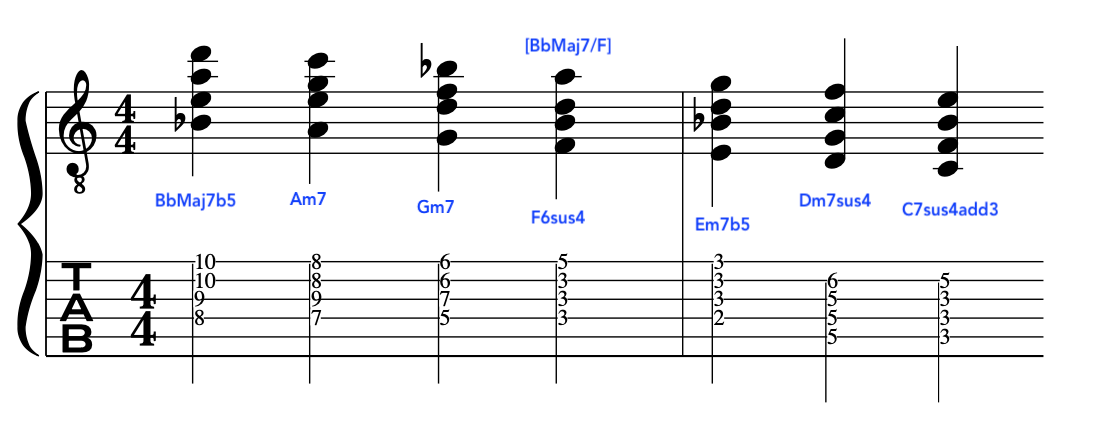
Descending chord scale:

jazz-fusion-chords-lesson

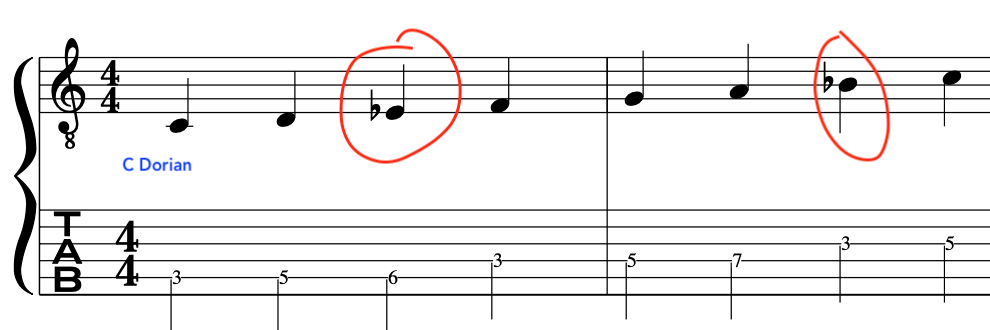
Now, we will apply this to the C Dorian Mode which has another flat note, this being Eb.

jazz-fusion-chords-lesson

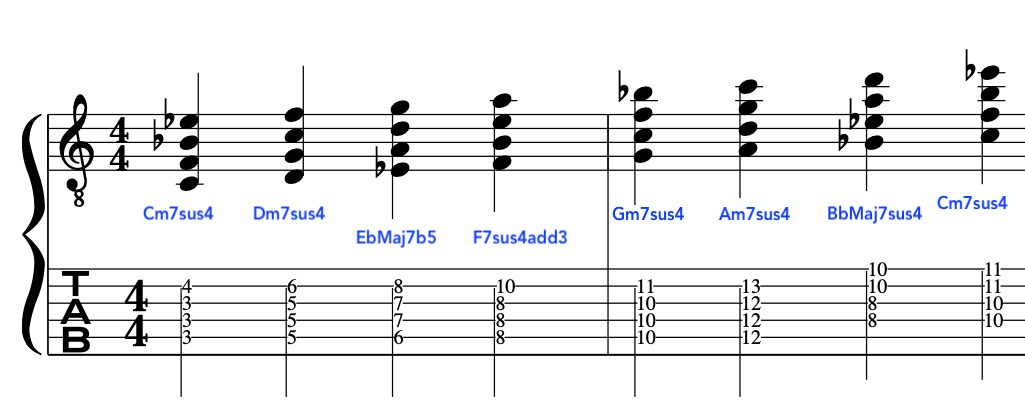
C Dorian Chord Scale : Harmonisation idea:

jazz-fusion-chords-lesson

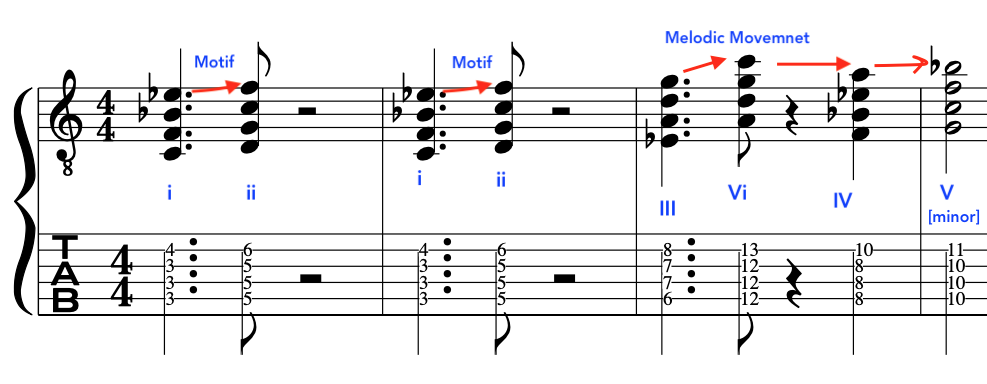
Now, let’s play these chords in a sequence and make a bit of music from them:

EXAMPLE: Notice-Motifs and melodic movement from the chord voicings:

jazz-fusion-chords-lesson

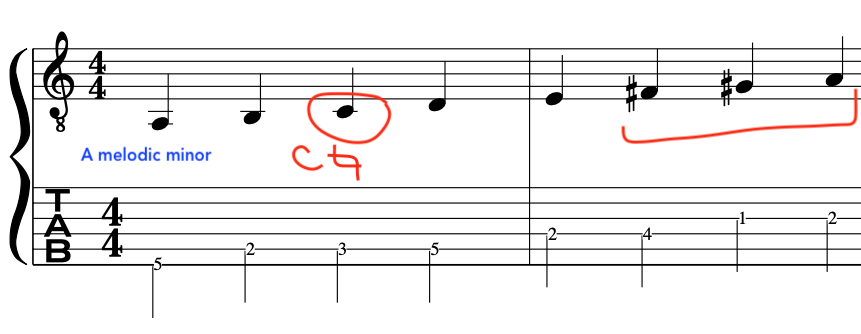
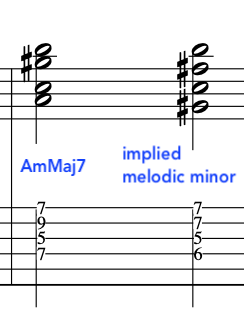
Finally, to really get that “Fusion” exoticism let’s now exploit the melodic minor scale:

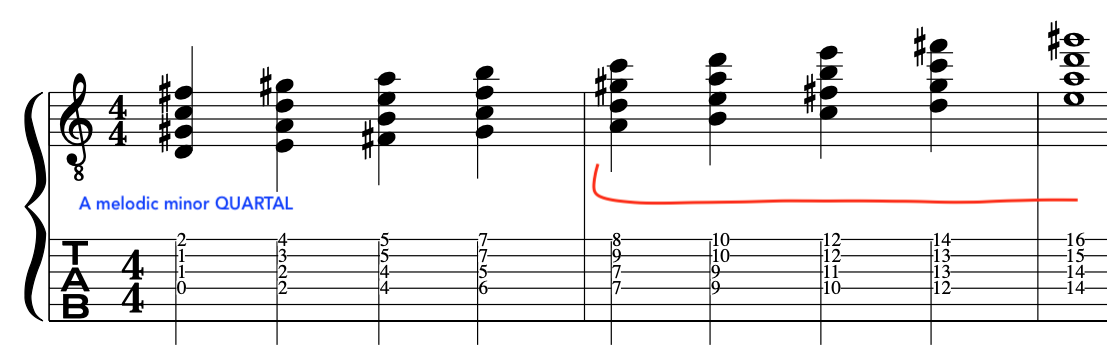
Below, we have the A melodic minor scale: Notice it’s just like the A Major scale but with the 3rd flattened: [In this case C natural]

jazz-fusion-chords-lesson

Again, we will try out some ideas to harmonise the scale with some interesting chord voicing’s:

jazz-fusion-chords-lesson

Here is a really nice set of chords built from from the scale.

jazz-fusion-guitar-chords-lesson-melodic-minor

From here it’s a good idea to play re-harmonised chords from chord scales in sequences like:

ii V7 I

Vi ii V I

iii Vi ii V7 I

This was just a basic look at how to create interesting chords from scales and modes and how to create interesting and unique voicing’s.

At the end of the day it really comes down to your own ears and imagination and sense of creativity. But, this is how easy it is to create chords from scales and then put them into sequences for composition and re-harmonisation.