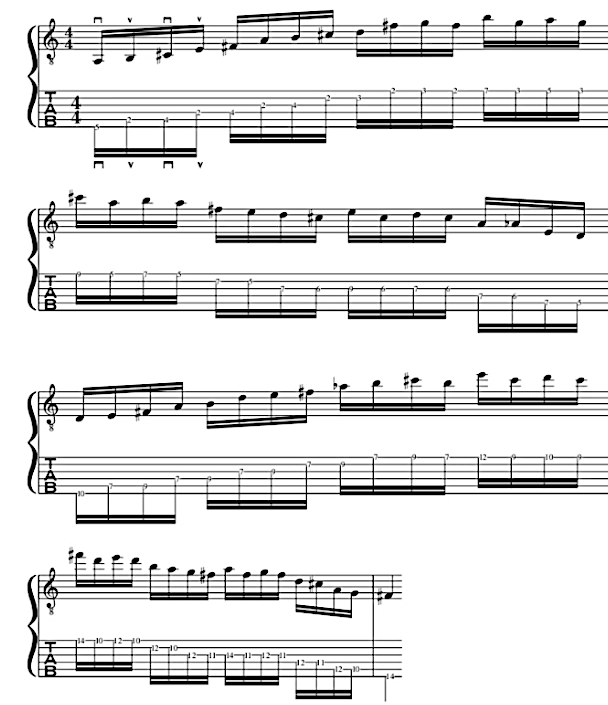
Today we will look at a ii V7 extension in the improvisational style of jazz/fusion guitarist John McLaughlin.
HARMONY/CHORD SEQ
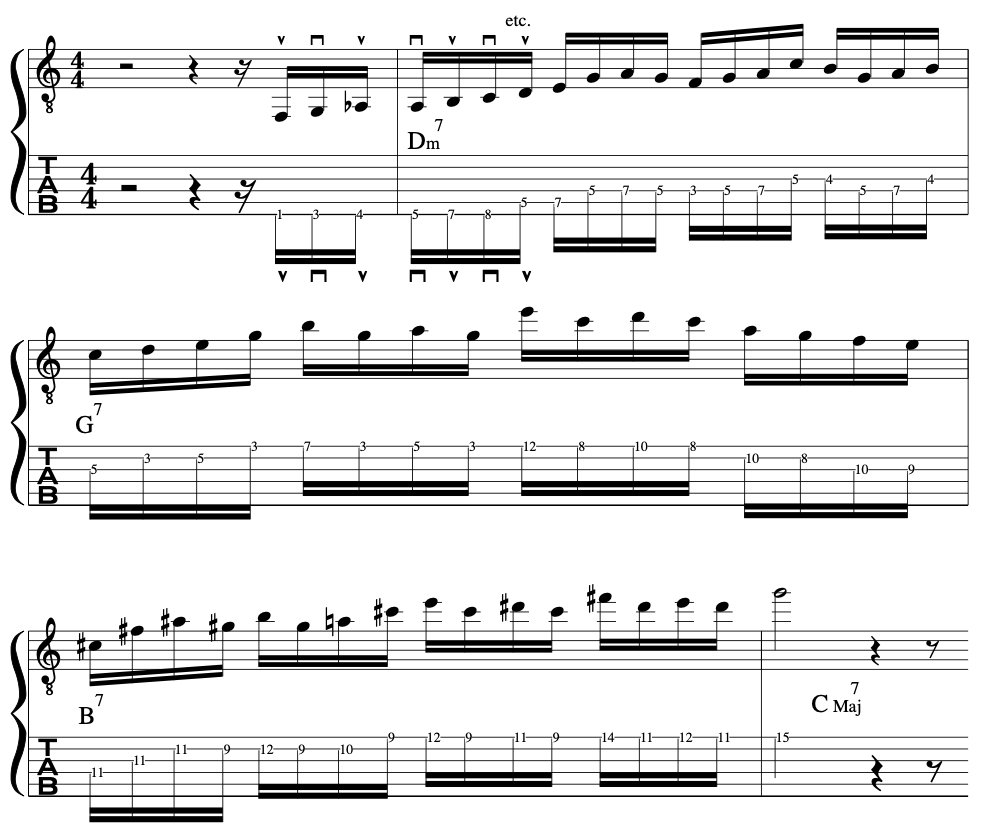
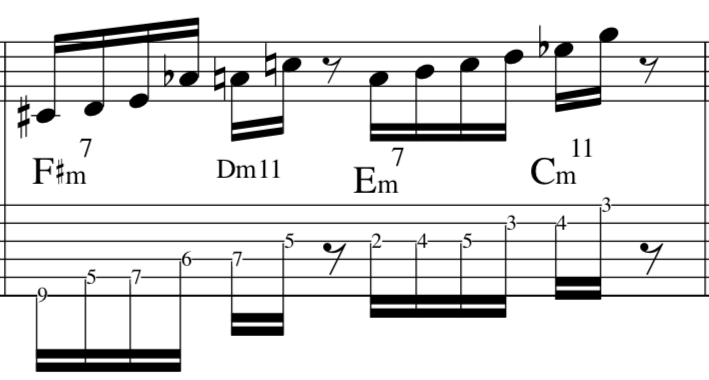
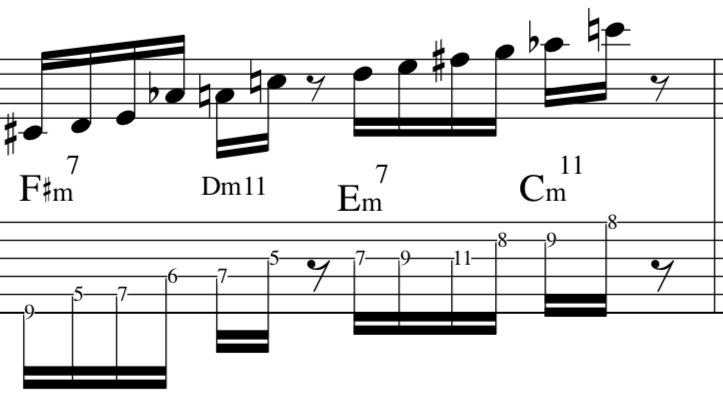
This is a cadential ii V7 I, but before the chord I resolution there is an added chord. This is chord Vii as a Dominant 7th. In this case this is B7:
So, this is the chord sequence/cadence that we will improvise over.
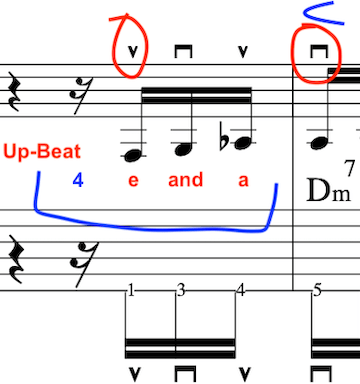
I start this with an up-beat employing strict alternate picking.
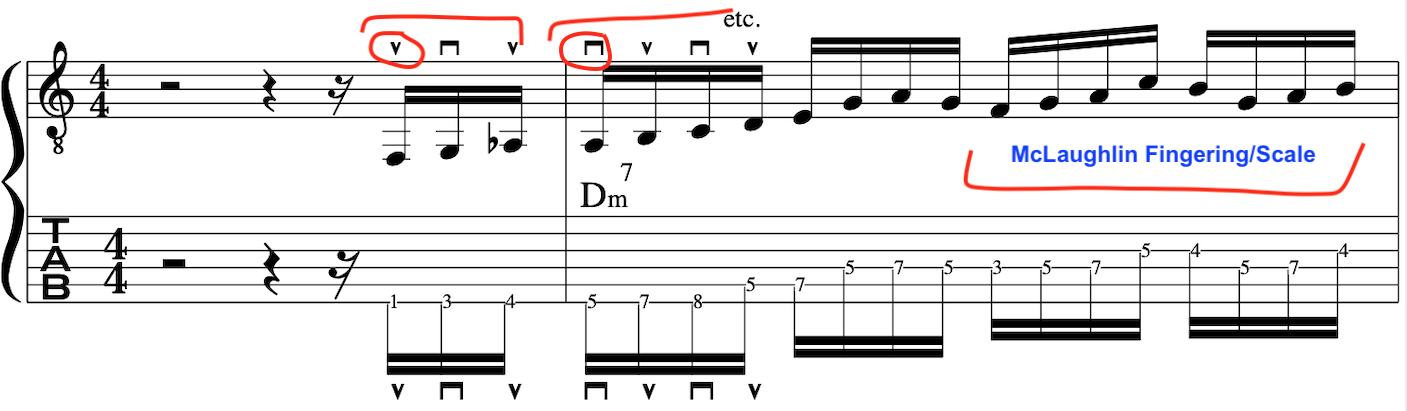
I start the phrase on an “Upstroke” so that when I start on the 1st beat of the 1st bar I can start on a “Downstroke”for familiarity.
The first bar is basic pentatonic scale movement. But, notice that the 2nd half of the bar encapsulates the classic McLaughlinguitar fingering signature phrase.
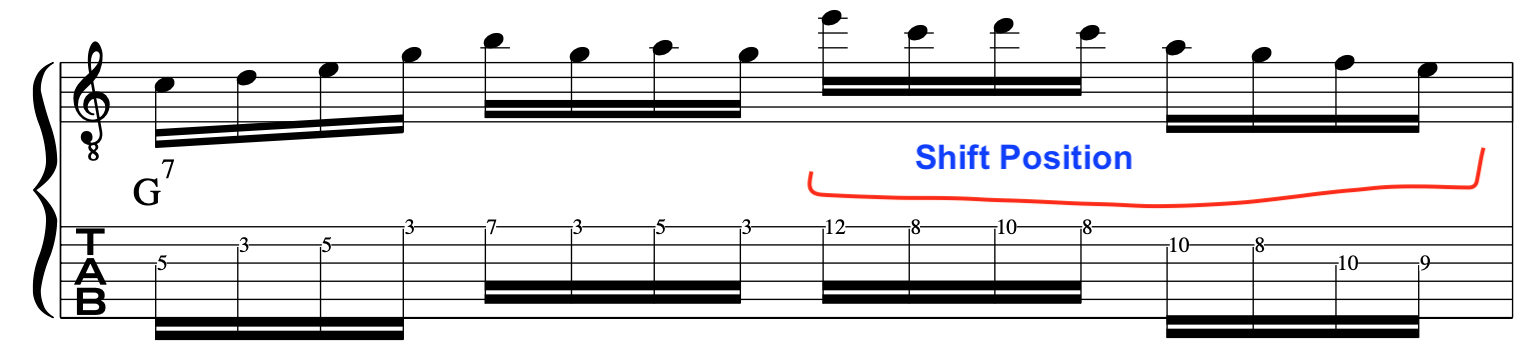
The next part employs pentatonic movement again. The key is in shifting positions in the second half of the bar.
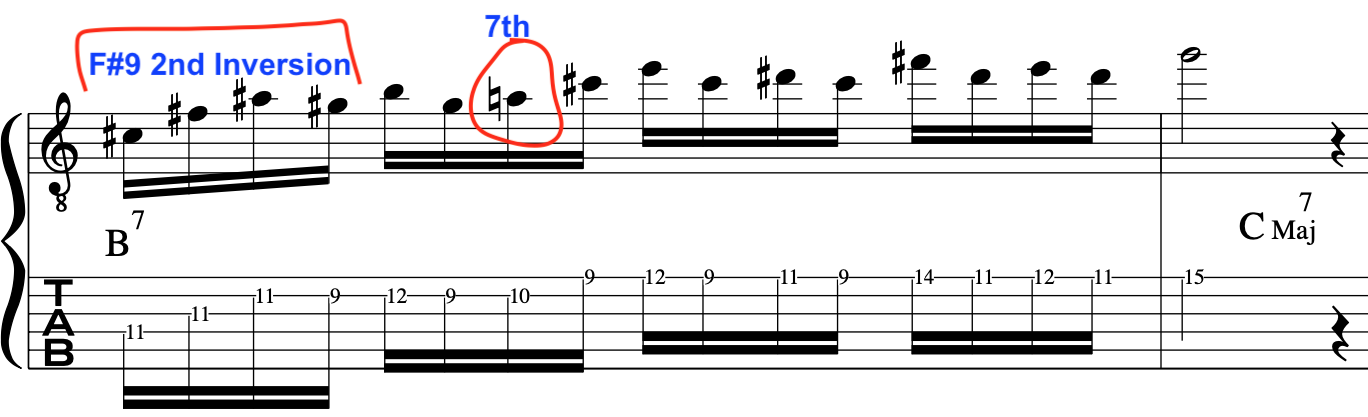
Lastly, we have the B7 chord. We start with a second inversion F#9 outline and then we establish the 7th with the A natural. We finally cadence by landing on the note G natural the 5th of CMaj7.
The good thing with alternate picking and the reason great players and improvisers employ it is because it offers the keys to performing rhythmically complex and fast tempo music. This is especially true with Jazz, Fusion and World Music.
Applying Indian Konokol or even Western Classical Tradition we can change the alternate picking patterns/groupings into rhythms for musical phrasing.
But, before we break these rhythms up though we need to get the basic idea and fundamentals down. This way we can nail any chords changes especially ambiguous ones.
PART 1:
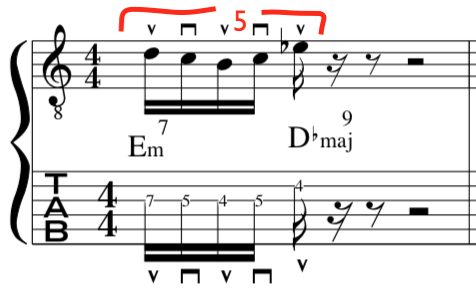
This simple “Rhythmic Unit” of a group of 5 notes can be broken up. This gives clarity when nailing the changes at a very fast tempo.
Alternate Picking 5’s John Mclaughlin 180 bpm jazz improv “Nailing the Changes”
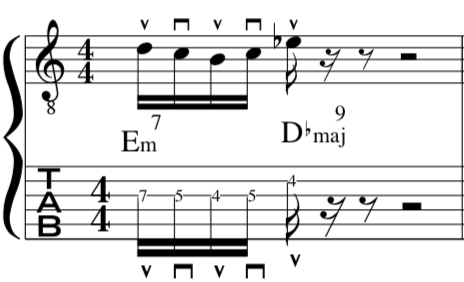
The Group of 5 now becomes one “Tetrachord” and the 5th note becomes the first note of the next chord [DbMaj9]. This way the changes are “Nailed” by the rhythm which has become 4+1
Alternate Picking 5’s John Mclaughlin 180 bpm jazz improv “Nailing the Changes”
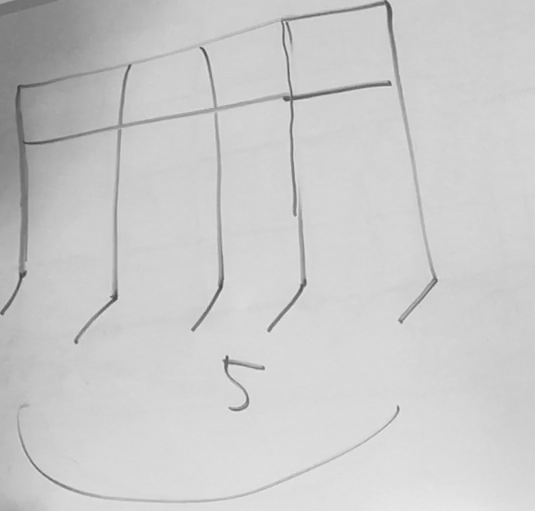
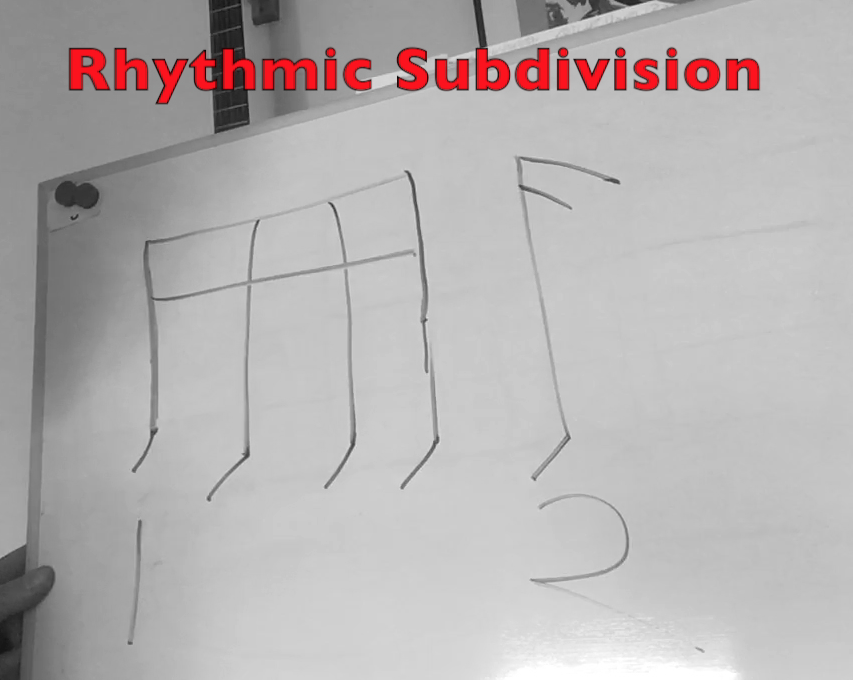
So, as we can see the Ta Ka Di Me Thom or 1 2 3 4 5
Alternate Picking Fives Rhythmic Subdivision
Becomes 1 e and a2
or Ta ka di mi Ta
For anybody having problems with their alternate picking at fast tempos whilst nailing the changes this will really help you because you will automatically land on the first note of the next chord.
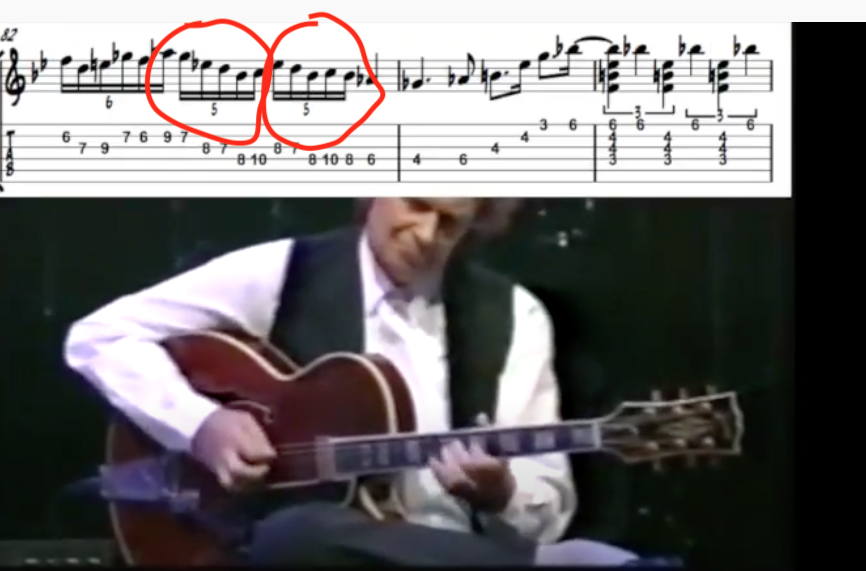
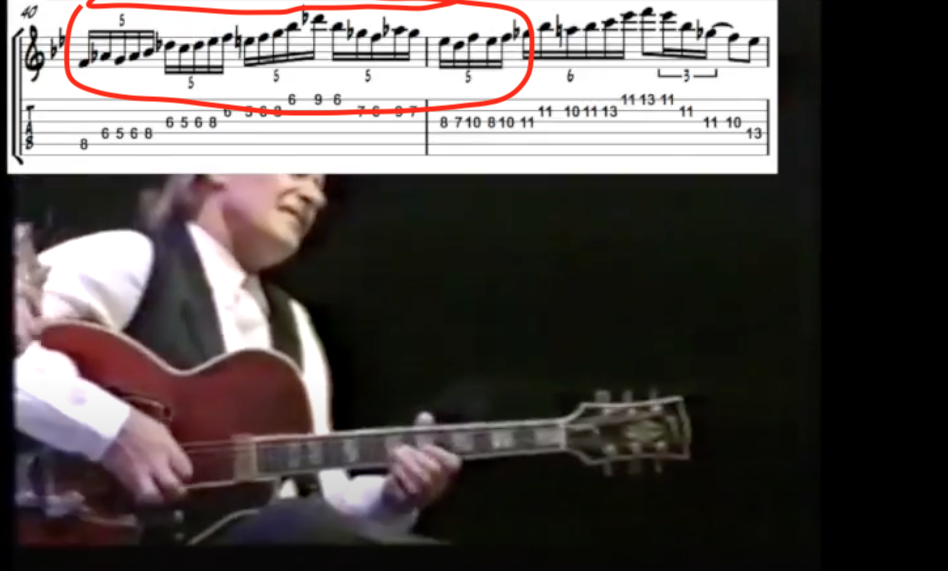
Below we can see a few examples with John Mclaughlin employing 5’s.
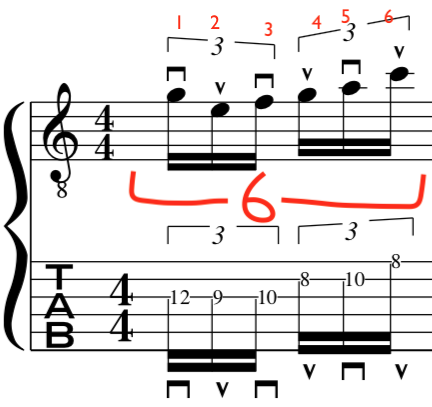
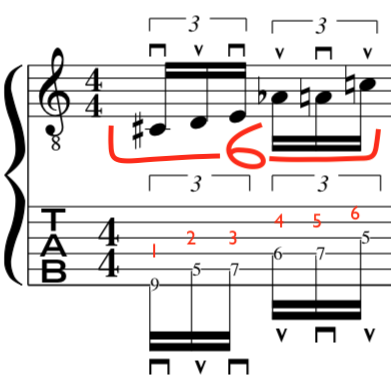
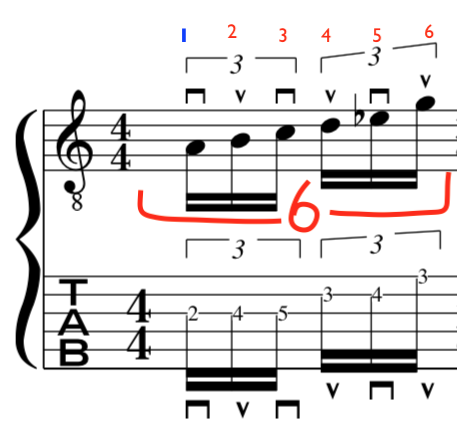
This time we will take a group of six notes [Sextuplets] and make a tetrachord and a half from it.
This will make 4+ 2 which will make us nail the changes with 4 notes on the first chord and 2 notes on the second chord with a short rest to reset our fretting hand to repeat the pattern again on the next two chords.
Alternate picking exercise warm up in Sextuplets/Triplets
Sextuplets John Mclaughlin guitar style into 4+2 Alternate Picking
1 2 3 4 5 6 or 1 trip let 2 trip let
or Ta ki ta Ta ki ta or Ta ka Ta ka di me
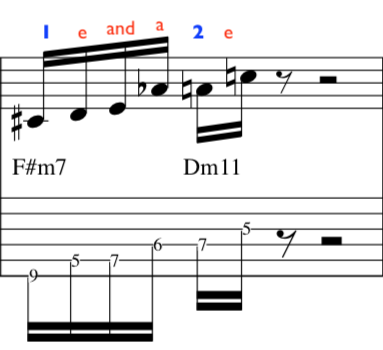
INTO:
1 e and a 2 e
Or Ta ka di me Ta ka
The first pattern for playing through the changes in Sextuplets
Sextuplets John Mclaughlin guitar style into 4+2 Alternate Picking
The first pattern is now changed into 16ths. From 1 2 3 4 5 6 into 1 e and a 2 e
or Ta ka di me Ta ka
Sextuplets John Mclaughlin guitar style into 4+2 Alternate Picking
The second part of the chord sequence in sextuplets
Sextuplets John Mclaughlin guitar style into 4+2 Alternate Picking
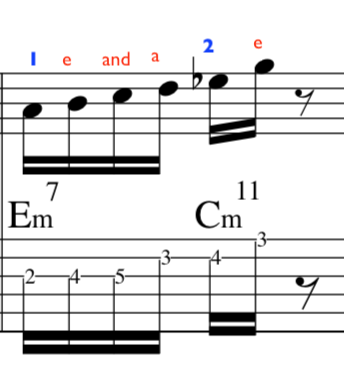
The second pattern is now changed into 16ths. From 1 2 3 4 5 6 into 1 e and a 2 e
or Ta ka di me Ta ka
Sextuplets John Mclaughlin guitar style into 4+2 Alternate Picking
Finally, the full one bar alternate picking chord sequence nailing the changes
Sextuplets John Mclaughlin guitar style into 4+2 Alternate Picking
VARIATION:
Sextuplets John Mclaughlin guitar style into 4+2 Alternate Picking
IF THIS LESSON WAS OF VALUE TO YOU THEN PLEASE SUBSCRIBE TO US ON YOUTUBE BELOW, THANKS!
Moving on from our last alternate picking video we will now extend this to 4 different positions on the guitar fingerboard.
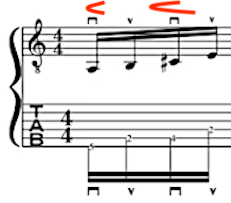
As always for this mid tempo jazz/fusion [140-160 Bpm] style it’s essential to accent the [first] and third notes in each 4 note grouping.
“The third note being the most important to accent”
Without doing this, the rhythm, tempo and dynamic gets lost along with the timing and fluidity.
[1st] and 3rd notes Accented
Here is the alternate picking exercise: It is essential to watch the video above in order to understand the “Simple” concept of the guitar fingering as this is crucial for executing this exercise.
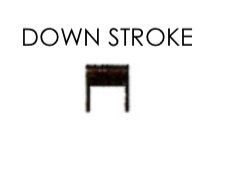
This starts on a “Downstroke” with strict alternate picking: