Exploring the Elektra Chord by Richard Strauss

Hi Guys,

Today, a quick look at the amazing “Elektra” chord employed by composer Richard Strauss.

Nowadays, we might consider this to be a 7#9 chord, but looking at this from a 20th century classical perspective we can create much fresher and more interesting material from this worn cliche.

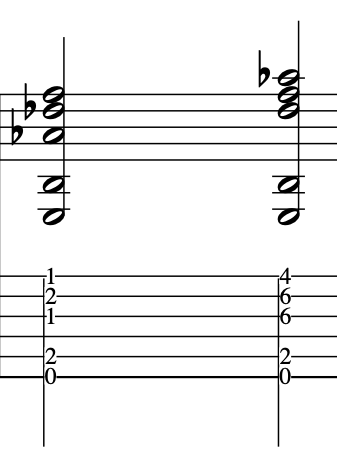
To get a clearer idea, we will exploit “Bi-tonality” and connect two different chords together, E Major and C# Major.
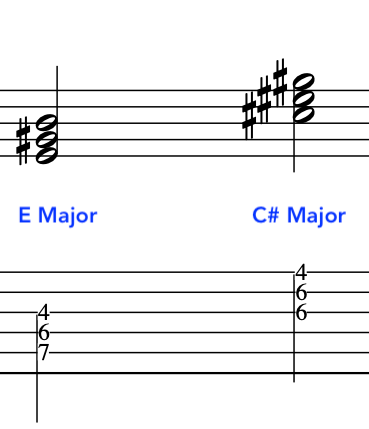
Musical notation showing E Major and C# Major chords on a staff with tablature below of Strauss "Elektra Chord".
Music notation showing E Major and C# Major chords, illustrating bi-tonality for the Elektra chord.

From this, we will remove the third [the G#] from the E Major triad and look at the C# Major triad enharmonically as Db Major.

So, now connected we have a Chord of Db7/E
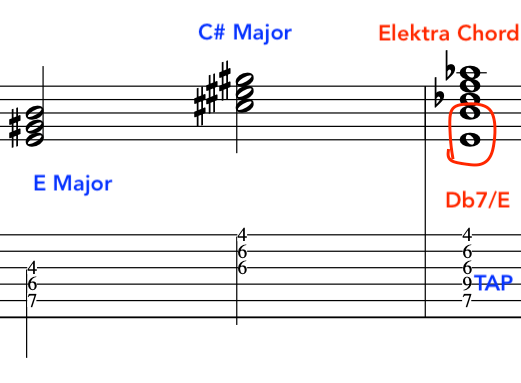
Sheet music illustrating the Elektra chord, showing E Major, C# Major, and Db7/E chords with corresponding tablature.
Chord notation illustrating the Elektra chord (Db7/E) in relation to E Major and C# Major.

For Guitar:

Musical notation for a Db7/E chord, including staff and tablature for the elektra chord on guitar.

Here, is the Arpeggio with TAB

Musical notation showing a guitar tab and sheet music for the elektra  chord arpeggio with notes and finger positions.
Illustration of the arpeggio/chordal outline for the Elektra chord

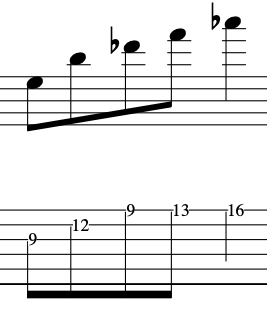
Here, are 3 octaves of the arpeggio/chordal outline with TAB:

Sheet music showing a guitar tab with the arpeggio/chordal outline for the Elektra chord in three octaves.
Illustration of the arpeggio/chordal outline for the Elektra chord in three octaves.

Now, we will make another “Elektra chord” so that we have two chords to work from.

This new [Elektra] chord, will be C7/Eb
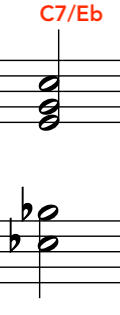
Musical notation of the chord C7/Eb showcasing the notes and structure to vary Strauss's elektra chord.
Musical notation illustrating the C7/Eb chord, showcasing the unique harmonic structure.

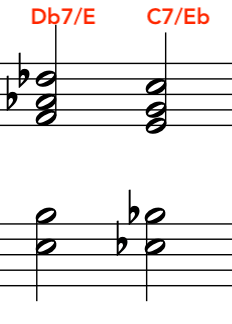
So, here are our two chord examples:

Sheet music displaying the chords Db7/E and C7/Eb from Strauss Elektra Chord.
Musical notation for the chords Db7/E and C7/Eb, highlighting their structure.

Below, I have included audio of a quick orchestration/compositon I did to show how this wonderful harmony sounds when we apply it to the orchestra [Orchestration].

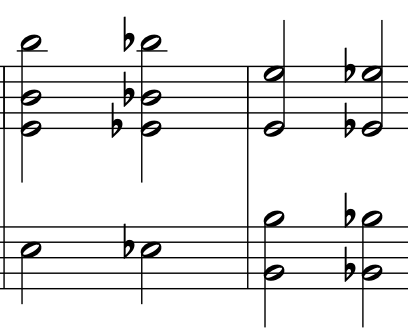
Also, notice how the inner pitches work to create beautiful drama in this tonality. Here we have octaves moving down in semitones in 5ths and then 4ths.
elektra-chord-richard-strauss-
Musical notation illustrating the ‘Elektra chord’ concept as explored in the article.

AUDIO Example:

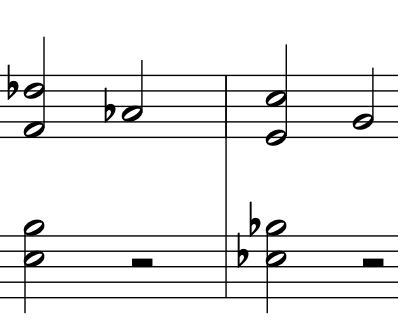
Next, notice the inner pitches when adding the 5th of the top triad.
elektra-chord-richard-strauss-

AUDIO Example:

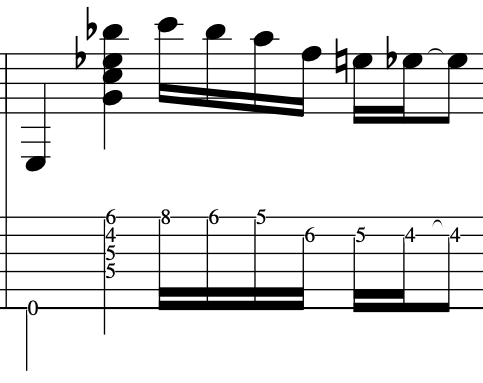
Here, we have a simple chord and answering phrase:

1] Chord and line: Db7/E
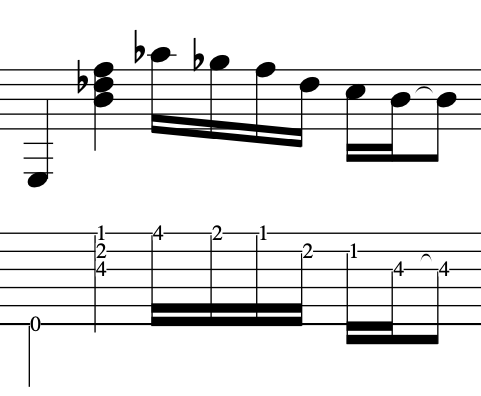
Musical notation for the Elektra chord  and improvised line with accompanying tablature for guitar.

2] Chord and Line: C7/E[/Eb]

Musical notation showing a chord progression with the elektra chord  for guitar, including finger placements and notes.
Chord and improvised line example for C7/Eb, showcasing voicings and ideas for musicians.

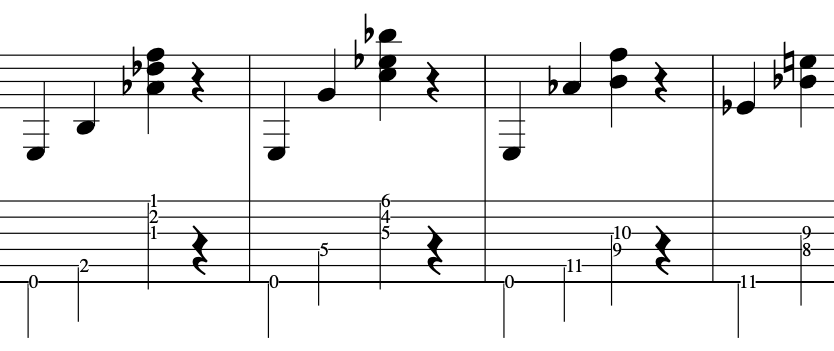
CHORDS: Here are some voicing’s and ideas:
elektra-chord-richard-strauss-guitar-chords

3 Octaves of Elektra Chord: As ascending Arpeggio Movement:
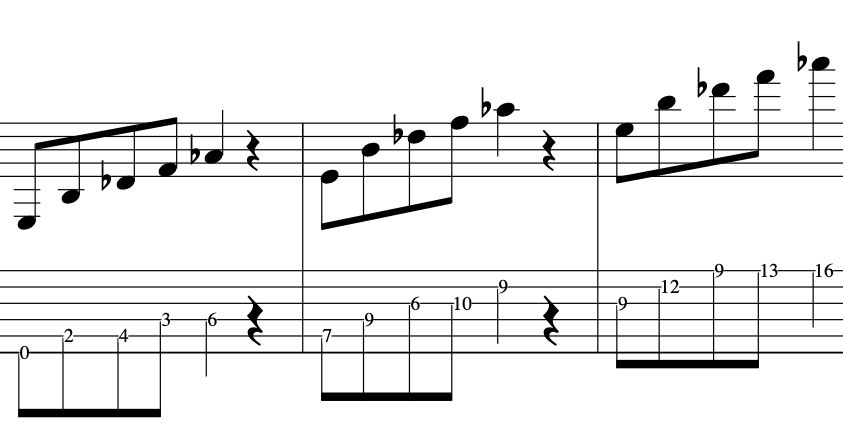
elektra-chord-richard-strauss-example-3-octaves

As we can see from this quick look at one chord, there is a whole world and a wealth of material within it.

For the serious composer, and improviser this search and re-development of worn ideas/harmony is essential in order to make ones mark.

This renewal, gives us fresh material to work with and a pallet of our own with which to stamp a unique signature that is all ours.

Polytonality:For Concerto/Orchestral Writing

Modern Jazz Fusion Chords part 2. Steely Dan, Dan Chord and Slash Chords

CLICK SUBSCRIBE!

Polytonality: For Concerto/OrchestralWriting lesson

Hi Guys

Today, a quick look at composing with Polytonality for orchestral and concerto writing.

Polytonality is the use of two or more keys at the same time:

poly-tonality-orchestral-composing-chords-example

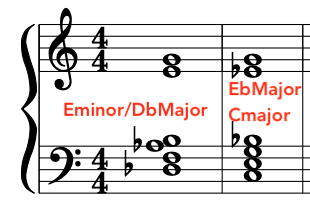
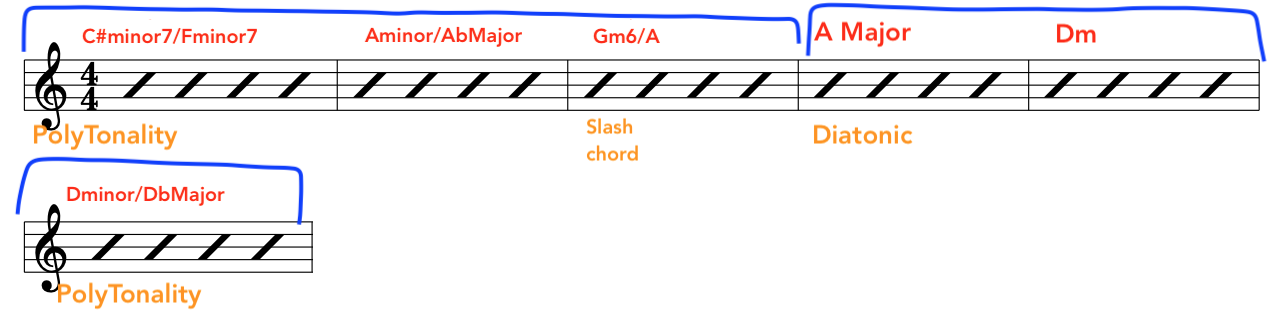
In this first example we have 4 bars of Polytonality with Eminor/DbMajor and EbMajor/CMajor

poly-tonality-orchestral-composing-chords-example

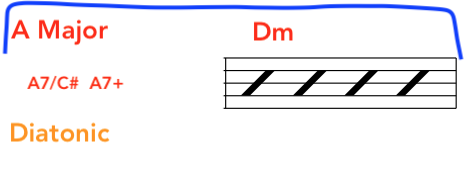
This then resolves itself with a “Tonal” diatonic cadence of B7/D# to Em:

Polytonality-Orchestral Example

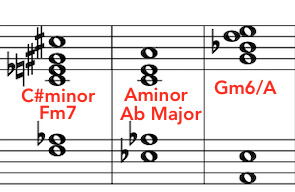
This example explores “Implication”. In this case it is implying the melodic minor but avoiding the cliche by employing the richness of Polytonality:

polytonality-orchestral-composing-chords-example

From here, we will again employ diatonic harmony for a cadence.

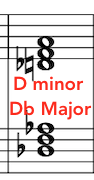
To complete this short orchestral example we will go back into Polytonality with another melodic minor implication by employing Dminor/DbMajor:

polytonality-orchestral-composing-chords-example

Here is the chart:

poly-tonality-orchestral-composing-example

Polytonality-Orchestral Example

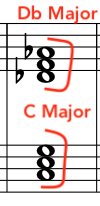
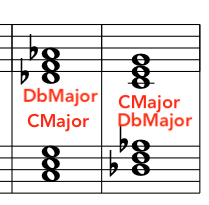
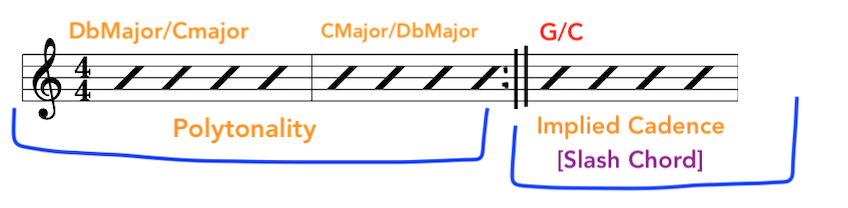
In this final example we will just “Reverse” the chords. This time it is DbMajor/Cmajor which is then played the other way around with CMajor/DbMajor.

polytonality-orchestral-composing-chords-example

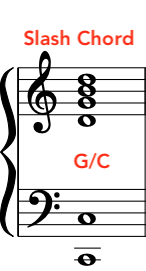
finally, we will employ a slash chord for an “Implied” cadence: This will also lighten the harmony:

Here is the Chart:

polytonality-orchestral-composing-example

FREE PDF DOWNLOAD:

Modern Jazz Fusion Chords part 2. Steely Dan, Dan Chord and Slash Chords