John McLaughlin-Prime Numbers-Alternate Pick Guitar Examples/Thoughts

Hi Guys,

Here are the Number groupings from the Youtube video I posted today as promised.

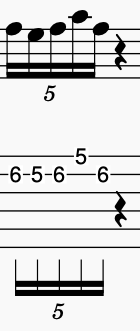
First of all we have the 4+1 or 1 e and a 2. [Hence nailing the next beat].
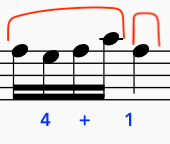
Sheet music showing rhythmic grouping of John McLaughlin's 4 + 1 with notes and time signatures for guitar technique.

This could also be transformed into a quintuplet. Or, Ta ka di mi thom from Johns use of Konokol.

john-mclaughlin-guitar-lesson

Here, we double this amazing “Prime number”.

NOTICE: We start on a downstroke for the first grouping and then start on an upstroke for the next grouping.
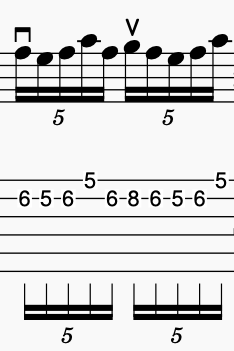
Musical notation with notes and tablature for guitar, showcasing various rhythms and groupings of John McLaughlin guitar techniques.
Musical notation and tab demonstrating alternate picking techniques and rhythmic groupings .

In terms of “Alternate Picking” guitar technique this creates some magic dust in our favour as not only are we two beats ahead of typical 4 note picking groupings, we are also connecting with both the up and downstrokes resulting in very quick and fluid picking.

From this, we can then start to break it up into musical motifs or phrases or riff/unison material.
john-mclaughlin-guitar-lesson

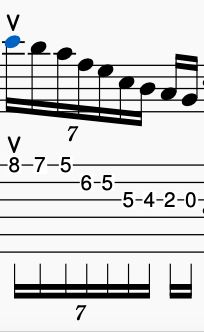
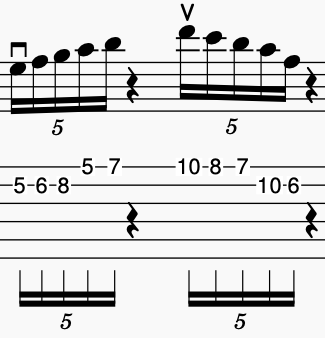
The next great number for interesting phrasing and alternate picking groupings is the prime number 7
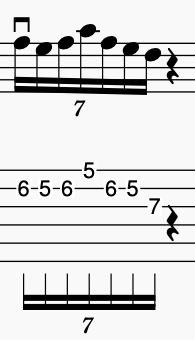
Music notation showing a sequence of notes with a 7 for John McLaughlin alternate picking and time signature.

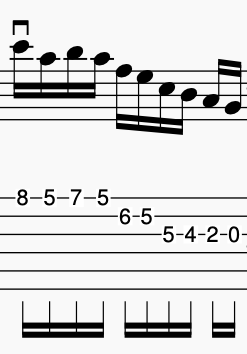
Now, let’s connect these two prime number patterns together!
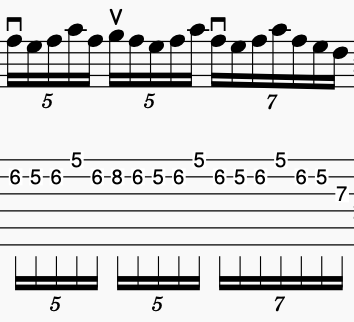
Sheet music notation showing guitar tabs and rhythmic markings for musical phrasing, prime numbers and John McLaughlin's alternate picking techniques.
Musical notation illustrating the connection of two prime number patterns in guitar technique.

This next example is also useful, although, it’s not a prime number but a group of 6 notes “Sextuplets”
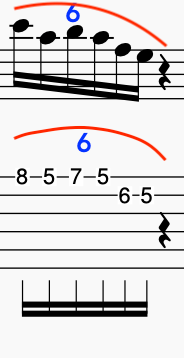
Musical notation illustrating a sequence of six notes. McLaughlin's  a rhythmic pattern.

From this, let’s add two more notes to form a common grouping of 8 notes:
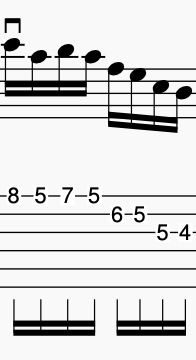
john-mclaughlin-guitar-lesson

We will now add one more note for a group of 9
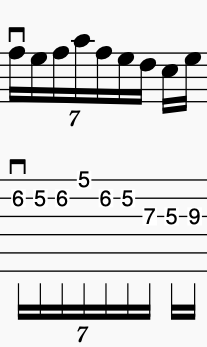
john-mclaughlin-guitar-lesson

9- Example 2

john-mclaughlin-guitar-lesson

Now, let’s go up one more again for ten notes.
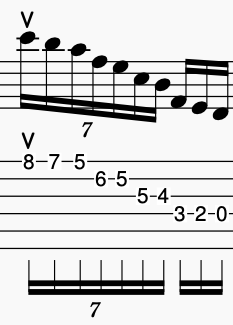
john-mclaughlin-guitar-lesson

10-Example 2

A musical notation sheet showing rhythmic patterns and guitar tabs for John McLaughlin prime number guitar technique.

This time we will go back to prime numbers with a group of 13 notes
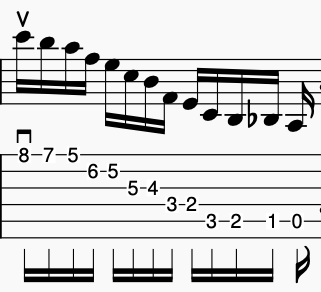
Musical notation showing a series of notes and tablature for guitar, with specific symbols indicating John McLaughlin's  rhythm and phrasing.
Musical notation illustrating a grouping of 13 notes [Prime number] for alternate picking techniques.

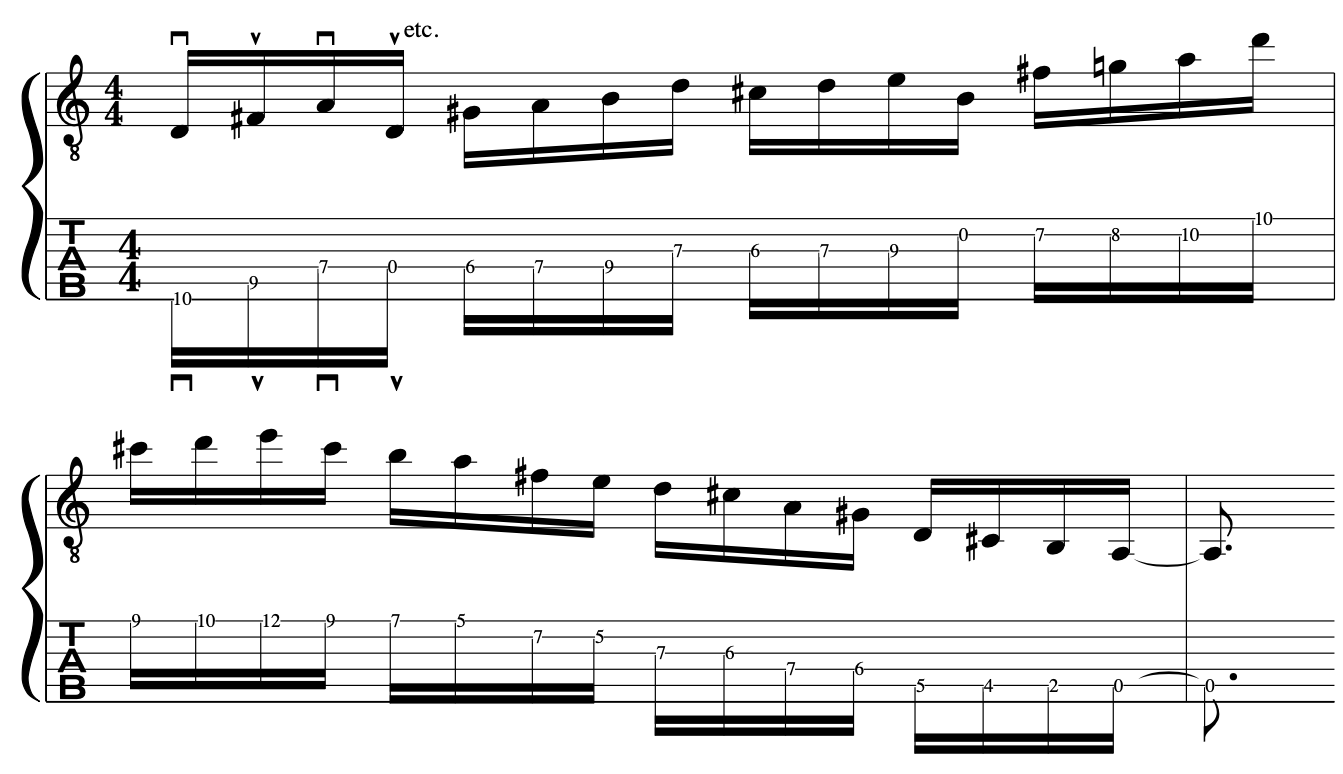
Finally, let’s exploit a whole bar of 4/4 time
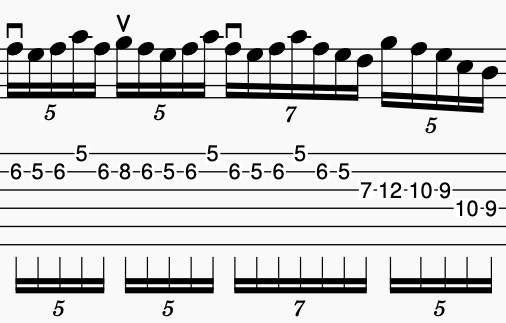
Sheet music displaying a John McLaughlin guitar exercise with notes, including various groupings and techniques for alternate picking.
Guitar tablature and notation illustrating alternate picking techniques and rhythmic groupings of John McLaughlin.

In conclusion, this was just a concept related to alternate picking guitar technique specifically.

This is because sometimes the rhythmic motifs are not logical and need to be re-framed in order to make sense of the demands of the picking hand.

Also, sometimes starting on an upstroke works better than the down stroke or visa versa. These prime numbers generally put us a beat ahead which for alternate picking is extremely important because otherwise there is the age old tendency to just tremolo and hammer on willy nilly trying to catch up and this music is the antithesis of that.

So, in summation: These groupings help make sense of illogical phrasing for the picking hand whilst making sure that we are ahead in the music.

John McLaughlin Alternate Picking Guitar Secrets part 1

Hi Guys,

Today, a quick delve into what makes John McLaughlin’s alternate picking guitar style work so easily and fluidly.

Many, focus on the right hand technique, but, much of it comes from the way the fretting hand works.

So, let’s look at a couple of simple secrets to John’s approach and why it is so fluid and effective

In this example, we will create an effective line that is not tremolo picking on cliche shred scales but a continuous colourful and creative improvised line in a world music style.

john-mclaughlin-guitar-secrets-alternate-picking-fast

If we take this apart we will find a couple of reasons why this is fluid and very natural for the alternate picking guitar technique.

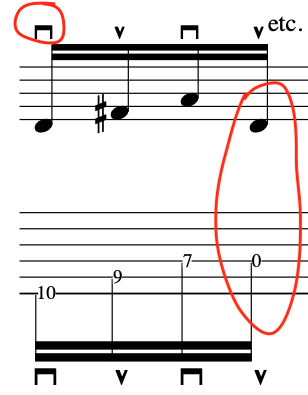
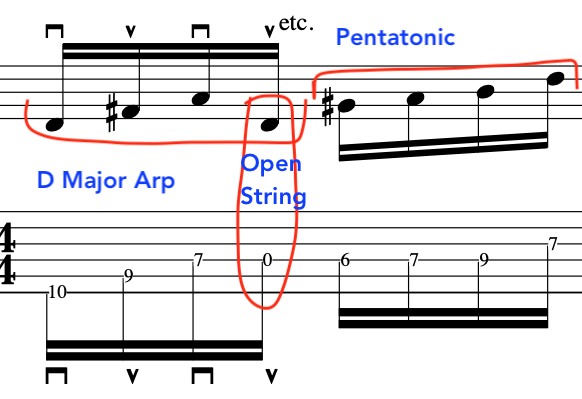
First of all notice: The arpeggio that starts the phrase. The last note of this 4 note tetrachord grouping is an open D string!

john-mclaughlin-guitar-secrets-alternate-picking-fast

This open string gives the fretting hand a hundredth of a second to do absolutely nothing as it prepares for the next 4 note grouping to fret.

john-mclaughlin-guitar-secrets-alternate-picking-fast

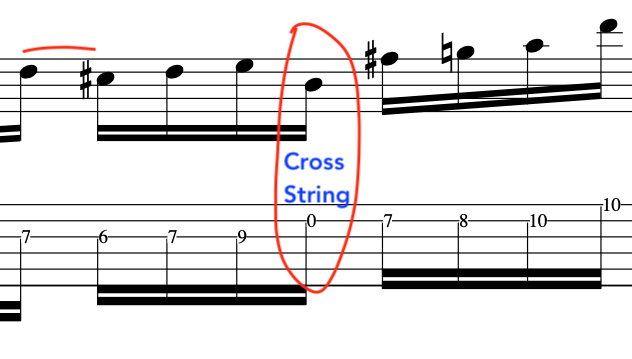
This gives us time to get into position and so we are NOT rushing about, and, we are in control

john-mclaughlin-guitar-secrets-alternate-picking-fast

This makes it easy to cross the string smoothly and connect to the next tetrachord.

From here we will extract a partial John McLaughlin scale/fingering by sliding it into position.

john-mclaughlin-guitar-secrets-alternate-picking-fast

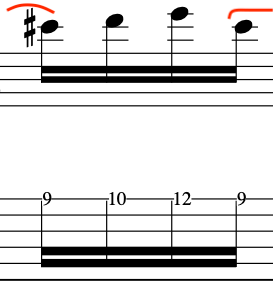
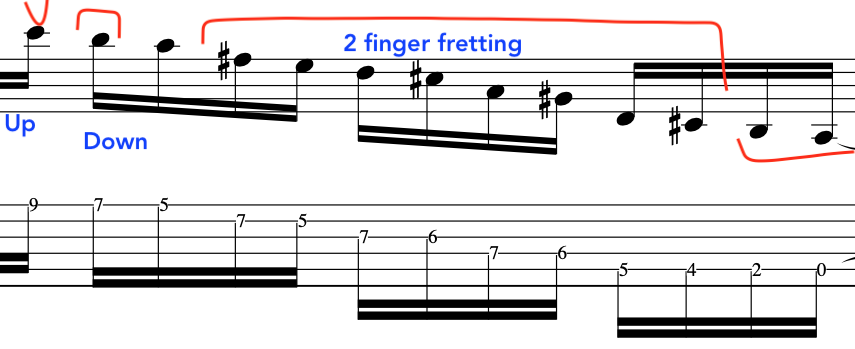
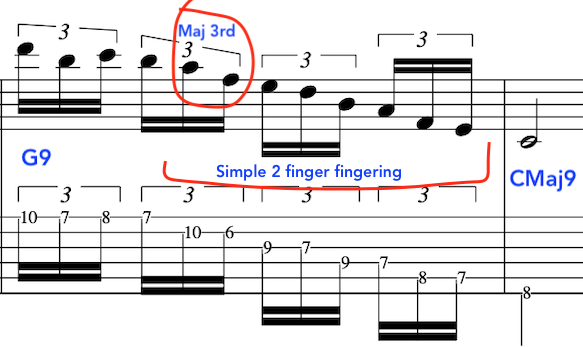
To end this line, we will descend with some simple scale starting on an “Up stroke”. Also, notice the simple 2 finger fingering for the fretting hand.

john-mclaughlin-guitar-secrets-alternate-picking-fast

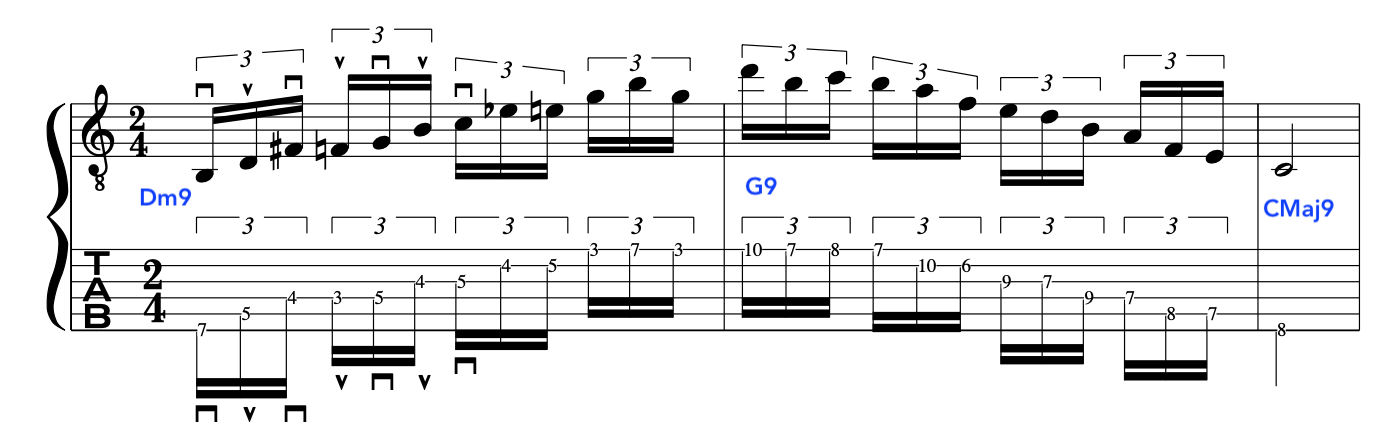
In this exercise we will employ groupings of 6 notes. This is based upon an improvised acoustic jazz fusion line, like that of “Belo Herozonte:

This is played over a ii V7 I of Dm9 G7 CMaj9:

john-mclaughlin-guitar-secrets-alternate-picking-fast

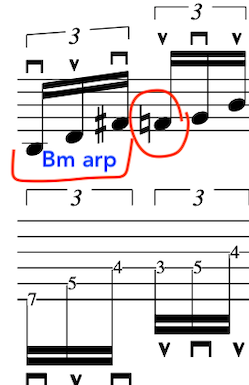
If we take this apart we will notice that we exploit a Bm arpeggio going to a B dim arpeggio that then goes to the 4th and 6th notes of D Dorian: This creates a nice colourful sound.

john-mclaughlin-guitar-secrets-alternate-picking-fast

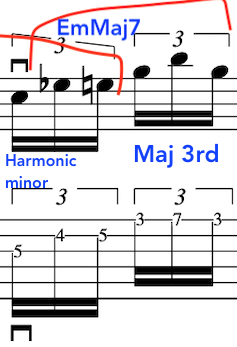
For the next 6 note hexatonic grouping we employ an E harmonic/melodic minor sound over the Dm9 chord: Notice the Major 3rd interval:

john-mclaughlin-guitar-secrets-alternate-picking-fast

From here, we will “Slide” the fretting hand up to the next position: Notice the use of the Major 3rd interval once again, as this breaks up the monotonous scale sound and creates distance and melodicism.

Finally, we have simple 2 finger pentatonic descending scale application that finally rest on the note C for the CMaj9 chord.

john-mclaughlin-guitar-secrets-alternate-picking-fast

Exploring Pat Martino’s 12 Chromatic Forms for Guitar:

Hi Guys,

Today, a look at the amazing 12 chromatic forms for guitar by jazz legend and music theoretician extrodinaire Pat Martino!

These 12 forms for the chromatic scale were written and I believe taught by Pat Martino in the 70’s and 80’s. They are a unique idea that connect through the concept of octave displacement.

Although they can be employed over dominant alt chords for improv [As covered previously https://jazzimproviser.com/2024/05/21/pat-martino-intervallic-studies-un-published-book-lesson/] I am going to dig at little bit deeper and create a compositional 12 tone approach where extra fresh material can be created from any one form.

But, to begin with:

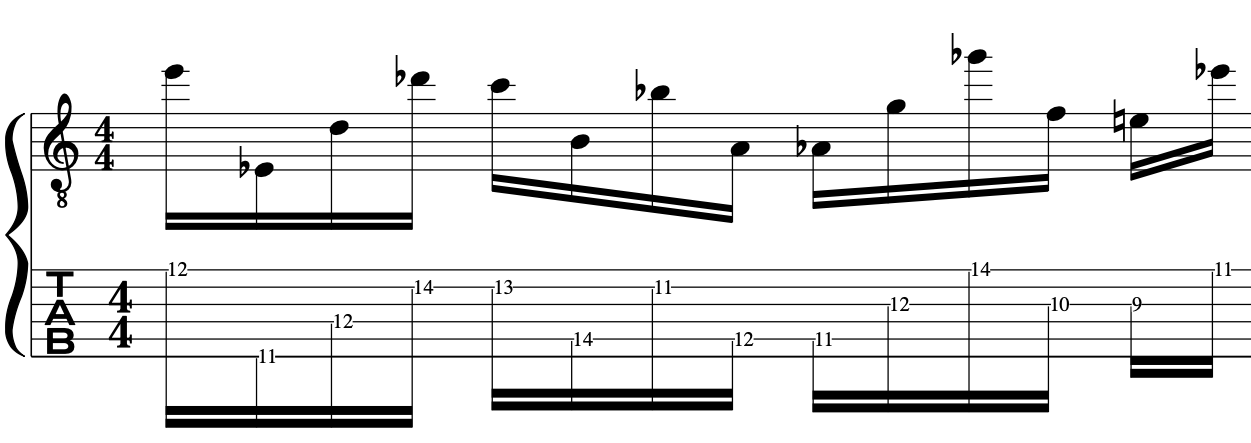
12-chromatic-forms-for-the-guitar-pat-martino

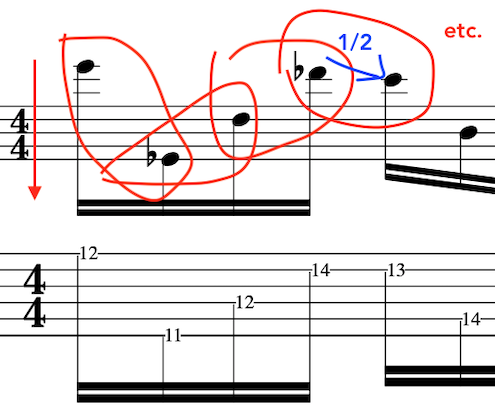
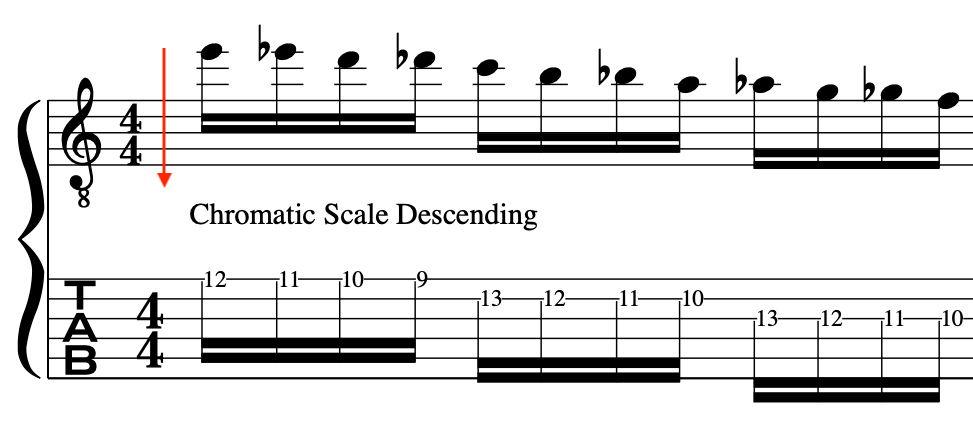
Notice: The semitones and octave displacement: E to Eb to D to Db [Db to C semitone] etc.

12-chromatic-forms-for-the-guitar-pat-martino

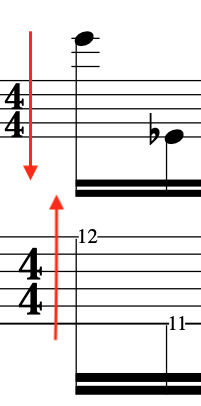
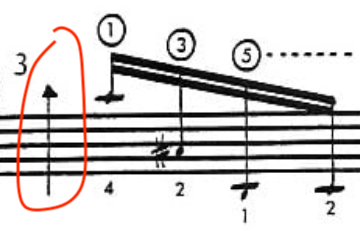
The arrow pointing up or down tells us whether it is an ascending or descending chromatic scale:

12-chromatic-forms-for-the-guitar-pat-martino

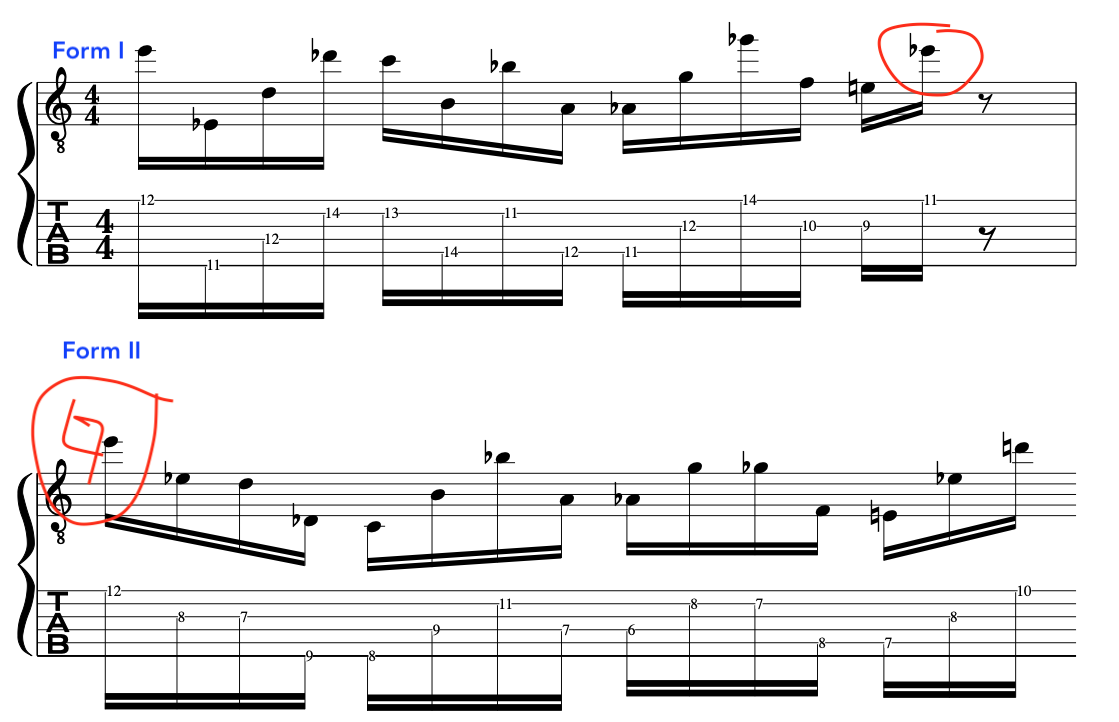
So, for instance “Form I” without octave displacement is:

With octave displacement is:

12-chromatic-forms-for-the-guitar-pat-martino

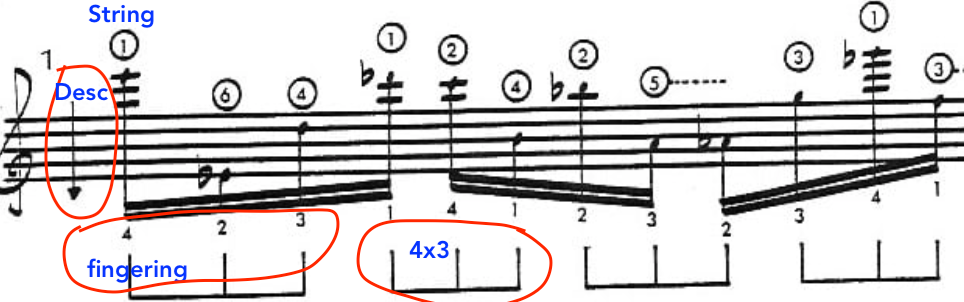
Here, is Form I written by Pat’s own hand showing his fingerings and string preference.

12-chromatic-forms-for-the-guitar-pat-martino

Now, let’s add the second form for guitar and notice Pat’s connection for the two: Eb to E

Also, notice that Form I and II have the same notes but mostly in different octaves.

12-chromatic-forms-for-the-guitar-pat-martino

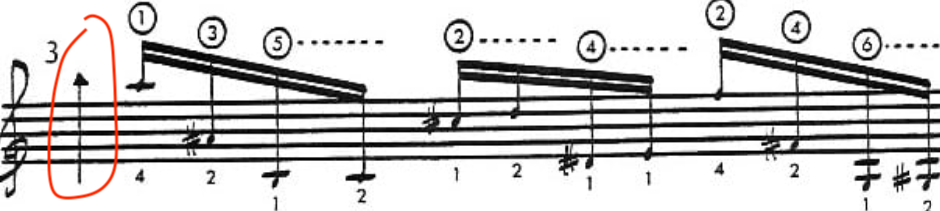
Lastly, if we look at form III we will see the arrow pointing upwards showing that it is an Ascending chromatic scale:

12-chromatic-forms-for-the-guitar-pat-martino-explained

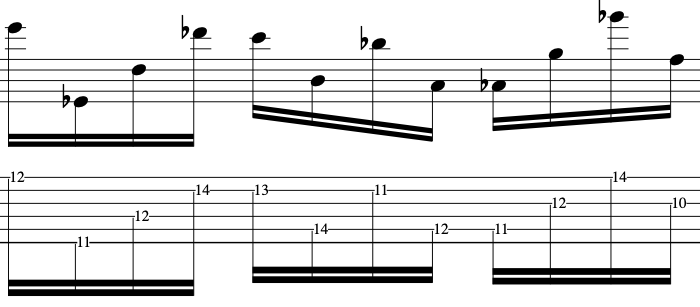
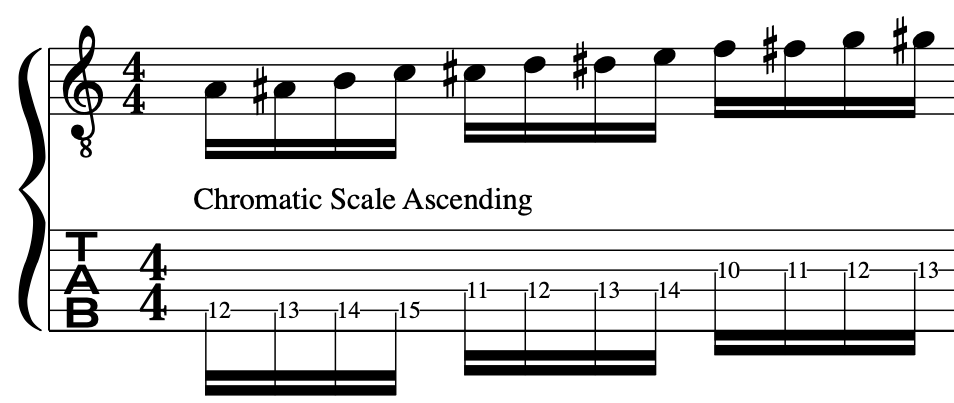
Here, is the basic ascending chromatic scale:

chromatic-scale-ascending

Here, it is with octave displacement

12-chromatic-forms-for-the-guitar-pat-martino

For all of the other chromatic forms please go to the downloadable Pdf at the bottom of this page for a free download of Pat’s actual notations.

Due to being the chromatic scale and 12 forms we can manipulate this by taking a 12 tone approach:

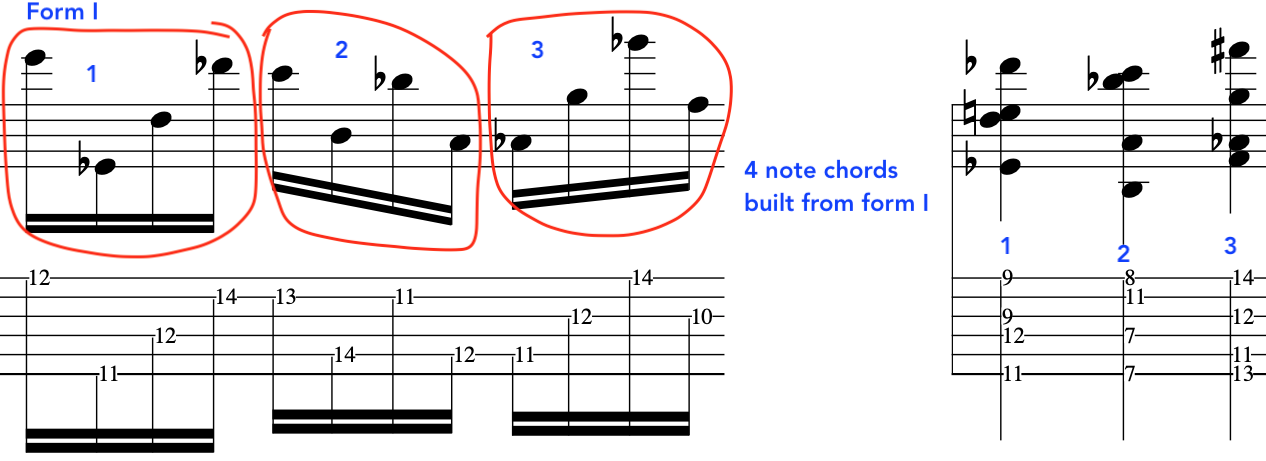
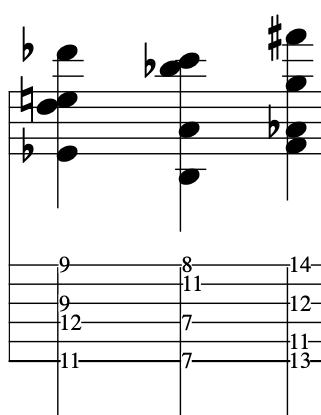
So let’s take the first Form and make 3 sets of 4 note chords from it.

pat-martino-12-tone-jazz-guitar-lesson-example

Here, we can see and hear how easy it is to create some very original and unique chords from these forms:

12-chromatic-forms-pat-martino-guitar-chords-lesson

We can now make some lovely voicing’s and chords from the following, so, let’s structure some sophisticated composition.

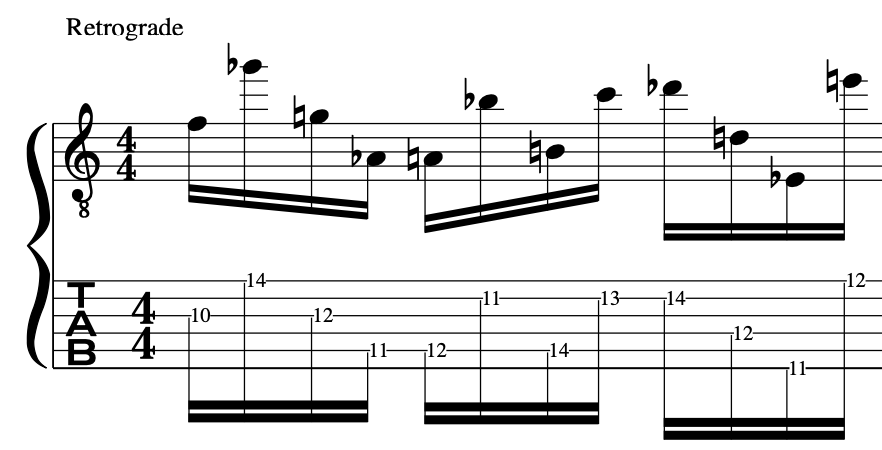
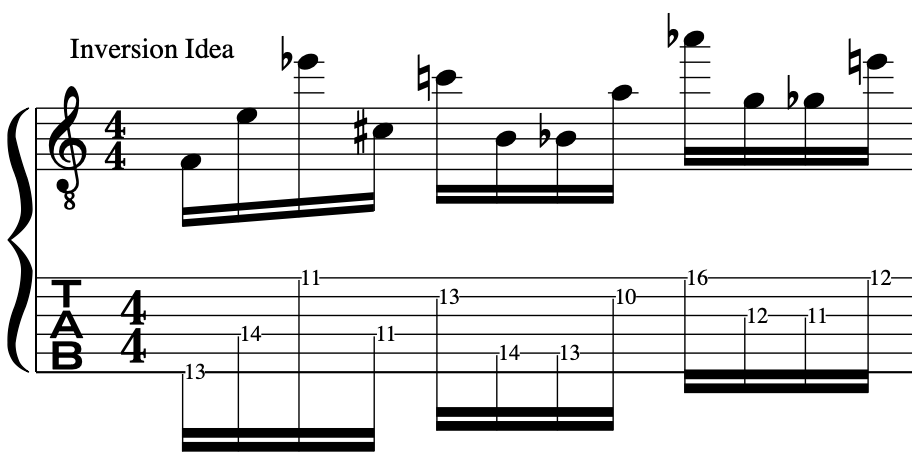
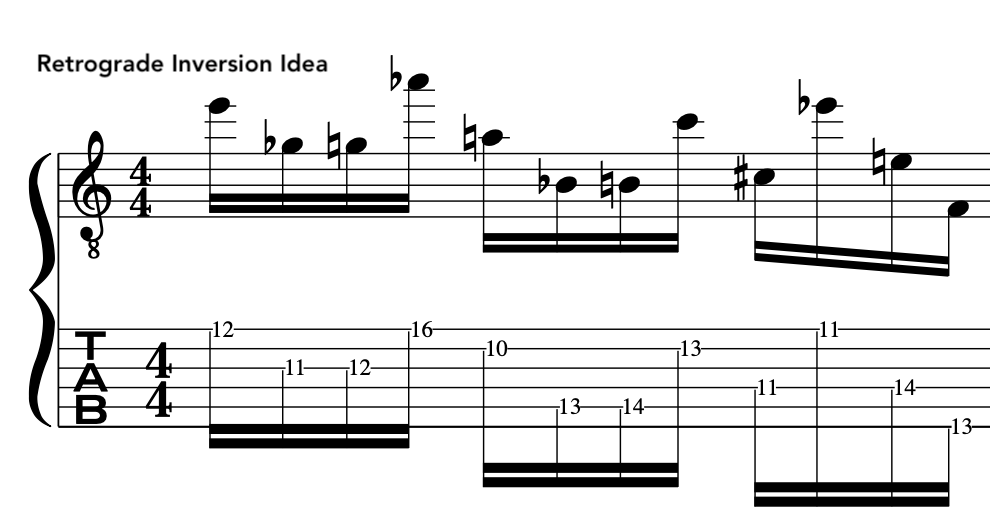
We will employ, “Retrograde” and “Inversion” and then “Retrograde Inversion”

12-tone-pat-martino-jazz-guitar

12-tone-pat-martino-jazz-guitar

12-tone-pat-martino-jazz-guitar

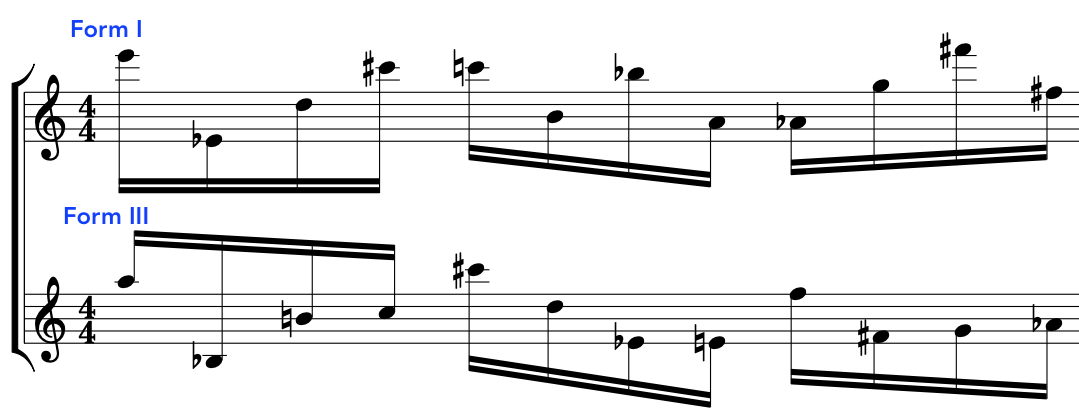
In this case it is Form I and III:

pat-martino-12-tone-guitar-jazz

These 12 Forms offer brilliant possibilities for string writing or 20C classical orchestral style composing.

The octave displacement and the flow of semitones creates a fluid and quite natural way of performing on stringed instruments wether it be the guitar, violin, cello, double bass etc.

As guitar players this gives us some great possibilities for altered dominant lines [https://jazzimproviser.com/2024/05/21/pat-martino-intervallic-studies-un-published-book-lesson/] and original chord voicings. These are also great as rut busters too.

This blog has just touched on the subject but as you can see the possibilities for the 12 forms gives way to unlimited fresh new music, and for the imaginiative and creative guitarist/composer the possibilities are endless.

Below is a free pdf download of all of Pat’s 12 chromatic forms for guitar written out by Pat himself.