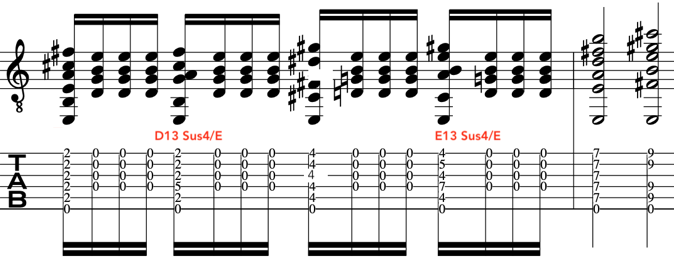
“In a Silent Way” Zawinul/McLaughlin Guitar Analysis

John McLaughlin/joe Zawinal “In a silent way” Guitar Analysis Lesson

Hi Guys,

Today, a look at the amazing performance/improvisation of “In a Silent Way” by John McLaughlin and Joe Zawinul.

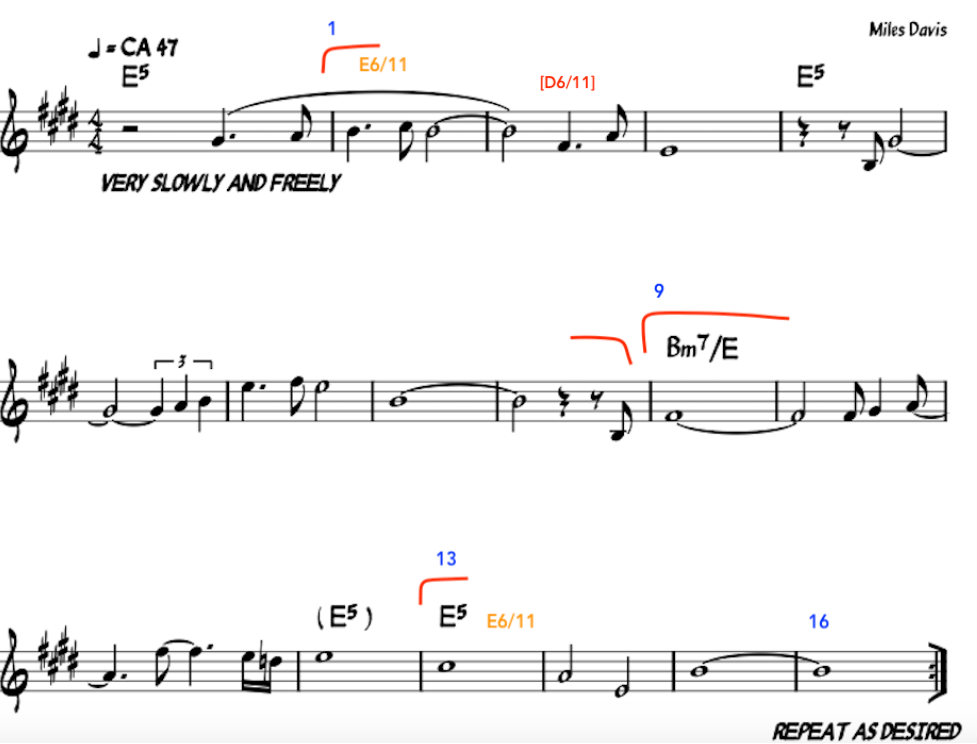
The key to this is to look at the 16 bar structure and view the two main chords and acknowledge how the melody is/can be contained within them.

A notated piece of sheet music for Joe Zawinal and John McLaughlin "In a silent way" chords and melody.
Musical notation illustrating the chords E6/11 and Bm7/E for ‘In a Silent Way’ Zawinal/McLaughlin

So, from this simple chart we can observe that we have two main prominent chords. These are E6/11
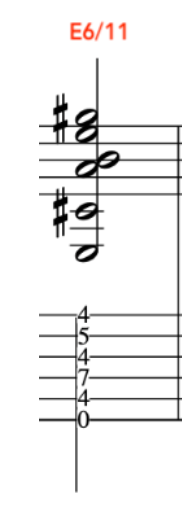
Musical sheet showing an E6/11 John McLaughlin chord diagram with specific finger placements on a guitar neck.
Chord diagram for E6/11, highlighting its structure used in the performance of ‘In a Silent Way.’

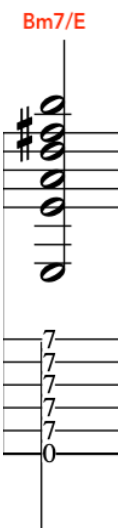
and Bm7/E

Chord diagram for Bm7/E John McLaughlin chord featuring finger placements on the guitar fretboard.
Chord diagram for McLaughlin’s Bm7/E, illustrating finger placements and string usage.

Here, is how the 6/11 is exploited by John for the intro: So, instead of the plain minor 7th chords we have:
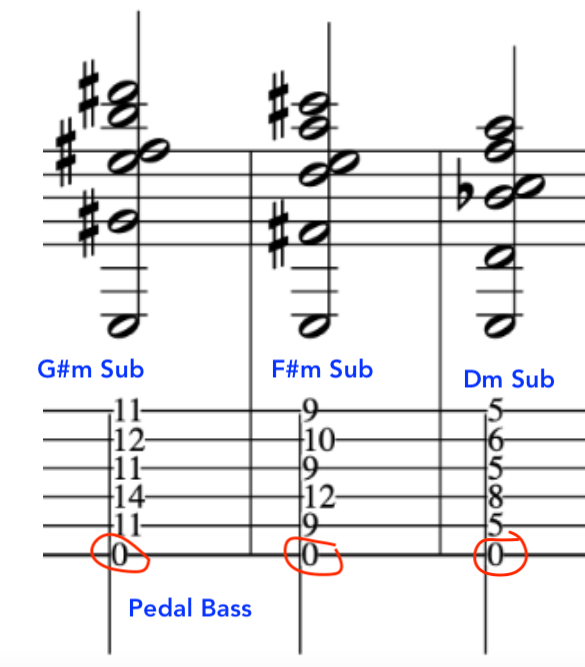
A music sheet showing chord progressions by John McLaughlin and Joe Zawinal labeled G#m Sub, F#m Sub, and Dm Sub with corresponding note positions indicated by numbers on the staff. This is for the song "In a silent way".
Chord chart showing G#m, F#m, and Dm substitutions with a pedal bass note for guitar improvisation.

Now, let’s loosely add some chords [Shapes] to the melody, and see what we can come up with,

EXAMPLE: Notice that the 1st note of each melody section [circled] fits perfectly within the chord shape.
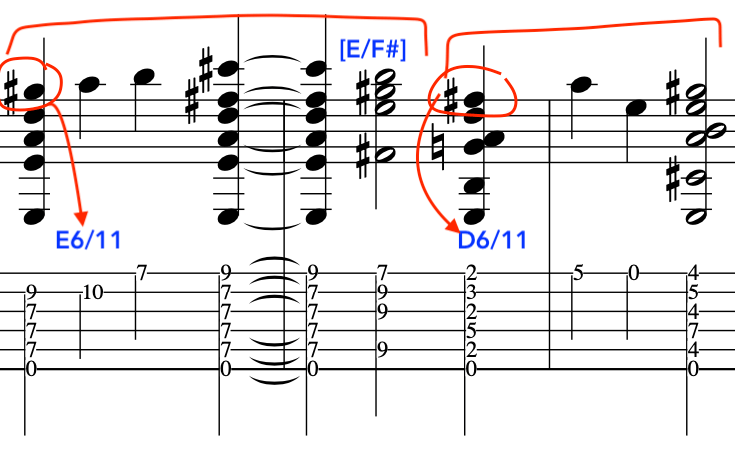
A sheet of music by John McLaughlin and Joe Zawinal notation featuring various notes, chords labeled E6/11 and D6/11, with annotations indicating E/F# from "In a silent way"
Chord progression and melody outline for ‘In a Silent Way,’ highlighting E6/11 and D6/11 McLaughlin chords.

In terms of harmonising the melody and creating a nice ethereal or dissonant resonance on the guitar it is a really good idea to employ a pedal note.

In this case it is the low E string.

Example:
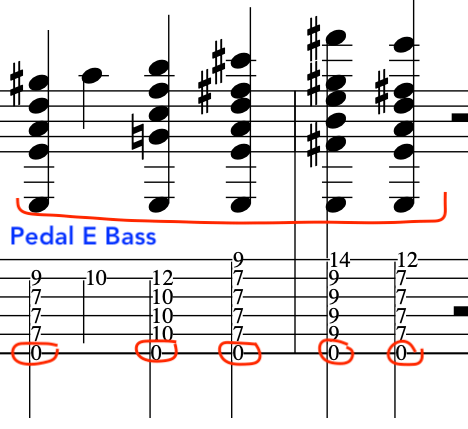
Sheet music displaying Joe Zawinal and John McLaughlin's "In a silent way" notes with a marked 'Pedal E Bass' section and tablature notation.
Notation example highlighting the use of a pedal E bass “In a silent way” in the chord sequence.

To conclude, we will cadence nicely with the 7sus4 chord and a little descending run back to the tonic chord of E Major.
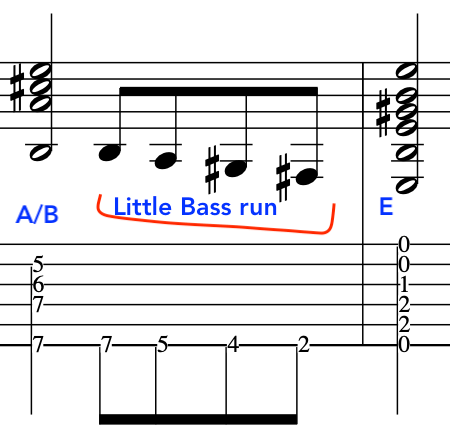
A sheet of music featuring guitarist John McLaughlin's little bass run highlighted in red with annotations for A/B and E chords for "In a silent way" song.

How to play Shakti Indian Guitar Scales

Hi Guys,

Today, a quick look at the first of a few Shakti Indian guitar scales for tabla and guitar improvisation.

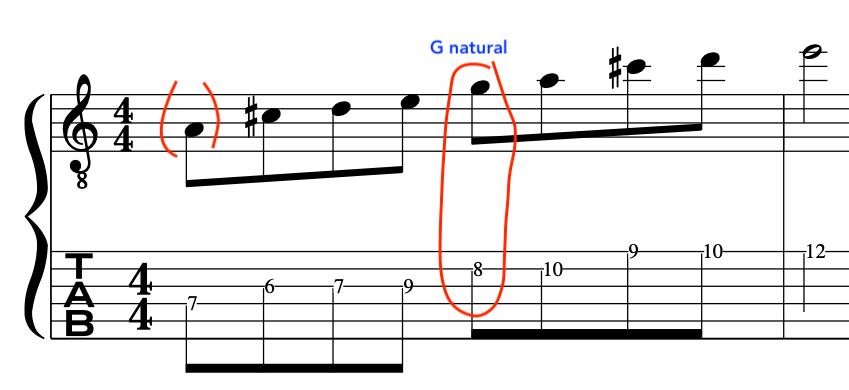
The first one that we will look at today is the A Mixolydian Mode exploited in a pentatonic form.

Here, is the basic scale ascending. The G natural gives the unique flavour and colour as it possesses the dominant sound, but, in a non resolving from.

how_to_play_shakti_indian_guitar_scales_lesson

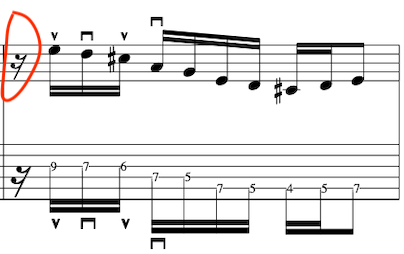
In this first exercise we will descend with the A mixolydian mode and employ imitation with the pentatonic form.

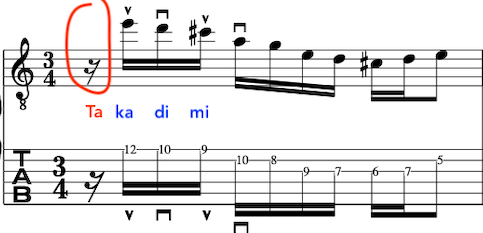
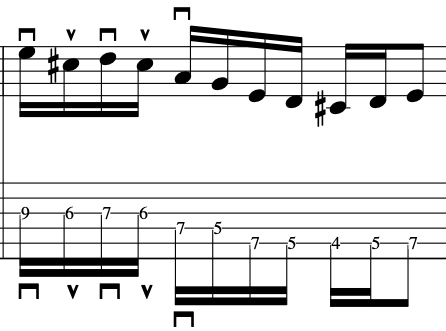
This example exploits strict alternate picking guitar technique. And, it works really well for two reasons:

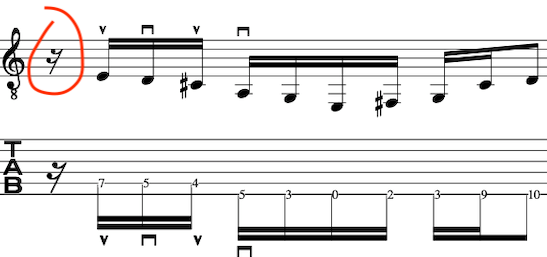
A] It start on an “Up stroke”

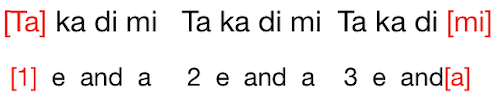
B] It starts in the bar and on the “Off” beat

This creates a nice, smooth phrasing and is easy to copy and repeat down the octave.

how_to_play_shakti_indian_guitar_scales_lesson

As you can see below, it is repeated, and copied down an octave starting on the upstroke and on the off beat:

how_to_play_shakti_indian_guitar_scales_lesson

Finally, a variation/implication of this is played, due to the guitar running out of notes to fully copy it.

how_to_play_shakti_indian_guitar_scales_lesson

In this next example we will vary what we have just played in the example above.

But,

with two differences,

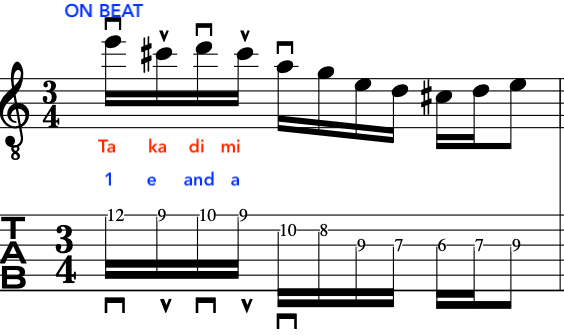
A] We will start on a “Down” stroke

B] We will play “On” the beat.

how_to_play_shakti_indian_guitar_scales_lesson

As with the previous example, we will now imitate what we have just played and copy it exactly down an octave:

how_to_play_shakti_indian_guitar_scales_lesson

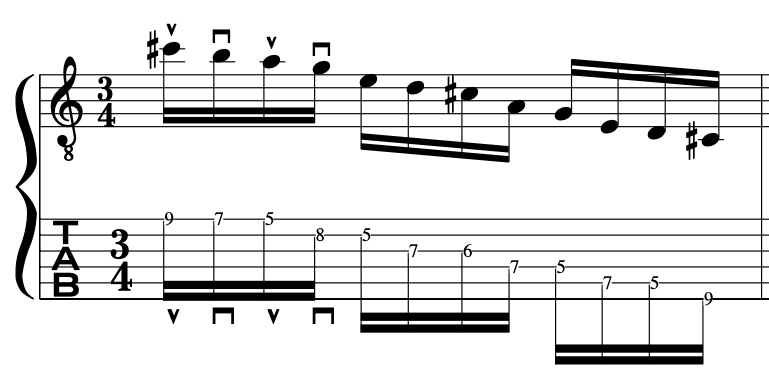
Here, is another form/fingering of the scale in descent: Notice that this is starting on an “Up” stroke.

how_to_play_shakti_indian_guitar_scales_lesson

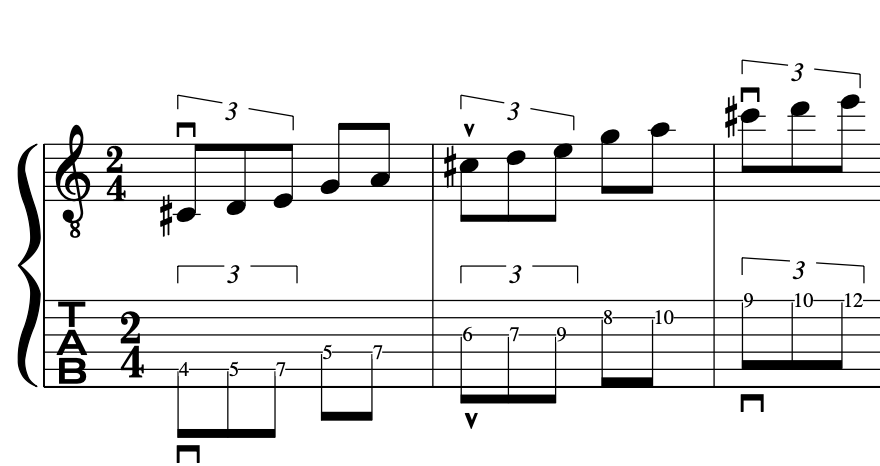
And finally, an ascending form/sequence starting on a “Down” stroke.

how_to_play_shakti_indian_guitar_scales_lesson

McLaughlin: Rhythm Guitar Revisited: Part 2

CLICK SUBSCRIBE!

Hi Guys,

Today, the second part of the John McLaughlin style rhythmic guitar essentials.

If we look at a composition like “Face to Face” by Shakti, we will find interesting rhythmic strumming patterns:

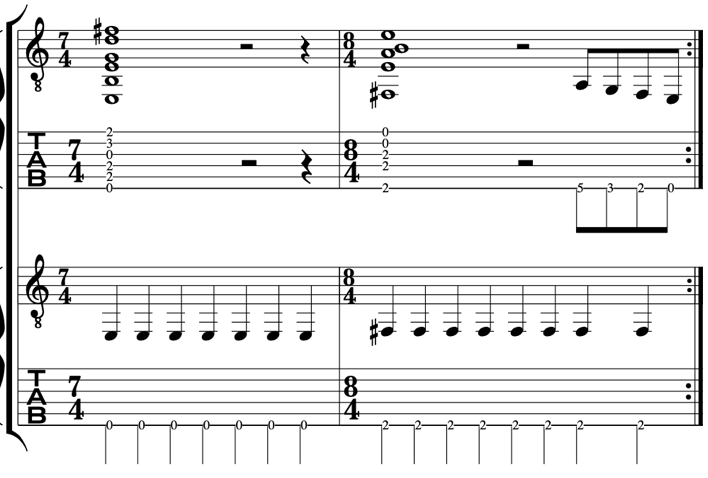
It’s unique how John creates interesting rhythmic riffs with just a couple of chords by employing a bar of 7 to a bar of 8:

shakti-face-to-face-rhythm-guitar-lesson

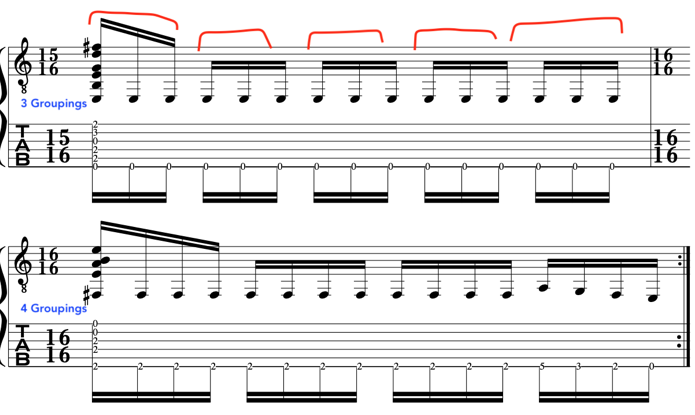
You may wish to count this in different ways. For Example, you could count this as: 15/16 to 16/16 [in groups of 3 to groups of 4 in the next bar]:

shakti-face-to-face-rhythm-guitar-lesson

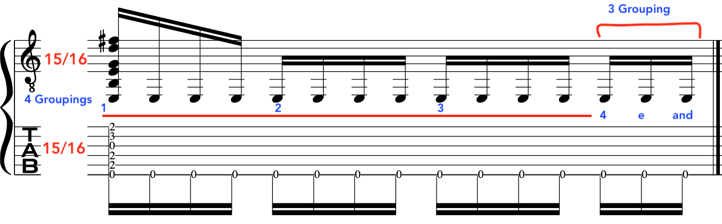
And, also, Groups of 4 with the last being a grouping of 3 [or one note removed in a bar of 4/4 time]

shakti-face-to-face-rhythm-guitar-lesson

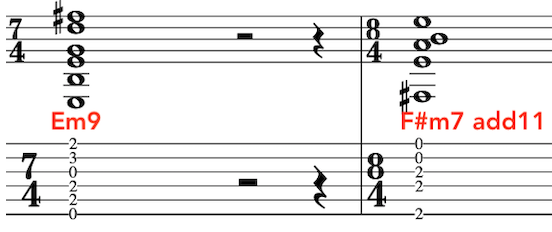
Here, are the two chords that I have used.

These being similar to McLaughlin’s “Face to Face” composition with Shakti.

shakti-face-to-face-rhythm-guitar-lesson

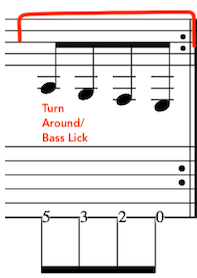
To complete this vamp I employ a little “Turn around” in the bass with a 4 note descending scale motif.

shakti-face-to-face-rhythm-guitar-lesson

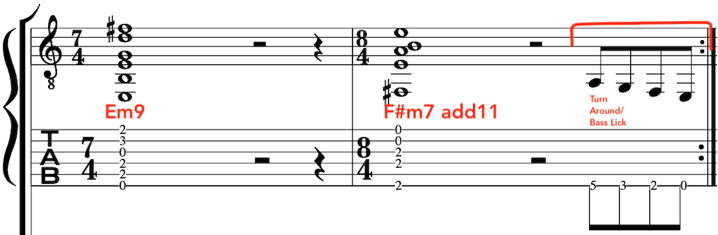
Here, is the full 2 Bar Sequence with the turn around motif:

shakti-face-to-face-rhythm-guitar-lesson

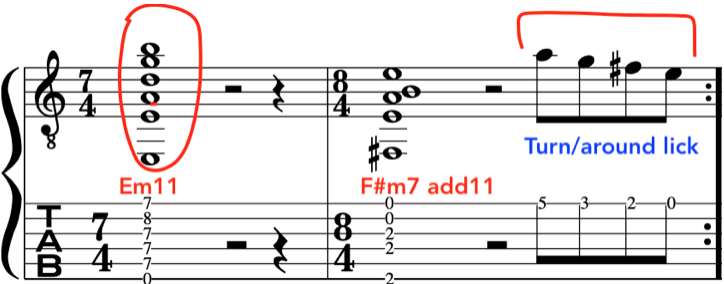
In this variation we have the previous bass scale notes played in the treble on the first string of the guitar.

We also have changed the first chord with a “Quartal” E minor voicing.

shakti-face-to-face-rhythm-guitar-lesson

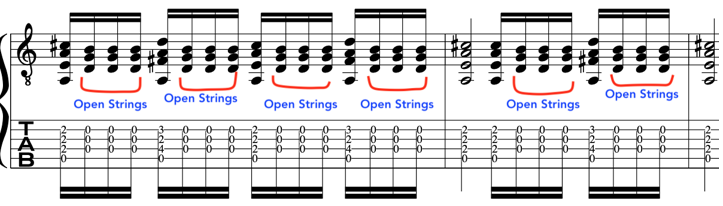
John McLaughlin sometimes strums quickly between two chords and the open strings. Here are a couple of examples.

Firstly, we can see how John exploits 2 simple chords of A Major and D Major between the open strings:

john-mclaughlin-strumming-guitar-lesson

[This is strummed at a very quick pace by alternate strumming “Down Up“] etc

To finish, we will look at one last alternate strumming McLaughlin favourite.

This again follows the same principle with the quick “Down Up” fast wrist movement in the strumming hand.

john-mclaughlin-strumming-guitar-lesson