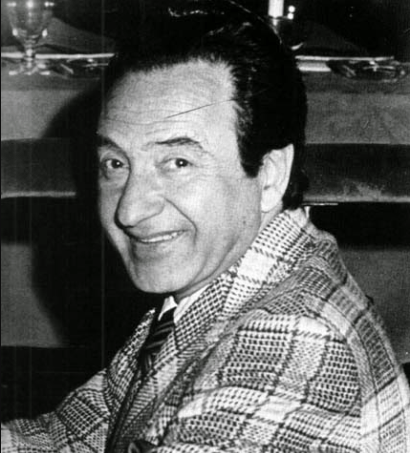
Dennis Sandole Polytonal Guitar Scales: Lesson:

Hi Guys,

Today, a look at the unique scale formations/superimpositions of Dennis Sandole.
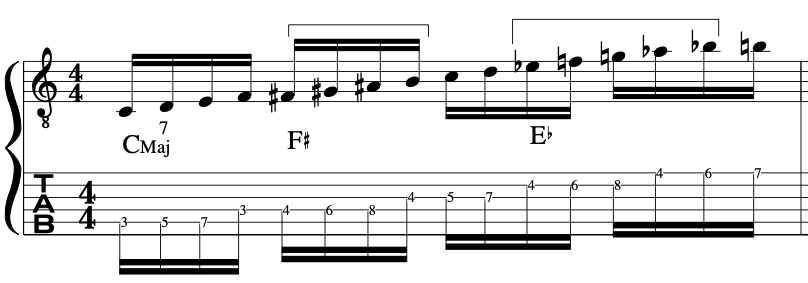
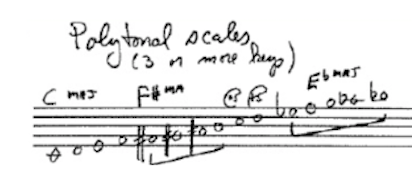
We will take three examples from a handwritten page of polytonal scales by Dennis Sandole and apply them to the guitar:
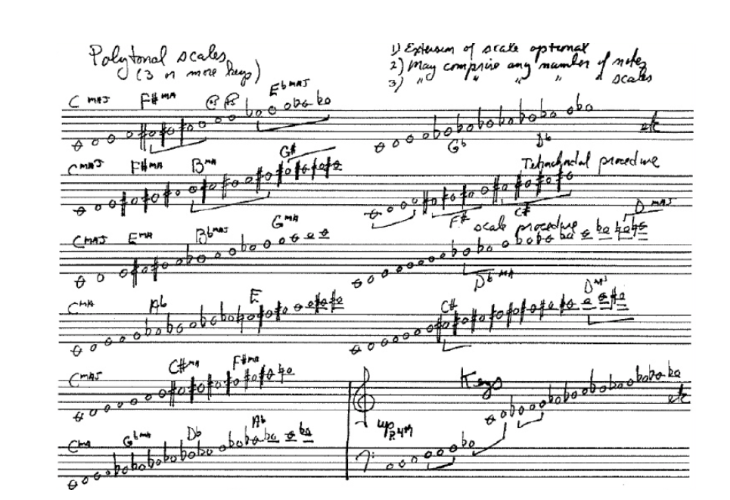
Dennis Sandole’s Handwritten Polytonal Scale:
dennis-sandole-polytoanl-scales-blog

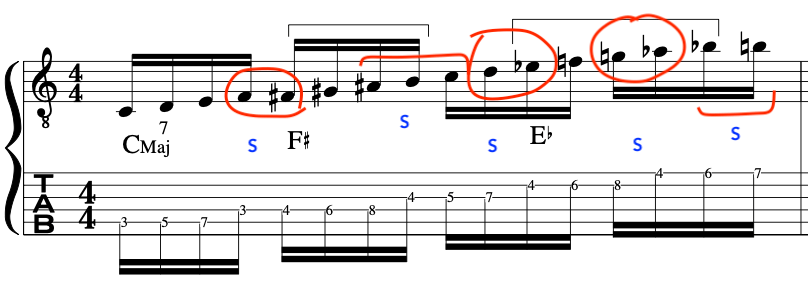
Same scale applied to the Guitar:

dennis-sandole-polytonal-guitar-scales-blog

In this example notice how the different major scales connect via semitones creating a unique chromatic connection.
dennis-sandole-polytonal-guitar-scales-blog

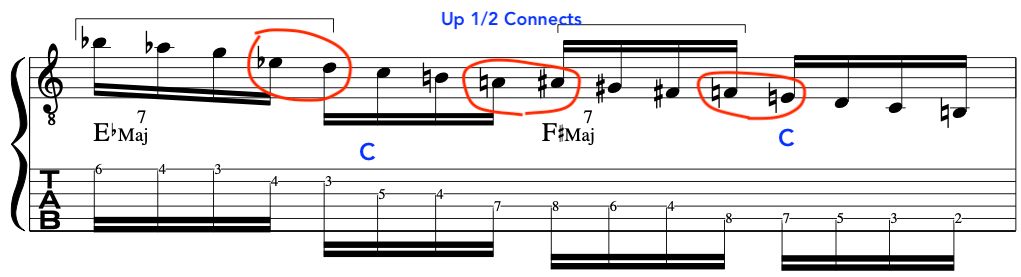
Now, let’s apply a descending version with a more pentatonic/fingering guitar format:

Again, notice the half step chromatic connections that make this run smoothly.
dennis-sandole-polytonal-guitar-scales-blog

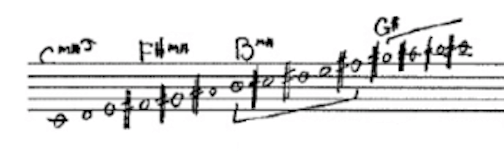
Dennis Sandole’s Handwritten Polytonal Scale:
dennis-sandole-polytonal-guitar-scales-blog

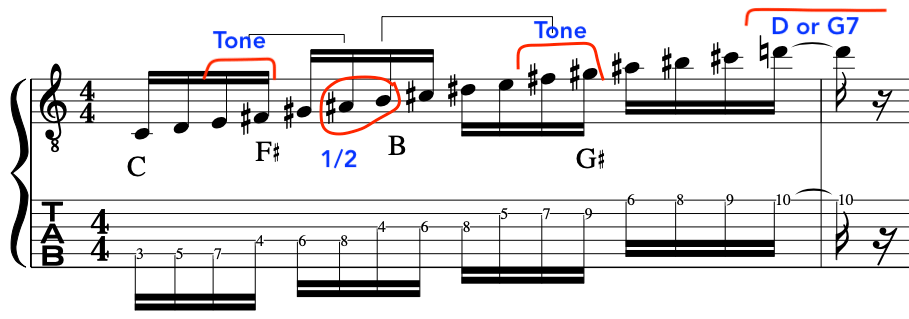
Same scale applied to the Guitar:

dennis-sandole-polytonal-guitar-scales-blog

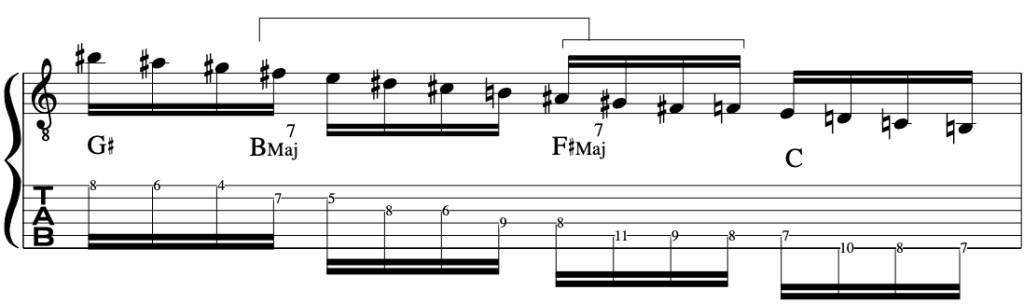
Here, we have whole tone connections as well as half step connections creating a colourful set of sounds:

Let’s now create a descending version:
dennis-sandole-polytonal-guitar-scales-blog

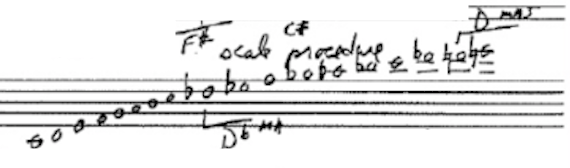
Dennis Sandole’s Handwritten Polytonal Scale:
dennis-sandole-polytonal-guitar-scales-blog

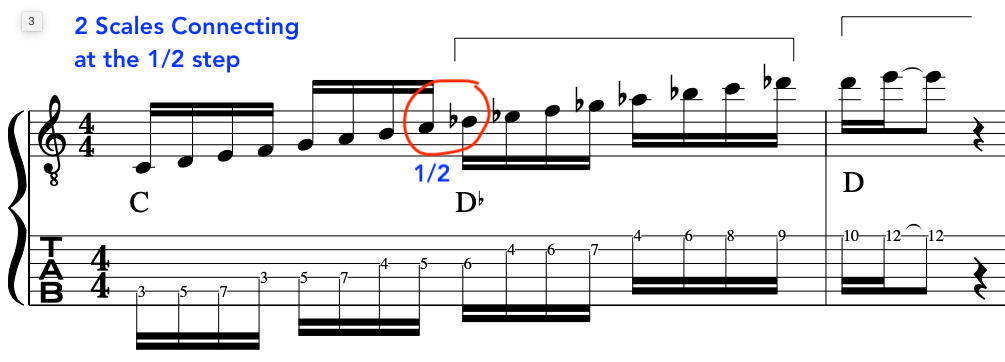
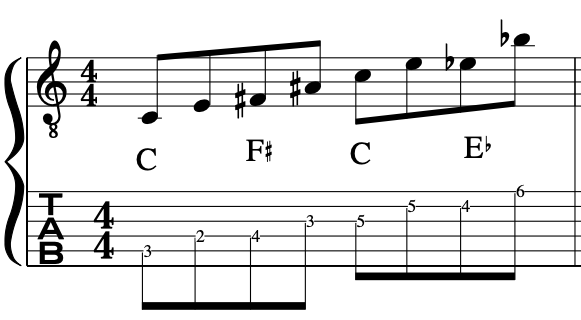
Same scale applied to the Guitar:

dennis-sandole-polytonal-guitar-scales-blog

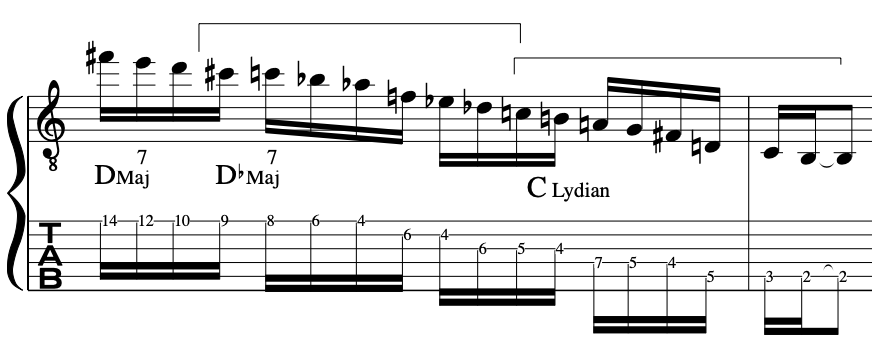
In this example we have a full C major scale connecting to a full Db major scale via the halfstep of C to Db. And finally, up another half step to the note D.

Finally, let’s descend:
dennis-sandole-polytonal-guitar-scales-blog

There are also many concepts that you can make out of these polytonal scales:

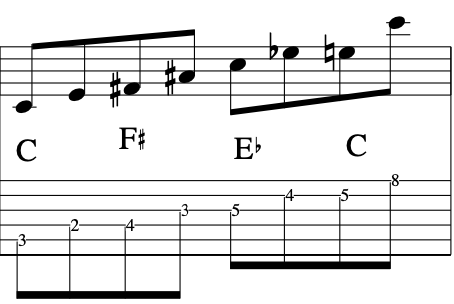
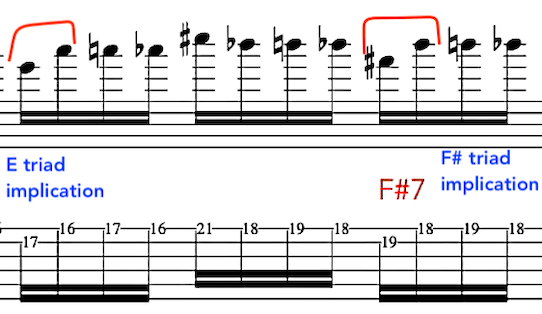
For instance, we can imply triads/arpeggios with dyads and create little licks, motifs and hook lines.

dennis-sandole-polytonal-guitar-scales-blog

dennis-sandole-polytonal-guitar-scales-blog

This was just a very brief look at Dennis Sandole’s concept of polytonal scales.

In terms of the guitar these are very useful for creating a mixed harmonic palette and creating seamless lines where any scale can connect to any other scale regardless of non diatonicism and ambiguity.

Jazz Fusion Alternate Picking Guitar Exercise Analysis

Hi Guys

As requested, here are the two youtube shorts [uploaded horizontal] with the Tab/Notation. [Sorry, some notation is a bit messy]

Alternate Picking guitar exercise. Jazz Fusion music mid tempo. Lesson/How to:

PLEASE NOTE: These are only exercises to connect and get familiar with the jazz tools of improvisation in regards to alternate picking:

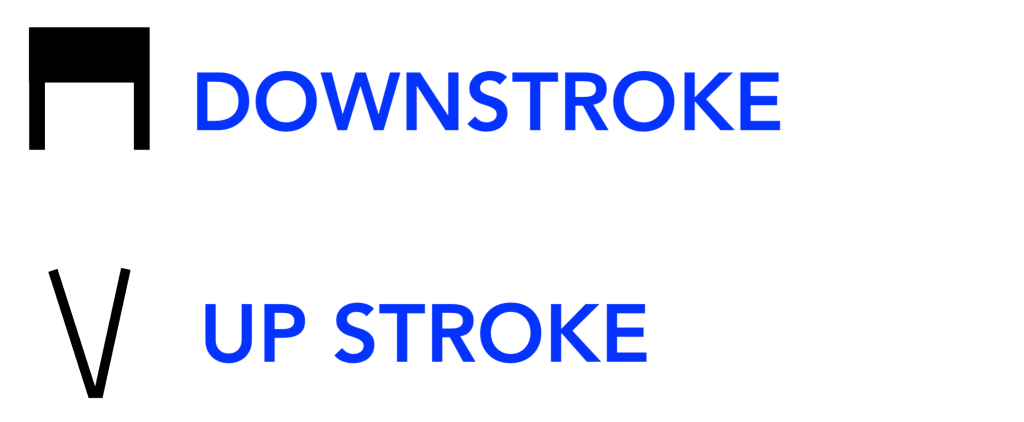
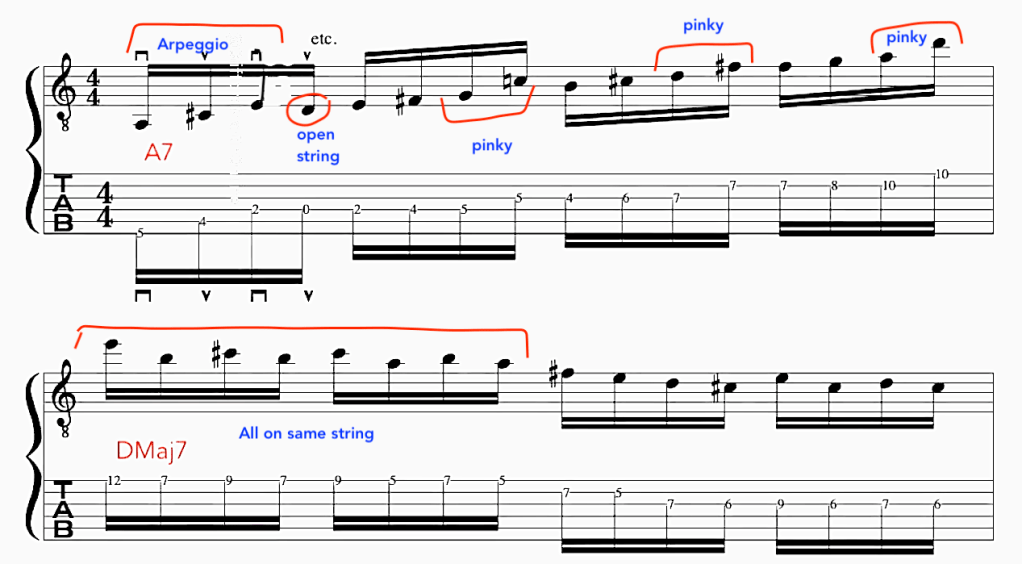
This exercise starts on a down stroke with strict alternate picking around 130-140 Bpm:

The point of the exercise is to “Connect” lots of jazz improvisation concepts together.

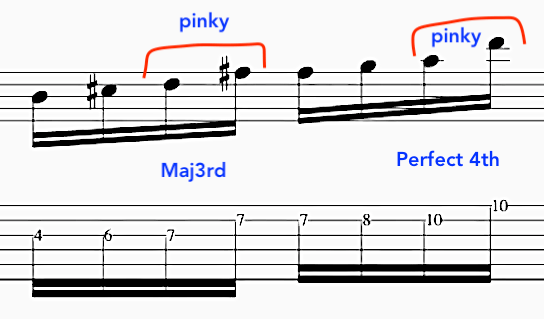
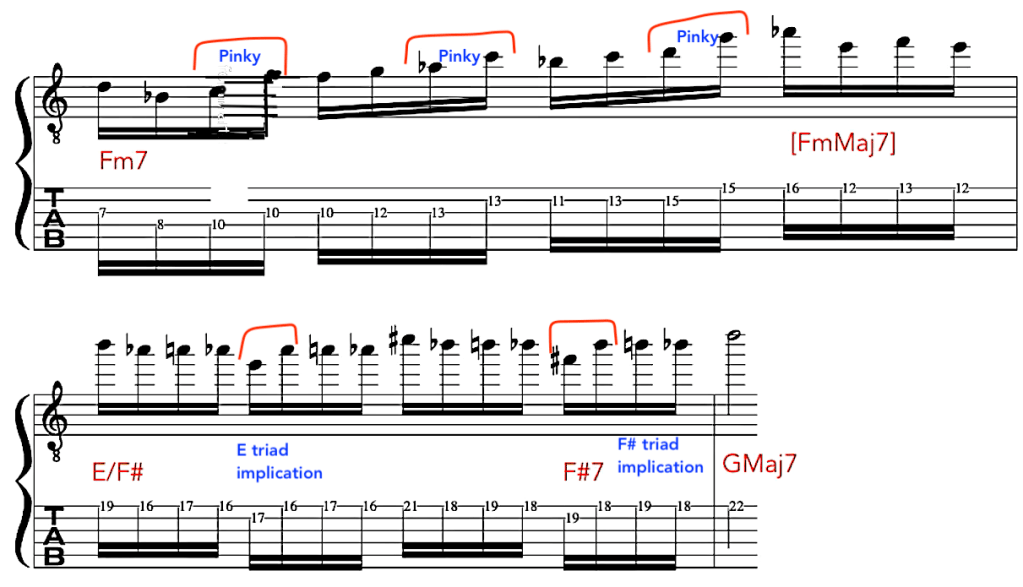
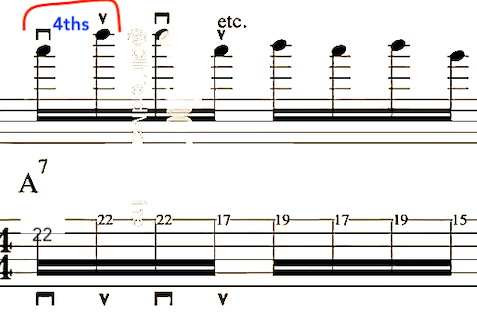
The first being barring 4ths and 3rds with the little finger [or pinkie]. This breaks up the monotony of the scale sound and creates a melodic inflection. It also makes it easy to play quickly as two notes are fretted with the same finger.

alternate-picking-guitar-jazz-fusion-lesson

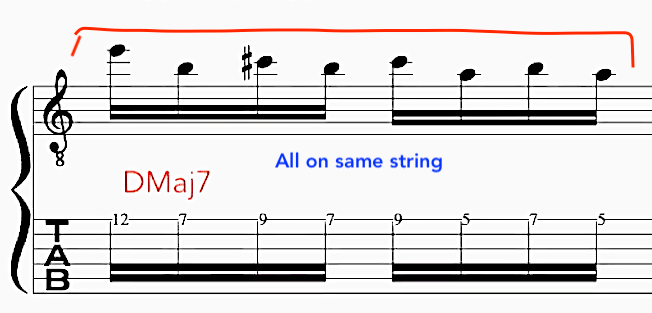
This exercise is also good for exploiting phrasing on one string:

alternate-picking-guitar-jazz-fusion-lesson

It’s also good for triad implications or sus 4-3 to lengthen the line.

alternate-picking-guitar-jazz-fusion-lesson

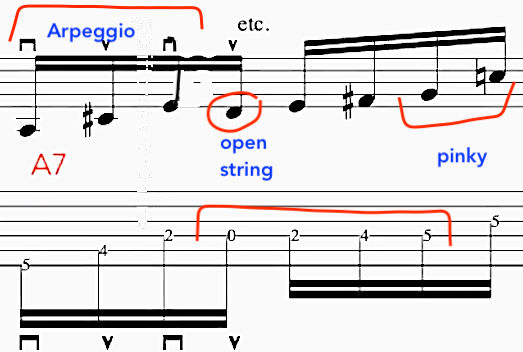
Lastly, another tool that works really well for both the alternate picking right hand and the sound of the phrase is to employ an arpeggio. In this exercise we have also manipulated the open string to set up the next fragment of scale on the same string.

alternate-picking-guitar-jazz-fusion-lesson

alternate-picking-guitar-jazz-fusion-lesson

Alternate Picking mid tempo guitar exercise

This exercise starts on a downstroke once again, but, this time we descend:

The same improvisational tools are applied.

We start the line with some 4ths barred with the little finger into a bit of broken scale.

alternate-picking-guitar-jazz-fusion-lesson

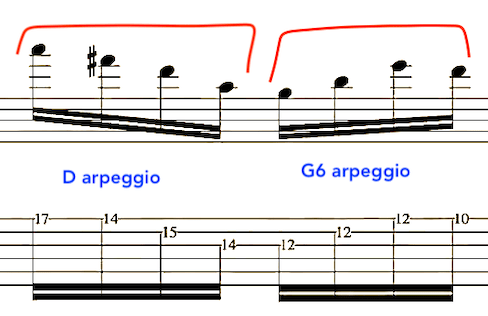
This leads us nicely into the employment of two arpeggios. These arpeggios create melodic colour over the A7 Dominant chord.

alternate-picking-guitar-jazz-fusion-lesson

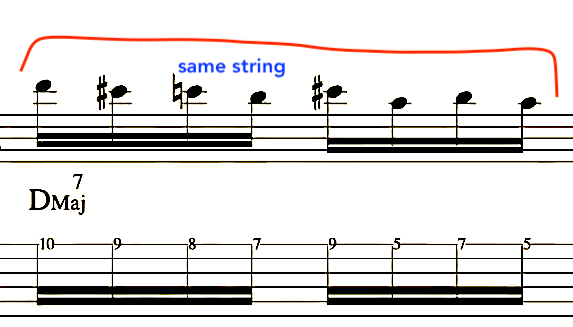
Next we exploit the alternate picking on the same string for two beats over the D Major 7 chord:

alternate-picking-guitar-jazz-fusion-lesson

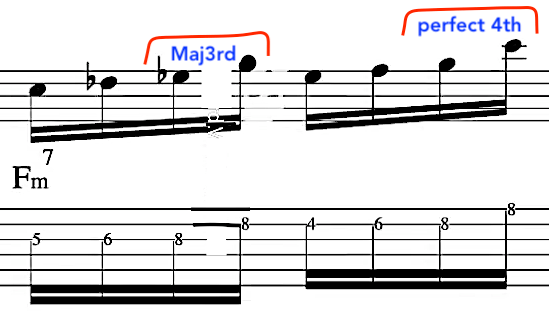
As with the previous exercise we exploit the Major 3rd and perfect 4th intervals, which means that we can alternate pick two notes quickly without having to change our fretting fingers.

alternate-picking-guitar-jazz-fusion-lesson

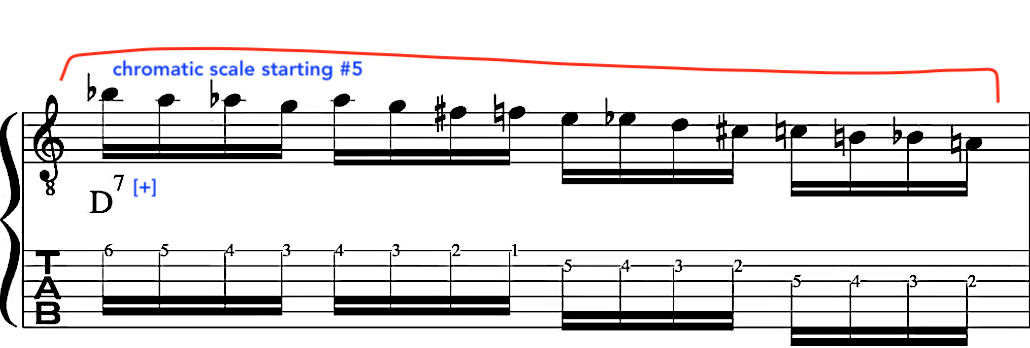
Finally, we employ the chromatic scale starting on the #5 [Bb] of D7augmented chord:

alternate-picking-guitar-jazz-fusion-lesson

In conclusion it’s through exploiting these improvisational devices that we can alternate pick and create long quick fluid lines lines that make improvisational sense.

In terms of jazz fusion this means that we can play smoothly through ambiguous harmony as well as standard chord changes at a quick tempo.

FREE PDF DOWNLOAD:

Pat Martino’s Guitar Improvisation Techniques | Free PDF Download

Pat Martino’s Guitar Improvisation Techniques | Free PDF Download

Hi Guy’s,

Today, a look at how jazz guitar legend Pat Martino approaches jazz improvisation.

This unique insight is strictly for guitar players, [although, players of other instruments may well find some of this extremely interesting and probably useful].

Pat’s approach to guitar improvisation is also a brilliant method for any guitarists that find playing through complex chord changes difficult or confusing

Okay, let’s say we are given this set of chord changes to improvise over.

pat-martino-jazz-guitar-improvisation-technique

Well, this is a lot of chords in different keys and with harmonic shifts to get through. This is 3 Chords per bar!!!

At a fast tempo this is a lot of different scales and arpeggios to connect together quickly!!!

Here’s where Pat’s unique approach comes into play.

Pat would approach this by employing the minor.

So, if we take a closer look at our sequence we will notice three sets of ii V7 I’s.

pat-martino-jazz-guitar-improvisation-technique

for F#m7 we will use C#m

and for Dm7 we will use Am.

In the example below we can visually see it all set up.

pat-martino-jazz-guitar-improvisation-technique

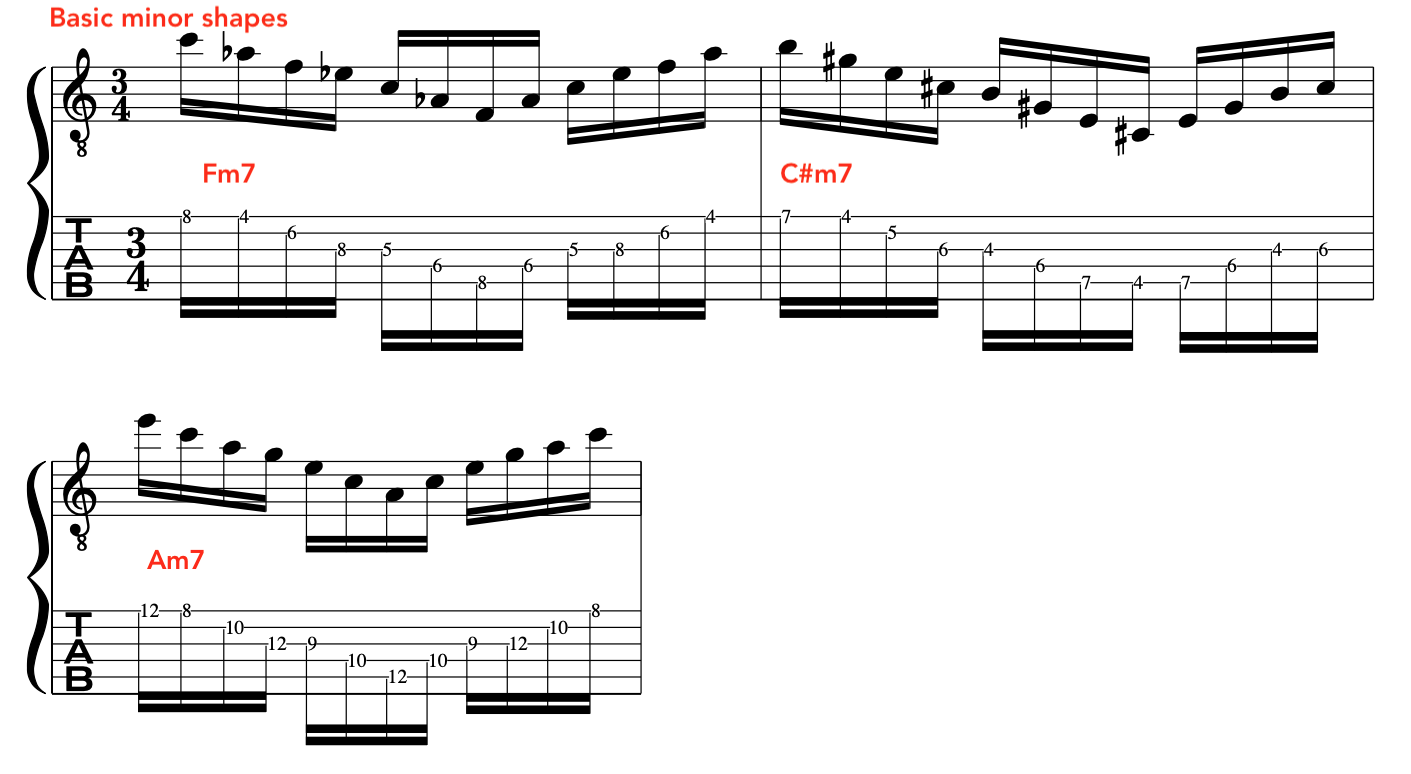
EXAMPLE: “minor” shapes to build from:

pat-martino-minor-conversion-jazz-guitar-improvisation-technique

This allows us to play freely and easily without worrying about messing up harmonically or rhythmically when connecting/playing through the changes.

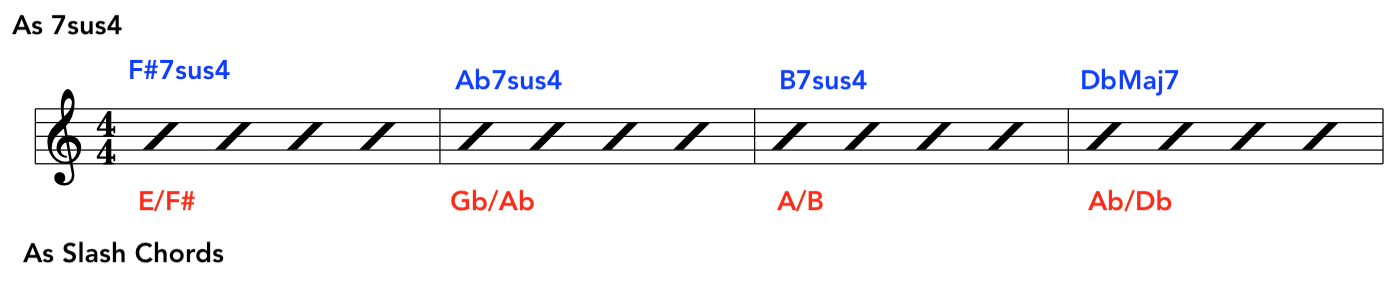
Let’s now exploit this with 7sus4 chordal movement and slash chords.

pat-martino-minor-conversion-jazz-guitar-improvisation-technique

As before w will make the dominants minor:

F#7sus7 = C#minor

Ab7sus4 = Ebminor

B7sus4 = F#minor

[DbMaj7 = Fminor or Bbm7]

VISUAL CHART: with dominant minor application below.

pat-martino-minor-conversion-jazz-guitar

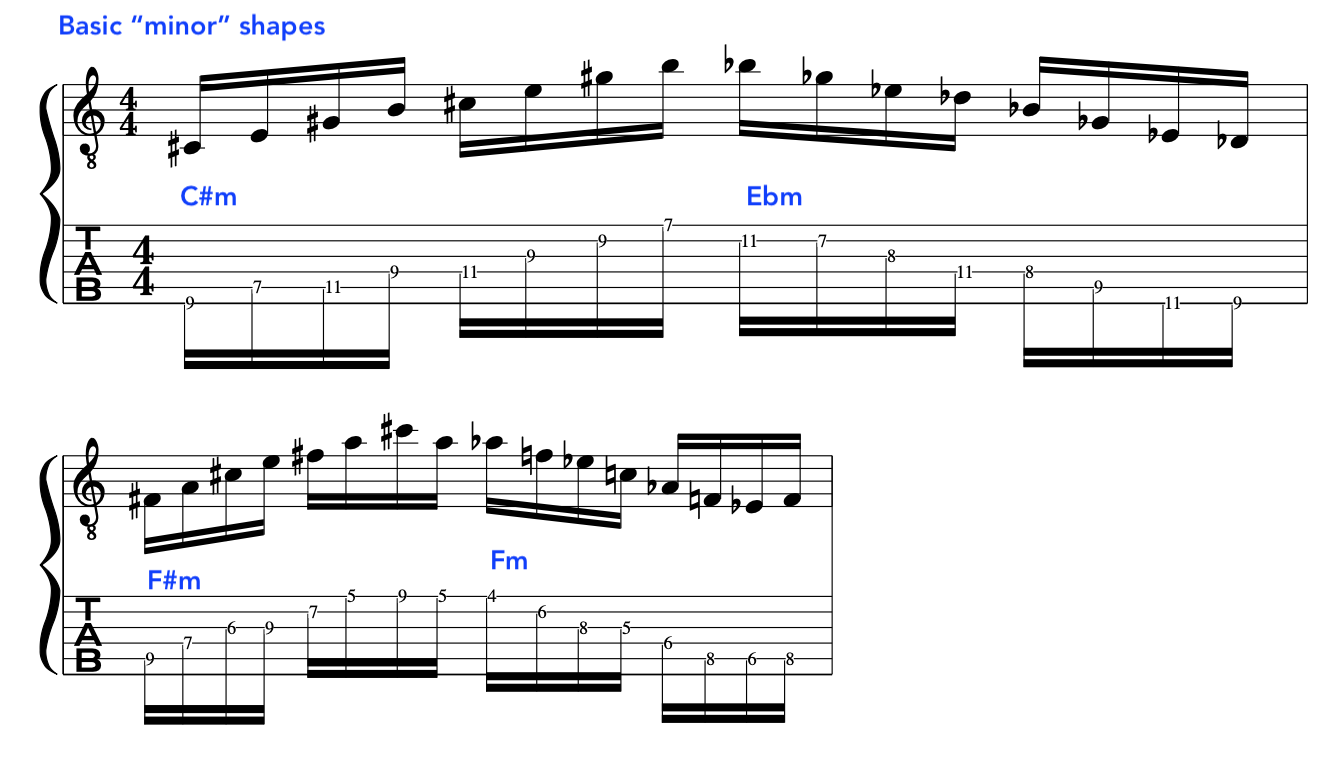
BASIC minor shape examples to build from:

pat-martino-minor-conversion-jazz-guitar-improvisation-technique

Finally, let’s add a chain of minor ii V7’s

Here we will employ biii as our minor-isation for easy improvisation:

pat-martino-minor-conversion-jazz-guitar-improvisation-technique

To make this really authentic we will add the 6th to the minor arpeggio:

So,

Example: Classic Jazz Seq Lick:

pat-martino-minor-conversion-jazz-guitar-ii-V7-1

With this in mind we can either sequence our way through the chain of chords or play freely by exploiting minor biii

pat-martino-jazz-guitar-improvisation-technique

IN CONCLUSION

In conclusion this was a brief look at Pat Martino’s brilliant approach to jazz improvisation through any chord changes on the guitar.

The guitar unlike the piano cannot play the same shape through countless octaves, so, when improvising on the guitar we need to be selective [in what actually works] so that ironically we have the freedom to let go and just play.

The minor topic [minorisation] technique allows us to achieve the guitar improvisers aim in a short period of time. For any student frustrated or seeing no end in sight, Pat’s methodology is a shining light. This method can save you 20 years of practice and frustration.

FREE PDF DOWNLOAD;