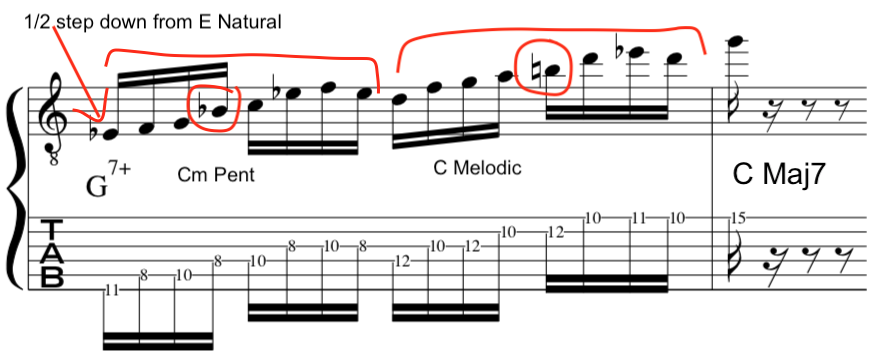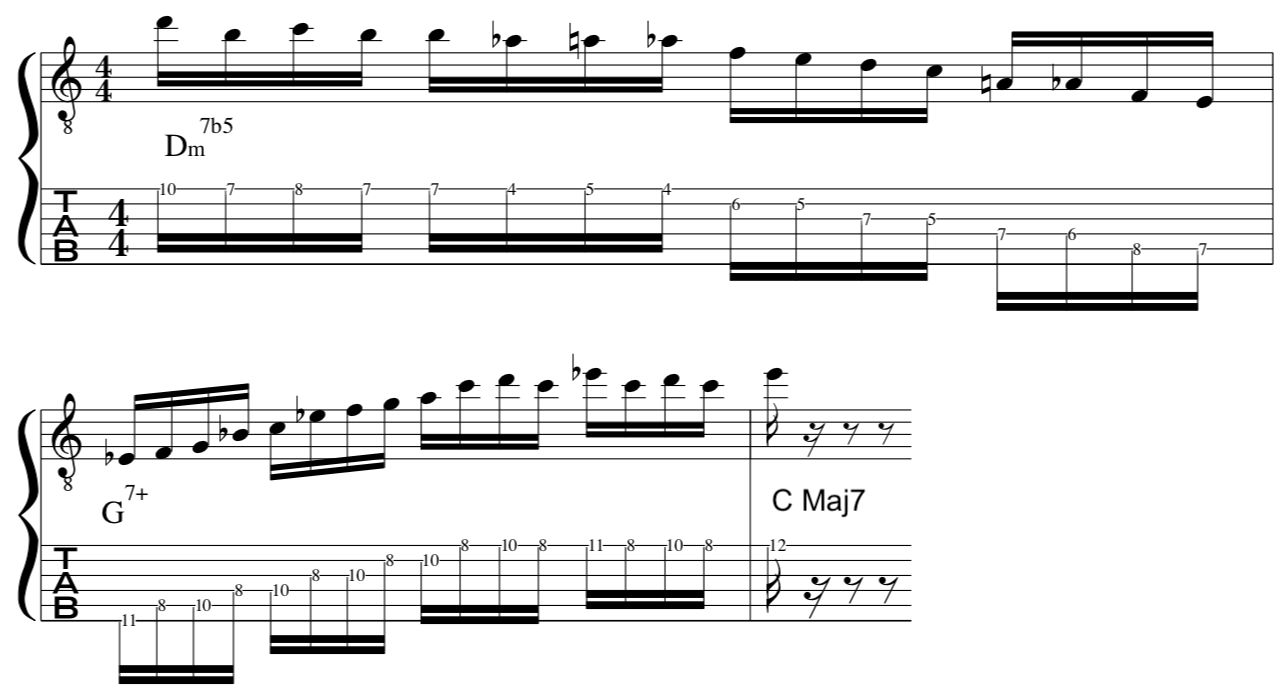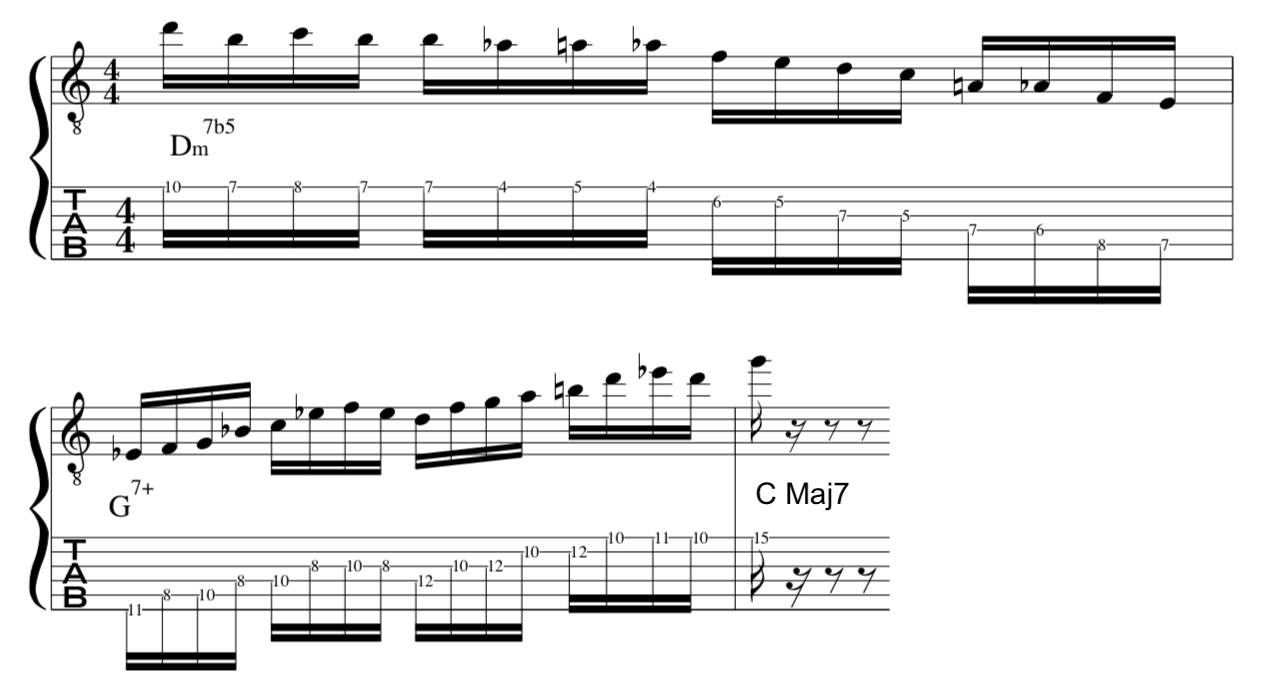
Please watch video above for detailed info:
Hi Guys,
Today, a quick delve into what makes John McLaughlin’s alternate picking guitar style work so easily and fluidly.
Many, focus on the right hand technique, but, much of it comes from the way the fretting hand works.
So, let’s look at a couple of simple secrets to John’s approach and why it is so fluid and effective
#1 OPEN STRING APPLICATION:
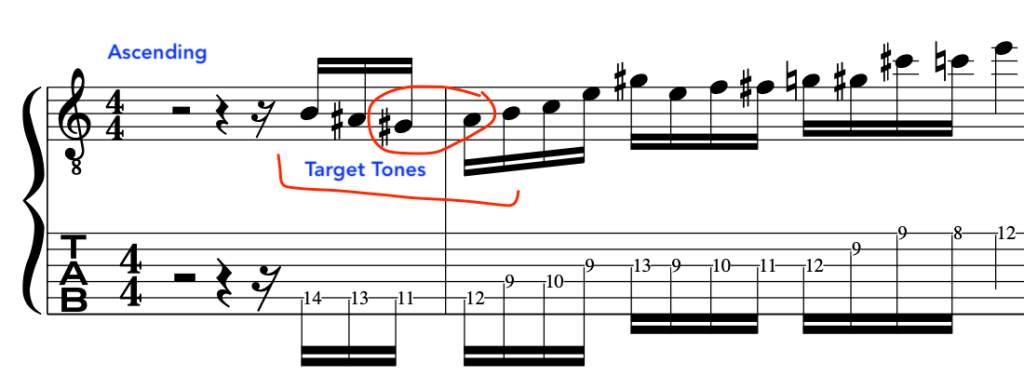
In this example, we will create an effective line that is not tremolo picking on cliche shred scales but a continuous colourful and creative improvised line in a world music style.
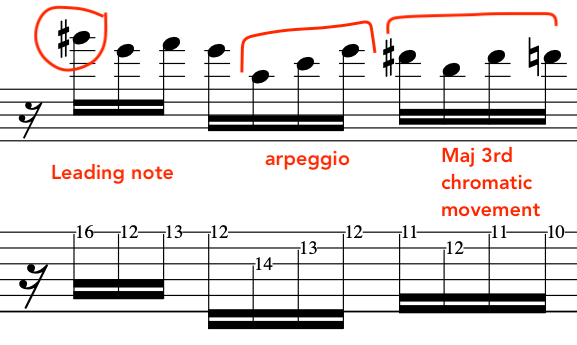
Here is the full line. Starting on a “Down stroke”
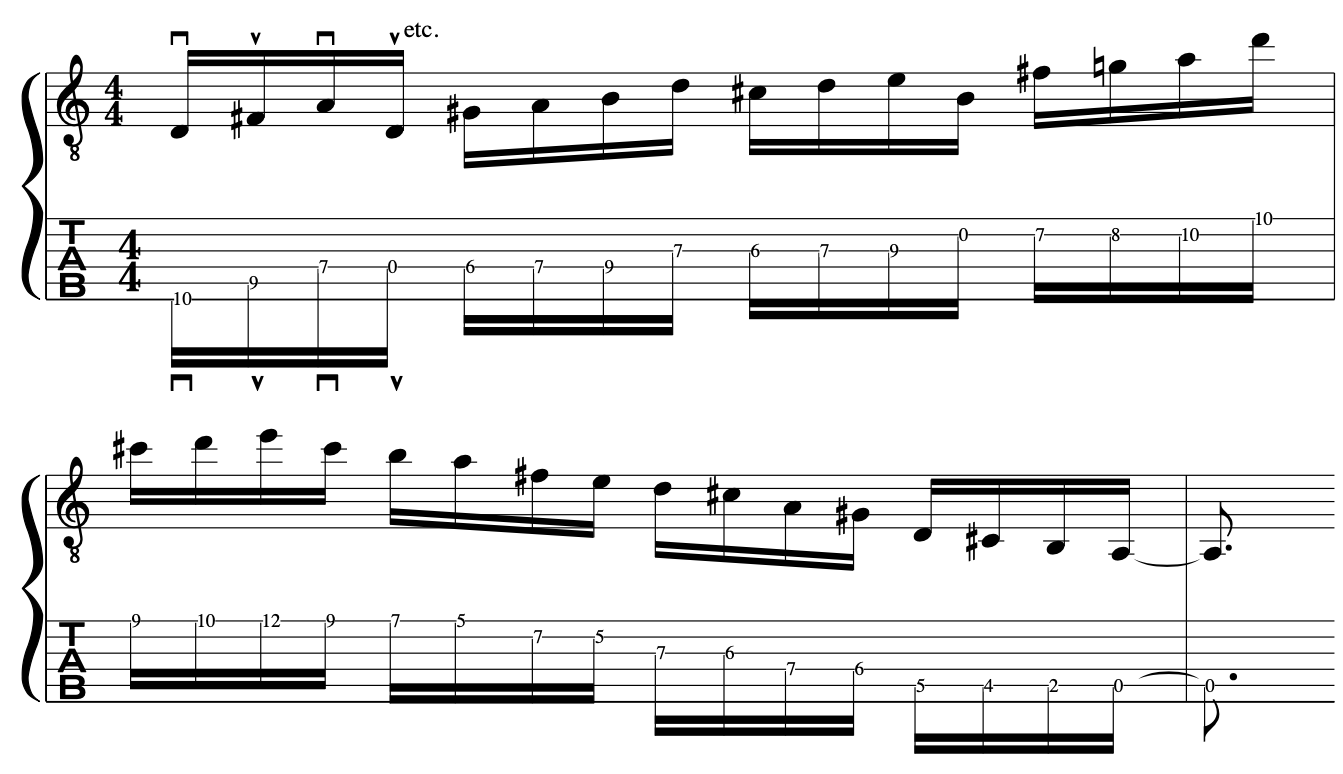
If we take this apart we will find a couple of reasons why this is fluid and very natural for the alternate picking guitar technique.
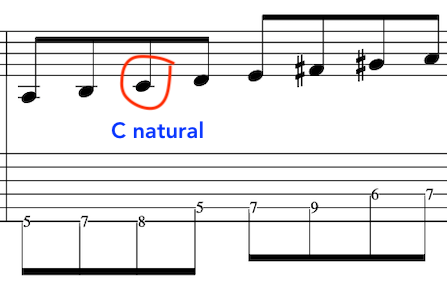
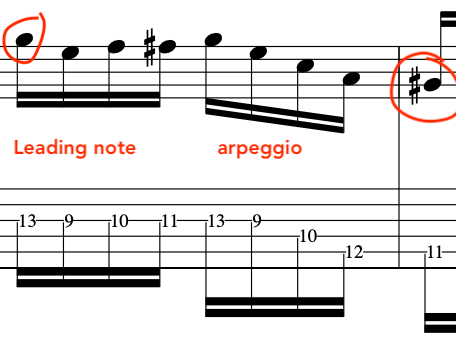
First of all notice: The arpeggio that starts the phrase. The last note of this 4 note tetrachord grouping is an open D string!
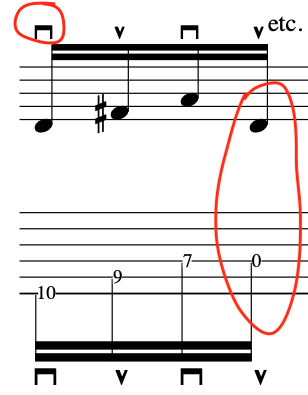
This open string gives the fretting hand a hundredth of a second to do absolutely nothing as it prepares for the next 4 note grouping to fret.
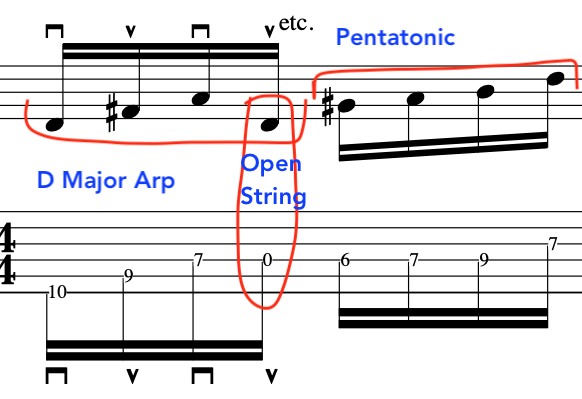
This gives us time to get into position and so we are NOT rushing about, and, we are in control
CROSSING THE STRING:
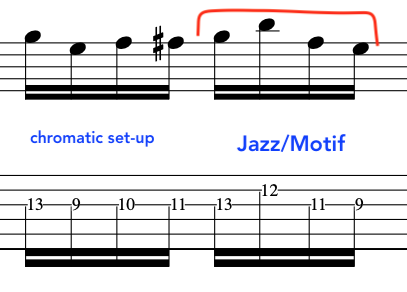
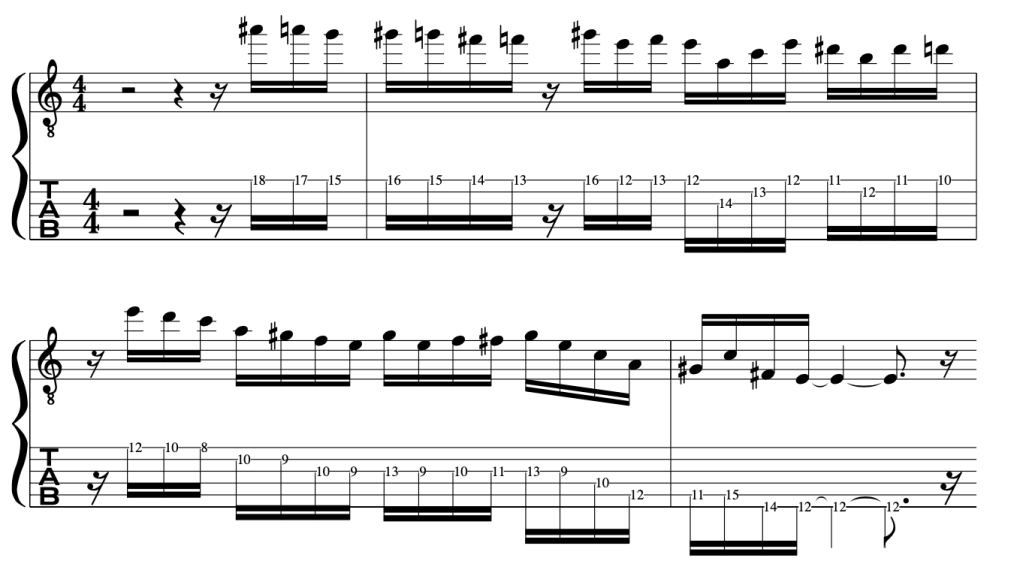
We will now employ the use of an open string once again, but, this time for “Crossing” the string:
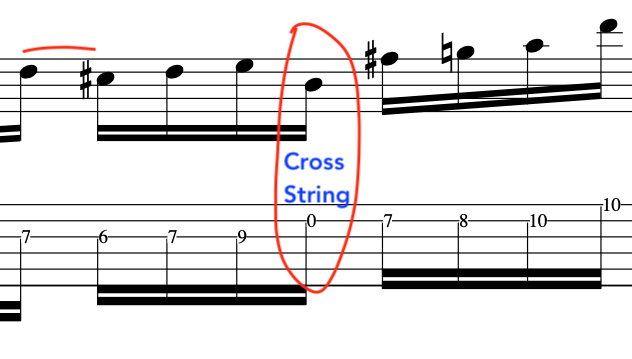
This makes it easy to cross the string smoothly and connect to the next tetrachord.
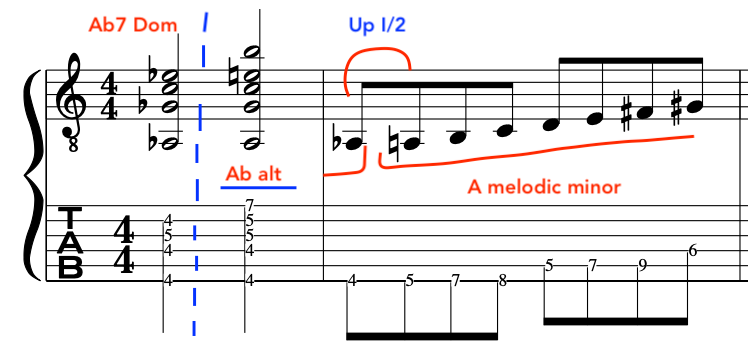
From here we will extract a partial John McLaughlin scale/fingering by sliding it into position.
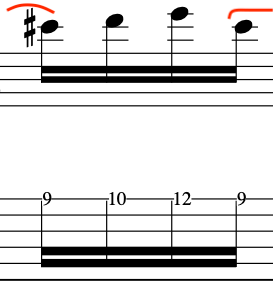
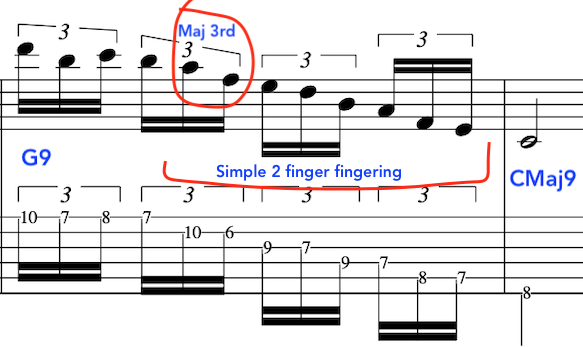
To end this line, we will descend with some simple scale starting on an “Up stroke”. Also, notice the simple 2 finger fingering for the fretting hand.
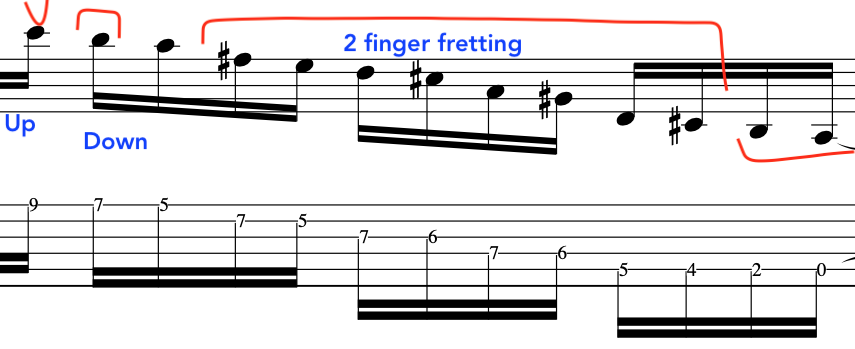
EXERCISE 2: SEXTUPLETS: 6 NOTE GROUPINGS:
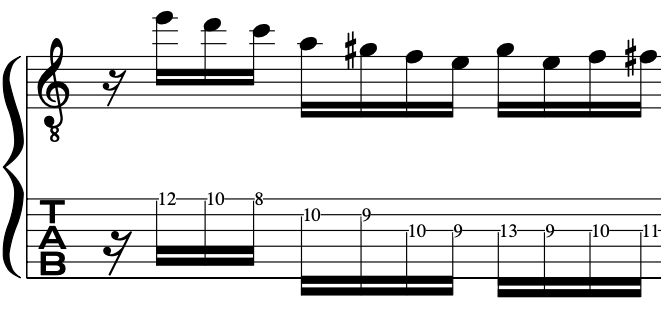
In this exercise we will employ groupings of 6 notes. This is based upon an improvised acoustic jazz fusion line, like that of “Belo Herozonte:
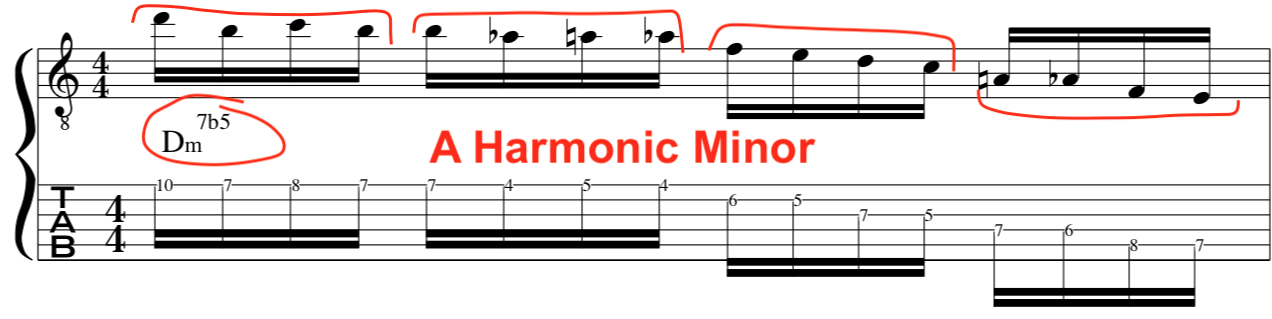
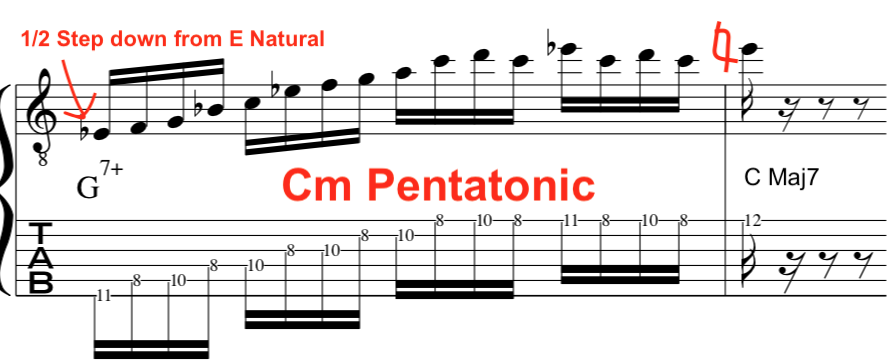
This is played over a ii V7 I of Dm9 G7 CMaj9:
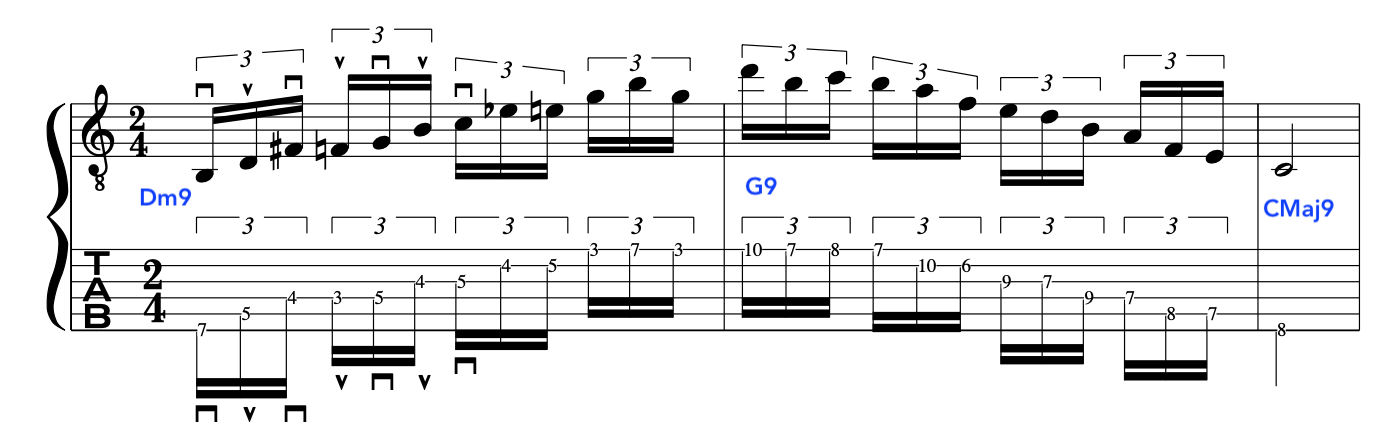
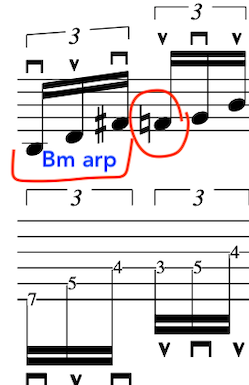
If we take this apart we will notice that we exploit a Bm arpeggio going to a B dim arpeggio that then goes to the 4th and 6th notes of D Dorian: This creates a nice colourful sound.
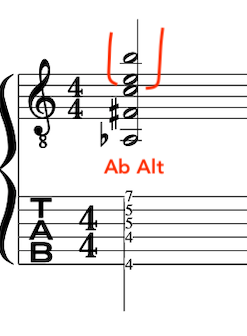
For the next 6 note hexatonic grouping we employ an E harmonic/melodic minor sound over the Dm9 chord: Notice the Major 3rd interval:
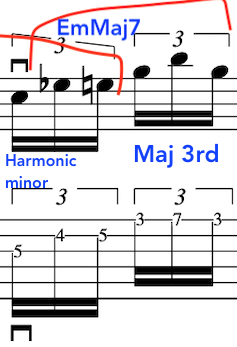
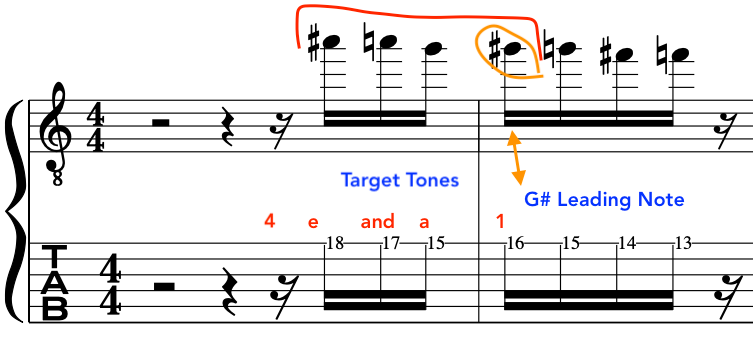
From here, we will “Slide” the fretting hand up to the next position: Notice the use of the Major 3rd interval once again, as this breaks up the monotonous scale sound and creates distance and melodicism.
Finally, we have simple 2 finger pentatonic descending scale application that finally rest on the note C for the CMaj9 chord.
FREE PDF DOWNLOAD:
If this lesson was of use to you then please SUBSCRIBE to us on YOUTUBE by clicking the youtube link below, thanks!