John McLaughlin Pentatonic Guitar Concepts part 1:

Hi Guys,

Today, a quick look at John McLaughlin’s use of the pentatonic scale.

To begin with, it is a good idea to map out the fretboard of the guitar with an arpeggio.

This way we can ascertain where the different positions are.
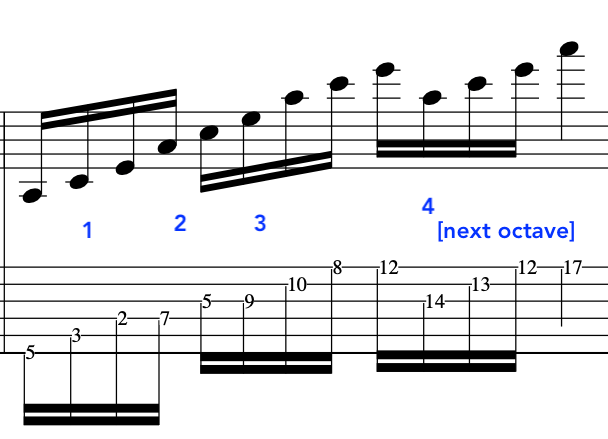
Now that we have this, let’s connect two positions together:
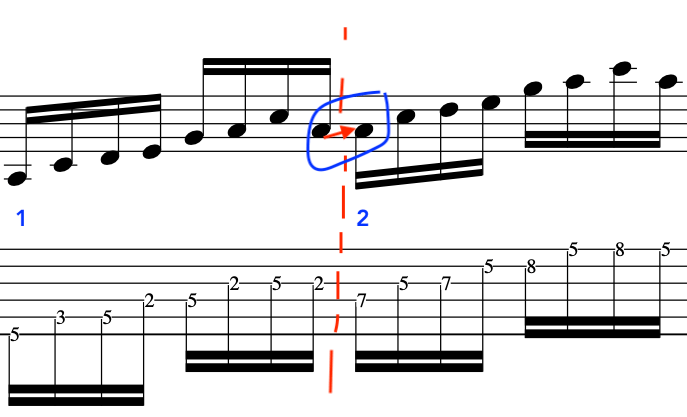
John McLaughlin sheet music depicting a guitar piece with notes and highlighted sections. Two distinct sections are marked with colored circles and arrows.
Diagram illustrating a guitar fretboard connecting pentatonic scale positions.

Moving up, we have this interesting scale combination:
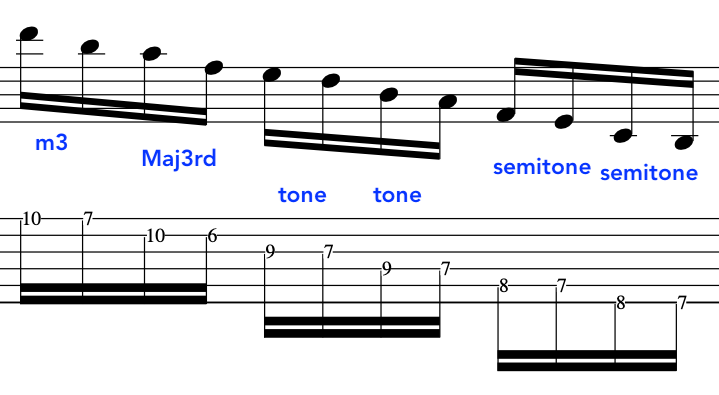
Music sheet illustrating John McLaughlin's pentatonic scale with notes labeled for minor third, major third, tone, and semitone.
Musical notation demonstrating the McLaughlin pentatonic scale with highlighted intervals.

Finally, we have another pentatonic combination at the end of the octave:
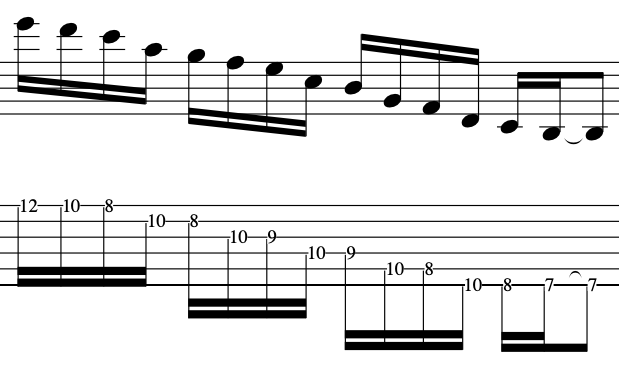
A musical score showing notes and tablature for guitar, illustrating the pentatonic scale.

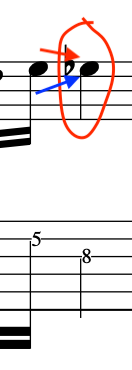
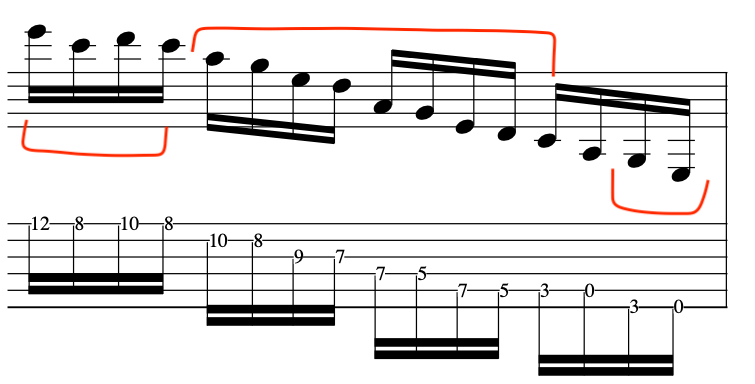
In order to create some magic, John McLaughlin naturally colours the phrase by adding a magic note.

In this example it is the E natural sliding down a semitone to E flat.
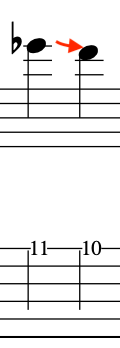
Also, the Eb moving down a semitone again, an octave up to D natural.
To see/hear this in action,let’s create a phrase/line.

We will do this by starting with an A minor arpeggio and an open D string. This has a triad pair inflection.

This open D string also gives our fretting hand a fraction of a second to get into the next position:
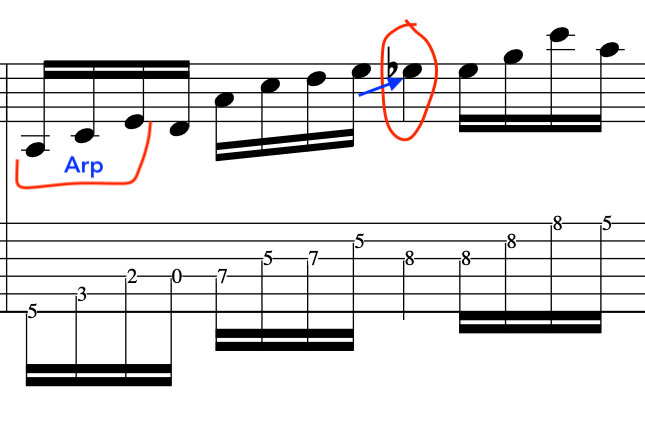
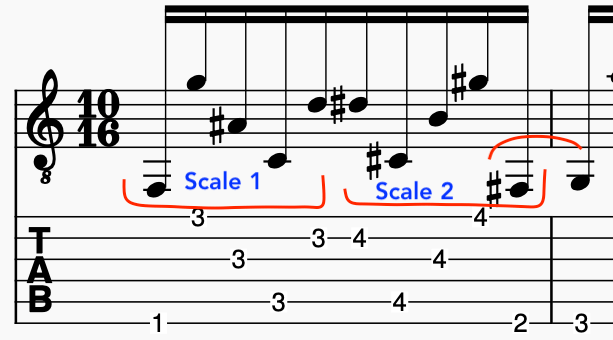
John McLaughlin heet music notation displaying a guitar arpeggio with annotated markings highlighting specific notes and techniques.

Another important point-John creates interest, by manipulating the 1st inversion minor chords on the first three strings of the guitar: In this case Cm and Am.
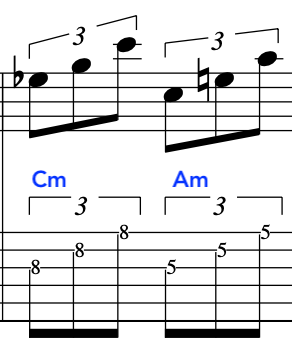
This gives us that spiritual or ethereal sound John is known for. It also, creates flavour and colour out of the basic minor pentatonic scale sound, yielding a more original result. [Please watch video above for demo performance]

Another great idea, is to employ the minor 7th arpeggio to the pentatonic scale:
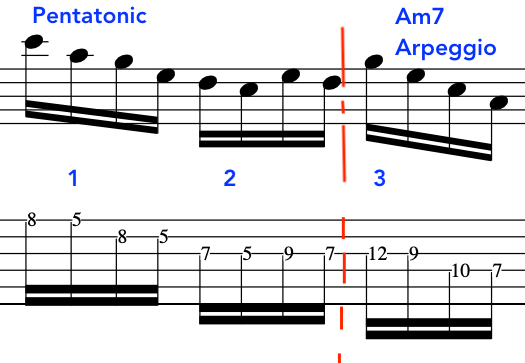
Musical notation featuring a John McLaughlin pentatonic scale and Am7 arpeggio, indicating different positions on a guitar fretboard.
Chord diagram illustrating the McLaughlin pentatonic scale and Am7 arpeggio for guitar.

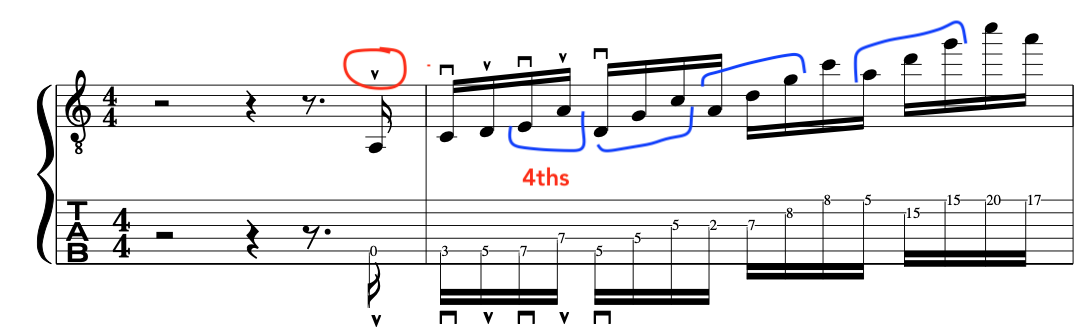
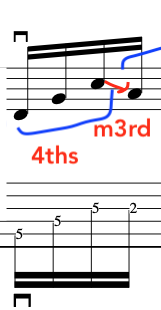
Lastly, John is a master at exploiting quartal harmony to create smooth pentatonic lines.
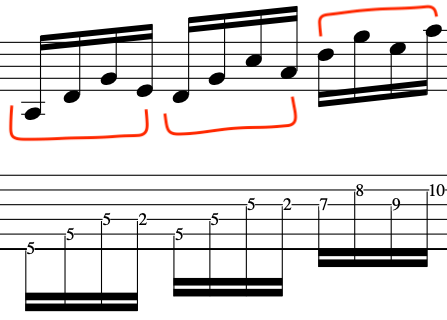
Music notation showing guitarist John McLaughlin's use of quartal harmony at the guitar when improvising
Sheet music illustrating guitar techniques used by John McLaughlin, focusing on quartal harmony ascending

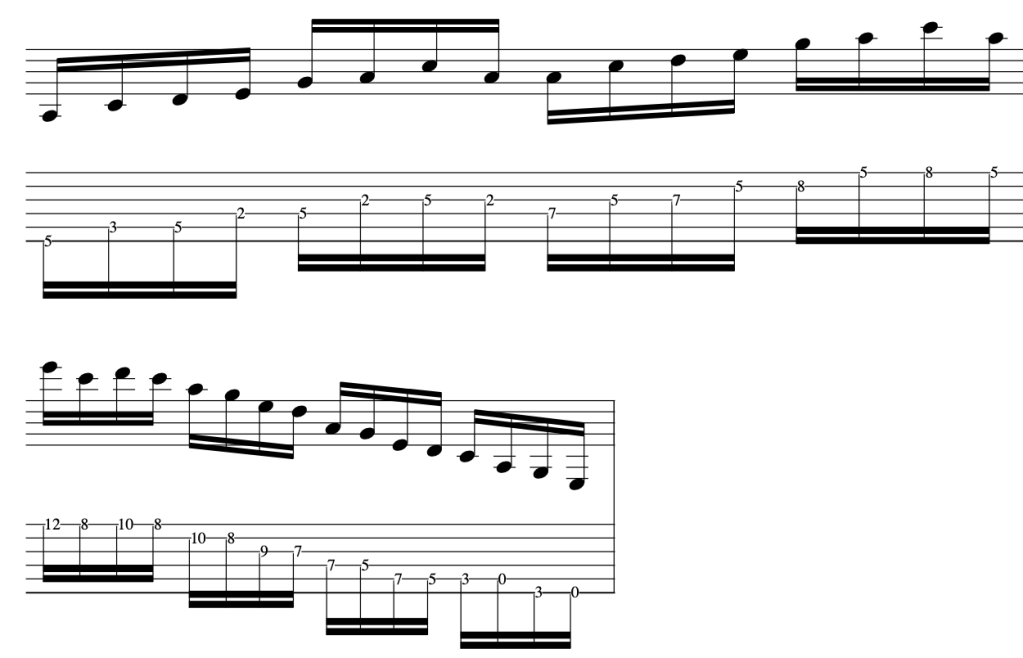
What’s great about using the minor arpeggio as a mapping tool, is that we can add notes of the pentatonic scale in between it. [Resulting in long fluid lines].
Musical notation with notes and tablature for guitar, highlighting a pentatonic scale exercise.

To conclude, we will take the first exercise from this blog and connect it to the pentatonic exercise above.
Sheet music illustrating John McLaughlin's pentatonic scale and various guitar techniques.
Musical notation illustrating John McLaughlin’s use of the pentatonic scale.

This was just a quick look at how John McLaughlin exploits the common pentatonic scale.

There are many other approaches to this like those found in John McLaughlin’s educational video “This is the way I do it”.

But, the concepts detailed in this blog/lesson work really well as a primer for John’s live performances/improvisations.

John Coltrane and McCoy Tyner Style Quartal Guitar Line | Jazz Improvisation Lesson

Hi Guys,

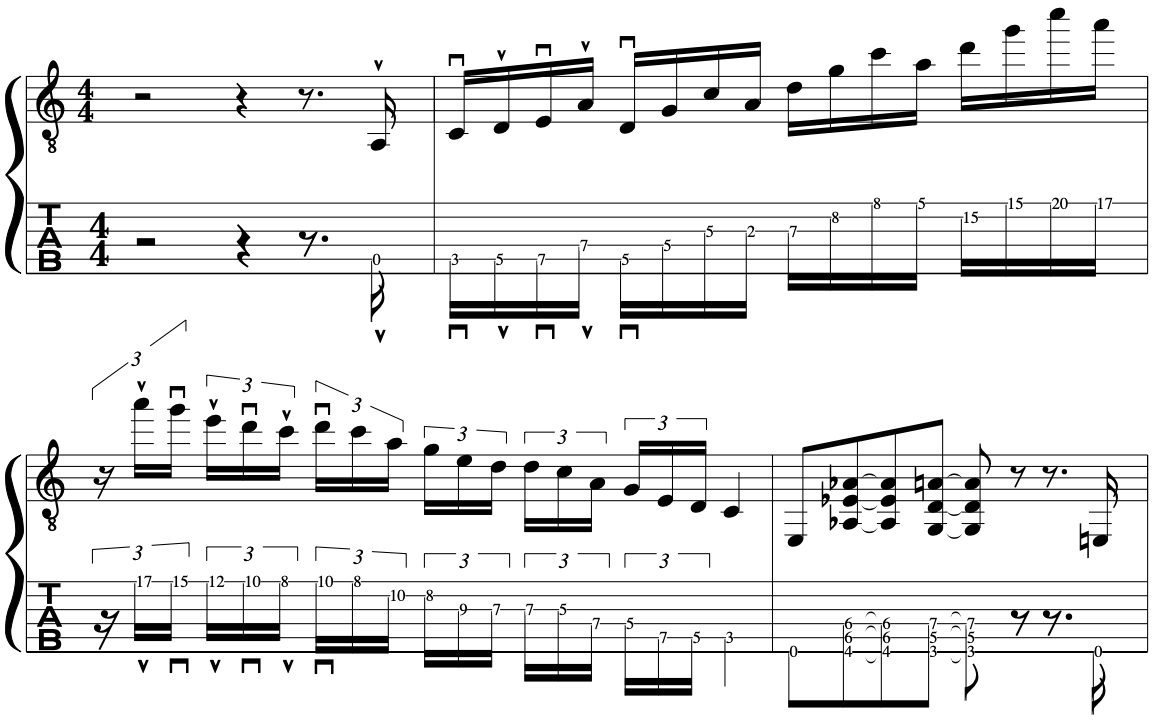
Today, a short John Coltrane/McCoy Tyner Style unison jazz quartal guitar line/ jazz head/riff.

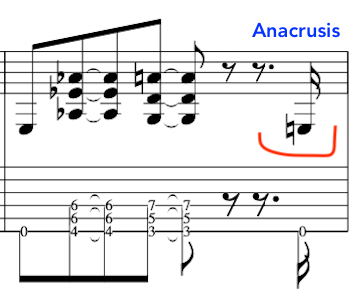
This line starts with an anacrusis/upbeat. From here we employ a short pentatonic scale phrase that leads to quartal harmony that resolves down a minor 3rd interval.

I am starting this on an upstroke with strict alternate picking guitar technique.

coltrane-jazz-guitar-lick-lesson

The key to the first phrase is that it plays upon this “Motif” as it gets imitated up the octaves:

coltrane-jazz-guitar-lick-lesson-example

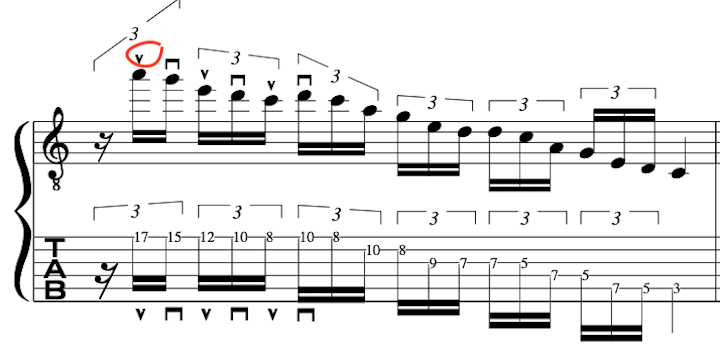
From here, we create contrast by descending with a pentatonic scale and push hard on a sextuplets feel for rhythmic colour and drive.

coltrane-jazz-guitar-lick-lesson

To complete the first part of this phrase, we round it off with two chords of Ab and G9

coltrane-jazz-guitar-lick-lesson

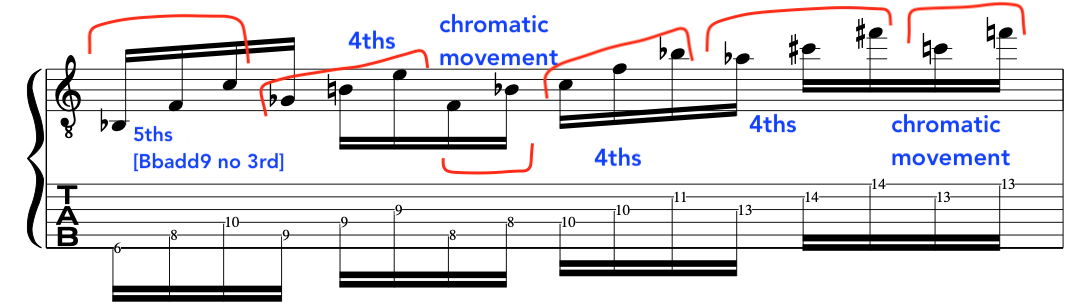
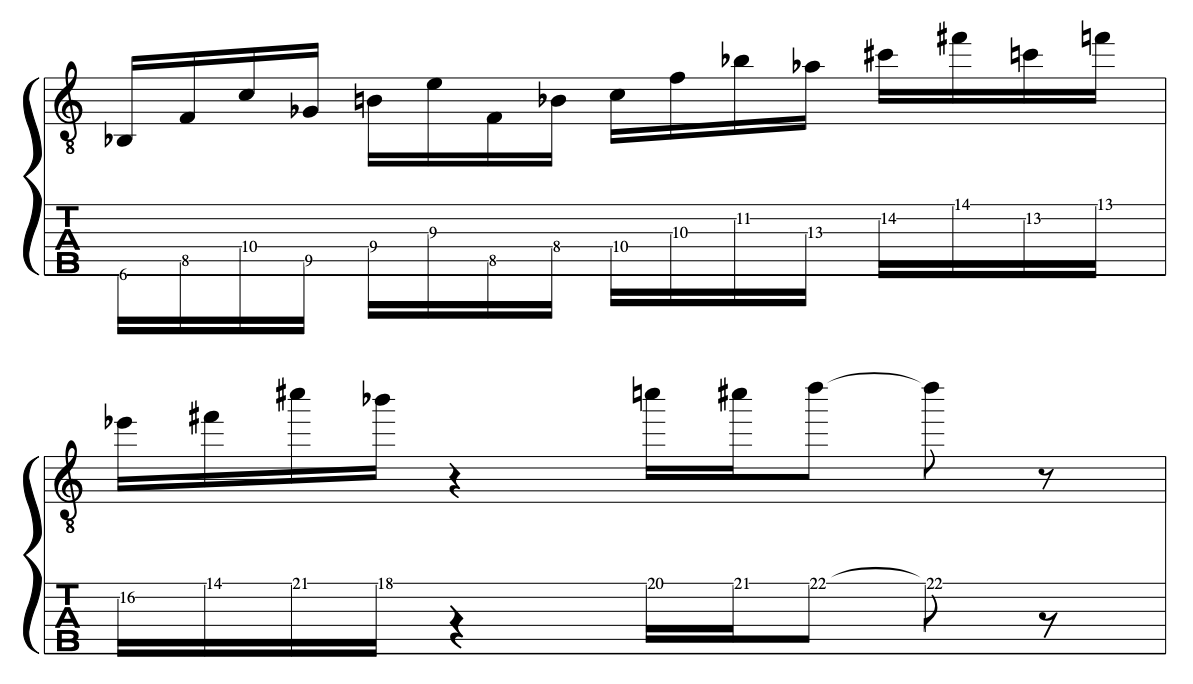
We, will now ascend and frame some interesting intervallic sounds: Opening with 5ths to 4ths with chromatic movement:

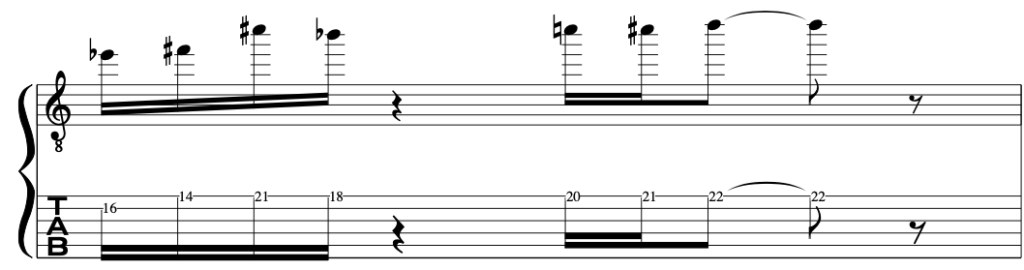
Finally, we will play the motif up a semitone one more time and ascend up in semitones to complete the phrase:

coltrane-jazz-guitar-lick-lesson

coltrane-jazz-guitar-lick-lesson

This was just a brief look at what can be done with this modal pentatonic quartal jazz style.

It’s a style very well suited to the guitar in terms of fretting and picking and it’s amazing what interesting music you can easily make from this even just by means of imitation.

Pat Martino Intervallic Studies: Un-Published Book Lesson

Pat Martino Intervallic Studies: Un-Published Book Lesson

Hi Guys!

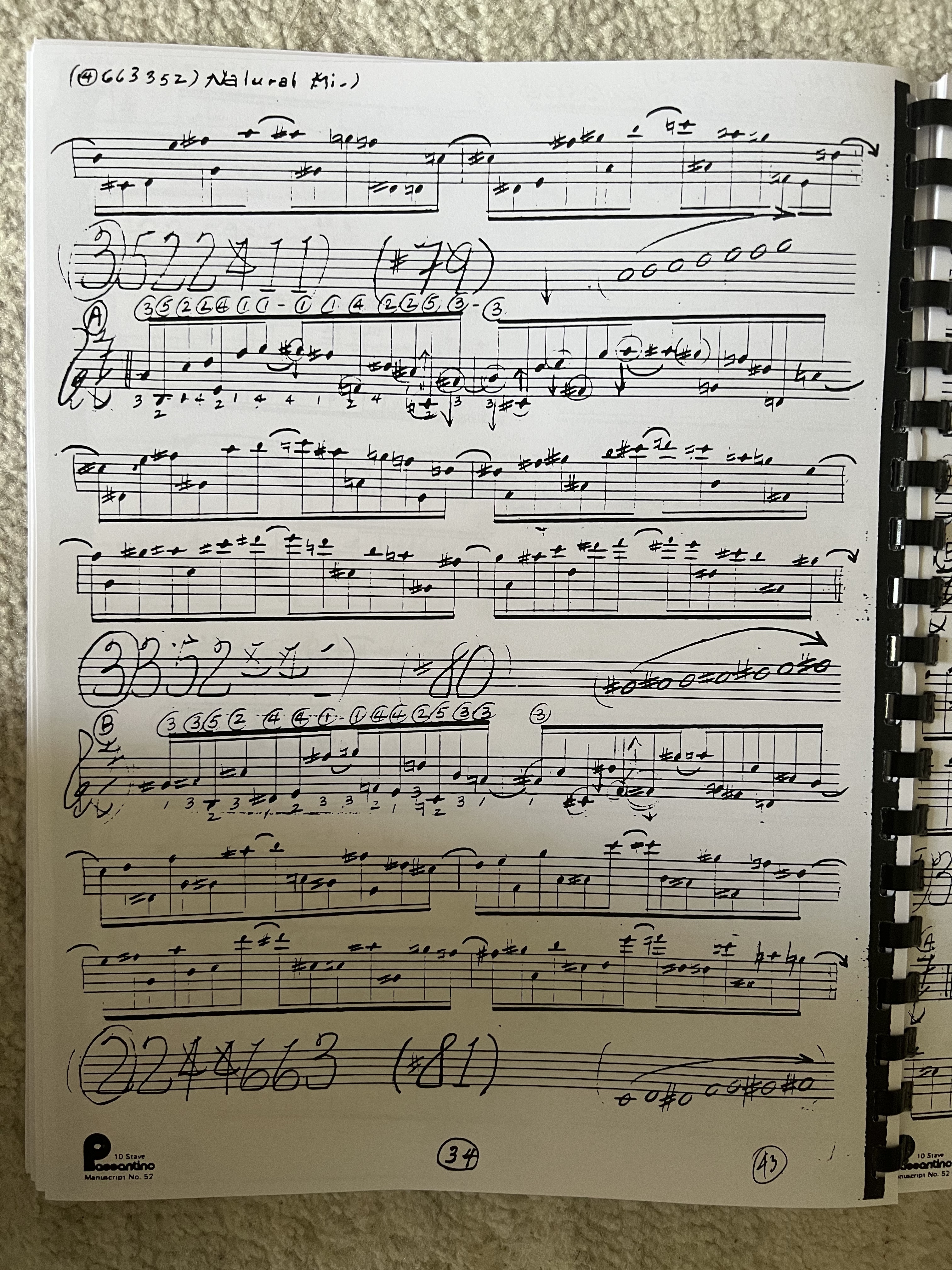
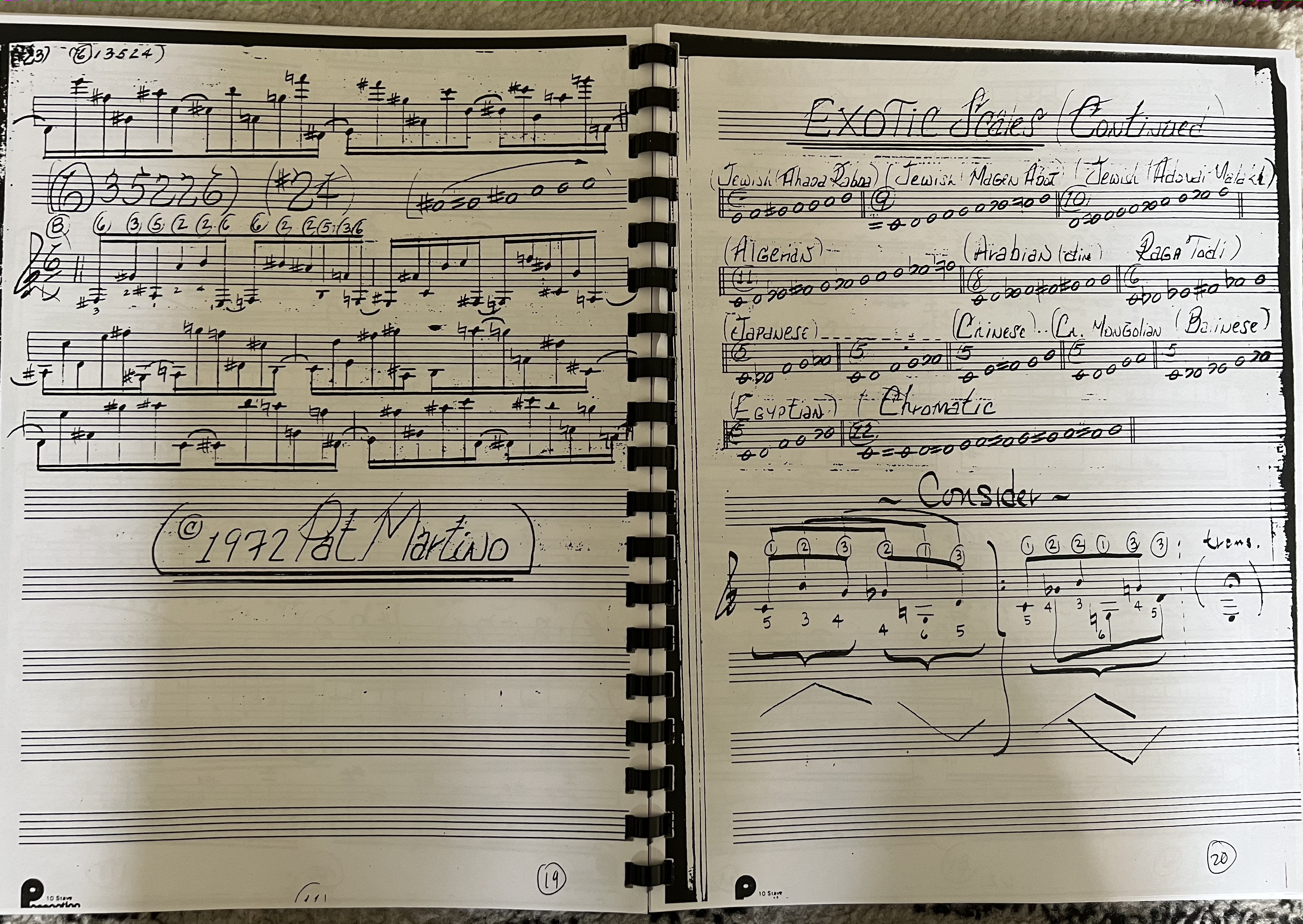
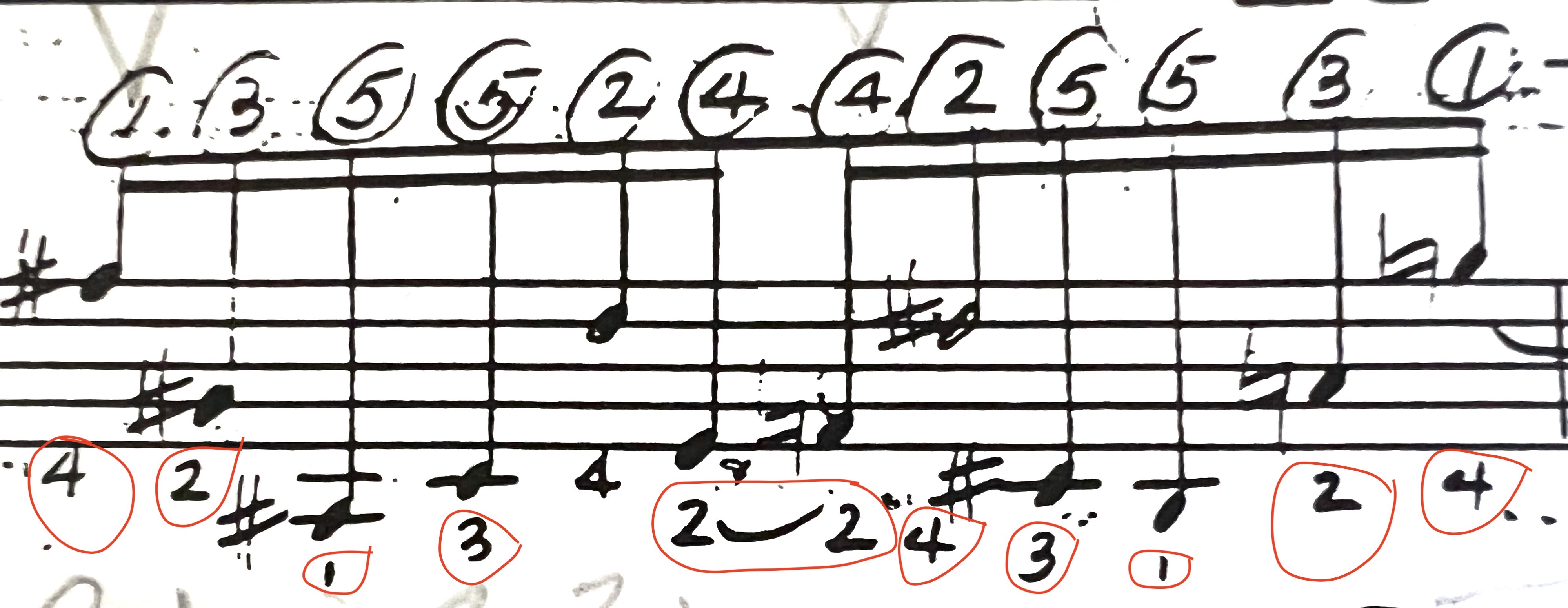
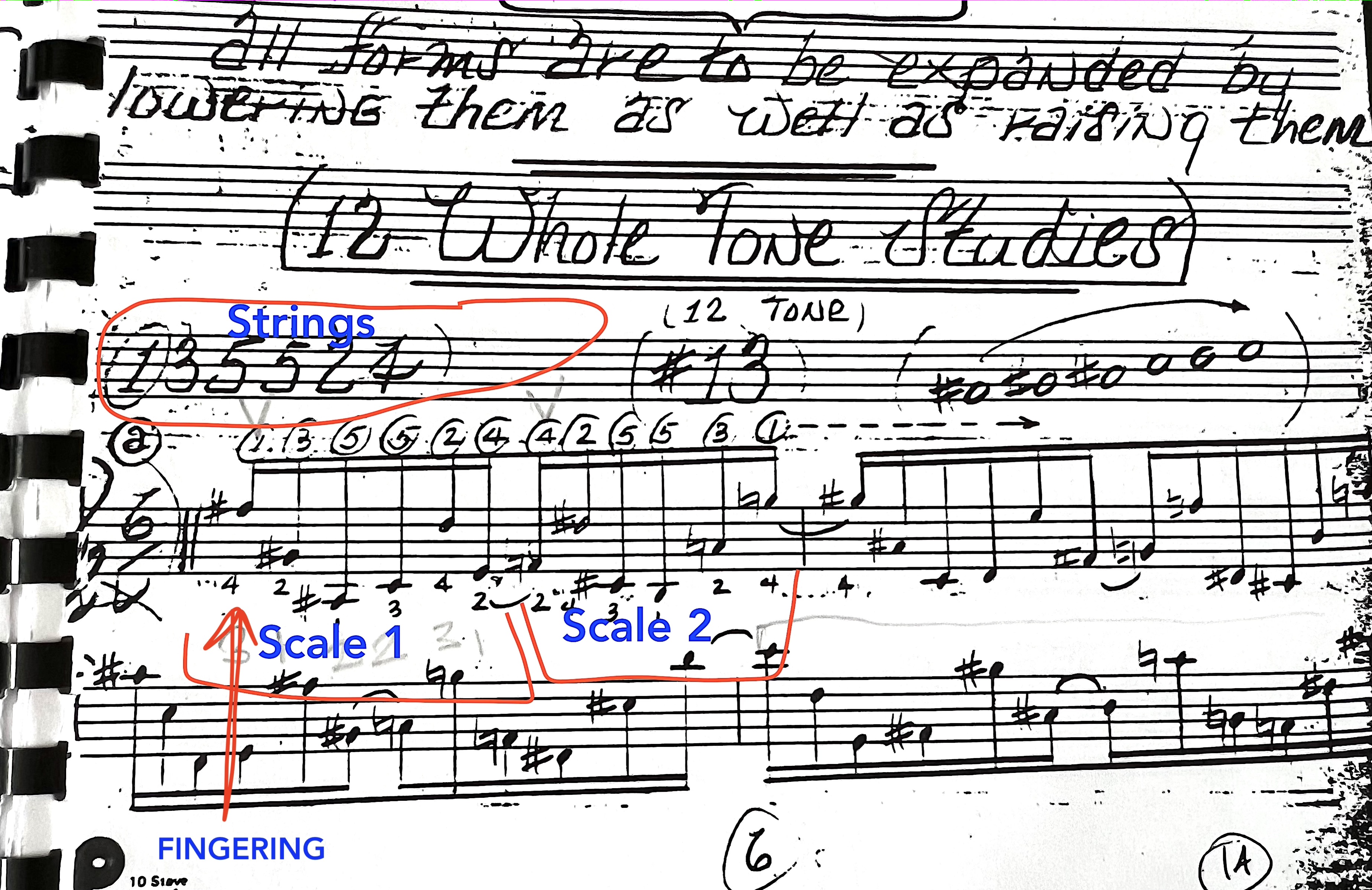
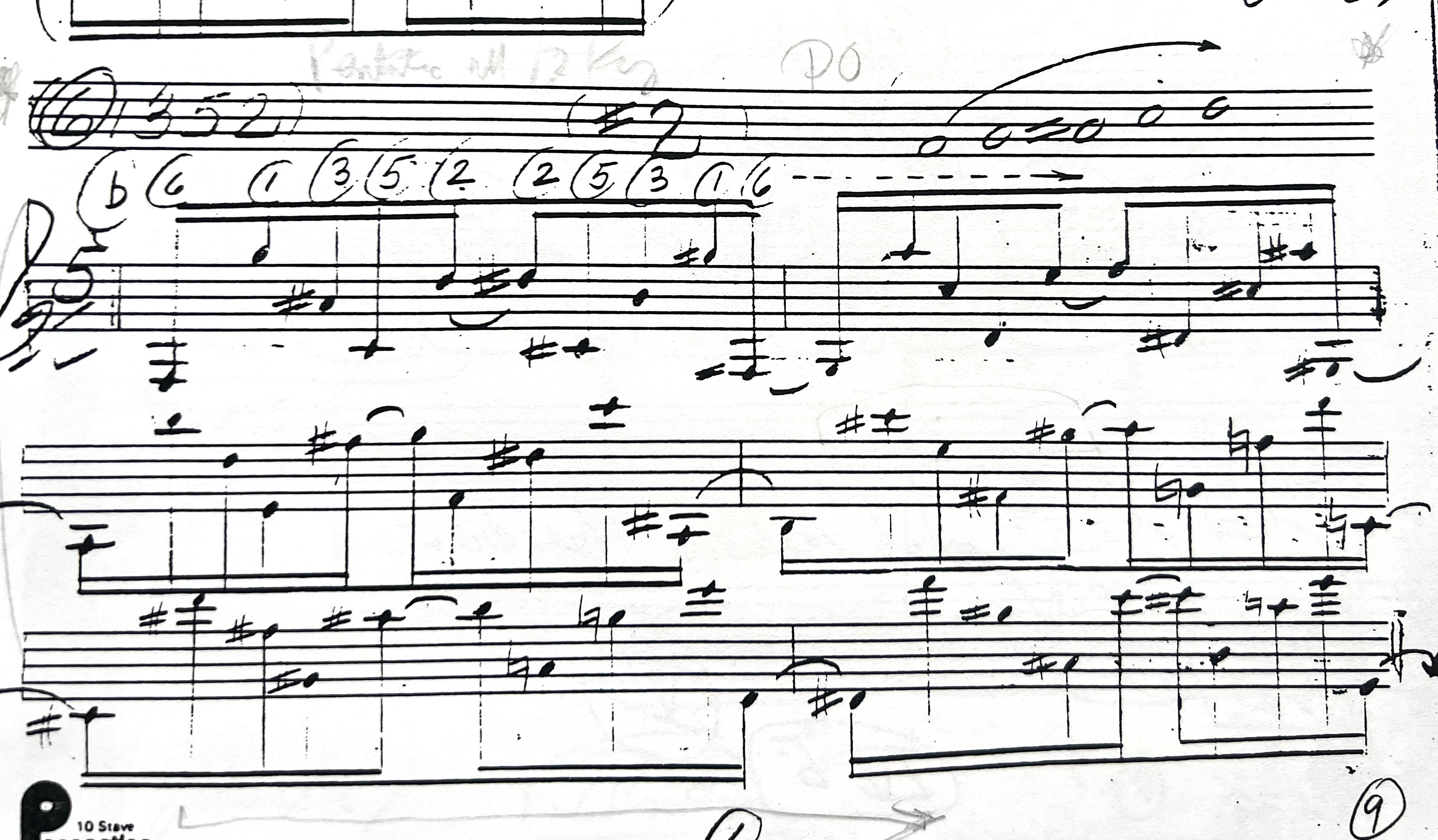
Guitarist Mark Koch one of Pat’s students kindly sent me a copy of Pat’s un-published book on “Intervallic studies“.

pat-martino-intervallic-studies-umpinlished-book

It’s a fascinating look at the imaginative thought process and creative concepts that Pat was investigating for the development of the improvising guitarist.

pat-martino-intervallic-studies-unpublished-book

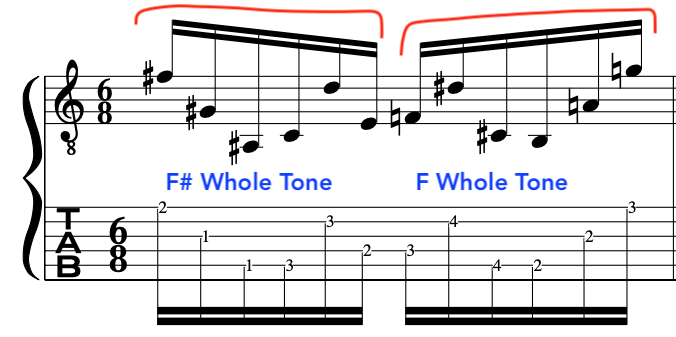
In this first example we will look at the “Whole Tone Scale” Study:

pat-martino-intervallic-studies-unpublished-book

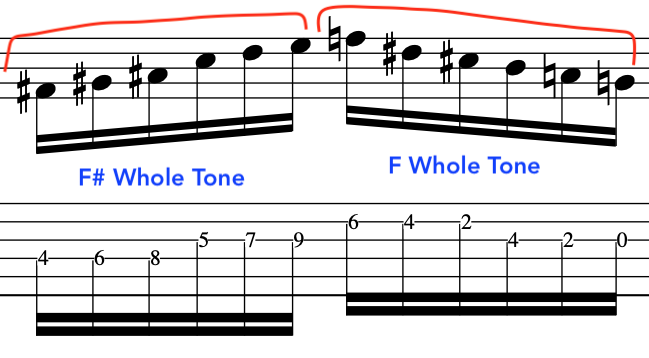
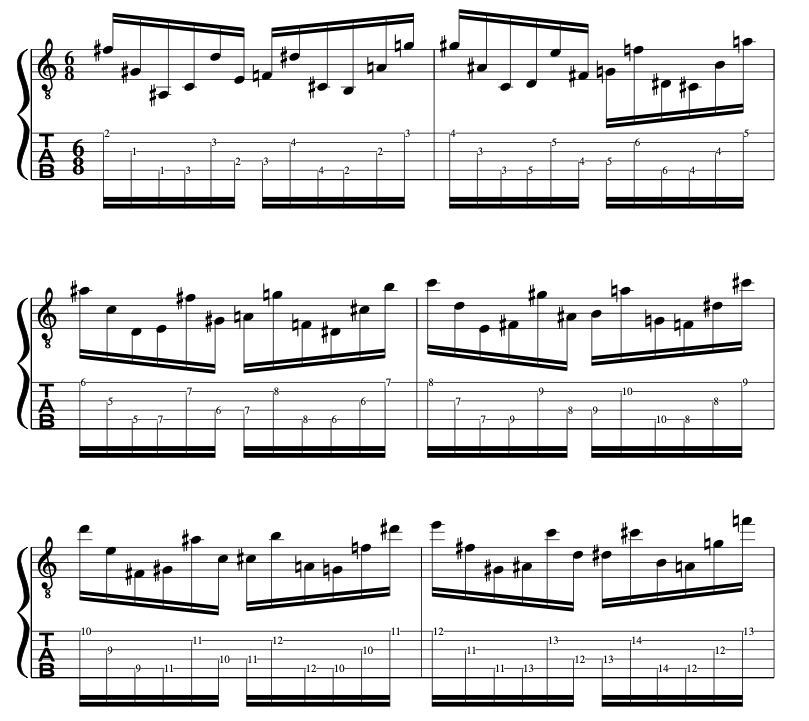
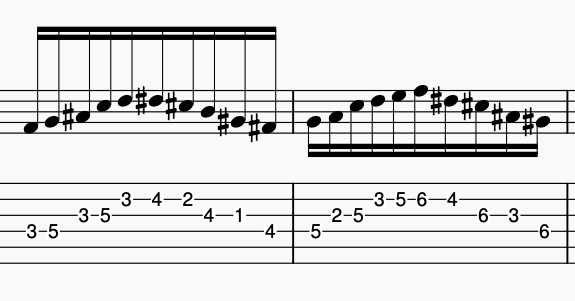
From a music theory perspective if we take away the intervallic approach and place the notes in order we will get a whole tone scale ascending followed by a whole tone scale descending:

pat-martino-intervallic-studies-unpublished-book

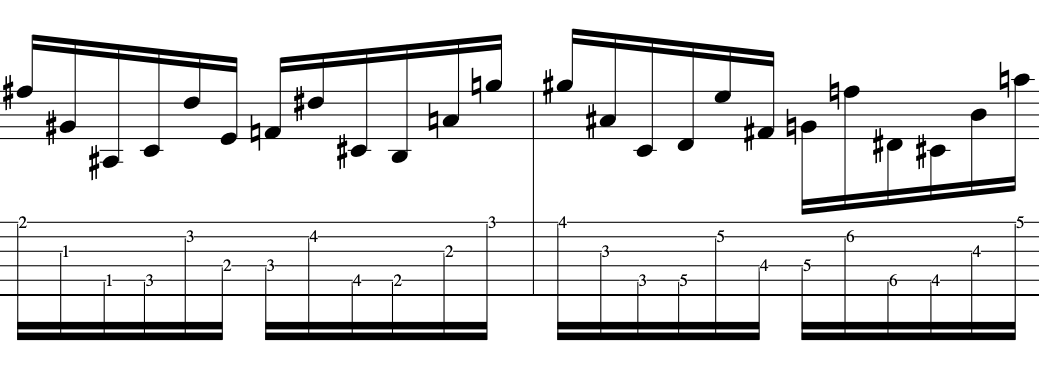
Now, we will put them back into the “Disguised” form with the clever approach of the intervallic design:

pat-martino-intervallic-guitar-studies

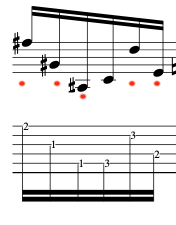
The key to playing these studies on the guitar is to decide on a methodical fingering and stick to it. [Below=Pat’s Fingering]

pat-martino's-unpublished-book-intervallic-guitar-studies

pat-martino-intervallic-studies-unpublished-book

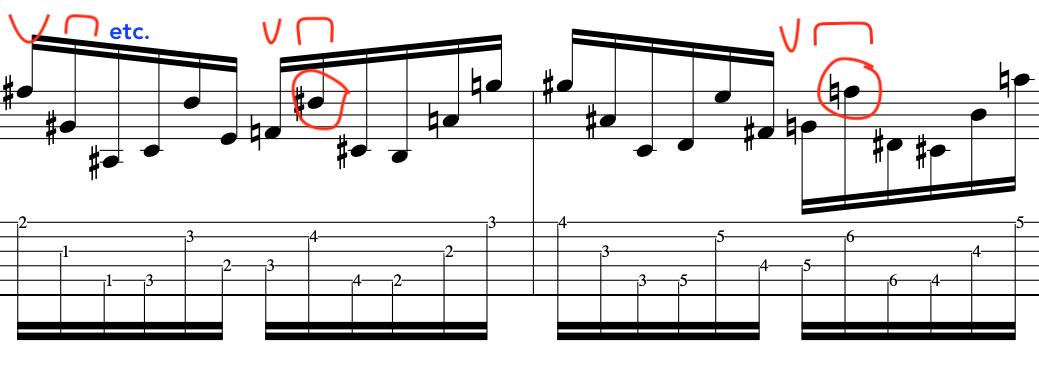
I am employing strict alternate picking for this study starting on an upstroke:

pat-martino-intervallic-studies-unpublished-book

pat-martino-intervallic-studies-unpublished-book

Same Study: From Pat’s book with fingering examples:

pat-martino-intervallic-studies-unpublished-book-whole-tone-scale

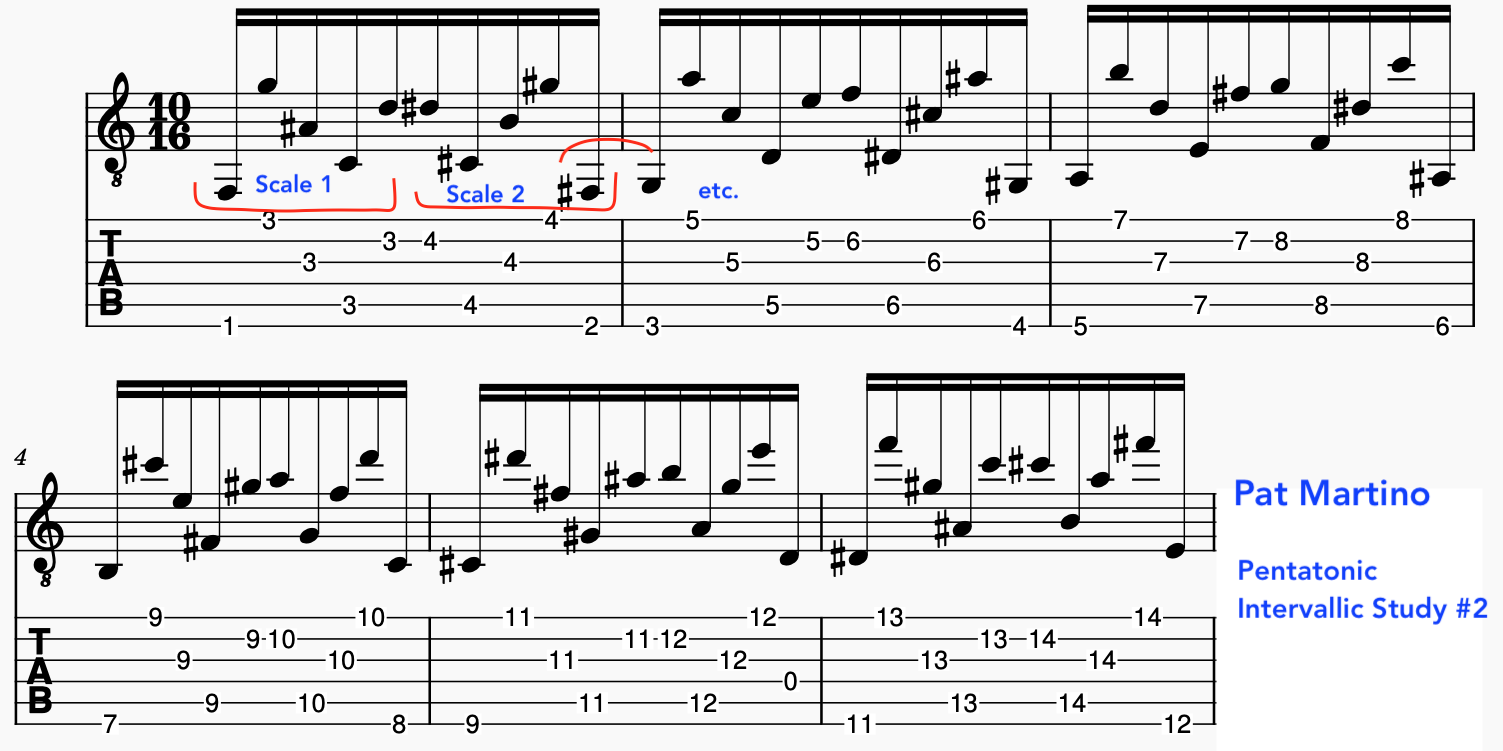
Now we will look at how Pat breathes life into the pentatonic scale:

pat-martino-intervallic-studies-unpublished-book

As before we will take this from a music theory perspective and remove the intervallic approach:

pat-martino-pentatonic-scale-guitar-lesson

Now, let’s disguise this with the use of intervallic exploitation and alternate picking starting on a “Downstroke”:

pat-martino-intervallic-studies-unpublished-book

Same Study from Pat’s unpublished book:

pat-martino-intervallic-studies-unpublished-book

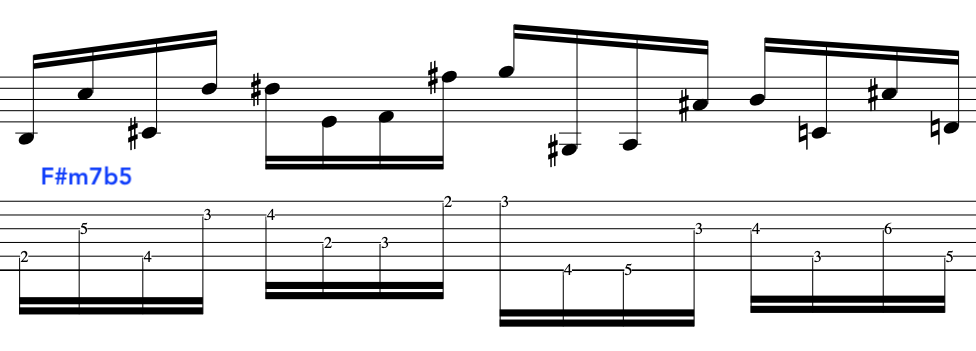
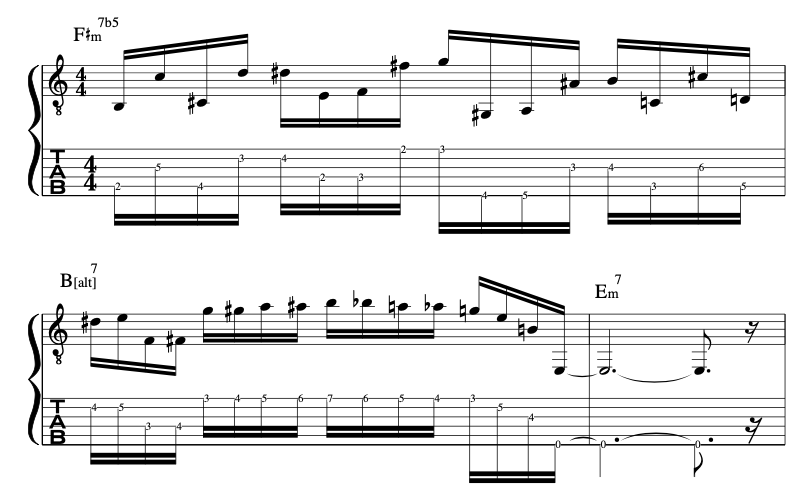
Finally, we will employ these intervallic concepts through a iim7b5 V7 i cadence.

Once again, we see the intervallic set up:

pat-martino-intervallic-improvisation-example

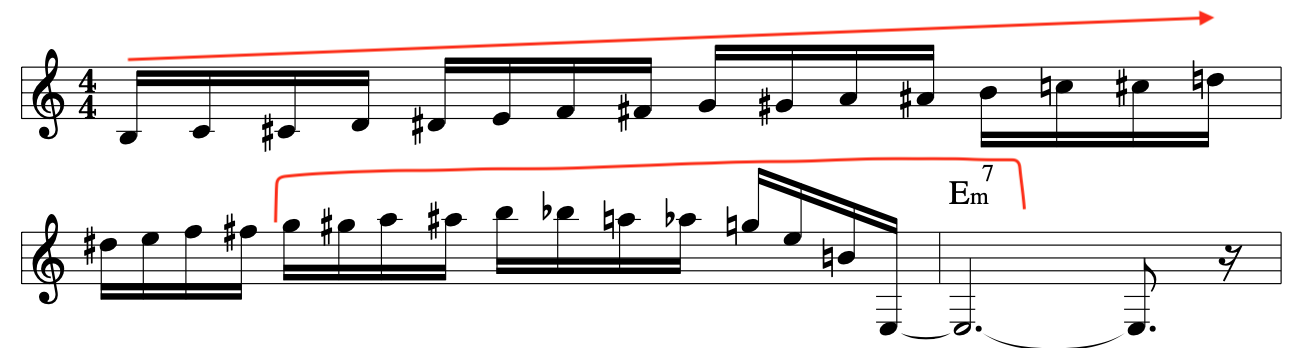
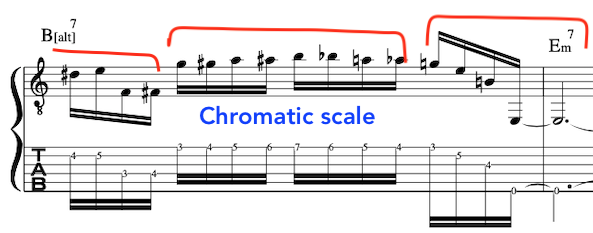
Now, let’s employ our music theory and place the intervallic notes in order. Here we find that we have the exploitation of the chromatic scale.

pat-martinochromatic-scale-guitar-lesson

This clever approach is really effective because in the second bar beats 2 and 3 we have a literal chromatic scale that then anticipates the coming minor tonic chord of Em with an Em arpeggio.

pat-martino-intervallic-improvisation-example

Full Example:

pat-martino-intervallic-improvisation-example

This was just a quick look at the creative thought process and unique approach of Pat Martino, resulting in the application of this material into a minor iim7b5 V7 i improvised line to hear how they work and sound.

This approach to scales and improvising [and composing] with them is highly original and extremely useful when there is a need to bust out of cliches and seek colour and creativity in our playing.