John McLaughlin Hexatonic Harmonic minor Guitar Scales Lesson and Explanation
Hi Guys,
Today, a quick look at creating a 6 note Hexatonic scale from the harmonic minor scale.
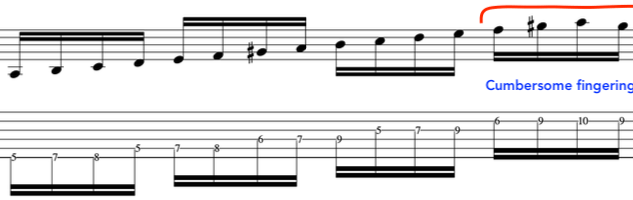
This works really well on the guitar as the harmonic minor scale is generally a clumpy and awkward affair in regards to the fingering.
So, if we take a look at the Harmonic minor scale in its classic, stock form, we have:
But, for effective guitar fingering, especially on a clean guitar or acoustic guitar this is not the most fluid way for the fretting hand.
So, what to do?
Well, the key is to break it up in the most Shakti way possible:
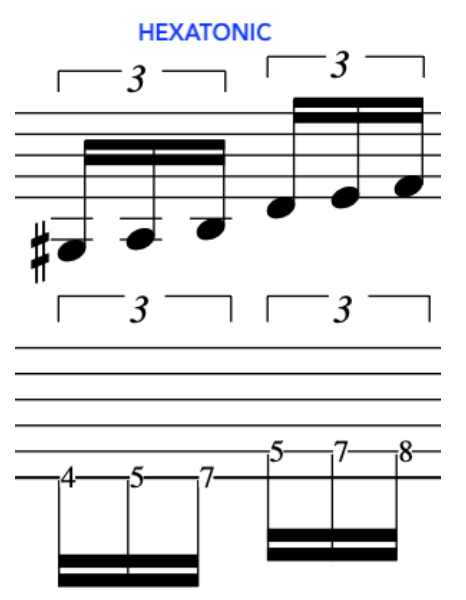
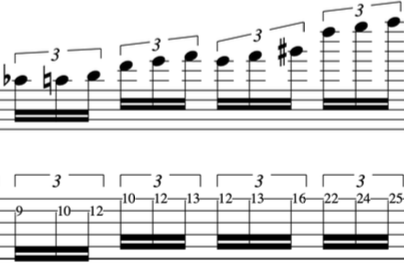
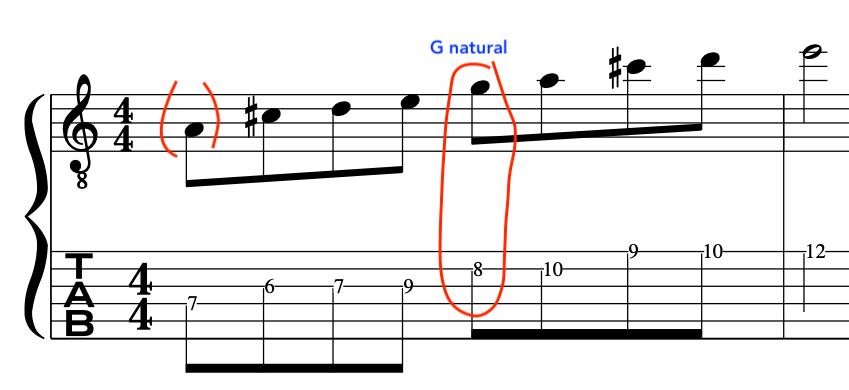
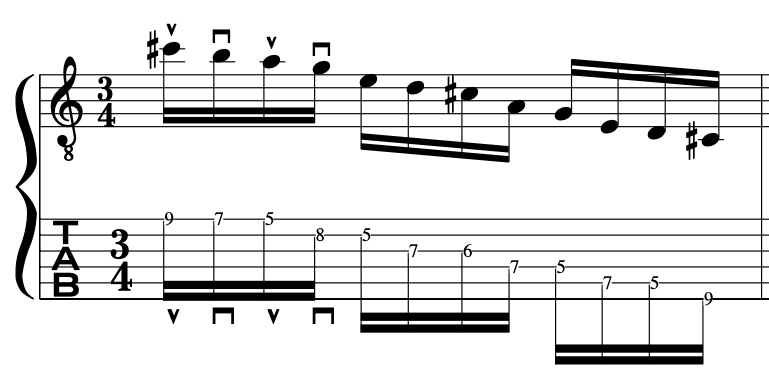
Here’s what we will do: We will employ 6 notes only of the scale. These will be: G# A B D E F
Hexatonic scale diagram with notation showing finger placements for guitar.
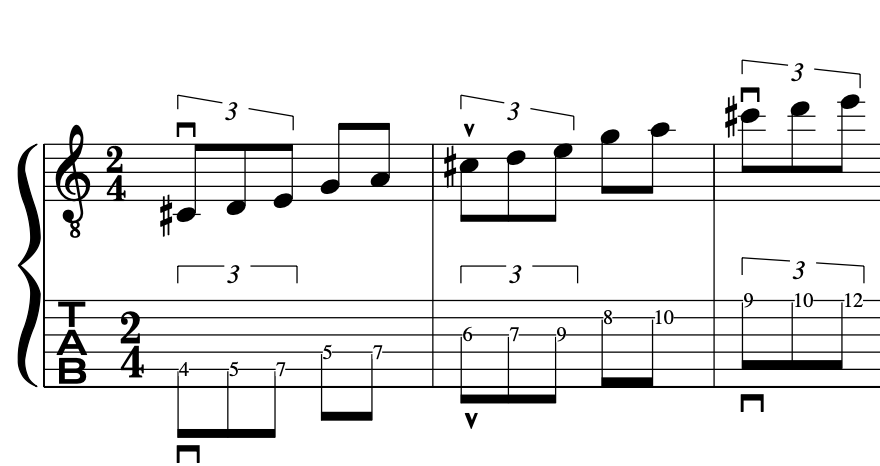
This simple 6 note Hexatonic scale gives us an easy 3 notes per string repetitive figure/pattern to alternate pick.
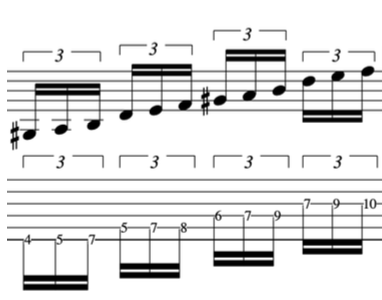
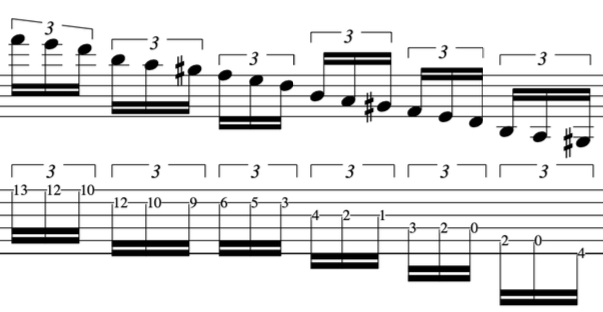
We can now play this across all 6 strings and create a nice line/phrase/scale that is easy to execute, pick and fret.
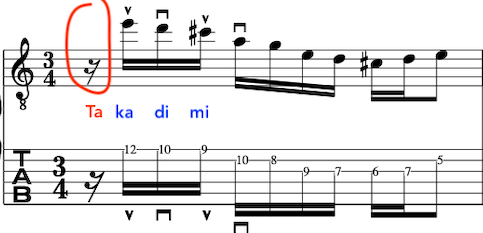
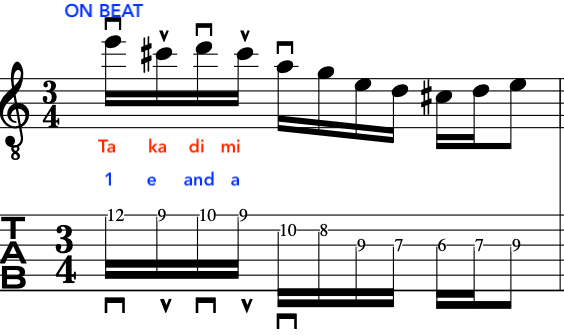
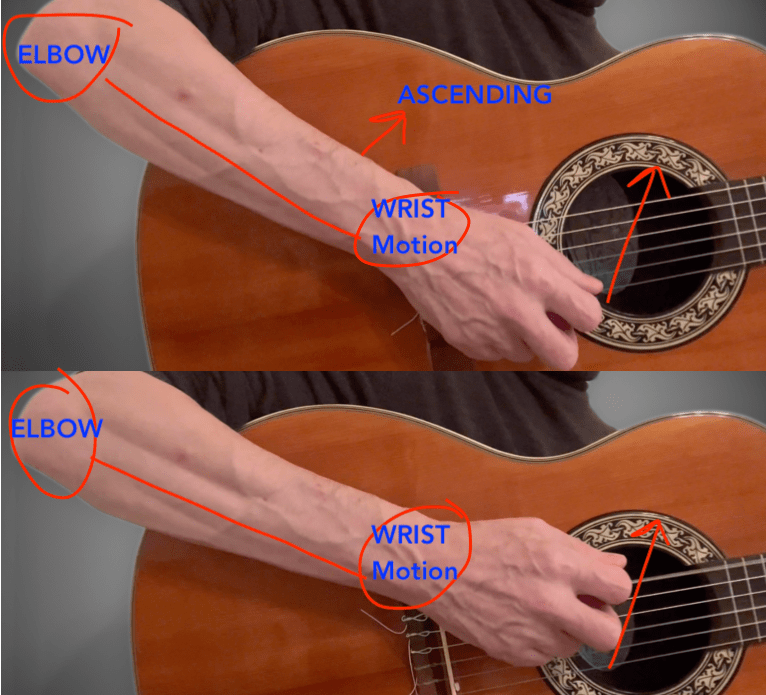
ASCENDING:
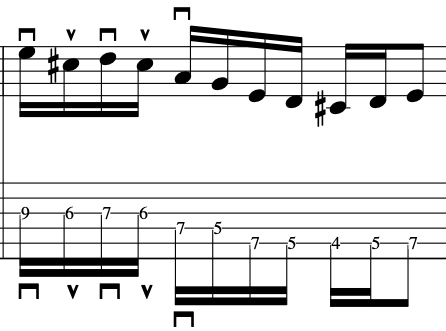
Notated example of ascending and descending patterns for the Hexatonic scale on guitar.Hexatonic scale notation for guitar, showcasing ascending and descending patterns.
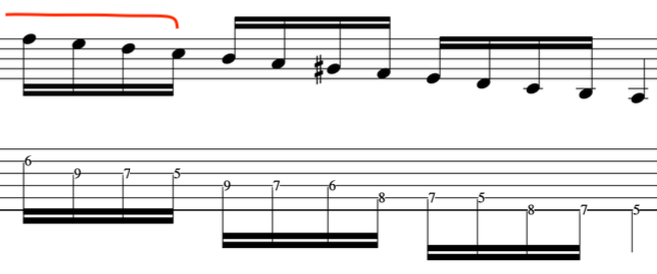
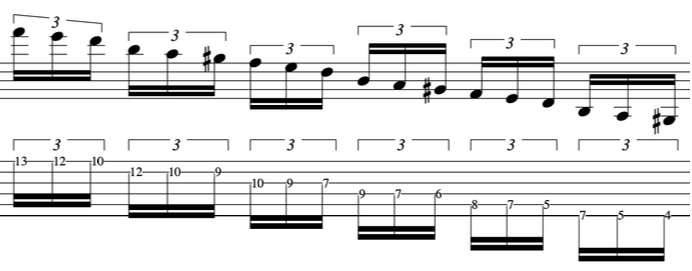
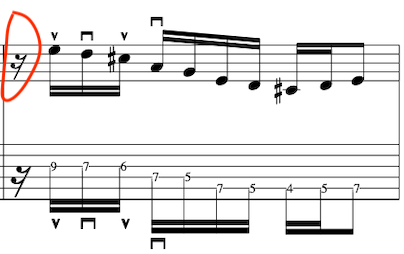
DESCENDING:
Way 1:
Musical notation illustrating the descending pattern for the Hexatonic scale in harmonic minor.
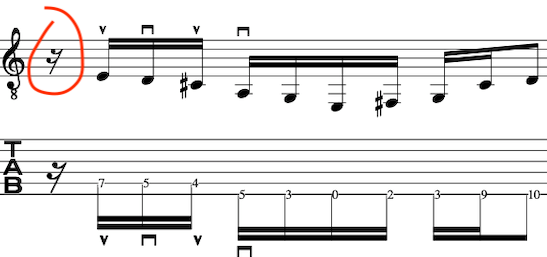
WAY 2:
Notation for the Hexatonic scale, illustrating finger placement and notes on guitar.
In Part 2 we will look at composition and improvisational techniques with the Hexatonic.
Today, a quick look at the “Right Hand” aspect of alternate picking guitar technique:
This is not cast in stone, but, to serve as a useful reference/guide to anyone that might be having problems.
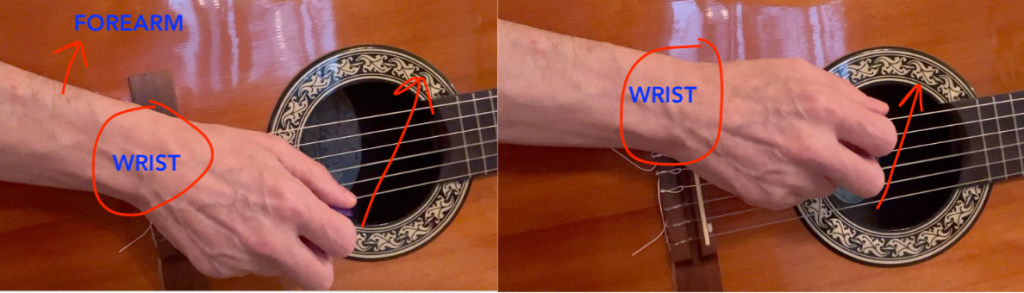
THE WRIST/FOREARM:
Picking works best for the jazz/fusion [McLaughlin] style when picking from the wrist. Having said this, there is relative movement from the elbow to the wrist as the forearm follows through.
This becomes one motion that connects the music/phrase [we are playing] together as we alternate strictly down/up or up/down aligned with the strings we wish to pluck.
The differences of the 3 great alternate pickers.
The Fripp style is more for “Pre-learnt” playing 100-152Bpm[Yes, there will be some improvisation] But, the McLaughlin style is really geared towards “In the moment” improvisation around the 130-200 bpm. With Al di Meola being a combination of both[Think “Hotel Splendido” to “Cielo et Terra”.
This in turn means that each are approached in a slightly different manner, but this would be a whole blog in itself. So, for the sake of time I am addressing the all round basic concepts for the Right Hand in this post.
Crossing the 6 Guitar Strings: PART#1
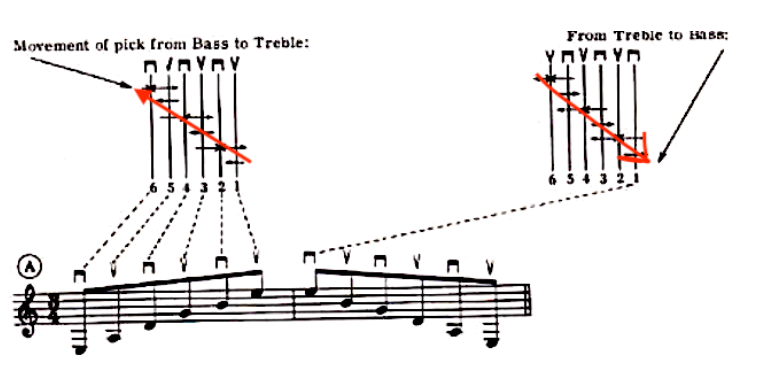
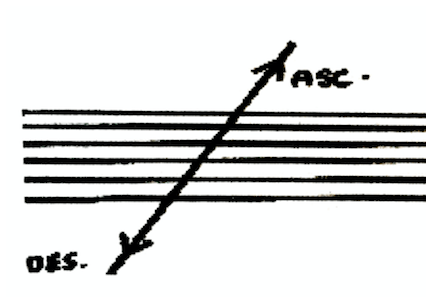
When crossing strings I like to follow a straight line as is taught in Ivor Mairants brilliant book “Perfect Pick Technique”.
Below, is the diagram that demonstrates this.
This is extremely useful as it means that we are aligned with the string we wish to pluck at the moment we wish to pluck it and the forearm wrist and pick are in line and ready to pluck.
Feeling, and knowing this gives us confidence for ascending and descending naturally without any interrupting from unnecessary nervous or tense movements.
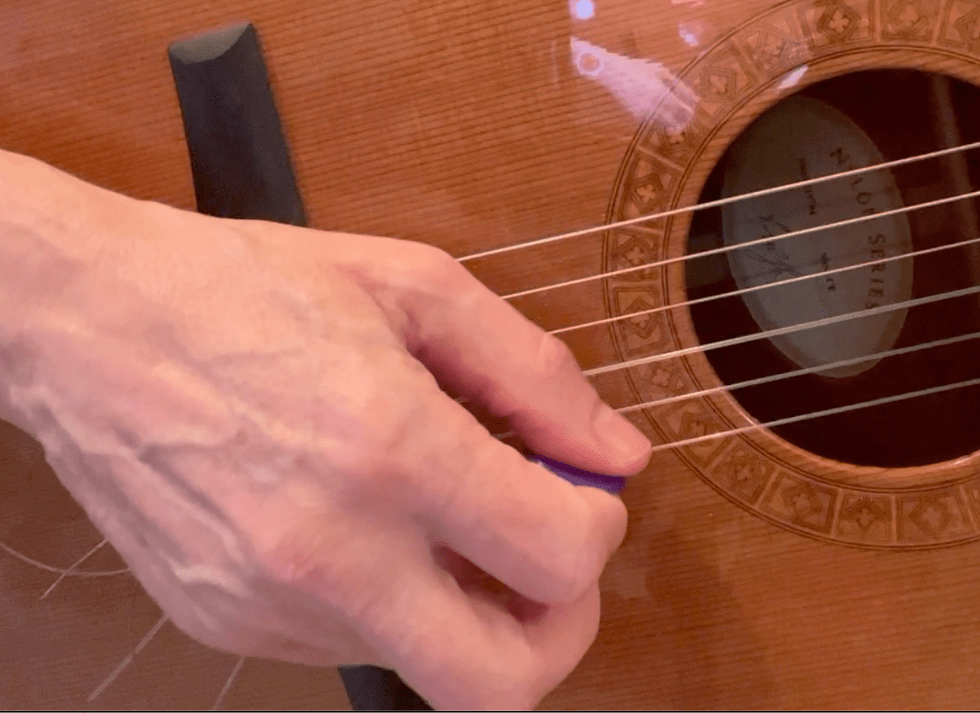
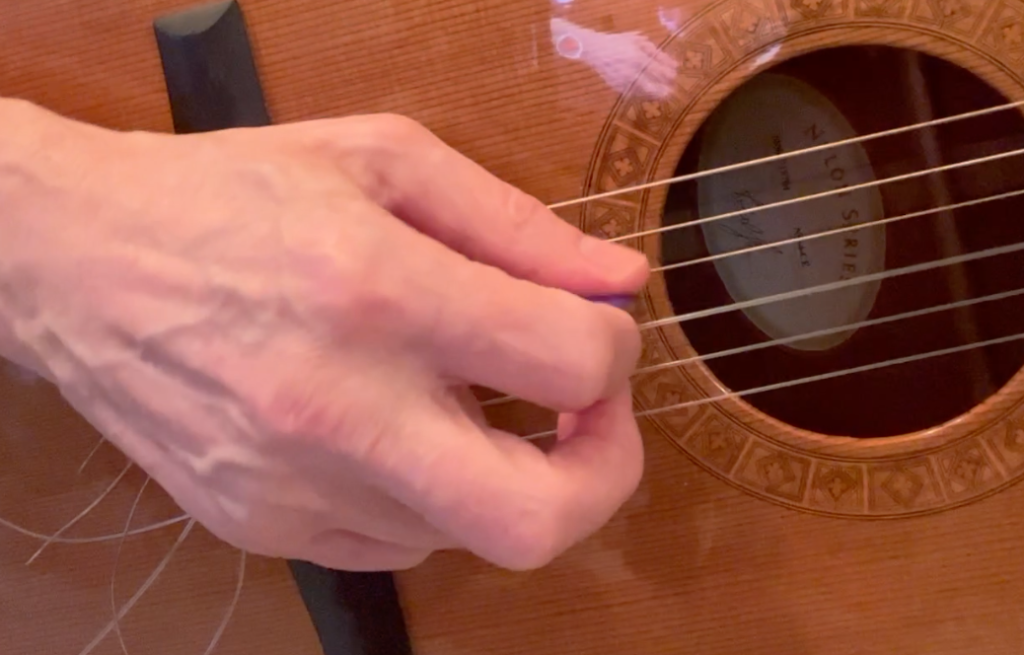
1st string aligned: “Down” stroke:
2nd string aligned/Plucked through on the “Up” stroke:
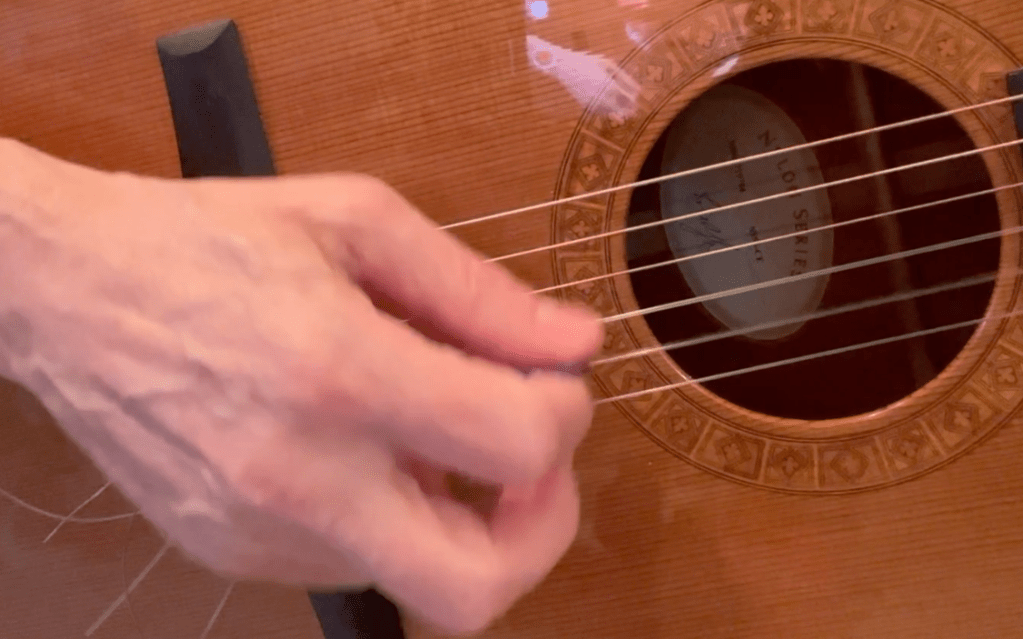
3rd string aligned:“Down” stroke
4th string aligned: About to be plucked through [on the “Up” stroke]
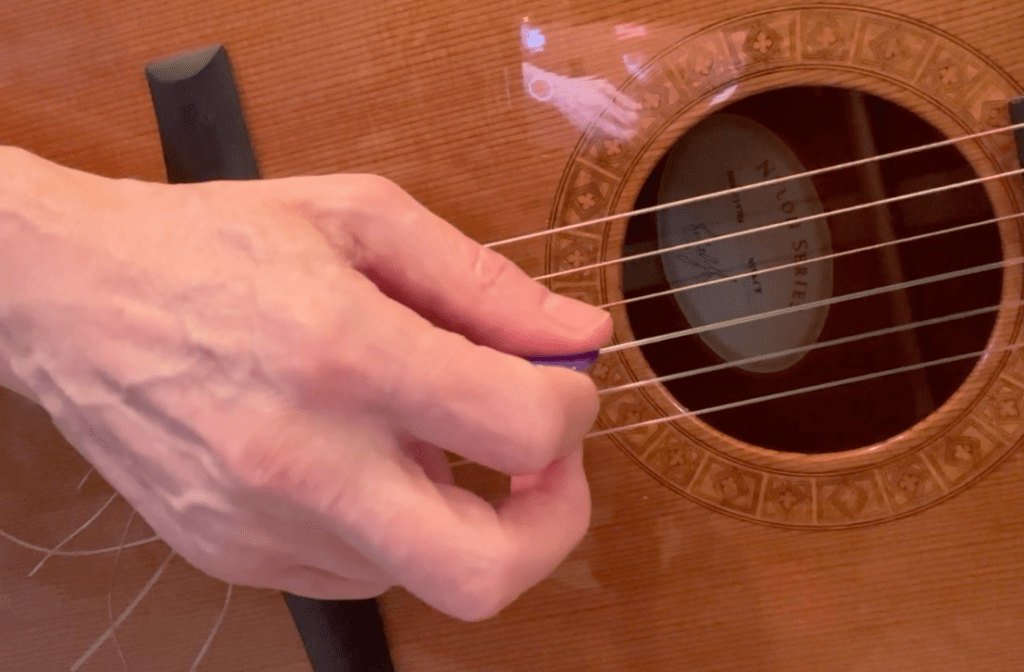
5th string aligned: “Down” stroke
6th string aligned: Plucked through on the “Up” stroke
As you can see from the 6 diagram alignments above, the wrist and forearm follow naturally as they cross the six guitar strings.
FLOATING OR PIVOTING?
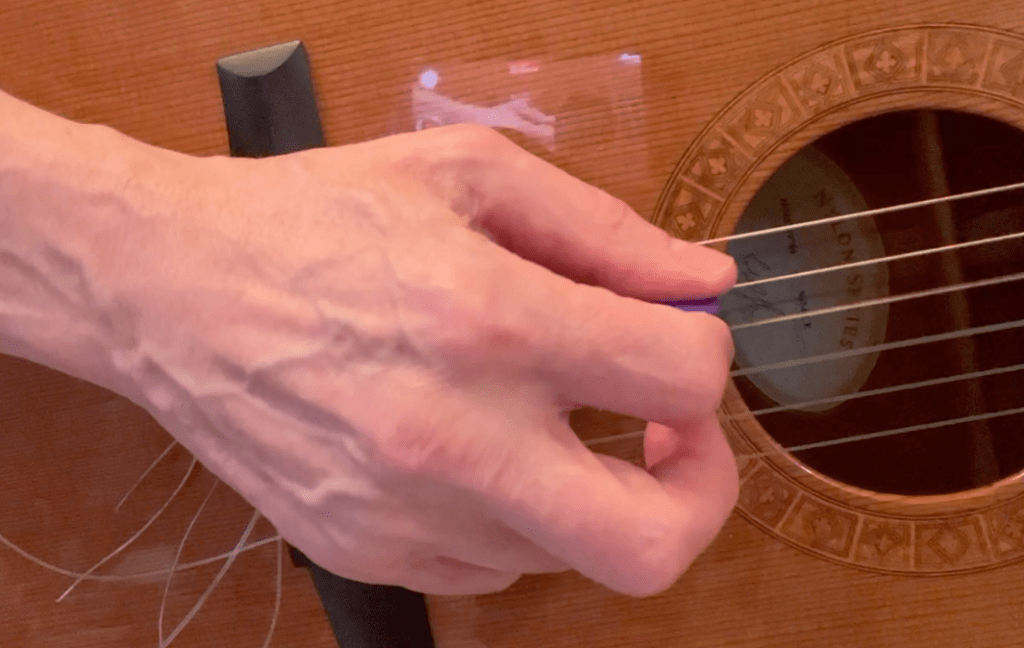
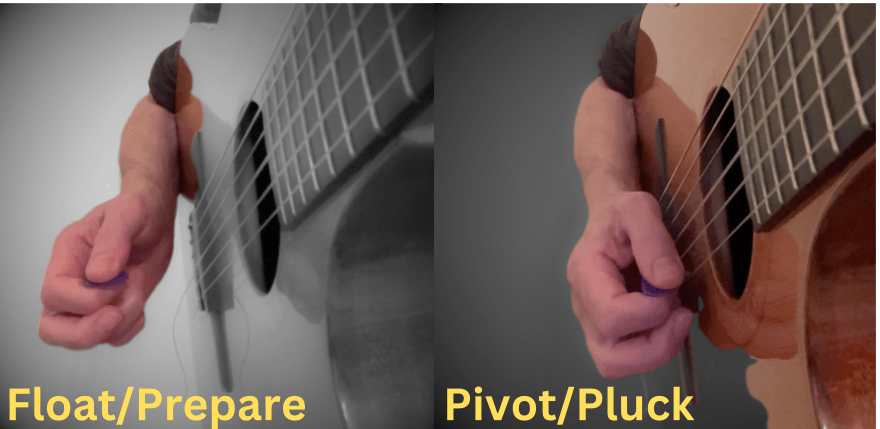
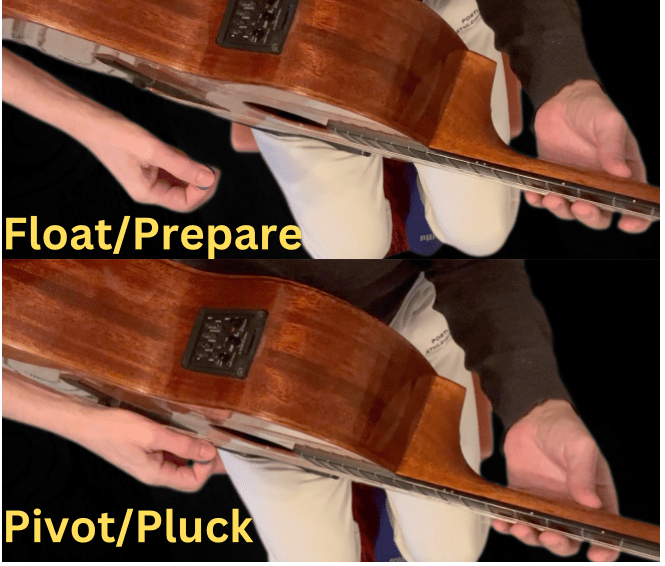
Floating, is literally as it sounds and means floating with the right hand above and not resting whilst plucking the strings.
Pivoting, on the other hand means resting on [generally] the bridge of the guitar and plucking.
I like to be in a floating position and then pivot on either the first note and then float or……float and pivot on the “Down” strokes:
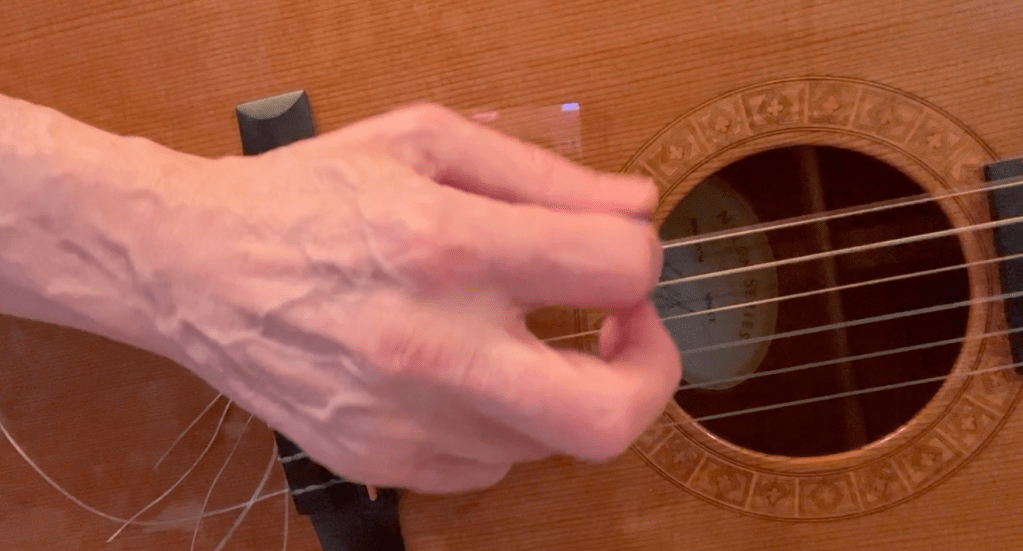
[Please not that the floating is overly emphasised in the photo’s as it is the only way I found to show it].
From Above:
CROSSING STRINGS: PART #2
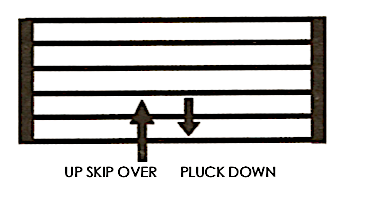
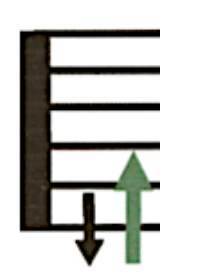
Always, remember with Alternate Picking we are either picking:
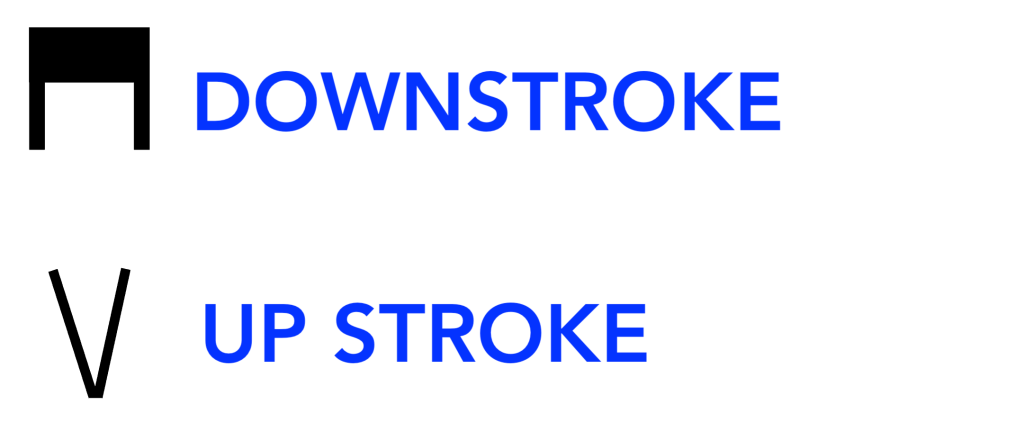
“Up” skip over pluck down.
Or:
“Down” skip over pluck up.
Simple as this is it’s essential to take into account so that you don’t get confused or do two of the same stroke.
IN CONCLUSION:
In conclusion, this was just a brief examination of good solid alternate picking right hand technique. Much of it depends on what you wish to play. Many just wish to play guitar fast, which, ironically defeats the task.
To play at fast tempos one needs to be able to articulate phrases slowly, and, for the prog or jazz fusion improviser this means 8th note to 16th note to 32nd note. Forms of double timing. Because, from that the musical phrasing emerges and so does the speed.
In summation I would say that alternate picking technique is really a simple technique to play complex music and not a complex technique to play simple music.
If this lesson was of use to you, then please SUBSCRIBE to us on YOUTUBE Below, Thanks!