Simplify Guitar Chromatics with Easy Fingering:

yt_logo_rgb_light CLICK SUBSCRIBE!

Please watch above video for detailed info:

Hi Guys,

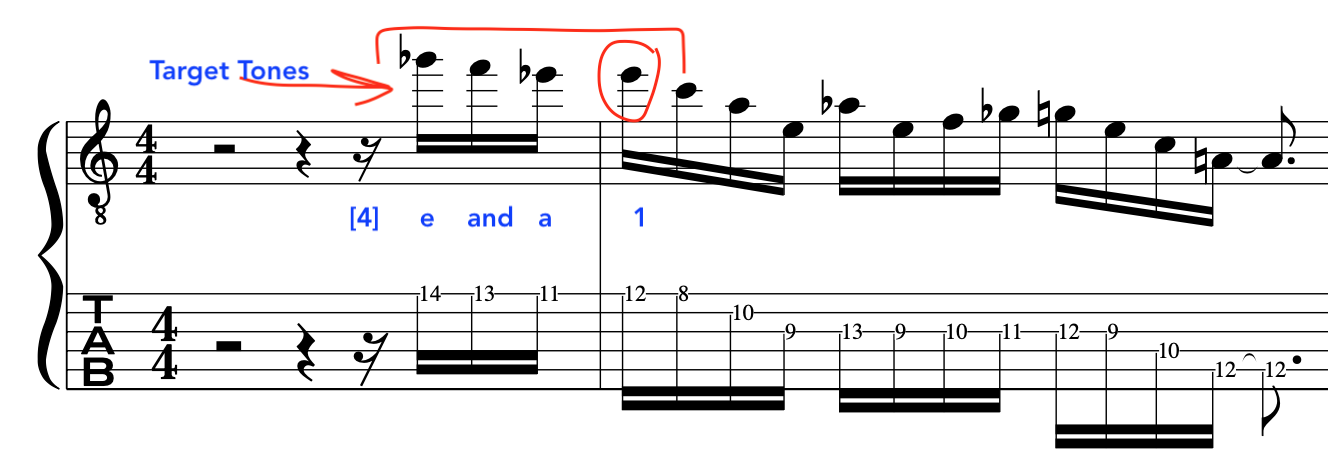
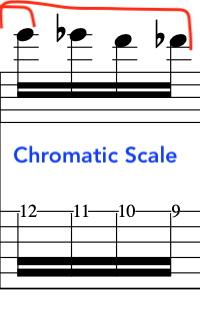
Today, we will employ chromatics [Target Tones]to a simple guitar fingering/scale that everybody knows.

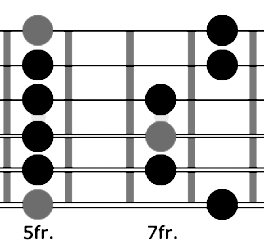
Yes, this is our old mate the A minor Pentatonic scale.
Before we start: Both fingerings are essential and very useful, but, in different instances.

Okay, let’s compare fingering.

Below, is the more “Traditional” fingering:
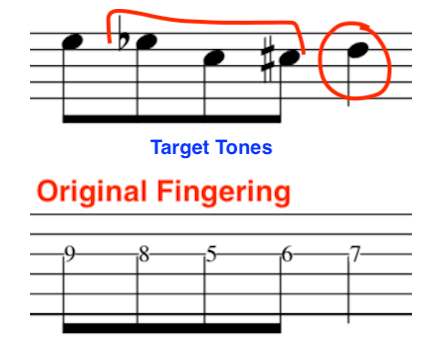
mclaughlin-jazz-guitar-chromatics-lesson-explained-example

Now, let’s simplify this with a more intuitive John McLaughlin style guitar fingering. [2 fingers to 2 fingers with a slide].
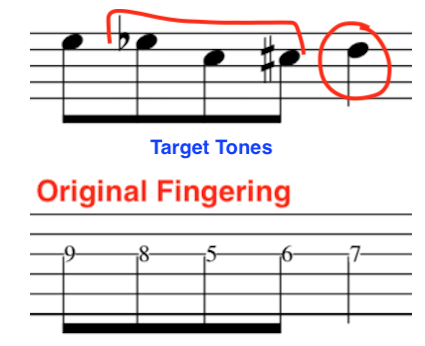
mclaughlin-jazz-guitar-chromatics-lesson-explained-example

We will now now apply this to the simple A minor Pentatonic scale guitar shape.
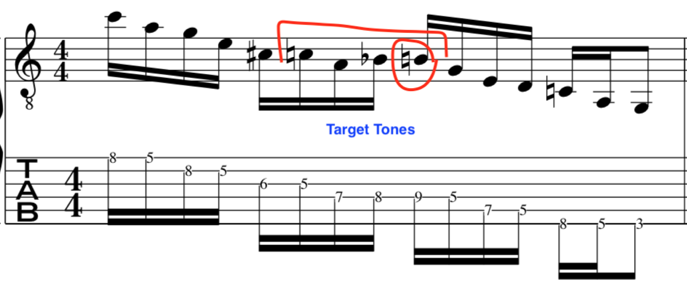
mclaughlin-jazz-guitar-chromatics-lesson-explained-example

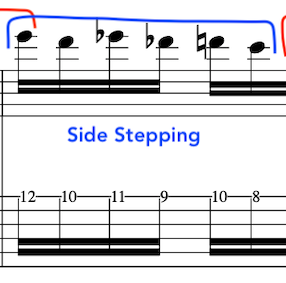
Here, we will employ a “Side Step” with chromatic target tones for more interest and chromatic colour.
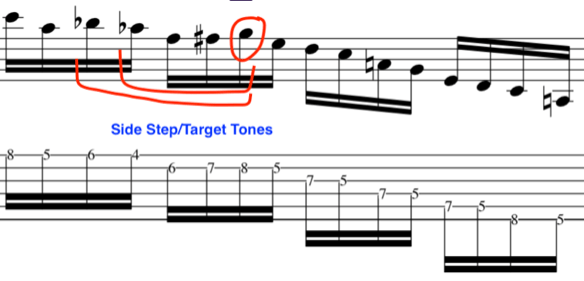
mclaughlin-jazz-guitar-chromatics-lesson-explained-example

This time we will extend the line with an upbeat of 4 chromatic descending notes starting on the note D as the tonic:
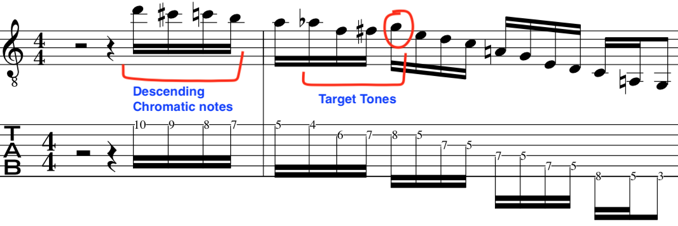
mclaughlin-jazz-guitar-chromatics-lesson-explained-example

Lastly, let’s try this over a ii V7 I [Dm7 G7 CMaj7]
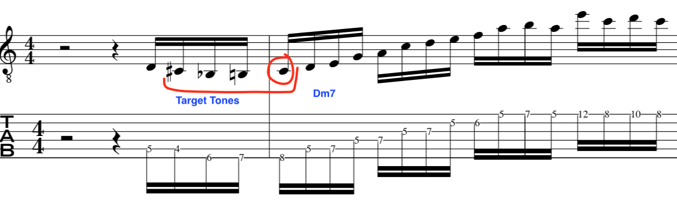
mclaughlin-jazz-guitar-chromatics-lesson-explained-example

This simple minor pentatonic guitar scale/shape allows us an easy way to employ chromatics and chromaticism by exploiting it with what we are already very familiar with.

This familiarity means that it is not only easier to learn, but, also, easy to remember. Hence, we can apply it to any strings of the guitar and create some colourful and interesting sounding lines.

FREE PDF DOWNLOAD

IF THIS LESSON WAS OF USE TO YOU THEN PLEASE SUBSCRIBE TO US BELOW ON YOUTUBE, THANKS!
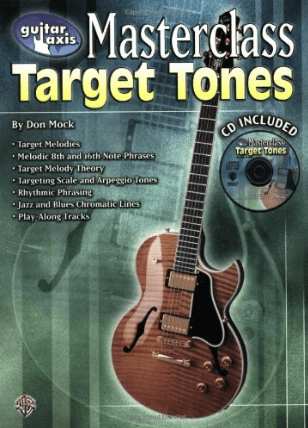
Don Mock: Target Tones Book and C.D Review:

Don Mock “Target Tones” Bok and C.D Review

Hi Guys,

Some of you have asked me if there is a good resource for mastering target tones or jazz chromatics on the guitar.

The good news is yes there is!…

But, it is out of print

Although, You might find a Pdf or cheap copy on the internet, Amazon or Ebay.

Okay, so what resource is this?

Well, this resource is a book with C.D written and performed by brilliant jazz guitarist and teacher supreme Don Mock.

don-mock-target-tones-book-CD-review

The difference between this book and most other books on jazz and chromaticism is that Don shows the “Theory”. This makes it easy to understand.

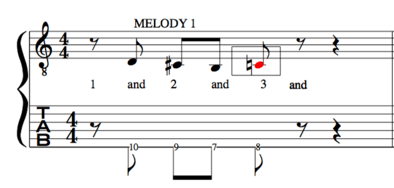
The key is this: The first three notes set up and target the chord tone that is on the beat:

Here, it is on beat 3 in red.

don-mock-target-tones-book-CD-review

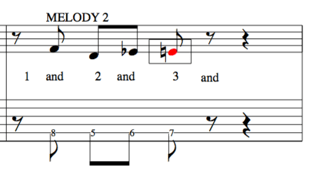
Here, is a second target melody: Again, we see the same set up:

Despite the chromaticism/target tones you can clearly see the outline of the arpeggio in red.

The arpeggio tones are “On” the beat: That is beats 1 and 3.

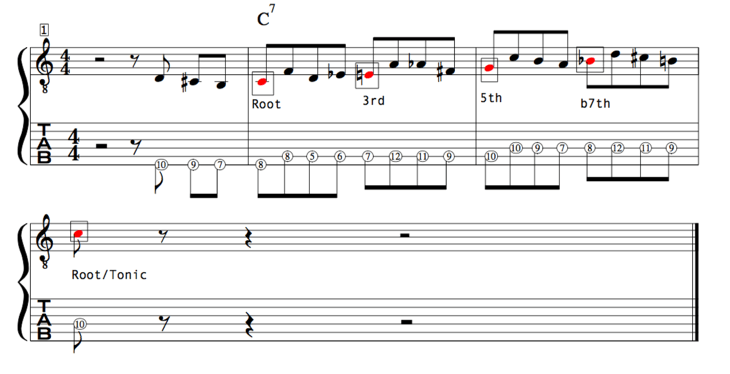
Lastly, notice the upbeat/target melody in bar 1 that sets this process in motion:

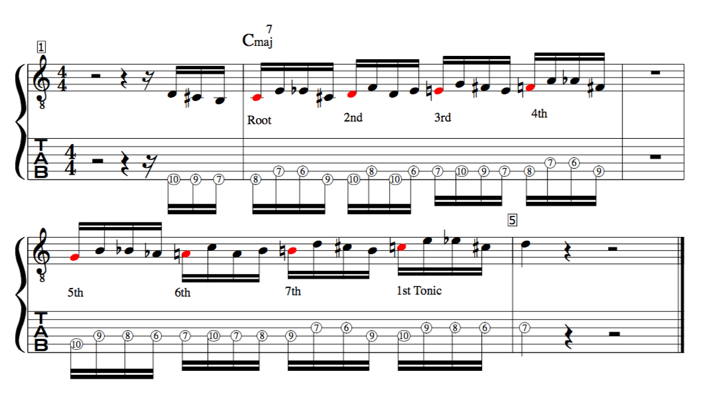
As a final example, [and also where this book is in a league of its own] is in the manipulation of double timed 16th note phrases.

This time the target melody or target tones outline the C Major scale:

Again, the notes of the scale are in red and are played “On” the beat and this time there are 4 scale tones per bar.

Again, notice the set up in bar 1:

When you have this down then you can start to manipulate the target melodies and try placing them in different parts of the bar.

Also, when you are fluent you can start to break the rhythm up and exploit the rhythmic phrasing.

This was just a brief look at Don Mocks excellent book/C.D “Target Tones”. I am not promoting this book or in any way involved with it, but, as I am always asked for a great resource to learn jazz chromatics on the guitar I felt that this would be of great help to anyone confused or trying to understand the theory behind it.

FREE PDF DOWNLOAD:

Pat Martino’s Minor Conversion Jazz Technique: Chromatic Devices and Examples

Pat Martino’s Minor Conversion Jazz Technique: Chromatic Devices and Examples

Hi Guys,

Some of you have said “How do we make Pat Martino’s minor conversion technique actually sound jazzy?”

Okay, let’s take a closer look!

There are 5 essential devices to employ for this:

These are employed to target a specific note. In this case E the 5th note of Am.

The use of an anacrusis/upbeat works best with target tones as this also sets up the jazz phrasing.

pat-martino-minor-conversion-jazz-guitar-lesson-target-tones

This is usually delivered in fragments:

pat-martino-minor-conversion-chromatic-jazz-guitar-lesson

In this case we are moving the interval of a tone down a semitone:

pat-martino-minor-conversion-side-stepping

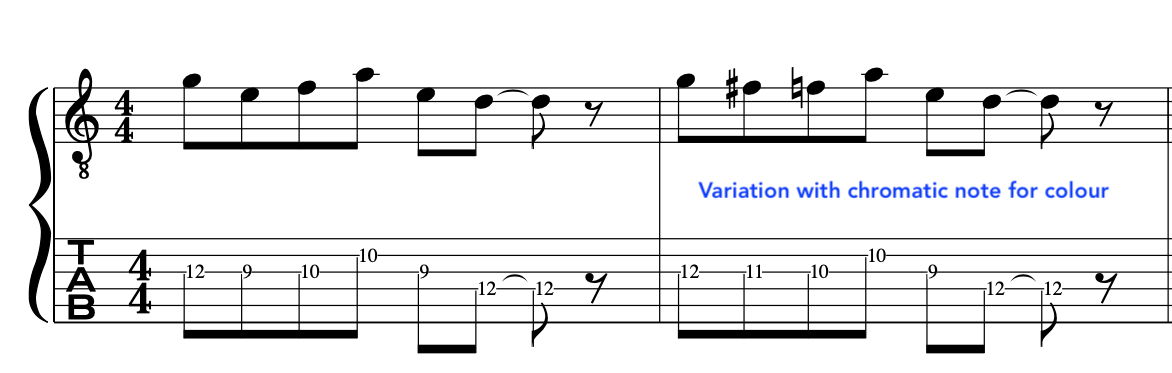
This is heard a lot in Charlie Paker’s playing as well as Pat’s improvisations.

pat-martino-minor-conversion-jazz-guitar-lesson

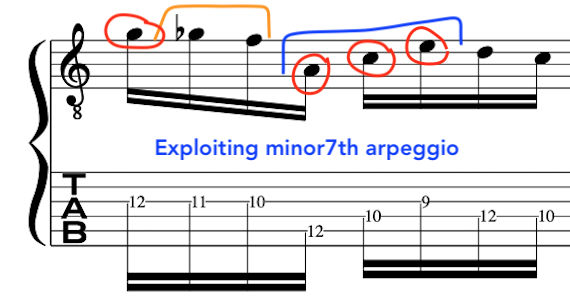
This is really useful and simple melodic tool for improvisational manipulation:

pat-martino-minor-conversion-minor7th-arpeggio

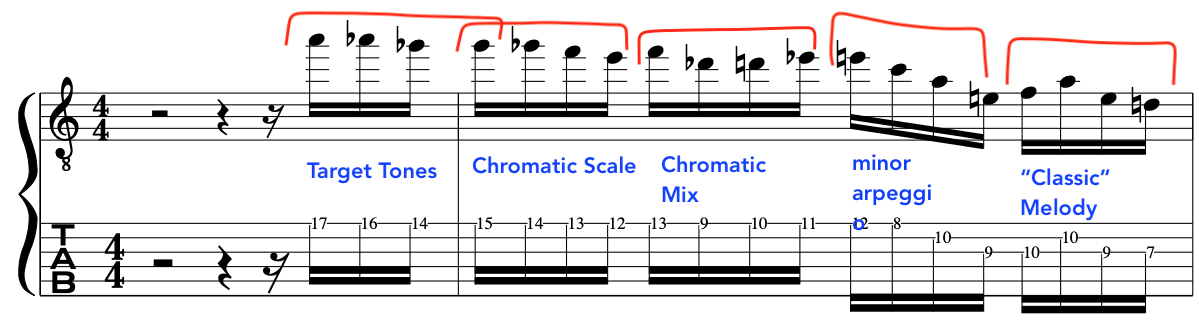
In this example we can clearly see Pat’s exploitation of chromatics and how fluid they are in creating a long phrase.

pat-martino-minor-conversion-jazz-guitar-lesson

We can see the target tone set up with an upbeat. Next we can see the manipulation of the chromatic scale, also, with a chromatic mix of scale and target tones. The minor arpeggio descends easily whilst the classic jazz motif/melody comes into play to round the phrase off .

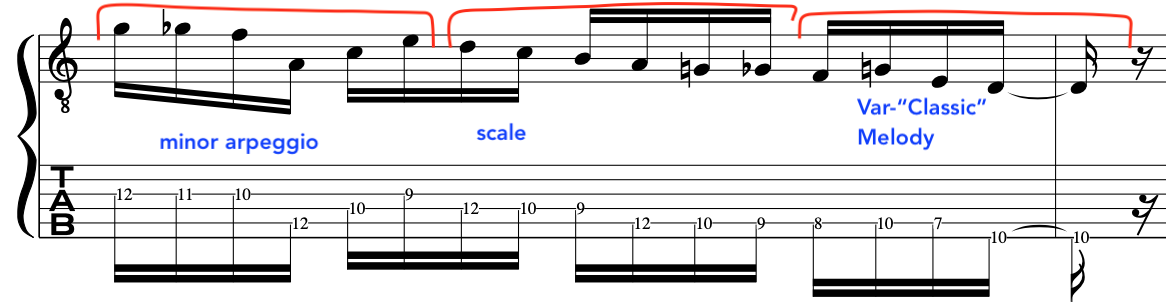
To complete this ii V7 I minor conversion we will exploit the minor7 arpeggio. From this, notice, the use of simple scale movement that finishes with a variation of the “Classic” jazz melody/motif:

pat-martino-minor-conversion-jazz-chromatics-guitar-lesson

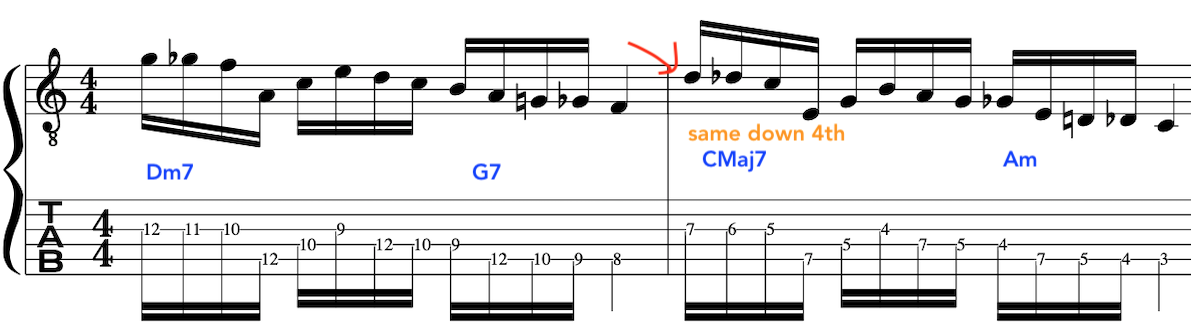
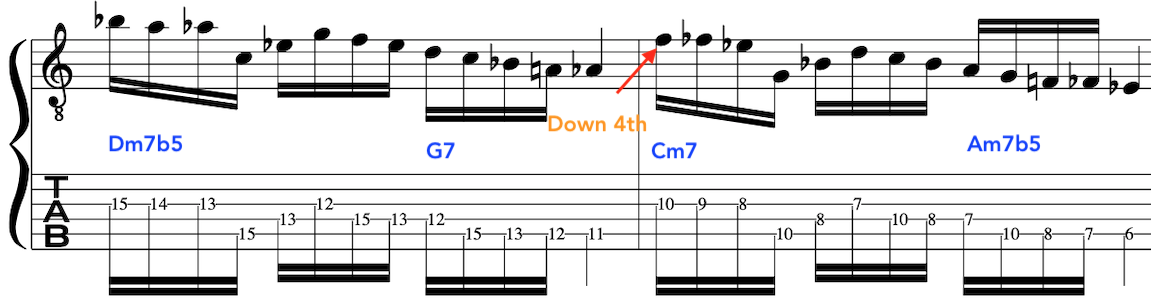
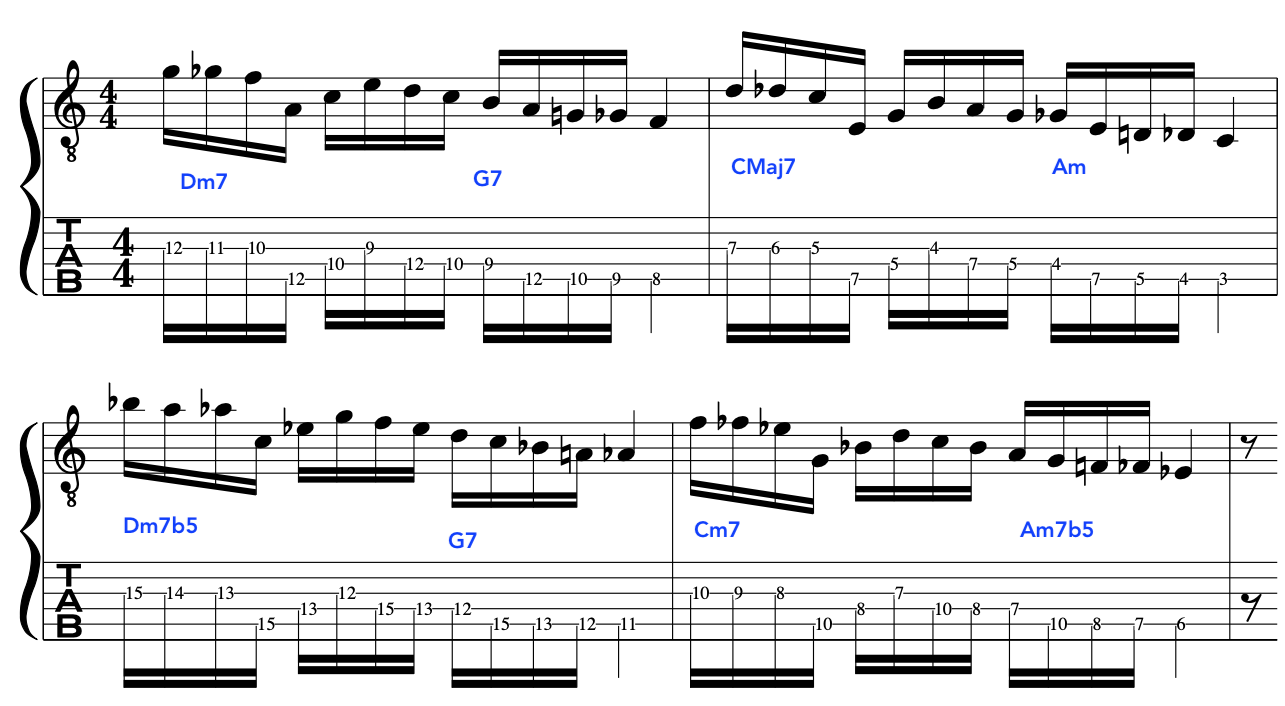
As an exercise to display the brilliance of Pat Martino’s minor conversion jazz technique we will take the minor 7th arpeggio from the previous bar in the previous example and sequence/juxtapose this to play through both major and minor ii V I’s

1] Example 1: “MAJOR”– the same line moves down a fourth to play a ii V7 I Vi

pat-martino-minor-conversion-jazz-guitar-lesson

2] Example 1: “MINOR”– the same line moves down a fourth to play a ii V7 i Vim7b5

pat-martino-minor-conversion-jazz-sequence-guitar-lesson

pat-martino-minor-conversion-jazz-guitar-lesson

This was a look at the essential devices any jazz guitar improviser needs to know and use for creative improvisation with the minor conversion, or minorisation technique.

As, I stated in the previous blog this simple method can save you 20 years of hard slog! Why? Because, Pat Matino’s minor conversion technique can be applied immediately!….

With these 5 musical improvisation tools anyone can create confident musical lines with strong and fluid jazz guitar phrasing.

FREE PDF DOWNLOAD: