Lessons from Jazz/World to 20 Century Classical Music Harmony Rhythm and Theory
Author: Modern Music Theory and Application
Clifford Martin is a trained classical musician and composer. His 1st study being piano and composition and a deep study in the application of modern music theory. He also studied jazz piano and jazz drums privately.
This website is a catalogue of ideas and musical concepts for improvisation and composition.
Today, a quick look at applying octave displacement into your alternate picking guitar technique.
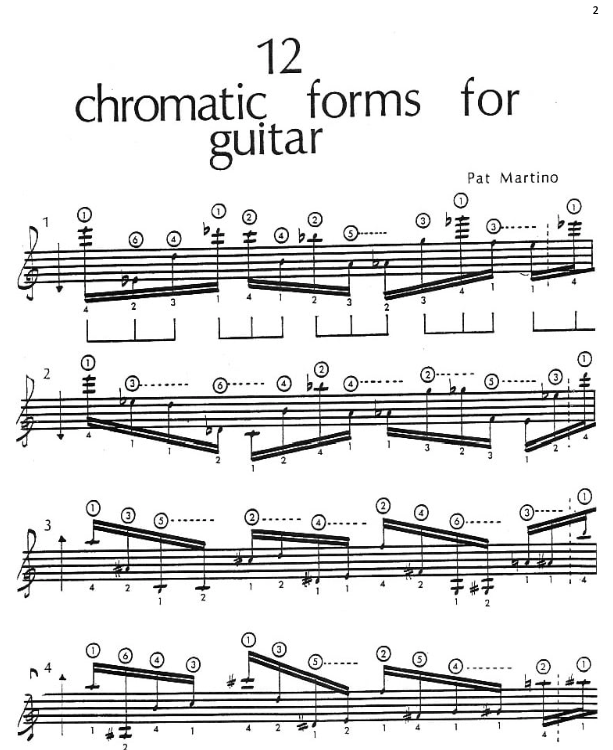
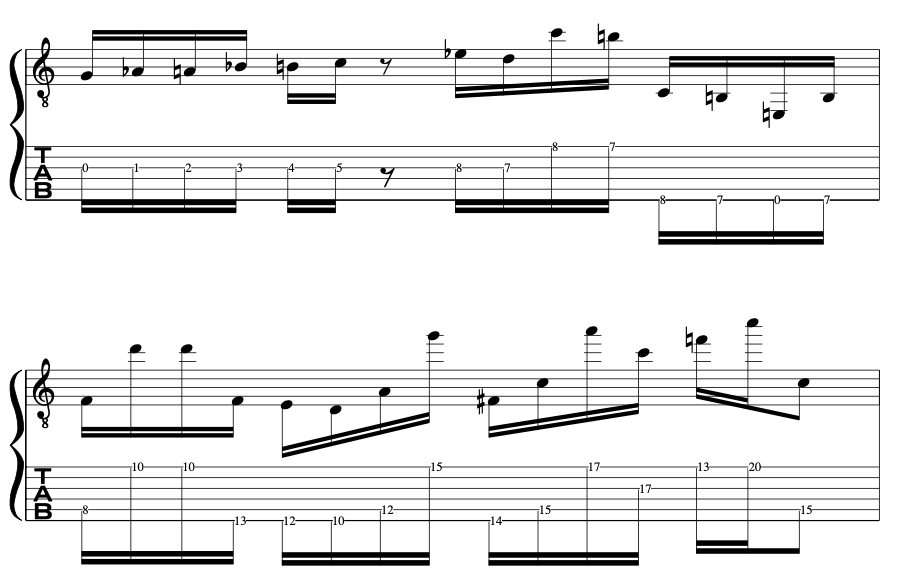
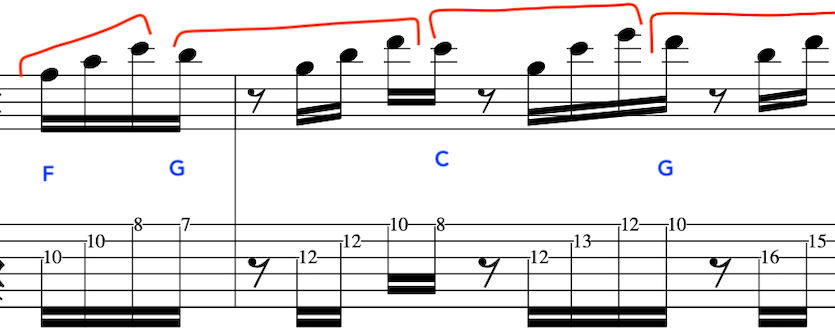
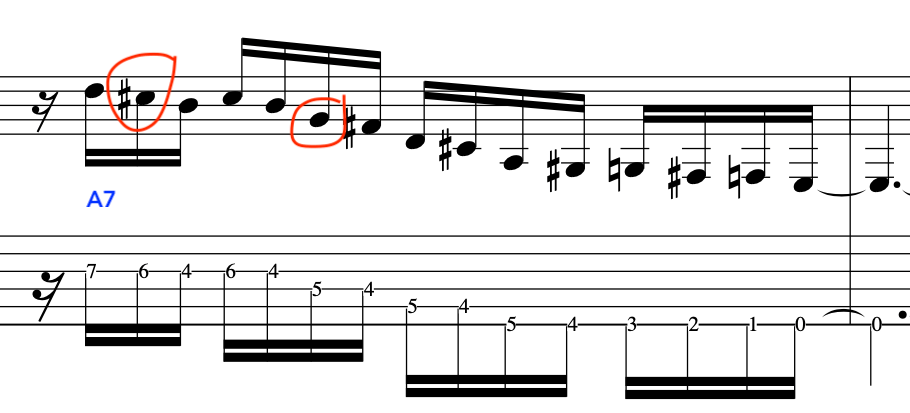
This [12 tone] concept was originally taken from the brilliant 12 chromatic forms by jazz guitar great Pat Martino and then re-developed into a more 20c classical picking Fripp-esque guitar etude.
Sheet music for Pat Martino’s 12 chromatic forms for guitar, illustrating the String Skipping exercise.
PART 1– Octave Displacement:
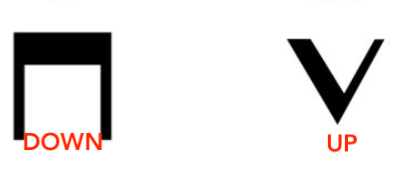
I am starting this little etude/exercise on an “Up” stroke with alternate picking guitar technique. [You may prefer to start on a downstroke]
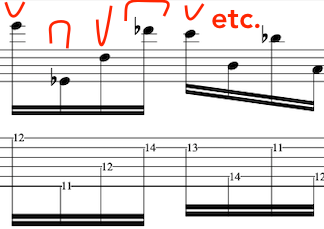
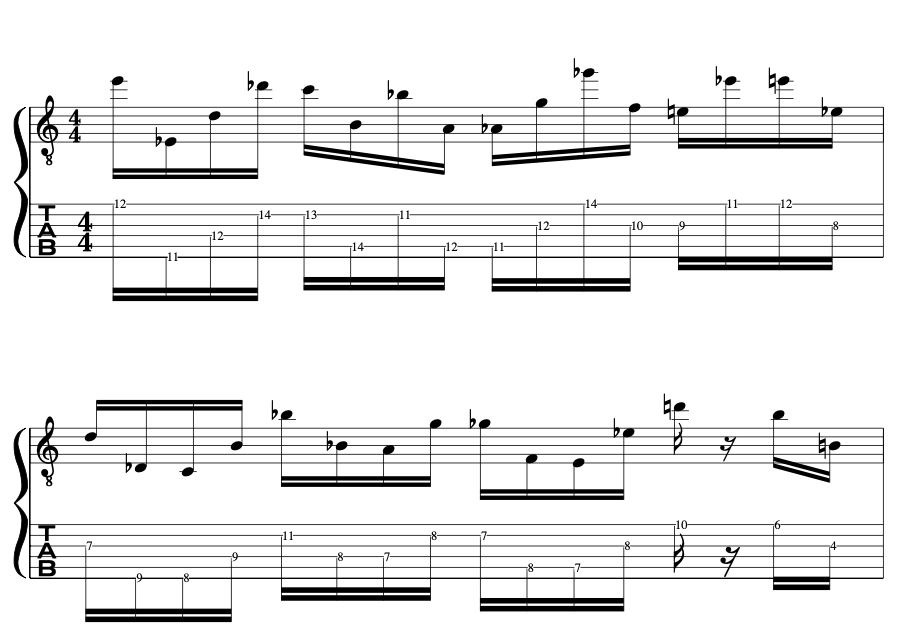
As an example here is the first part:
Notation for the ‘String Skipping’ guitar exercise exploring octave displacement.
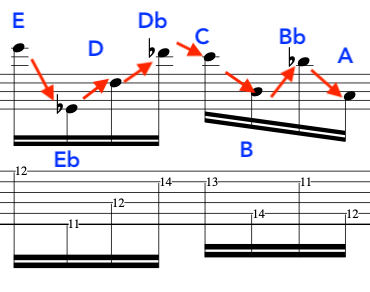
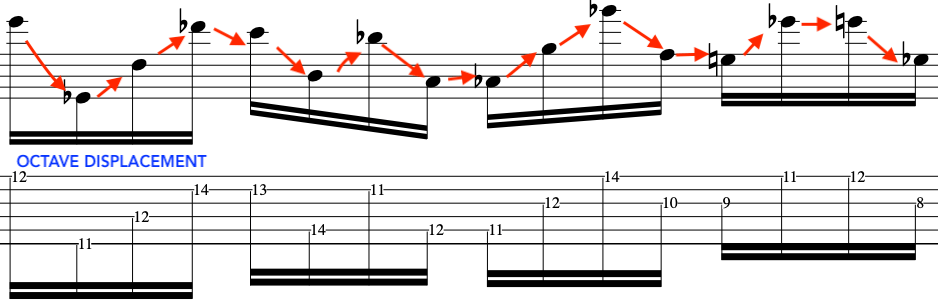
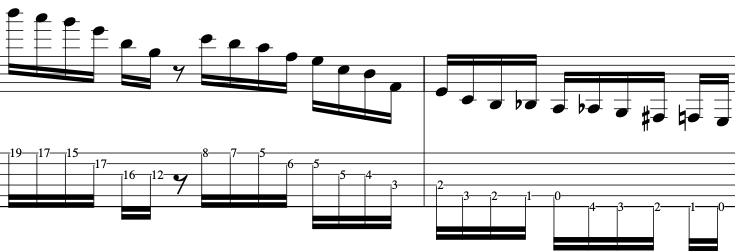
The key to be aware of = The exploitation of “Octave displacement”. This creates unique harmonies and S.A.T [B] style 12 tone lines.
Diagram illustrating octave displacement and the chromatic scale in guitar playing.
As you can see in the diagram above, this is just the chromatic scale, but, moving/resolving through the different registers.
This octave displacement technique, offers us a way to create/extract interesting colourful music from the chromatic scale [12 tone], whilst, complimenting our instrument through the high low high or low high low resonances.
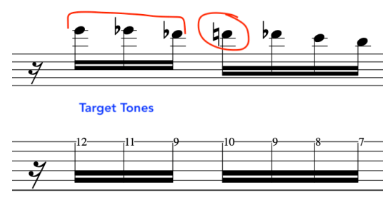
Musical notation for the ‘String Skipping’ exercise, highlighting octave displacement techniques in guitar playing.
PART 2: Scale Employment:
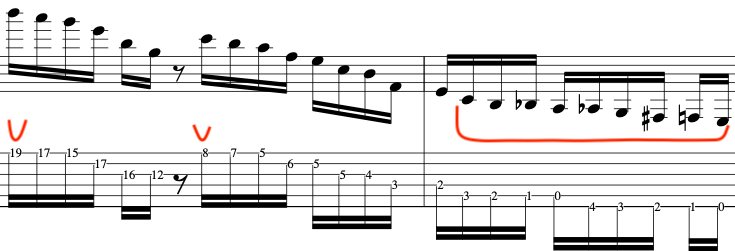
Although, [for this etude] I have employed octave displacement, I have also incorporated some basic scale parts to link it all together and avoid intervallic monotony.
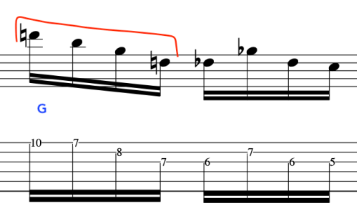
I am starting both of these scale fragments on an“Up” stroke with strict alternate picking once again:
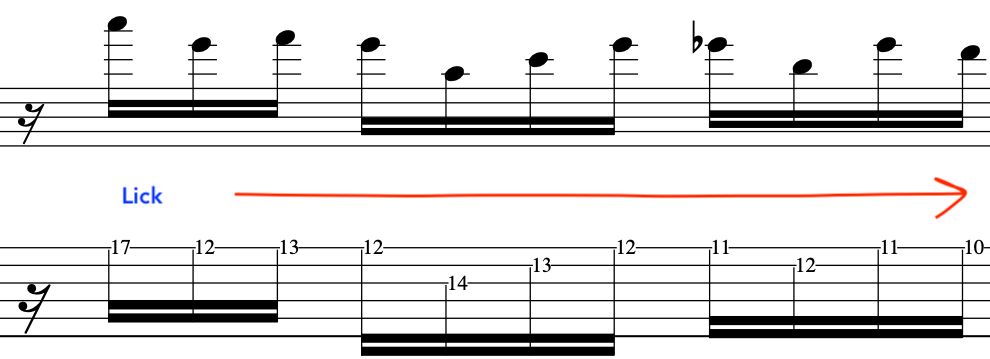
Tab notation for the ‘String Skipping’ exercise inspired by guitarists Robert Fripp and Pat Martino.Guitar tablature for the ‘String Skipping’ exercise inspired by Robert Fripp, illustrating techniques of alternate picking and octave displacement.Musical notation for the ‘String Skipping’ exercise inspired by Robert Fripp, illustrating alternate picking techniques and octave displacement.
These differ slightly as they incorporate alternate picking to chord and back to alternate picking technique.
Adding a chord [or chords] can throw some players off when alternate picking, so these exercises can be really helpful.
All of these little exercises are around the 140 bpm metronome marking.
EXERCISE 1:
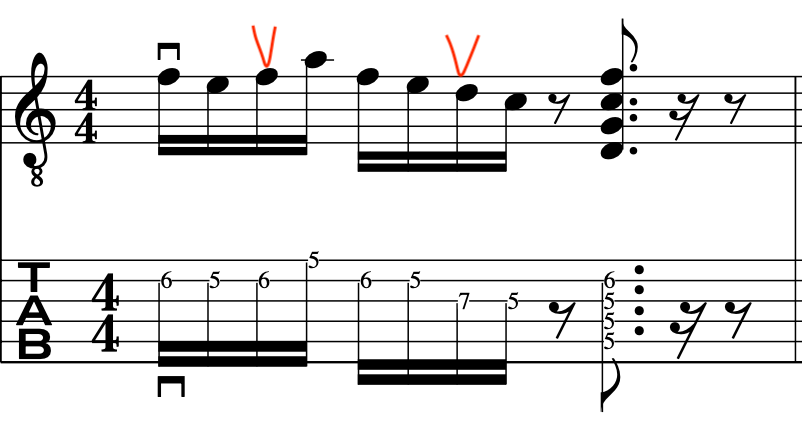
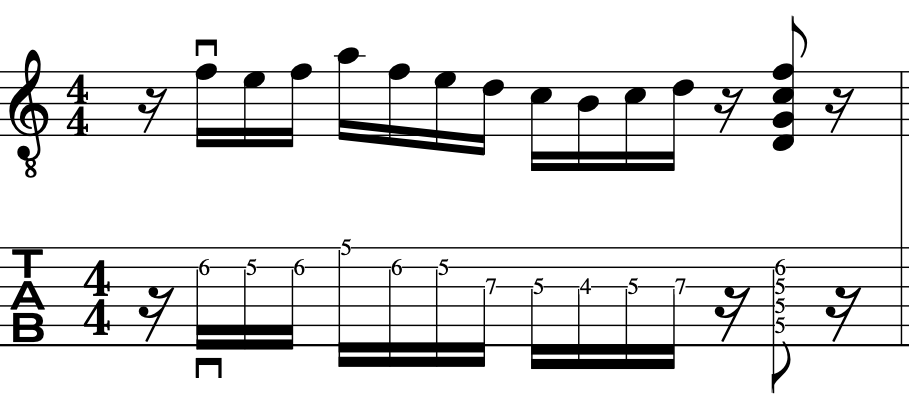
In this primer exercise we will have two sets of 16th notes that then accent a D quartal chord.
This exercise starts on a Downstroke and accents the 3rd note in each 4 note grouping.
By accenting these pitches it will make picking the exercise much smoother, due to the the last 2 notes in each 4 note grouping being prepared for and hence plucked in a deliberate fashion.
Musical notation for a guitar exercise focusing on alternate picking with accents.
EXERCISE 2:
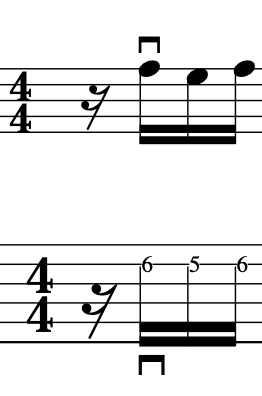
This time we will extend the previous exercise, but, start in the bar on the 2nd semiquaver.
Again, these simple concepts will affect how you pick. So, this is set as if it is for a riff or hook that is doubled up with another instrument, hence, creating a much more compositional approach.
Sheet music for alternate picking guitar exercise focusing on chord integration.
Here is the Full Exercise:
Musical notation and tablature for Exercise 3, showcasing alternate picking techniques for guitar.
EXERCISE 3:
This time we will ascend and descend.
This exercise demonstrates the different amount of notes per string.
Many, alternate picking exercises revolve around the 3 notes per string concept.
But, real music dosen’t work that way as we have – Melodies/Vamps/Hooks/Riff/UnisonInstruments-this means, there maybe 1 note on one string and 4 notes on the next string and then 2 notes on the next string and then 3 notes etc.
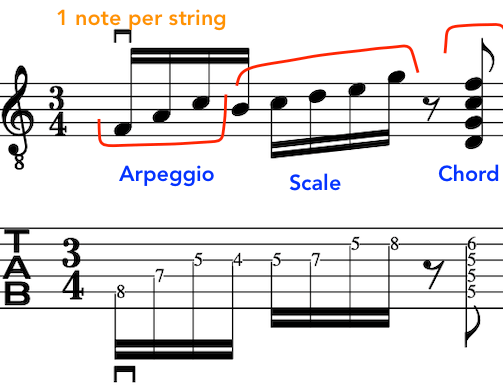
This exercise is tailor made for the above, as, it employs the two main music devices being that of an arpeggio and scale.
Here is the first part.
Guitar alternate picking exercise showing arpeggio, scale, and chord for varied note patterns.
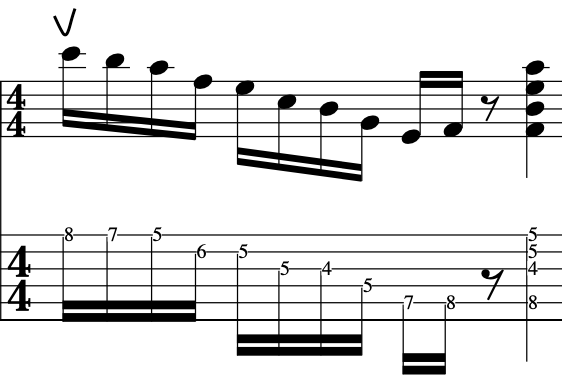
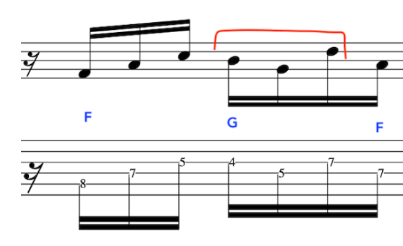
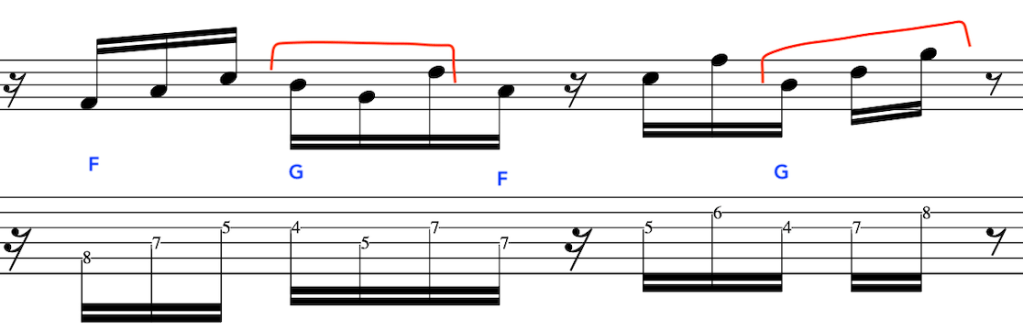
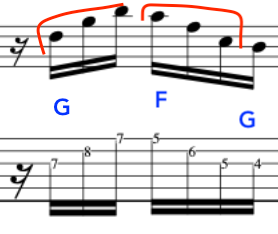
The second part, starts on an Upstroke, because, we finished the last phrase on a downstroke as we plucked the chord.
Sheet music for Exercise 3, illustrating descending guitar patterns for alternate picking.
EXERCISE 4:
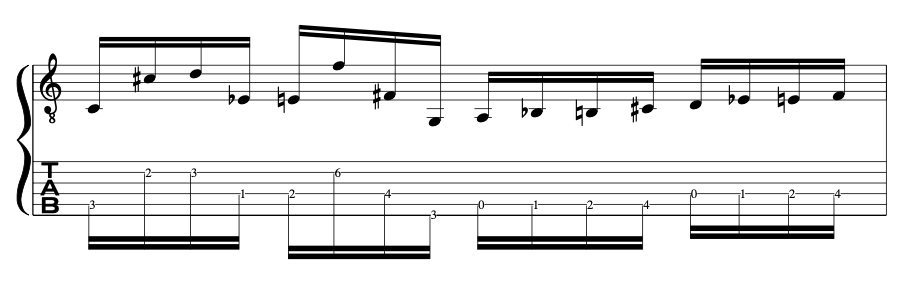
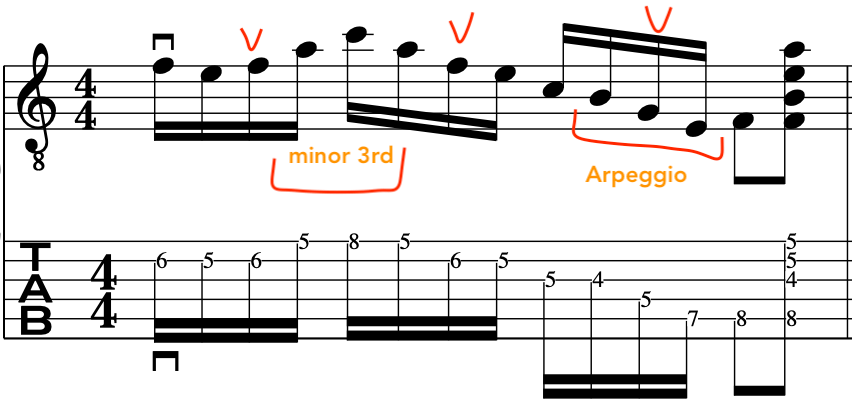
This exercise involves crossing over to the 1st string and back again, with different amounts per string.
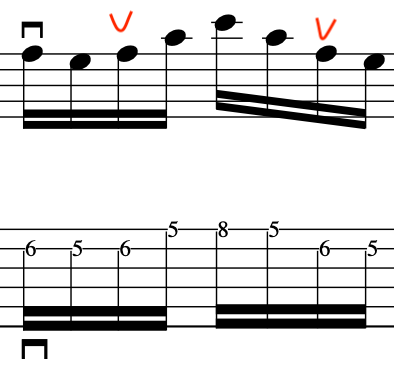
So, to begin with let’s break this down into a simple 2 string exercise:
As before, notice the accents on the 3rd note in each 4 note grouping:
Detailed notation for a guitar exercise focusing on alternate picking with accents on specific notes.
Full Exercise:
Musical notation and tablature for a guitar alternate picking technique exercise, highlighting a minor third and arpeggio.
In conclusion:
These exercises are just a few ideas that are really useful when working on alternate picking guitar technique.
This is because many hooks and vamps and compositional devices don’t work on 3 note per string picking.
The great improvisers like John McLaughlin, Don Mock and Pat Martino play long fluid phrases along with weaving in and out of chords, chromaticism and implied harmony [double stops/Octaves]. So, being able to pluck odd and even groupings [or any amount of notes per string] with embellishments and chords is essential.
Hopefully, these exercises will be of some help with that.