Stravinsky “Rite of Spring” Chord: Analysis/Harmony and Application

Hi Guys,

Today, a look at the amazing orchestral chord from “The Rite of Spring” [“Augurs of Spring ” – Les augures printaniers] by composer Igor Stravinsky.

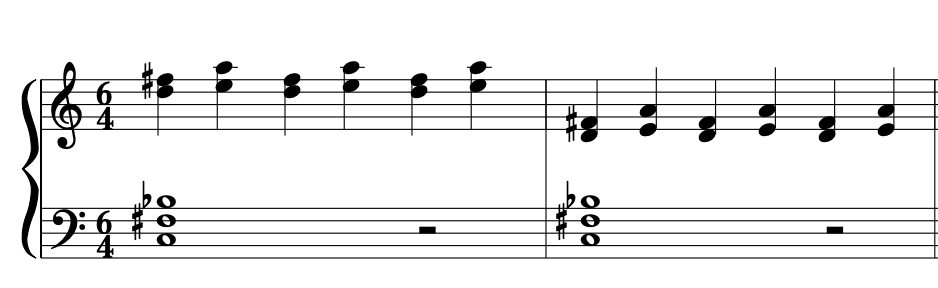
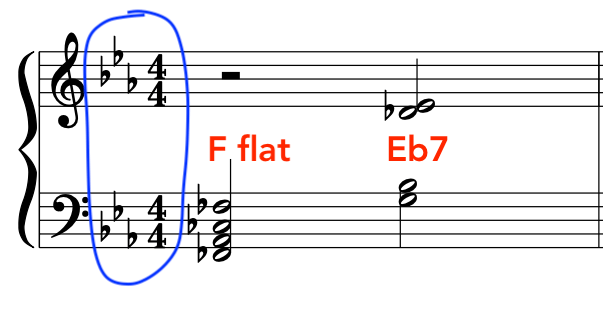
This is a Bi-Tonal chord consisting of two parts or two different tonalities. In the Bass we have a chord of F flat Major and in the treble we have a chord of Eb7

Musical notation displaying the F flat Major and Eb7 chords, highlighting Stravinsky's "Rite of Spring" chord   [augurs of spring chord]
Musical notation illustrating the bi-tonal chord of F flat Major and Eb7 from Stravinsky’s ‘The Rite of Spring.’

Stravinsky calls this F flat Major as opposed to its enharmonic [E Major] because, he employs an Eb Major key signature making it easier to read and follow, whilst removing any # accidentals that could create messiness. [The extra flats make it legible].
stravinsky_rite_of_spring_chord_augurs_of_spring

In our modern analysis we can think of it this way,
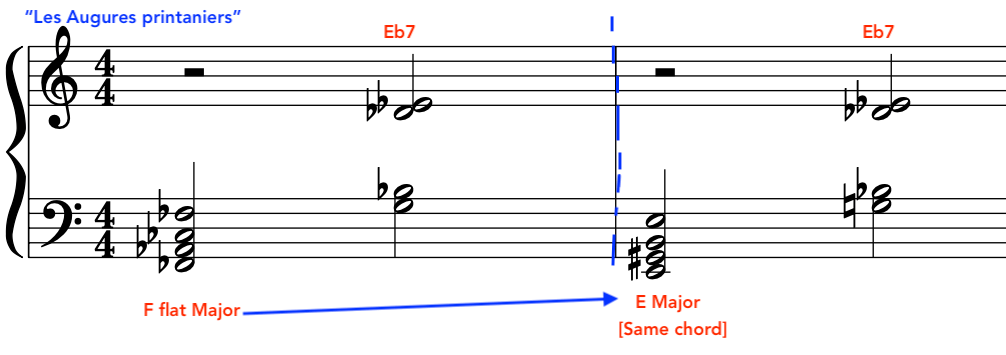
"Les Augures printaniers" sheet music displaying F flat Major and Eb7  Stravinsky chords with annotations.

Here, is how the rite of spring chord sounds in an orchestral context:

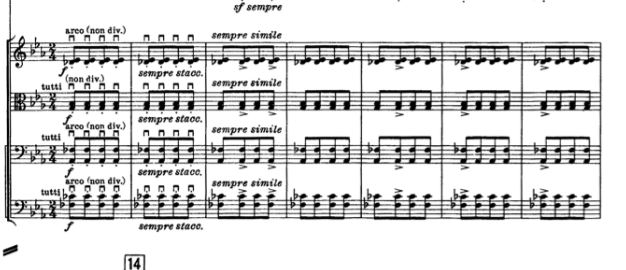
From Stravinsky’s score: Here, we can see Stravinsky’s mastery, displayed by his execution of rhythmic brilliance.
stravinsky_rite_of_spring_chord_augurs_of_spring

Below, is how it sounds as a pad on an modern keyboard

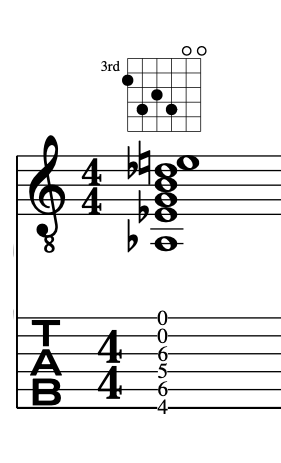
Due, to the nature of the guitar we really need an extra finger and an extra string to do this unique chord justice.

But, here are two guitar voicing’s for harmony, strumming and chordal picking:

Musical notation diagram illustrating a bi-tonal "Rite of Spring" chord with tablature for guitar, depicting an F flat Major and Eb7 chord by Stravinsky.
Guitar voicing example for the Bi-Tonal chord from Stravinsky’s ‘Rite of Spring.’
stravinsky_rite_of_spring_chord_guitar-lesson-voicing

In the example below, we can see the amazing way Stravinsky’s “Rite of Spring” chord resolves and how the structure of the harmony moves.
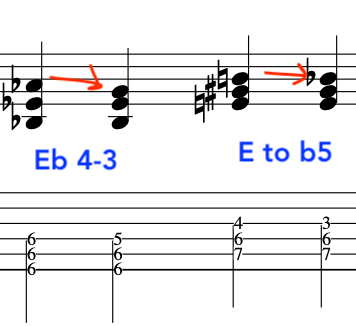
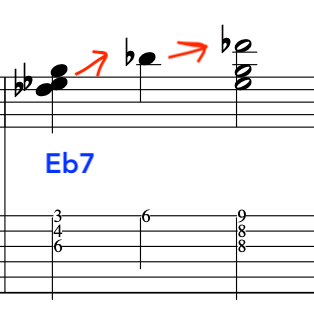
stravinsky_rite_of_spring_chord_augurs_of_spring_analysis
stravinsky_rite_of_spring_chord_augurs_of_spring_harmony
stravinsky_rite_of_spring_chord_augurs_of_spring

Due to the nature of the two chords being a semitone apart we can create some interesting chord pairs lines/licks from this:
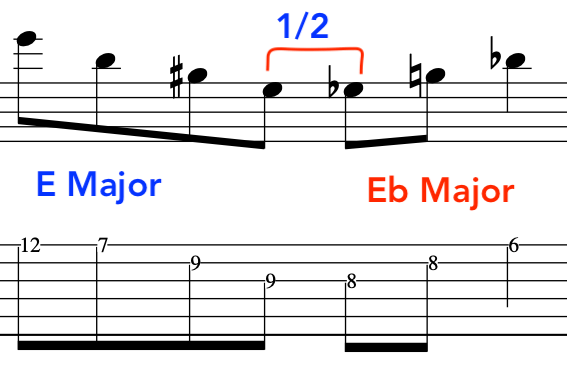
stravinsky_rite_of_spring_chord_augurs_of_spring_bi_tonality

Okay, now let’s develop this a bit,

stravinsky_rite_of_spring_chord_augurs_of_spring_bi_tonal_lesson

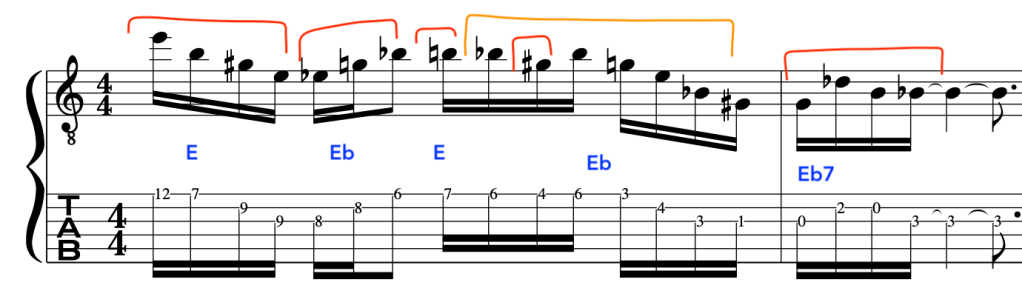
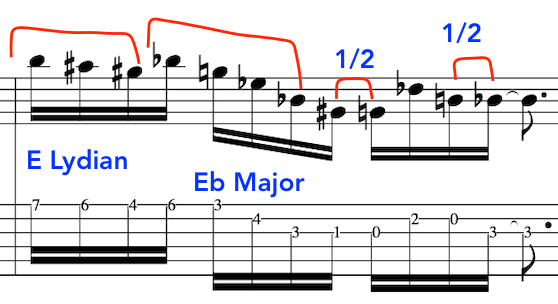
We, can also build on this concept and create some interesting guitar or solo instrument lines with this approach:

Here is a lick/line example:
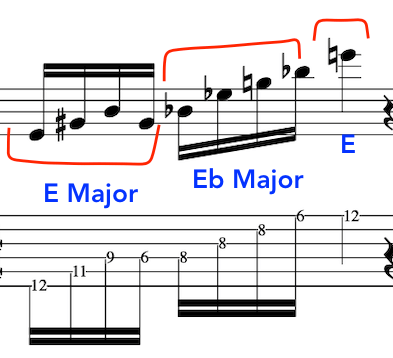
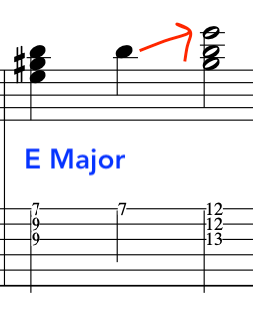
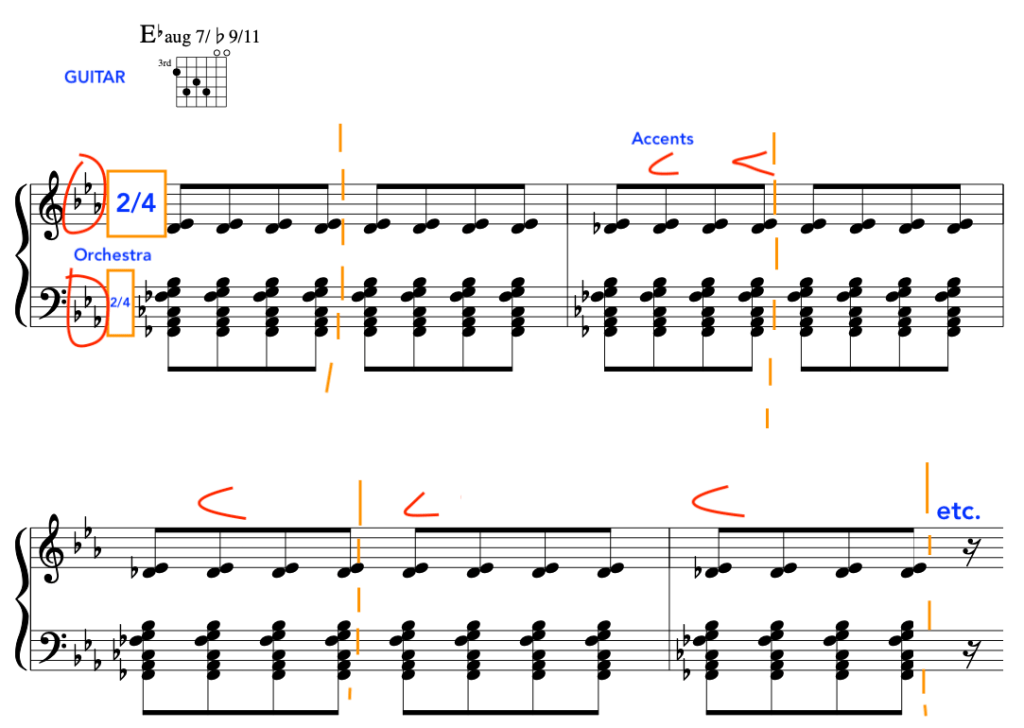
A music score highlighting E Major and Eb Major sections improvised Stravinsky "Rite of Spring" chord
Musical notation highlighting the transition between E Major and Eb Major chords in Stravinsky’s ‘Rite of Spring.’
Musical score displaying E Lydian and Eb Major sections, with annotated rhythmic divisions for Stravinsky's "Rite of Spring" chord
Musical notation illustrating the E Lydian and Eb Major scales, highlighting the rhythmic structure and chord pairs from Stravinsky’s ‘Rite of Spring’.

This was just a quick look at the potential of just one chord!

This Bi-tonal and Polytonal approach opens up so much in terms of inspirational ideas, originality and fresh harmonic perspectives.

In this way, cliches can be rung of banality and forged into something interesting and unique and thoroughly challenging.

“Les Augures Printaniers/The Rite of Spring” is such a great example of this, possessing a little world within itself. Add, to this Stravinsky’s brilliant exploitation of rhythm and we have a [Bi-tonal]chord that’s an all time classic!

LINKS to ALL of my past Blogs/PDF Downloads/Lessons

Hi Guys,

Below, is the list of all of my past “Blogs/Lessons” that many of you have enquired about:

As you can see, in the list/links below I have delivered hundreds of free lessons/blogs and pdf downloads over the years!

This is a great thing!

But,

I cannot organise them all, as there are just too many.

So, putting them in a long list is the only way to catalogue and contain them all at this moment in time.

You can also find them all in the website menu:

BLOG SEARCH BOX

Many [not all] have free PDF Downloads

I hope that some of the lessons and downloads were of use to you!

Scriabin’s ‘Prometheus’ Mystic Chord Analysis and examples for Guitar, Orchestra and Piano

The “Prometheus” Chord-Scriabin’s “Mystic” Chord Analysis

Hi Guy’s,

Today, we will take a look at Alexander Scriabin’s “Prometheus” or mystic chord.

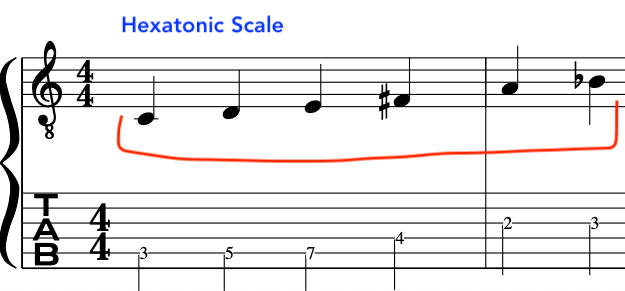
The “Prometheus chord,” introduced by Alexander Scriabin, is a fascinating and innovative harmonic structure that reflects the composer’s mystical and philosophical inclinations. Officially known as the “mystic chord, this six-note chord (C, F#, Bb, E, A, D) forms the foundation of Scriabin’s “Prometheus: The Poem of Fire,” Op. 60.

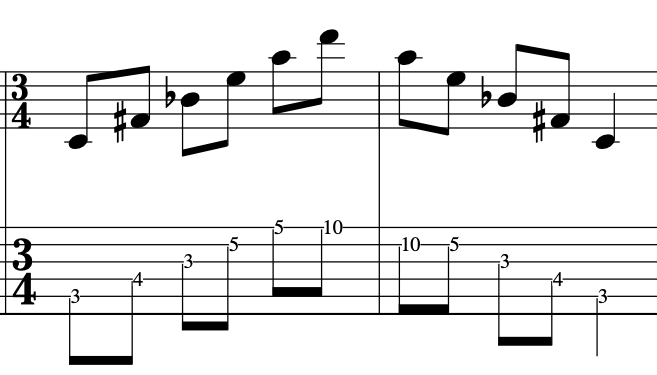
Okay, let’s take the scale notes in order [Hexatonic 6 notes]

Now, let’s arrange the pitches by intervals,

root
major second
major sixth
major third
minor seventh
augmented fourth
root

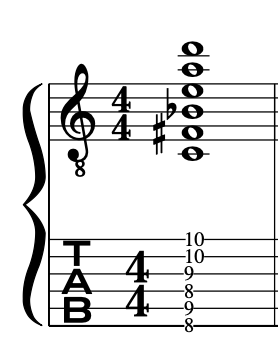
This results in the “Promethus/Mystic” Chord:

Analysis-of-Scriabin's-Prometheus-chord

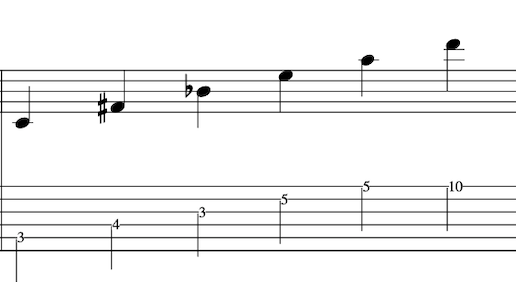
Here is the outline of the chord in single notes:

Analysis-of-Scriabin's-Prometheus-chord

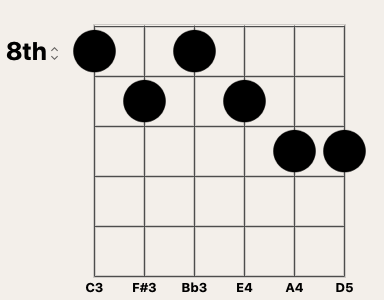
Now, let’s apply it as a guitar fingering:

Analysis-of-Scriabin's-Prometheus-chord

Here is a Barre Guitar chord shape/voicing:

Guitar-voicing-bar-chord-Scriabin-Prometheus-chord

From here, we can now play around with this unique sound and create some interesting musical ideas from it.

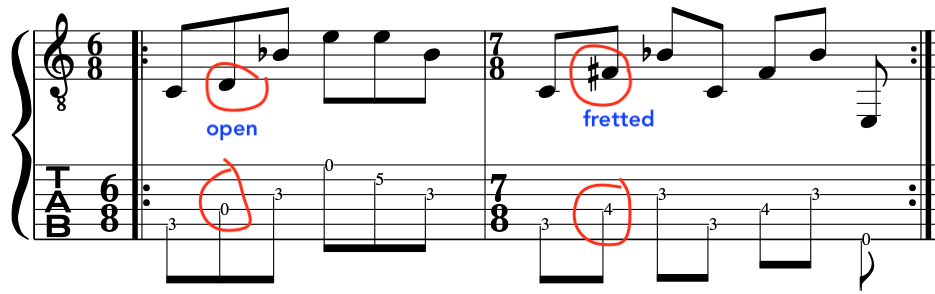
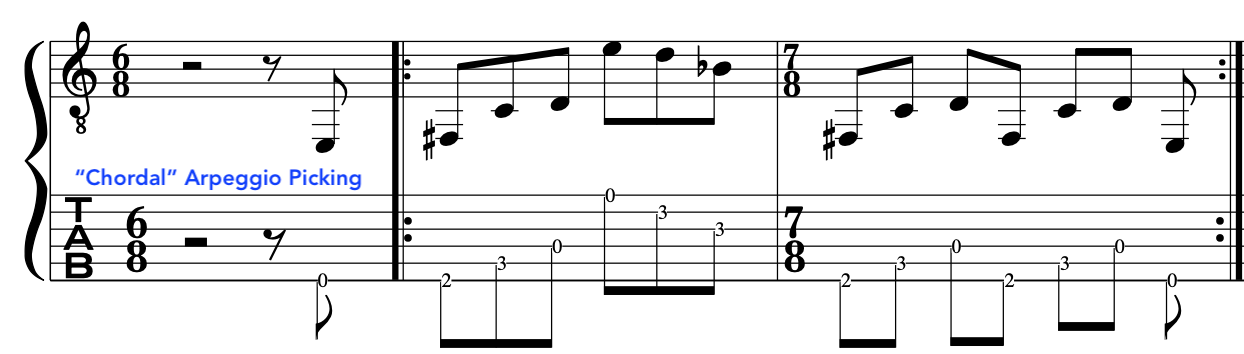
Here are two “Chordal picking” guitar arpeggio vamps:

In the first example the key is to make sure not to dampen the open D string in the first bar even though this same string is fretted in the second bar.

Example 1:

composing-with-Scriabin's-Prometheus-chord

In the next example [below] the key to execution is the same by remembering not to dampen any open strings with the fretting hand.

EXAMPLE 2:

composing-with-Scriabin's-Prometheus-chord

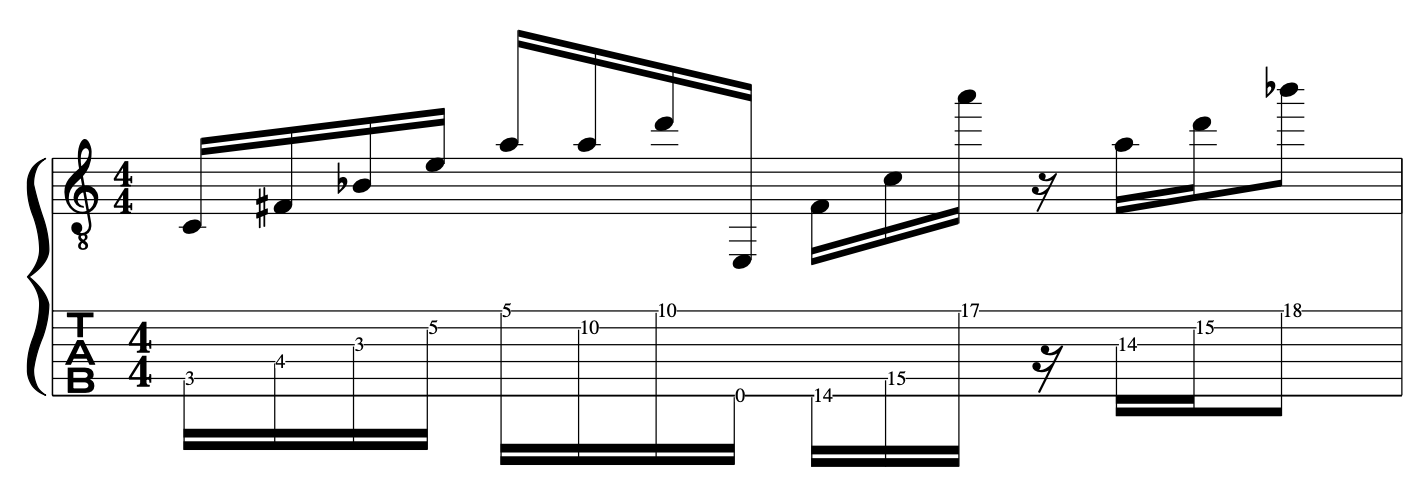
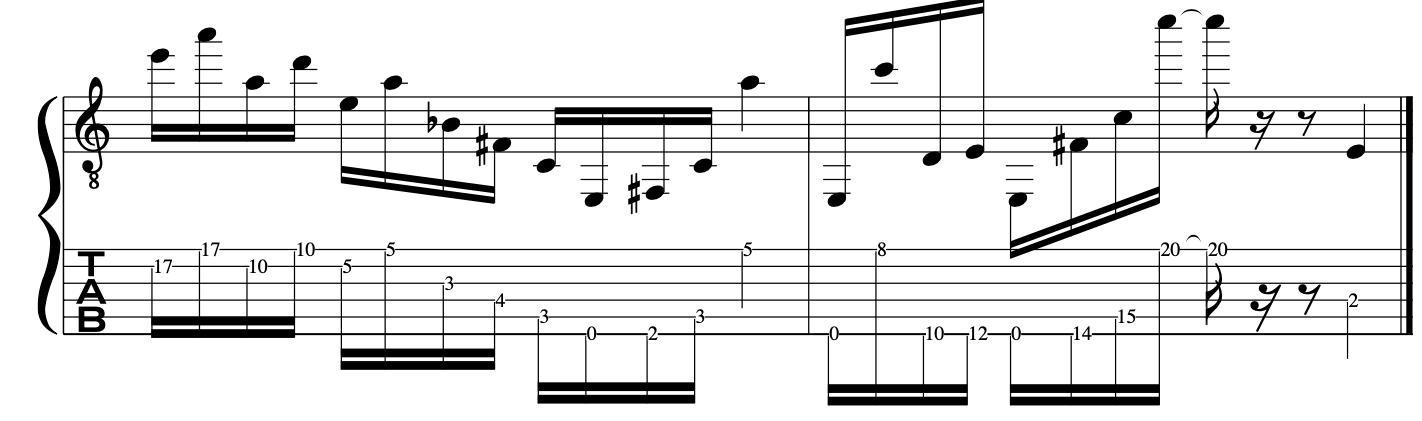
Here is an example of a longer line built from this chord/scale concept:

improvising-with-Scriabin's-Prometheus-chord

This little phrase exploits the chord/scale outline with some string skipping/intervallic picking to create interest and to make it more compositional in its approach.

This chord/scale is employed a lot in modern and old Film and T.V music:

Example 1: Old 70’s detective shows like “Columbo”

composing-with-Scriabin's-Prometheus-chord

Example 2: Mystery/Drama from the late 30’s early 40’s Film.

composing-with-Scriabin's-Prometheus-chord

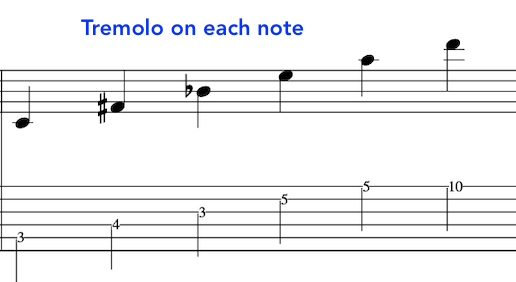
Example 3: Tremolo Build up for suspenseful crescendo.

composing-with-Scriabin's-Prometheus-chord

In conclusion this was just a quick look at the amazing “Prometheus” chord and it’s use and function in music.

It’s a very useful tool becasue it can be employed for lovely guitar vamps, solo lines and improvisation. It’s also excellent for orchestration where drama and suspense is required.

This chord departs from traditional harmonic conventions, creating a sonorous, otherworldly soundscape that evokes transcendence and spiritual awakening. The chord’s ambiguous tonal center and unconventional intervallic relationships challenge listeners’ expectations and epitomize Scriabin’s quest to explore new harmonic realms. This daring musical innovation was part of Scriabin’s broader artistic vision, intertwining music with his synesthetic experiences and esoteric beliefs, aiming to elevate human consciousness through art.