Today, a look at the amazing minor flat 6th chord as used in the compositional styles of Carlos Jobim, John McLaughlin, Astor Piazolla and Al Di Meola.
PART 1:
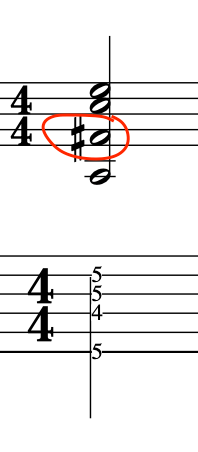
Most people seem to have a preference for the minor 6th chord, [which in this case has the F# or the Major 6th].
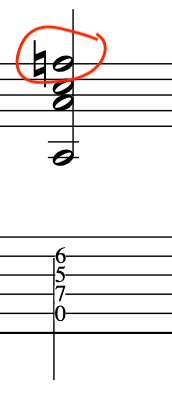
But, the minor flattened 6th chord [F natural in this case] has an amazing character of its own, [especially when it resolves to the first inversion, as we will see].
PART 2:
What makes the minor chord with a flattened 6th work really well is to move down to a first inversion chord.
EXAMPLE:
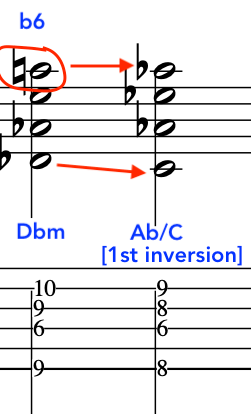
Here, we have a Db minor chord moving down to a 1st inversion Ab Major chord:
Notice the flattened 6th note of A at the top moving down a semitone to the Ab note:
Illustration of the Db minor flat 6th chord to 1st inversion Ab Major chord, highlighting the flattened 6th note.
This smooth chordal transition works beautifully when creating melodic sequences.
Diagram illustrating the transition from Db minor to Ab major first inversion, highlighting the flattened 6th note.
Let’s now add some more first inversion chords:
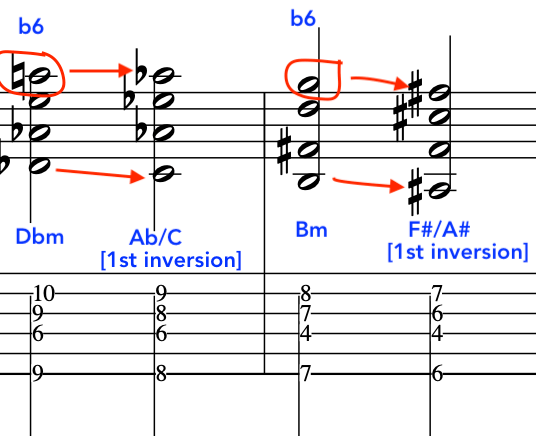
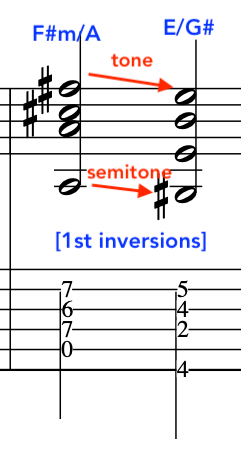
Here, we employ F#m/A with the bass resolving a half step down to the G # note.
Once again, we have a wonderful melodic transition, this time going to the E first inversion chord.
Illustration of F#m/A and E/G# first inversion chords highlighting tone and semitone relationships.
In order to move away from cliche-dom we will now alter the harmony a bit.
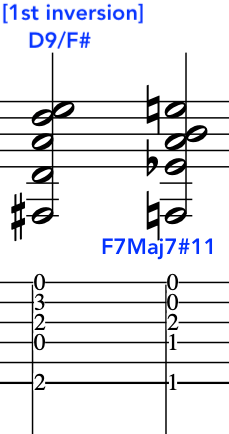
Here, we will add a chord of D9/F#[1st inversion] and let the bass move down a semitone to a chord of F7 [but with a Maj7th also and a #11th].
Chord diagram illustrating the first inversion D9/F# and F7Maj7#11 chords
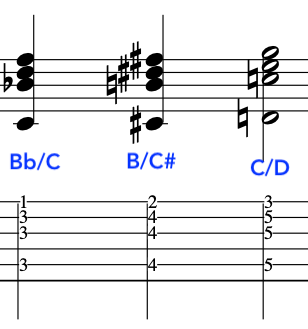
To complete this example, we will exploit chains of 7 Sus4 chords: Here, are the first three chords moving up in semitones.
Illustration of 7sus4 chord transitions in semitones, featuring Bb/C, B/C#, and C/D for musical composition.
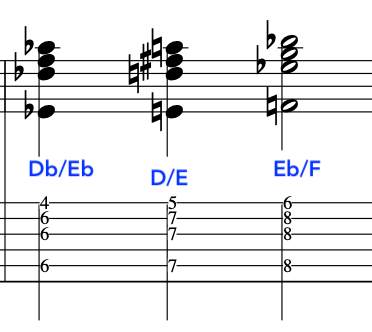
Here are the next three chords moving up in semitones :
Today, a look at using the guitar pick/plectrum to create contrapuntal/counterpoint ideas.
In this first part, [This lesson] we will look at treble to bass and bass to treble and how to make the non consecutive 3rds, 5ths and octaves and harmony work.
In the next part [next lesson] we will look at how to create “Resonance”, especially in regards to scales.
PART 1: Etude/Prelude
At the beginning of the video above, you will see/hear a little prelude that I composed for the contrapuntal plectrum/picking ideas.
This demonstration concepts piece will be the lesson of today.
SMOOTH “CLEAR” HARMONY=Key
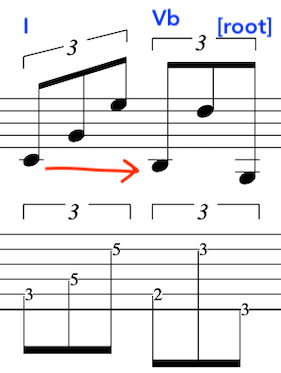
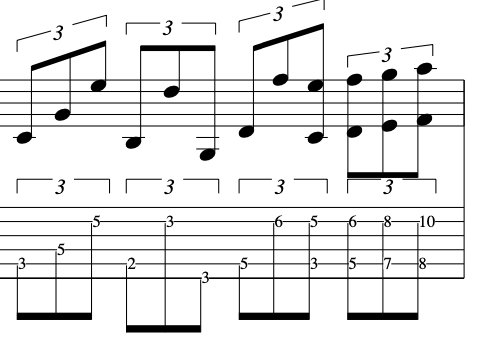
In the first bar we have chord I to Vb. This, could also be seen as, C to G/B or chord I to chord V first inversion:[Landing on the root]
Musical notation for plectrum guitar illustrating the progression from chord I to Vb, emphasizing harmonic structure.
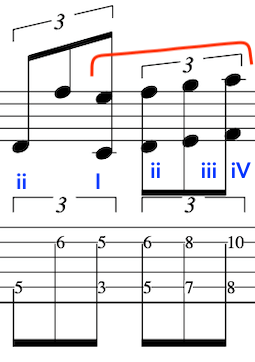
From here we have chord ii and then chords moving up the scale – I ii iii iV
Here, I am also employing the second finger with the pick in order to pluck both strings at once [see video].
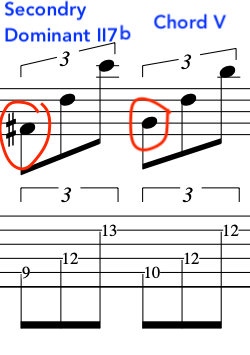
In order to keep the harmony ascending with clear movement, we will now take the F natural up a semitone to F# and create a secondary dominant first inversion-II7b
This chord ii [Dm] is now, made Major with the added seventh [D7].
This in turn, resolves up another semitone to G for the dominant chord of G Major.
Musical notation depicting the secondary dominant II7b and chord V for guitar pick practice.
We will now, exploit a perfect cadence of I V I to complete this section of the composition:
PART 2:
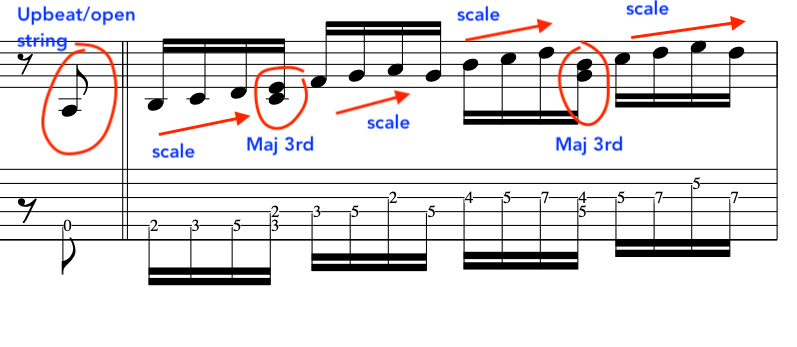
Now, to create contrast, we will employ scale movement, double stops and imitation:
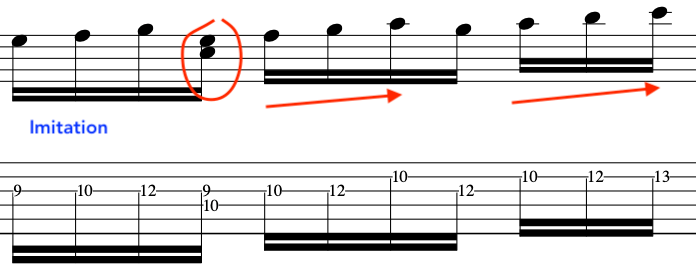
The technique to keep this ascending is “Imitation”, using and implying what we have already played up an octave.
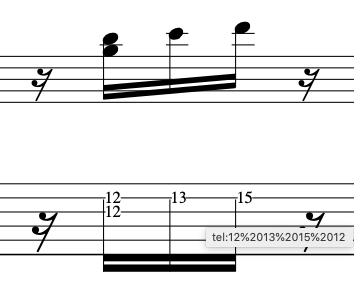
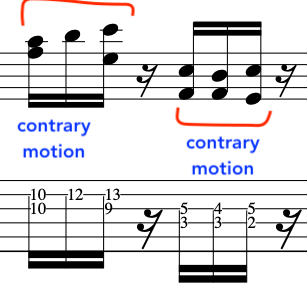
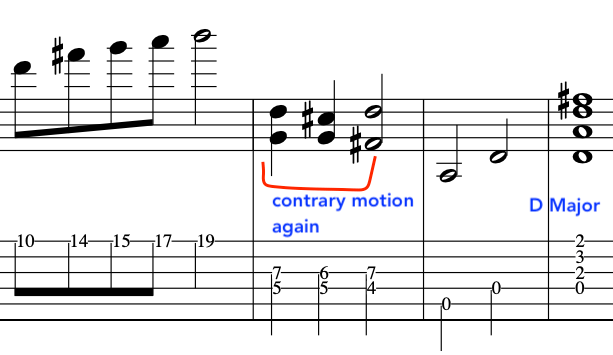
Finally, the cadence is created with “Contrary Motion” technique. And, once again we will imitate this, but, an octave lower this time, to complete the cadence.
Musical notation illustrating the technique of contrary motion, highlighting specific notes and finger positions and imitation.
PART 3:
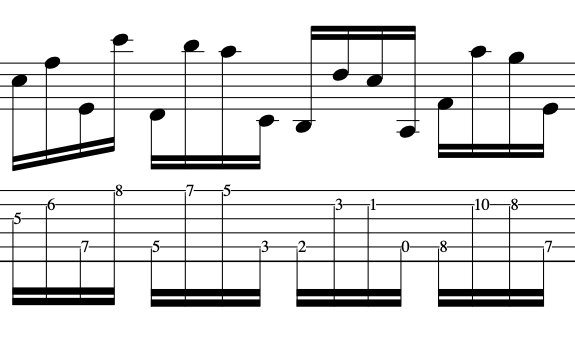
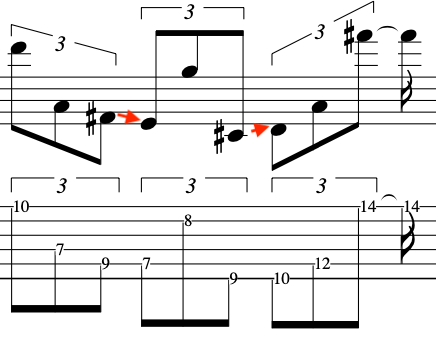
In the coming part, we will exploit much string skipping and intervallic movement.
This technique is great for Low High Low with the Bass to Treble or Treble to bass.
This is an amazing way, to perform a contrapuntal effect and map out and perform crystalline clear harmony that resonates beautifully when fretted on the guitar.[See Video Above].
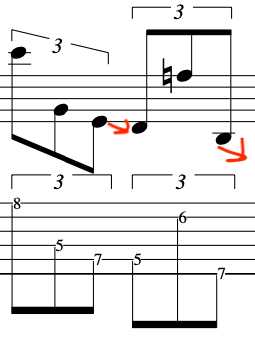
Sheet music illustrating plectrum techniques and contrapuntal ideas for guitar.
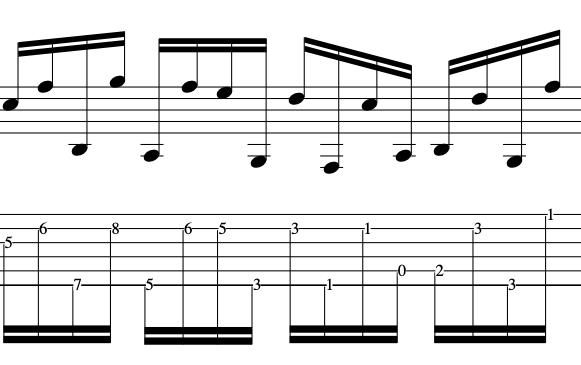
Second Part:
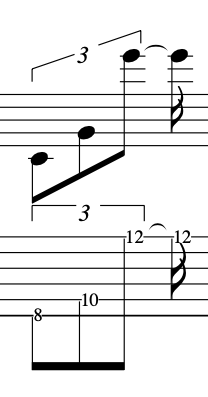
Musical notation showing notes and finger placements for contrapuntal guitar picking.
PART 4: Recapitulation:
The last part employs our original little tune, but will change key at the finale.
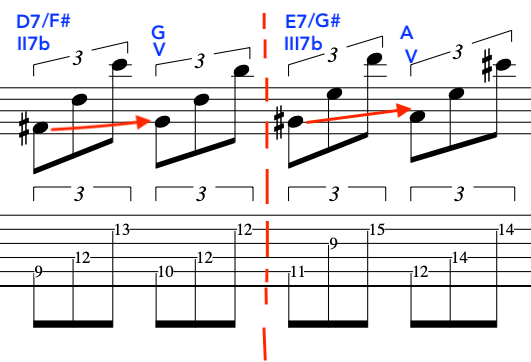
In order to change the key and “Uplift” the end, we will exploit two secondary dominants: The first being chord ii as II7b [D7 to G].
And the second being Chord iii. So, we have III7b [E7 to A Major]
Musical notation illustrating the progression from D7/F# G to E7/G# A, highlighting the transitions in chord structure and secondary dominants for guitar.
This, means that we now have to cadence with D Major as the new tonic key.
To wind down the composition we will outline a D Major [13/sus4] arpeggio and cadence with some simple contrary motion emphasising the new key and chord of D Major.
Conclusion:
This, was just a quick look at the fretting side of plectrum contrapuntal guitar writing and playing.
This style, encompasses the no consecutive 3rds, 5ths and octaves approach, taken from the Bach’s chorales.
In the next part, we will look at how to create resonance and a much bigger sound with more colourful plectrum techniques.
Today, a quick look at some of John McLaughlin’s amazing altered, slash and ambiguous guitar chords.
Johns harmony is a very rich palette indeed.
In the little example above in the video, I play about with some of Johns harmonic movement and colour.
EXAMPLE 1:
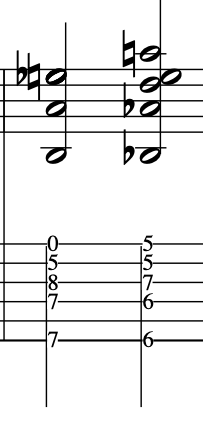
Although, I could employ diminished harmony, I am instead aiming at “Implication”….Why?…This is in order to bring out the big “Rich” resonance of the guitar.
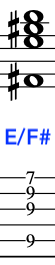
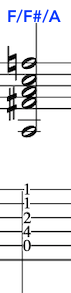
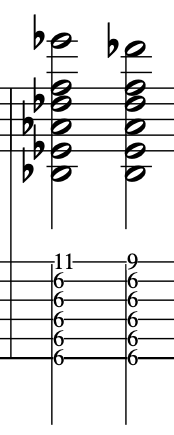
F/F# [/A]
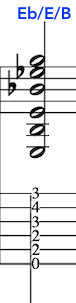
Eb/E [/B]
It is an ethereal sound where the natural harmonics and overtones can ring out of the guitars sound hole harmoniously.
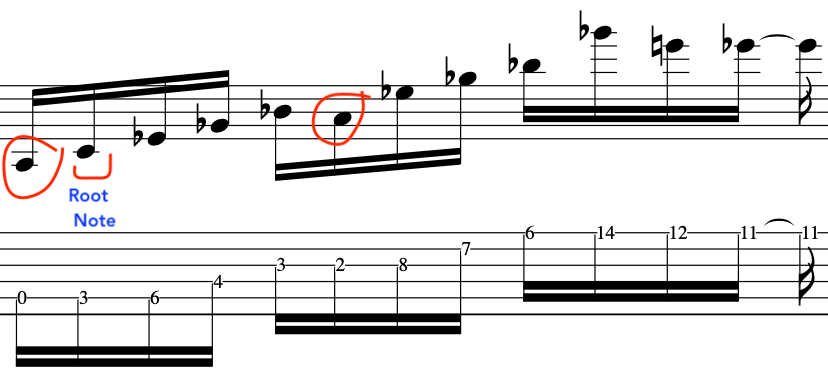
SHORT CONNECTING RUN:
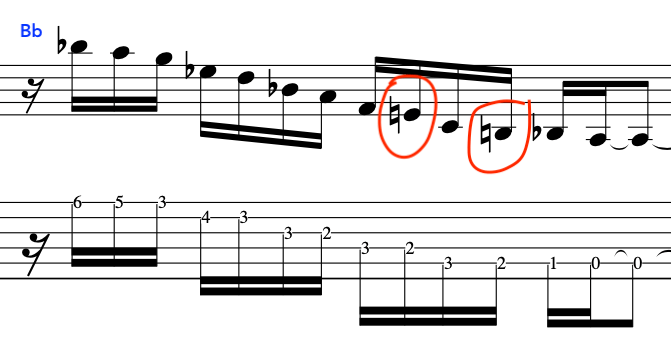
Next, we employ a Bb Major run with a few chromatic notes. These being, the B natural and the E natural chordal tones.
EXAMPLE 2:
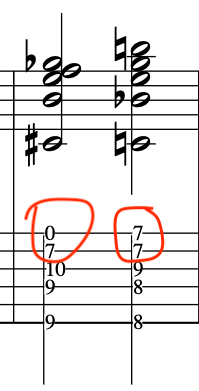
Now, let’s addtwo more resonant chords,
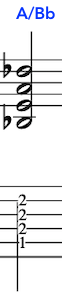
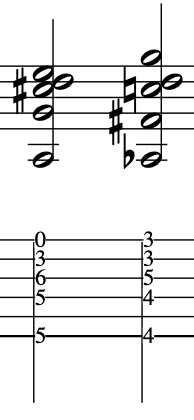
A/Bb
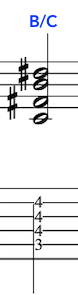
B/C
ARPEGGIO CONNECTION:
We will now connect to the next part together.
This will be with an arpeggio of Ebm mostly [or D#m] implying BMaj7. [Although there is an implied resolution to B7 also].
This juxtaposition, creates another ambiguous move that opens up a fresh and unique sounding harmony.
From here, we can manipulate and resolve into the Bb minor full barre harmony:
Now, let’s create a sequence. This will be, C#7sus4 to C7 with a sharpened 4th and a Maj7th.
Notice, the chromatic movement in the bass as we sequence this.
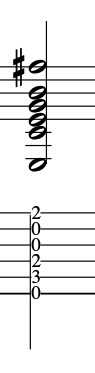
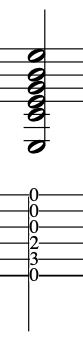
Finally, this resolves from CMaj7#11 to CMaj7 with open string guitar chords.
In conclusion, this was just a quick look at Johns unique take on harmony and how to apply some scale and arpeggio movement to connect it all together.
John’s harmony is a lovely combination of ambiguity and resonance with a sense of calm.
The magical ethereal tone opens doors to really interesting solo applications that exploit implied harmonies and dissonances. These I find are met with with lingering resolutions that are never quite met.
It’s a sort of pairing of opposites that you can’t quite put your finger on that give it that alluring yet elusive quality.
If this lesson was of use to you then please SUBSCRIBE to us on YOUTUBE below, Thanks!