Simplify Guitar Chromatics with Easy Fingering:

yt_logo_rgb_light CLICK SUBSCRIBE!

Please watch above video for detailed info:

Hi Guys,

Today, we will employ chromatics [Target Tones]to a simple guitar fingering/scale that everybody knows.

Yes, this is our old mate the A minor Pentatonic scale.

Before we start: Both fingerings are essential and very useful, but, in different instances.

Okay, let’s compare fingering.

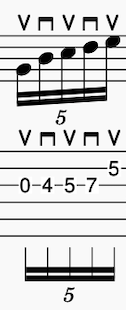
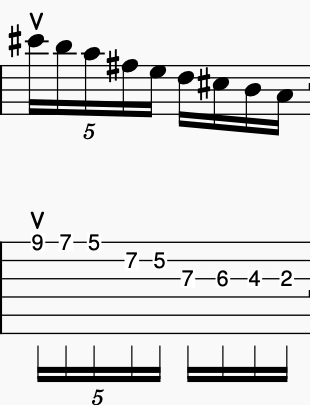
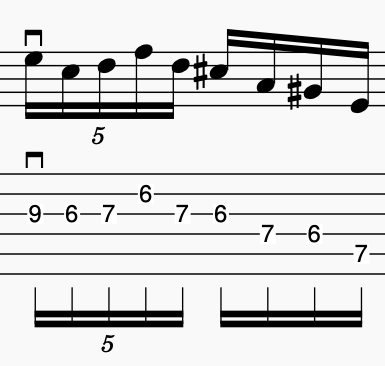
Below, is the more “Traditional” fingering:

mclaughlin-jazz-guitar-chromatics-lesson-explained-example

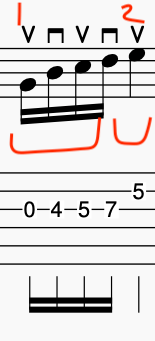
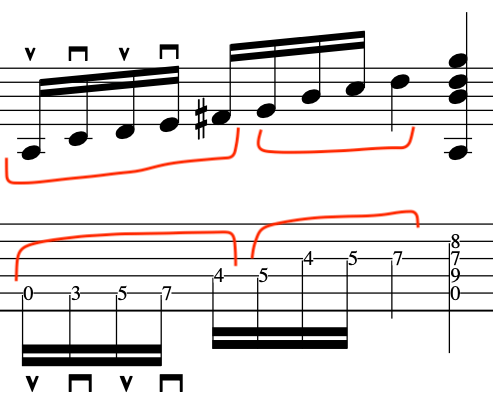
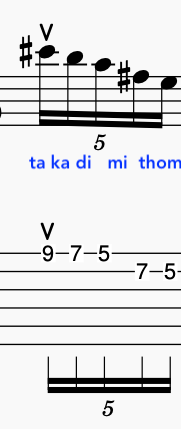
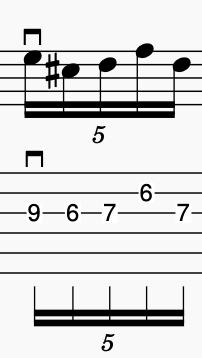
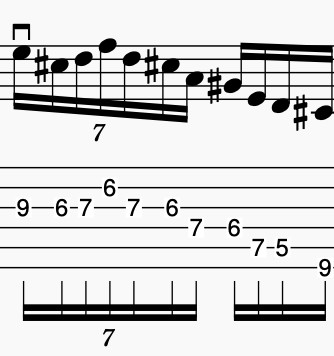
Now, let’s simplify this with a more intuitive John McLaughlin style guitar fingering. [2 fingers to 2 fingers with a slide].

mclaughlin-jazz-guitar-chromatics-lesson-explained-example

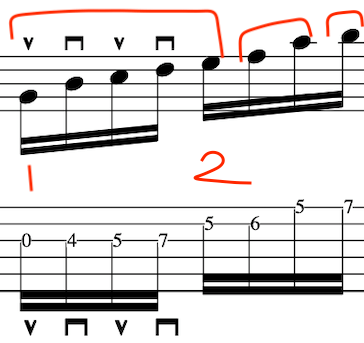
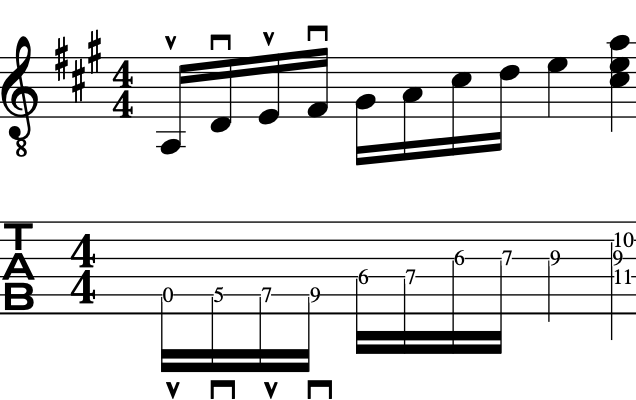
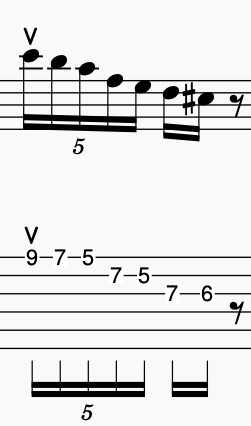
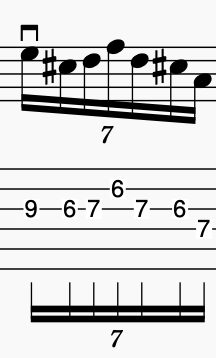
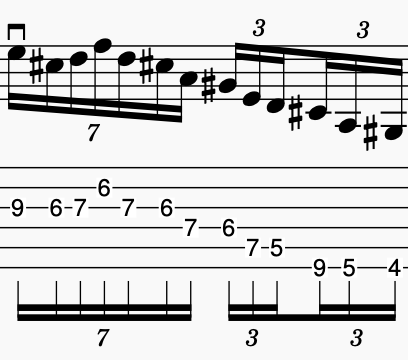
We will now now apply this to the simple A minor Pentatonic scale guitar shape.

mclaughlin-jazz-guitar-chromatics-lesson-explained-example

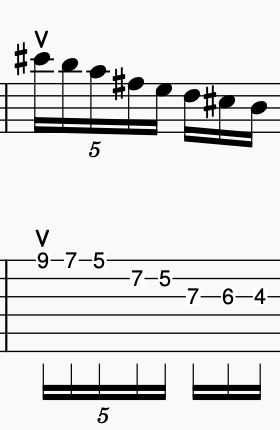
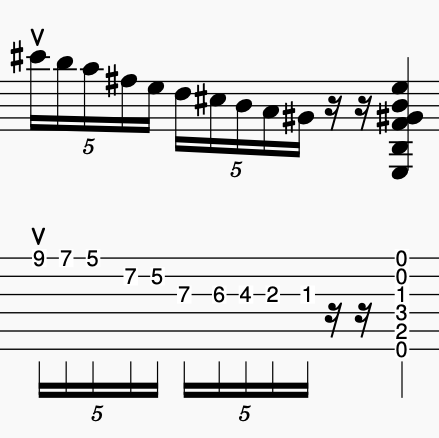
Here, we will employ a “Side Step” with chromatic target tones for more interest and chromatic colour.

mclaughlin-jazz-guitar-chromatics-lesson-explained-example

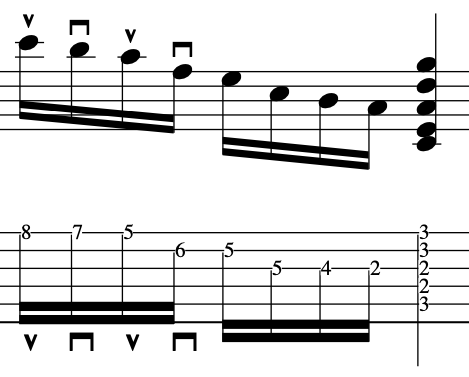
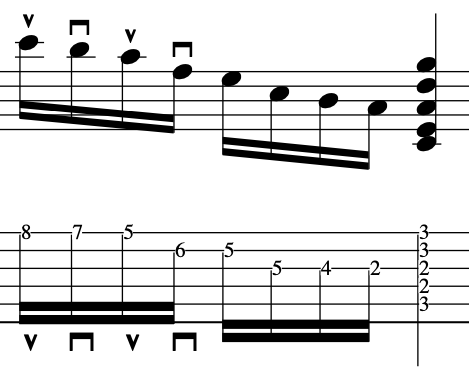
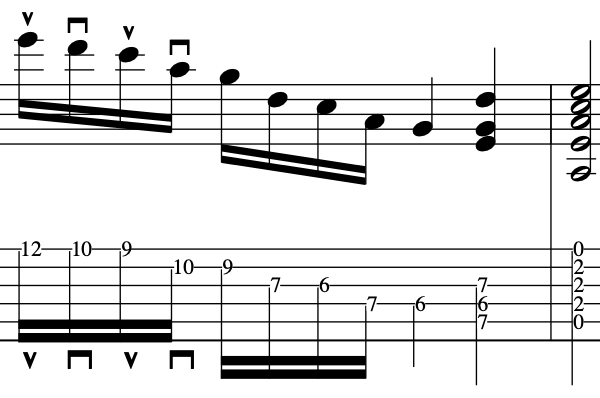
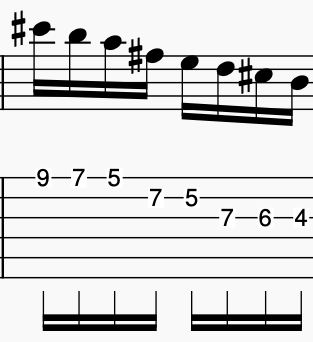
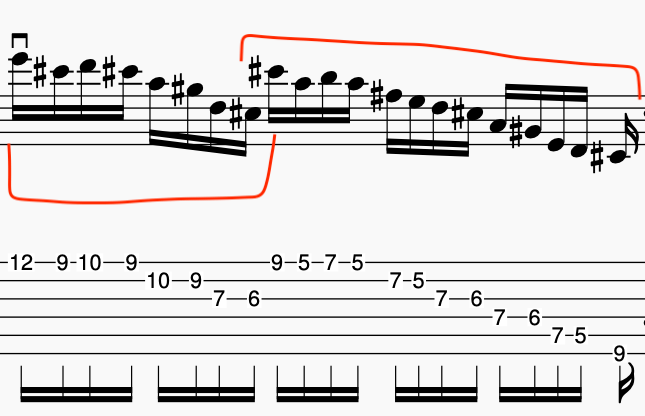
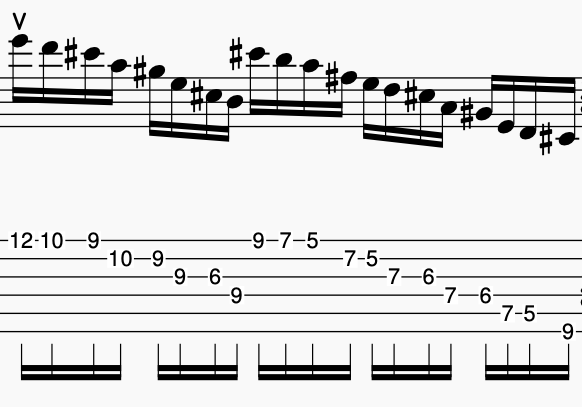
This time we will extend the line with an upbeat of 4 chromatic descending notes starting on the note D as the tonic:

mclaughlin-jazz-guitar-chromatics-lesson-explained-example

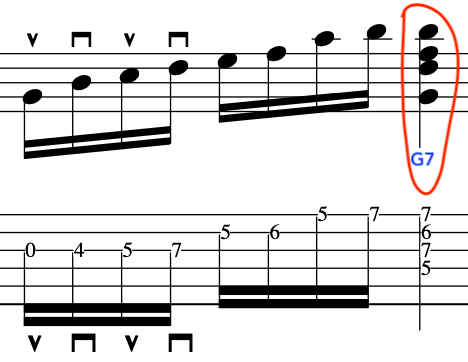
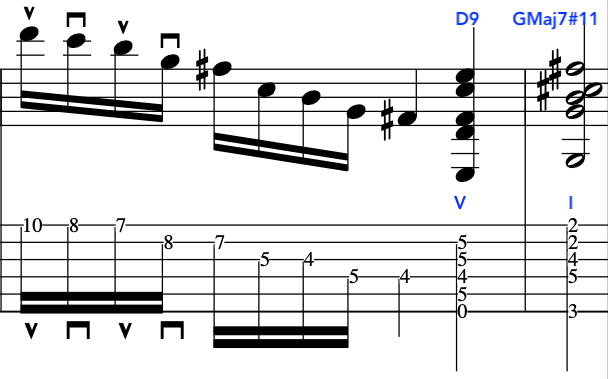
Lastly, let’s try this over a ii V7 I [Dm7 G7 CMaj7]

mclaughlin-jazz-guitar-chromatics-lesson-explained-example

This simple minor pentatonic guitar scale/shape allows us an easy way to employ chromatics and chromaticism by exploiting it with what we are already very familiar with.

This familiarity means that it is not only easier to learn, but, also, easy to remember. Hence, we can apply it to any strings of the guitar and create some colourful and interesting sounding lines.

FREE PDF DOWNLOAD

IF THIS LESSON WAS OF USE TO YOU THEN PLEASE SUBSCRIBE TO US BELOW ON YOUTUBE, THANKS!

John McLaughlin Rhythm Guitar Techniques: Pedal Notes Revisited.

CLICK SUBSCRIBE!

Hi Guys,

Today, a quick look at how JohnMcLaughlin creates interesting time signatures with his rhythm guitar playing by employing the open E string as a pedal note.

This unique approach to rhythm guitar makes it easy to play in odd time signatures and create alternate time signatures.

This is the open E string that is plucked as the time keeper.

mclaughlin-pedal-note-rhythm-guitar-technique-lesson

[It can also play rhythms and add rhythmic drive of its own as we will see later on].

Let’s begin with simple quarter notes: Here, will will add chords on beats 2 and 4.

mclaughlin-pedal-note-rhythm-guitar-technique-lesson

Now, we will do the same thing but with 8th notes as the pedal bass:

mclaughlin-pedal-note-rhythm-guitar-technique-lesson

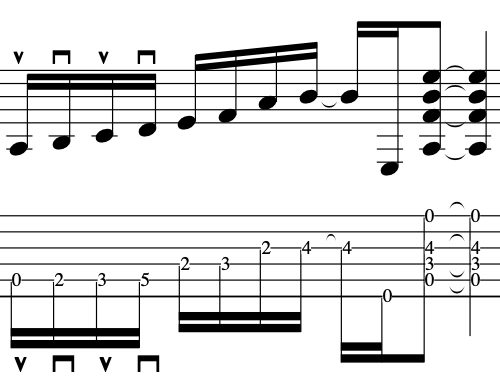
Let’s take this further with 16th notes creating that rhythmic drive:

mclaughlin-pedal-note-rhythm-guitar-technique-lesson

To create another useful effect we will play the chords on the off-beat:

mclaughlin-pedal-note-rhythm-guitar-technique-lesson

Now, let’s mix it all together by applying all of the 1/4 1/8th and 16th notes in the E pedal bass!

mclaughlin-pedal-note-rhythm-guitar-technique-lesson

This is really useful because we can play odd/ uncommon time signatures and also alternate time signatures.

Let’s start by exploiting Indian “‘Teen Taal” or a 16 beat cycle and then alter it.

mclaughlin-pedal-note-rhythm-guitar-technique-lesson

Above, we can see the 16 beat cycle with the accented red numbers/Beats 1 5 9 13

Now, we will count this and accent the numbers/beats 1 5 9 13 and repeat the cycle until it is effortless to do.

Next, we will break this cycle up, and only count to 11. From here, we will create a loop with our E pedal note holding time in quarter notes. So we have, 1 5 9 [11] REPEAT.

mclaughlin-pedal-note-rhythm-guitar-technique-lesson

This in turn gives us an 11/4 time signature:

john-mclaughlin-pedal-note-rhythm-guitar-technique-lesson

From this point on we can see how easy it is to create interesting odd time signatures and rhythmic patterns with the E pedal as our base and time keeper.

Our understanding of beats 5 and 9 tells us where we are in the bar or beat cycle and hence what might sound complex in theory is actually pretty easy to do and exploit.

These, are the combing of two or more different time signatures.

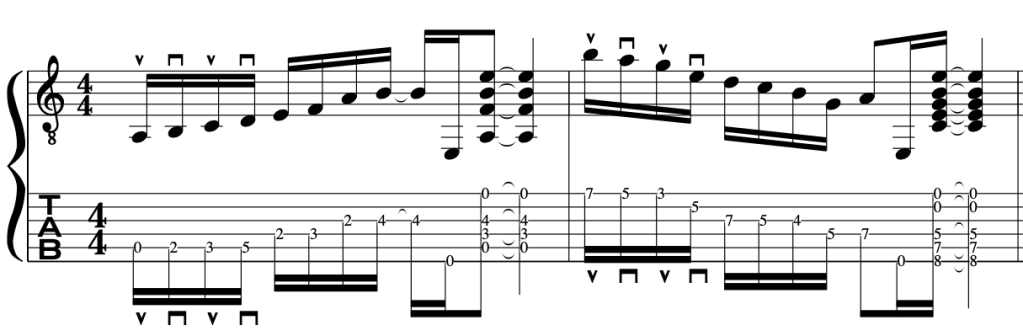
Here we employ a bar of 5/4 and a bar of 7/4. We will highlight the E pedal bass note with some quarter and eighth notes for good measure.

john-mclaughlin-pedal-note-rhythm-guitar-technique-lesson

This was just a brief look at this concept, but, exploiting just one of these techniques can lead to lots of interesting and useful guitar rhythms and time signature manipulations.

The E Pedal note as the time keeper is so useful because it means that we are in control of the timing/signatures and can accent chords off of it.

Lastly, these techniques are incredible for composition/songwriting. We hear this a lot with John McLaughlin’s Shakti, especially the great albums from the 1970’s where the rhythm of the acoustic guitar is prominent.

FREE PDF DOWNLOAD:

CLICK SUBSCRIBE!

Jazz Fusion Guitar Chords and Substitutions for Slash Chords

Please watch video above for detailed info:

Hi Guys,

Today, we will take a I Vi [VI] ii V V I cadence and re-harmonise it with fusion chord substitutions/slash chords

jazz-fusion-guitar-chords-reharmonisation-slash-chords-lesson-example

To begin with, we will make the chord of C Major into a C6/9 voicing that will resonate well on the guitar.

jazz-fusion-guitar-chords-reharmonisation-slash-chords-lesson-example

We, will now employ a slash chord for A7. Here, we will move a flattened 5th away and employ an Eb Triad over an E natural bass.

jazz-fusion-guitar-chords-reharmonisation-slash-chords-lesson-example

Let’s now exploit the Dm7 chord. For this we will use a 2nd inversion C Major triad over an F bass note. [Dm9 with an 11th in 1st inversion]

jazz-fusion-guitar-chords-reharmonisation-slash-chords-lesson-example

Now, let’s take the first Dominant substitution and go a flat 5th away once again. We will employ a Db Triad over a B bass: [as in an altered 1st inversion]

jazz-fusion-guitar-chords-reharmonisation-slash-chords-lesson-example

To manipulate this next Dominant chord we will put the flattened 5th [Db] in the bass and exploit a G triad on top:

To complete the sequence we will resolve back to the tonic chord of C Major but colour it with an F# to make it C Maj7#11

jazz-fusion-guitar-chords-reharmonisation-slash-chords-lesson-example

In terms of improvisation we can weave in and out of the re-harmonisation. Here, is an example for an improvised line:

john-mclauglin-guitar-chords-improvisation-licks-examples

DOWNLOAD PDF:

IF THIS LESSON WAS OF USE TO YOU THEN PLEASE SUBSCRIBE TO US ON YOUTUBE BELOW, THANKS!