Pat Martino Intervallic Studies: Un-Published Book Lesson

Pat Martino Intervallic Studies: Un-Published Book Lesson

Hi Guys!

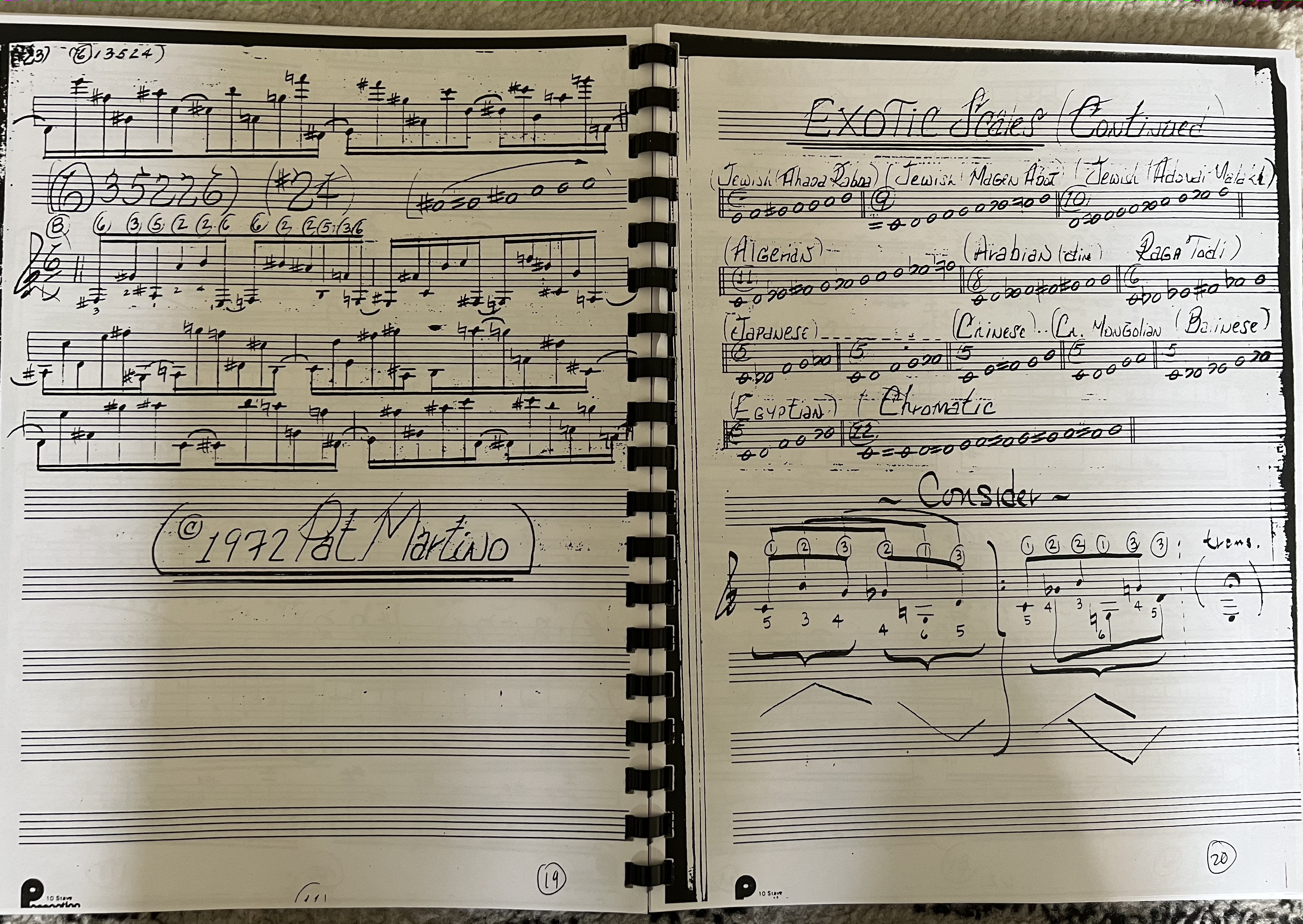
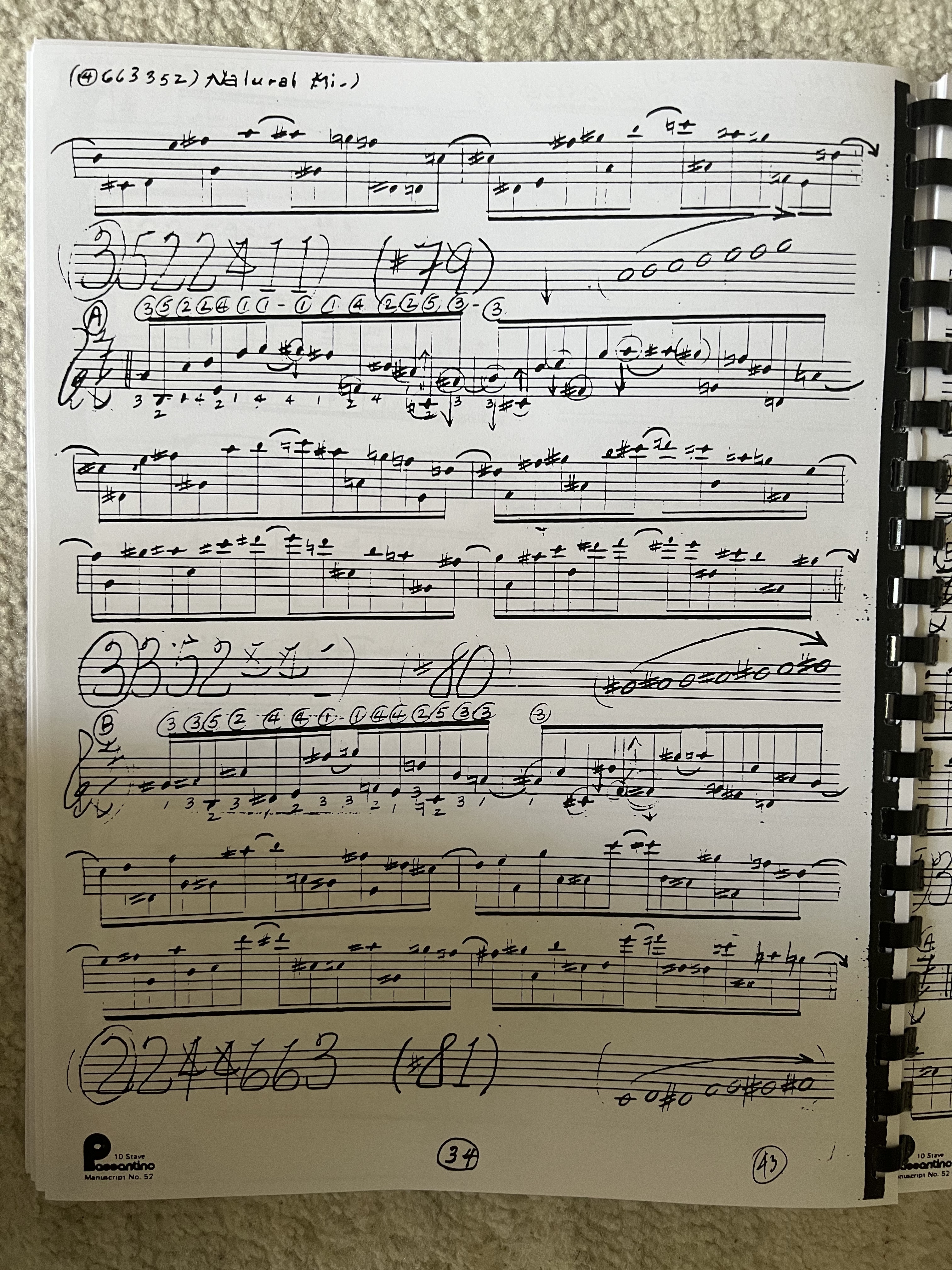
Guitarist Mark Koch one of Pat’s students kindly sent me a copy of Pat’s un-published book on “Intervallic studies“.
pat-martino-intervallic-studies-umpinlished-book

It’s a fascinating look at the imaginative thought process and creative concepts that Pat was investigating for the development of the improvising guitarist.

pat-martino-intervallic-studies-unpublished-book

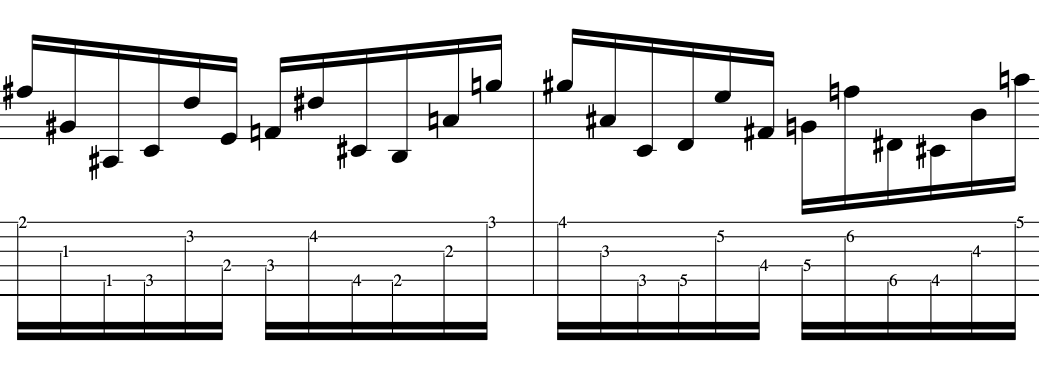
In this first example we will look at the “Whole Tone Scale” Study:
pat-martino-intervallic-studies-unpublished-book

From a music theory perspective if we take away the intervallic approach and place the notes in order we will get a whole tone scale ascending followed by a whole tone scale descending:
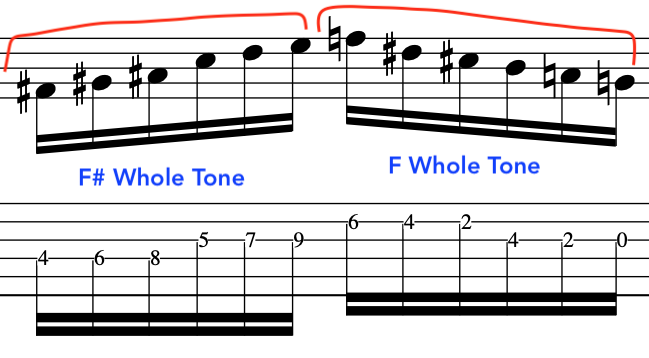
pat-martino-intervallic-studies-unpublished-book

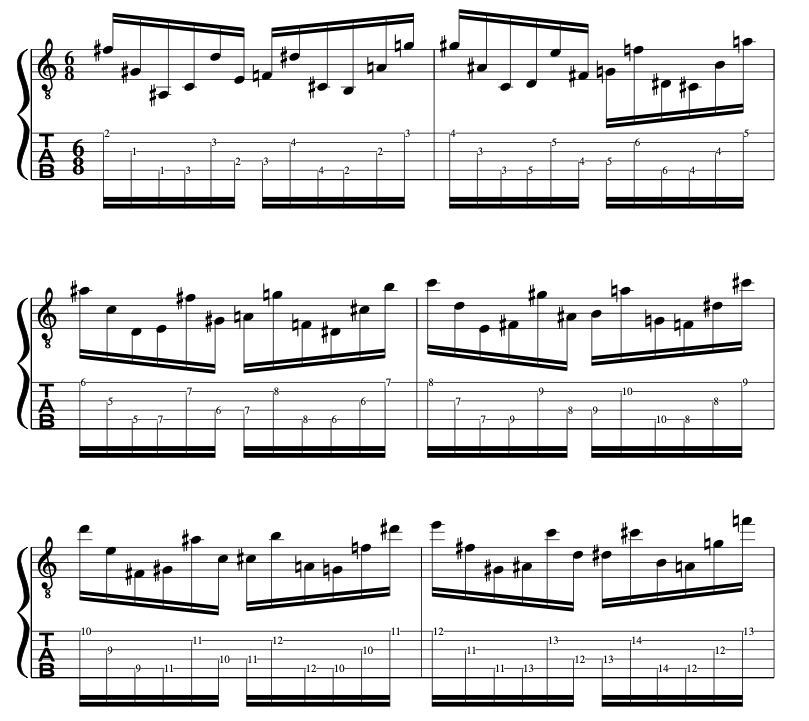
Now, we will put them back into the “Disguised” form with the clever approach of the intervallic design:
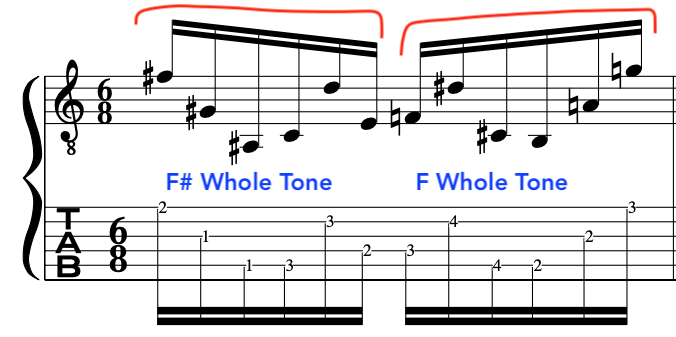
pat-martino-intervallic-guitar-studies

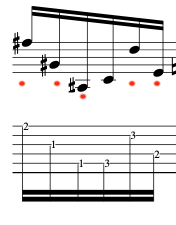
The key to playing these studies on the guitar is to decide on a methodical fingering and stick to it. [Below=Pat’s Fingering]
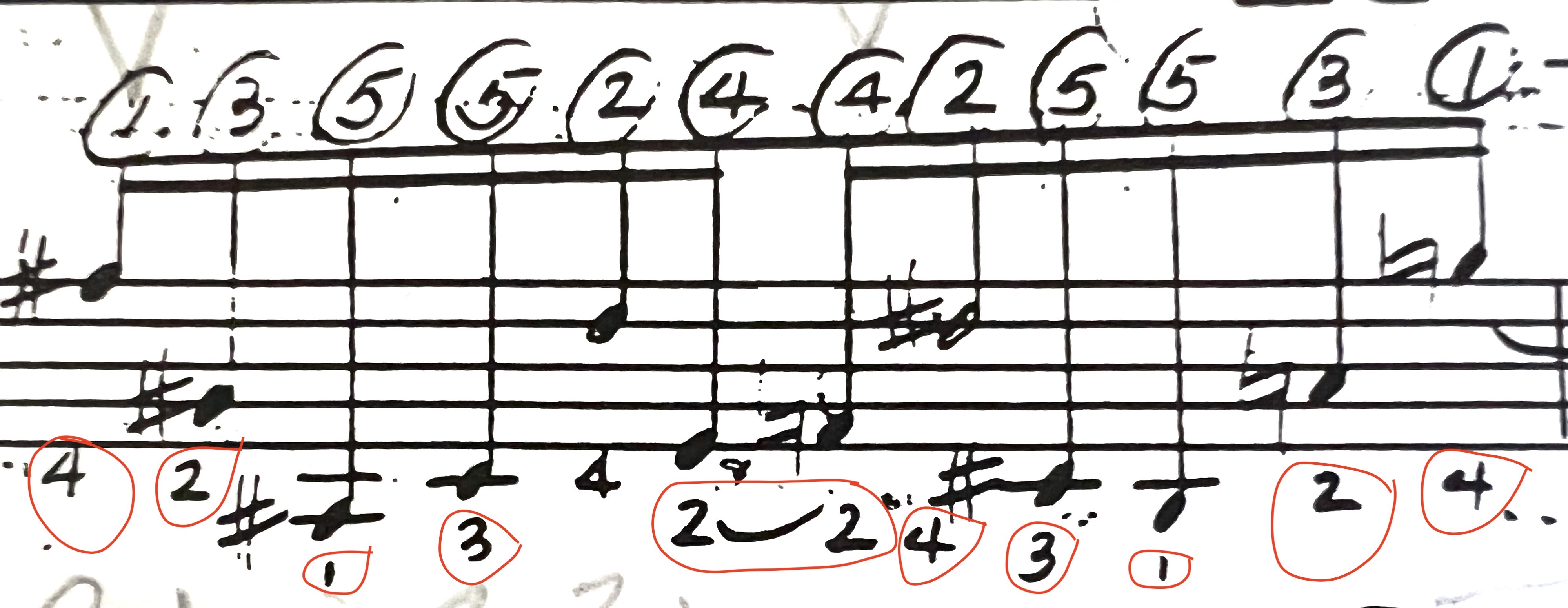
pat-martino's-unpublished-book-intervallic-guitar-studies

pat-martino-intervallic-studies-unpublished-book

I am employing strict alternate picking for this study starting on an upstroke:
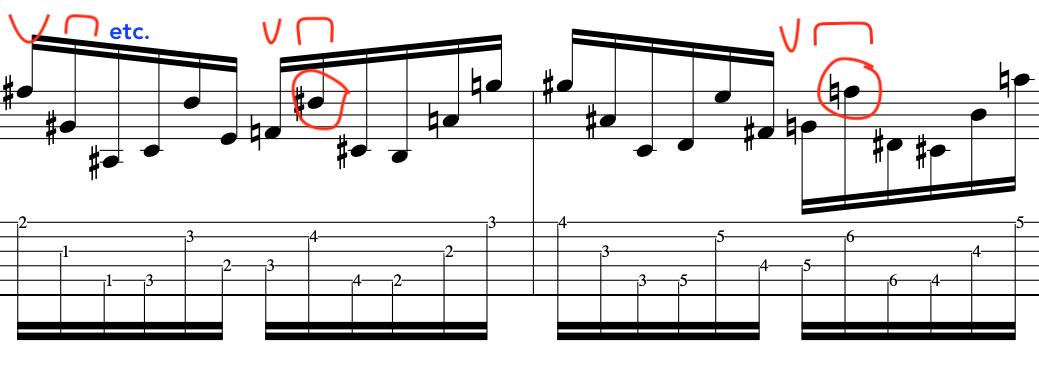
pat-martino-intervallic-studies-unpublished-book

pat-martino-intervallic-studies-unpublished-book

Same Study: From Pat’s book with fingering examples:
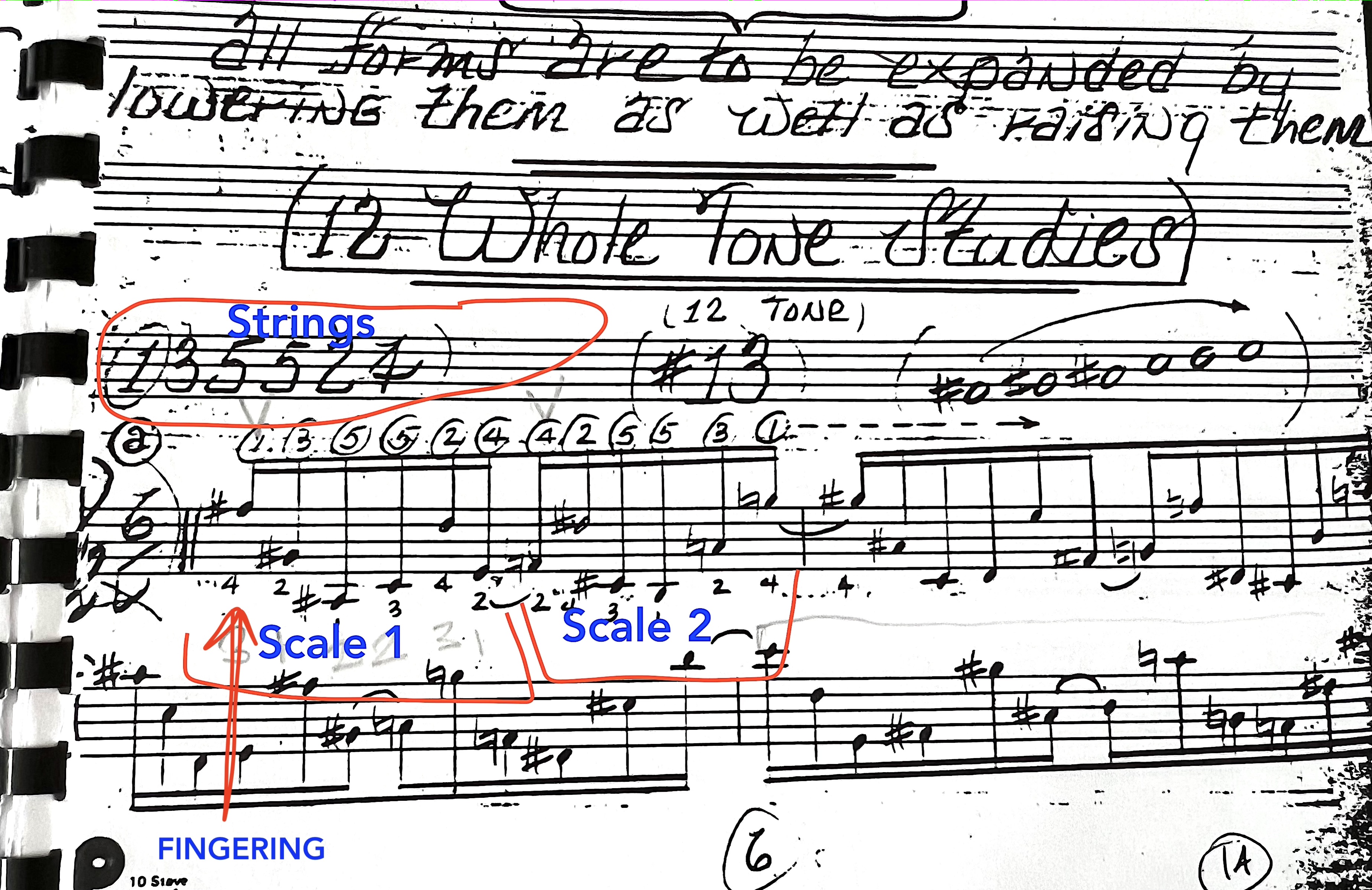
pat-martino-intervallic-studies-unpublished-book-whole-tone-scale

Now we will look at how Pat breathes life into the pentatonic scale:
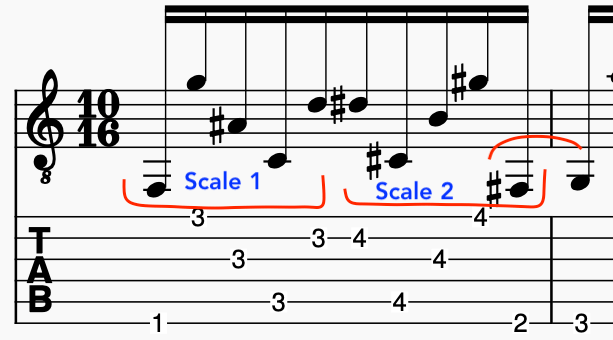
pat-martino-intervallic-studies-unpublished-book

As before we will take this from a music theory perspective and remove the intervallic approach:
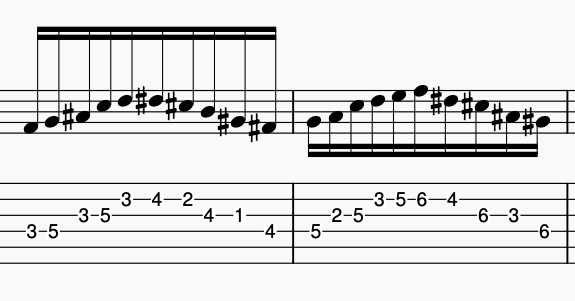
pat-martino-pentatonic-scale-guitar-lesson

Now, let’s disguise this with the use of intervallic exploitation and alternate picking starting on a “Downstroke”:
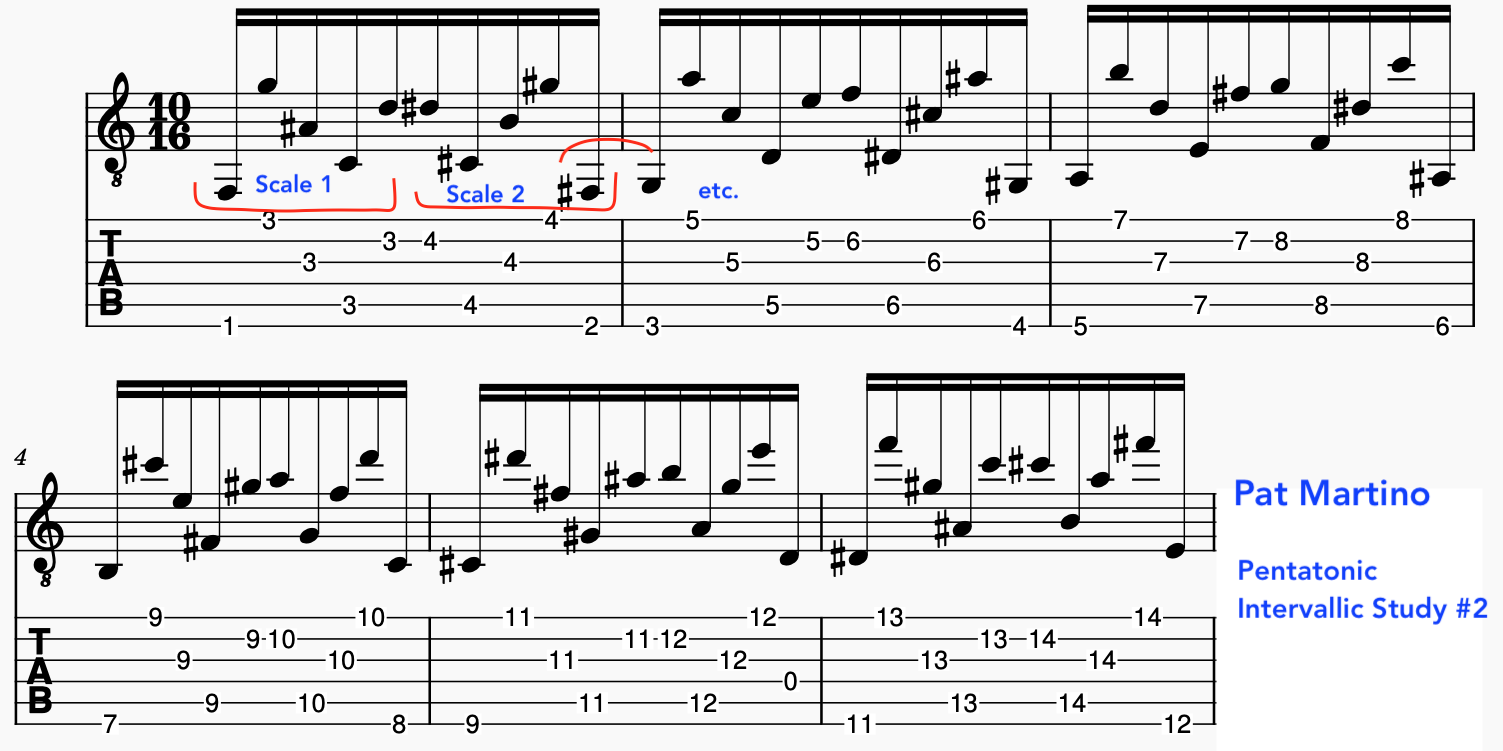
pat-martino-intervallic-studies-unpublished-book

Same Study from Pat’s unpublished book:
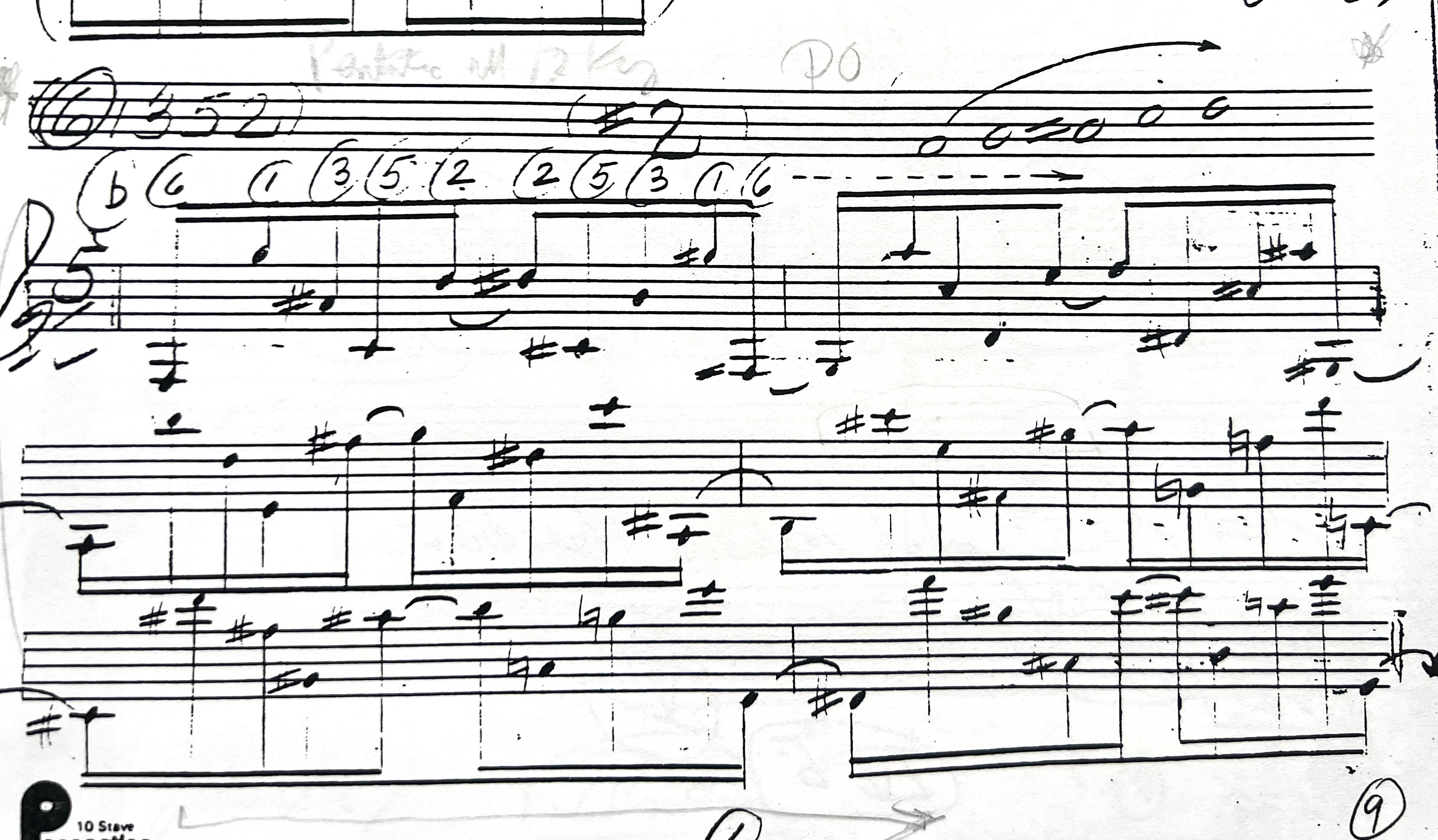
pat-martino-intervallic-studies-unpublished-book

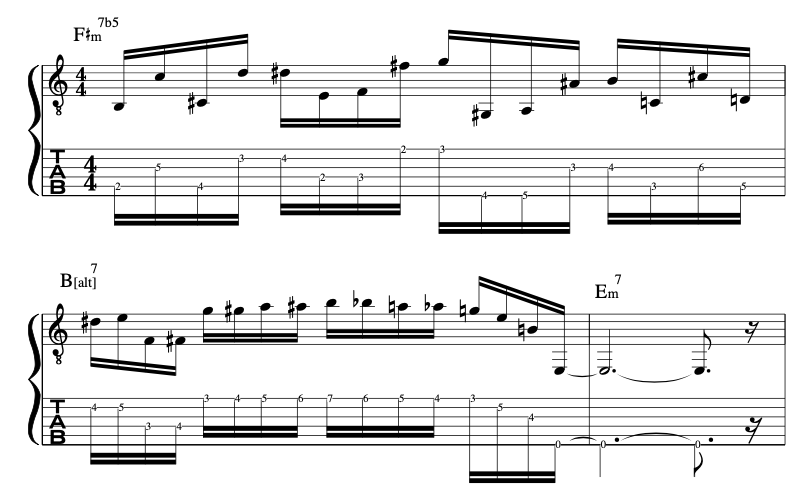
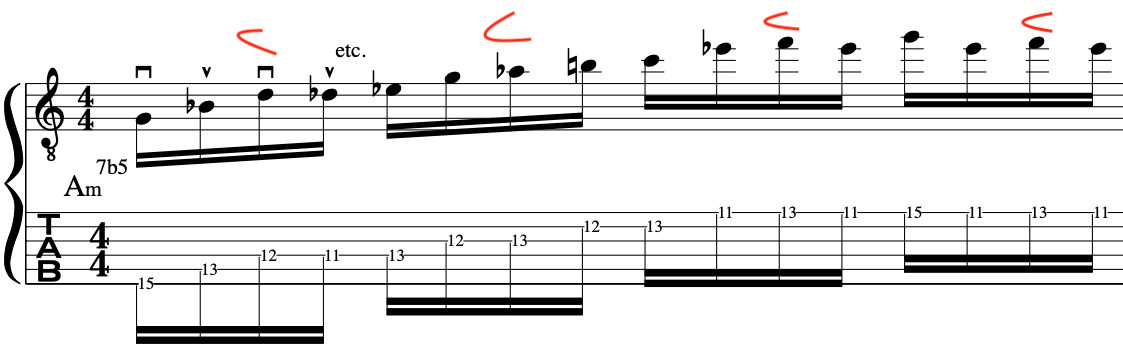
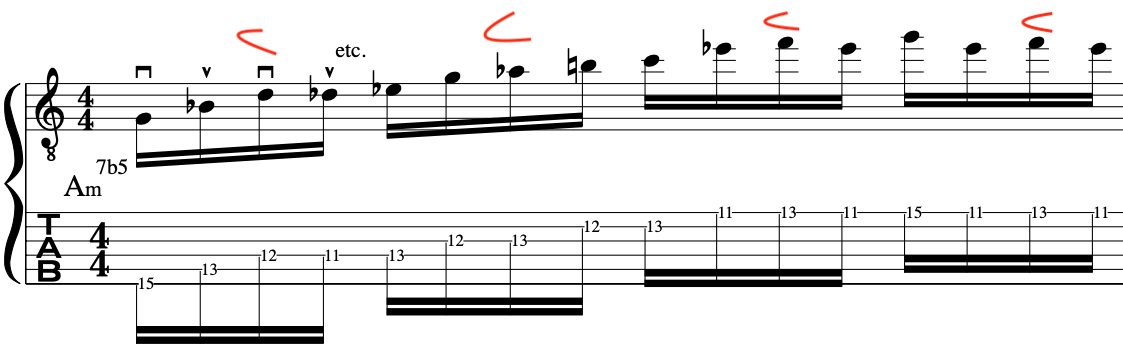
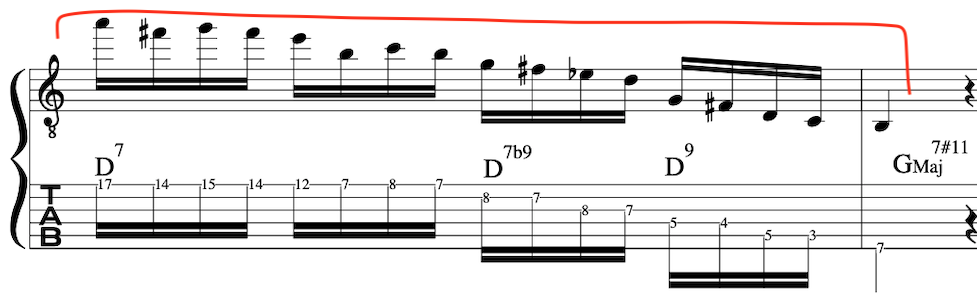
Finally, we will employ these intervallic concepts through a iim7b5 V7 i cadence.

Once again, we see the intervallic set up:
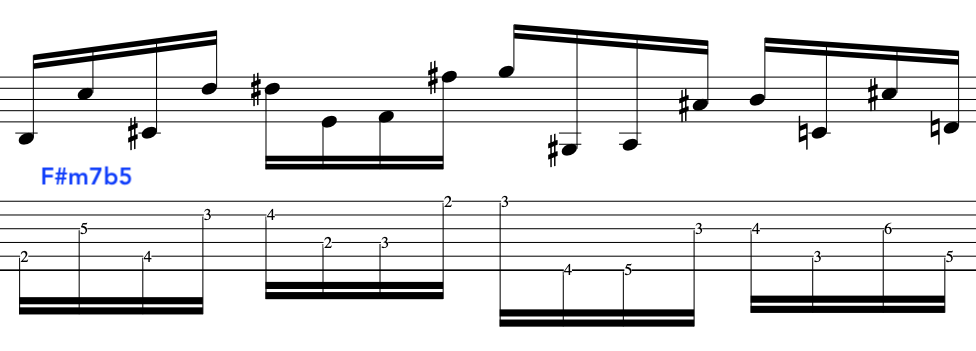
pat-martino-intervallic-improvisation-example

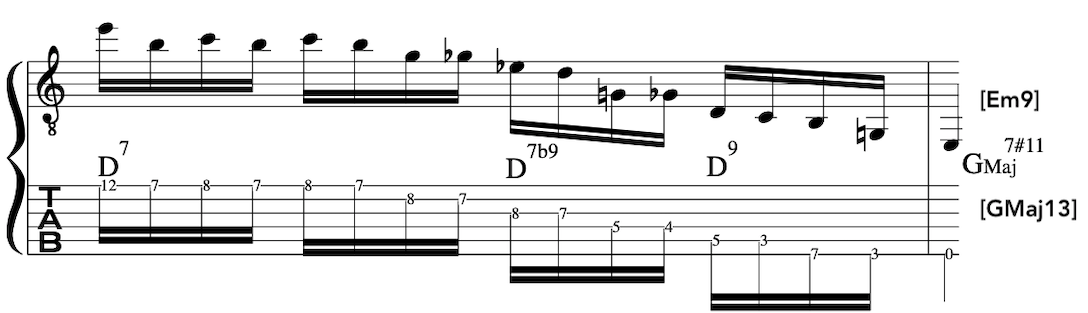
Now, let’s employ our music theory and place the intervallic notes in order. Here we find that we have the exploitation of the chromatic scale.
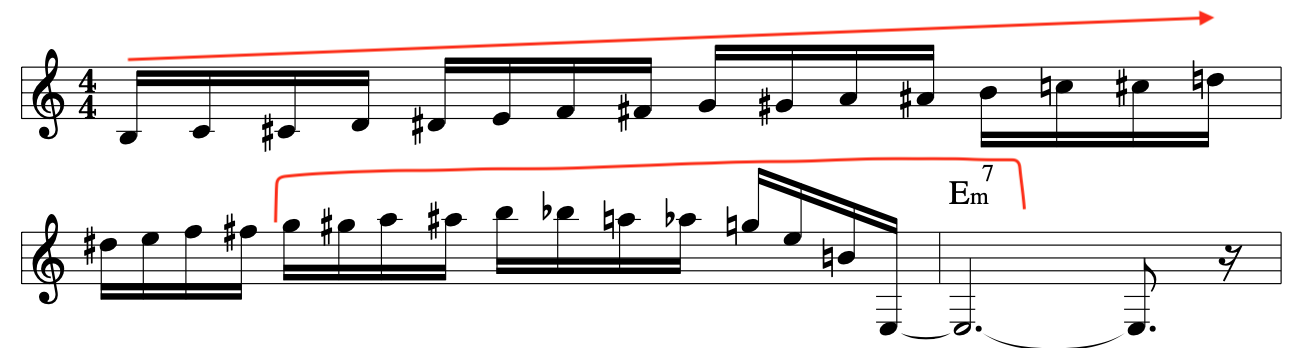
pat-martinochromatic-scale-guitar-lesson

This clever approach is really effective because in the second bar beats 2 and 3 we have a literal chromatic scale that then anticipates the coming minor tonic chord of Em with an Em arpeggio.
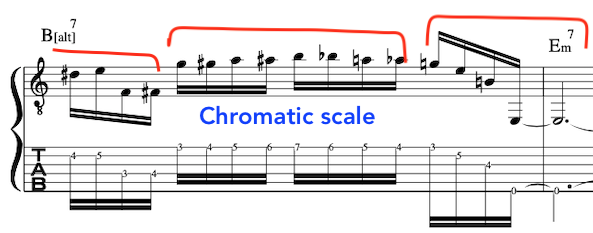
pat-martino-intervallic-improvisation-example

Full Example:

pat-martino-intervallic-improvisation-example

This was just a quick look at the creative thought process and unique approach of Pat Martino, resulting in the application of this material into a minor iim7b5 V7 i improvised line to hear how they work and sound.

This approach to scales and improvising [and composing] with them is highly original and extremely useful when there is a need to bust out of cliches and seek colour and creativity in our playing.

Modern Jazz Fusion Chords:How to create them from scales

CLICK SUBSCRIBE!

Hi Guys,

Today, a look at how to create colourful and interesting jazz/fusion chords:

Because, we are dealing with jazz/fusion we will manipulate a scale in modal form. This will be C Mixolydian:

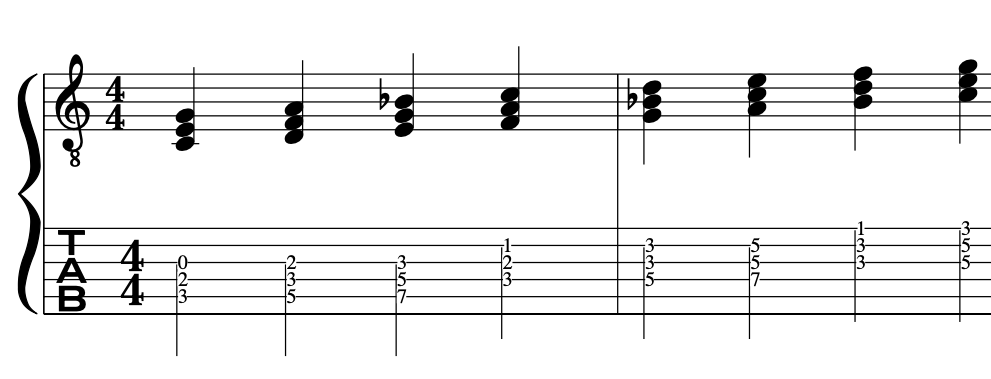
Now, let’s add one note above each note of the mode and create 3rds. [Here we can hear the mode in double stops].

Now, we will add another note a 5th above the root and create triads.

jazz-fusion-chords-lesson

We have now harmonised the Mixolydian mode.

As you will hear it doesn’t sound very jazzy or have a fusion-esque sound.

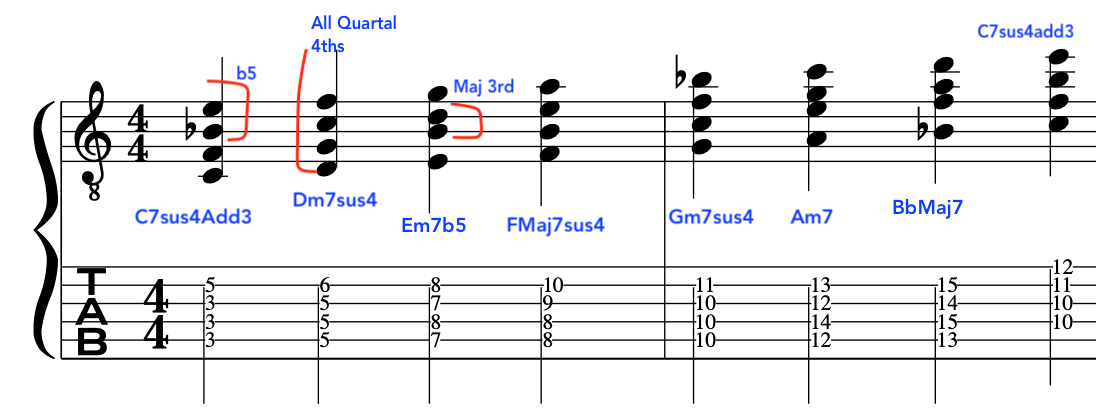
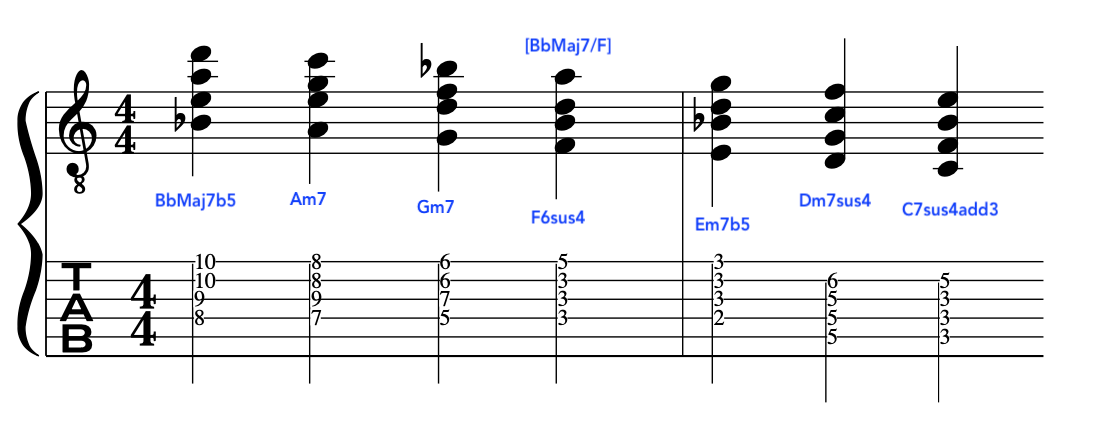
Well, we will add another note and manipulate the chord “Voicing’s”. Let’s exploit 4ths, flattened 5ths and Major 3rds.

Ascending Chord Scale:

jazz-fusion-chords-lesson

Descending chord scale:

jazz-fusion-chords-lesson

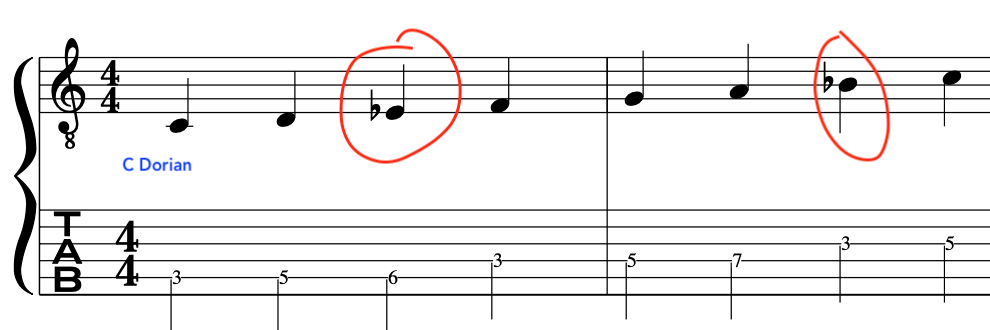
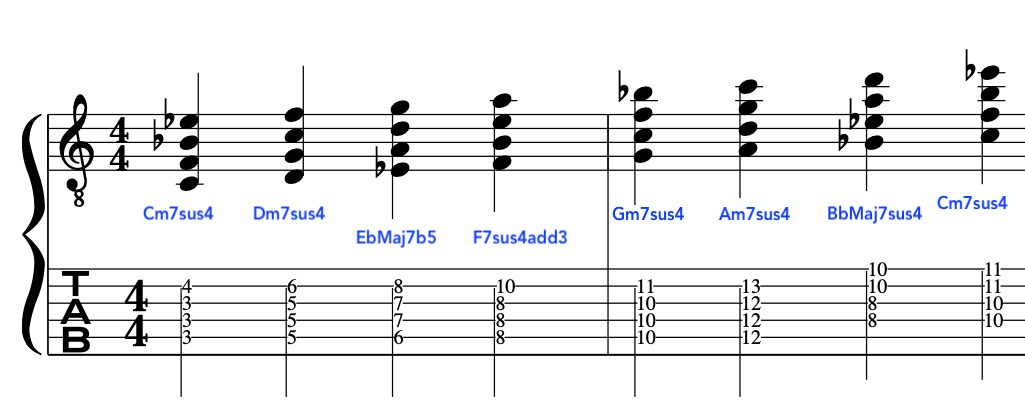
Now, we will apply this to the C Dorian Mode which has another flat note, this being Eb.

jazz-fusion-chords-lesson

C Dorian Chord Scale : Harmonisation idea:

jazz-fusion-chords-lesson

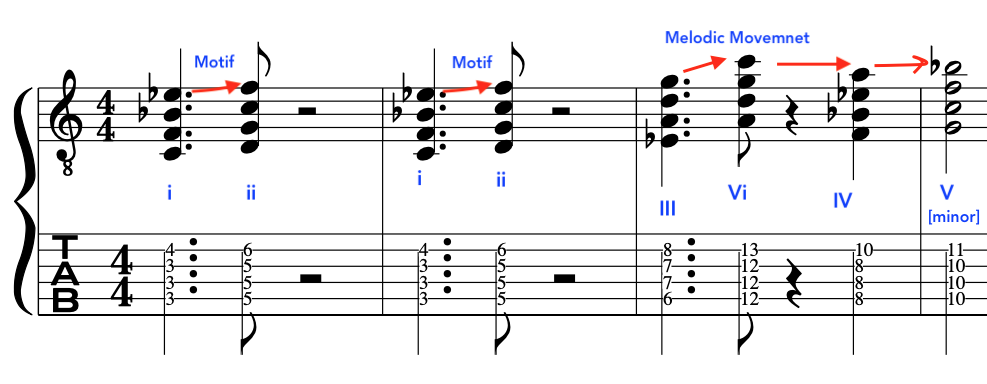
Now, let’s play these chords in a sequence and make a bit of music from them:

EXAMPLE: Notice-Motifs and melodic movement from the chord voicings:

jazz-fusion-chords-lesson

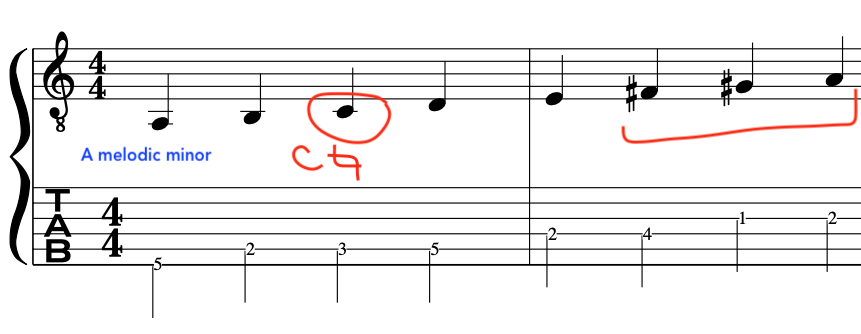
Finally, to really get that “Fusion” exoticism let’s now exploit the melodic minor scale:

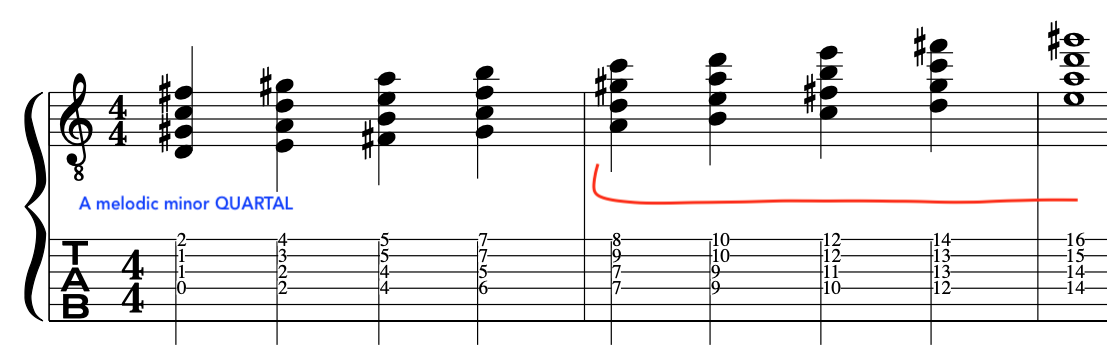
Below, we have the A melodic minor scale: Notice it’s just like the A Major scale but with the 3rd flattened: [In this case C natural]

jazz-fusion-chords-lesson

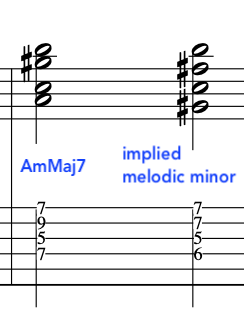
Again, we will try out some ideas to harmonise the scale with some interesting chord voicing’s:

jazz-fusion-chords-lesson

Here is a really nice set of chords built from from the scale.

jazz-fusion-guitar-chords-lesson-melodic-minor

From here it’s a good idea to play re-harmonised chords from chord scales in sequences like:

ii V7 I

Vi ii V I

iii Vi ii V7 I

This was just a basic look at how to create interesting chords from scales and modes and how to create interesting and unique voicing’s.

At the end of the day it really comes down to your own ears and imagination and sense of creativity. But, this is how easy it is to create chords from scales and then put them into sequences for composition and re-harmonisation.

Jazz Guitar Alternate Picking Exercises: ii V7 i [Double Time]

Modern Jazz Fusion Chords part 2. Steely Dan, Dan Chord and Slash Chords

CLICK SUBSCRIBE!

Jazz Guitar Alternate Picking Exercises: ii v7 I [Double Time]

Hi Guys,

Today, we will look at some alternate picking guitar technique exercises for jazz improvisation when double timing

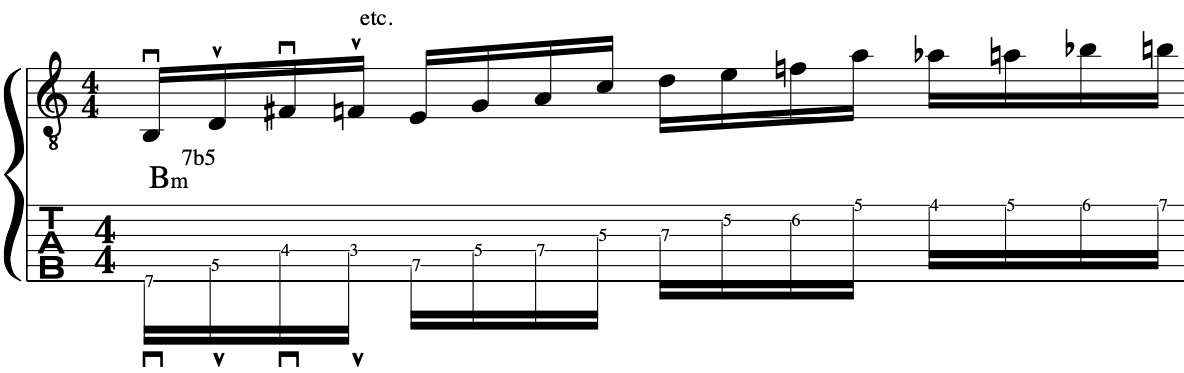
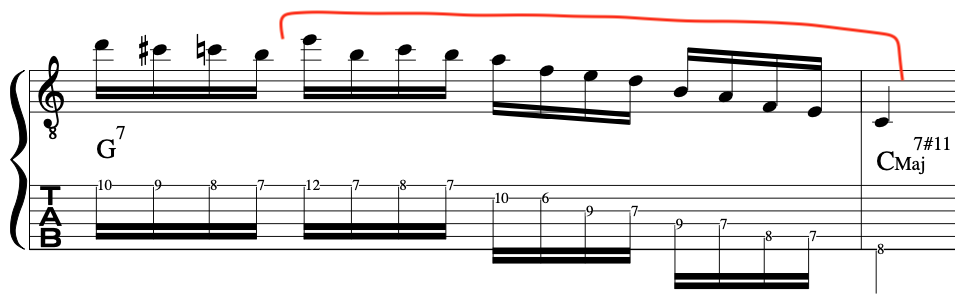
We will exploit ii V7 I’s as a basis for honing our alternate picking skills whilst employing 4 note tetrachord groupings.

In the first exercise it’s a good idea to accent the third note in each four note grouping. We are also starting on a downstroke:

jazz-guitar-alternate-picking-lesson-exercies

Here is the same exercise but with a variation in the second bar:

jazz-guitar-alternate-picking-lesson-exercies

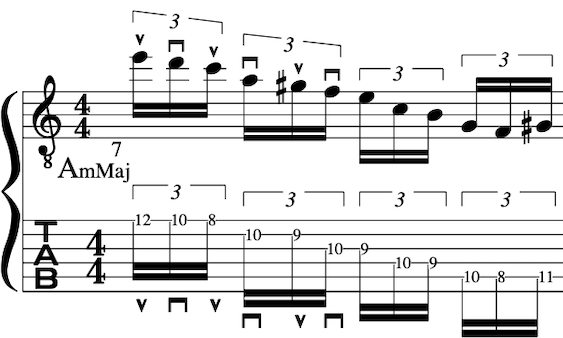
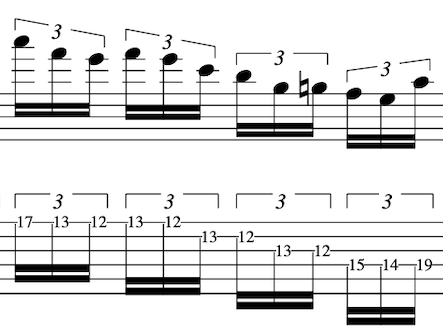
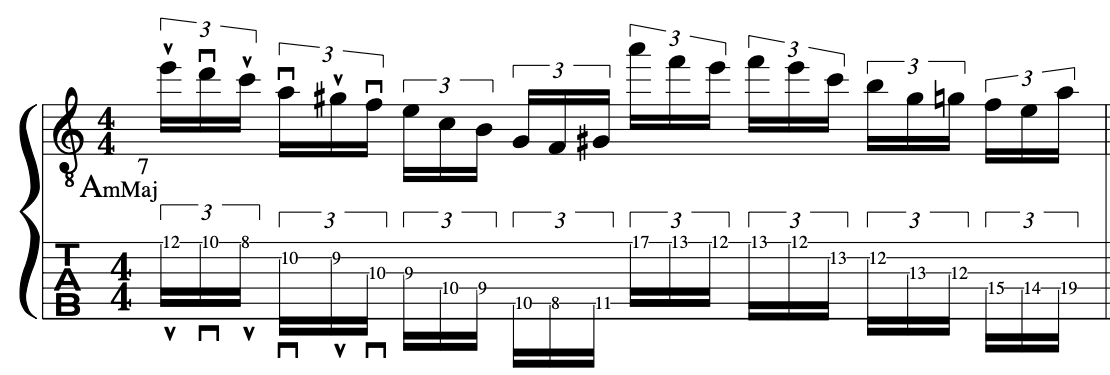
The next exercise will employ groups of 6 notes called sextuplets: As an exercise we will start with an “Upstroke” this time. This will be played over an AmMaj7 pad:

First Part:

jazz-guitar-alternate-picking-lesson-exercies-sextuplets

2nd Part:

jazz-guitar-alternate-picking-lesson-exercies-sextuplets

Full Exercise/Line:

jazz-guitar-alternate-picking-lesson-exercies-sextuplets

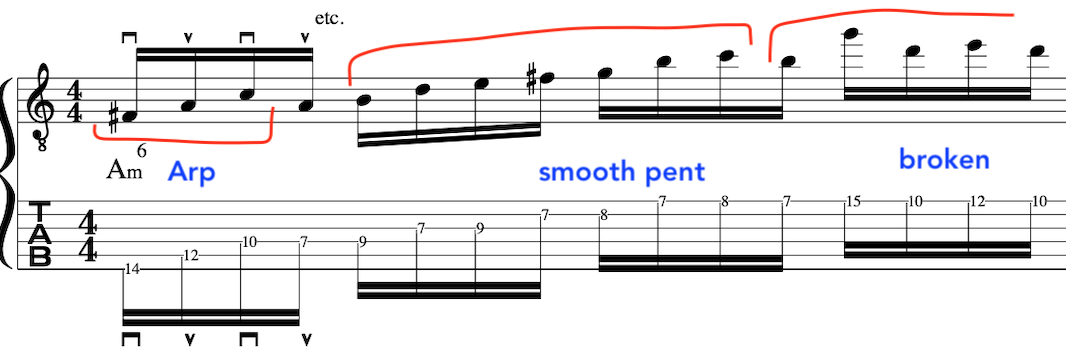
The following exercise uses some chromatic movement that smoothly connects to pentatonic movement starting on a downstroke:

jazz-guitar-alternate-picking-lesson-exercies

In our final exercise we will join together some of these principles.

jazz-guitar-alternate-picking-lesson-exercies-double-time

This was just a brief look at how to create alternate picking guitar exercises for improvisation through chord changes by applying simple patterns/fingerings that work naturally.

This was only around 140 bpm. But, this is essential before moving onto much quicker tempos with the alternate picking guitar technique.

With the 4 note “Tetrachord” groupings you will get fluidity through the changes. They will give you stability. They can then be broken up to create anticipation and syncopation-which will in turn create the natural expression of musical phrasing.

Modern Jazz Fusion Chords part 2. Steely Dan, Dan Chord and Slash Chords