Exploring the Minor Flat 6th Chord in Modern Music:Jobim/Piazolla

Hi Guys,

Today, a look at the amazing minor flat 6th chord as used in the compositional styles of Carlos Jobim, John McLaughlin, Astor Piazolla and Al Di Meola.

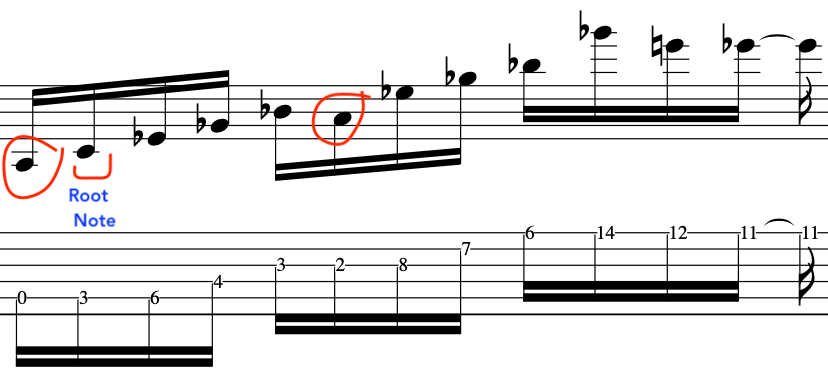
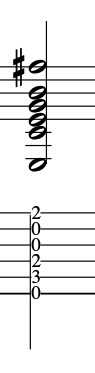
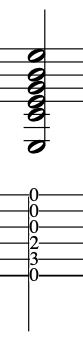
Most people seem to have a preference for the minor 6th chord, [which in this case has the F# or the Major 6th].
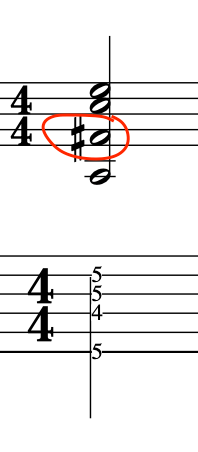
Musical notation showing a chord structure of A minor 6th, highlighting the major 6th note in red.

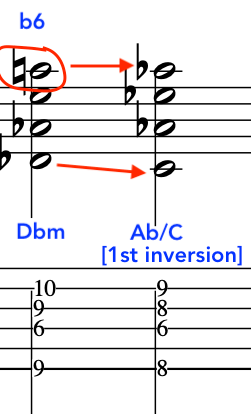
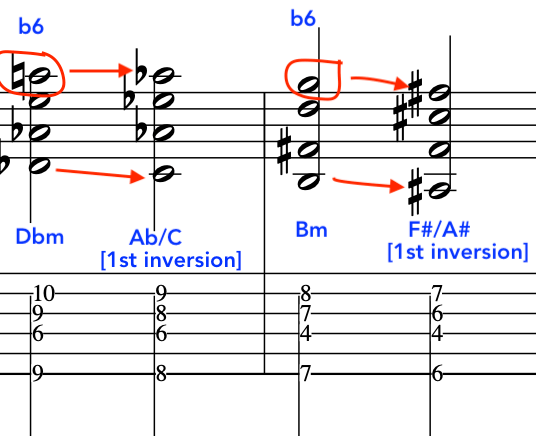
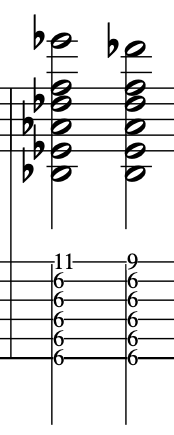
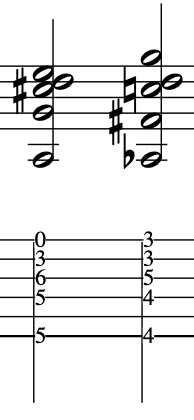
But, the minor flattened 6th chord [F natural in this case] has an amazing character of its own, [especially when it resolves to the first inversion, as we will see].
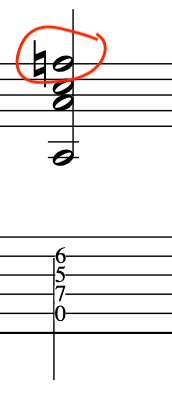
Musical notation showing a minor chord with a highlighted flattened 6th note.
Musical notation showing a Db minor flat 6th chord resolving to an Ab Major chord in first inversion, highlighting the flattened 6th note.
Illustration of the Db minor flat 6th chord to 1st inversion Ab Major chord, highlighting the flattened 6th note.
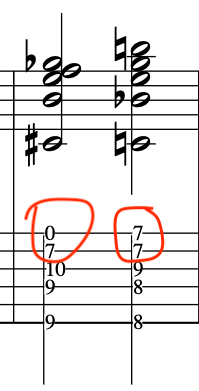
Sheet music showing a D flat minor flat 6th chord resolving to a first inversion A flat major chord, and B minor chord, with annotations indicating flattened sixth notes and first inversions.
Diagram illustrating the transition from Db minor to Ab major first inversion, highlighting the flattened 6th note.

Let’s now add some more first inversion chords:

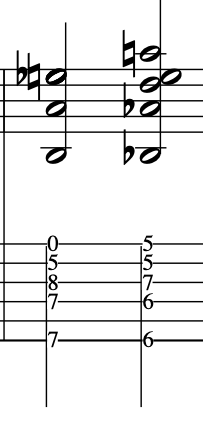
Here, we employ F#m/A with the bass resolving a half step down to the G # note.

Once again, we have a wonderful melodic transition, this time going to the E first inversion chord.
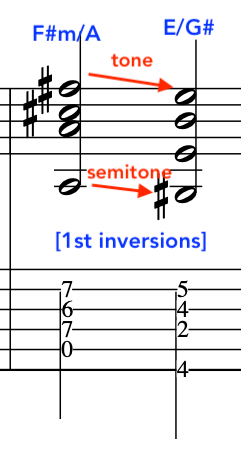
Musical notation showing first inversion chords F#m/A and E/G# with indicators for 'tone' and 'semitone' resolutions
Illustration of F#m/A and E/G# first inversion chords highlighting tone and semitone relationships.

In order to move away from cliche-dom we will now alter the harmony a bit.

Here, we will add a chord of D9/F# [1st inversion] and let the bass move down a semitone to a chord of F7 [but with a Maj7th also and a #11th].
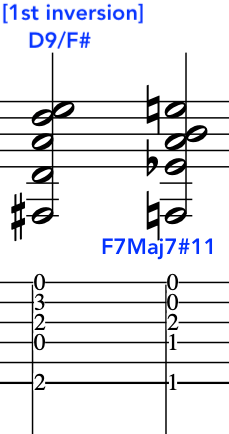
Musical notation showing D9/F# chord in first inversion and F7Maj7#11 chord for altered  harmonic cadence
Chord diagram illustrating the first inversion D9/F# and F7Maj7#11 chords

To complete this example, we will exploit chains of 7 Sus4 chords: Here, are the first three chords moving up in semitones.
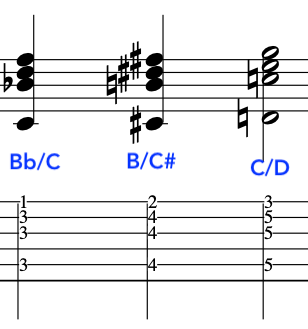
Music notation showing how to use 7sus4 chords  Bb/C, B/C#, and C/D chords.
Illustration of 7sus4 chord transitions in semitones, featuring Bb/C, B/C#, and C/D for musical composition.

Here are the next three chords moving up in semitones :
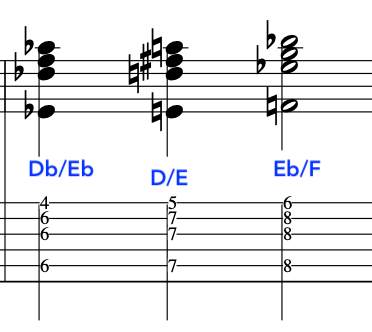
Musical notation showing 7sus4 chords Db/Eb, D/E, and Eb/F with corresponding finger positions.
Chord progression analysis showcasing 7sus4 chords Db/Eb D/E Eb/F

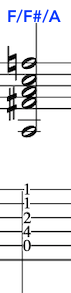
Finally, we come to a conclusion and rest on an E/F# Chord, up a semitone once again.
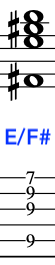
Musical notation displaying the 7sus4 chord E/F# with labeled fret positions on a guitar neck.

Enhance Your Compositions with Polytonality Techniques

Modern Jazz Fusion Chords part 2. Steely Dan, Dan Chord and Slash Chords

CLICK SUBSCRIBE!

Polytonality: For Concerto/OrchestralWriting lesson

Hi Guys,

This is the Re-Post that you requested.

Polytonality is the use of two or more keys at the same time:

poly-tonality-orchestral-composing-chords-example

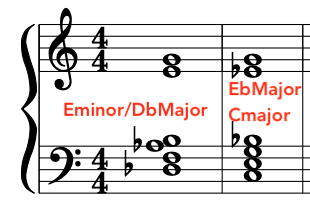
In this first example we have 4 bars of Polytonality with Eminor/DbMajor and EbMajor/CMajor

Sheet music showing a polytonal example with E minor/Db Major and Eb Major/C Major labels.
Musical notation illustrating polytonality with E minor/Db Major and Eb Major/C Major.

This then resolves itself with a “Tonal” diatonic cadence of B7/D# to Em:

Polytonality-Orchestral Example

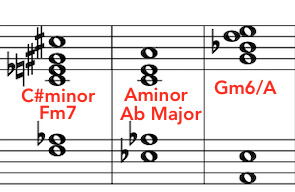
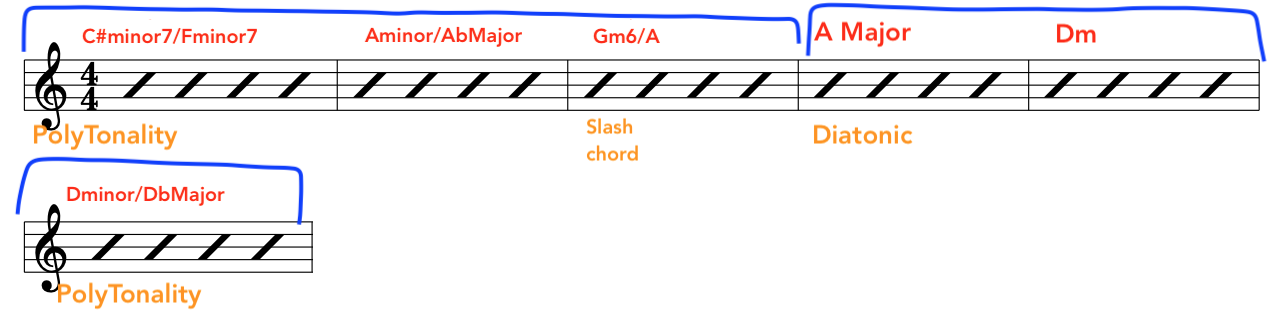
This example explores “Implication”. In this case it is implying the melodic minor but avoiding the cliche by employing the richness of Polytonality:

Sheet music showing C# minor, Fm7, A minor, Ab Major, and Gm6/A chords with annotations as examples for polytonality.
Musical notation illustrating chord progressions in polytonality, featuring C# minor, Fm7, Aminor, Ab Major, and Gm6/A.

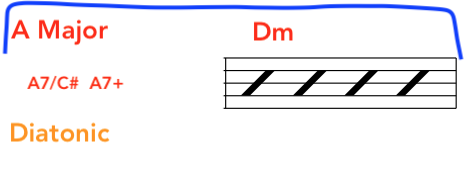
From here, we will again employ diatonic harmony for a cadence.

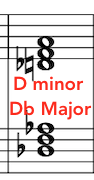
To complete this short orchestral example we will go back into Polytonality with another melodic minor implication by employing Dminor/DbMajor:

Sheet music showing the chord labels 'D minor' and 'Db Major' in red text to demonstrate polytonality.
Musical chart depicting D minor and Db Major for a polytonal music example.

Here is the chart:

poly-tonality-orchestral-composing-example

Polytonality-Orchestral Example

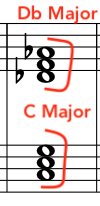
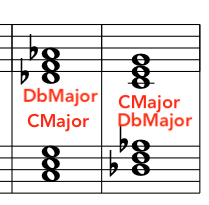
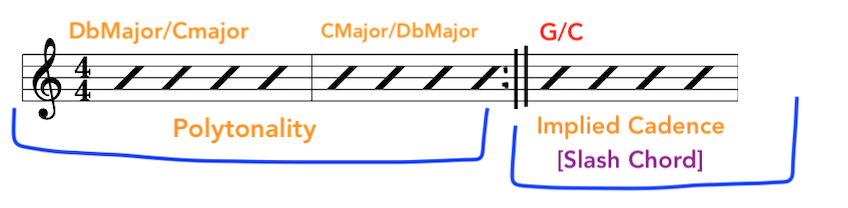
In this final example we will just “Reverse” the chords. This time it is DbMajor/Cmajor which is then played the other way around with CMajor/DbMajor.

polytonality-orchestral-composing-chords-example

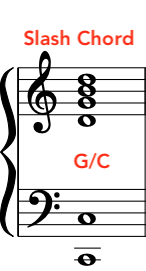
finally, we will employ a slash chord for an “Implied” cadence: This will also lighten the harmony:

Musical notation of a slash chord labeled 'G/C' with staff lines and symbols.
Illustration of a G/C slash chord as notated in music theory.

Here is the Chart:

polytonality-orchestral-composing-example

FREE PDF DOWNLOAD:

Modern Jazz Fusion Chords part 2. Steely Dan, Dan Chord and Slash Chords

Exploring John McLaughlin’s Unique Guitar Chordal Harmony

Hi Guys,

Today, a quick look at some of John McLaughlin’s amazing altered, slash and ambiguous guitar chords.

Johns harmony is a very rich palette indeed.

In the little example above in the video, I play about with some of Johns harmonic movement and colour.

Although, I could employ diminished harmony, I am instead aiming at “Implication”….Why?…This is in order to bring out the big “Rich” resonance of the guitar.

john_mclaughlin_guitar_chord_example_lesson

It is an ethereal sound where the natural harmonics and overtones can ring out of the guitars sound hole harmoniously.

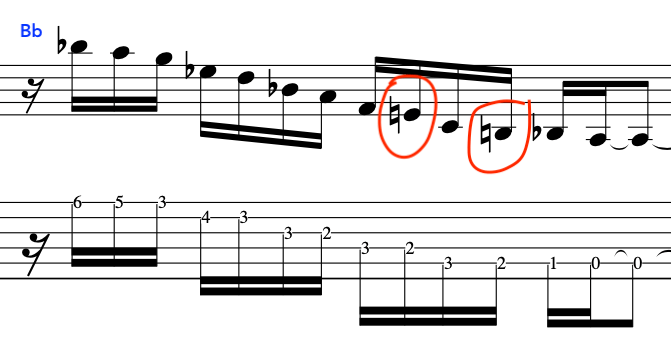
Next, we employ a Bb Major run with a few chromatic notes. These being, the B natural and the E natural chordal tones.

john_mclaughlin_guitar_chord_example_lesson

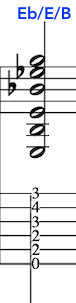
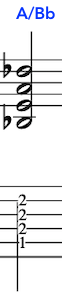
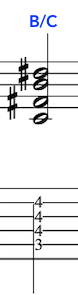
Now, let’s add two more resonant chords,

john_mclaughlin_guitar_chord_example_lesson

We will now connect to the next part together.

This will be with an arpeggio of Ebm mostly [or D#m] implying BMaj7. [Although there is an implied resolution to B7 also].

This juxtaposition, creates another ambiguous move that opens up a fresh and unique sounding harmony.

john_mclaughlin_guitar_arpeggio_example_lesson

From here, we can manipulate and resolve into the Bb minor full barre harmony:

john_mclaughlin_guitar_chord_example_lesson

Now, let’s create a sequence. This will be, C#7sus4 to C7 with a sharpened 4th and a Maj7th.

Notice, the chromatic movement in the bass as we sequence this.

john_mclaughlin_guitar_chord_example_lesson

Finally, this resolves from CMaj7#11 to CMaj7 with open string guitar chords.

john_mclaughlin_guitar_chord_example_lesson

In conclusion, this was just a quick look at Johns unique take on harmony and how to apply some scale and arpeggio movement to connect it all together.

John’s harmony is a lovely combination of ambiguity and resonance with a sense of calm.

The magical ethereal tone opens doors to really interesting solo applications that exploit implied harmonies and dissonances. These I find are met with with lingering resolutions that are never quite met.

It’s a sort of pairing of opposites that you can’t quite put your finger on that give it that alluring yet elusive quality.