Alternate Picking Leverage:Open String Concept:

Hi Guys,

Just, a quick response Blog to a video I made about employing the “Open” [2nd] string ascending with alternate picking guitar technique.

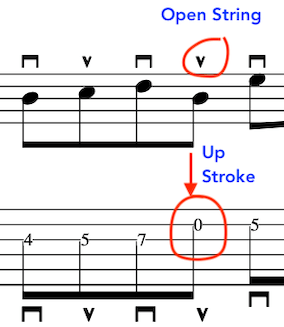
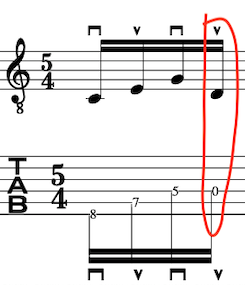
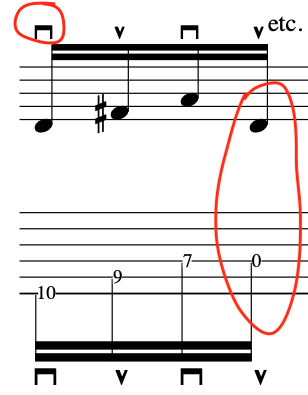
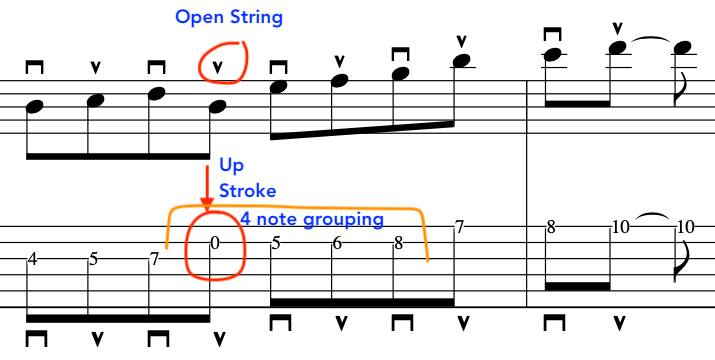
The main reason that this works, is because it is an “Even” grouping, and, by plucking the open 2nd string it gives the fretting hand a fraction of a second to relax and get into position.

This in turn gives us some natural and excellent leverage. This also, means that we have the “Up” stroke to descend with.

This technique works really well for the precise picking passages both in Fusion and World Music, like, for example the precise lines of McLaughlin’s “Shakti” compositions.

This extra note, or even pattern, works in principle like a Be bop scale in that the extra note creates a smooth picking line for the right hand.

alternate_picking_guitar_technique_expalained

This gives us, the 4 note “Even” grouping.
alternate_picking_guitar_technique_expalained

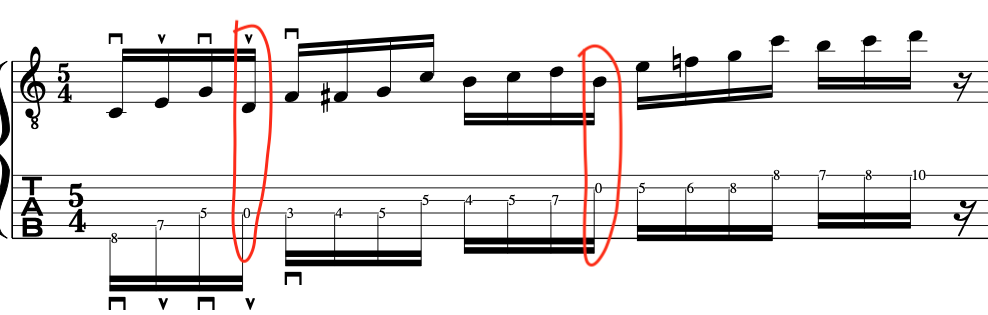
In this example, we can see where the “Up” stroke occurs, which, sets us up nicely to descend:
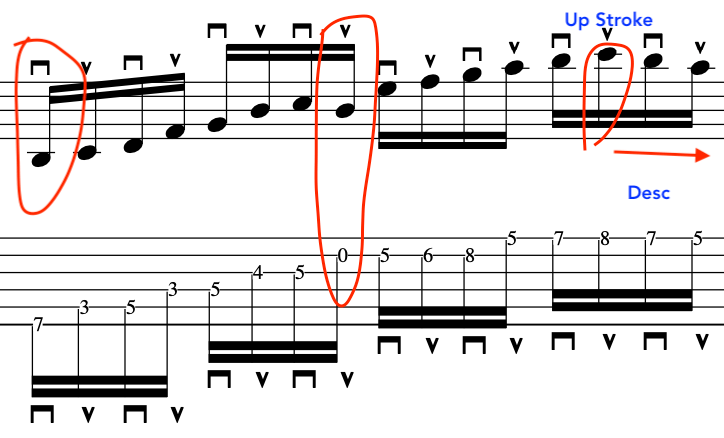
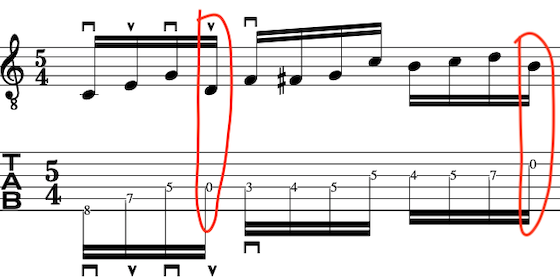
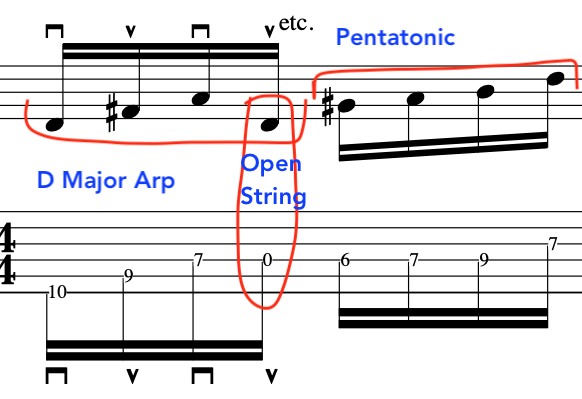
Here, is the whole scale passage.

Also, notice that the open B string is “Off” the beat.

alternate_picking_guitar_technique_expalained

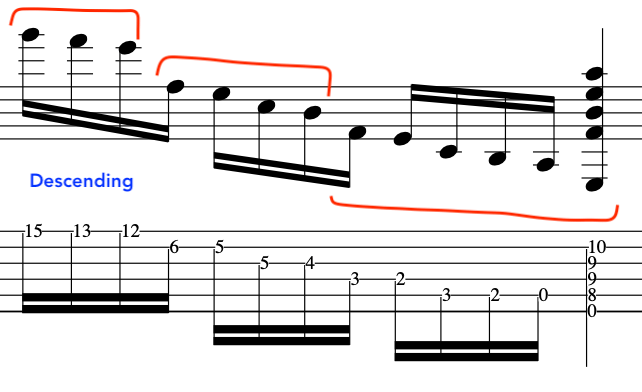
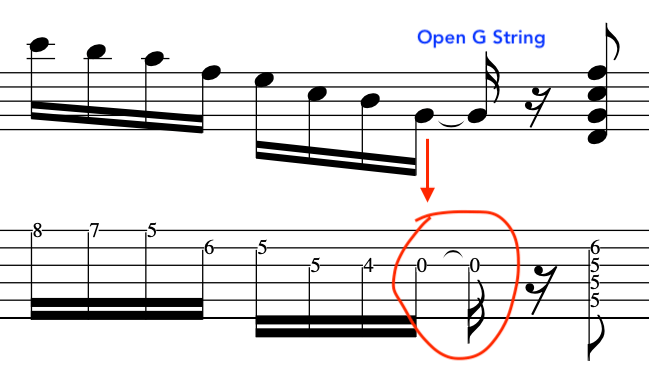
There are, other open strings that we can exploit. But, for the sake of a quick response blog we will just look at one more idea and that is for descending:

Here, will will pluck the open G string and then add a chord. [Again, notice the the open string is off the beat]
alternate_picking_guitar_technique_expalained

Finally, let’s extend this:

alternate_picking_guitar_technique_expalained

This is only touching the surface. There are many variations on this and any string can be employed both ascending and descending.

Now, you might say what if the open B note isn’t in the key? Well, this doesn’t matter as it is only one note and can add colour. John McLaughlin does this to great effect. Also, due to the picking and the velocity the ear of the listener is not really affected, it’s very difficult to tell.

Lastly, this is not a shred gimmick or a means of tremolo picking and trying to play fast. It is a concept for really precise picking awkward lines, when, for instance you are doubling with a Sax or Piano or as a Rhythmic “Shakti” style line with a tight drum/drummer/percussionist.

“Shakti/McLaughlin” Mid Tempo Guitar Exercise [Alternate Picking]

Hi Guys,

Today, a short “Mid-Tempo” [around 140bpm] JohnMcLaughlin/Shakti style alternate picking guitar exercise for scale connections in the fretting hand.

This is in regard to crossing the strings and connecting different scale fragments together.

The first concept is that of employing the open string. This gives the fretting hand a hundredth of a second to rest and hence easily get into position to fret the next note at a mid and fast tempo.

Note: fourth 16th note = Open String

shakti-mclaughlin-indo-jazz-guitar-exercise

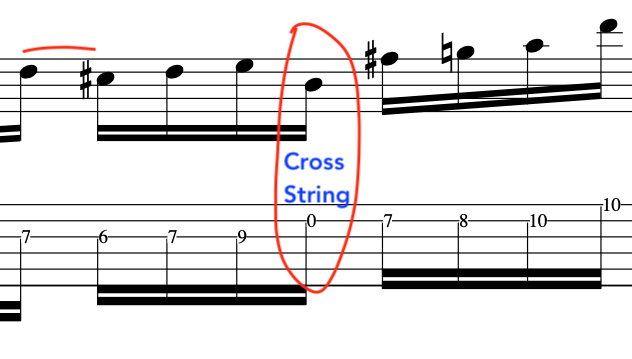
In the next part, we can see both open strings employed to make it easy for the fretting hand to get into position and connect to the next scale fragment.

The last note in the bar, the open B natural, makes it easy for us to cross the string smoothly.

shakti-mclaughlin-indo-jazz-guitar-lesson

shakti-mclaughlin-indo-jazz-guitar-exercise

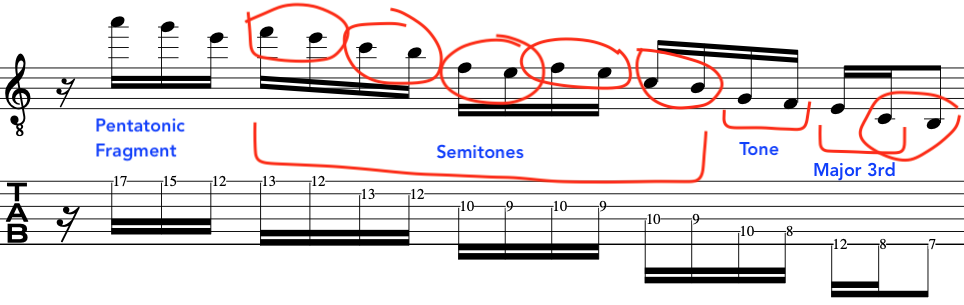
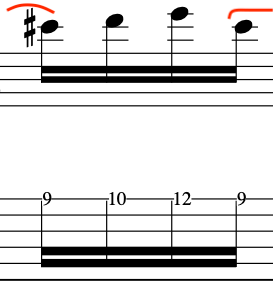
In this bar, we employ semitones as they are easy to finger/fret, and, also to cross the guitar strings when descending.

shakti-mclaughlin-indo-jazz-guitar-exercise

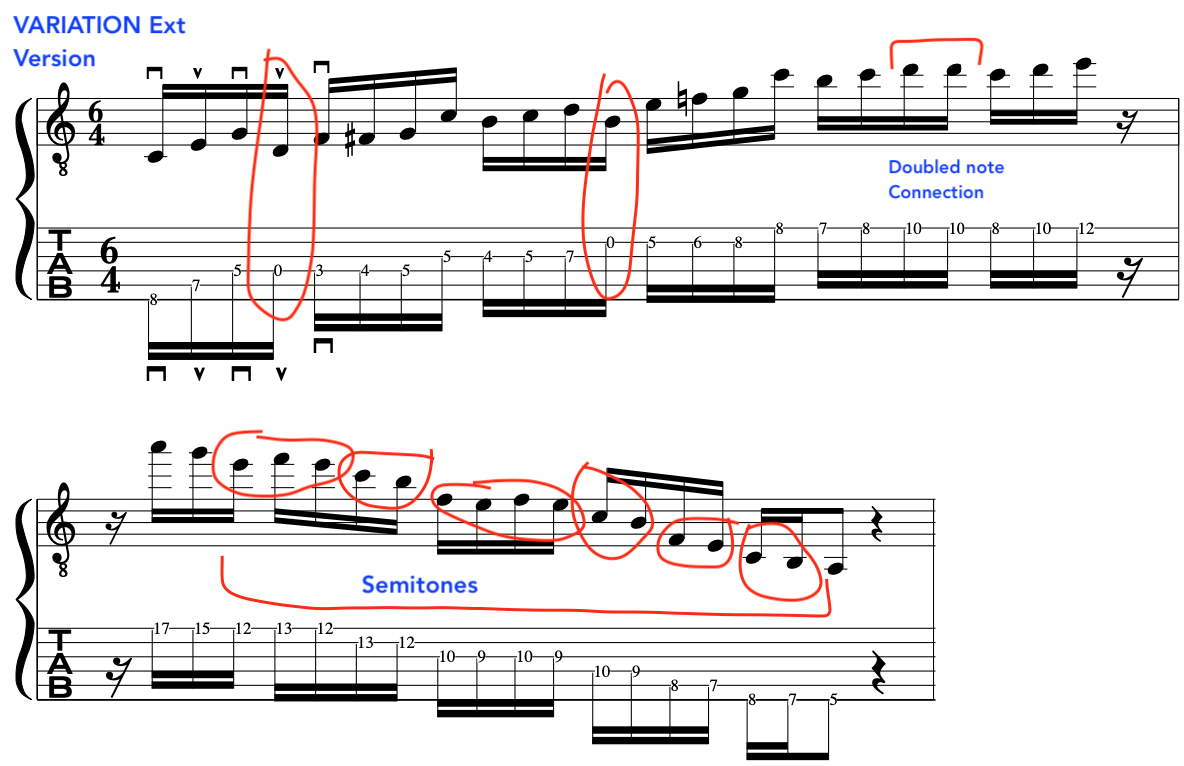
Here, is an extended variation that employs the same alternate picking John McLaughlin concepts that we have just looked at:

john-mclaughlin-indian-guitar-scales

These simple concepts for the fretting hand when alternate picking might not seem much, but, they are the little hinges that swing the big door when holding the tempo together. Especially, when playing with a tabla/drum.

It also makes it easier for the right picking hand to pluck the strings as the fretting hand is not under pressure, and, there are spaces for the fretting hand to rest and get into position.

PDF DOWNLOAD:

John McLaughlin Alternate Picking Guitar Secrets part 1

Hi Guys,

Today, a quick delve into what makes John McLaughlin’s alternate picking guitar style work so easily and fluidly.

Many, focus on the right hand technique, but, much of it comes from the way the fretting hand works.

So, let’s look at a couple of simple secrets to John’s approach and why it is so fluid and effective

In this example, we will create an effective line that is not tremolo picking on cliche shred scales but a continuous colourful and creative improvised line in a world music style.

john-mclaughlin-guitar-secrets-alternate-picking-fast

If we take this apart we will find a couple of reasons why this is fluid and very natural for the alternate picking guitar technique.

First of all notice: The arpeggio that starts the phrase. The last note of this 4 note tetrachord grouping is an open D string!

john-mclaughlin-guitar-secrets-alternate-picking-fast

This open string gives the fretting hand a hundredth of a second to do absolutely nothing as it prepares for the next 4 note grouping to fret.

john-mclaughlin-guitar-secrets-alternate-picking-fast

This gives us time to get into position and so we are NOT rushing about, and, we are in control

john-mclaughlin-guitar-secrets-alternate-picking-fast

This makes it easy to cross the string smoothly and connect to the next tetrachord.

From here we will extract a partial John McLaughlin scale/fingering by sliding it into position.

john-mclaughlin-guitar-secrets-alternate-picking-fast

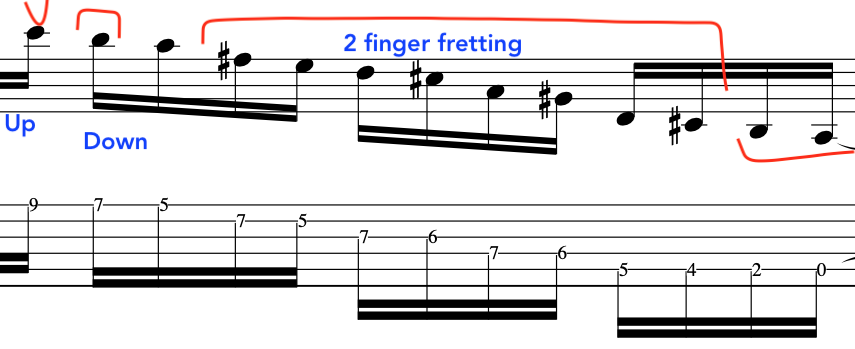
To end this line, we will descend with some simple scale starting on an “Up stroke”. Also, notice the simple 2 finger fingering for the fretting hand.

john-mclaughlin-guitar-secrets-alternate-picking-fast

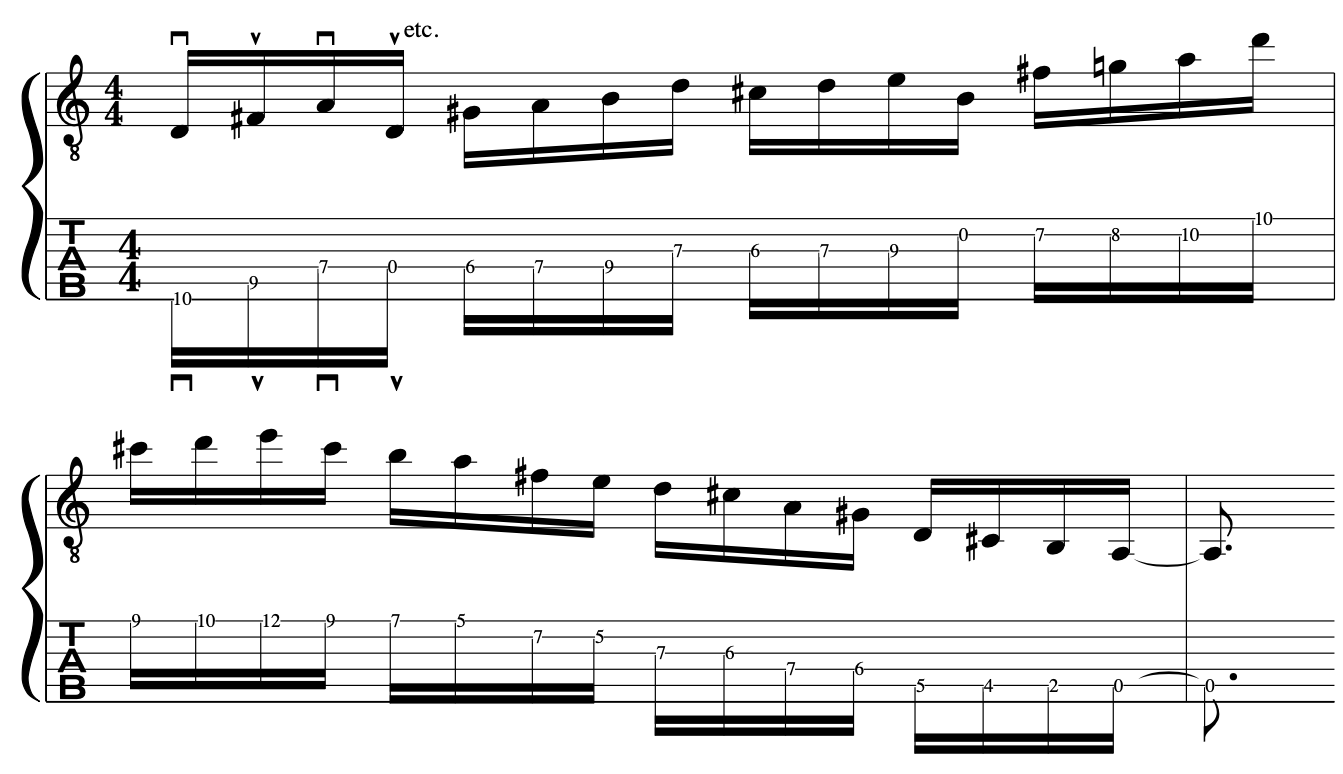
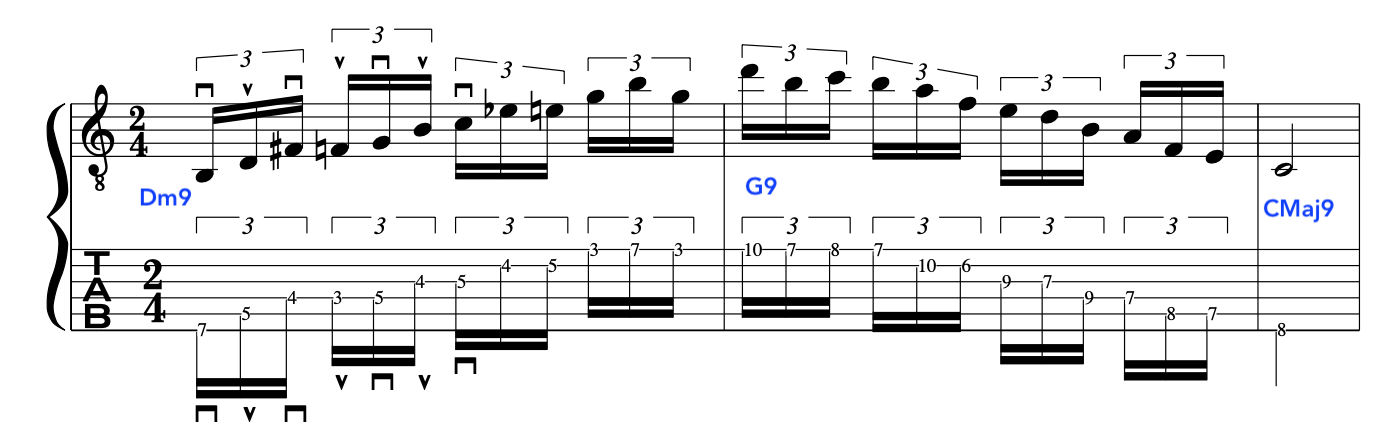
In this exercise we will employ groupings of 6 notes. This is based upon an improvised acoustic jazz fusion line, like that of “Belo Herozonte:

This is played over a ii V7 I of Dm9 G7 CMaj9:

john-mclaughlin-guitar-secrets-alternate-picking-fast

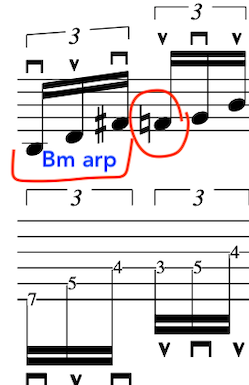
If we take this apart we will notice that we exploit a Bm arpeggio going to a B dim arpeggio that then goes to the 4th and 6th notes of D Dorian: This creates a nice colourful sound.

john-mclaughlin-guitar-secrets-alternate-picking-fast

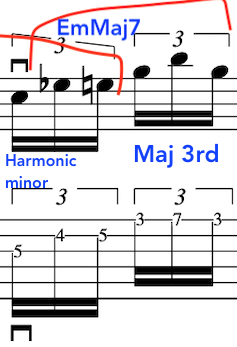
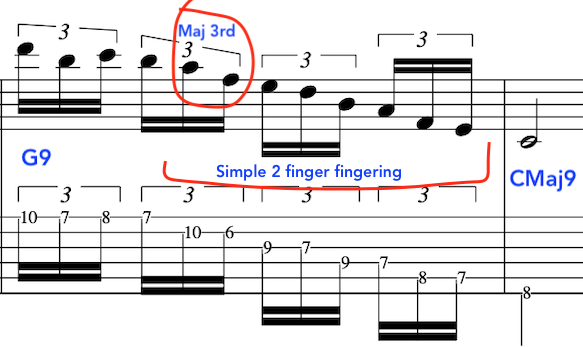
For the next 6 note hexatonic grouping we employ an E harmonic/melodic minor sound over the Dm9 chord: Notice the Major 3rd interval:

john-mclaughlin-guitar-secrets-alternate-picking-fast

From here, we will “Slide” the fretting hand up to the next position: Notice the use of the Major 3rd interval once again, as this breaks up the monotonous scale sound and creates distance and melodicism.

Finally, we have simple 2 finger pentatonic descending scale application that finally rest on the note C for the CMaj9 chord.

john-mclaughlin-guitar-secrets-alternate-picking-fast