Many of you have asked me to publish more pages from the unpublished book on intervallic studies by jazz guitar legend Pat Martino:
Here are some excerpts/pages from the book that you might find interesting/insightful and useful:
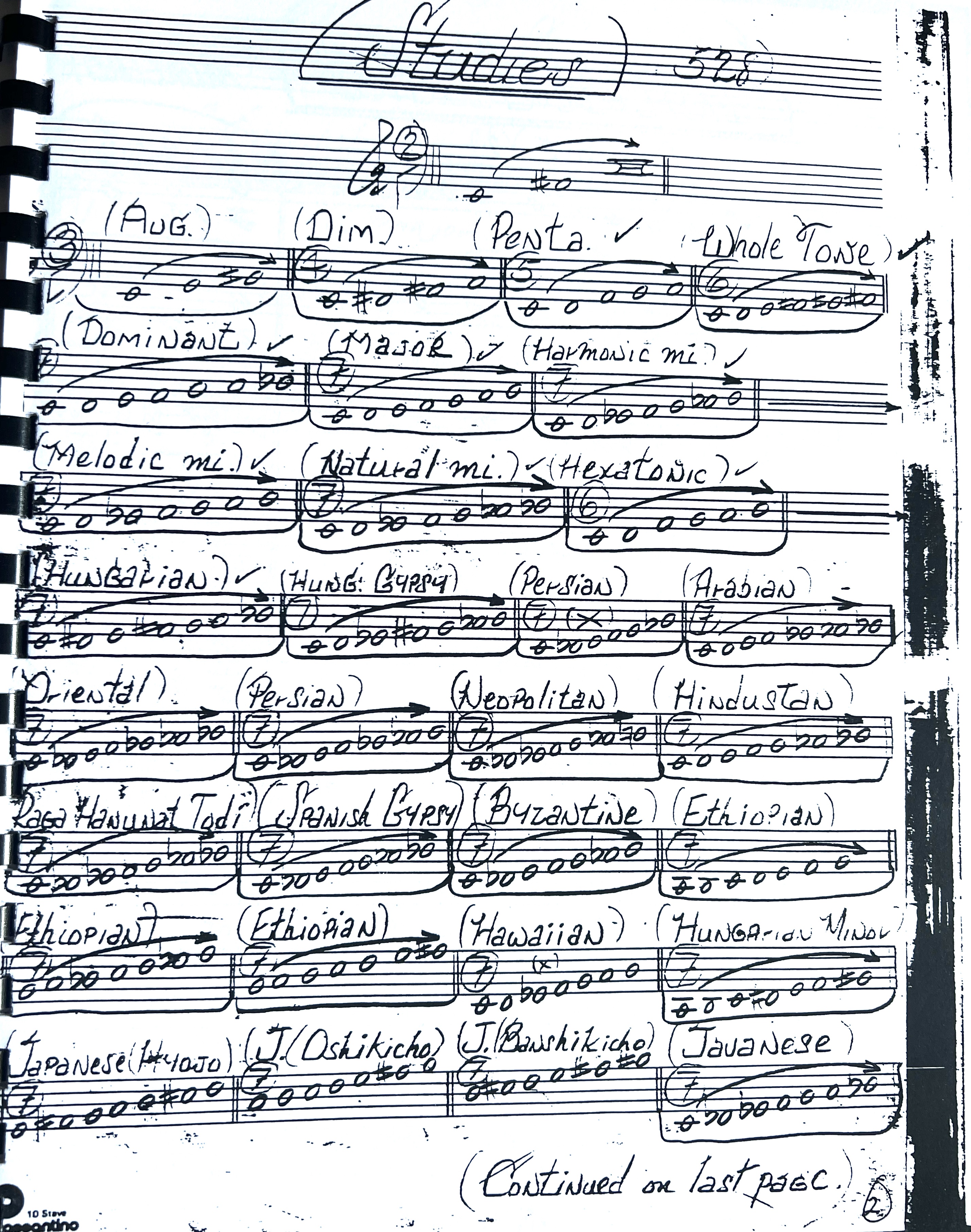
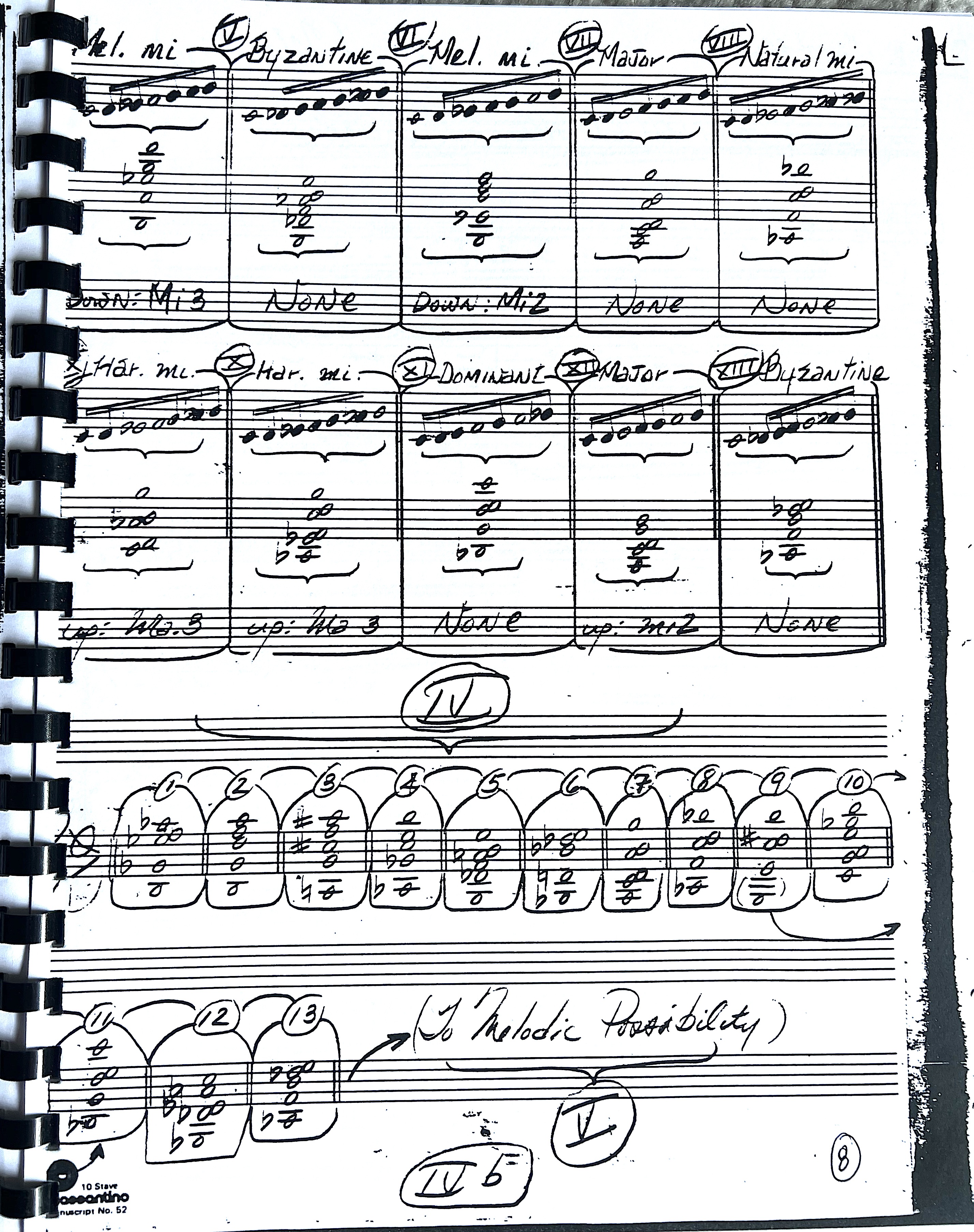
SCALES:
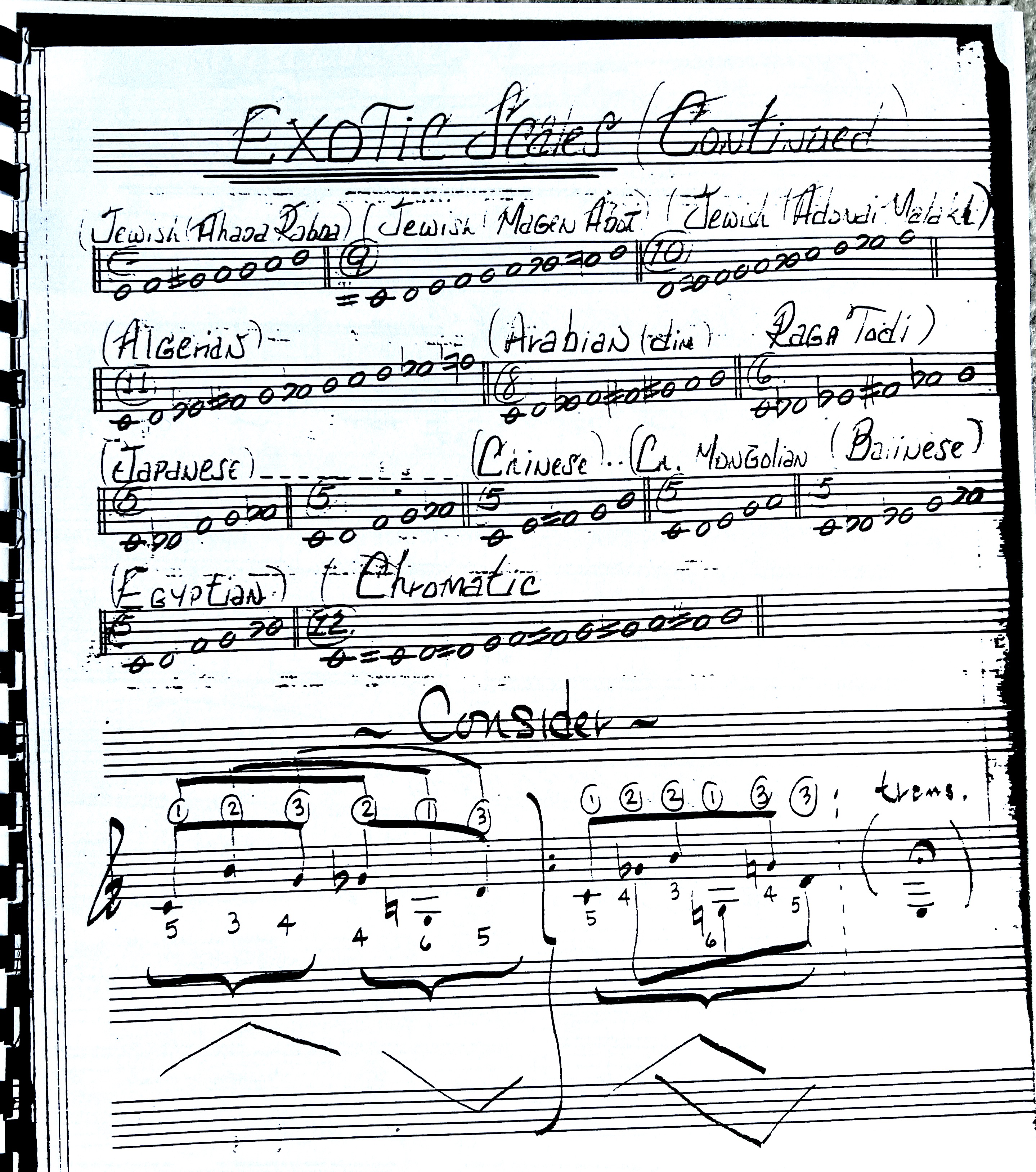
Firstly, we see Pats thoughts on the many scales available to create his intervallic studies:[He seems to have had an impressive encyclopaedic knowledge ofscales].
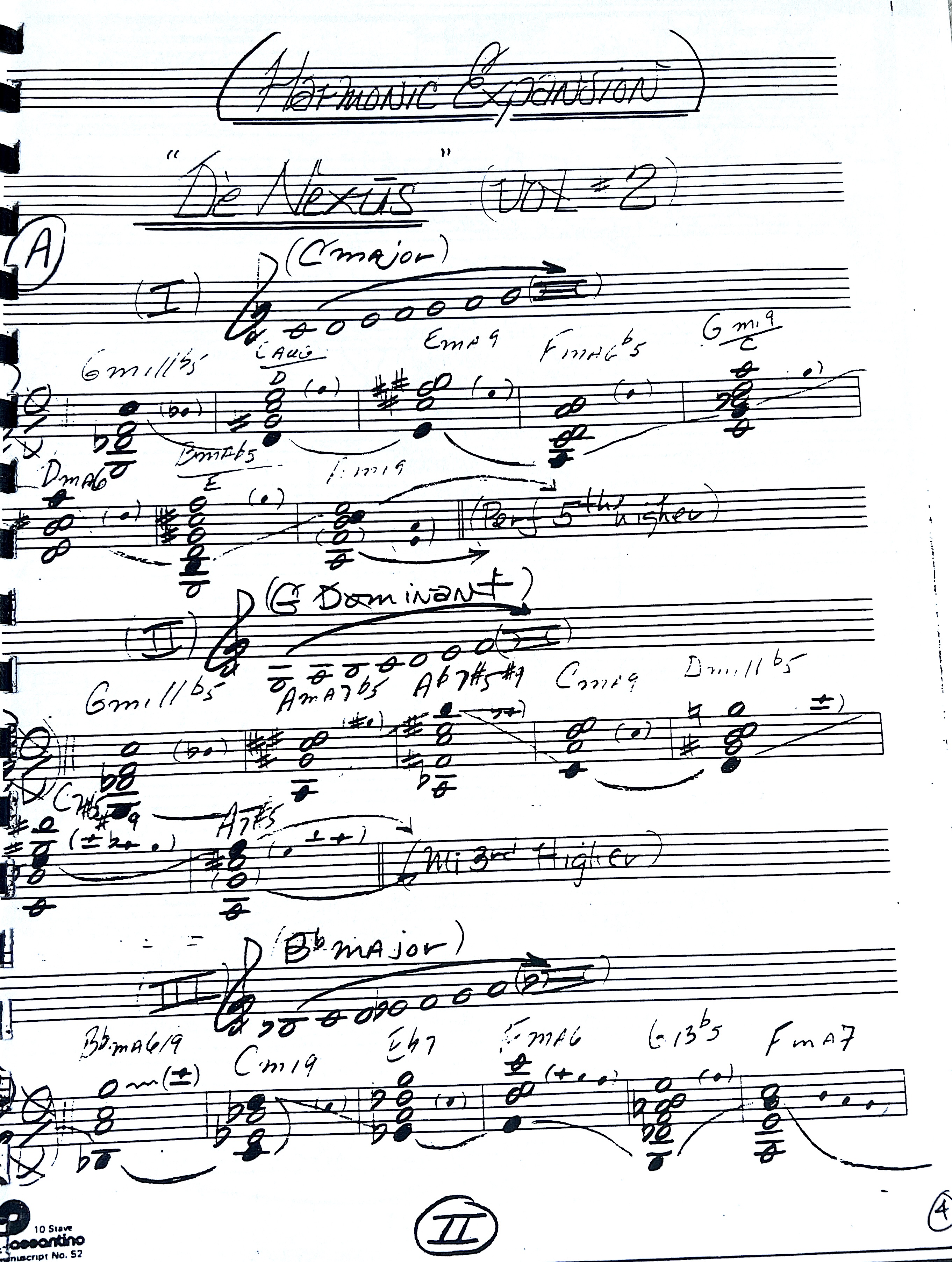
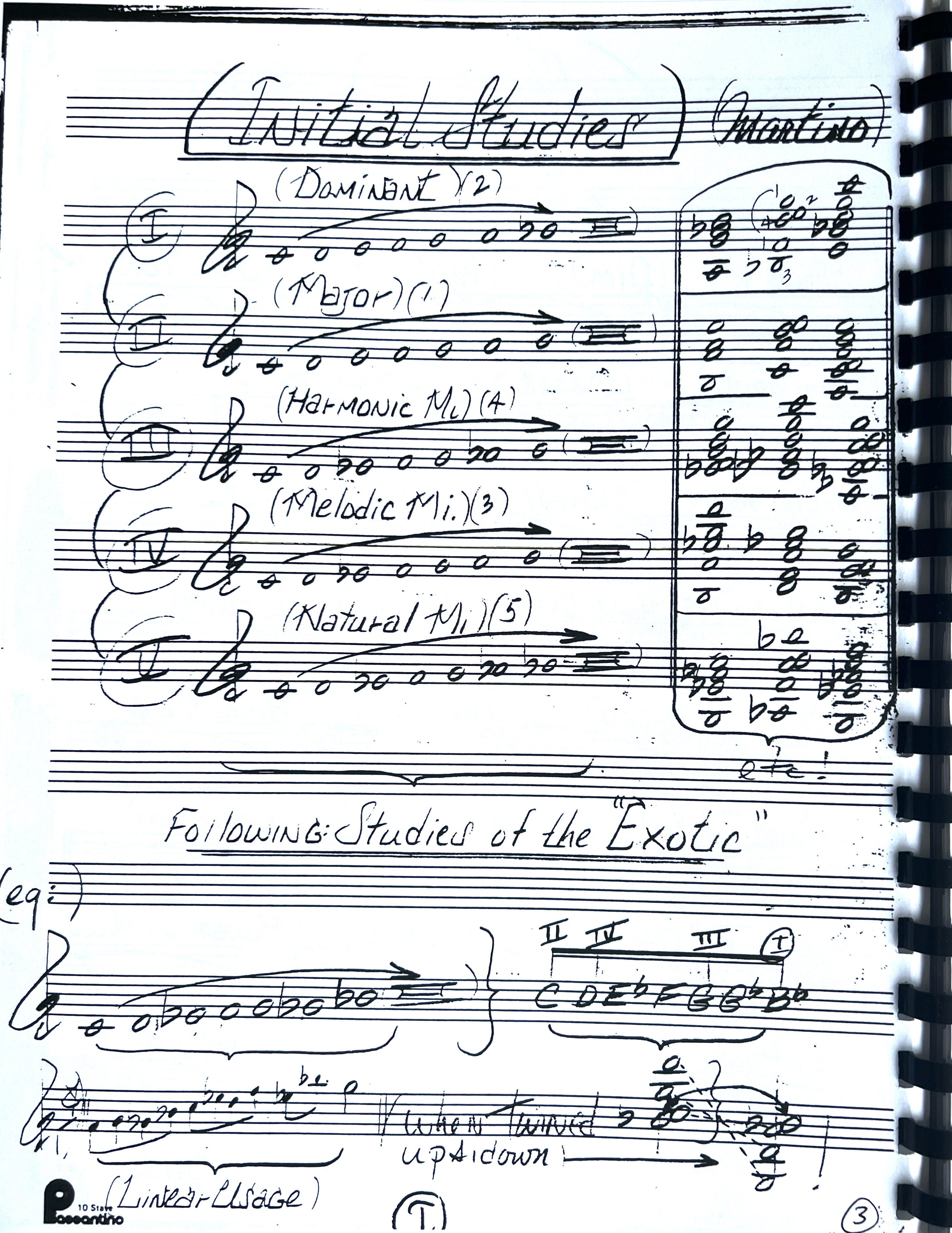
Here, Pat lays out the main/commonly used scales to his preferred/choice of harmony [inversions/voicing’s]
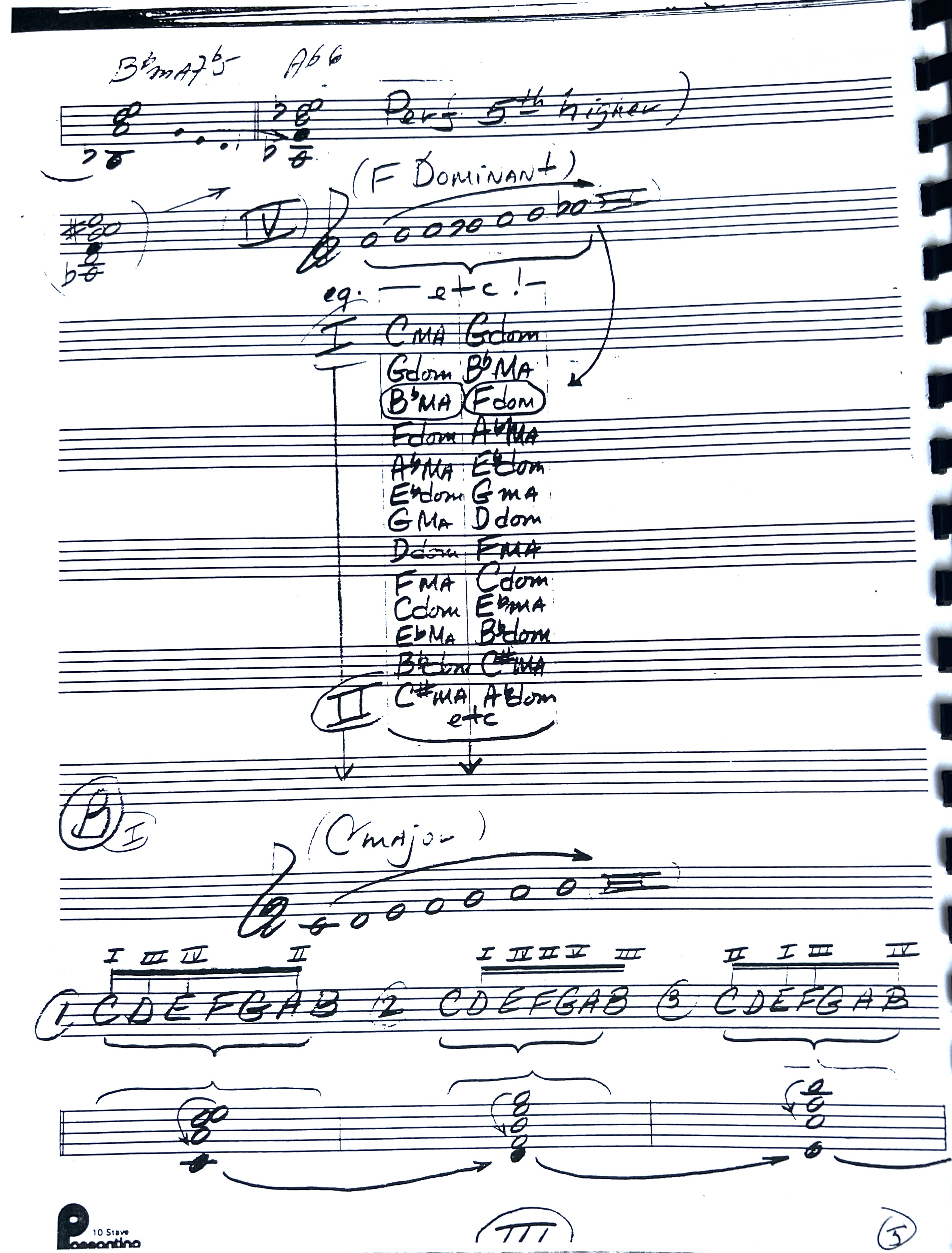
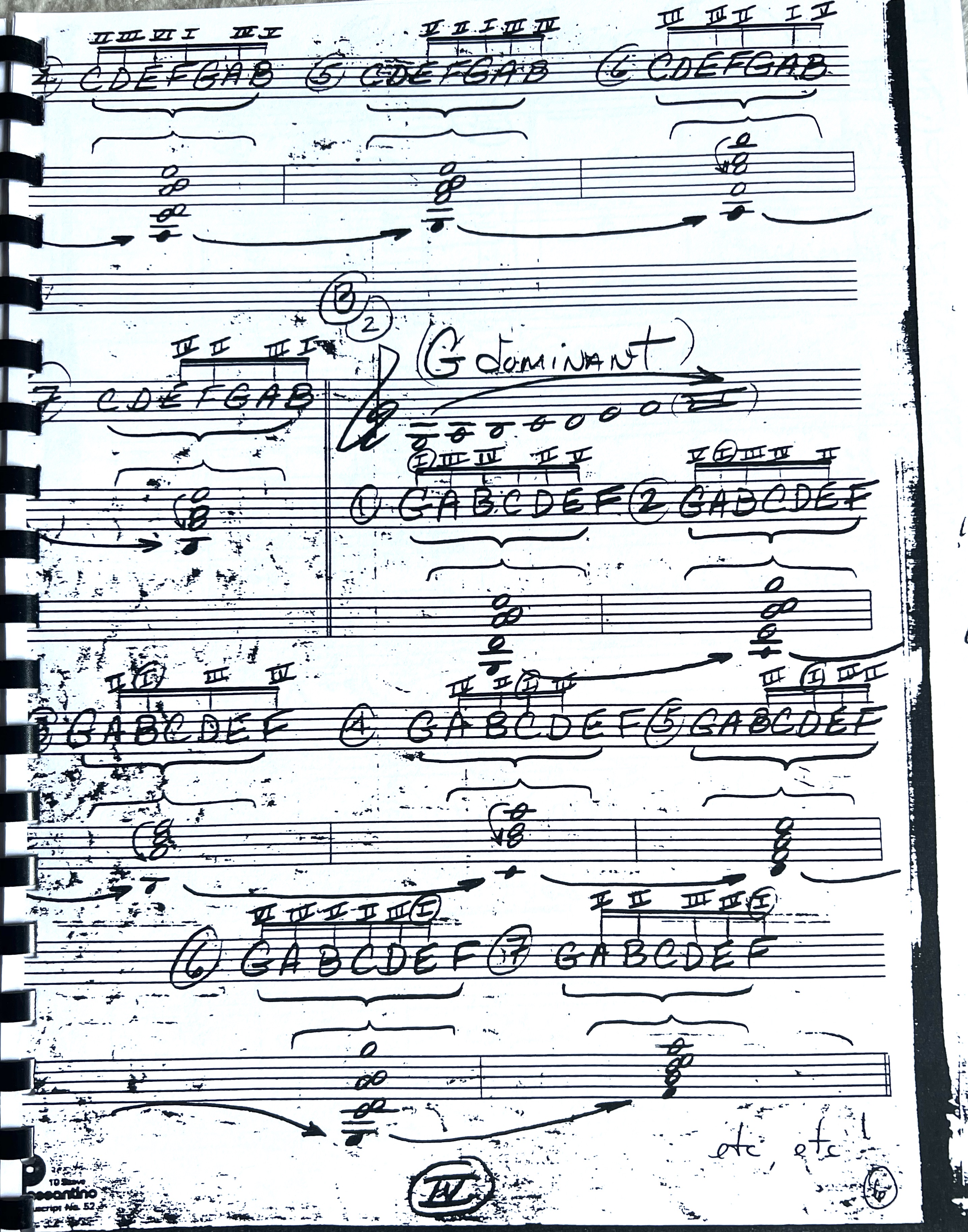
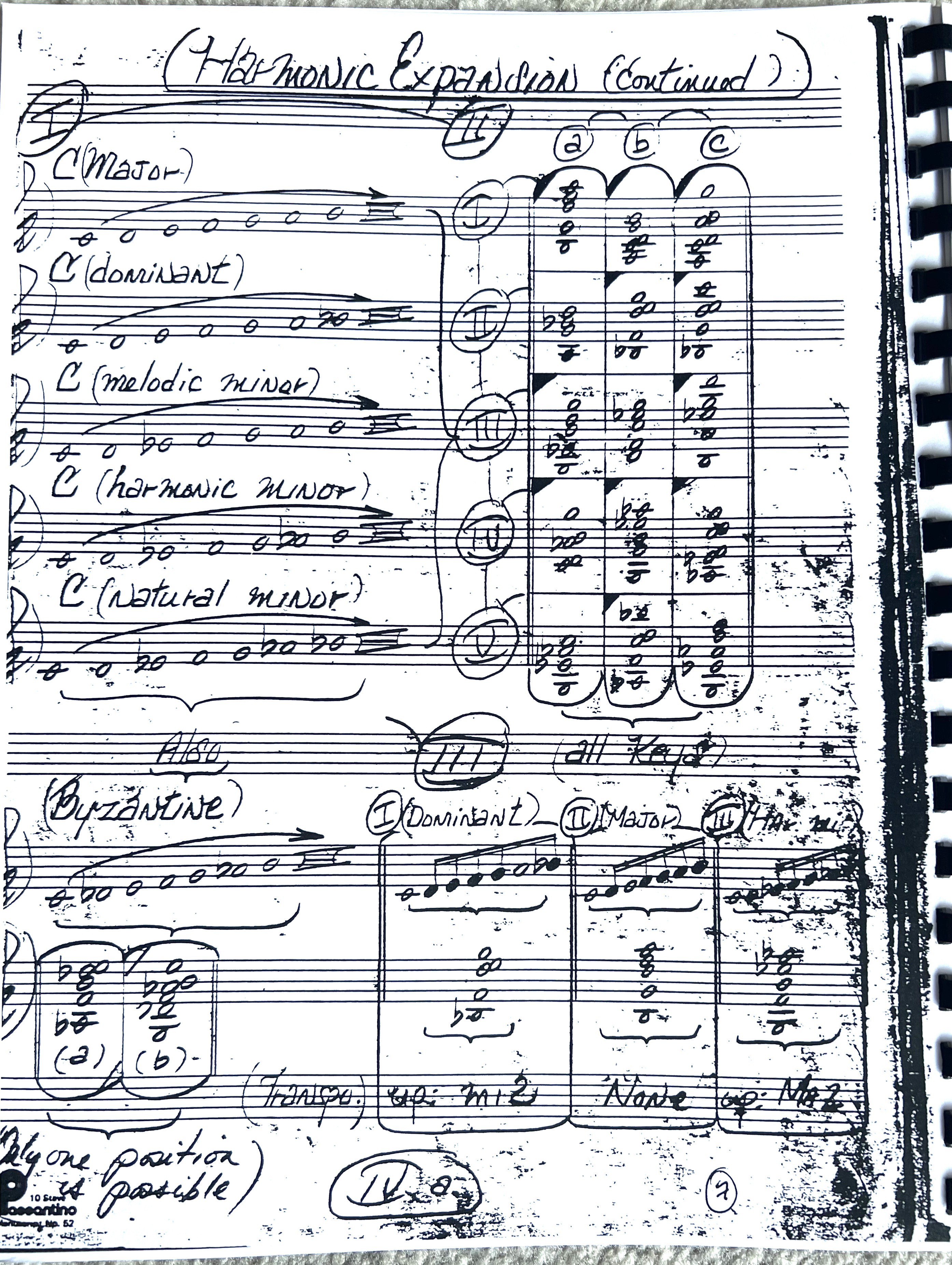
Here, his harmonicexpansion is continued: Again, scale to harmony [chord voicing’s].
This page demonstrates once again, scales and harmony with possibilities and personal choices. It’s interesting to see Pats chord voicing’s available for development with his unique intervallic concept:
[It presenst a unique glimpse into Pat’s theoretical outlook, considerations and harmonic outlook].
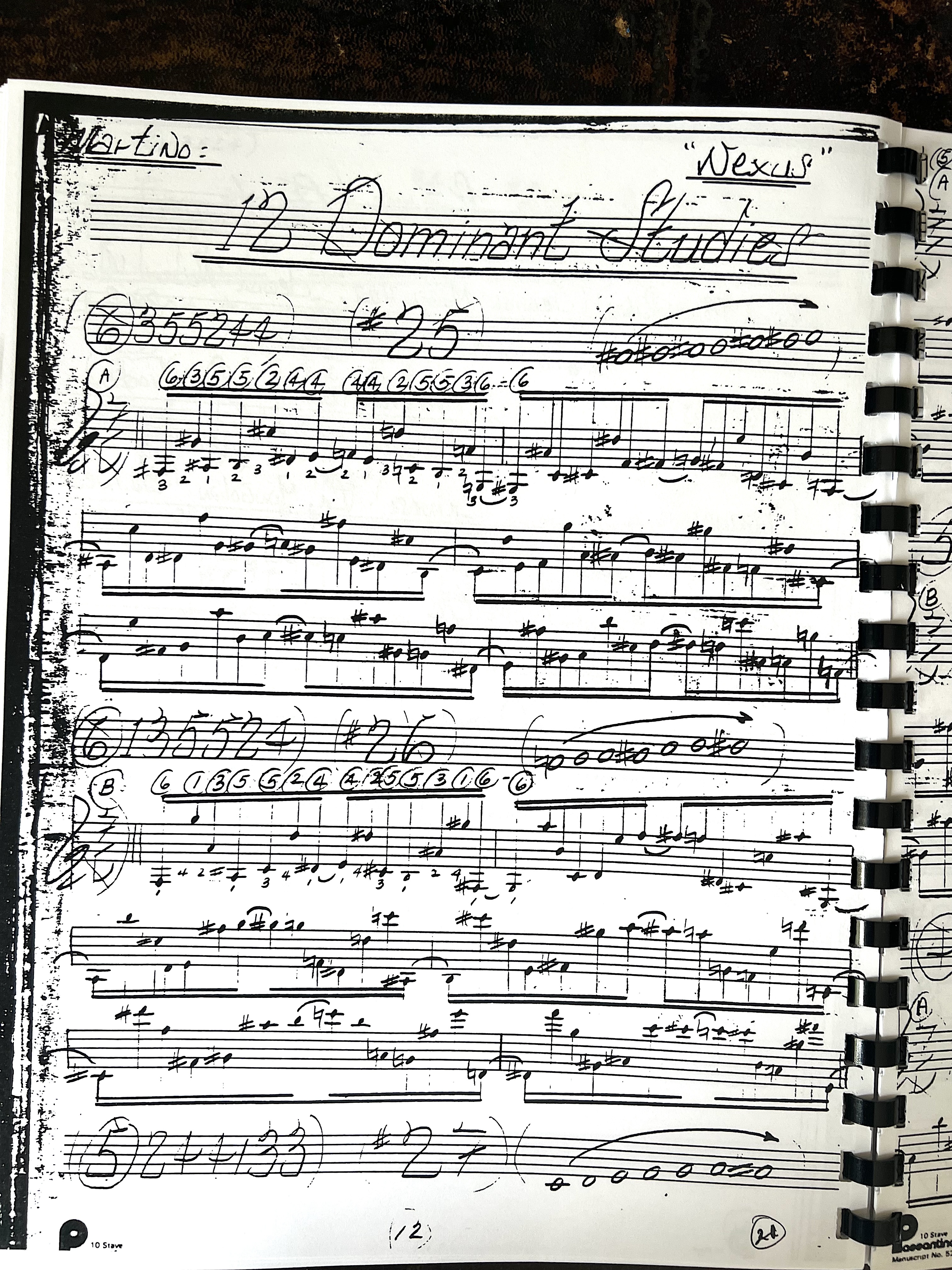
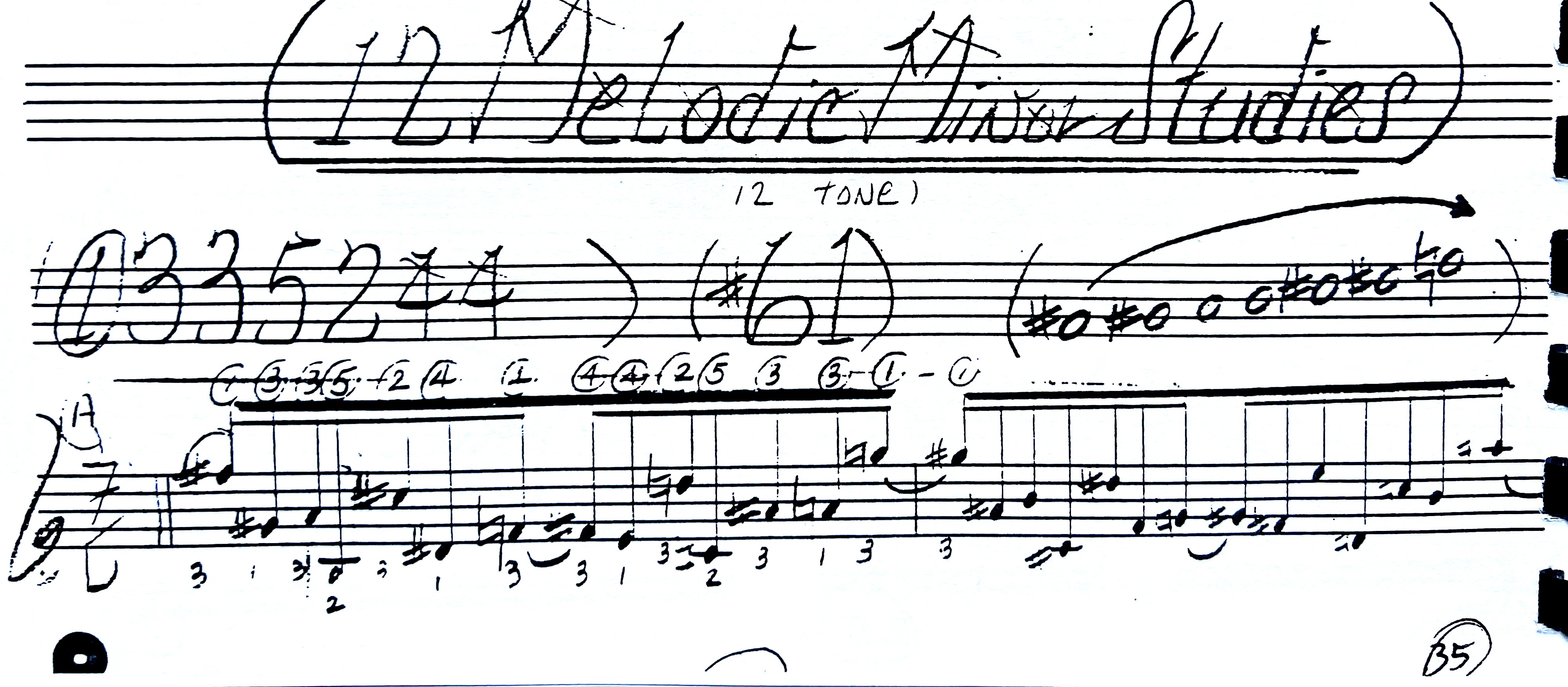
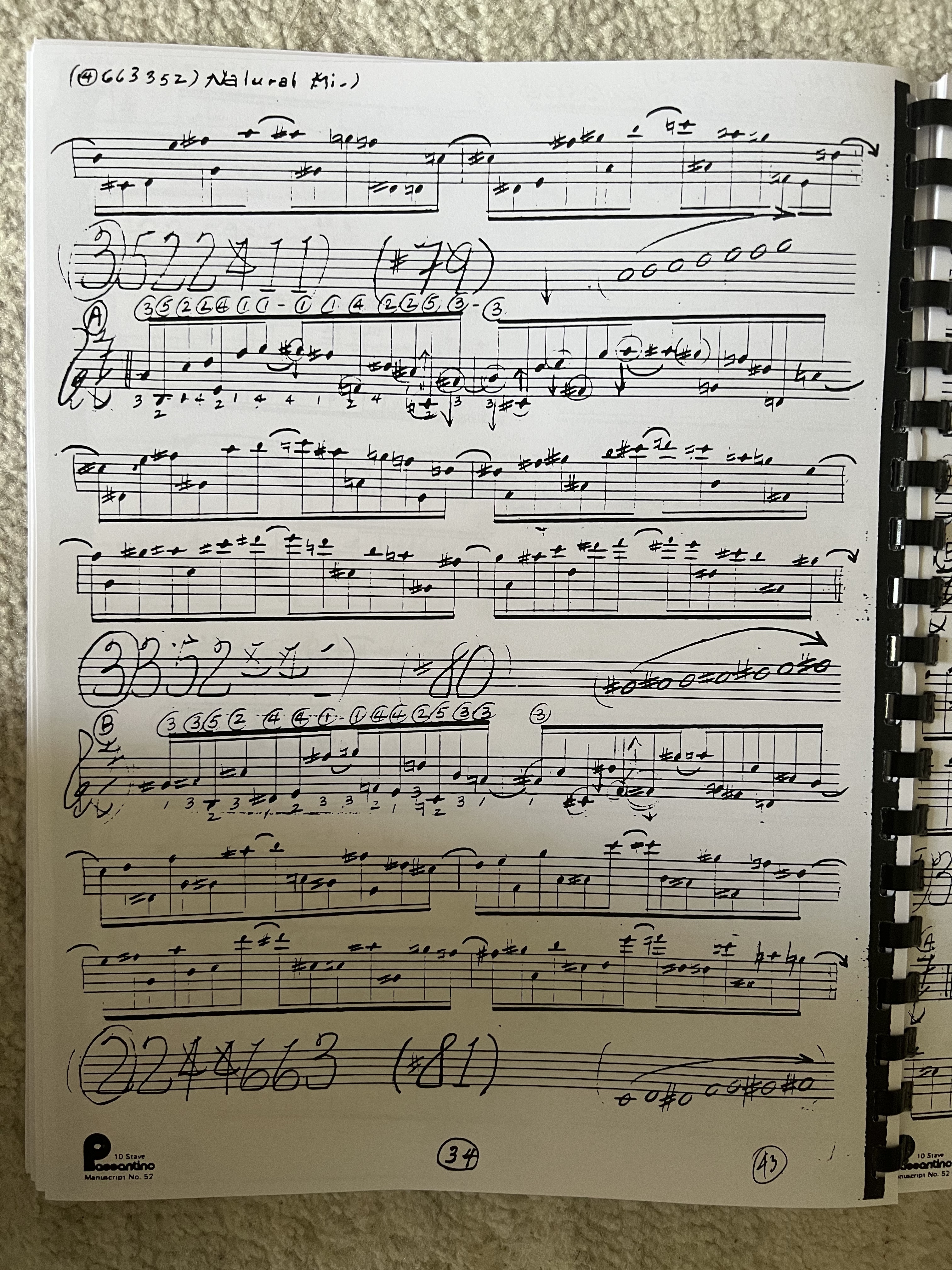
Full Study: The Melodic minor scale EXAMPLE:
Now, let’s take a complete study. Here is the first one of the melodic minor set :
Pat’s studies to be completed:
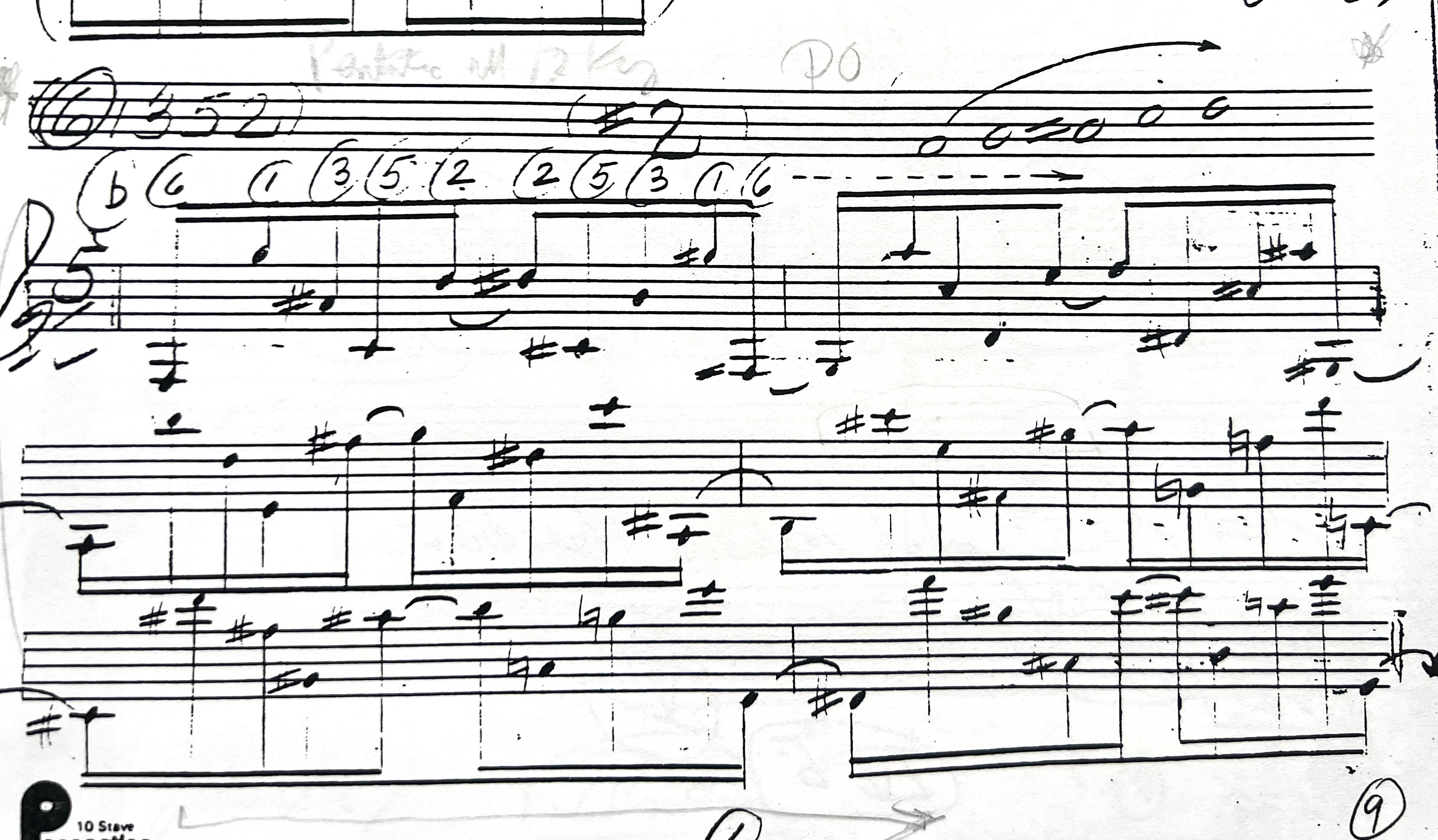
Towards the end of the book we find that Pat was either still working on the book or he didn’t have time to complete [in all 12 keys] everything that was in his mind.
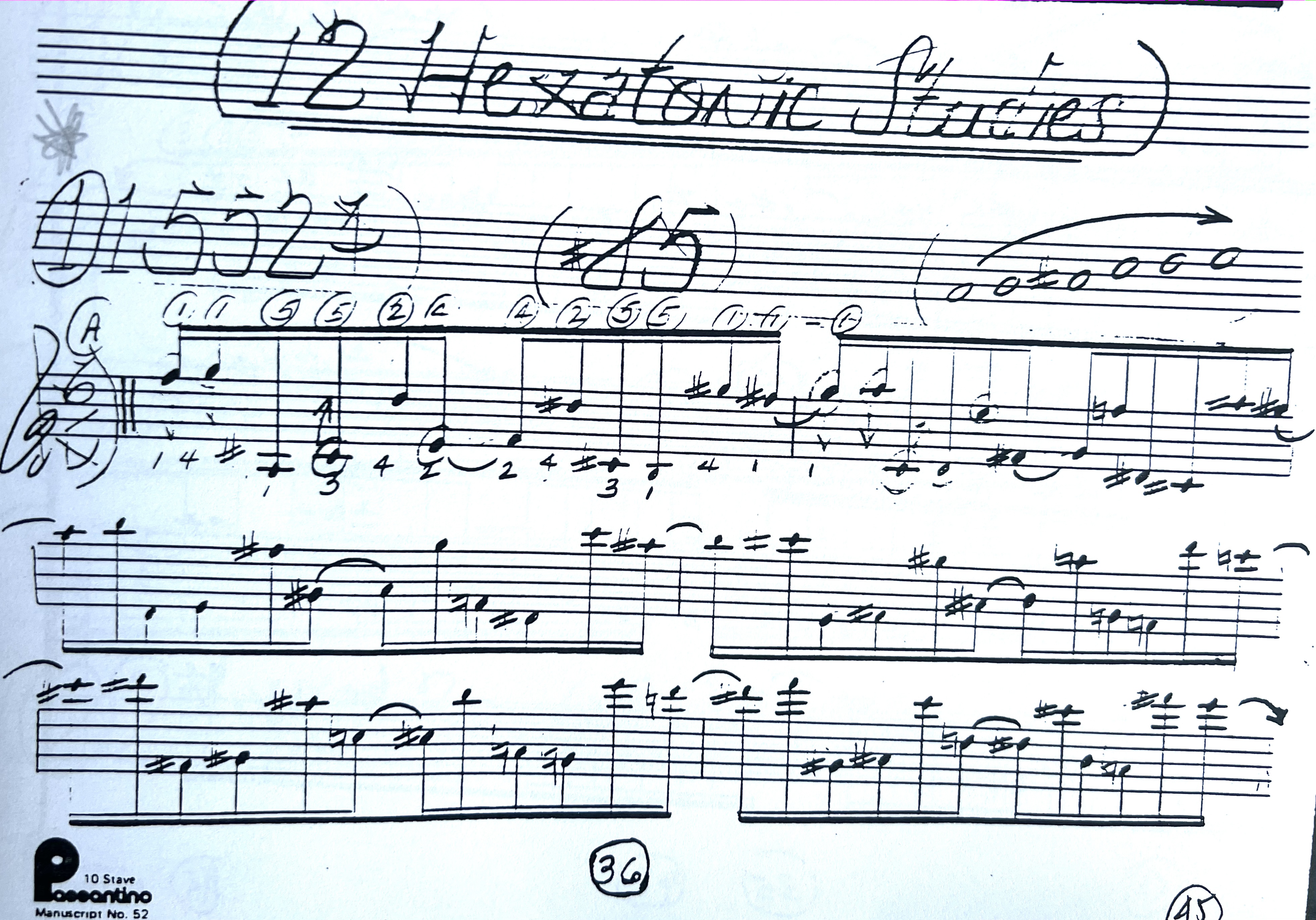
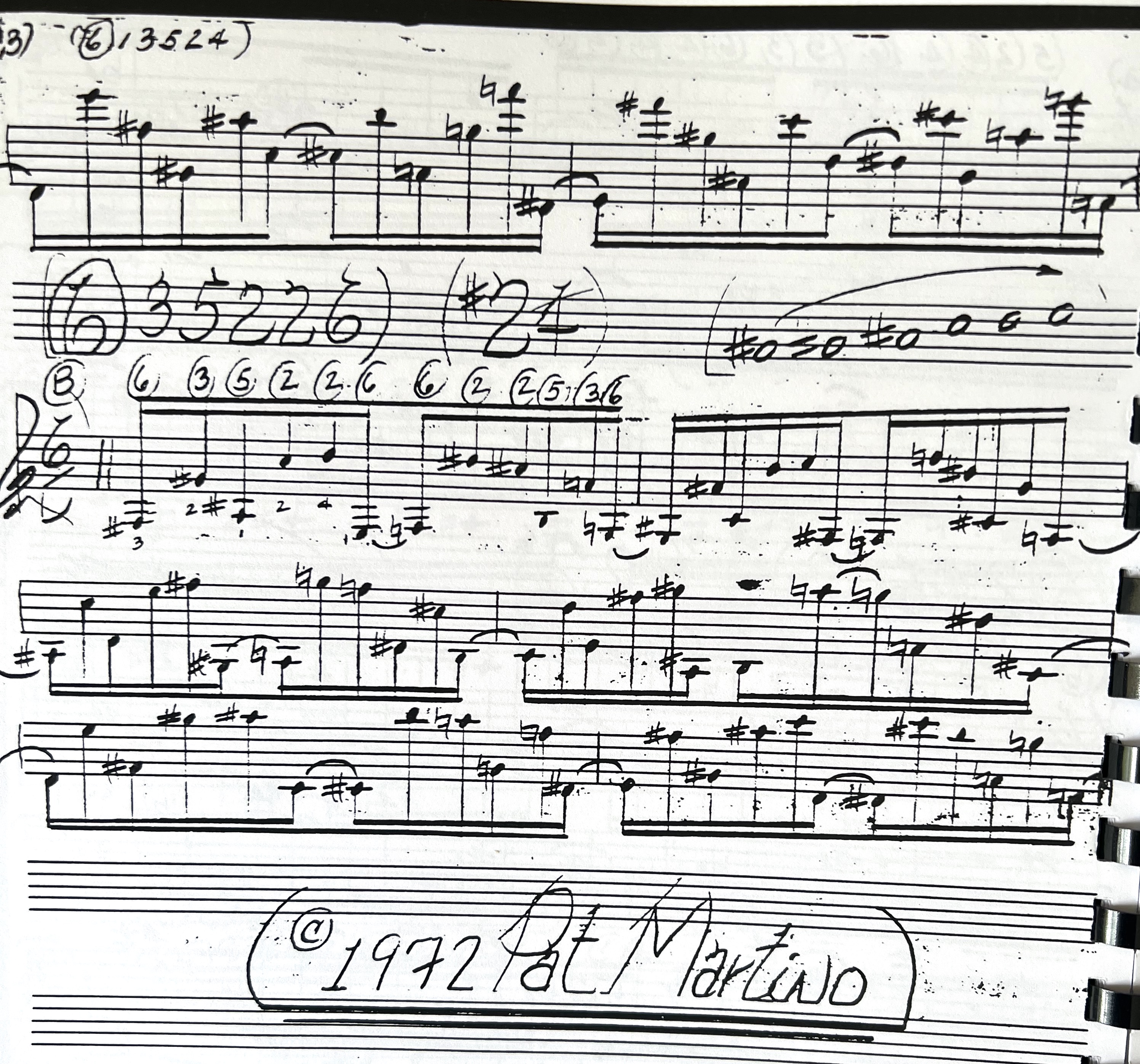
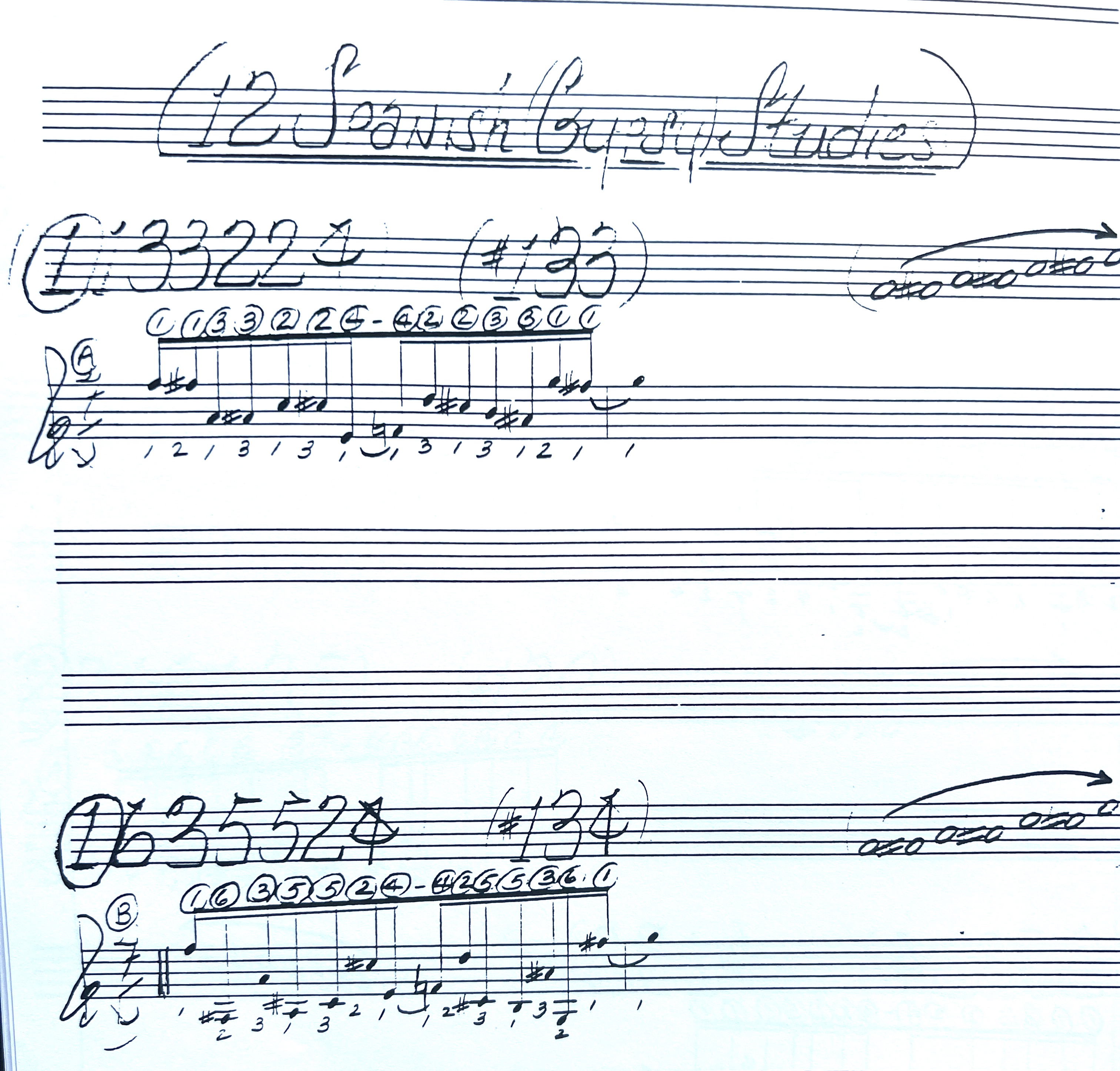
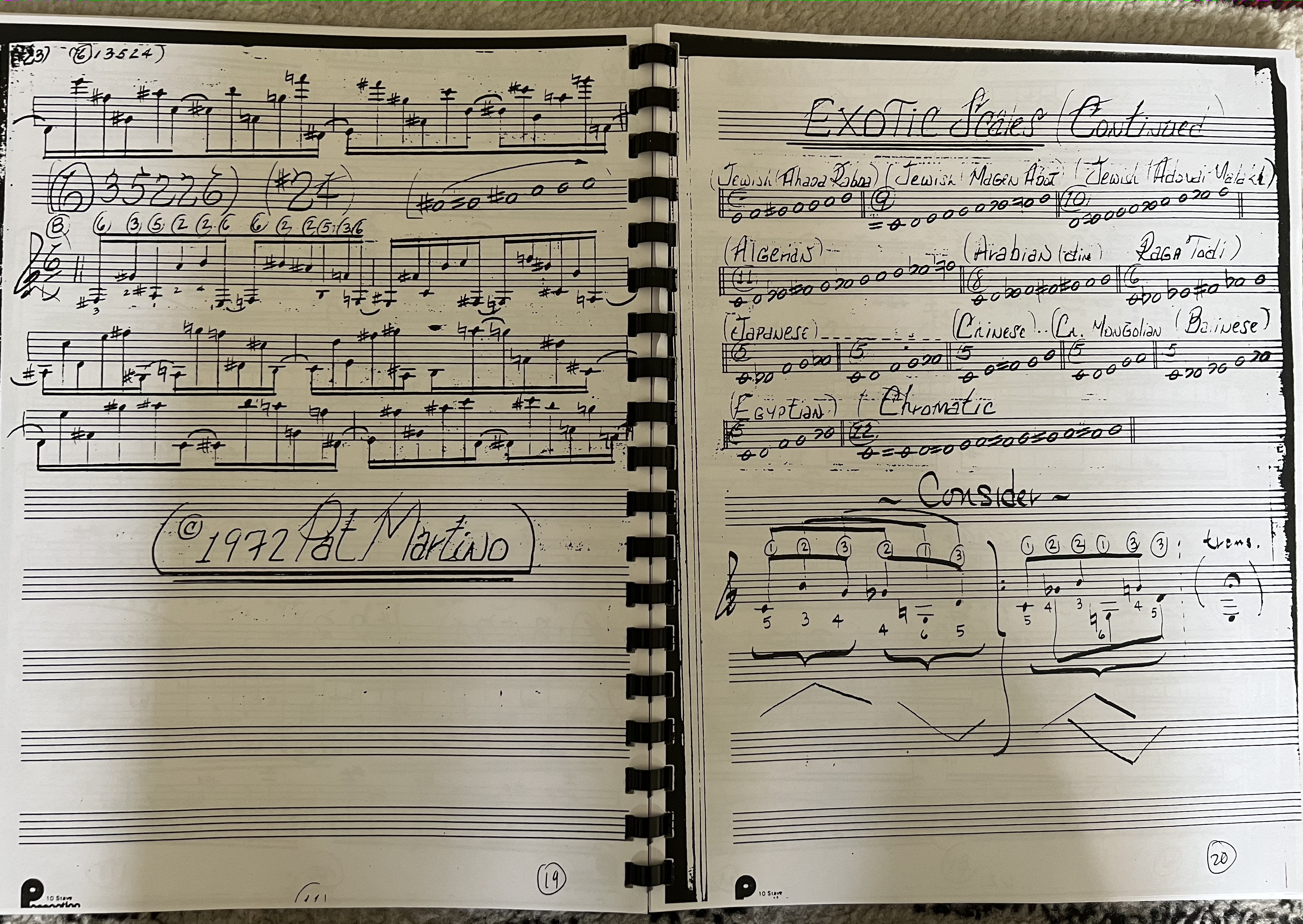
Here is an Example:
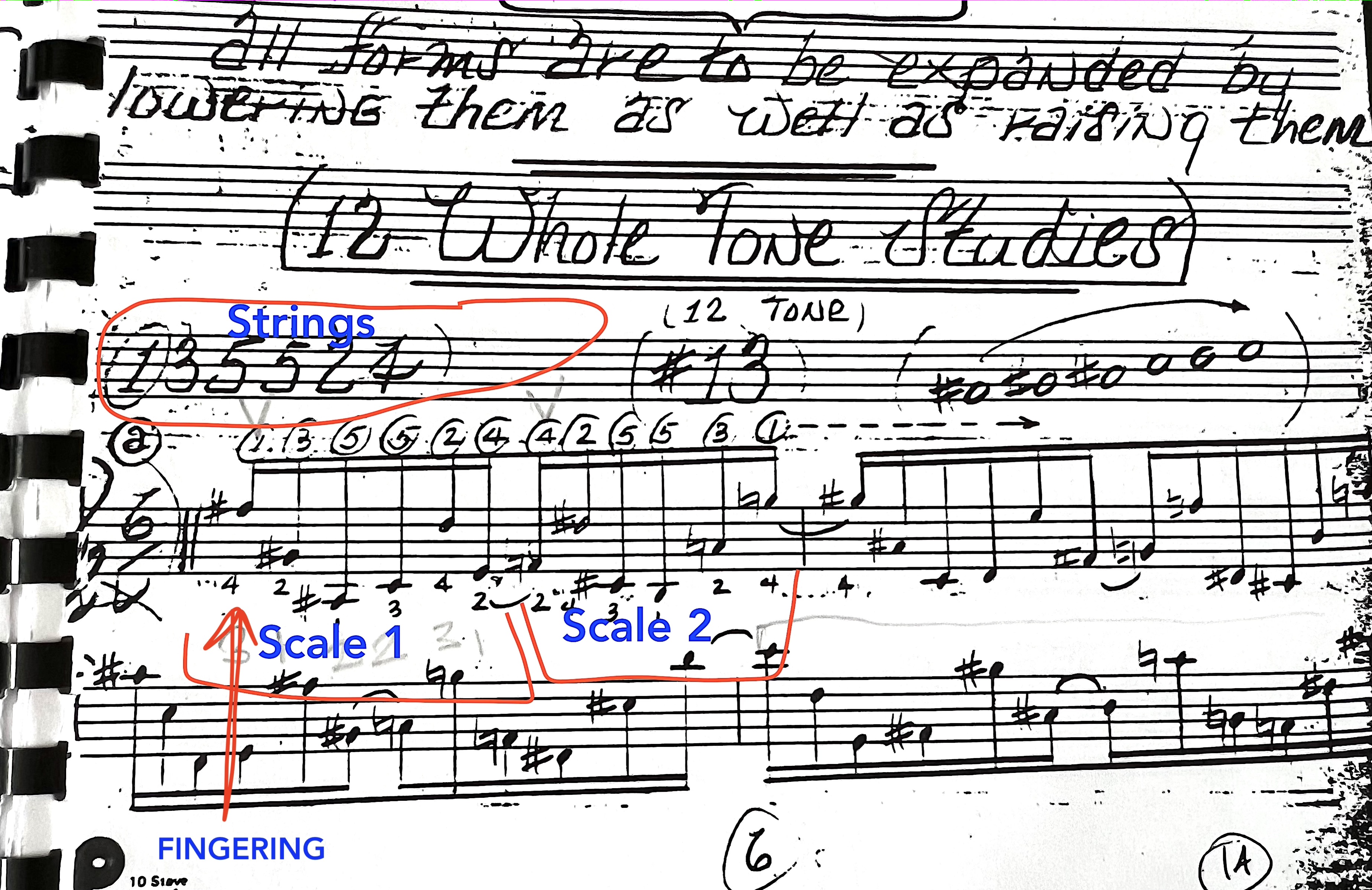
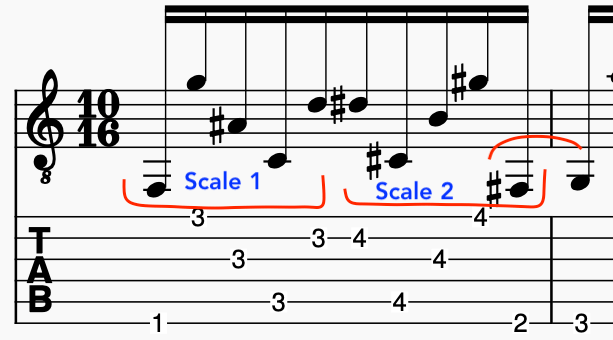
Although incomplete, here we see Pat preparing studies for the Spanish Gypsy scale, with the key points of string order and correct guitar fingering:
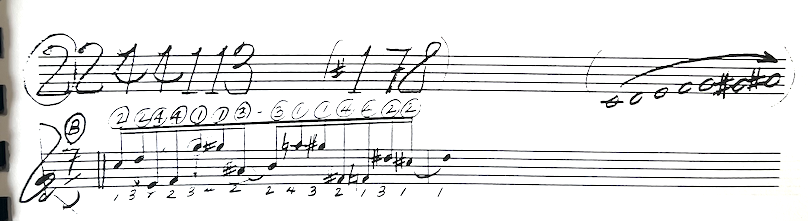
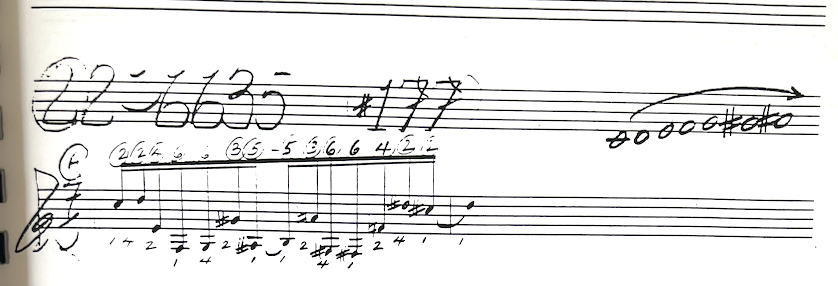
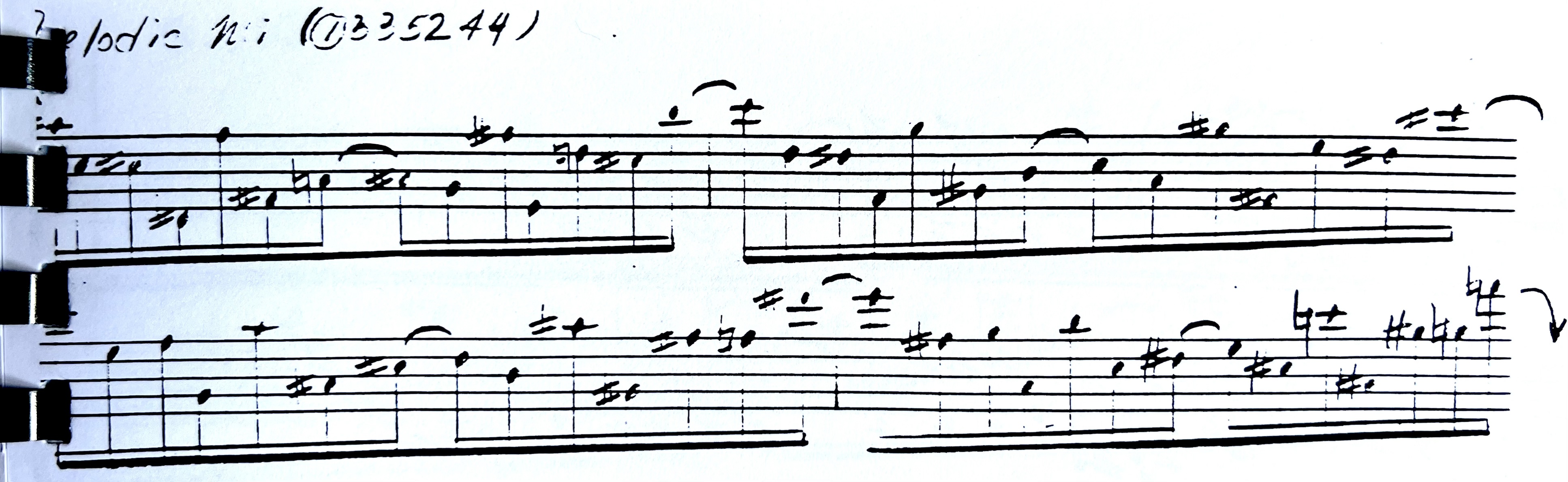
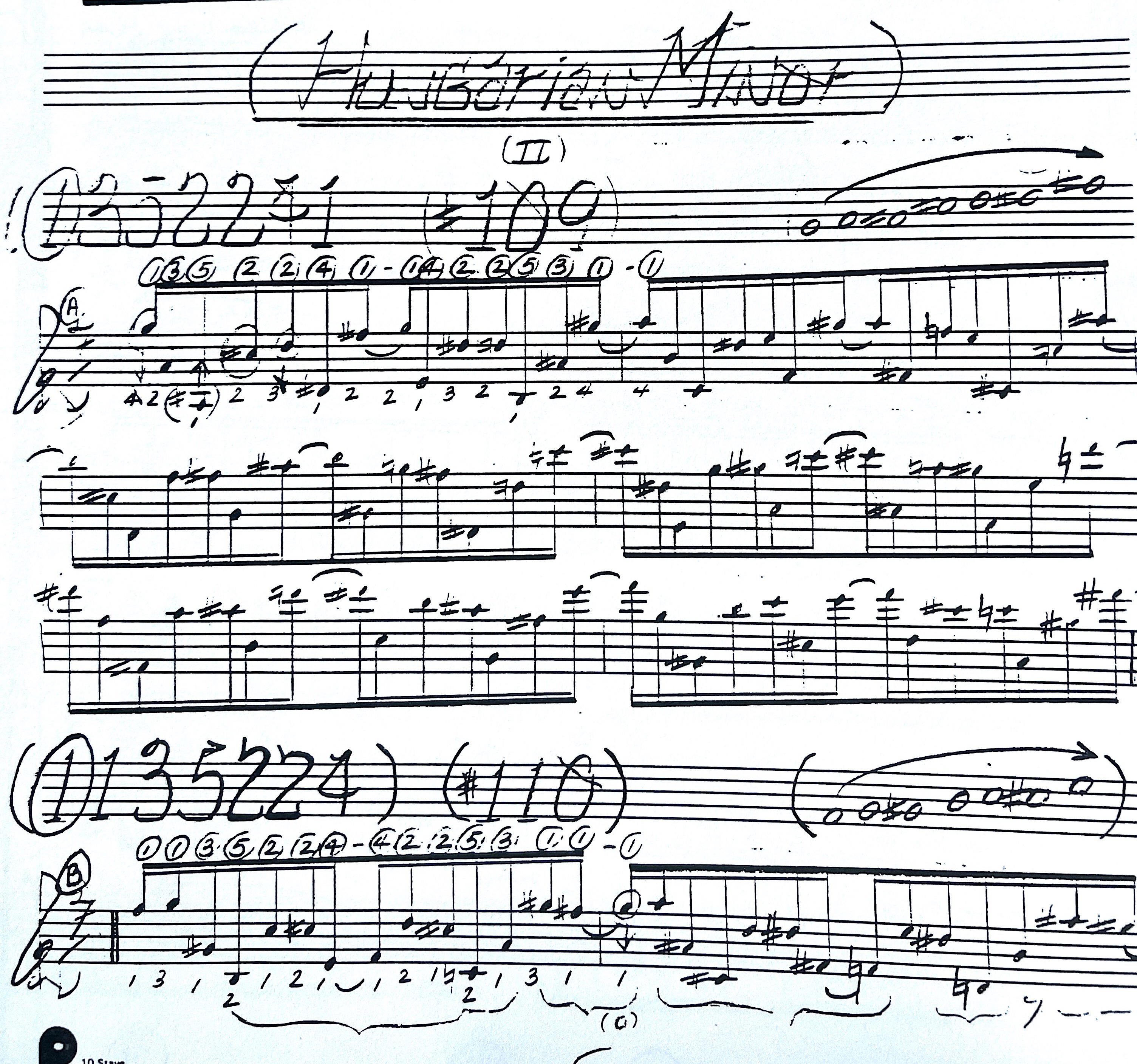
LAST EXAMPLE: FULL STUDY
Lastly, we have a full study with the Hungarian minor scale: Once again notice the string order and Pat’s choice/recommended guitar fingering.
IN CONCLUSION:
In conclusion, these are some of the important pages of the book, although there are lots more studies of interest and some more interesting pages [chords/scales] that I will publish in a later blog. But, this is the main core for those interested.
Judging by this book, although, Pat was an amazing jazz guitarist/composer and improviser he also seems to have been a great theoretician and super creative individual with a vast knowledge of music and not just jazz:
Finally, I would like to say a big thanks to Mark Koch for sending me the book and making all of this possible.
Pat Martino Intervallic Studies: Un-Published Book Lesson
PLEASE WATCH VIDEO ABOVE FOR DETAILED INFO:
Hi Guys!
Guitarist Mark Koch one of Pat’s students kindly sent me a copy of Pat’s un-published book on “Intervallic studies“.
It’s a fascinating look at the imaginative thought process and creative concepts that Pat was investigating for the development of the improvising guitarist.
Also, it’s a real eye opener for the development of scale applications and creating fresh lines form nearly every scale imaginable. This book has around 294 examples.
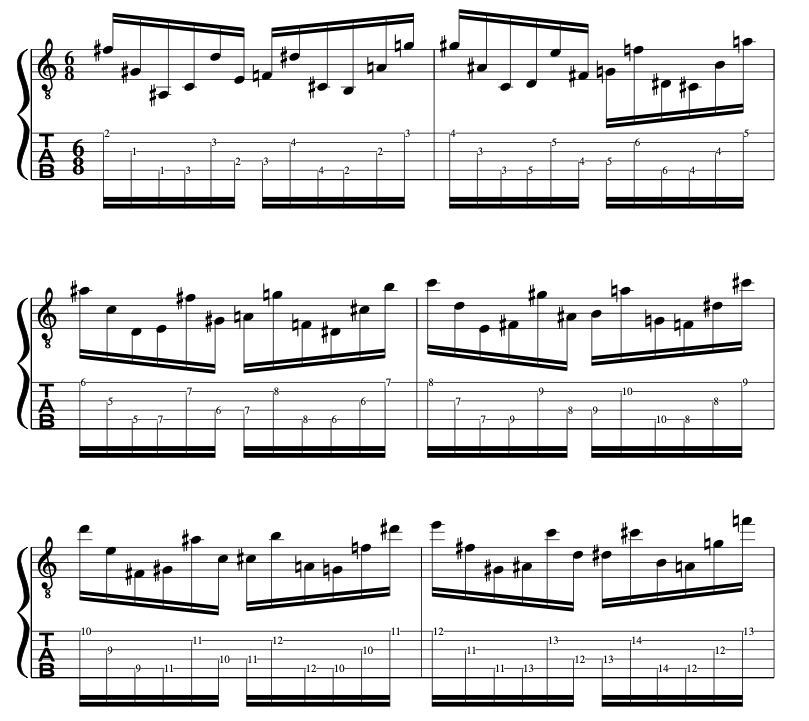
INTERVALLIC STUDY #1 “Whole Tone Scale”
In this first example we will look at the “Whole Tone Scale” Study:
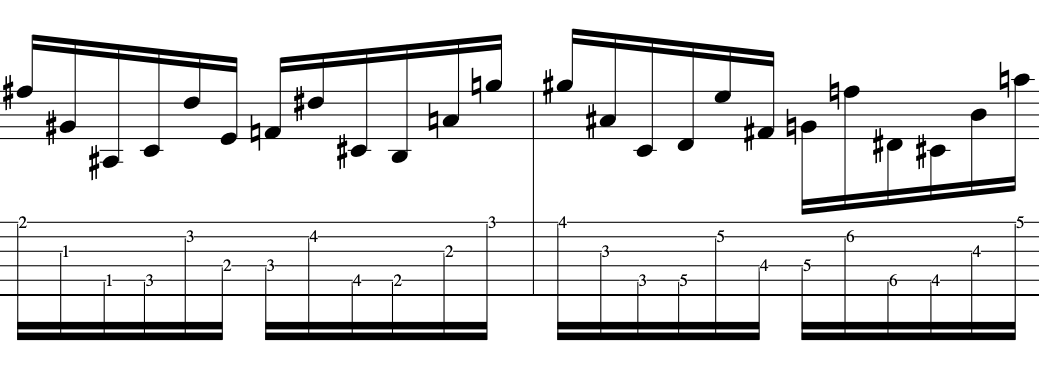
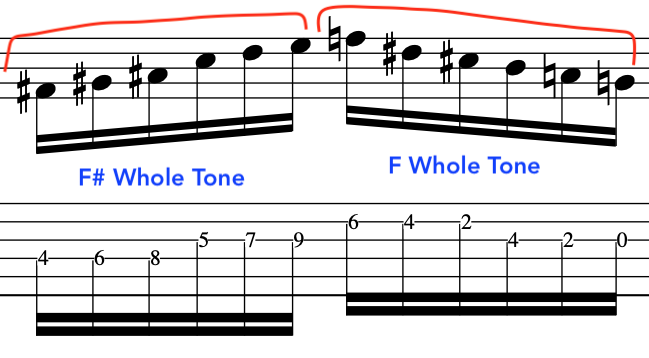
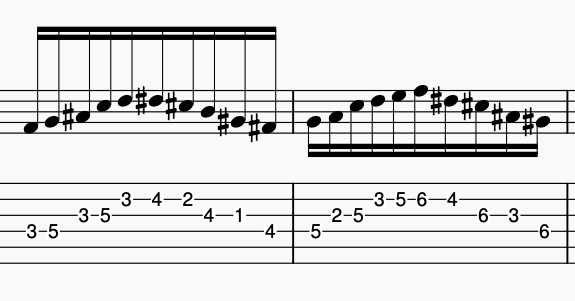
From a music theory perspective if we take away the intervallic approach and place the notes in order we will get a whole tone scale ascending followed by a whole tone scale descending:
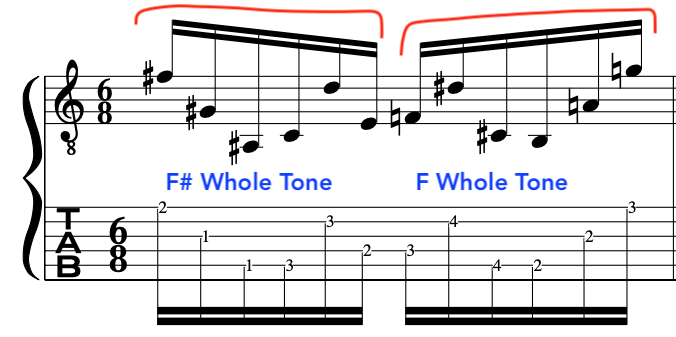
Now, we will put them back into the “Disguised” form with the clever approach of the intervallic design:
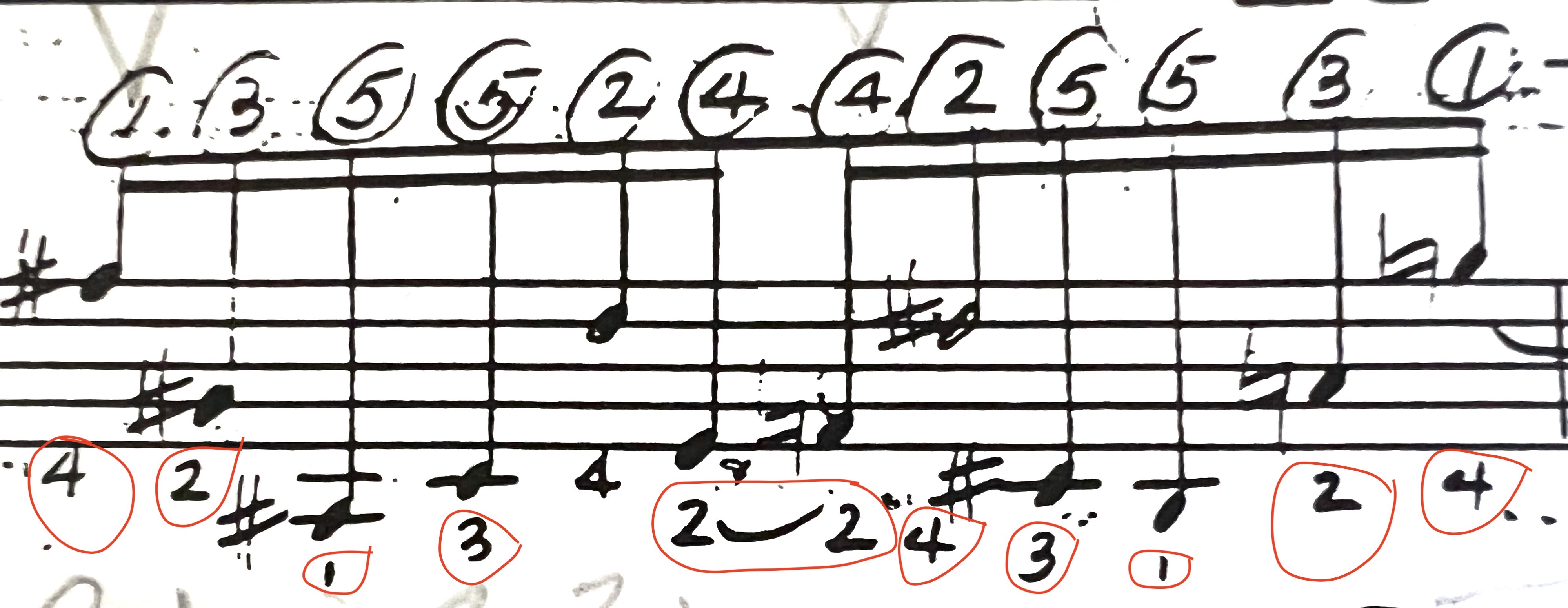
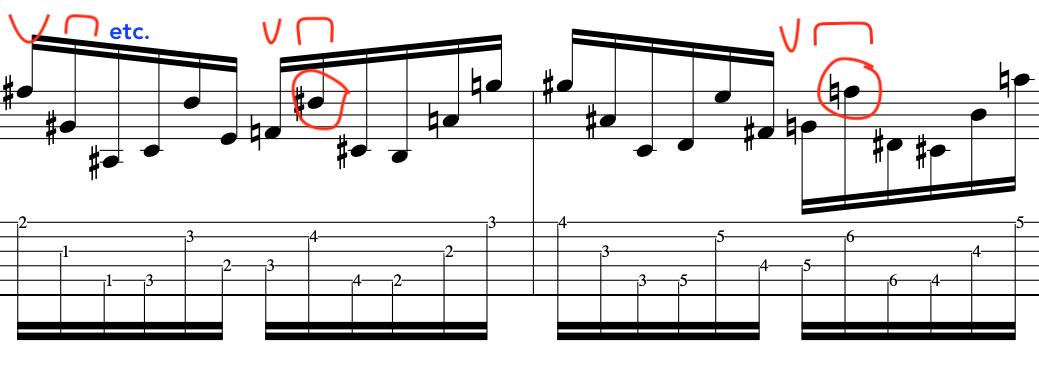
The key to playing these studies on the guitar is to decide on a methodical fingering and stick to it. [Below=Pat’s Fingering]
Also, it’s a really good idea to play in a staccato manner because there is a tendency for the open strings to resonate sympathetically with the string that has just been plucked.
I am employing strict alternate picking for this study starting on an upstroke:
FULL INTERVALLIC STUDY:
Same Study: From Pat’s book with fingering examples:
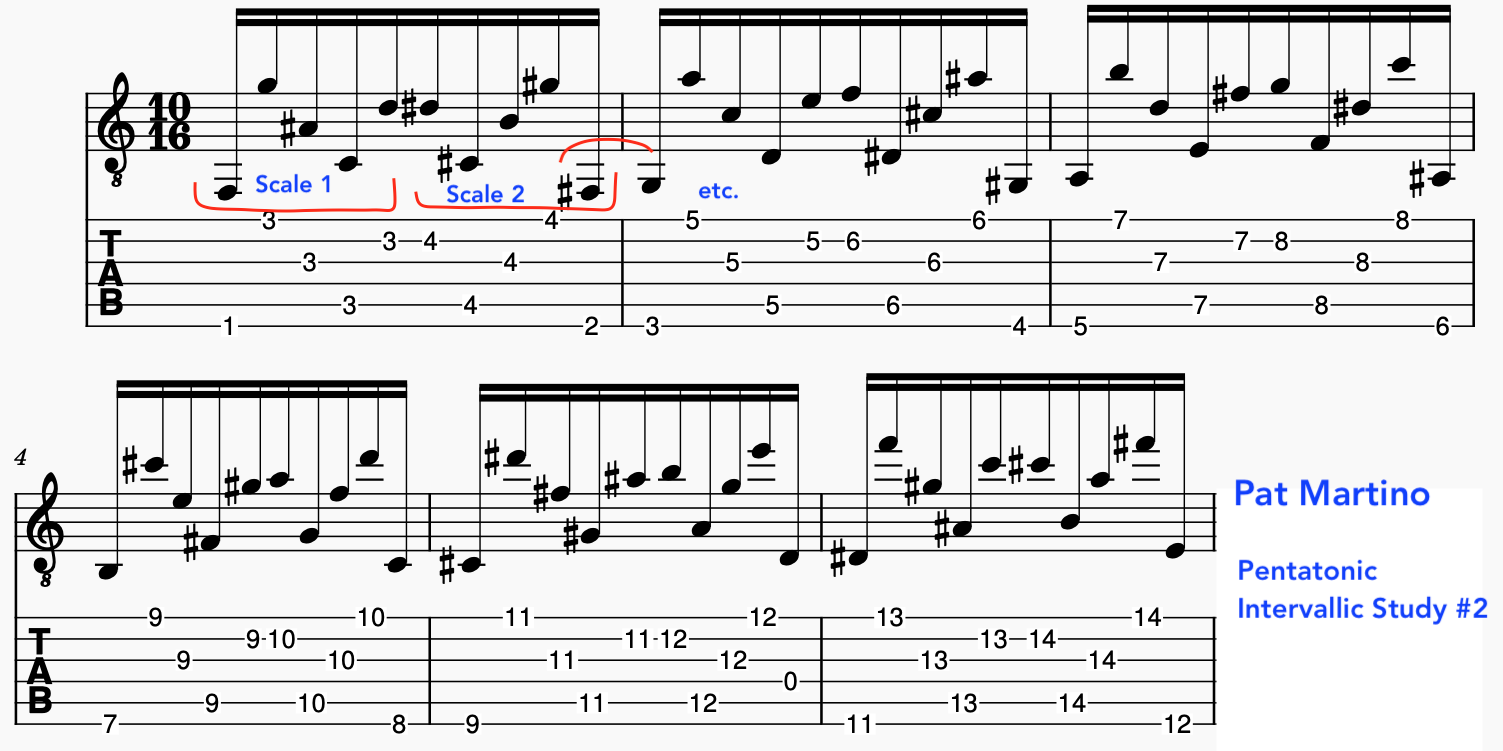
INTERVALLIC STUDY #2 “Pentatonic Scale”
Now we will look at how Pat breathes life into the pentatonic scale:
As before we will take this from a music theory perspective and remove the intervallic approach:
Here, we again find the same principle as the previous example. But, this time we have the Pentatonic scales ascending and descending:
Now, let’s disguise this with the use of intervallic exploitation and alternate picking starting on a “Downstroke”:
Same Study from Pat’s unpublished book:
INTERVALLIC STUDY APPLICATION with the “Chromatic Scale”
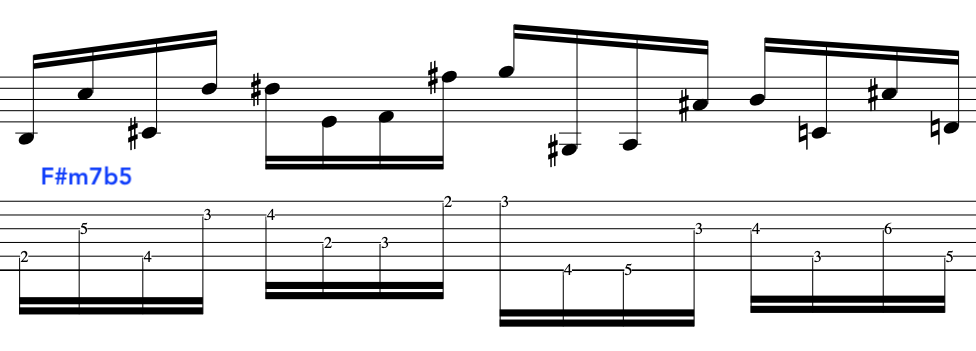
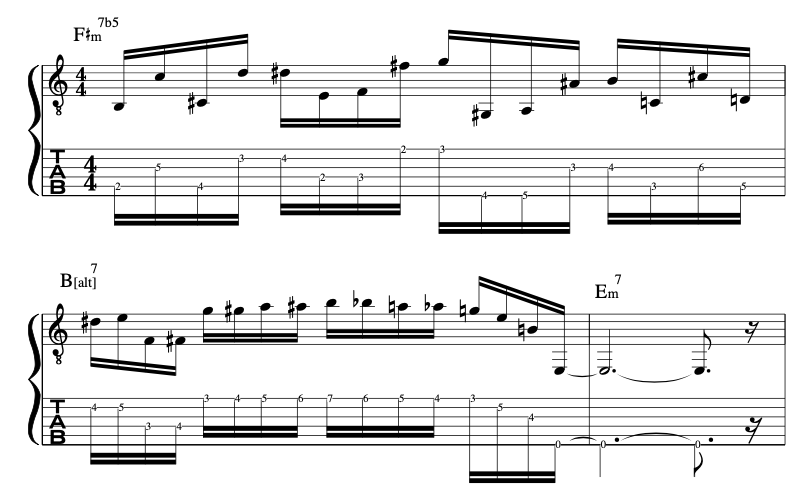
Finally, we will employ these intervallic concepts through a iim7b5 V7 i cadence.
Once again, we see the intervallic set up:
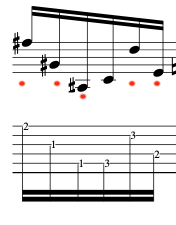
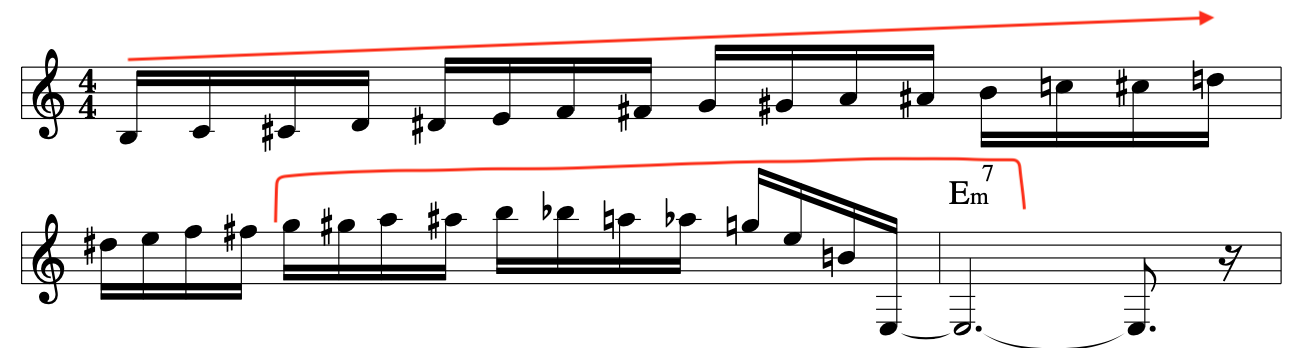
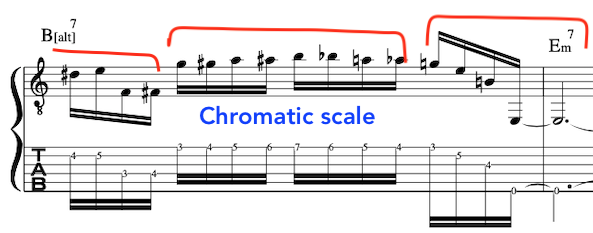
Now, let’s employ our music theory and place the intervallic notes in order. Here we find that we have the exploitation of the chromatic scale.
This clever approach is really effective because in the second bar beats 2 and 3 we have a literal chromatic scale that then anticipates the coming minor tonic chord of Em with an Em arpeggio.
Full Example:
In Conclusion:
This was just a quick look at the creative thought process and unique approach of Pat Martino, resulting in the application of this material into a minor iim7b5 V7 i improvised line to hear how they work and sound.
This approach to scales and improvising [and composing] with them is highly original and extremely useful when there is a need to bust out of cliches and seek colour and creativity in our playing.