Unlock Your Guitar Skills with Pat Martino’s Triad Pair Techniques

Hi Guys,

Today, a quick look at building interesting, creative, melodic lines by pairing simple triads together.

To begin with, let’s join the triads of F and G [back to F] together
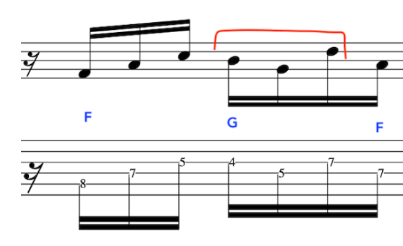
Sheet music illustrating the chord pairing of F and G triads in a melodic line of jazz guitarist Pat Martino.
Musical notation illustrating the triad pairs of F and G for creative melodic lines.

We will now, extend the line further by employing the same two triads once again,
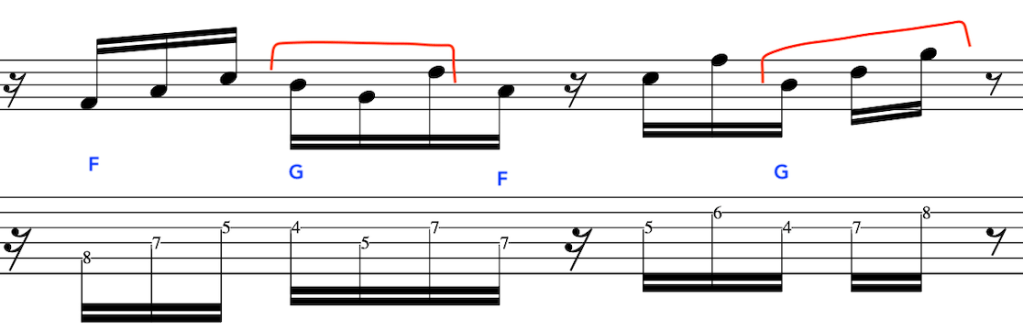
Sheet music showing melodic lines with F and G triad pairs of guitarist Pat Martino highlighted.
Pat Martino F and G triad pairs to create melodic jazz lines.

At this point we will end the phrase and create a cadence with our two triads,
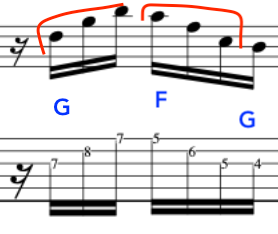
Musical notation showing the triad pairs of G and F in a jazz melodic line, with highlighted notes and annotations.
Musical notation showing the pairing of triad pairs F and G for melodic development.

We will now shape a new line and ascend with the triads of F G and C
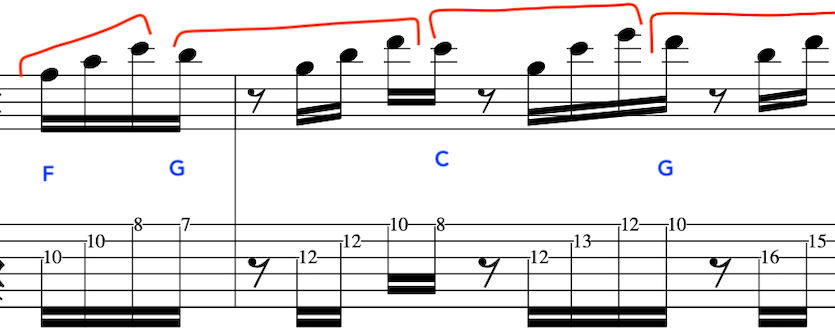
Sheet music showing pairing of triads F, G, and C of guitarist Pat Martino with annotations highlighting jazz melody and note positions.
Musical notation illustrating the use of F, G, and C triads for melodic jazz line construction.

So, we will add some colour.

To achieve this, we will now go in the opposite direction and descend with a classic Pat Martino lick
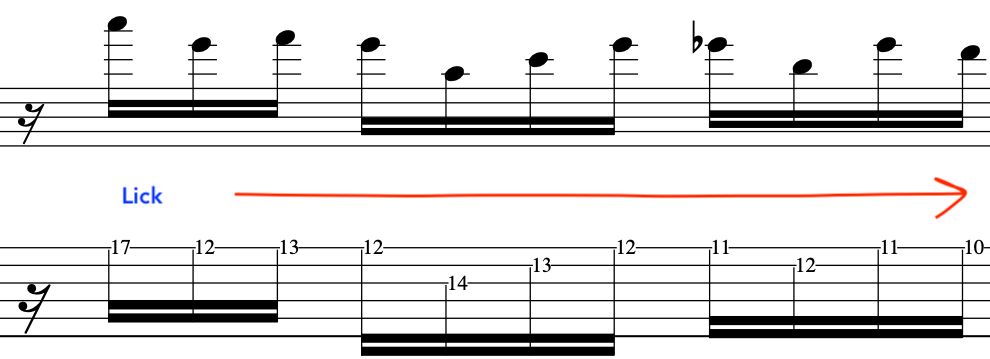
Musical notation showing a jazz guitarist Pat Martino melodic line with a labeled lick, featuring notes on a staff and highlighting specific sections for musical instruction.
Musical notation illustrating a classic Pat Martino lick, focusing on descending triad pairs.

This leads us in nicely to exploit some chromatic set ups with target tones
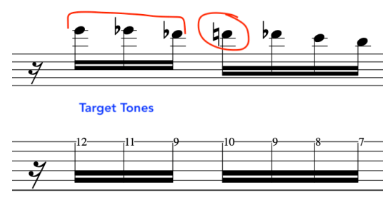
Sheet music showing jazz guitarist Pat Martino's  musical phrase with highlighted notes and text label 'Target Tones'. for chromatic improvisation.
Musical notation for guitar illustrating target tones for improvisation.

From this, we can bring in our G Major triad/arpeggio to give a wider intervallic sound to give a sense of distance from our chromatic notes.
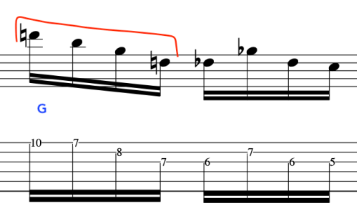
Musical notation showing a melodic line with notes and a highlighted segment in red, labeled with a G.

Finally, to complete the lick we will employ some basic scale movement with chromatic fragments for the A7 chord.
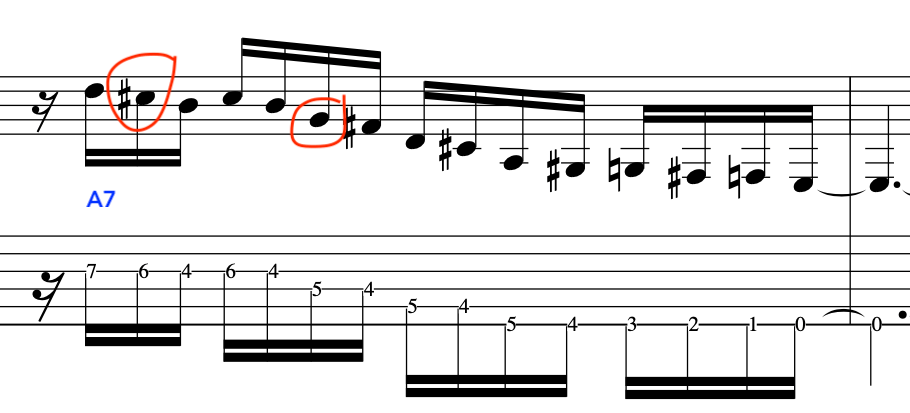
Musical notation for an A7 chord with highlighted notes and finger positions.

Although, this was a long phrase It acts as a useful example to hear and see how natural it is to build off of triad pairs for the improvised line.

These triad pairs also create a really nice melodic and fluid way to start a phrase.

Lastly, due to the way triad pairs are offset rhythmically, the improvised line generally possesses a more composed and polished sound.

John McLaughlin Pentatonic Guitar Concepts part 1:

Hi Guys,

Today, a quick look at John McLaughlin’s use of the pentatonic scale.

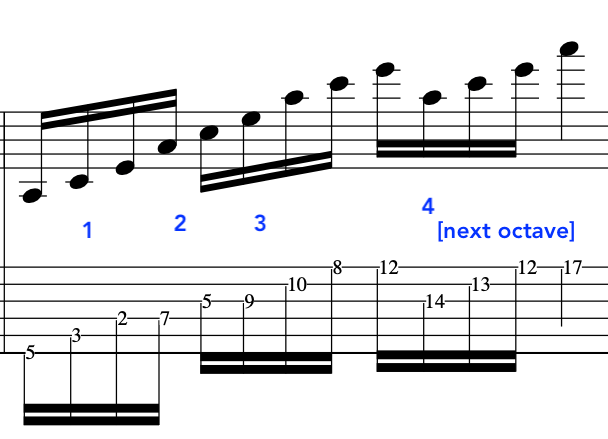
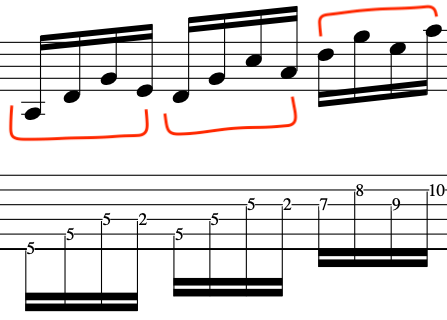
To begin with, it is a good idea to map out the fretboard of the guitar with an arpeggio.

This way we can ascertain where the different positions are.

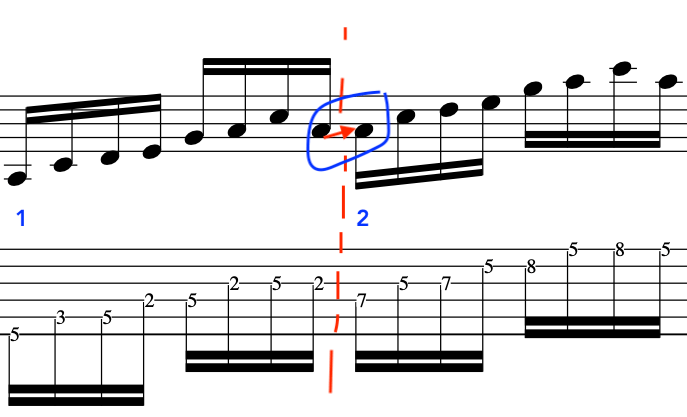
Now that we have this, let’s connect two positions together:

John McLaughlin sheet music depicting a guitar piece with notes and highlighted sections. Two distinct sections are marked with colored circles and arrows.
Diagram illustrating a guitar fretboard connecting pentatonic scale positions.

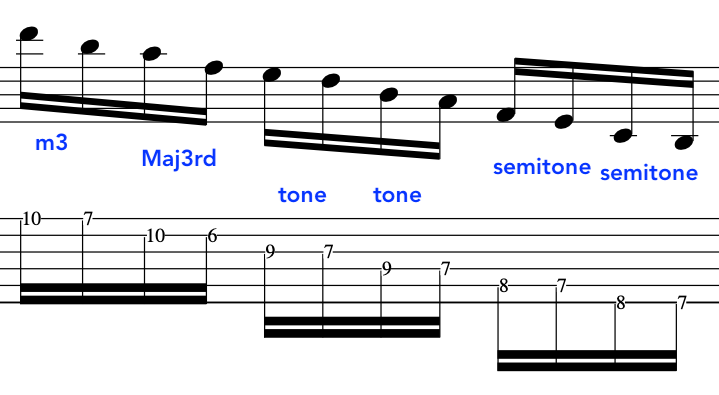
Moving up, we have this interesting scale combination:

Music sheet illustrating John McLaughlin's pentatonic scale with notes labeled for minor third, major third, tone, and semitone.
Musical notation demonstrating the McLaughlin pentatonic scale with highlighted intervals.

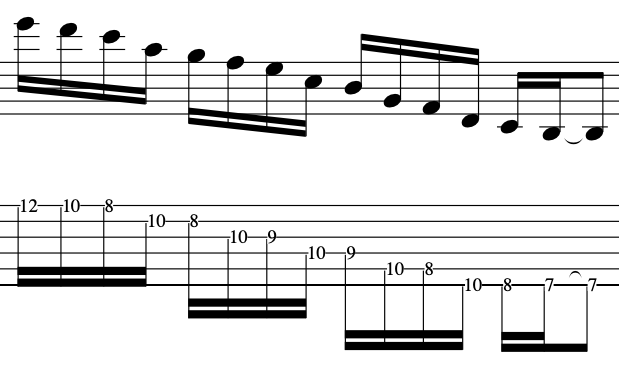
Finally, we have another pentatonic combination at the end of the octave:

A musical score showing notes and tablature for guitar, illustrating the pentatonic scale.

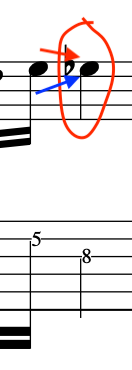
In order to create some magic, John McLaughlin naturally colours the phrase by adding a magic note.

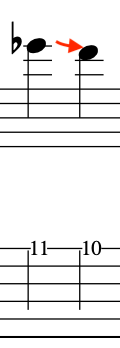
In this example it is the E natural sliding down a semitone to E flat.

Also, the Eb moving down a semitone again, an octave up to D natural.

To see/hear this in action,let’s create a phrase/line.

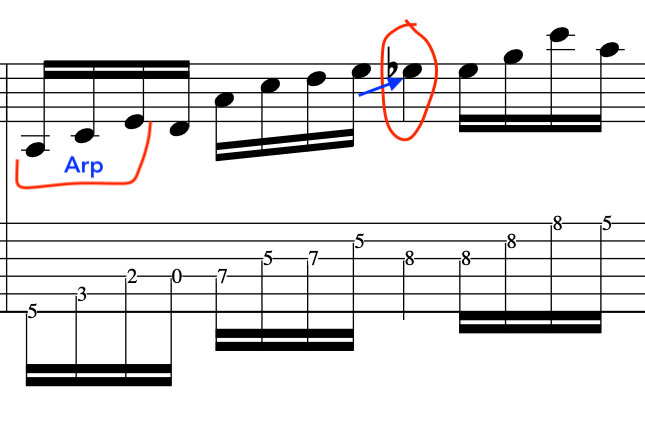
We will do this by starting with an A minor arpeggio and an open D string. This has a triad pair inflection.

This open D string also gives our fretting hand a fraction of a second to get into the next position:

John McLaughlin heet music notation displaying a guitar arpeggio with annotated markings highlighting specific notes and techniques.

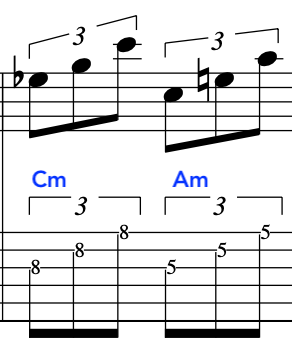
Another important point-John creates interest, by manipulating the 1st inversion minor chords on the first three strings of the guitar: In this case Cm and Am.

This gives us that spiritual or ethereal sound John is known for. It also, creates flavour and colour out of the basic minor pentatonic scale sound, yielding a more original result. [Please watch video above for demo performance]

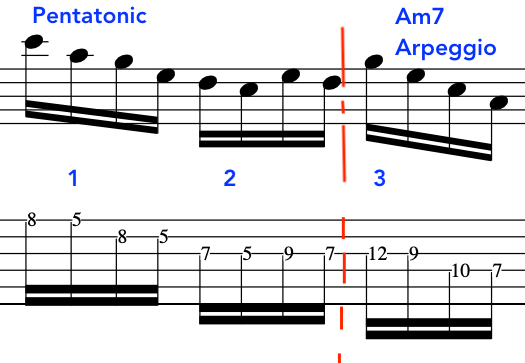
Another great idea, is to employ the minor 7th arpeggio to the pentatonic scale:

Musical notation featuring a John McLaughlin pentatonic scale and Am7 arpeggio, indicating different positions on a guitar fretboard.
Chord diagram illustrating the McLaughlin pentatonic scale and Am7 arpeggio for guitar.

Lastly, John is a master at exploiting quartal harmony to create smooth pentatonic lines.

Music notation showing guitarist John McLaughlin's use of quartal harmony at the guitar when improvising
Sheet music illustrating guitar techniques used by John McLaughlin, focusing on quartal harmony ascending

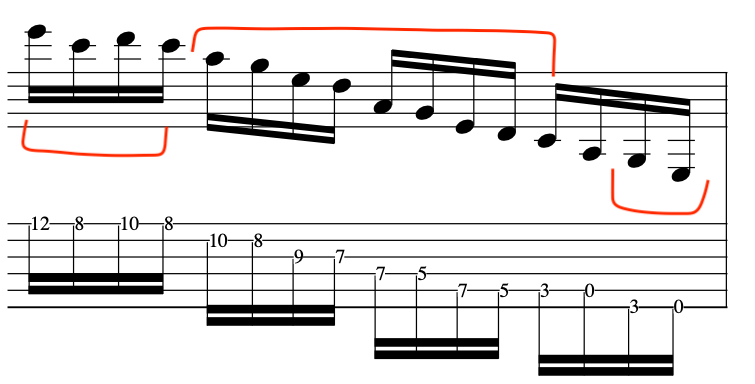
What’s great about using the minor arpeggio as a mapping tool, is that we can add notes of the pentatonic scale in between it. [Resulting in long fluid lines].

Musical notation with notes and tablature for guitar, highlighting a pentatonic scale exercise.

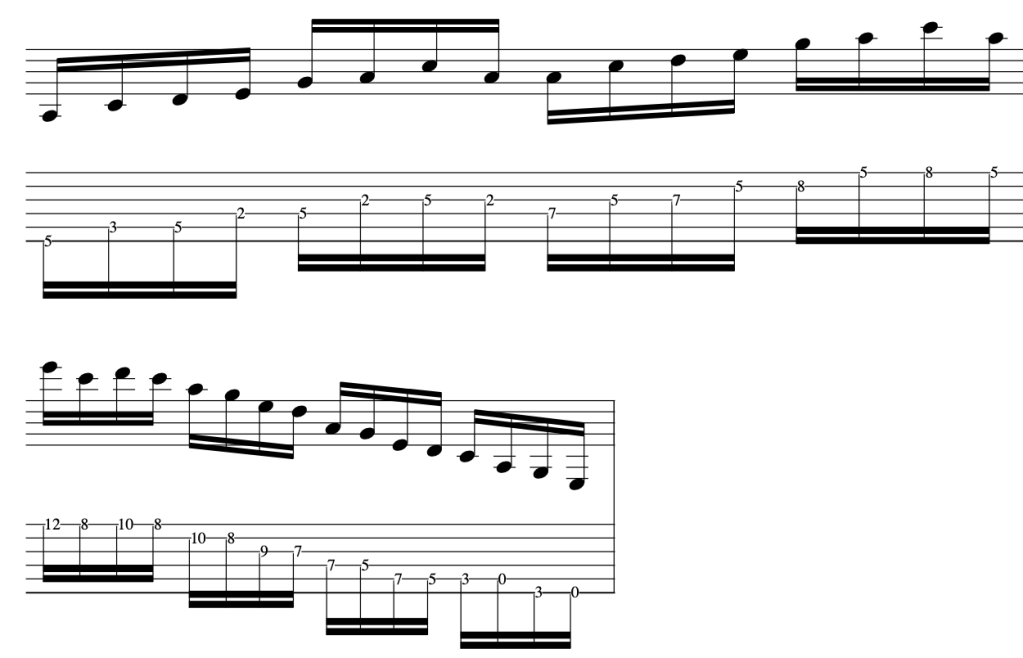
To conclude, we will take the first exercise from this blog and connect it to the pentatonic exercise above.

Sheet music illustrating John McLaughlin's pentatonic scale and various guitar techniques.
Musical notation illustrating John McLaughlin’s use of the pentatonic scale.

This was just a quick look at how John McLaughlin exploits the common pentatonic scale.

There are many other approaches to this like those found in John McLaughlin’s educational video “This is the way I do it”.

But, the concepts detailed in this blog/lesson work really well as a primer for John’s live performances/improvisations.

Mastering John McLaughlin’s Unique 13th Chord Voicing

Hi Guys,

Today, a quick look at the unique 13th chord Voicing of guitar maestro John mcLaughlin.

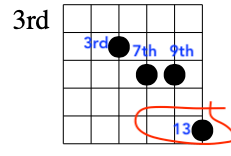
This unique voicing possesses a 7th a 9th with the 13th ringing out on top. It has a lovely sonorous tone :

Diagram showing a guitar chord with labeled notes: 3rd, 7th, 9th, and 13th. John McLaughlin 13 chord voicing.
Diagram of a 13th chord voicing showing the 3rd, 7th, 9th, and 13th notes, highlighting the unique structure.

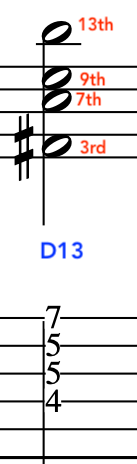
This chord works really well because it’s a 1st inversion, and, without a root it gives us that slightly ethereal painted sound:

Diagram of a D13 chord showing the 13th, 9th, 7th, and 3rd notes labeled.
Diagram illustrating the D13 chord voicing with 7th, 9th, and 13th notes labeled.

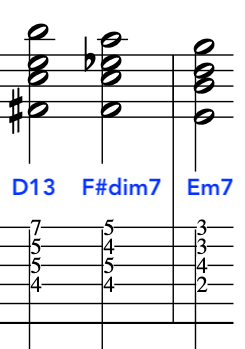
The sonorous nature of this chord makes it shine when moving to a diminished 7th chord for a resolution:

Sheet music showing chord voicings labeled D13, F#dim7, and Em7. John McLaughlin guitar chord examples.
Chord diagram showcasing the D13, F#dim7, and Em7 voicings, essential for understanding the unique textures in John McLaughlin’s 13th chord progression.

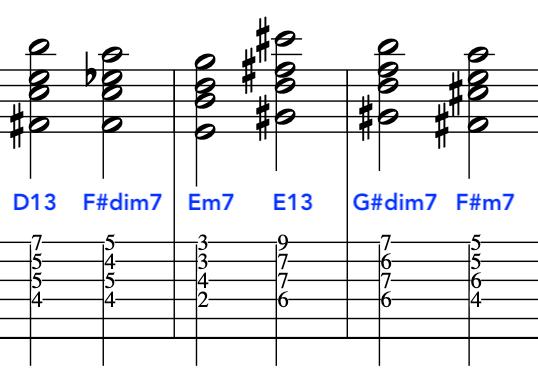
This in turn rewards us with fantastic melodic sequences:

Chord chart showing musical notation for D13, F#dim7, Em7, E13, G#dim7, and F#m7 chords. John McLaughlin guitar harmony lesson.
Chord progression illustrating John McLaughlin’s unique 13th chord voicing with associated diminished and major chords.
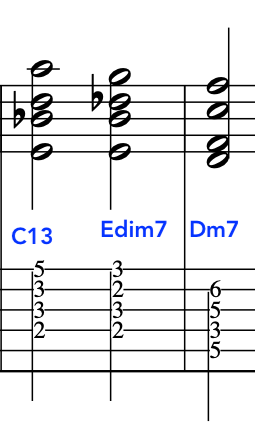
Guitar chord diagram showing C13, Edim7, and Dm7 voicings.
Chord diagram illustrating the C13, Edim7, and Dm7 voicings, highlighting their unique structures and relations.

Now, let’s make a sequence by employing strong Major 9th chords that move to John’s brilliant voicing.

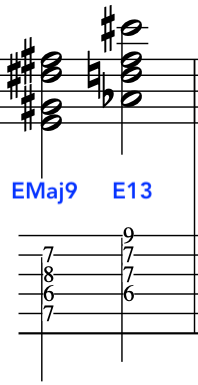
If we play the example below we can hear the resonant nature of the two chords.

Musical notation displaying EMaj9 and E13 chords, indicating finger placements on the guitar fretboard.
Chord diagram illustrating E Major 9 and E13 chord voicings in a musical lesson.

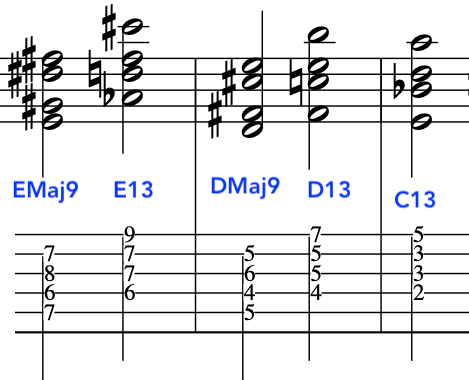
Now, let’s create a little chord sequence with them:

Sheet music showing chord voicings for EMaj9, E13, DMaj9, D13, and C13 with annotations and finger positioning in John McLaughlin's guitar style.
John McLaughlin Chord sequence illustration featuring E13, D13, and C13 voicings.

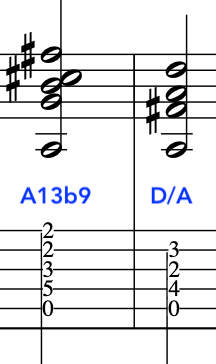
To complete the sequence, we will cadence with a13b9 chord back to the tonic D

Musical notation showing the John McLaughlin A13b9 chord and D/A chord with finger placements for guitar.
Chord diagram for A13b9 and D/A used in the sequence demonstrating John McLaughlin’s 13th chord voicing.

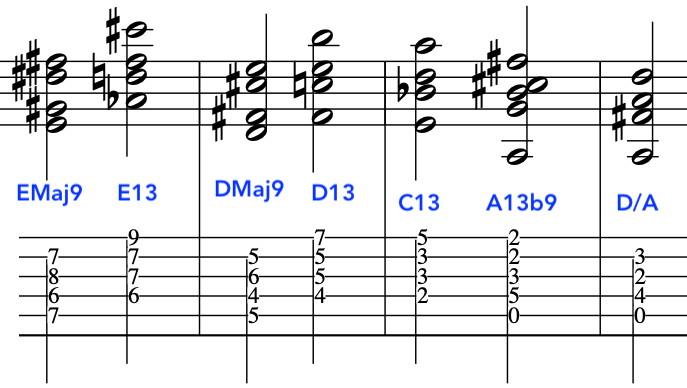
Here, is the full sequence:

Musical notation chart displaying John McLaughlin's various chord voicings including EMaj9, E13, DMaj9, D13, C13, A13b9, and D/A.
Chord sequence illustrating John McLaughlin’s unique 13th chord voicing alongside related Major 9th chords.

PART 4:

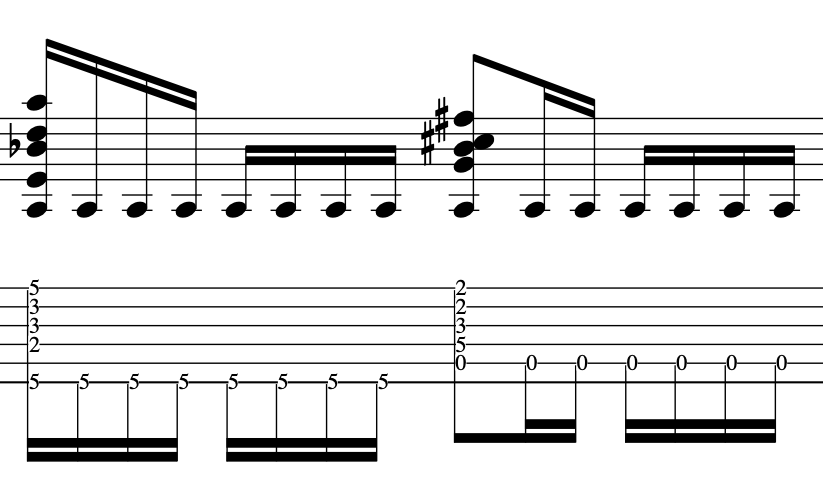
John, also makes good dramatic use of this chord by exploiting a pedal note in the bass for rhythmic drive.

Musical notation for a John McLaughlin guitar pedal riff, showing measures with notes and tablature.
John McLaughlin use of pedal note in chord riff.