Improve Your Guitar Skills with Alternate Picking Techniques

Alternate Picking Guitar Technique Lesson

Hi Guys,

Today, a few alternate picking guitar exercises.

These differ slightly as they incorporate alternate picking to chord and back to alternate picking technique.

Adding a chord [or chords] can throw some players off when alternate picking, so these exercises can be really helpful.

All of these little exercises are around the 140 bpm metronome marking.

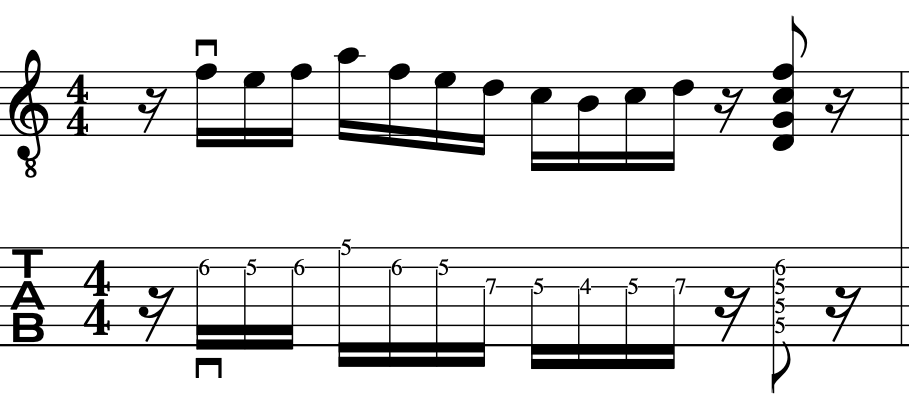
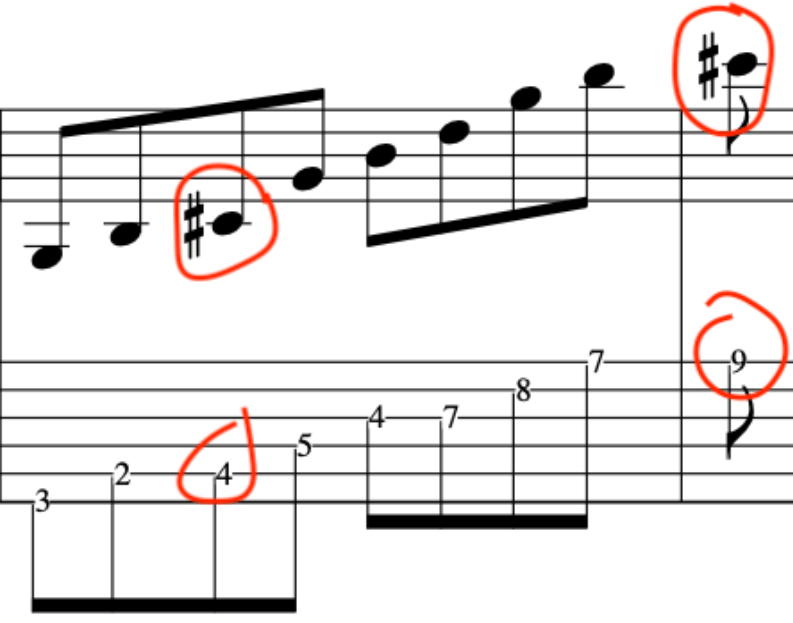
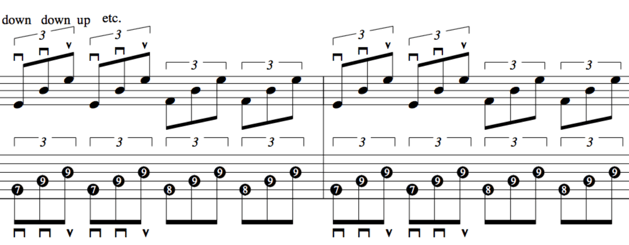
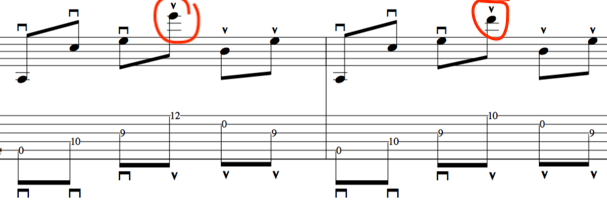
In this primer exercise we will have two sets of 16th notes that then accent a D quartal chord.

This exercise starts on a Downstroke and accents the 3rd note in each 4 note grouping.

Sheet music with notes on a staff, featuring a clef, and measures containing various rhythmic patterns and symbols for alternate picking guitar technique.

By accenting these pitches it will make picking the exercise much smoother, due to the the last 2 notes in each 4 note grouping being prepared for and hence plucked in a deliberate fashion.
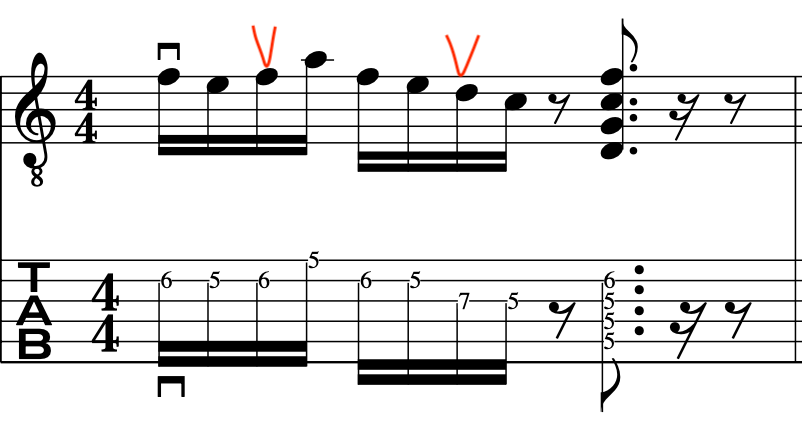
Sheet music showing a 4/4 time signature alternate picking guitar technique featuring a melody line with notes and guitar tablature below.
Musical notation for a guitar exercise focusing on alternate picking with accents.

This time we will extend the previous exercise, but, start in the bar on the 2nd semiquaver.

Again, these simple concepts will affect how you pick. So, this is set as if it is for a riff or hook that is doubled up with another instrument, hence, creating a much more compositional approach.
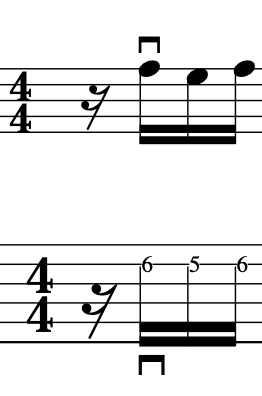
Sheet music with two measures in 4/4 time signature, featuring dotted quarter notes and half notes for alternate picking guitar technique.
Sheet music for alternate picking guitar exercise focusing on chord integration.
Musical notation for alternate picking guitar technique exercise on a staff in 4/4 time with notes for guitar, including standard notation and tablature. How to alternate pick easily.
Musical notation and tablature for Exercise 3, showcasing alternate picking techniques for guitar.

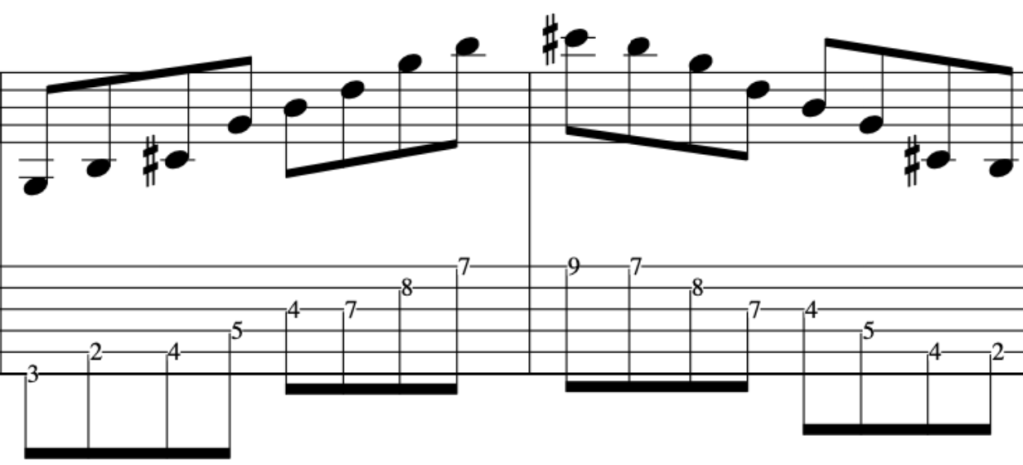
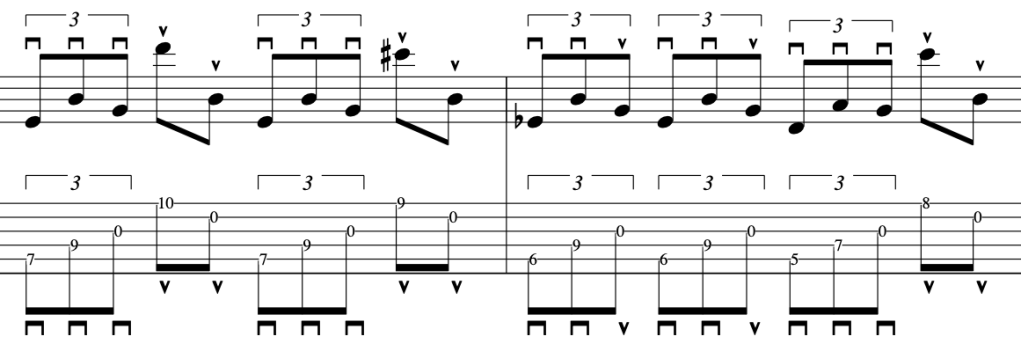
This time we will ascend and descend.

This exercise demonstrates the different amount of notes per string.

But, real music dosen’t work that way as we have – Melodies/Vamps/Hooks/Riff/Unison Instruments-this means, there maybe 1 note on one string and 4 notes on the next string and then 2 notes on the next string and then 3 notes etc.

This exercise is tailor made for the above, as, it employs the two main music devices being that of an arpeggio and scale.

Here is the first part.
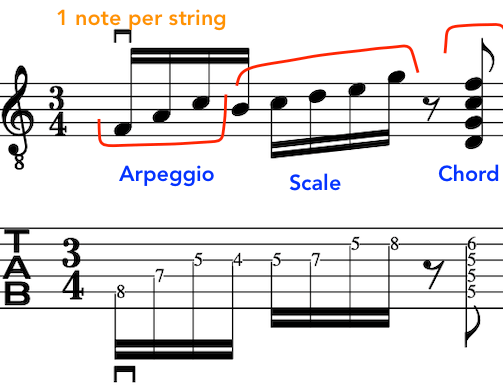
Musical notation showing an alternate picking guitar exercise with arpeggio, scale, and chord, with a guitar tablature notation underneath.
Guitar alternate picking exercise showing arpeggio, scale, and chord for varied note patterns.

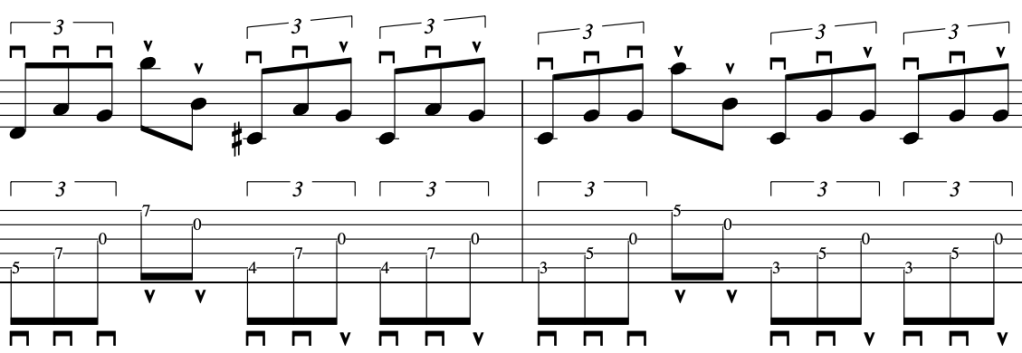
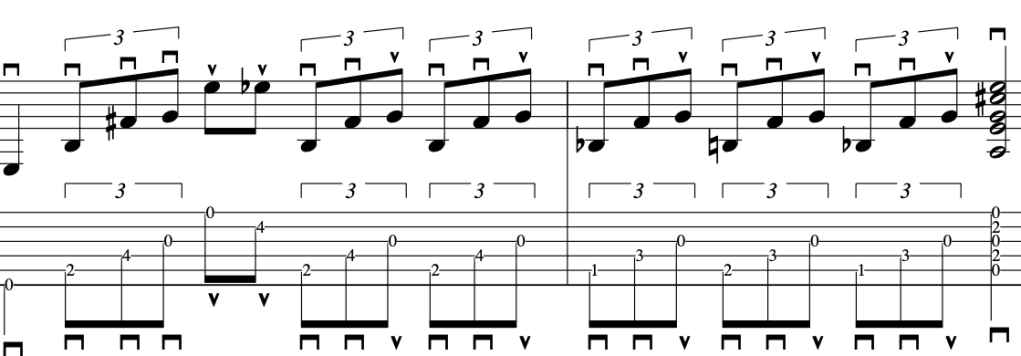
The second part, starts on an Upstroke, because, we finished the last phrase on a downstroke as we plucked the chord.
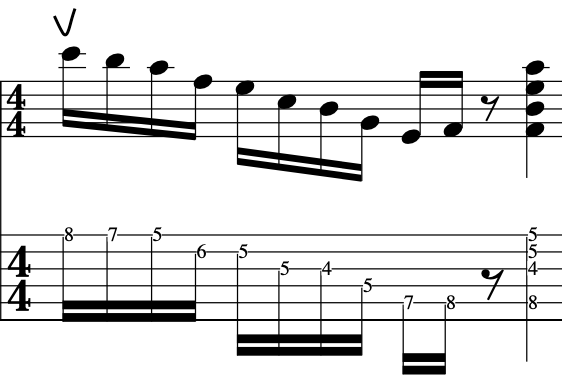
Musical notation showing a series of alternate picking guitar technique notes in 4/4 time signature, including both treble and bass clef sections, indicating a melodic sequence and finger positions.
Sheet music for Exercise 3, illustrating descending guitar patterns for alternate picking.

This exercise involves crossing over to the 1st string and back again, with different amounts per string.

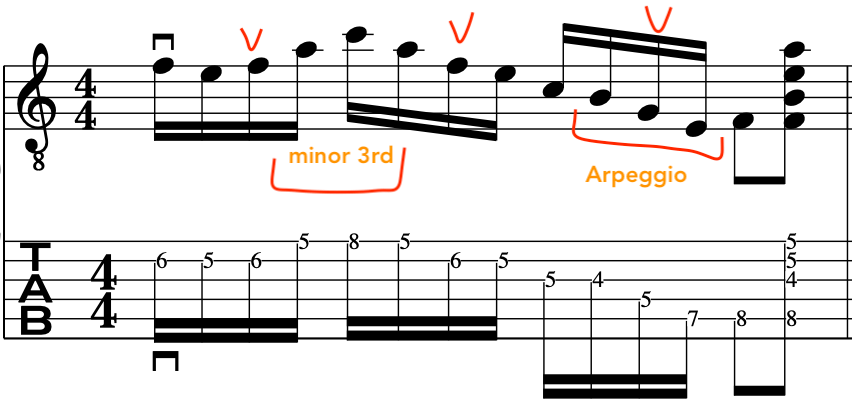
So, to begin with let’s break this down into a simple 2 string exercise:

As before, notice the accents on the 3rd note in each 4 note grouping:
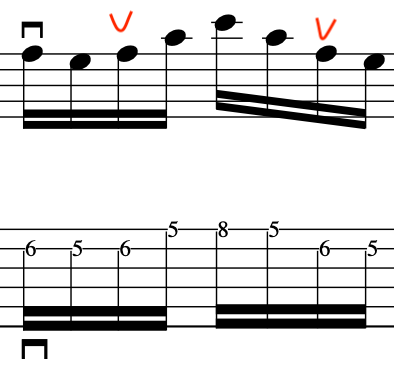
Musical notation sheet showing alternate picking guitar technique a series of notes and symbols, including two sections of tablature indicating finger placements on a stringed instrument.
Detailed notation for a guitar exercise focusing on alternate picking with accents on specific notes.
Sheet music showing alternate picking guitar technique in a series of notes in 4/4 time signature with labels for a minor third and arpeggio.
Musical notation and tablature for a guitar alternate picking technique exercise, highlighting a minor third and arpeggio.

These exercises are just a few ideas that are really useful when working on alternate picking guitar technique.

This is because many hooks and vamps and compositional devices don’t work on 3 note per string picking.

The great improvisers like John McLaughlin, Don Mock and Pat Martino play long fluid phrases along with weaving in and out of chords, chromaticism and implied harmony [double stops/Octaves]. So, being able to pluck odd and even groupings [or any amount of notes per string] with embellishments and chords is essential.

Hopefully, these exercises will be of some help with that.

Understanding the Maj7#11 Chord for Guitarists

Hi Guys,

Today, a look at the Maj7#11 chord, a favourite of guitarist John McLaughlin.

This is really a lydian chord due to the sharpened 11th note.

In our example and analysis, we will look at the harmonic implications through the tonality of G Major.

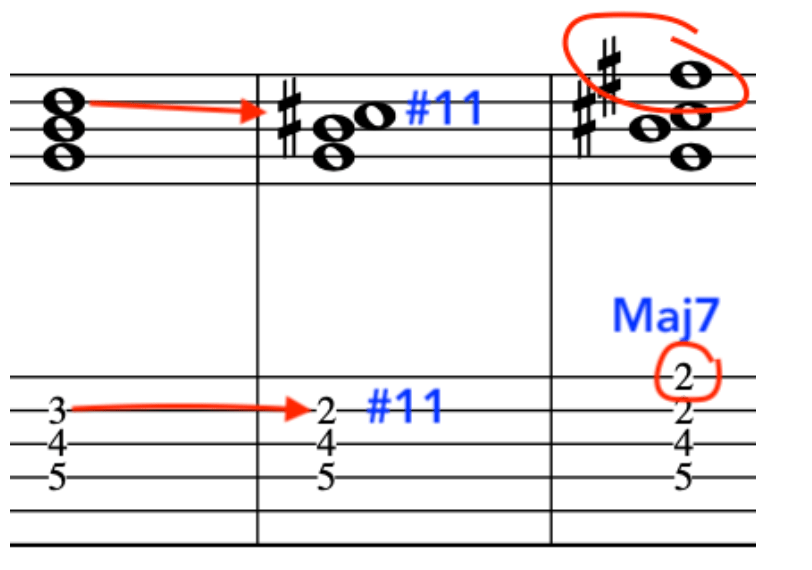
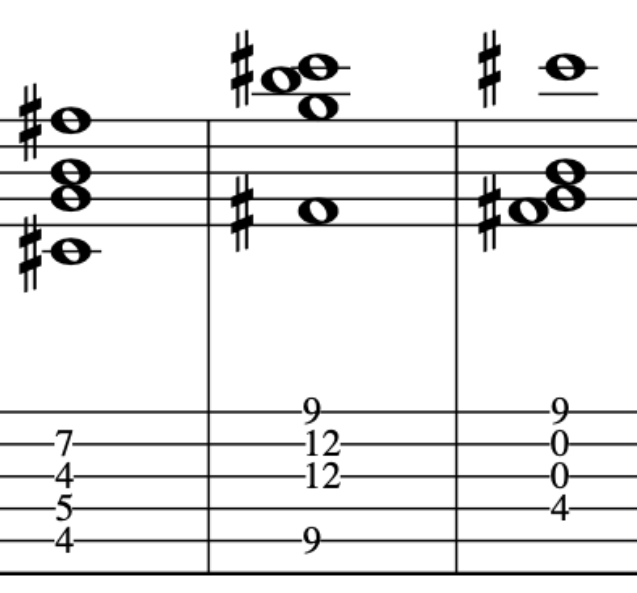
Below, we can see the 5th of G Major, the note D moves down a semitone to the note C# [the sharpened 11th]. On top of this we will place the Maj7th note in G Major. This is the note of F#.

Sheet music depicting the Maj7#11 chord with annotations for G Major tonality, including note positions and symbols.
Musical notation illustrating the G Major – Maj7#11 chord features/Construction.

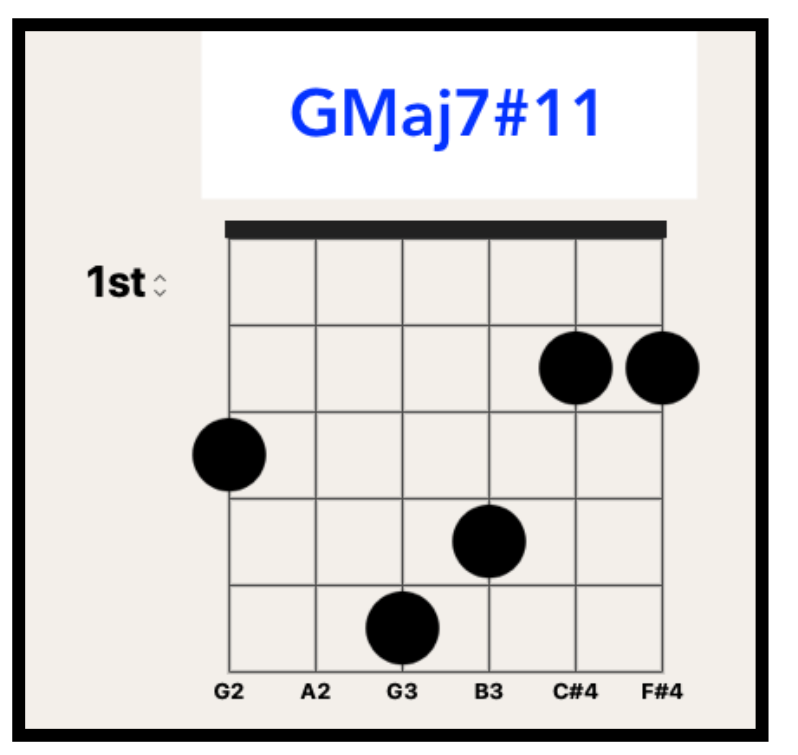
Here, is a classic guitar shape/voicing with the tonic note of G in the bass:

Diagram showing the Gmaj7#11 chord for guitar, with labeled fret and string positions.
G Major 7 Sharp 11 Chord Diagram with Fingering [GMaj7#11]

Let’s now create an arpeggio outline of the chord:

Sheet music showing a musical notation example for a Maj7#11 chord and arpeggio voicing, with specific notes and finger positions highlighted.
Musical notation illustrating an arpeggio in the context of a Maj7#11 chord.

We will now ascend and descend the arpeggio outline, as this will give us control over the harmony when improvising on the solo line.

Musical notation displaying a sequence of notes and chords, illustrating an arpeggio pattern for the Maj7#11 chord.
Arpeggio exercise featuring the Maj7#11 chord in the context of G Major.

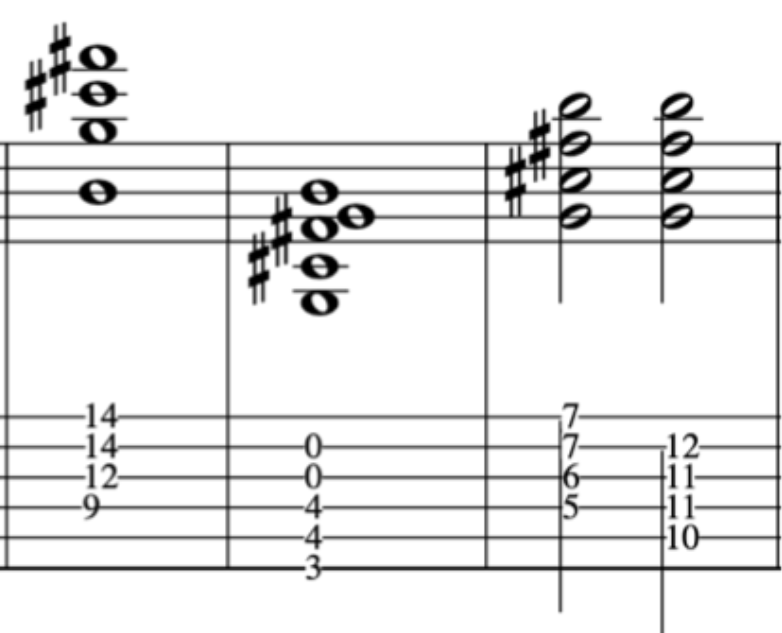
Below, are examples of various voicing’s and variations for all instruments, but, especially the guitar.

This is because certain voicing’s resonate extremely well on the guitar, whereas, others can become muddy in sound.

The voicing’s below offer quite a few possibilities,

Musical notation for a Maj7#11 chord on guitar, showing frets and strings and chord voicing's.
Various chord voicings for the Maj7#11 chord on guitar.
Musical notation displaying a Maj7#11 chord with highlighted notes.
Musical notation for a Maj7#11 chord, depicting various notes and finger positions on a guitar.  As used by John McLaughlin Al di meola and Pat Martino
Musical notation illustrating the Maj7#11 chord voicing.
Sheet music showing a G Major scale with indications for a Maj7#11 chord, along with guitar tablature highlighting finger positioning.
Sheet music illustrating the Maj7#11 chord with guitar tablature, showing notes and finger positions.
Sheet music showing a Maj7#11 chord with notes and tablature for guitar.

We, will now make a ii V7 I cadence with this chord, in order to see, hear and understand how to apply it to composition.

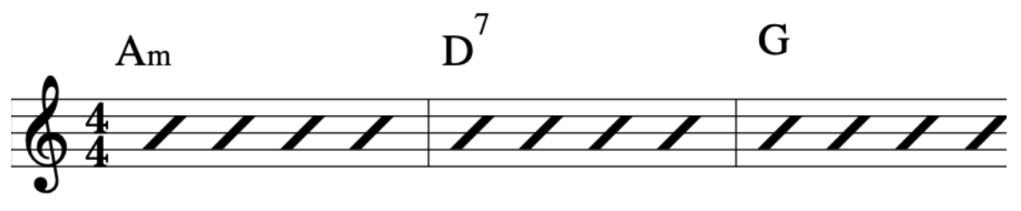
Firstly, let’s take a simple ii V I in G major.

A musical notation showing a ii-V-I chord progression in the key of G major, featuring Am, D7, and G chords.

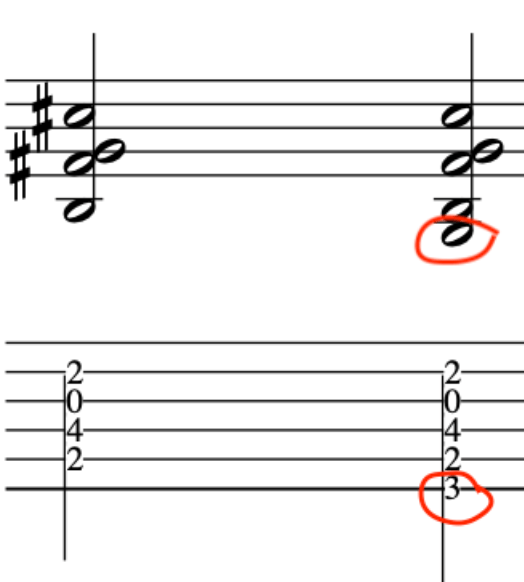
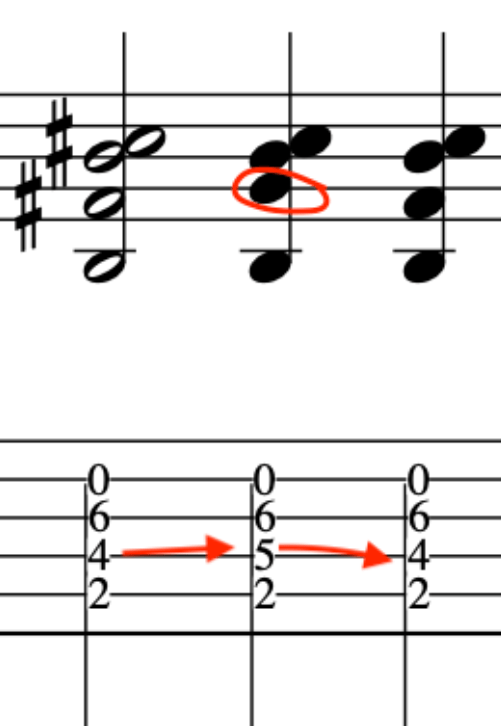
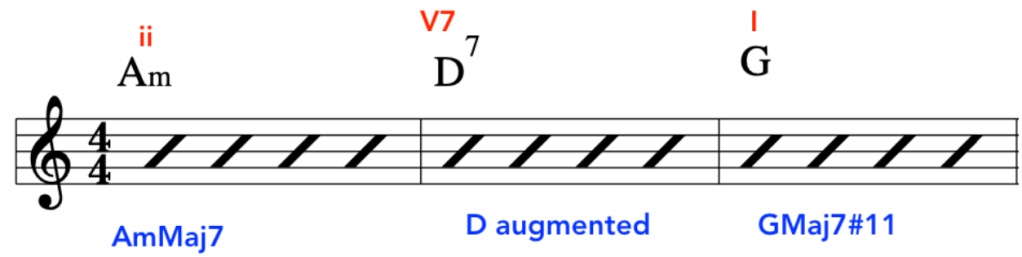
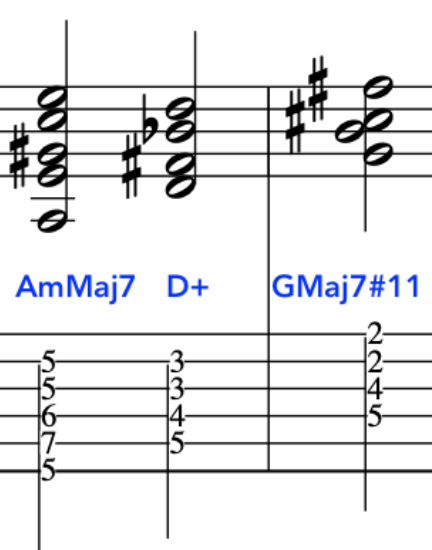
Now, we will substitute the Am for AmMaj7 and the dominant chord D7 for D Augmented. This will allow us to finally rest on the Gmaj7#11 chord. [A sort of ethereal rest]

A sheet of music notation displaying a substitution of a ii V7 I cadence progression in G major, altered as AmMaj7, D augmented, and Gmaj7#11 chords for jazz reharmonisation.
Musical notation illustrating the ii V7 I cadence substitution featuring AmMaj7, D augmented, and G Maj7#11 chords.
Musical notation diagram displaying the chords AmMaj7, D+, and GMaj7#11, with corresponding finger positions for guitar jazz chord substitution.
Chord diagram showing substitution AmMaj7, D+, and GMaj7#11 chords for guitar.

Let’s, now create a solo line from this Maj7#11 chord:

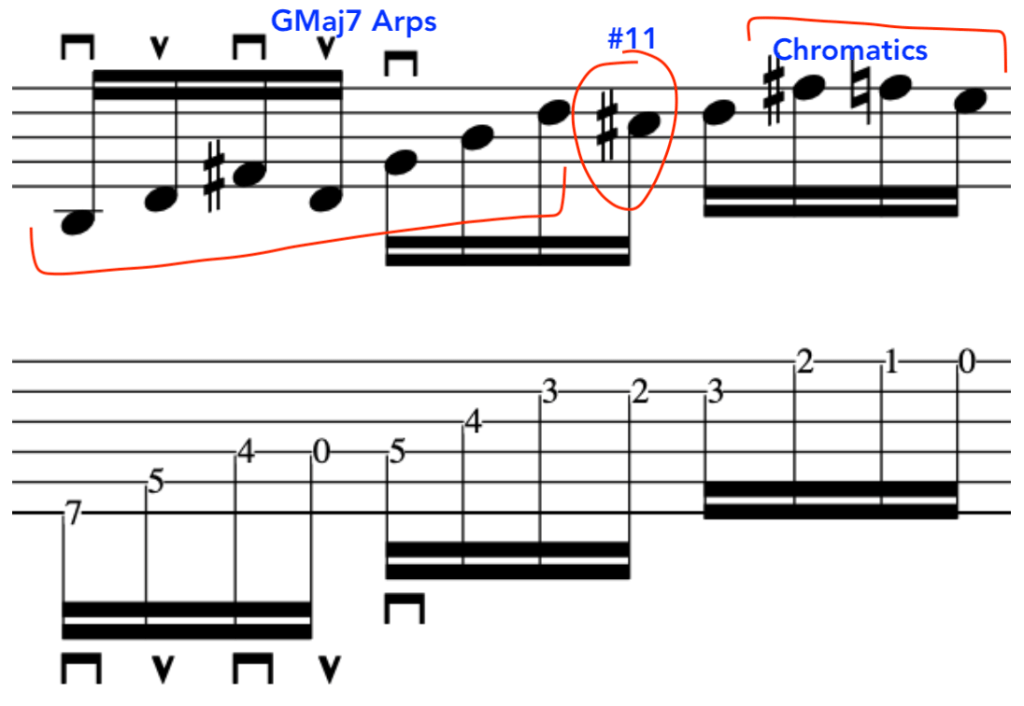
Below, we can see the use of simple arpeggio inversions.

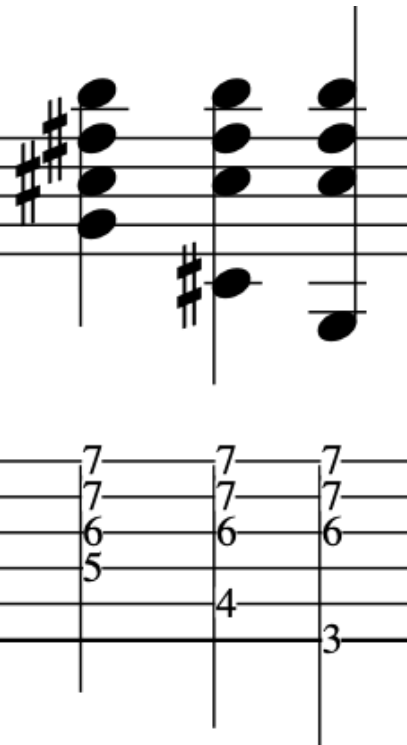
Firstly, we have a Bm arpeggio [implying a 1st inversion GMaj7] connecting to a 2nd inversion G Major triad. This, then resolves down with simple chromatic application.

Sheet music illustrating G Major 7 arpeggios with chromatic notes, including the sharp 11th note highlighted for lydian guitar solos.
Example of G Major 7 arpeggios showcasing the #11 note and chromatic transitions.

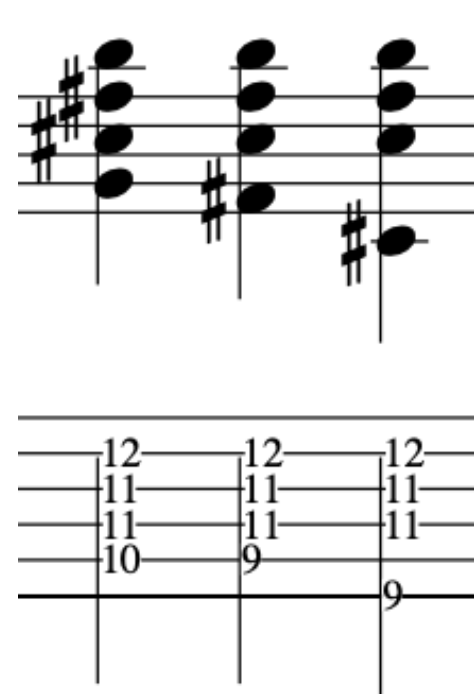
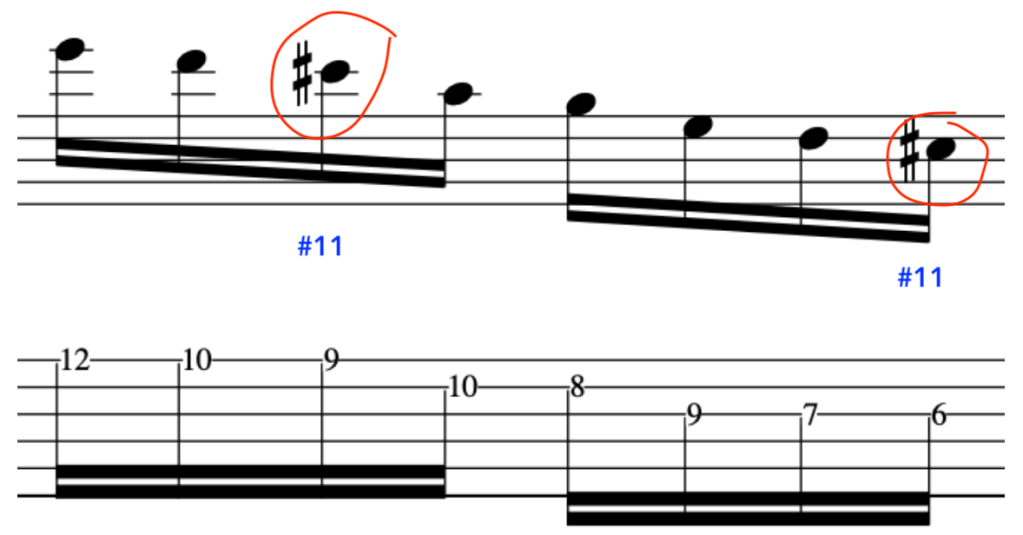
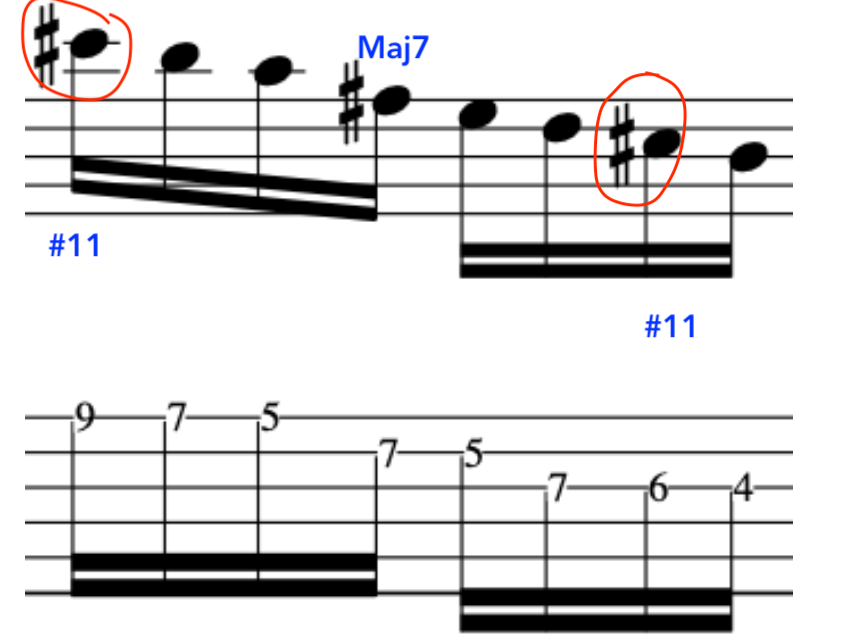
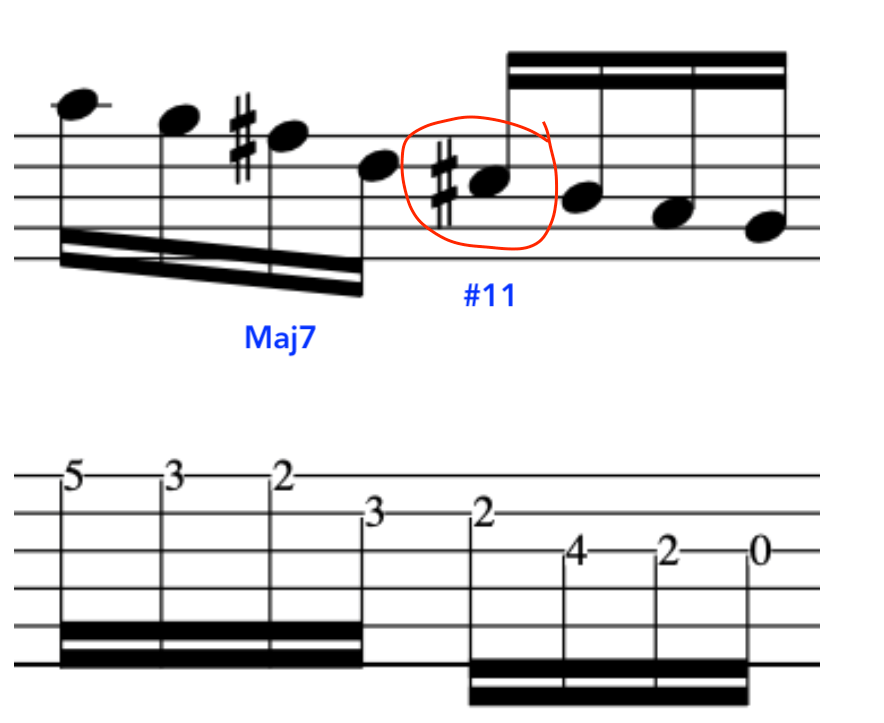
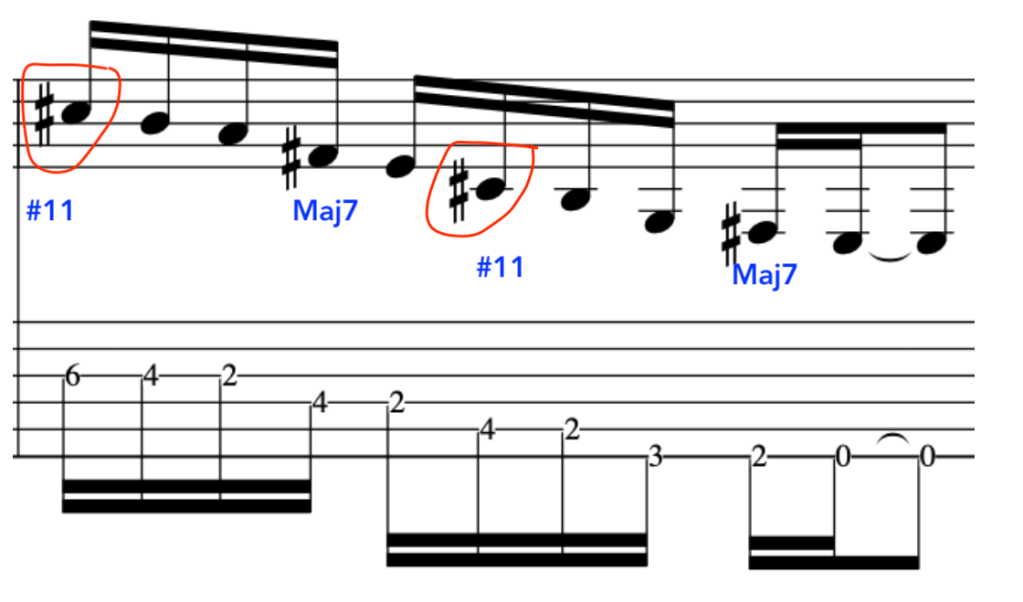
From herein, we will employ G Lydian modal/scale “Fragments” to complete the line,

Musical notation illustrating the Maj7#11 chord with highlighted sharpened 11th notes, including tablature for guitar.

Musical notation for the Maj7#11 chord, including notations for #11 and Maj7 for jazz improvisation.

Sheet music displaying the Maj7#11 chord with the sharpened 11th note highlighted, along with corresponding guitar tablature.
Musical notation showing Maj7#11 chord analysis with highlighted #11 and Maj7 notes.

Chordal Picking Guitar Arpeggios Revisited: [Al Di Meola Style]

Modern Jazz Fusion Chords part 2. Steely Dan, Dan Chord and Slash Chords

Hi Guys,

As requested: Today, a quick look at some basic and very useful Al Di Meola Chordal Picking Arpeggio Guitar Patterns.

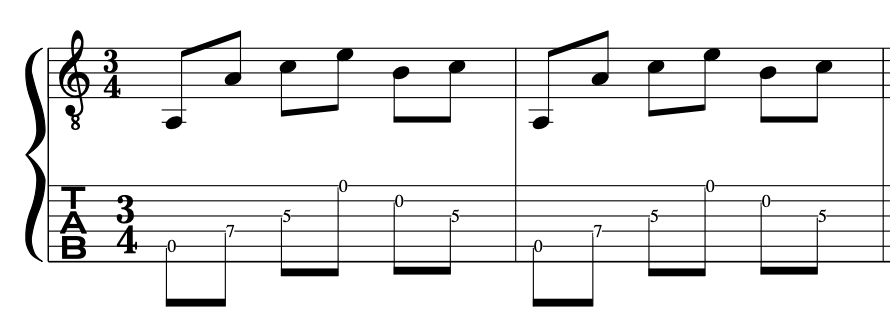
The first pattern is a simple, “Down Down Up” pattern plucked with the guitar pick.

This pattern is a really useful tool to have under your belt for rhythmic contrast or full underlying accompaniments for compositions.

chordal_picking_aldimeola_guitar_lesson_tab

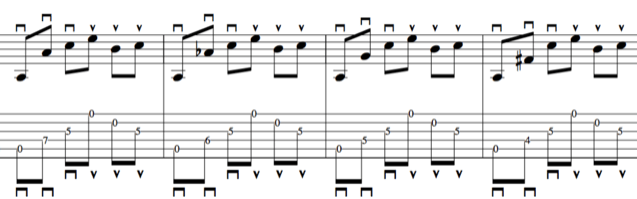
Here, we have “Down Down Down Up Up Up” creating a lovely fluid 3/4 pattern. Again, really excellent for creating melodic solo compositions.

chordal_picking_aldimeola_guitar_lesson_tab

Let’s, now extend this.

Although, this is a familiar sequence, this example demonstrates how easy it is to create melodic music with this arpeggio picking pattern.

chordal_picking_aldimeola_guitar_lesson_tab

Now, let’s mix both patterns together: Again, I have employed the minor key, as this really brings out the resonance and beauty of the the pick plucking against the strings of the guitar.

chordal_picking_aldimeola_guitar_lesson_tab

This time we will add some melody notes in the treble:

This, will be the notes of E and D, which, once again demonstrates what can be achieved melodically with the guitar pick by employing these concepts.

chordal_picking_aldimeola_guitar_lesson_tab

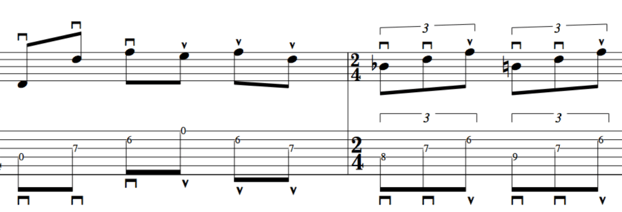
Finally, here is an excerpt from one of my own compositions, that encapsulates all that we have looked at today: [There is a pdf download for better quality at the bottom of the page]

chordal_picking_aldimeola_guitar_lesson_tab
Modern Jazz Fusion Chords part 2. Steely Dan, Dan Chord and Slash Chords