Improve Your Guitar Skills with Alternate Picking Techniques

Alternate Picking Guitar Technique Lesson

Hi Guys,

Today, a few alternate picking guitar exercises.

These differ slightly as they incorporate alternate picking to chord and back to alternate picking technique.

Adding a chord [or chords] can throw some players off when alternate picking, so these exercises can be really helpful.

All of these little exercises are around the 140 bpm metronome marking.

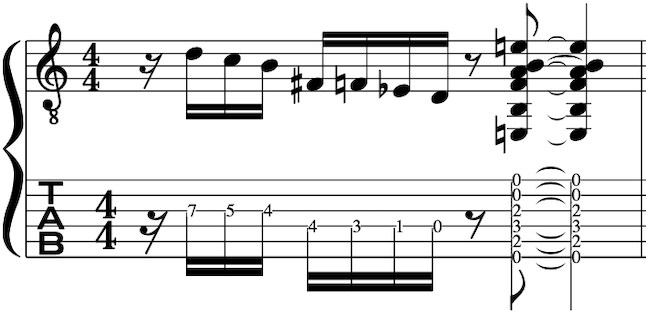
In this primer exercise we will have two sets of 16th notes that then accent a D quartal chord.

This exercise starts on a Downstroke and accents the 3rd note in each 4 note grouping.

Sheet music with notes on a staff, featuring a clef, and measures containing various rhythmic patterns and symbols for alternate picking guitar technique.

By accenting these pitches it will make picking the exercise much smoother, due to the the last 2 notes in each 4 note grouping being prepared for and hence plucked in a deliberate fashion.

Sheet music showing a 4/4 time signature alternate picking guitar technique featuring a melody line with notes and guitar tablature below.
Musical notation for a guitar exercise focusing on alternate picking with accents.

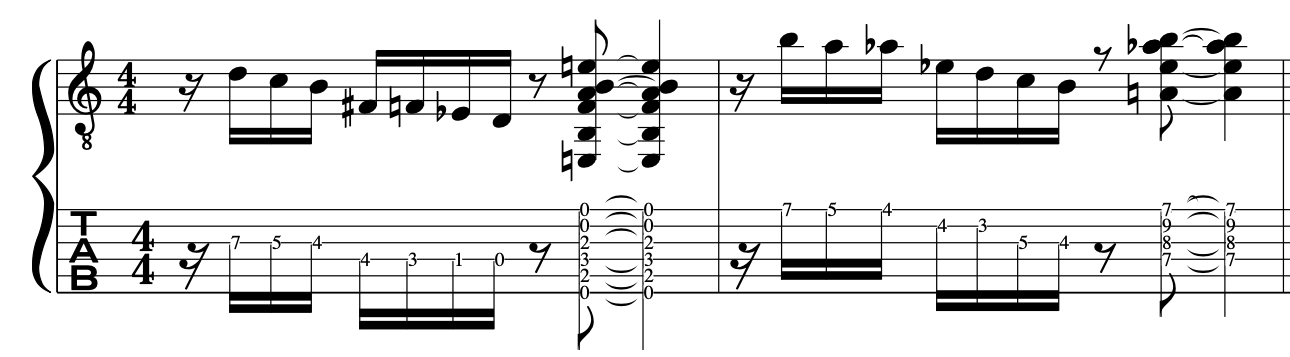
This time we will extend the previous exercise, but, start in the bar on the 2nd semiquaver.

Again, these simple concepts will affect how you pick. So, this is set as if it is for a riff or hook that is doubled up with another instrument, hence, creating a much more compositional approach.

Sheet music with two measures in 4/4 time signature, featuring dotted quarter notes and half notes for alternate picking guitar technique.
Sheet music for alternate picking guitar exercise focusing on chord integration.
Musical notation for alternate picking guitar technique exercise on a staff in 4/4 time with notes for guitar, including standard notation and tablature. How to alternate pick easily.
Musical notation and tablature for Exercise 3, showcasing alternate picking techniques for guitar.

This time we will ascend and descend.

This exercise demonstrates the different amount of notes per string.

But, real music dosen’t work that way as we have – Melodies/Vamps/Hooks/Riff/Unison Instruments-this means, there maybe 1 note on one string and 4 notes on the next string and then 2 notes on the next string and then 3 notes etc.

This exercise is tailor made for the above, as, it employs the two main music devices being that of an arpeggio and scale.

Here is the first part.

Musical notation showing an alternate picking guitar exercise with arpeggio, scale, and chord, with a guitar tablature notation underneath.
Guitar alternate picking exercise showing arpeggio, scale, and chord for varied note patterns.

The second part, starts on an Upstroke, because, we finished the last phrase on a downstroke as we plucked the chord.

Musical notation showing a series of alternate picking guitar technique notes in 4/4 time signature, including both treble and bass clef sections, indicating a melodic sequence and finger positions.
Sheet music for Exercise 3, illustrating descending guitar patterns for alternate picking.

This exercise involves crossing over to the 1st string and back again, with different amounts per string.

So, to begin with let’s break this down into a simple 2 string exercise:

As before, notice the accents on the 3rd note in each 4 note grouping:

Musical notation sheet showing alternate picking guitar technique a series of notes and symbols, including two sections of tablature indicating finger placements on a stringed instrument.
Detailed notation for a guitar exercise focusing on alternate picking with accents on specific notes.
Sheet music showing alternate picking guitar technique in a series of notes in 4/4 time signature with labels for a minor third and arpeggio.
Musical notation and tablature for a guitar alternate picking technique exercise, highlighting a minor third and arpeggio.

These exercises are just a few ideas that are really useful when working on alternate picking guitar technique.

This is because many hooks and vamps and compositional devices don’t work on 3 note per string picking.

The great improvisers like John McLaughlin, Don Mock and Pat Martino play long fluid phrases along with weaving in and out of chords, chromaticism and implied harmony [double stops/Octaves]. So, being able to pluck odd and even groupings [or any amount of notes per string] with embellishments and chords is essential.

Hopefully, these exercises will be of some help with that.

Mastering John McLaughlin’s Unique 13th Chord Voicing

Hi Guys,

Today, a quick look at the unique 13th chord Voicing of guitar maestro John mcLaughlin.

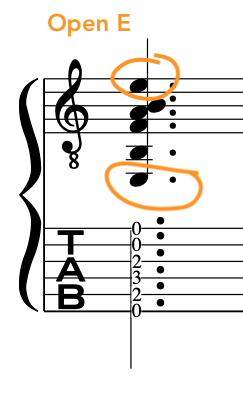
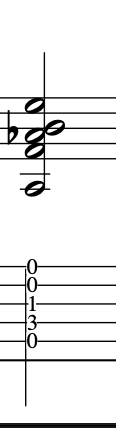
This unique voicing possesses a 7th a 9th with the 13th ringing out on top. It has a lovely sonorous tone :

Diagram showing a guitar chord with labeled notes: 3rd, 7th, 9th, and 13th. John McLaughlin 13 chord voicing.
Diagram of a 13th chord voicing showing the 3rd, 7th, 9th, and 13th notes, highlighting the unique structure.

This chord works really well because it’s a 1st inversion, and, without a root it gives us that slightly ethereal painted sound:

Diagram of a D13 chord showing the 13th, 9th, 7th, and 3rd notes labeled.
Diagram illustrating the D13 chord voicing with 7th, 9th, and 13th notes labeled.

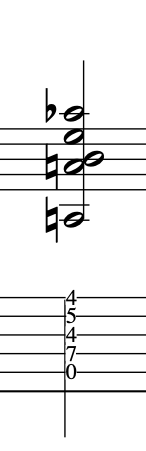
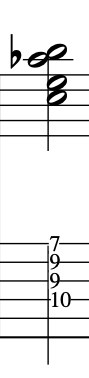
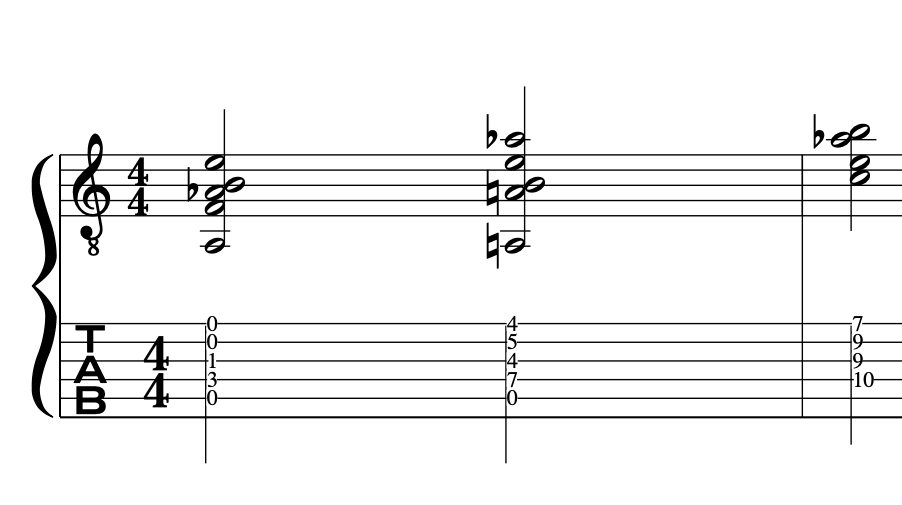
The sonorous nature of this chord makes it shine when moving to a diminished 7th chord for a resolution:

Sheet music showing chord voicings labeled D13, F#dim7, and Em7. John McLaughlin guitar chord examples.
Chord diagram showcasing the D13, F#dim7, and Em7 voicings, essential for understanding the unique textures in John McLaughlin’s 13th chord progression.

This in turn rewards us with fantastic melodic sequences:

Chord chart showing musical notation for D13, F#dim7, Em7, E13, G#dim7, and F#m7 chords. John McLaughlin guitar harmony lesson.
Chord progression illustrating John McLaughlin’s unique 13th chord voicing with associated diminished and major chords.
Guitar chord diagram showing C13, Edim7, and Dm7 voicings.
Chord diagram illustrating the C13, Edim7, and Dm7 voicings, highlighting their unique structures and relations.

Now, let’s make a sequence by employing strong Major 9th chords that move to John’s brilliant voicing.

If we play the example below we can hear the resonant nature of the two chords.

Musical notation displaying EMaj9 and E13 chords, indicating finger placements on the guitar fretboard.
Chord diagram illustrating E Major 9 and E13 chord voicings in a musical lesson.

Now, let’s create a little chord sequence with them:

Sheet music showing chord voicings for EMaj9, E13, DMaj9, D13, and C13 with annotations and finger positioning in John McLaughlin's guitar style.
John McLaughlin Chord sequence illustration featuring E13, D13, and C13 voicings.

To complete the sequence, we will cadence with a13b9 chord back to the tonic D

Musical notation showing the John McLaughlin A13b9 chord and D/A chord with finger placements for guitar.
Chord diagram for A13b9 and D/A used in the sequence demonstrating John McLaughlin’s 13th chord voicing.

Here, is the full sequence:

Musical notation chart displaying John McLaughlin's various chord voicings including EMaj9, E13, DMaj9, D13, C13, A13b9, and D/A.
Chord sequence illustrating John McLaughlin’s unique 13th chord voicing alongside related Major 9th chords.

PART 4:

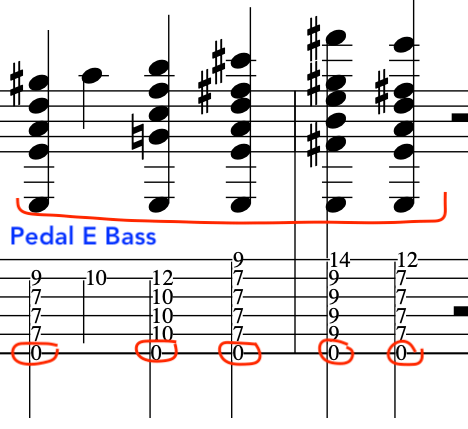
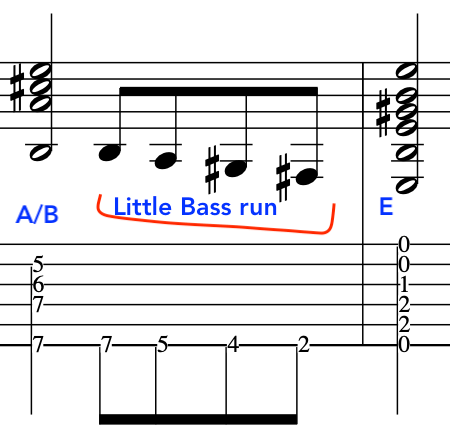
John, also makes good dramatic use of this chord by exploiting a pedal note in the bass for rhythmic drive.

Musical notation for a John McLaughlin guitar pedal riff, showing measures with notes and tablature.
John McLaughlin use of pedal note in chord riff.

John McLaughlin’s Pentatonic’s for Coltrane Changes:[Giant Steps]

Hi Guys,

Today, a quick look at John McLaughlin’s “Pentatonic” guitar concepts for playing over the Coltrane Changes.

Although I am employing alternate picking guitar technique at quite a fast rate, these pentatonic’s simplify things enormously.

THE RHYTHMIC SIDE OF THINGS:

To keep the solo line tight, we will count in a basic manner,

1 and 2 and 3 and 4 and

This way, you will know where you are in the bar and what chord you are playing over.

To begin with I use the B major pentatonic scale. Next, I employ a simple 2 finger pentatonic scale over D7 and GMaj7.

I then play the second part [same fingering] up a semitone and land on the note D for the EbMaj7 chord, counting 1 2 3 4 in preparation for the next chord.

Sheet music diagram showing giant steps chord names BMaj7, D7, GMaj7, Bb7, and EbMaj7, along with tablature for guitar. John McLaughlin version.
John McLaughlin Giant Steps BMaj7, D7, GMaj7, Bb7, and EbMaj7 for guitar players.

For the first three chords I play what could be called “A Dorian Pentatonic”. But, I am not really thinking in that way. [I am just adding the F# note for the 3rd of D7]. This in turn creates a very simple and “Fluid” guitar fingering that is very common to most guitar players and hence easy to play.

Sheet music featuring john mclaughlin  guitar tablature for Am7, D7, GMaj7, Bb7, EbMaj7, and F#7 giant steps chords.
John McLaughlin giant steps guitar chords Am7, D7, Gmaj7, Bb7, EbMaj7, F#7, and BMaj7.

On the F#7 chord I play an F#7 arpeggio that then resolves into an Eb minor arpeggio for the BMaj7 chord.

John McLaughlin Sheet music showing guitar tablature for the chords BMaj7, EbMaj7, and F#7, with annotations.
McLaughlin Musical notation showcasing the BMaj7 and EbMaj7 chords alongside the F#7 arpeggio.

For then next part, I again employ a simple Pentatonic to get through the first three chords.

This Bb minor leaning works well because over the Bb7 chord it gives us the “Blue note”. Finally we use our A Dorian Pentatonic again to resolve to GMaj7 for our last three chords.

Sheet music displaying John McLaughlin's chord progressions and tablature for Fm7, Bb7, EbMaj7, Am7, D7, and GMaj7 in giant stpes improvisation

Here, I just use C#m pentatonic and F# Pentatonic to land on the D# to nail the change to the BMaj7 chord. Very simple and very common guitar fingering.

John McLaughlin musical sheet showing chord progressions for C#m7, F#7, and BMaj7 with annotations for specific notes.
Musical notation highlighting C#m7, F#7, and BMaj7 chords for McLaughlin’s giant steps.

For the last part, I employ an Fm9 arpeggio and a C minor pentatonic scale that then goes up a semitone and repeats our C#m7 F#7 to Bmaj7 phrase.

Sheet music displaying Fm7, Bb7, and EbMaj7 John McLaughlin chords with tablature for guitar.
Music notation for Fm7, Bb7, and EbMaj7 chords, illustrating McLaughlin guitar techniques.

But, this time we land on an F# for the 5th of BMaj7.

A musical sheet showing the John McLaughlin chords C#m7, F#7, and BMaj7 with corresponding tablature.
John McLaughlin guitar pentatonic’s example

PDF DOWNLOAD:

If you enjoyed this blog then Please Click and SUBSCRIBE to us on YOUTUBE Below, Thanks!