McLaughlin: Rhythm Guitar Revisited: Part 2

CLICK SUBSCRIBE!

Hi Guys,

Today, the second part of the John McLaughlin style rhythmic guitar essentials.

If we look at a composition like “Face to Face” by Shakti, we will find interesting rhythmic strumming patterns:

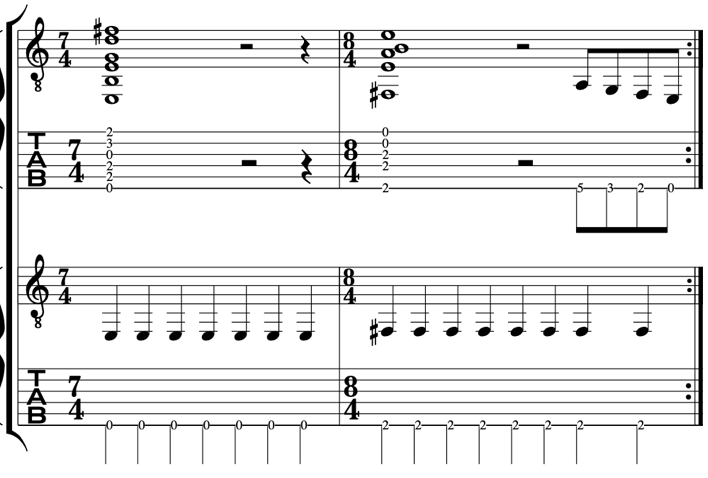
It’s unique how John creates interesting rhythmic riffs with just a couple of chords by employing a bar of 7 to a bar of 8:

shakti-face-to-face-rhythm-guitar-lesson

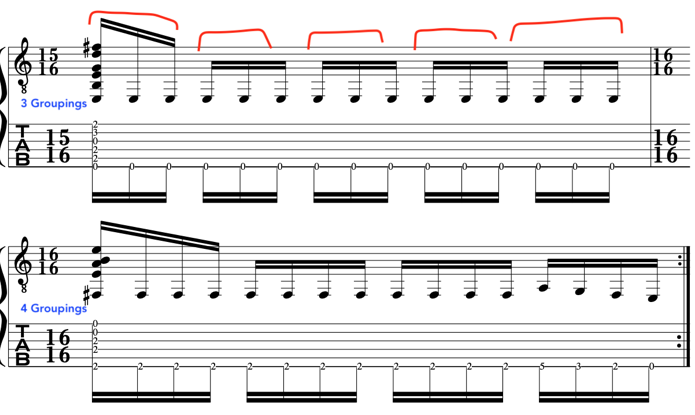
You may wish to count this in different ways. For Example, you could count this as: 15/16 to 16/16 [in groups of 3 to groups of 4 in the next bar]:

shakti-face-to-face-rhythm-guitar-lesson

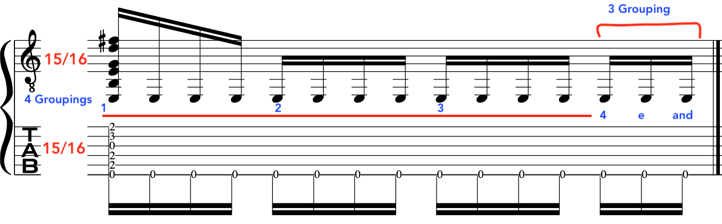
And, also, Groups of 4 with the last being a grouping of 3 [or one note removed in a bar of 4/4 time]

shakti-face-to-face-rhythm-guitar-lesson

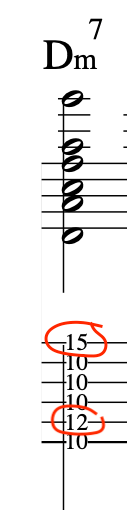
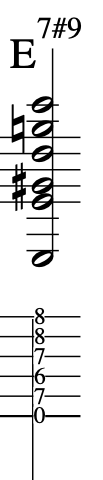
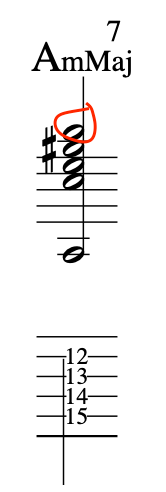
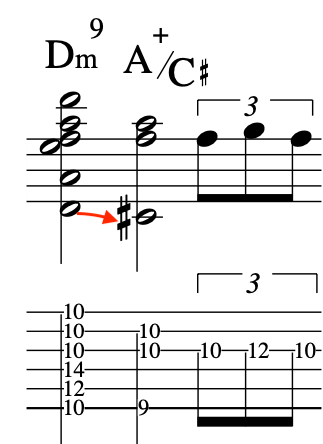
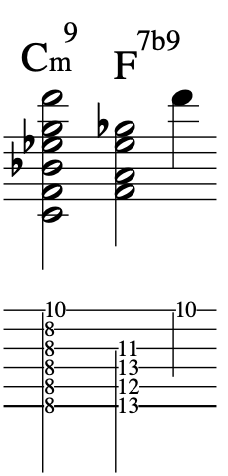
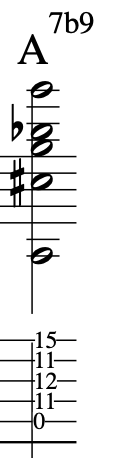
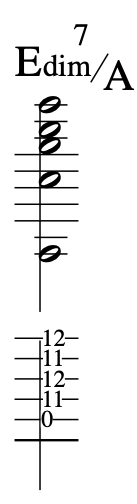
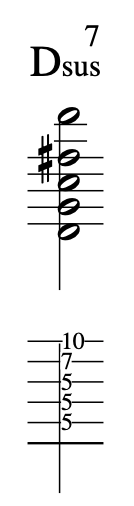
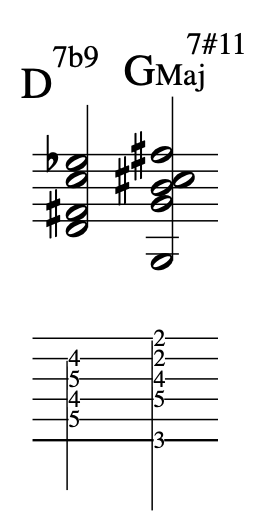
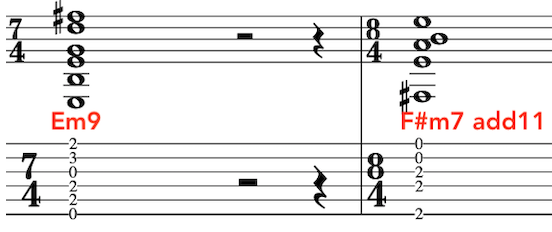
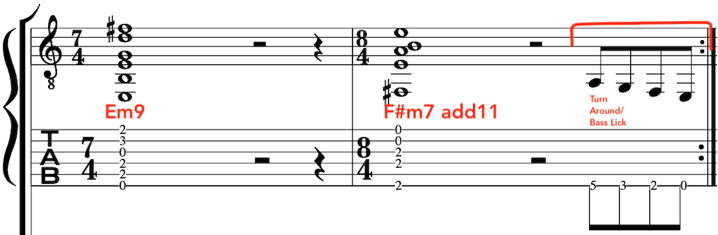
Here, are the two chords that I have used.

These being similar to McLaughlin’s “Face to Face” composition with Shakti.

shakti-face-to-face-rhythm-guitar-lesson

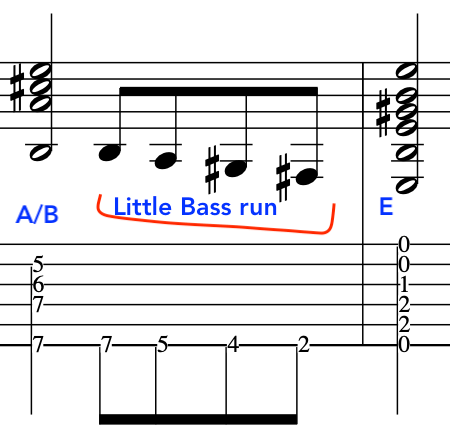
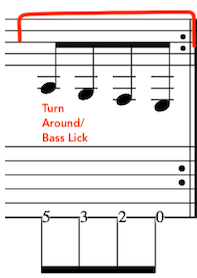
To complete this vamp I employ a little “Turn around” in the bass with a 4 note descending scale motif.

shakti-face-to-face-rhythm-guitar-lesson

Here, is the full 2 Bar Sequence with the turn around motif:

shakti-face-to-face-rhythm-guitar-lesson

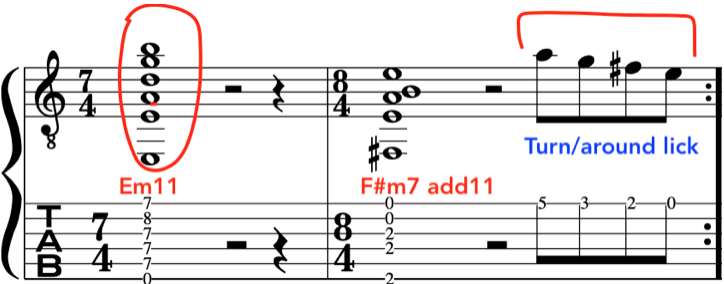
In this variation we have the previous bass scale notes played in the treble on the first string of the guitar.

We also have changed the first chord with a “Quartal” E minor voicing.

shakti-face-to-face-rhythm-guitar-lesson

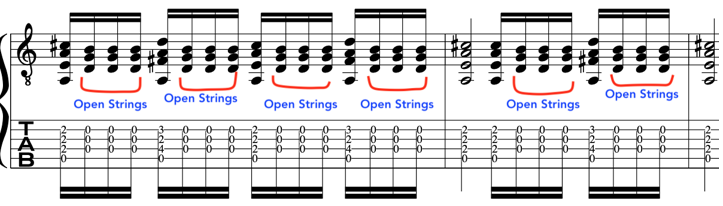
John McLaughlin sometimes strums quickly between two chords and the open strings. Here are a couple of examples.

Firstly, we can see how John exploits 2 simple chords of A Major and D Major between the open strings:

john-mclaughlin-strumming-guitar-lesson

[This is strummed at a very quick pace by alternate strumming “Down Up“] etc

To finish, we will look at one last alternate strumming McLaughlin favourite.

This again follows the same principle with the quick “Down Up” fast wrist movement in the strumming hand.

john-mclaughlin-strumming-guitar-lesson

Master John McLaughlin’s Guitar Chord Techniques:

Hi Guys,

Today, a look at the late 60’s early 70’s John McLaughlin guitar chord/riff style of “My goals beyond” and “Extrapolation”.

This is a great compositional vamp style that really brings out the resonance of the guitar. It has a sort of loose swing feel to it, that sort of gritty London soho jazz sound of the time.

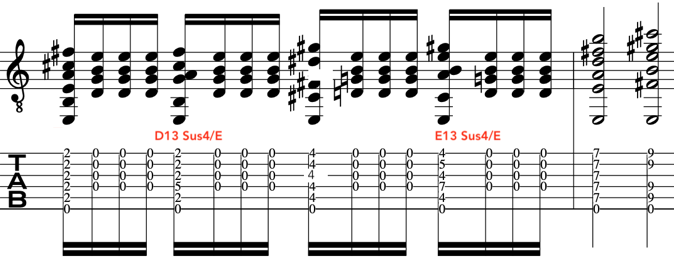
The vamp is based around the D6add9 guitar chord shape, with the open E note as a pedal.

john-mclaughlin-chords-lesson

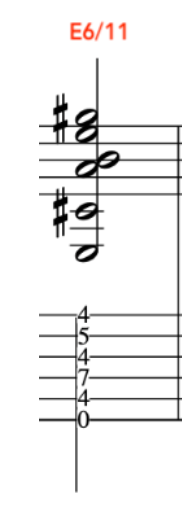
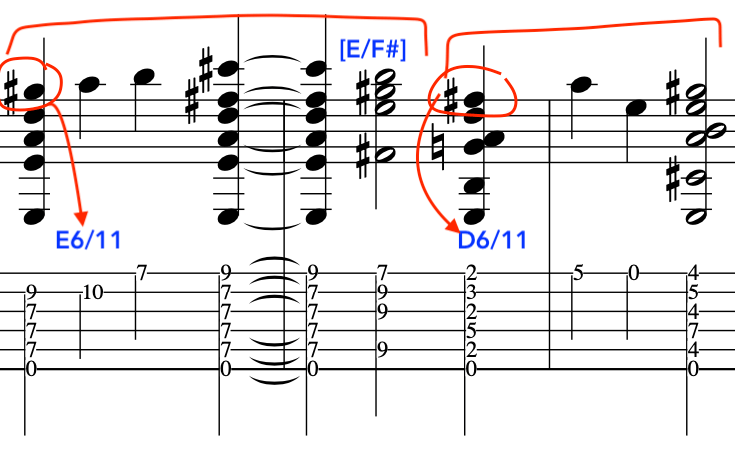
To begin with, we will play the D6add9 chord and then move it up a tone to E6add9 and then back again to D6add9. [see video above]

john-mclaughlin-chords-lesson

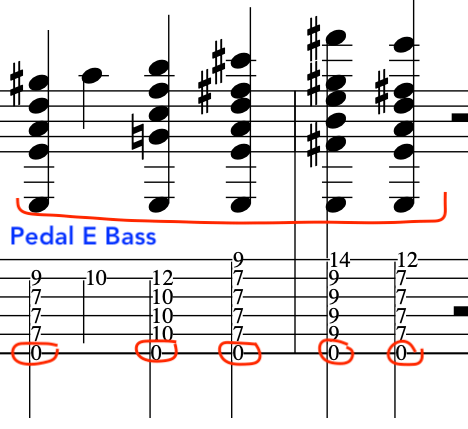
As in the video above you will hear/see that I am syncopating/weaving in and out of the bass notes displayed below plucked on the low E string.

john-mclaughlin-bass-lesson

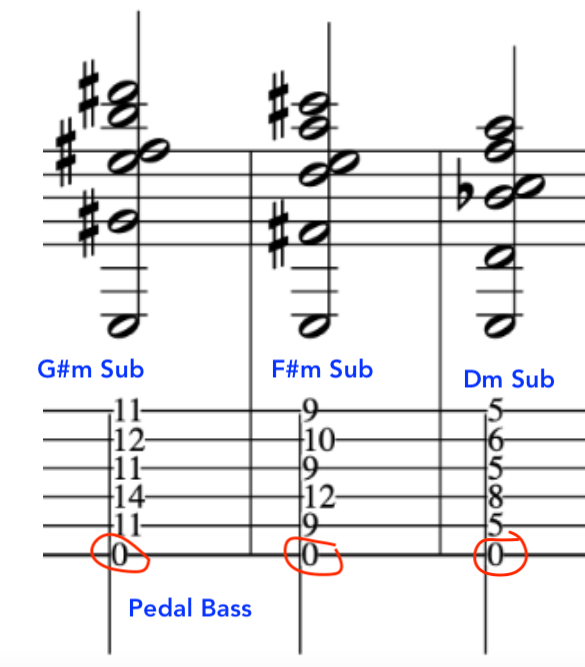
To create colour and contrast we then change the chord in the third bar by moving the shape up to create Dm11/E to G6add9 and back to Dm11/E.

john-mclaughlin-chords-lesson

We then move back to D6add9 and E6add9:

john-mclaughlin-chords-lesson

From here, we move the shape up to A6/9/E to G6/9/D and finally resolving to F#13/E.

The Bass moves down in half steps, E Eb D C#

john-mclaughlin-chords-lesson

We repeat the first part and then end with the chord shape on G A C D E D: strummed over the E pedal bass.

john-mclaughlin-chords-lesson

To conclude, this was just a quick look into strumming extended chords in and out of a melodic bass line. Simple as this is it works really well for creating compositions, wether in a blues form or a verse/chorus structure.

This style excels on the guitar because the bass can be doubled in unison with another instrument, [for example, piano or sax or double bass].

Lastly, the chord shape of the added 6th and 9th [as well as the 11th] resonate sympathetically on the guitar both as a strummed attack or mellowly plucked with the fingers.

FREE PDF DOWNLOAD: