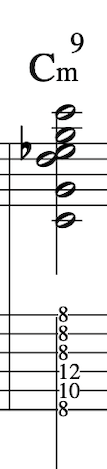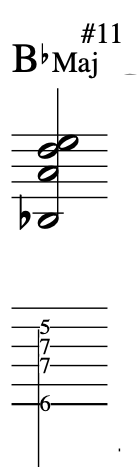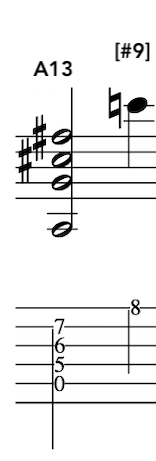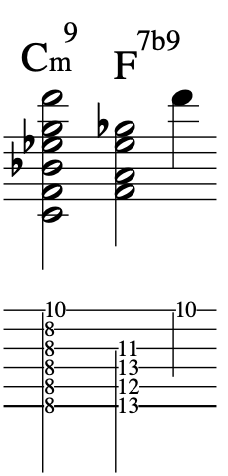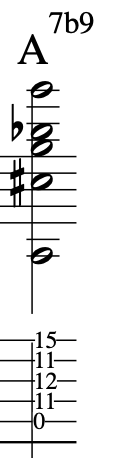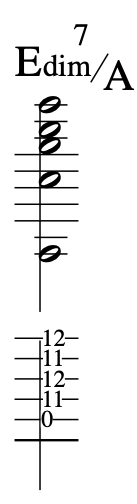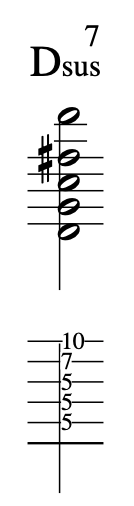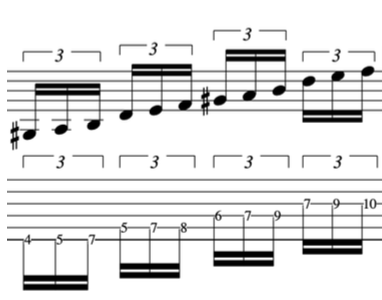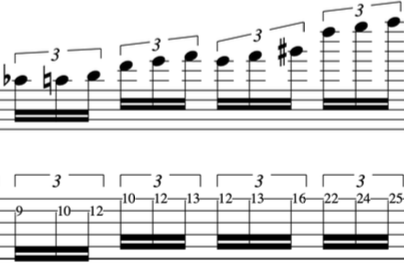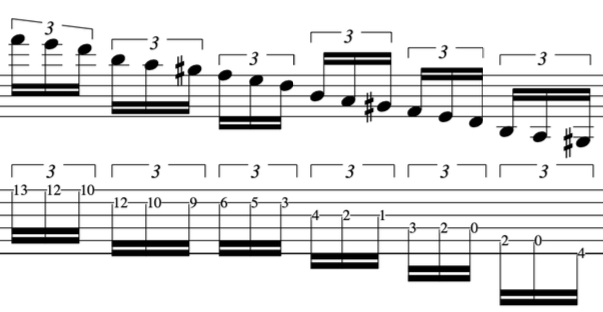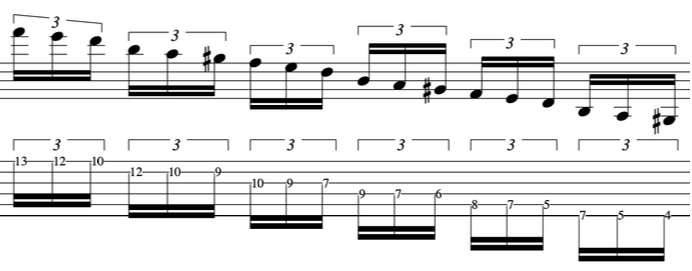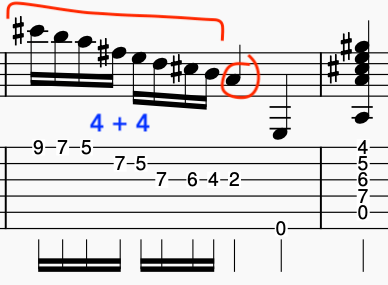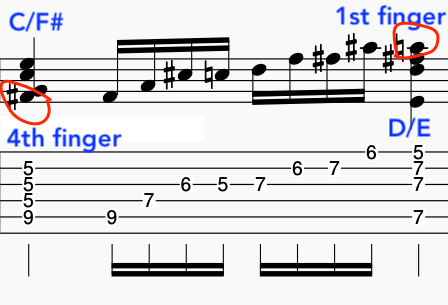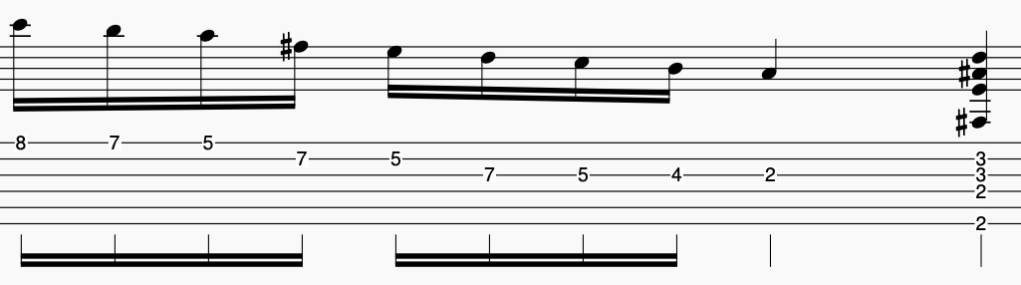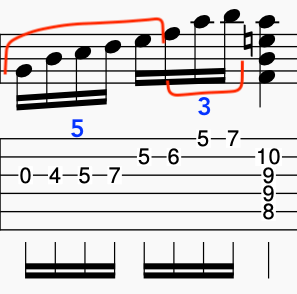
IMPORTANT: Please watch video above for detailed info:
Hi Guys,
Today, we will look at some more Modern Jazz Fusion Chords.
These are primarily based around a Major Triad [played] over a different bass note: Commonly called “Slash” chords.
Here, are some essential common slash chords employed in/for reharmonisation.
PART 1:
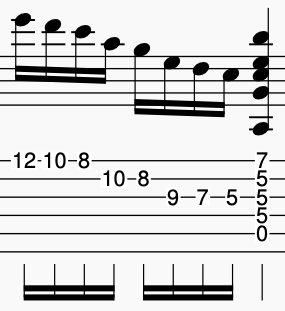
The first chord we will investigate is the tri tone concept of C/F#.
This unique voicing creates a colourful dissonant timbre.
In this example we have a 2nd inversion triad of C Major played over an F# bass note.

Next, we will examine the most common slash chord type.
This is the 7 Sus 4 chord. And, in this case it will be C/D. They may be played in succession or as a substitute for a dominant chord. [for example C/D instead of D7]
This type of chord is heard a lot in pop songwriting, but is also highly prominent and best known for the sequence in Herbie Hancock’s composition “Maiden Voyage”.

[What you will start to notice is that the Major triad has a lovely bright quality when played over a different bass note]:
Here, is the guitar voicing with a root C Major chord over a D bass.

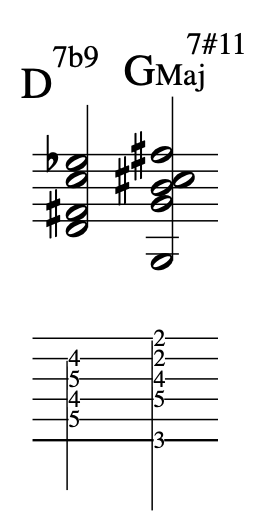
The next chord is the classic Dominant 7th in its 3rd inversion.
Generally in Fusion these chords do not resolve and/or are played once again in succession.
For, our example we will employ a triad of D Major with it’s 7th [C] in the bass

Next up, we have one of John McLaughlin’s favourite Slash Chords.
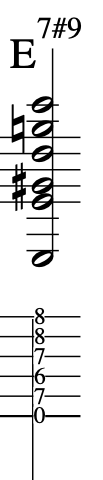
This is an Eb triad over an E [up 1/2 step] bass. [This is also known as a13b9 that works well with the diminished scale].

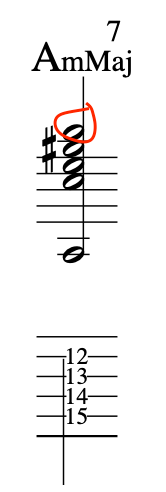
Here, we have an interesting chord that is also a favourite of the late great jazz guitarist Pat Martino.
With the open E note resonating in the bass this produces an extremely beautiful set of tone colours in one chord.

In order to create that big ethereal/dissonant sound let’s exploit John Mclaughlin’s unique nylon string guitar voicing.
This is a B Major triad over a C Bass. [This also works well with the open E string ringing out].

Finally, we will manipulate another tri-tone voicing:
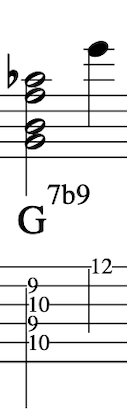
This will be a less bright but highly resonant sound with a root F# triad over a low G bass note.

PART 2:
Okay, you might ask. What do we do with these chords?
How to we compose with them?
Re- harmonise with them?
Actually use them?
Well, firstly, lets take a basic/common chord sequence like,
iii Vi ii V7 I

For the first chord we will employ a C6/9, but, we will only use the E A D G tones and create a “Quartal” sound.
From here we will move a tri-tone away from the Am7 chord and employ an Eb triad. We will still establish the dominant in the bass by employing the 5th note of Am7, [the note E] hence we have Eb/E.
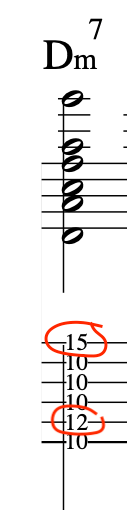
For chord ii [Dm7] we will have a C triad over an F bass note acting as a First inversion Dm7 chord. [You could also think of this as having an added 9th and 11th]
The dominant chord will now have the dominant root in the bass with a Db Major triad, [a flat 5th/tri-tone away] on top in the treble.
This then returns to the CMaj 6/9 tonic chord
Below is another example:
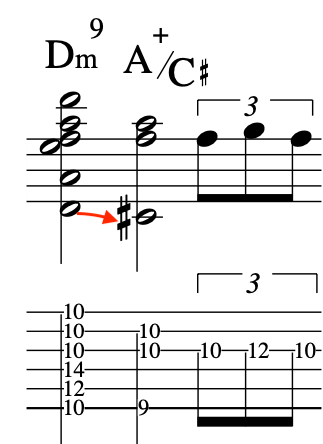
Notice, the reharmonisation and how the basic chords are exploited with colourful slash chords.

THE BLUES
To complete this, let’s put them into a blues 12 bar structure [turn around] so that you can clearly see how to create composition from them:

From the above chart notice that the first 4 bars are more of a long drawn out affair in the tonic key. Next, this is repeated in a similar fashion [or a variation] with chord IV of the key.
But, in the last four bars we exploit the harmonic rhythm to create drama and turn the music around.

BLUES CHART: Example,

PDF DOWNLOAD:
IF THIS LESSON WAS OF USE TO YOU THEN PLEASE SUBSCRIBE TO US BELOW ON YOUTUBE, THANKS!