Unlock Your Guitar Skills with Pat Martino’s Triad Pair Techniques

Hi Guys,

Today, a quick look at building interesting, creative, melodic lines by pairing simple triads together.

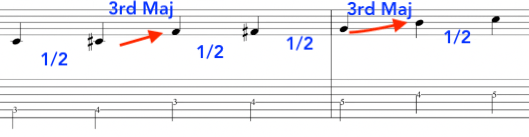
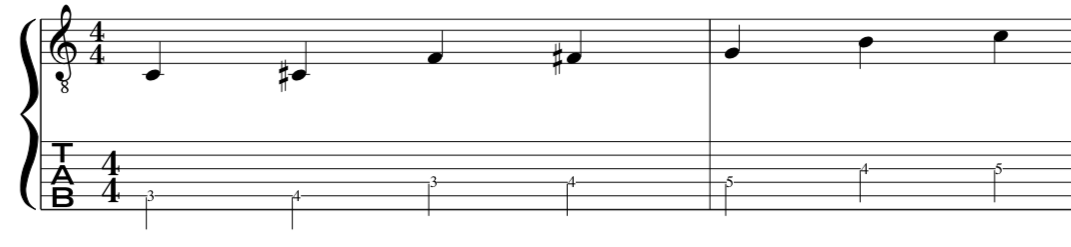
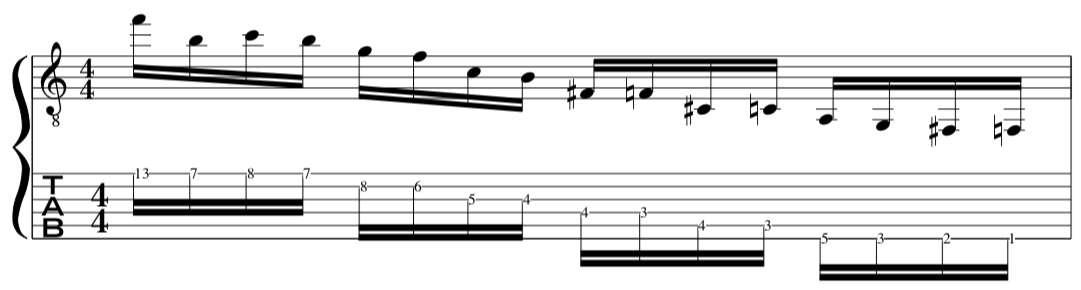
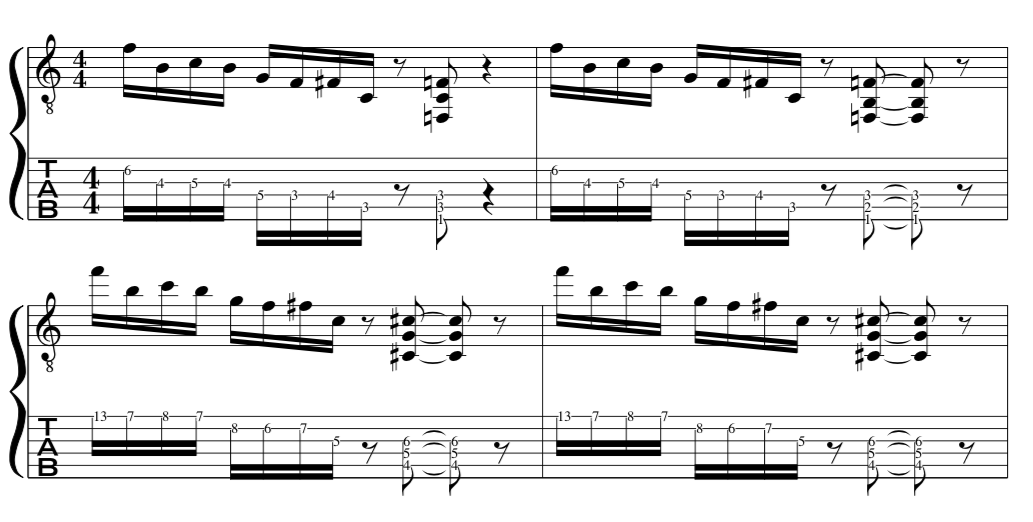
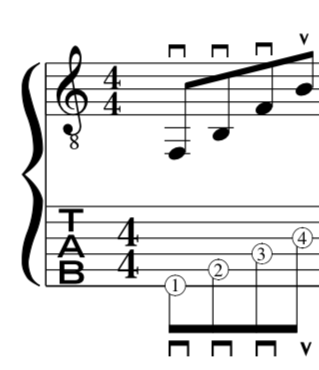
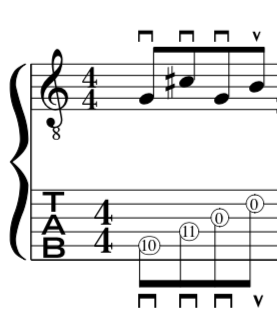
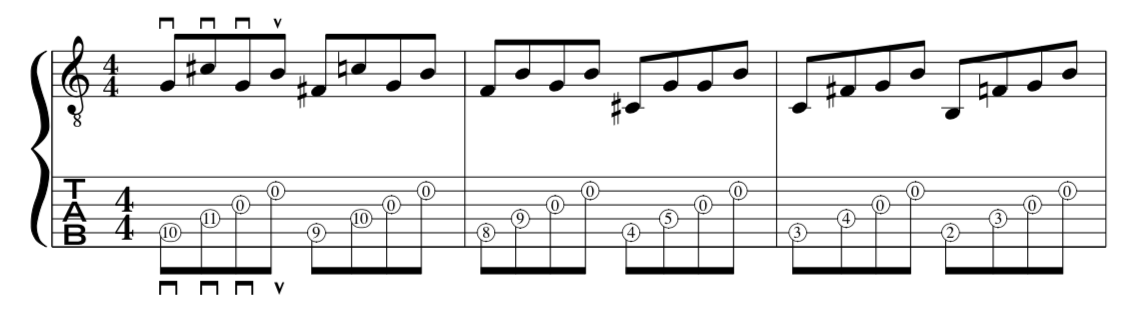
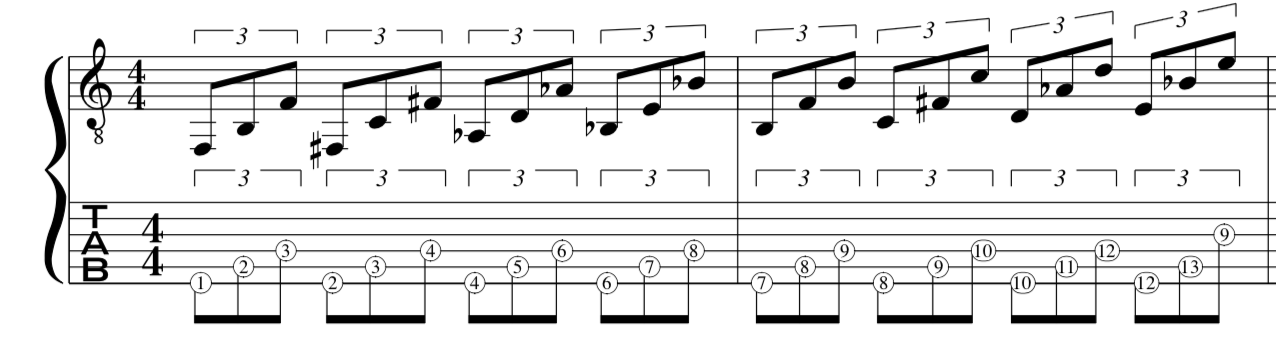
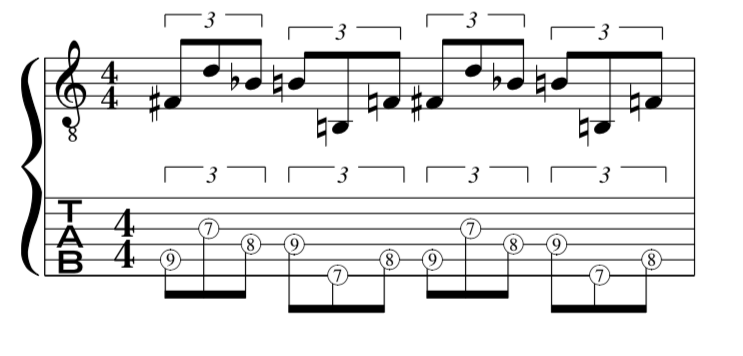
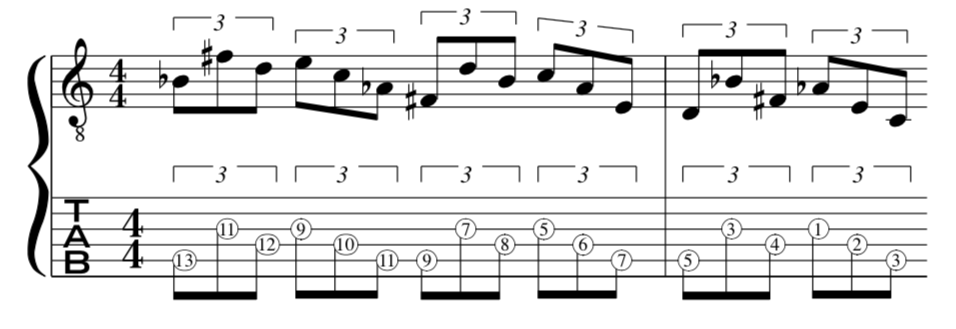
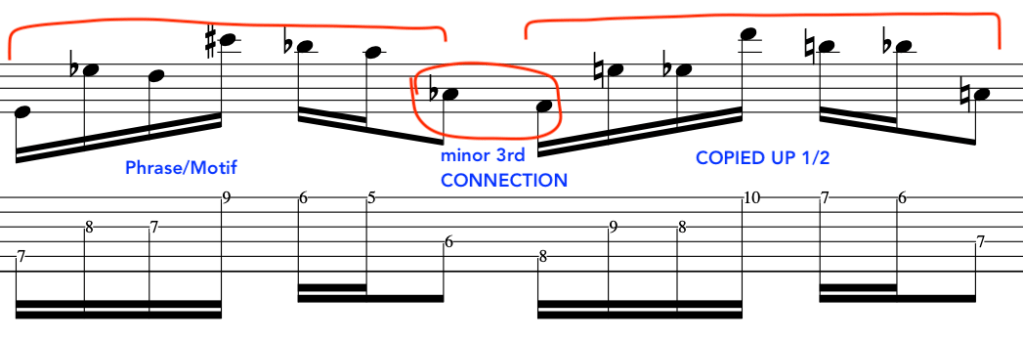
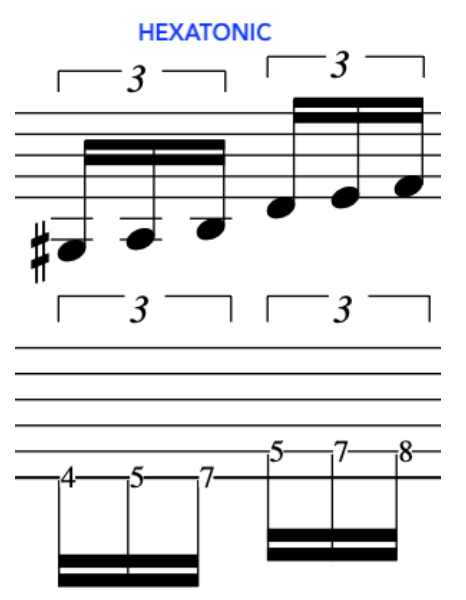
To begin with, let’s join the triads of F and G [back to F] together

Sheet music illustrating the chord pairing of F and G triads in a melodic line of jazz guitarist Pat Martino.
Musical notation illustrating the triad pairs of F and G for creative melodic lines.

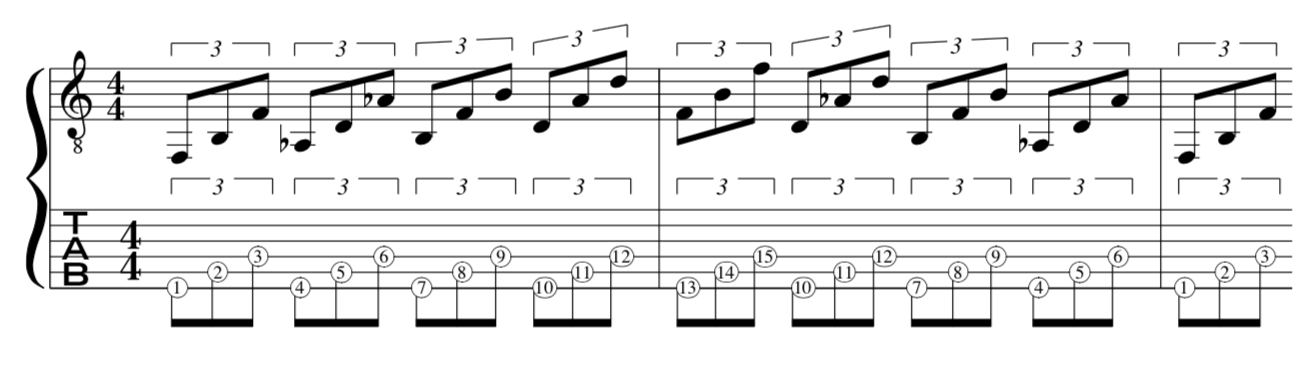
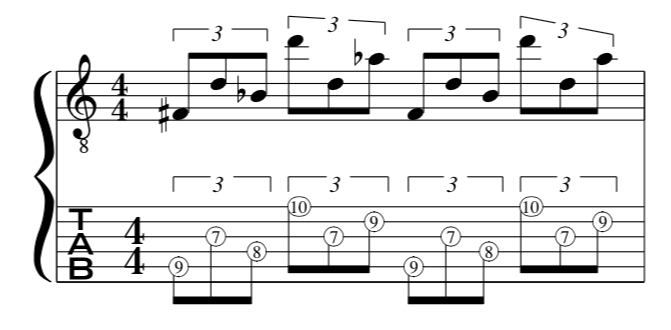
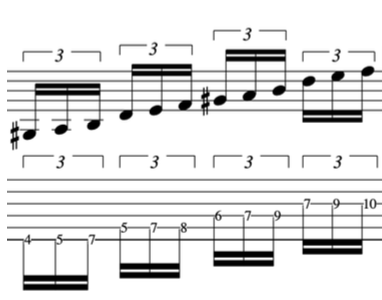
We will now, extend the line further by employing the same two triads once again,

Sheet music showing melodic lines with F and G triad pairs of guitarist Pat Martino highlighted.
Pat Martino F and G triad pairs to create melodic jazz lines.

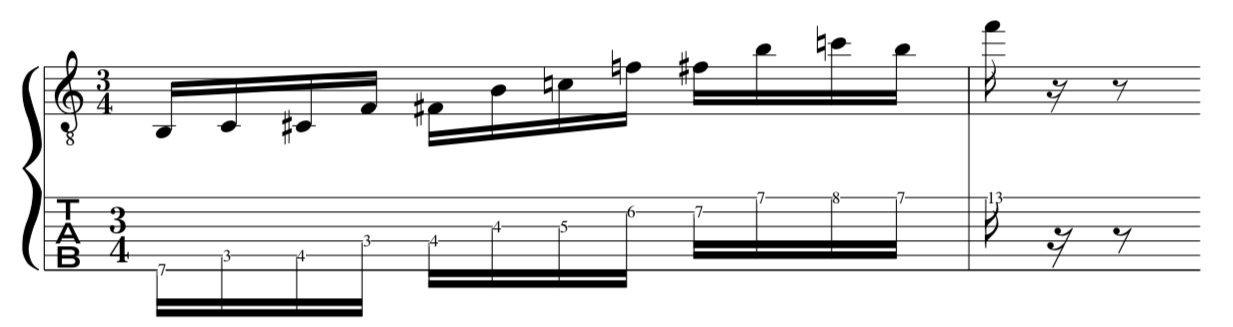
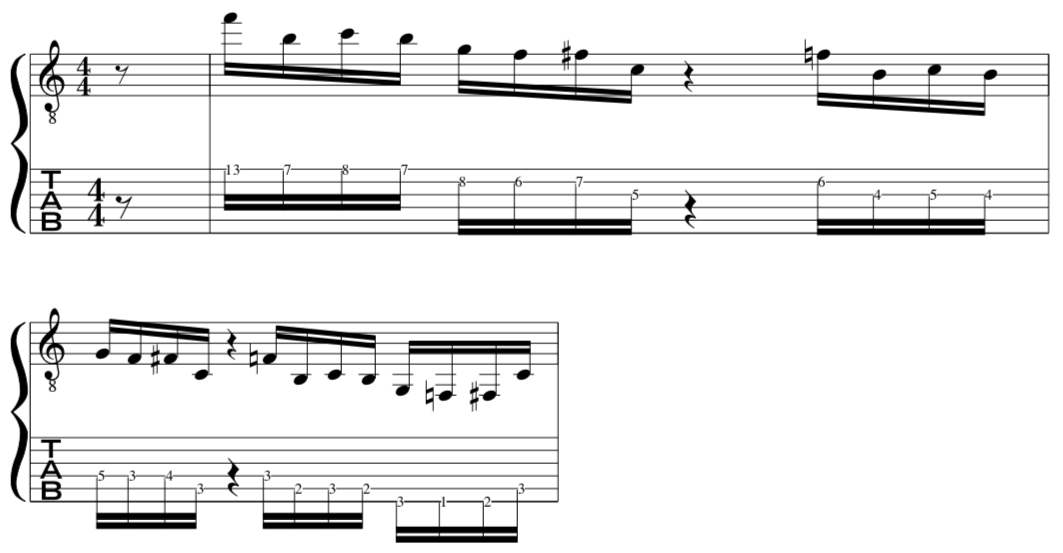
At this point we will end the phrase and create a cadence with our two triads,

Musical notation showing the triad pairs of G and F in a jazz melodic line, with highlighted notes and annotations.
Musical notation showing the pairing of triad pairs F and G for melodic development.

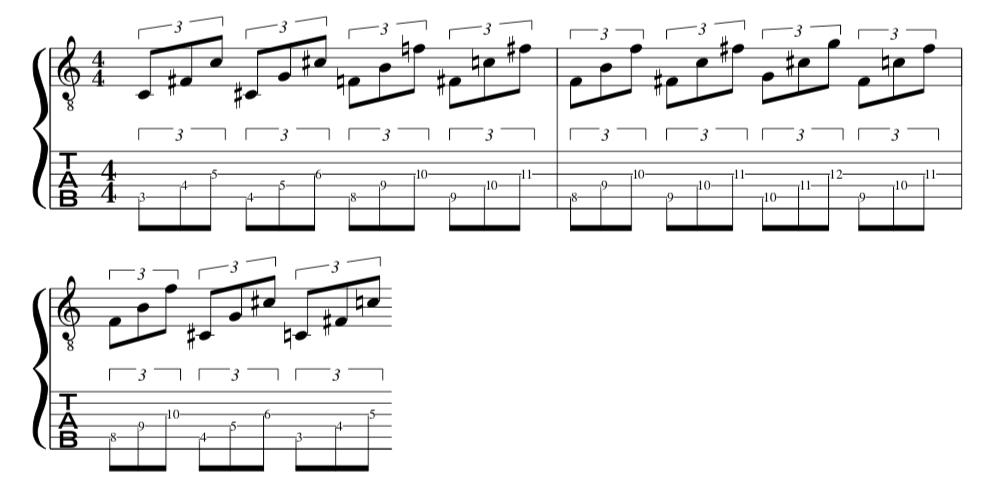
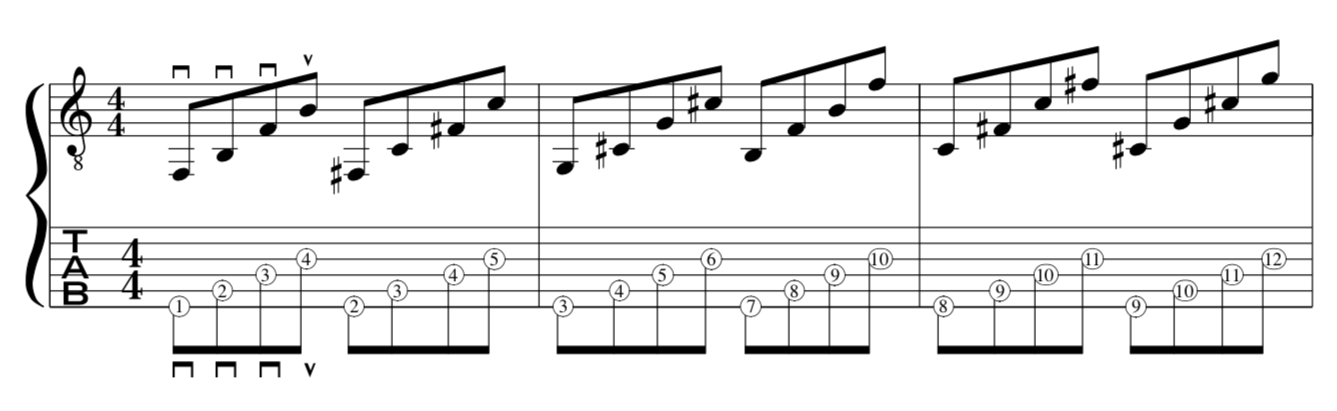
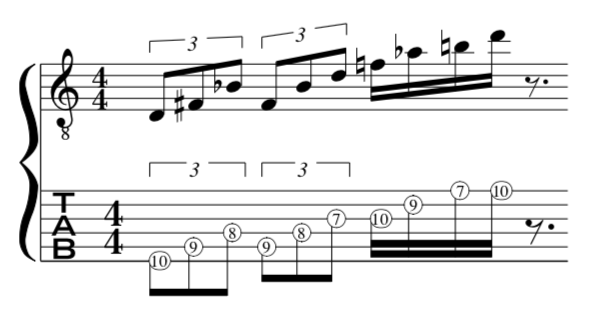
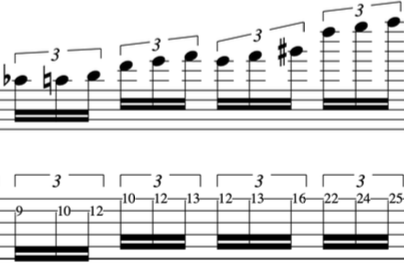
We will now shape a new line and ascend with the triads of F G and C

Sheet music showing pairing of triads F, G, and C of guitarist Pat Martino with annotations highlighting jazz melody and note positions.
Musical notation illustrating the use of F, G, and C triads for melodic jazz line construction.

So, we will add some colour.

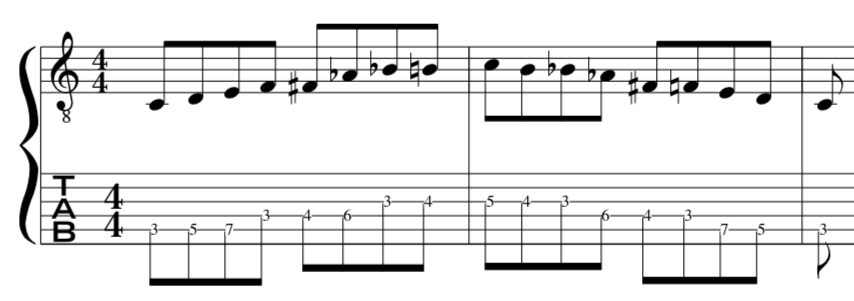
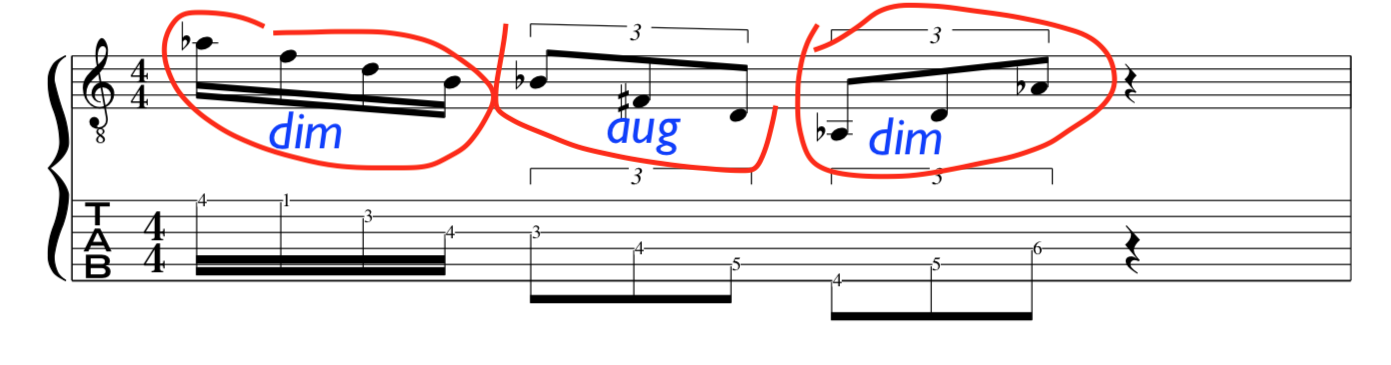
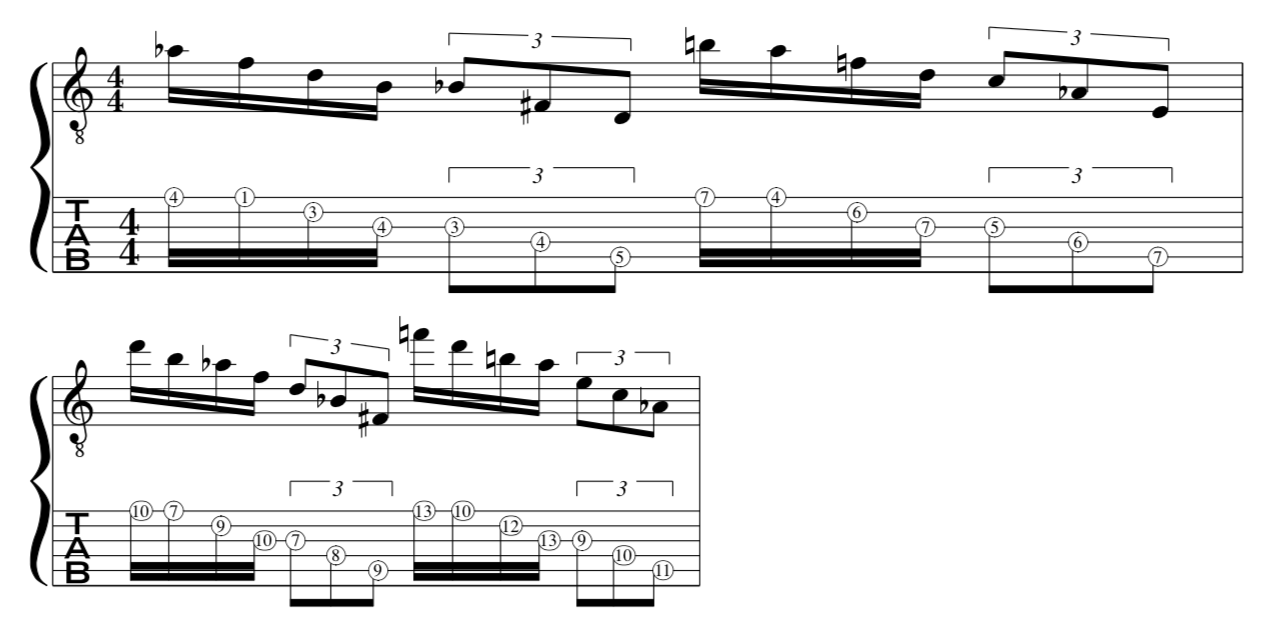
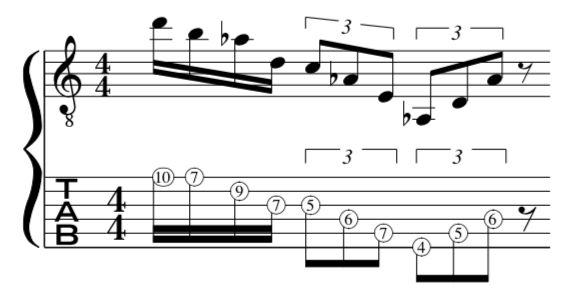
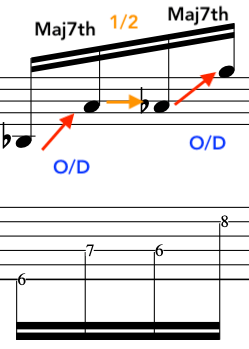
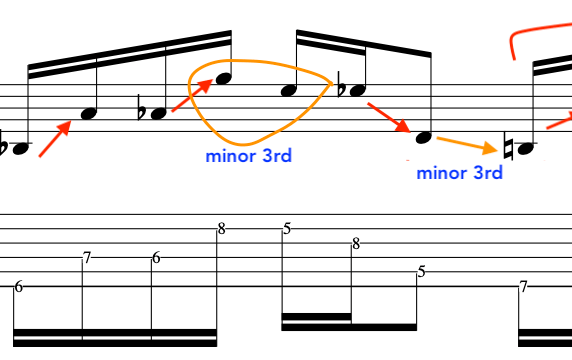
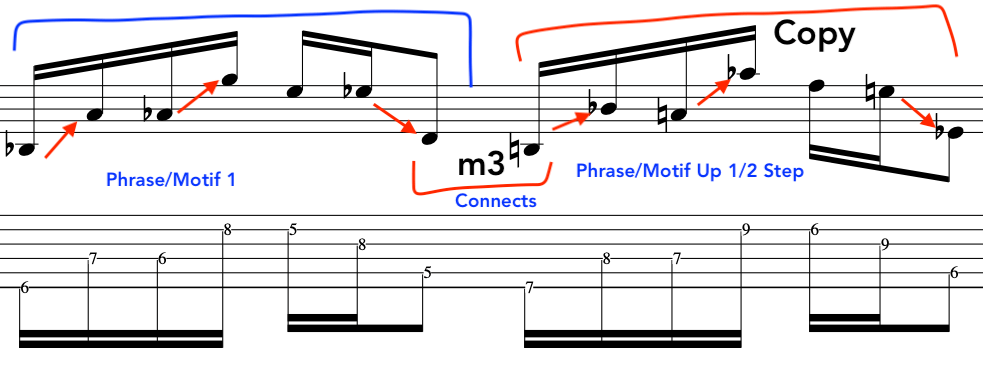
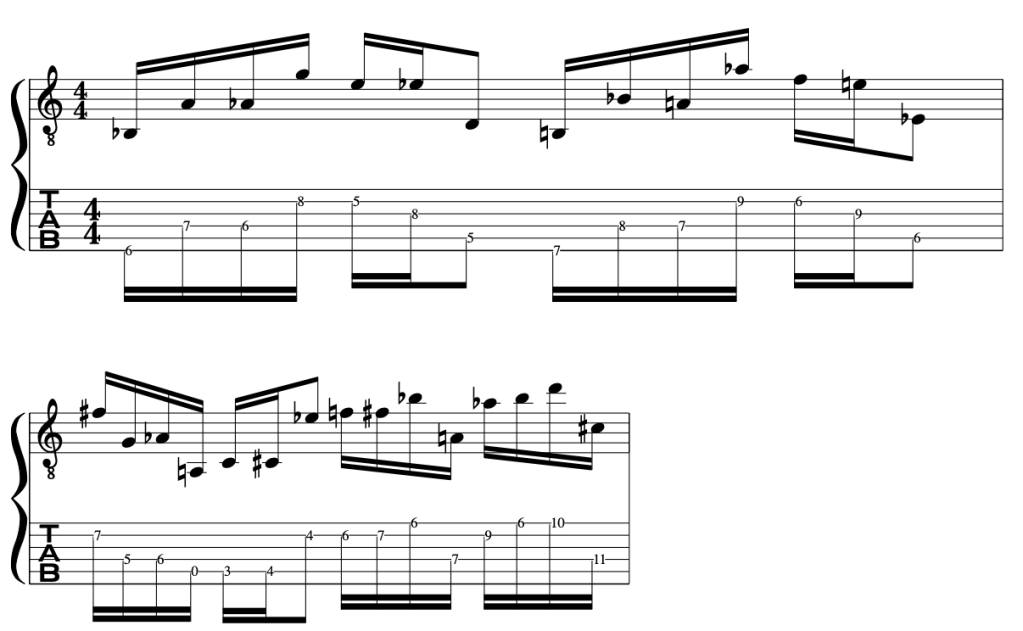
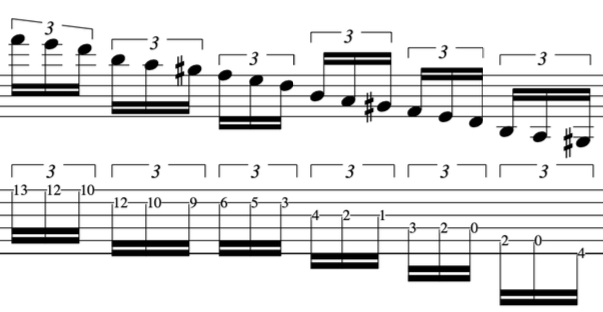
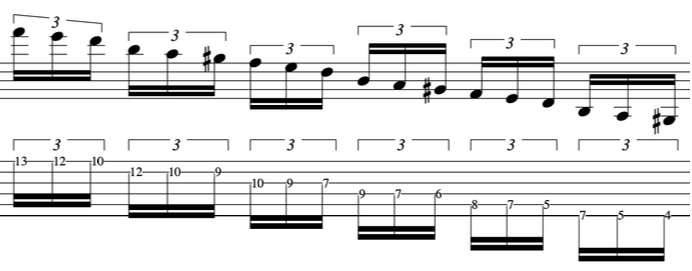
To achieve this, we will now go in the opposite direction and descend with a classic Pat Martino lick

Musical notation showing a jazz guitarist Pat Martino melodic line with a labeled lick, featuring notes on a staff and highlighting specific sections for musical instruction.
Musical notation illustrating a classic Pat Martino lick, focusing on descending triad pairs.

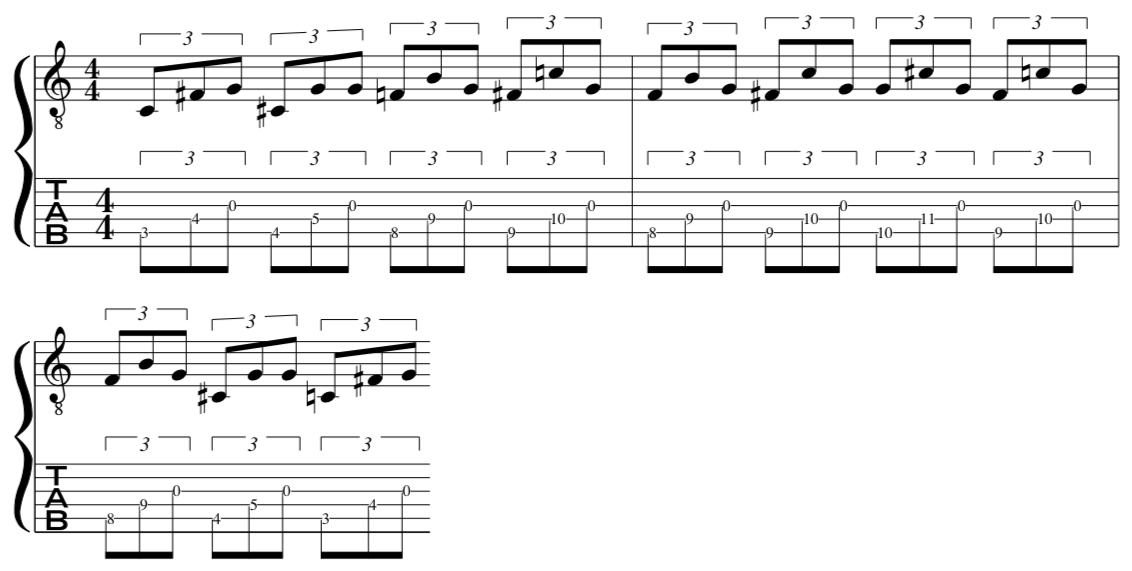
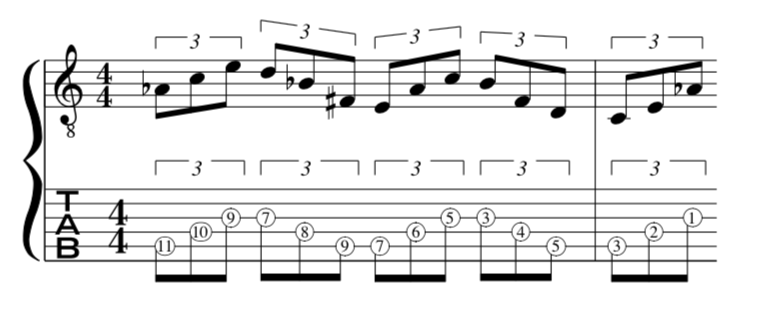
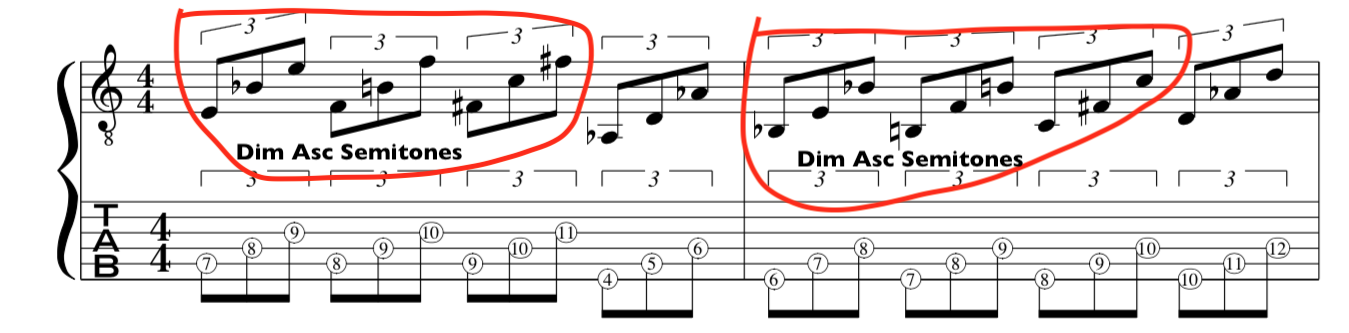
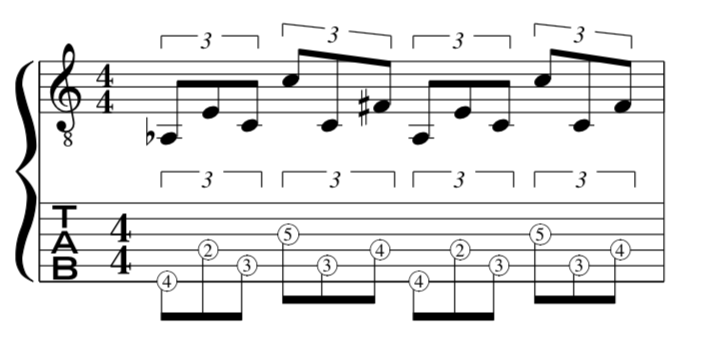
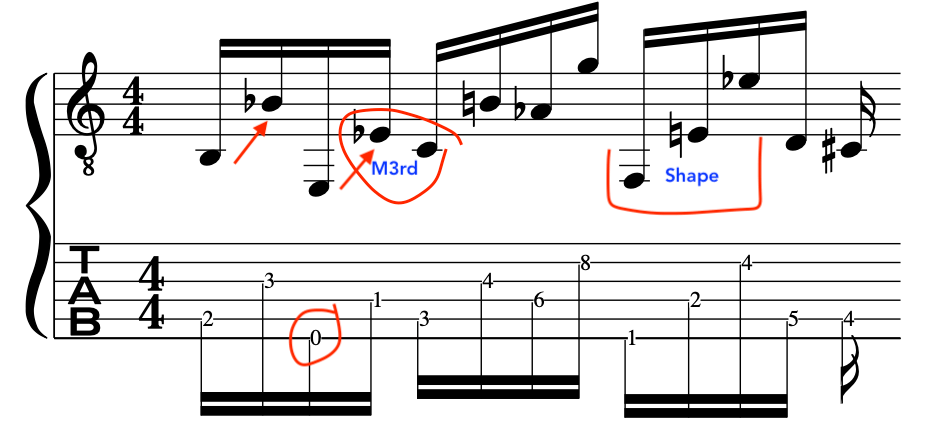
This leads us in nicely to exploit some chromatic set ups with target tones

Sheet music showing jazz guitarist Pat Martino's  musical phrase with highlighted notes and text label 'Target Tones'. for chromatic improvisation.
Musical notation for guitar illustrating target tones for improvisation.

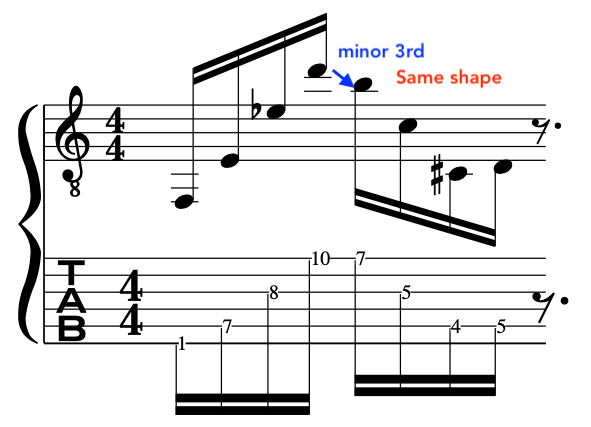
From this, we can bring in our G Major triad/arpeggio to give a wider intervallic sound to give a sense of distance from our chromatic notes.

Musical notation showing a melodic line with notes and a highlighted segment in red, labeled with a G.

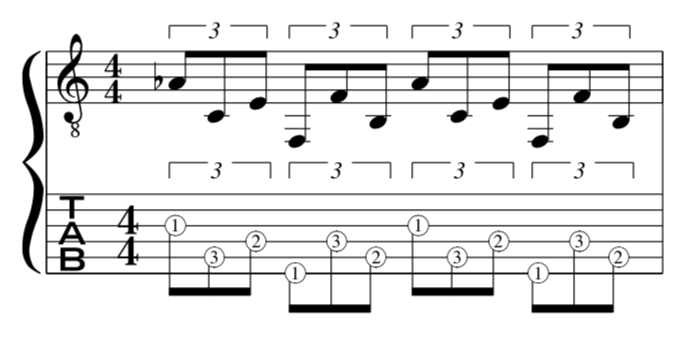
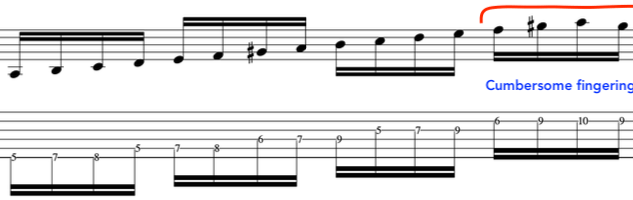
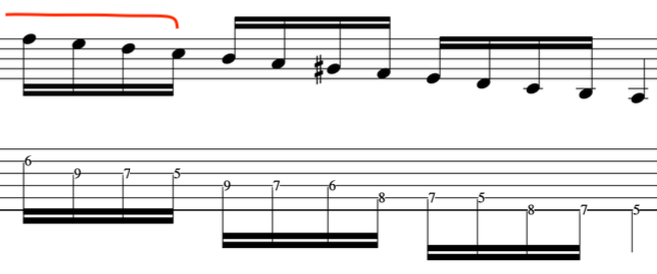
Finally, to complete the lick we will employ some basic scale movement with chromatic fragments for the A7 chord.

Musical notation for an A7 chord with highlighted notes and finger positions.

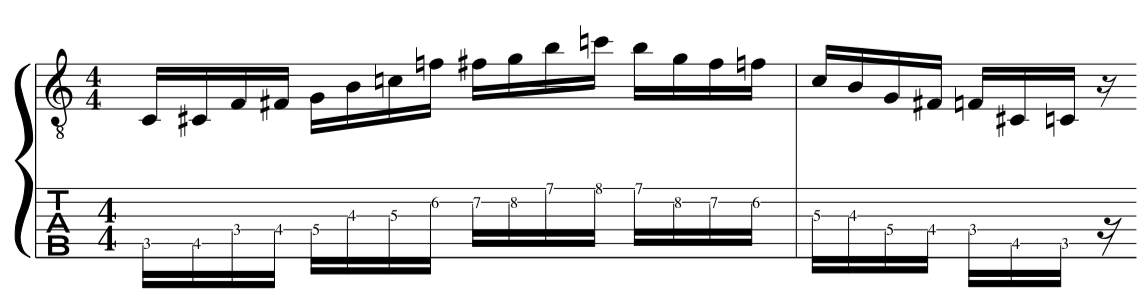
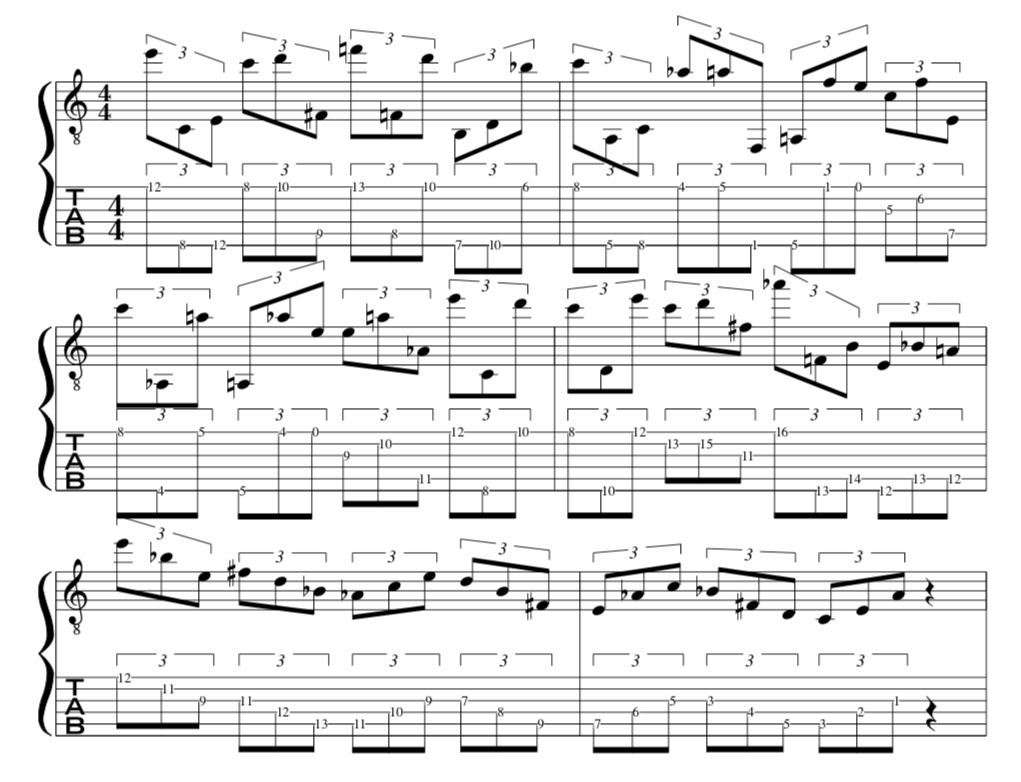
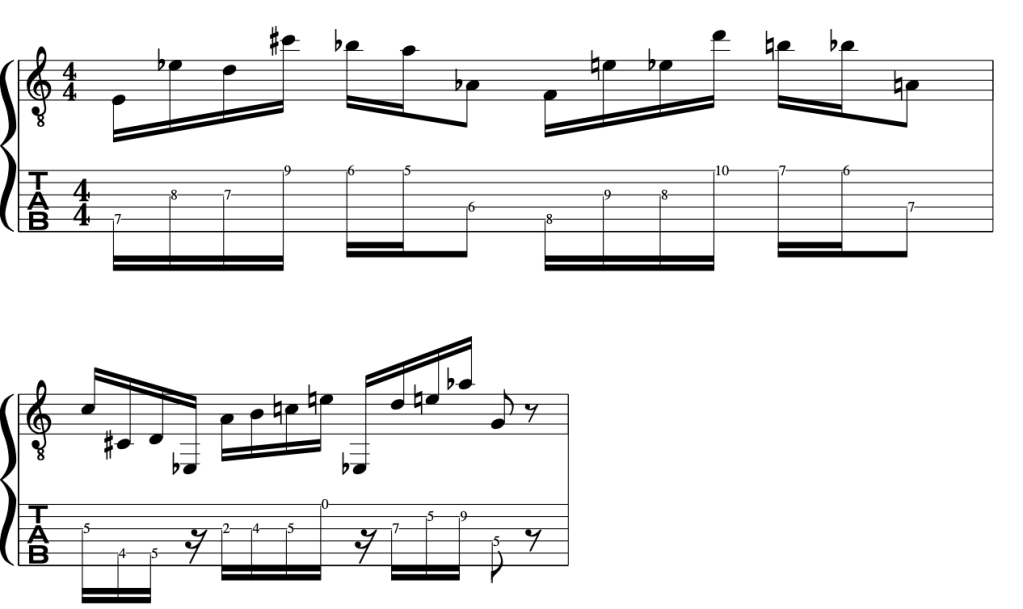
Although, this was a long phrase It acts as a useful example to hear and see how natural it is to build off of triad pairs for the improvised line.

These triad pairs also create a really nice melodic and fluid way to start a phrase.

Lastly, due to the way triad pairs are offset rhythmically, the improvised line generally possesses a more composed and polished sound.

John McLaughlin’s Pentatonic’s for Coltrane Changes:[Giant Steps]

Hi Guys,

Today, a quick look at John McLaughlin’s “Pentatonic” guitar concepts for playing over the Coltrane Changes.

Although I am employing alternate picking guitar technique at quite a fast rate, these pentatonic’s simplify things enormously.

THE RHYTHMIC SIDE OF THINGS:

To keep the solo line tight, we will count in a basic manner,

1 and 2 and 3 and 4 and

This way, you will know where you are in the bar and what chord you are playing over.

To begin with I use the B major pentatonic scale. Next, I employ a simple 2 finger pentatonic scale over D7 and GMaj7.

I then play the second part [same fingering] up a semitone and land on the note D for the EbMaj7 chord, counting 1 2 3 4 in preparation for the next chord.

Sheet music diagram showing giant steps chord names BMaj7, D7, GMaj7, Bb7, and EbMaj7, along with tablature for guitar. John McLaughlin version.
John McLaughlin Giant Steps BMaj7, D7, GMaj7, Bb7, and EbMaj7 for guitar players.

For the first three chords I play what could be called “A Dorian Pentatonic”. But, I am not really thinking in that way. [I am just adding the F# note for the 3rd of D7]. This in turn creates a very simple and “Fluid” guitar fingering that is very common to most guitar players and hence easy to play.

Sheet music featuring john mclaughlin  guitar tablature for Am7, D7, GMaj7, Bb7, EbMaj7, and F#7 giant steps chords.
John McLaughlin giant steps guitar chords Am7, D7, Gmaj7, Bb7, EbMaj7, F#7, and BMaj7.

On the F#7 chord I play an F#7 arpeggio that then resolves into an Eb minor arpeggio for the BMaj7 chord.

John McLaughlin Sheet music showing guitar tablature for the chords BMaj7, EbMaj7, and F#7, with annotations.
McLaughlin Musical notation showcasing the BMaj7 and EbMaj7 chords alongside the F#7 arpeggio.

For then next part, I again employ a simple Pentatonic to get through the first three chords.

This Bb minor leaning works well because over the Bb7 chord it gives us the “Blue note”. Finally we use our A Dorian Pentatonic again to resolve to GMaj7 for our last three chords.

Sheet music displaying John McLaughlin's chord progressions and tablature for Fm7, Bb7, EbMaj7, Am7, D7, and GMaj7 in giant stpes improvisation

Here, I just use C#m pentatonic and F# Pentatonic to land on the D# to nail the change to the BMaj7 chord. Very simple and very common guitar fingering.

John McLaughlin musical sheet showing chord progressions for C#m7, F#7, and BMaj7 with annotations for specific notes.
Musical notation highlighting C#m7, F#7, and BMaj7 chords for McLaughlin’s giant steps.

For the last part, I employ an Fm9 arpeggio and a C minor pentatonic scale that then goes up a semitone and repeats our C#m7 F#7 to Bmaj7 phrase.

Sheet music displaying Fm7, Bb7, and EbMaj7 John McLaughlin chords with tablature for guitar.
Music notation for Fm7, Bb7, and EbMaj7 chords, illustrating McLaughlin guitar techniques.

But, this time we land on an F# for the 5th of BMaj7.

A musical sheet showing the John McLaughlin chords C#m7, F#7, and BMaj7 with corresponding tablature.
John McLaughlin guitar pentatonic’s example

PDF DOWNLOAD:

If you enjoyed this blog then Please Click and SUBSCRIBE to us on YOUTUBE Below, Thanks!

John McLaughlin’s Emotional/Melodic Guitar Chords:

Hi Guys,

Today, a look at John McLaughlin’s emotional and melodic chords for composition and reharmonisation.

The key to both parts of this blog is the employment of the 1st Inversion Major chord and its resonant guitar voicing:

Diagram of a first inversion chord on a guitar, showing finger positioning on the fretboard with black dots indicating where to press.
Diagram showing the F Major 1st Inversion (F/A) chord voicing.

From this, let’s take the sequence from John’s classic “Electric dreams/Electric Sighs” composition.

We will start with a basic E Major chord that will then go to an Eb first inversion chord:

John McLaughlin guitar sheet music displaying E major and Eb first inversion chords with chord annotations.
Chord progression from E Major to Eb first inversion in a musical notation.

From here, we will resolve this by moving to Ab minor:

We will now repeat the pattern, and, create an ascending sequence with F#/A# resolving to B minor:

Musical notation showing the F#/A# chord resolving to B minor, with staff lines and symbols. Electric dreams electric sighs JohnMcLaughlin
Chord progression featuring F#/A# resolving to B minor, illustrating melodic harmony.

There is now an implied cadence with Em7 to A7. But, this doesn’t Modulate to the key of D,

Sheet music showing the chords Em7 and A7, with guitar tab notation beneath.

Instead, we carry on with the sequence. This time we employ Ab/C to Db minor [enharmonically C#m]

Sheet music showing chords Ab/C and C#m, with notes and staff lines for JohnMcLaughlin's song electric dreams electric sighs.
Musical notation illustrating the Ab/C to C# minor chord transition, highlighting melodic harmony.

And finally, we do resolve, but, this is back to our tonic chord/Key of E Major.

Sheet music showing the notes B/D# and E along with rhythmic markings.
Musical notation showing a B/D# chord transitioning to an E chord.

FULL SCORE:

Sheet music displaying a melodic sequence of musical chords including E, Eb/G, Abm, F#/A#, Bm, Em7, A7, Ab/C, C#m, and B/D# with corresponding tablature.
Musical score featuring various chord progressions and their notations for melodic harmony.

With this type of beautiful, creative, melodic harmony, it’s a good idea to apply arpeggios to underline it and give it movement.

Sheet music depicting a series of arpeggiated  musical chords including E, Eb/G, Abm, F#/A#, Bm, and Em.
Musical notation showcasing arpeggio chord transitions including E, Eb/G, Abm, F#/A#, Bm, and Em.

Sheet music displaying arpeggiated guitar  john mclaughlin chords A7, Ab/C, C#m, B/D#, and E for electric dreams electric sighs.
Musical notation illustrating chord transitions with A7, Ab/C, C#m, B/D#, and E.

Most people seem to have a preference for the minor 6th chord, [which in this case has the F# or the Major 6th].

Musical notation showing a chord structure of A minor 6th, highlighting the major 6th note in red.

But, the minor flattened 6th chord [F natural in this case] has an amazing character of its own, [especially when it resolves to the first inversion, as we will see].

Musical notation showing a minor chord with a highlighted flattened 6th note.
Musical notation showing a Db minor flat 6th chord resolving to an Ab Major chord in first inversion, highlighting the flattened 6th note.
Illustration of the Db minor flat 6th chord to 1st inversion Ab Major chord, highlighting the flattened 6th note.
Sheet music showing a D flat minor flat 6th chord resolving to a first inversion A flat major chord, and B minor chord, with annotations indicating flattened sixth notes and first inversions.
Diagram illustrating the transition from Db minor to Ab major first inversion, highlighting the flattened 6th note.

Let’s now add some more first inversion chords:

Here, we employ F#m/A with the bass resolving a half step down to the G # note.

Once again, we have a wonderful melodic transition, this time going to the E first inversion chord.

Musical notation showing first inversion chords F#m/A and E/G# with indicators for 'tone' and 'semitone' resolutions
Illustration of F#m/A and E/G# first inversion chords highlighting tone and semitone relationships.

In order to move away from cliche-dom we will now alter the harmony a bit.

Here, we will add a chord of D9/F# [1st inversion] and let the bass move down a semitone to a chord of F7 [but with a Maj7th also and a #11th].

Musical notation showing D9/F# chord in first inversion and F7Maj7#11 chord for altered  harmonic cadence
Chord diagram illustrating the first inversion D9/F# and F7Maj7#11 chords

To complete this example, we will exploit chains of 7 Sus4 chords: Here, are the first three chords moving up in semitones.

Music notation showing how to use 7sus4 chords  Bb/C, B/C#, and C/D chords.
Illustration of 7sus4 chord transitions in semitones, featuring Bb/C, B/C#, and C/D for musical composition.

Here are the next three chords moving up in semitones :

Musical notation showing 7sus4 chords Db/Eb, D/E, and Eb/F with corresponding finger positions.
Chord progression analysis showcasing 7sus4 chords Db/Eb D/E Eb/F

Finally, we come to a conclusion and rest on an E/F# Chord, up a semitone once again.

Musical notation displaying the 7sus4 chord E/F# with labeled fret positions on a guitar neck.