Schoenberg’s chord of the 15th-Music Examples and Analysis

Hi Guys,

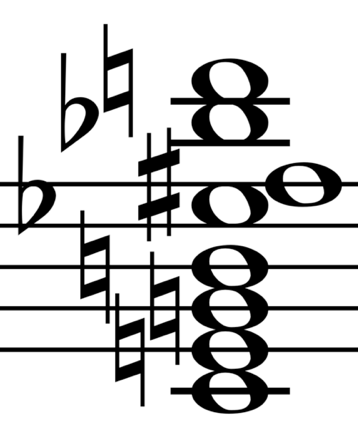
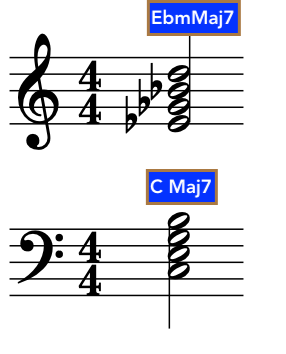
Today, a look at the final chord of Arnold Schoenberg’s “Sechs Kleine Klavierstucke” 2nd movement.  In thirds this reads as: C–E–G–B–D♯–F♯–A♯–Cx.

schoenberg_chord_music_analysis_extended_15th_in_music

This extended chord of a 15th, can also be viewed and heard as a bi-tonal construction of C Major 7th with Eb minorMajor 7th superimposed on top

schoenberg_chord_music_analysis_extended_15th_in_music

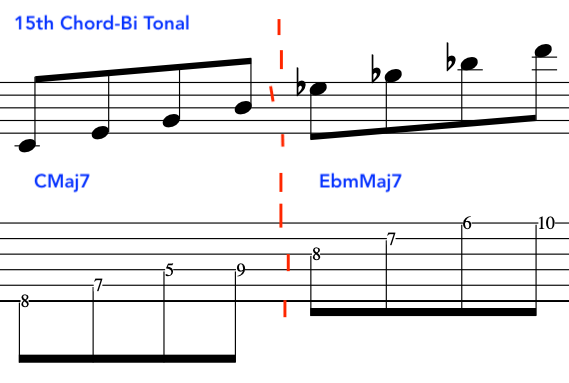
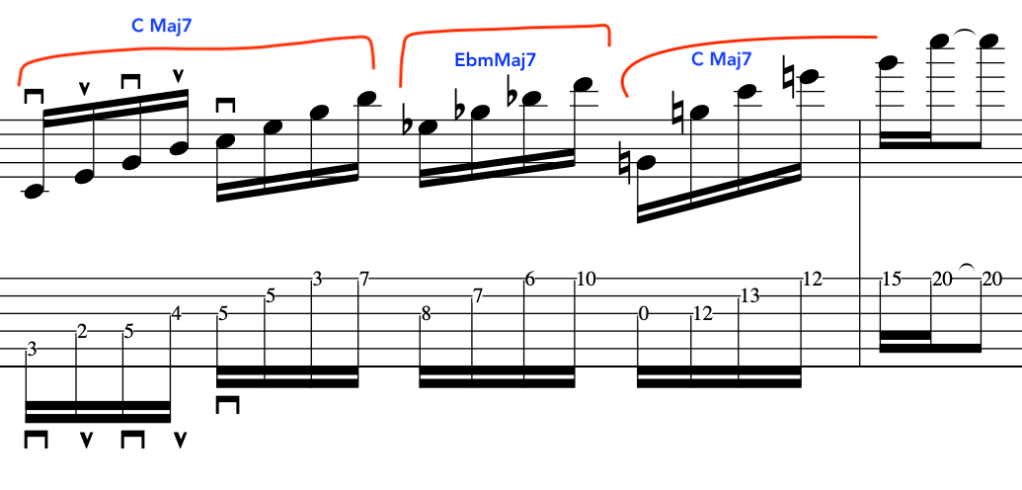
This can also, be thought of [especially in terms of the guitar] as an arpeggio of CMaj7 and an Arpeggio of EbmMaj7.

schoenberg_chord_music_analysis_explained_15th_in_music

Due, to the nature of its sound and collection of notes, it can produce some interesting counterpoint. Especially, as the Eb to E natural resolution creates colour and drama. [view video at top of page].

schoenberg_chord_music_analysis_extended_15th_in_music_guitar

Being, a Bi-Tonal chord it is useful as it gives us triad pairs.

schoenberg_chord_music_analysis_extended_15th_in_music_guitar

Ascending Line:

schoenberg_chord_music_analysis_chord_pairs_guitar

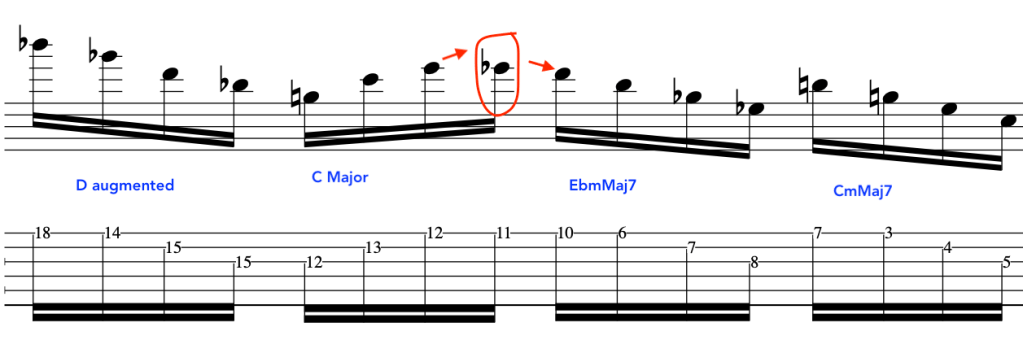
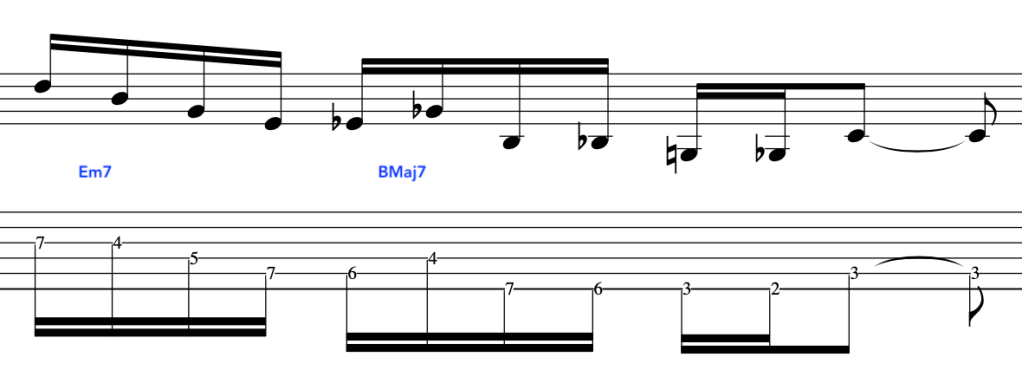
Now, we will take this a stage further by adding more chords/triads available.

D+ to C to EbmMaj7 to CmMaj7 to Em7 to Bmaj7

schoenberg_chord_music_analysis_chord_pairs

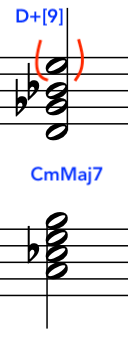
Let’s now, re voice the chord. Here we will make the chord of C a minMaj7 and add D Augmented [9th] on top.

schoenberg_chord_music_analysis_extended_15th_in_music

In the video/audio [a quick demo I created] below, we can hear the dramatic sound of this voicing in the orchestra.

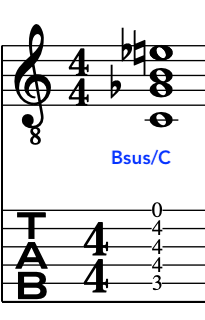
Next, we have two guitar voicing’s. Firstly we have a Bsus/C [or plain B/C] as a typical McLaughlin guitar voicing.

schoenberg_chord_music_analysis_extended_15th_in_music_mclaughlin_guitar

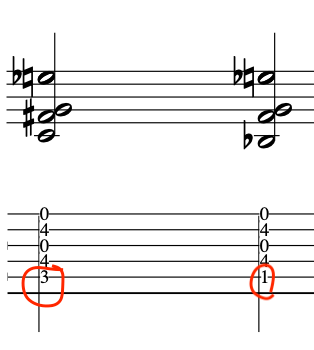
Secondly, we have the same voicing but with a changing bass.

schoenberg_chord_music_analysis_extended_15th_in_music_guitar

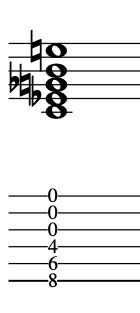
Lastly, another guitar voicing that is useful for chordal picking:

schoenberg_chord_music_analysis_extended_15th_in_music_guitar

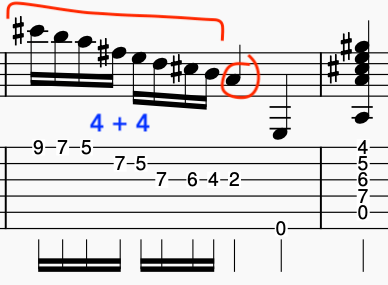
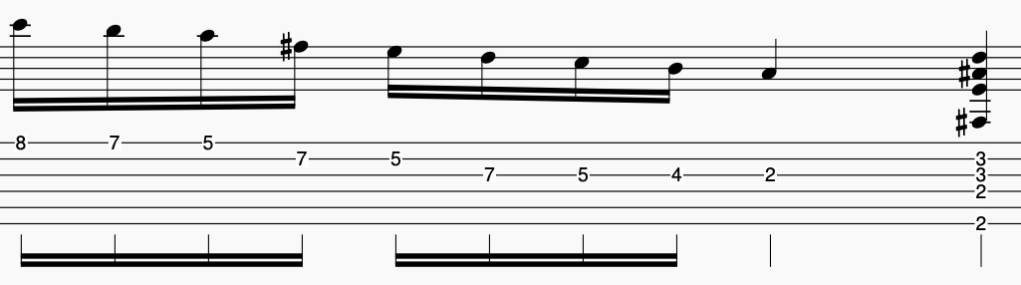
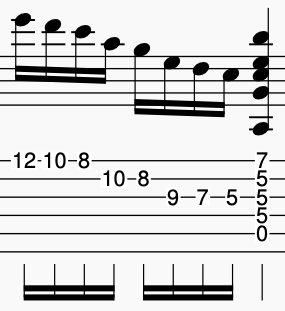
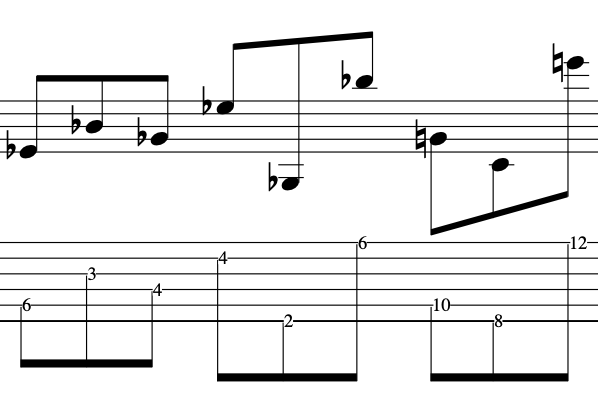
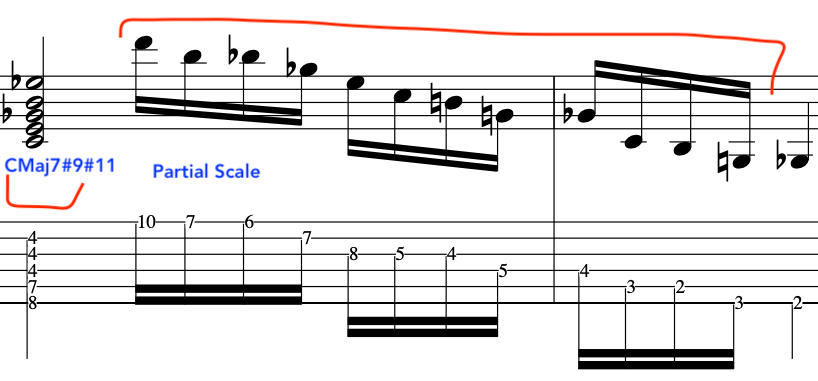
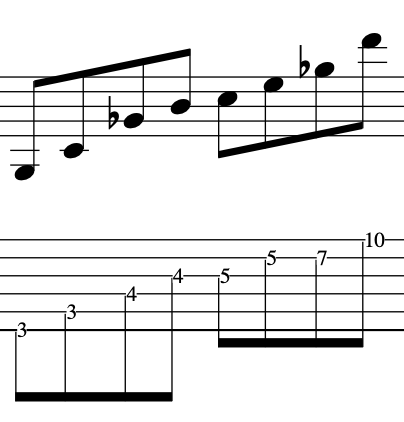
From here, we will add a partial scale descending that is formed from the chord: This chord voicing has a flattened 5th and a sharpened 9th.

schoenberg_chord_music_analysis_extended_15th_in_music_guitar

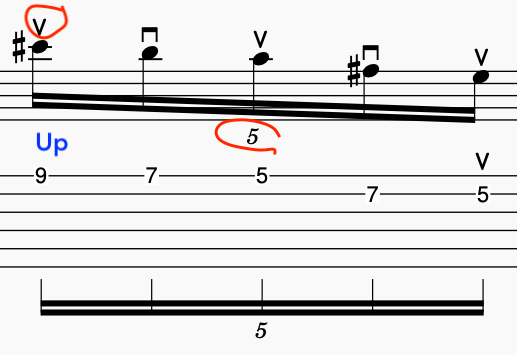
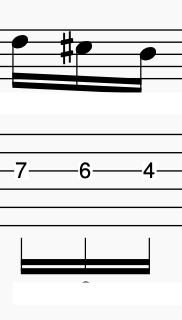
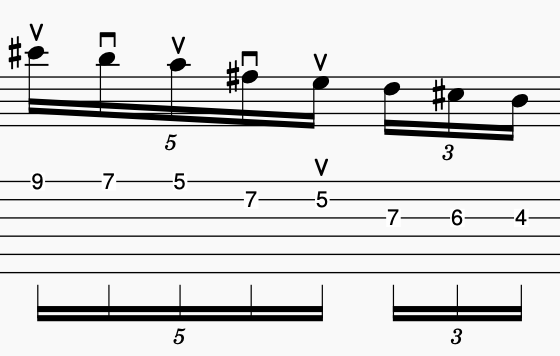
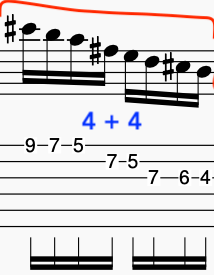
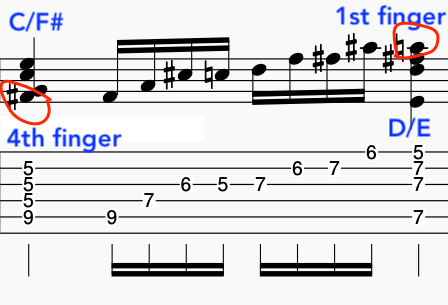
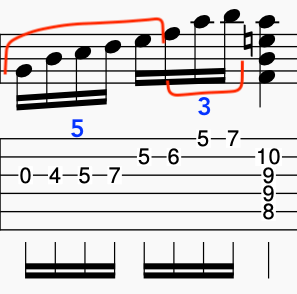
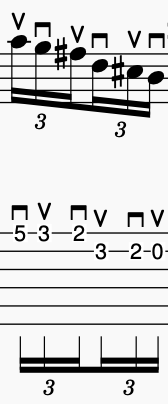
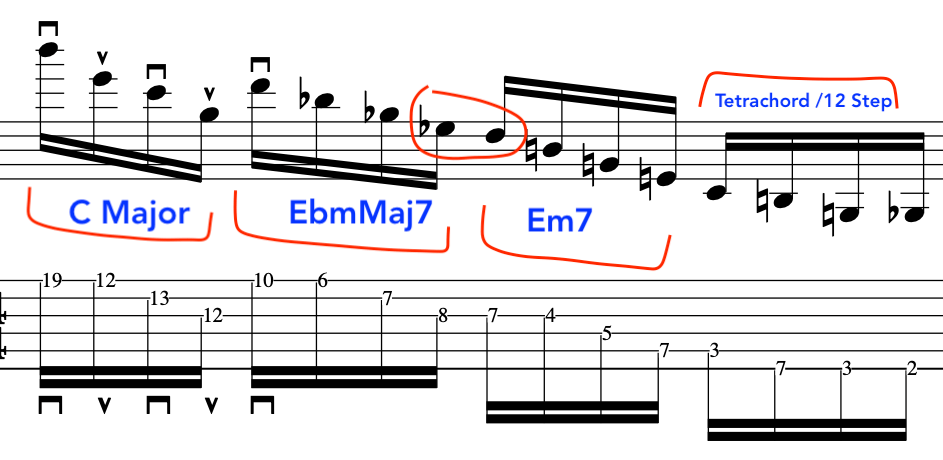
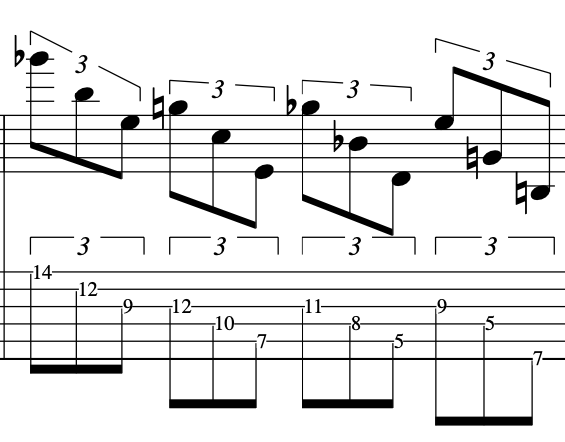
Lastly, we can create some interesting and colourful passages by exploiting the intervals inherent within this 15th chord.

schoenberg_chord_music_analysis_extended_15th_in_music_intervals

Arnold_Schoenberg's_chord-of-the 15th_analysis_music_theory

20 Century Classical Music: Plectrum Guitar Concepts/Patterns

Hi Guys,

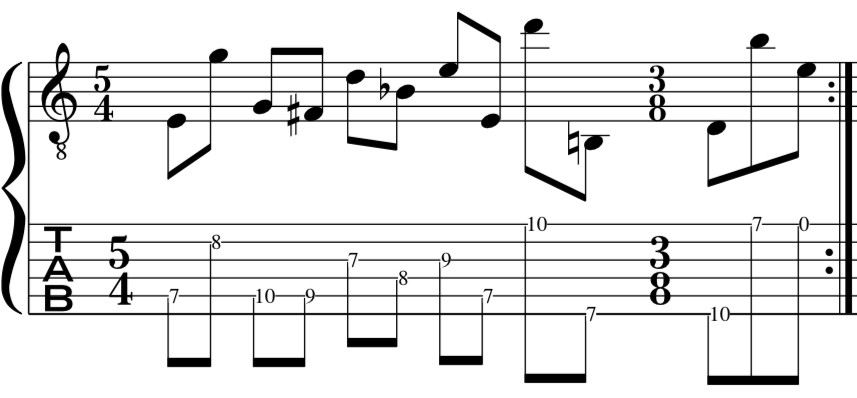
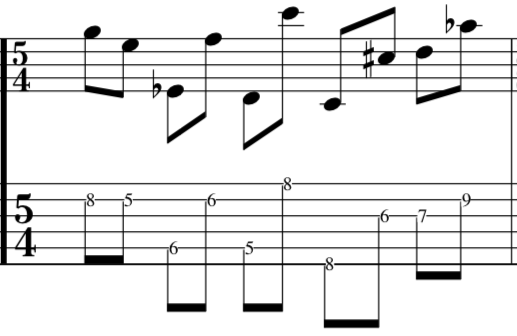
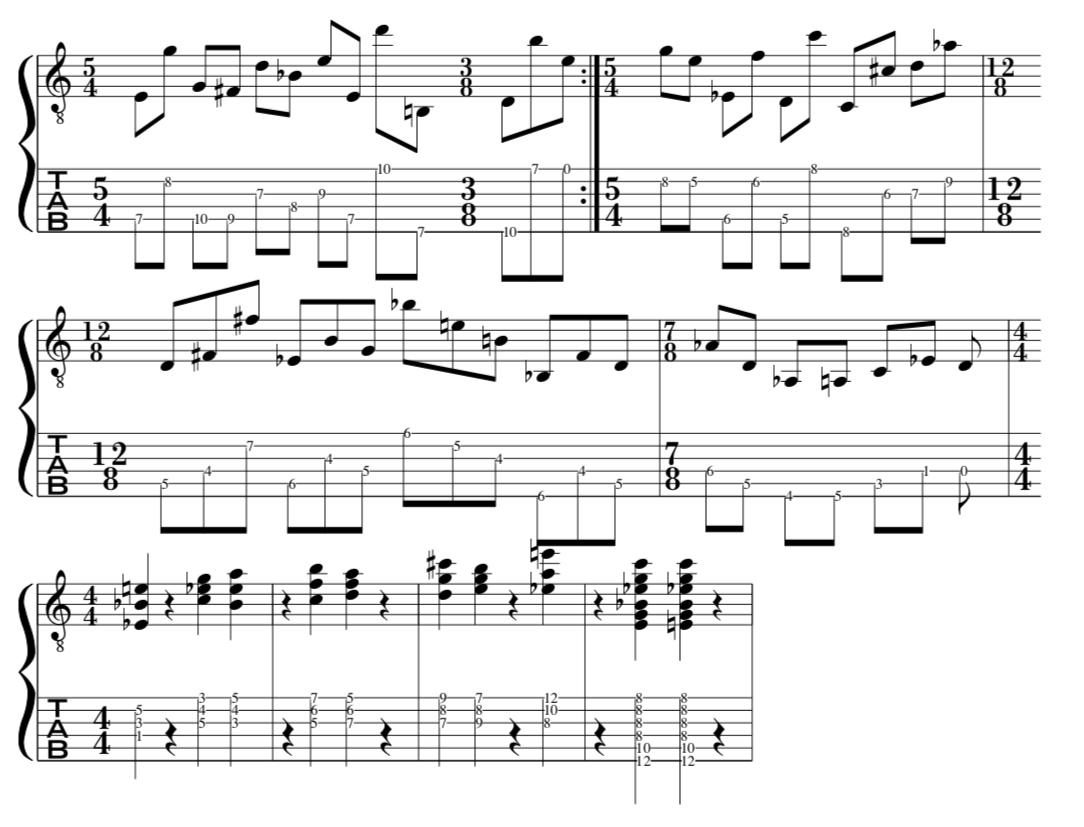
Today, a quick look at picking intervals on the guitar in an atonal fashion and creating innovative composition/improvisation.

Our example, exploits uneven/untidy intervals and creates a Stockhausen-esque [in terms of plectrum guitar] way of working and listening whilst placing these intervals.

Here, we will pick 5/4 and 3/8 Rhythmic units, and make the most of the guitars resonances from the bass to the treble.

This works really well, when the bass note is “Sustained” as the treble note is plucked. [The opposite can be applied also, as staccato]

Stockhausen, Guitar, Lesson,  intervals, alternate, time, signatures, composing, improvising, Free, PDF, Download
Stockhausen guitar composing improvising lesson concepts: Alternate Time Signatures

In the next bar, we will again make adventure with our “Atonal Intervals”. We will utilise our wide string skipping and move back to the 5/4 unit.

Stockhausen, Guitar, Lesson,  intervals, alternate, time, signatures, composing, improvising, Free, PDF, Download
Stockhausen guitar composing improvising lesson concepts

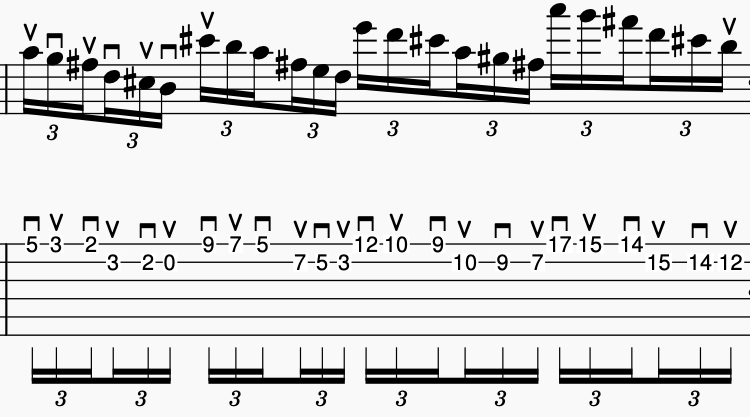
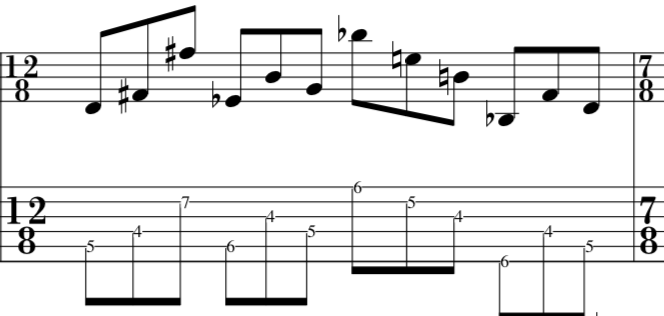
The rhythm in this next bar, now employs four “Three” note groupings in 12/8 [or as triplets in 4/4].

This changes the rhythmic effect, and makes the intervals less harsh and more even and interesting to the ear of the listener.

Stockhausen, Guitar, Lesson,  intervals, alternate, time, signatures, composing, improvising, Free, PDF, Download
Stockhausen composing improvising guitar muslesson concepts

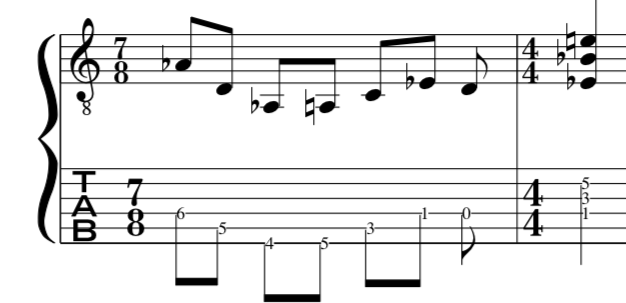
To offset this, we now have an irregular feel with 7/8 which will lead us back into a regular 4/4 set up with chords.

Like Boulez, this is all really a play on opposites.

Stockhausen, Guitar, Lesson, alternate, time, signatures  composing, improvising, Free, PDF, Download
Stockhausen composing improvising guitar lesson musical concepts

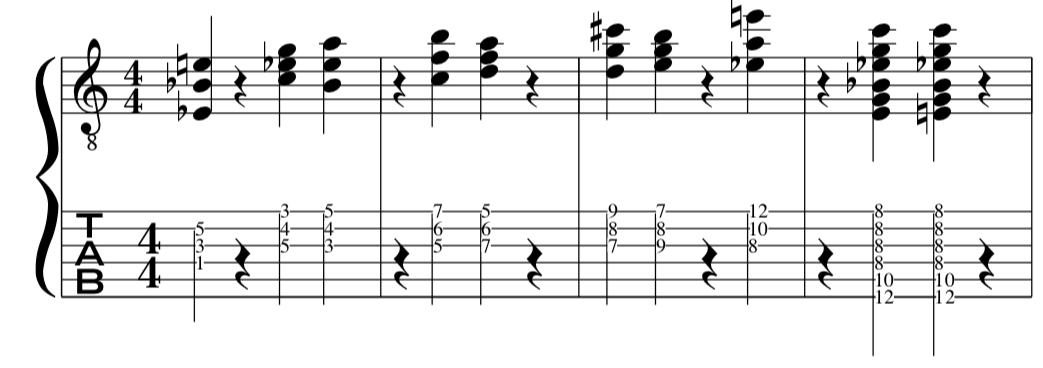
Finally, we have our chords: But, they too are slightly offset, so that nothing ever feels quite stable and hence, keeps the listener on their toes!

Stockhausen, Guitar, Lesson,   composing, improvising, Free, PDF, Download
Stockhausen composing improvising guitar lesson musical concepts
Musical notation and tablature illustrating uneven intervals and rhythmic units on guitar for atonal composition.
Guitar notation and tablature illustrating atonal intervals and rhythmic complexities for innovative composition.

IF THIS LESSON WAS OF USE TO YOU THEN PLEASE SUBSCRIBE TO US BELOW ON YOUTUBE, THANKS!

Enhance Your Compositions with Polytonality Techniques

Modern Jazz Fusion Chords part 2. Steely Dan, Dan Chord and Slash Chords

CLICK SUBSCRIBE!

Polytonality: For Concerto/OrchestralWriting lesson

Hi Guys,

This is the Re-Post that you requested.

Polytonality is the use of two or more keys at the same time:

poly-tonality-orchestral-composing-chords-example

In this first example we have 4 bars of Polytonality with Eminor/DbMajor and EbMajor/CMajor

Sheet music showing a polytonal example with E minor/Db Major and Eb Major/C Major labels.
Musical notation illustrating polytonality with E minor/Db Major and Eb Major/C Major.

This then resolves itself with a “Tonal” diatonic cadence of B7/D# to Em:

Polytonality-Orchestral Example

This example explores “Implication”. In this case it is implying the melodic minor but avoiding the cliche by employing the richness of Polytonality:

Sheet music showing C# minor, Fm7, A minor, Ab Major, and Gm6/A chords with annotations as examples for polytonality.
Musical notation illustrating chord progressions in polytonality, featuring C# minor, Fm7, Aminor, Ab Major, and Gm6/A.

From here, we will again employ diatonic harmony for a cadence.

To complete this short orchestral example we will go back into Polytonality with another melodic minor implication by employing Dminor/DbMajor:

Sheet music showing the chord labels 'D minor' and 'Db Major' in red text to demonstrate polytonality.
Musical chart depicting D minor and Db Major for a polytonal music example.

Here is the chart:

poly-tonality-orchestral-composing-example

Polytonality-Orchestral Example

In this final example we will just “Reverse” the chords. This time it is DbMajor/Cmajor which is then played the other way around with CMajor/DbMajor.

polytonality-orchestral-composing-chords-example

finally, we will employ a slash chord for an “Implied” cadence: This will also lighten the harmony:

Musical notation of a slash chord labeled 'G/C' with staff lines and symbols.
Illustration of a G/C slash chord as notated in music theory.

Here is the Chart:

polytonality-orchestral-composing-example

FREE PDF DOWNLOAD:

Modern Jazz Fusion Chords part 2. Steely Dan, Dan Chord and Slash Chords