Quick Tips for Jazz Guitar Turnarounds: Martino,Mock,McLaughlin

Hi Guys,

Today, a look at playing through a Vi ii V7 I Turn around/Cadence at a quick pace/tempo.

This is in the style of Don Mock, Pat Martino and John McLaughlin. So, this employs the alternate picking guitar technique.

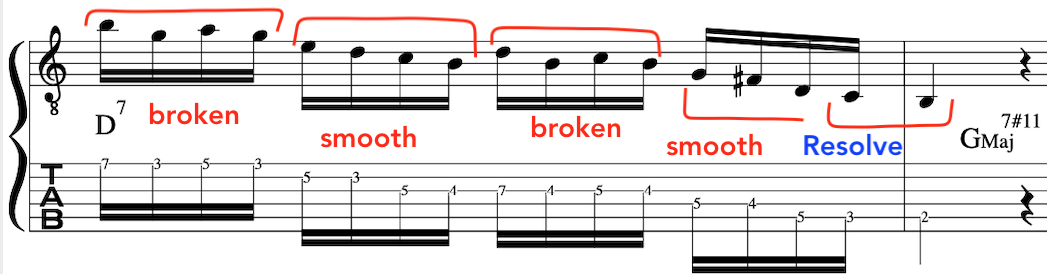
A jazz chord turnaround and cadence featuring Gmaj7, E7, Am7, D7, Gmaj, Gm7, C7, and Fmaj7 in 4/4 time.
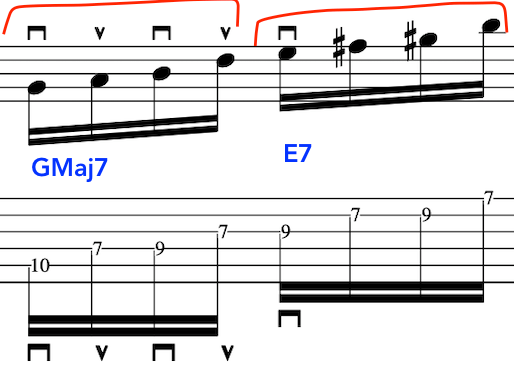
Musical notation and tab showing GMaj7 and E7 jazz turnaround chords with corresponding notes and finger placements for guitar.

Starting, on a down stroke with alternate picking, we can see how easy it is to connect these simple pentatonic’s together through the two chord changes.

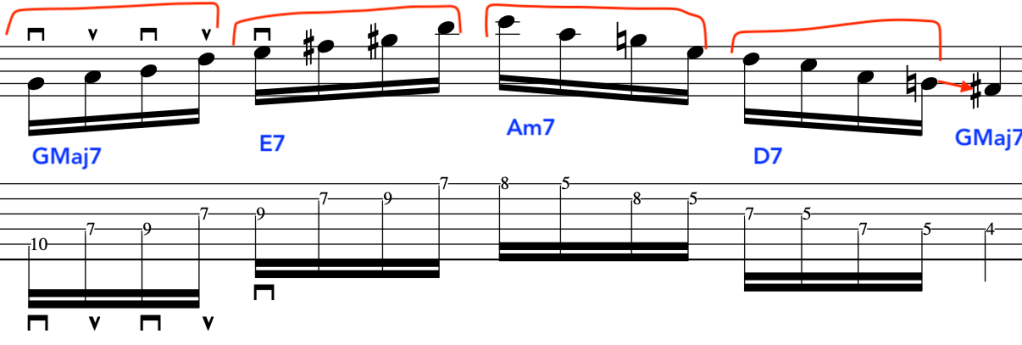
Now, let’s connect the pentatonic’s over the next two chords in the same manner. [Notice the G to F# resolution for Gmaj7]
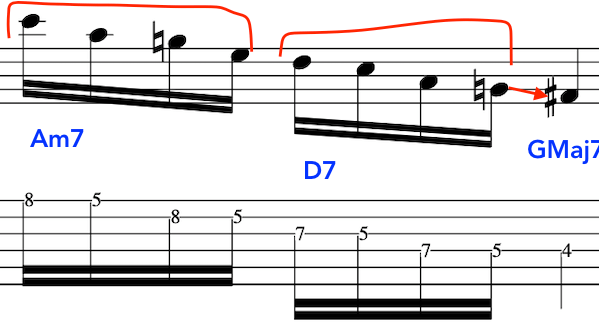
Musical notation and tablature showing jazz ii V7 I chords Am7, D7, and Gmaj7 with highlighted notes and guitar finger placements.

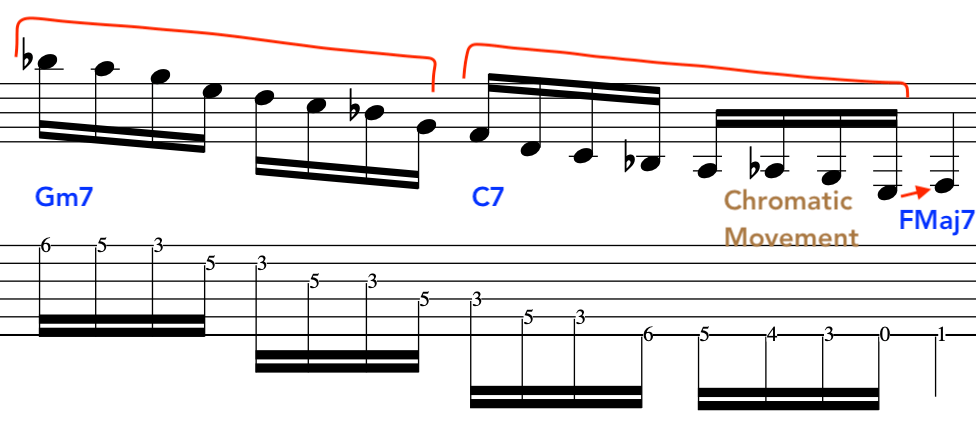
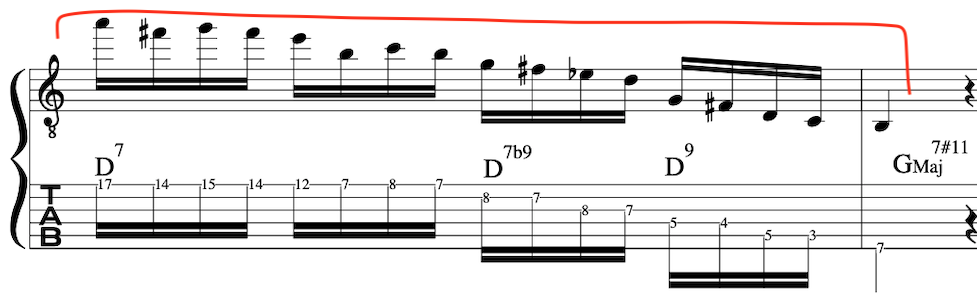
Having completed our Turnaround, let’s cadence this to a new key: This will be F Major.

To do this, we will make the G Major 7th chord, minor, to G minor 7th.
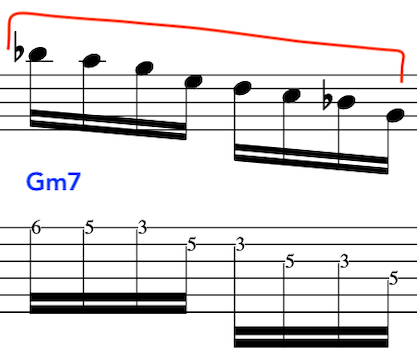
Musical notation and tab for the Gm7 chord featuring pentatonic scale connections for jazz improvisation

From here, we will carry this pentatonic scale/line along and play it over the next chord.

This will be the Dominant chord of C7 [or chord V leading to/of the new key F Major].

Notice: the use of a few chromatic notes to fill out the pentatonic scale/line.
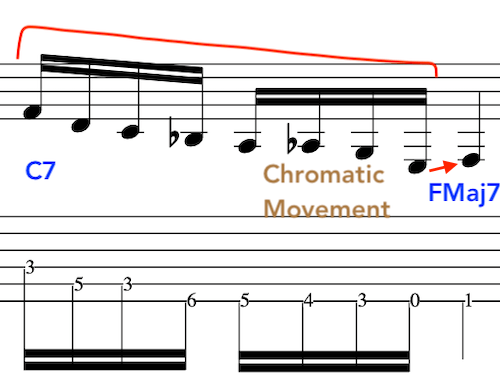
Sheet music showing a chord progression with annotations for C7 and Fmaj7, highlighting chromatic jazz improvisational movement.

Full Turnaround/Cadence:

Sheet music and tablature  displaying chord progression for jazz Vi ii V7 I Gmaj7, E7, Am7, D7, and Gmaj7, with annotations and notes for guitar performance.
Sheet music showing a chord progression for jazz with ii V7 I with Gm7, C7, and FMaj7, highlighting chromatic scale movement and alternate picking guitar techniques.

This, was just a quick look at how easy it is to connect long lines together through very quick chord changes, especially, at the guitar with alternate picking technique.

It’s amazing the amount of chords we can play through fluently and quickly with this simple pentatonic four note [tetrachord] approach when improvising.

This short blog/lesson was just touching the surface. But, it does still give quite a comprehensive view of what can be achieved with this approach.

It’s a good idea to apply this method to any quick chord changes that you can find [e,g “Giant Steps”] and try this.

John McLaughlin Alternate Picking Guitar Secrets part 1

Hi Guys,

Today, a quick delve into what makes John McLaughlin’s alternate picking guitar style work so easily and fluidly.

Many, focus on the right hand technique, but, much of it comes from the way the fretting hand works.

So, let’s look at a couple of simple secrets to John’s approach and why it is so fluid and effective

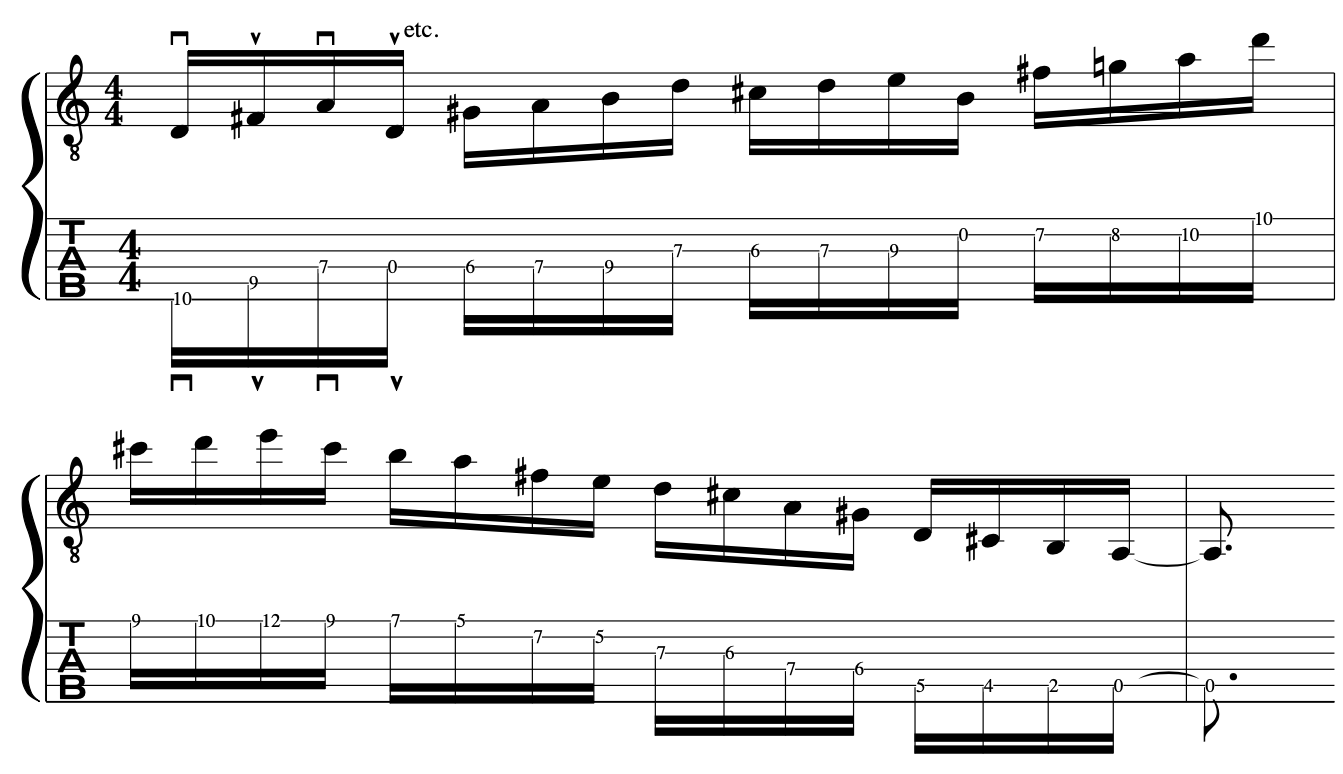
In this example, we will create an effective line that is not tremolo picking on cliche shred scales but a continuous colourful and creative improvised line in a world music style.

john-mclaughlin-guitar-secrets-alternate-picking-fast

If we take this apart we will find a couple of reasons why this is fluid and very natural for the alternate picking guitar technique.

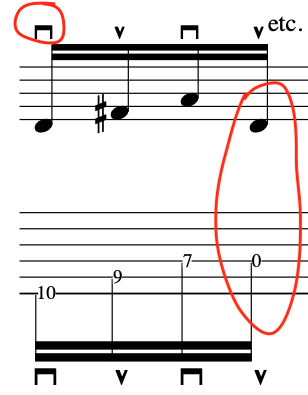
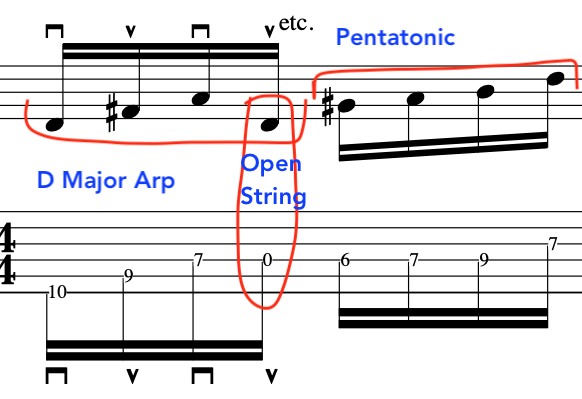
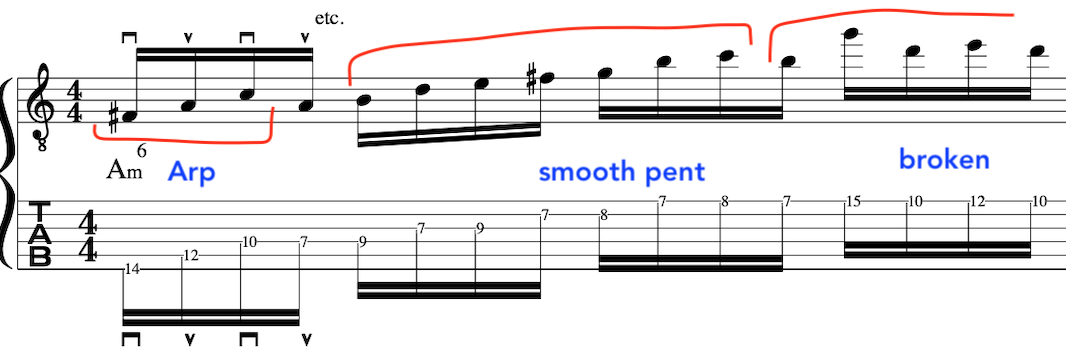
First of all notice: The arpeggio that starts the phrase. The last note of this 4 note tetrachord grouping is an open D string!

john-mclaughlin-guitar-secrets-alternate-picking-fast

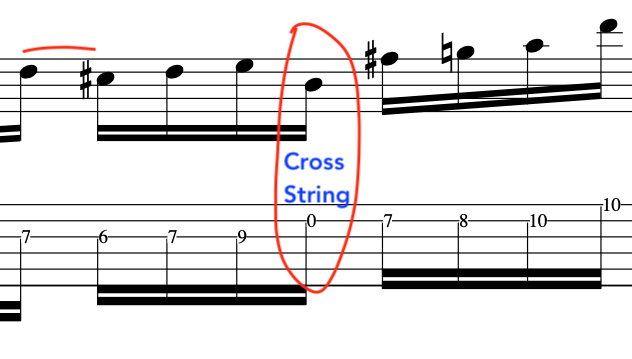
This open string gives the fretting hand a hundredth of a second to do absolutely nothing as it prepares for the next 4 note grouping to fret.

john-mclaughlin-guitar-secrets-alternate-picking-fast

This gives us time to get into position and so we are NOT rushing about, and, we are in control

john-mclaughlin-guitar-secrets-alternate-picking-fast

This makes it easy to cross the string smoothly and connect to the next tetrachord.

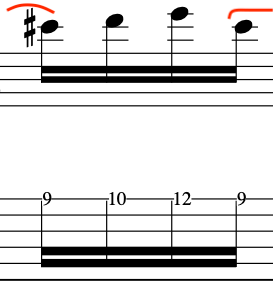
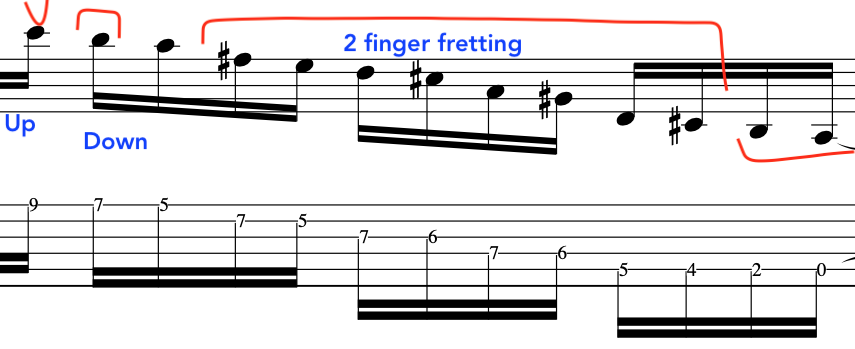
From here we will extract a partial John McLaughlin scale/fingering by sliding it into position.

john-mclaughlin-guitar-secrets-alternate-picking-fast

To end this line, we will descend with some simple scale starting on an “Up stroke”. Also, notice the simple 2 finger fingering for the fretting hand.

john-mclaughlin-guitar-secrets-alternate-picking-fast

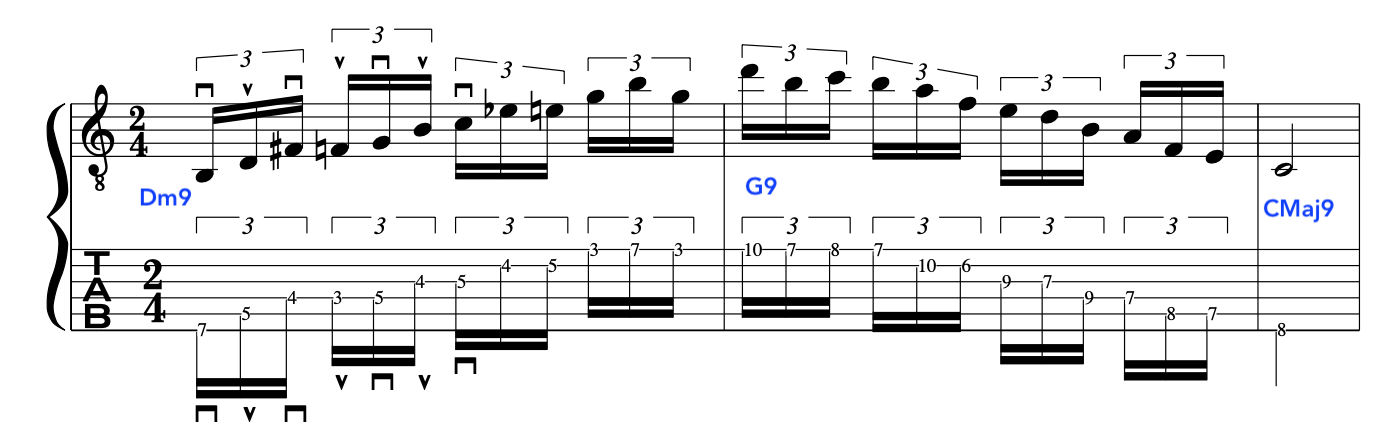
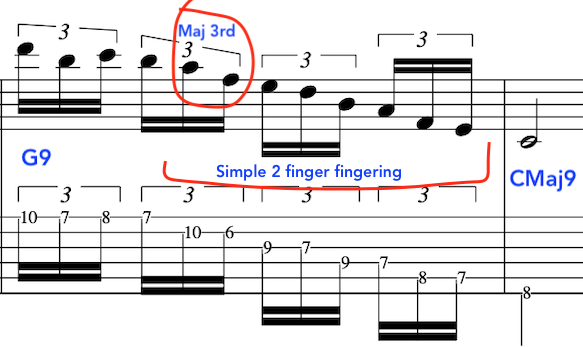
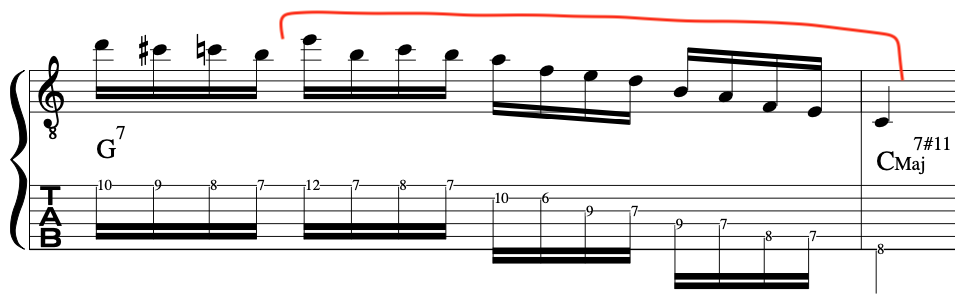
In this exercise we will employ groupings of 6 notes. This is based upon an improvised acoustic jazz fusion line, like that of “Belo Herozonte:

This is played over a ii V7 I of Dm9 G7 CMaj9:

john-mclaughlin-guitar-secrets-alternate-picking-fast

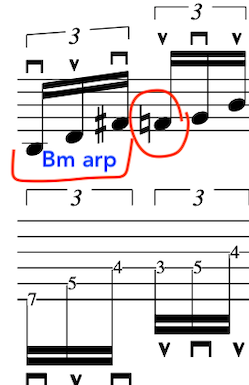
If we take this apart we will notice that we exploit a Bm arpeggio going to a B dim arpeggio that then goes to the 4th and 6th notes of D Dorian: This creates a nice colourful sound.

john-mclaughlin-guitar-secrets-alternate-picking-fast

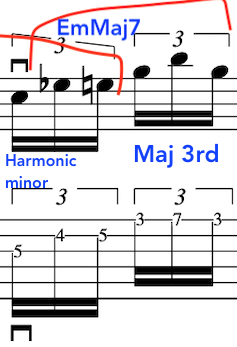
For the next 6 note hexatonic grouping we employ an E harmonic/melodic minor sound over the Dm9 chord: Notice the Major 3rd interval:

john-mclaughlin-guitar-secrets-alternate-picking-fast

From here, we will “Slide” the fretting hand up to the next position: Notice the use of the Major 3rd interval once again, as this breaks up the monotonous scale sound and creates distance and melodicism.

Finally, we have simple 2 finger pentatonic descending scale application that finally rest on the note C for the CMaj9 chord.

john-mclaughlin-guitar-secrets-alternate-picking-fast

Jazz Guitar Alternate Picking Exercises: ii V7 i [Double Time]

Modern Jazz Fusion Chords part 2. Steely Dan, Dan Chord and Slash Chords

CLICK SUBSCRIBE!

Jazz Guitar Alternate Picking Exercises: ii v7 I [Double Time]

Hi Guys,

Today, we will look at some alternate picking guitar technique exercises for jazz improvisation when double timing

We will exploit ii V7 I’s as a basis for honing our alternate picking skills whilst employing 4 note tetrachord groupings.

In the first exercise it’s a good idea to accent the third note in each four note grouping. We are also starting on a downstroke:

jazz-guitar-alternate-picking-lesson-exercies

Here is the same exercise but with a variation in the second bar:

jazz-guitar-alternate-picking-lesson-exercies

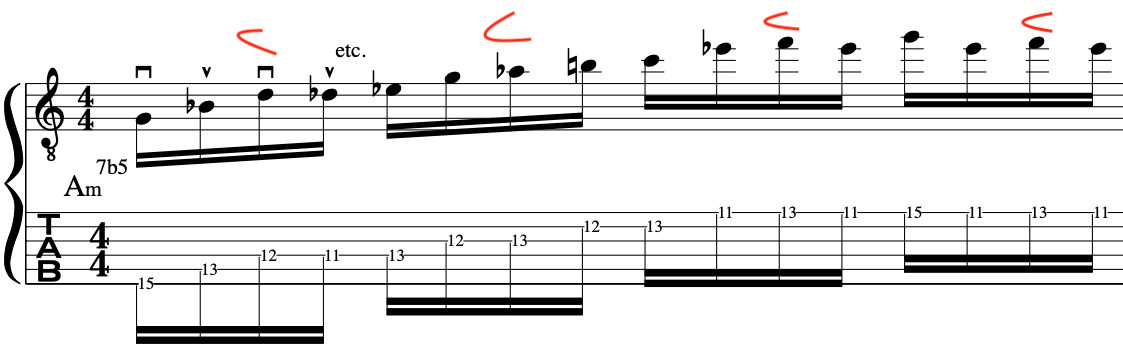
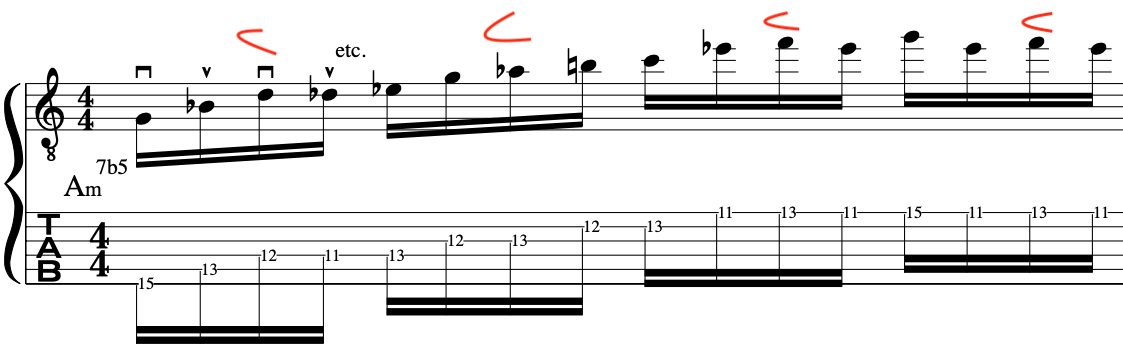
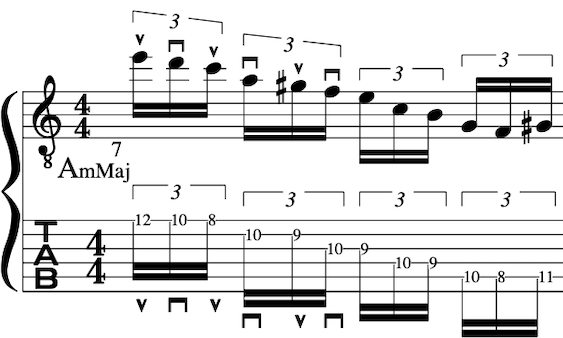
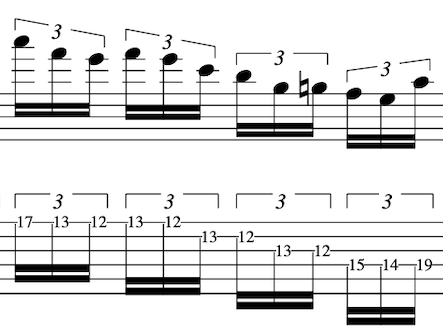
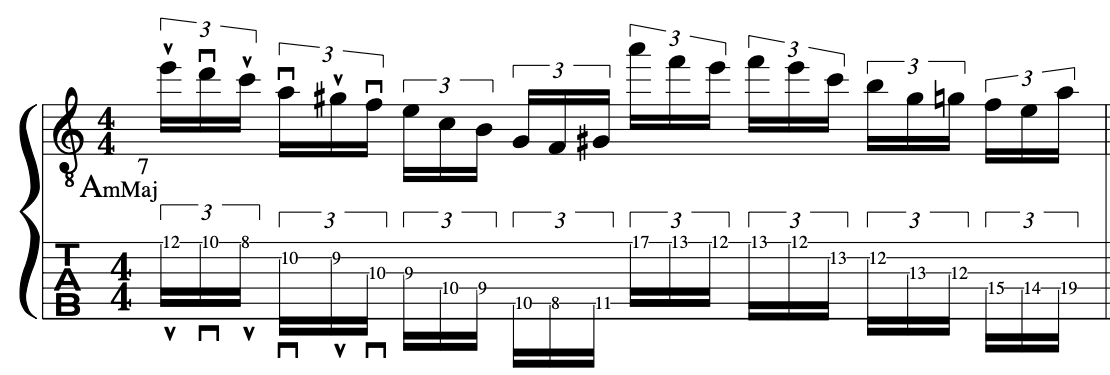
The next exercise will employ groups of 6 notes called sextuplets: As an exercise we will start with an “Upstroke” this time. This will be played over an AmMaj7 pad:

First Part:

jazz-guitar-alternate-picking-lesson-exercies-sextuplets

2nd Part:

jazz-guitar-alternate-picking-lesson-exercies-sextuplets

Full Exercise/Line:

jazz-guitar-alternate-picking-lesson-exercies-sextuplets

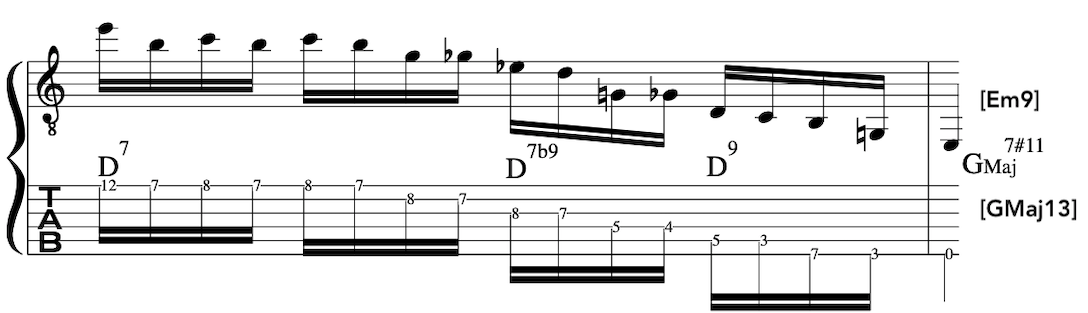
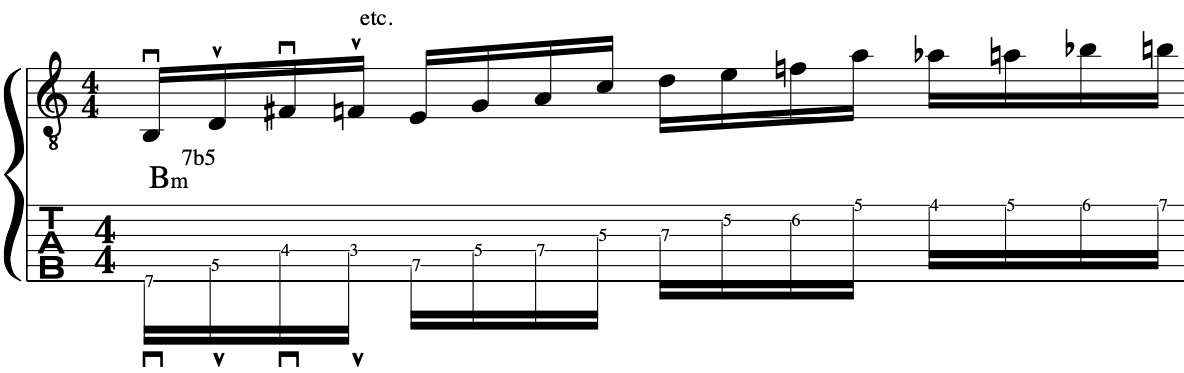
The following exercise uses some chromatic movement that smoothly connects to pentatonic movement starting on a downstroke:

jazz-guitar-alternate-picking-lesson-exercies

In our final exercise we will join together some of these principles.

jazz-guitar-alternate-picking-lesson-exercies-double-time

This was just a brief look at how to create alternate picking guitar exercises for improvisation through chord changes by applying simple patterns/fingerings that work naturally.

This was only around 140 bpm. But, this is essential before moving onto much quicker tempos with the alternate picking guitar technique.

With the 4 note “Tetrachord” groupings you will get fluidity through the changes. They will give you stability. They can then be broken up to create anticipation and syncopation-which will in turn create the natural expression of musical phrasing.

Modern Jazz Fusion Chords part 2. Steely Dan, Dan Chord and Slash Chords