Pat Martino Intervallic Studies: Un-Published Book Lesson

Pat Martino Intervallic Studies: Un-Published Book Lesson

Hi Guys!

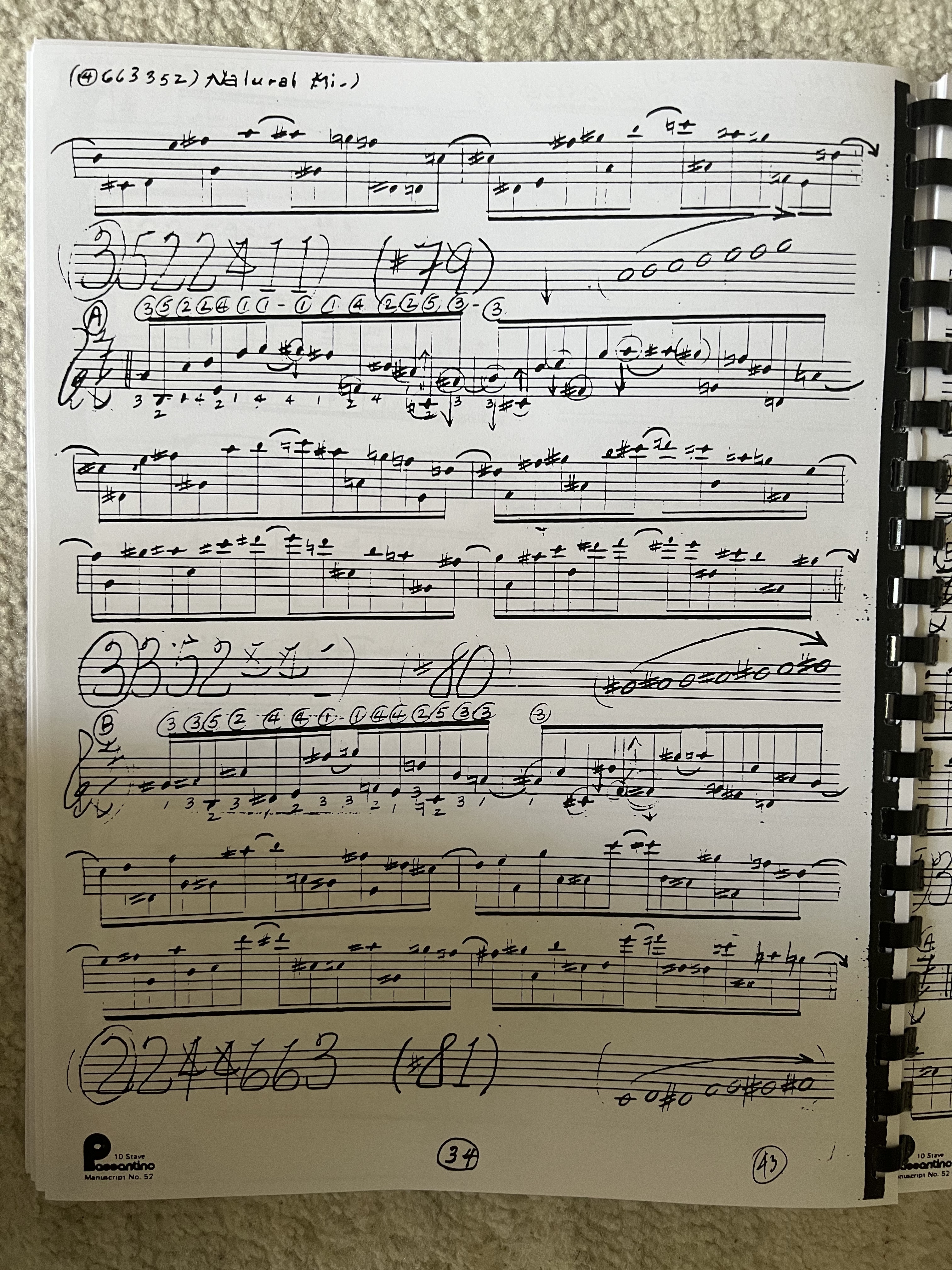
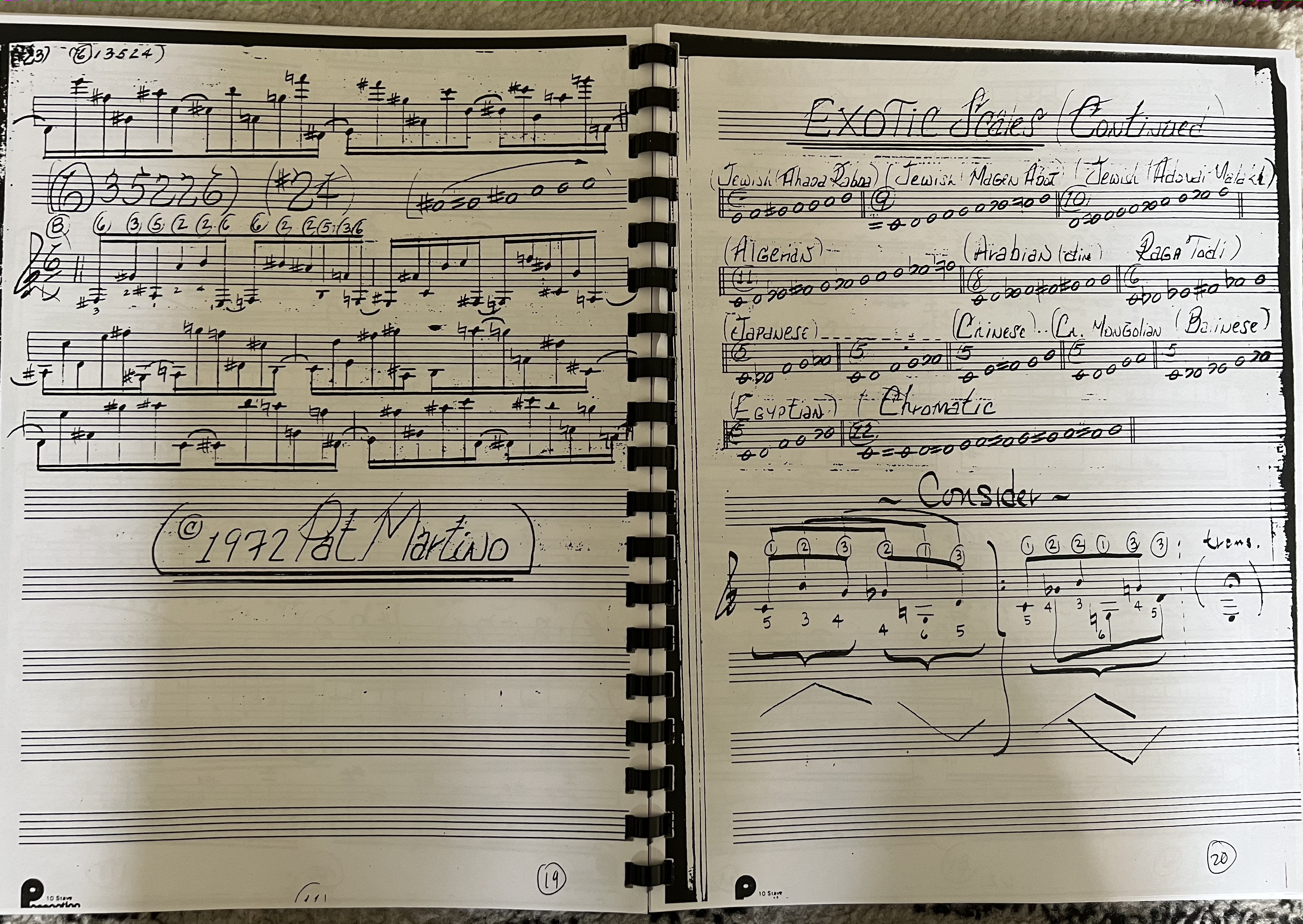
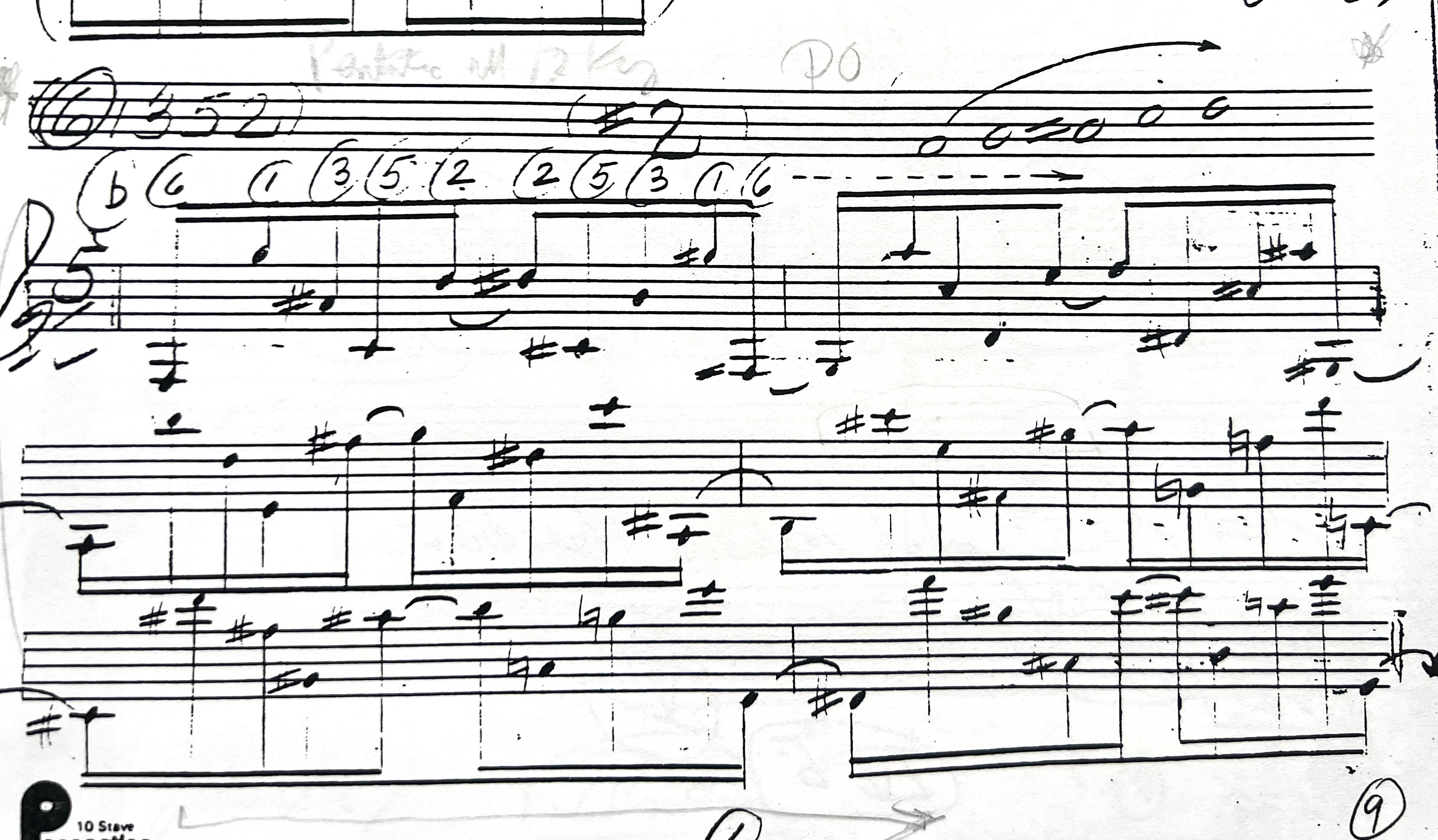
Guitarist Mark Koch one of Pat’s students kindly sent me a copy of Pat’s un-published book on “Intervallic studies“.

pat-martino-intervallic-studies-umpinlished-book

It’s a fascinating look at the imaginative thought process and creative concepts that Pat was investigating for the development of the improvising guitarist.

pat-martino-intervallic-studies-unpublished-book

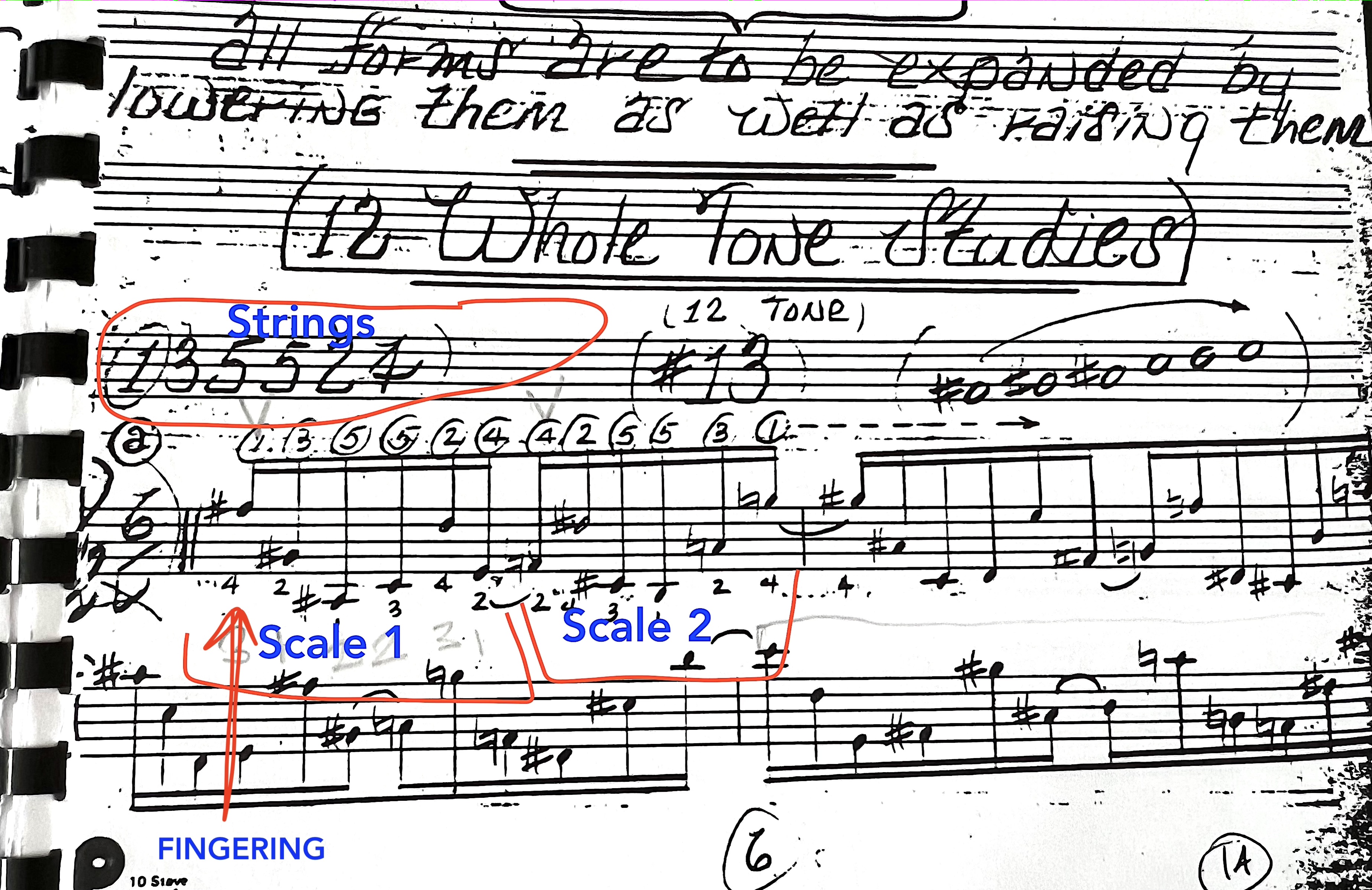
In this first example we will look at the “Whole Tone Scale” Study:

pat-martino-intervallic-studies-unpublished-book

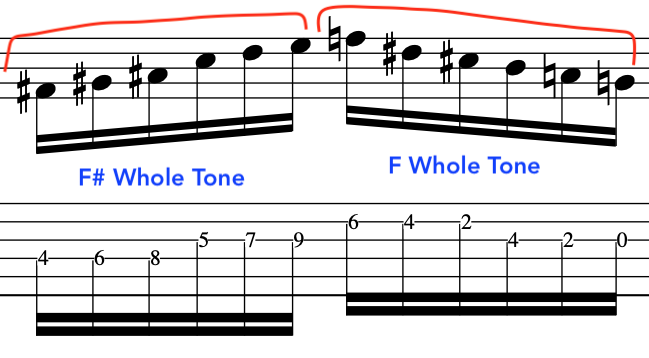
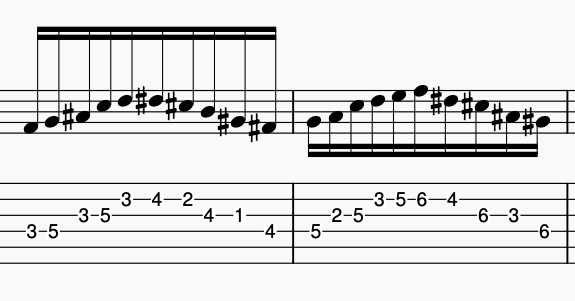
From a music theory perspective if we take away the intervallic approach and place the notes in order we will get a whole tone scale ascending followed by a whole tone scale descending:

pat-martino-intervallic-studies-unpublished-book

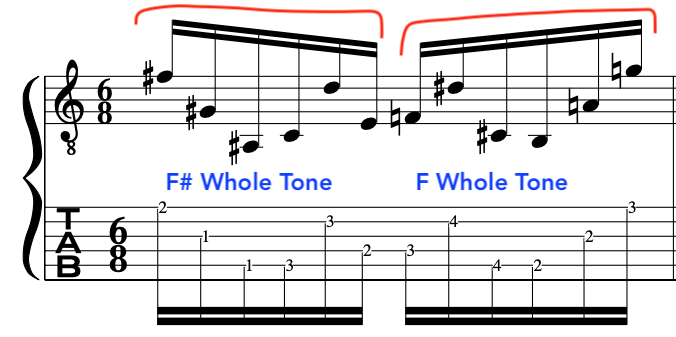
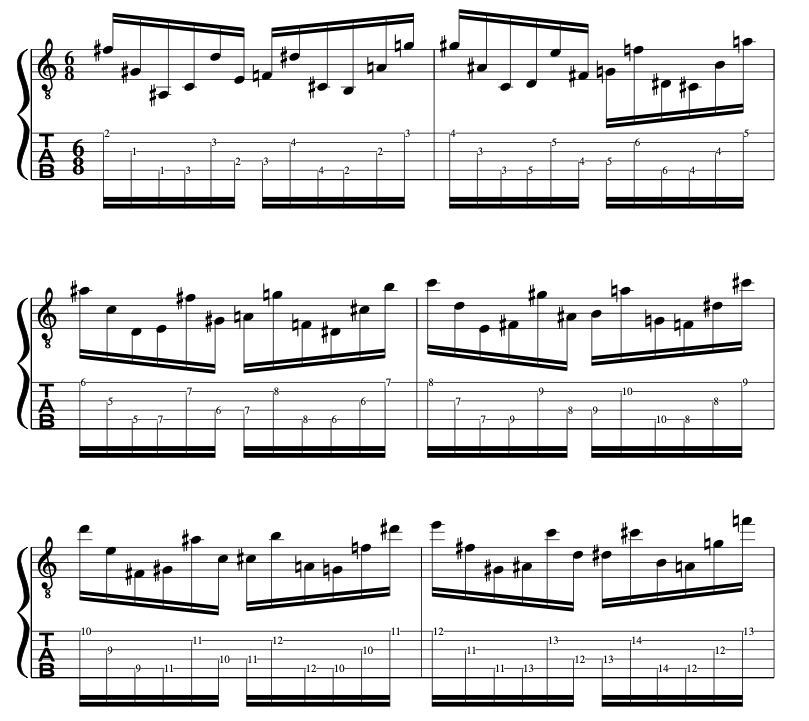
Now, we will put them back into the “Disguised” form with the clever approach of the intervallic design:

pat-martino-intervallic-guitar-studies

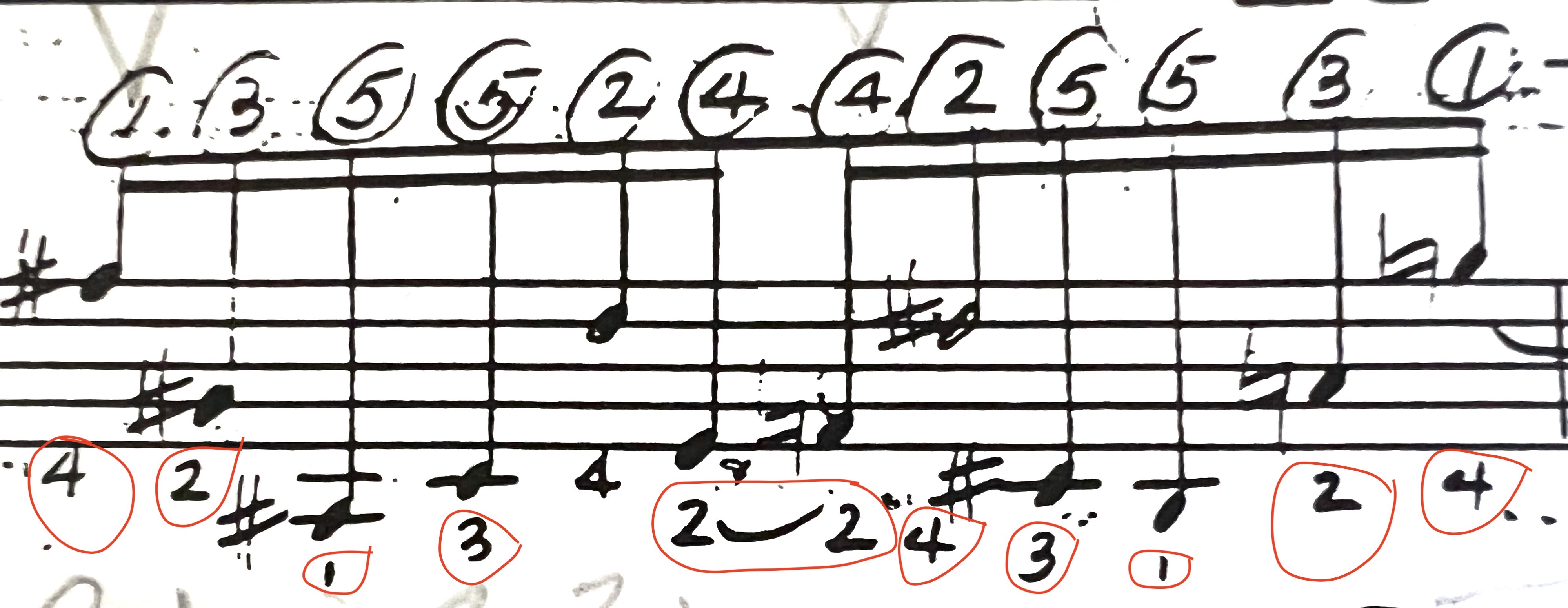
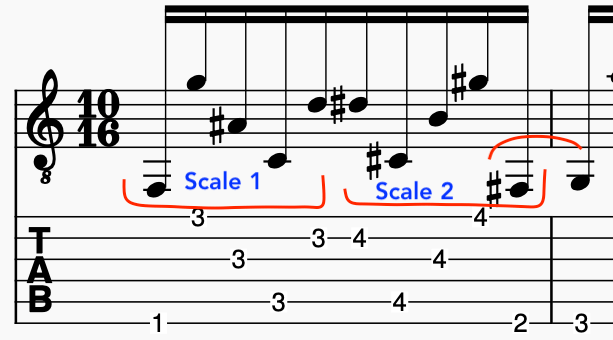
The key to playing these studies on the guitar is to decide on a methodical fingering and stick to it. [Below=Pat’s Fingering]

pat-martino's-unpublished-book-intervallic-guitar-studies

pat-martino-intervallic-studies-unpublished-book

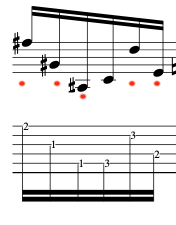
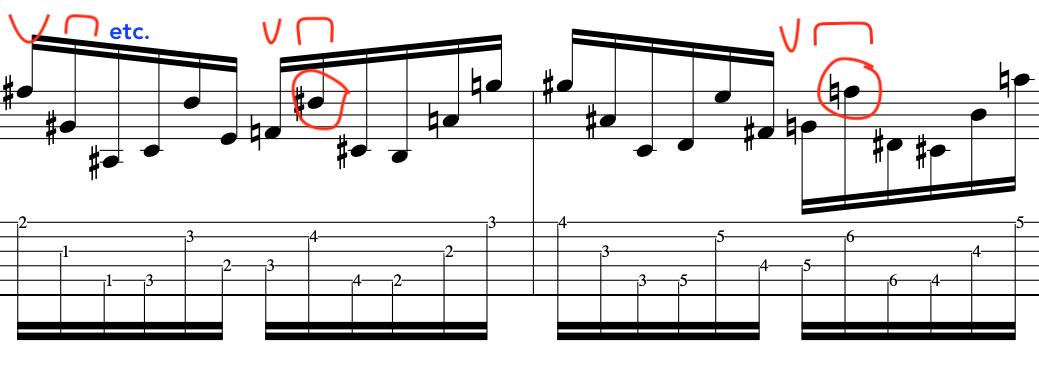
I am employing strict alternate picking for this study starting on an upstroke:

pat-martino-intervallic-studies-unpublished-book

pat-martino-intervallic-studies-unpublished-book

Same Study: From Pat’s book with fingering examples:

pat-martino-intervallic-studies-unpublished-book-whole-tone-scale

Now we will look at how Pat breathes life into the pentatonic scale:

pat-martino-intervallic-studies-unpublished-book

As before we will take this from a music theory perspective and remove the intervallic approach:

pat-martino-pentatonic-scale-guitar-lesson

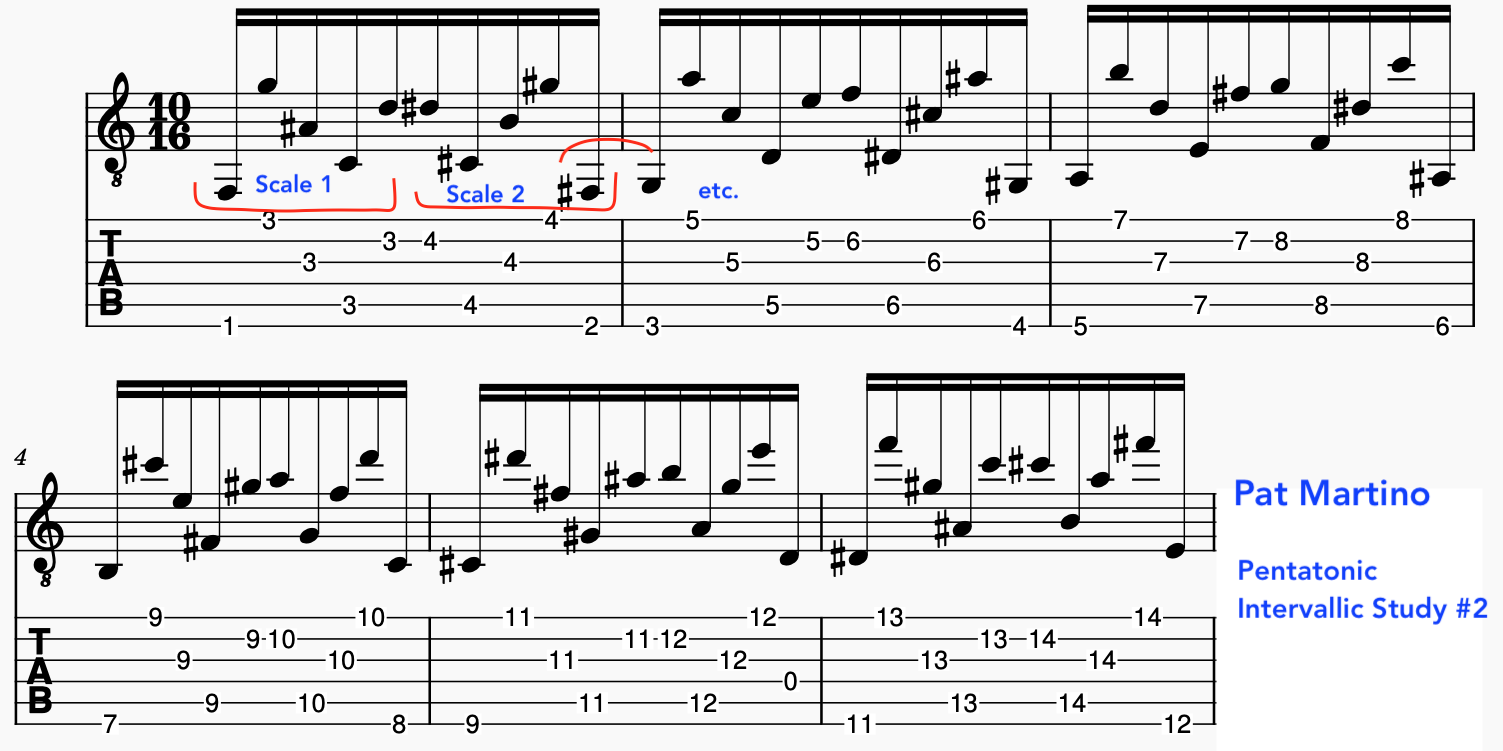
Now, let’s disguise this with the use of intervallic exploitation and alternate picking starting on a “Downstroke”:

pat-martino-intervallic-studies-unpublished-book

Same Study from Pat’s unpublished book:

pat-martino-intervallic-studies-unpublished-book

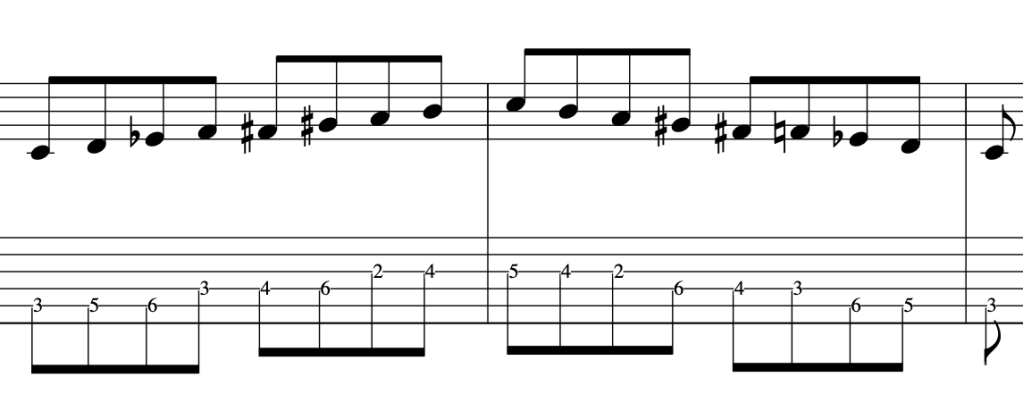
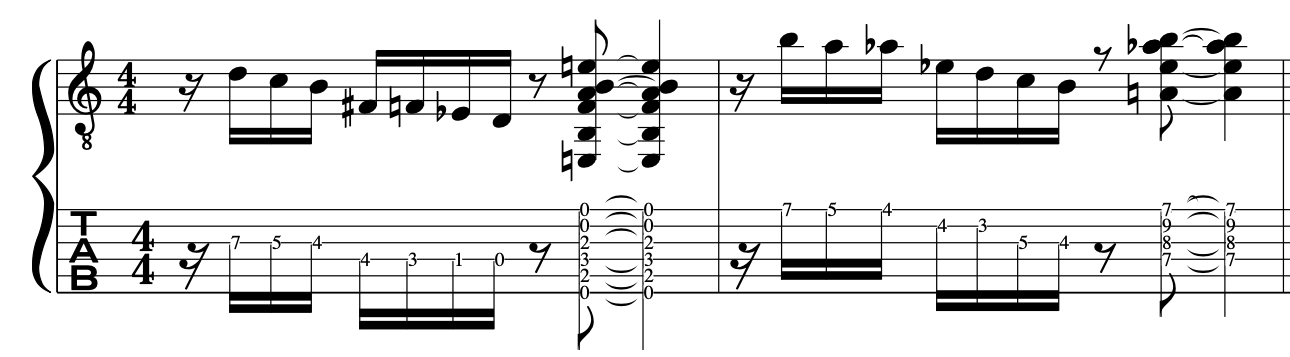
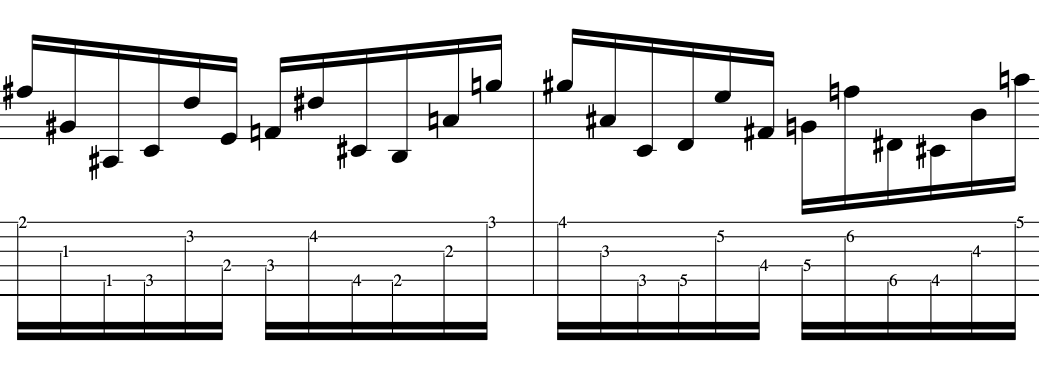
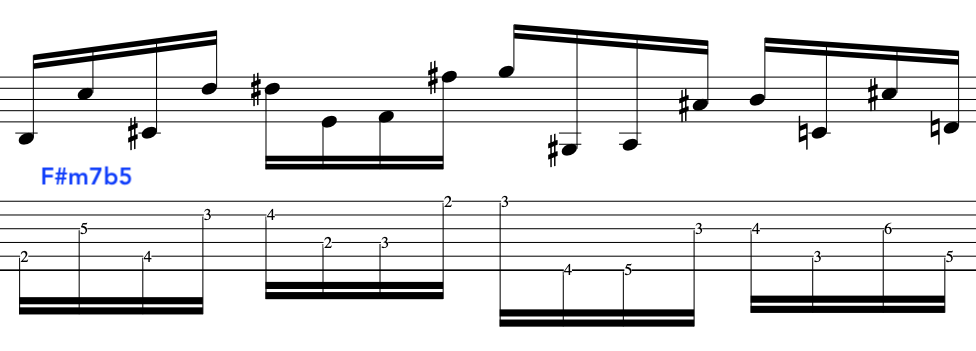
Finally, we will employ these intervallic concepts through a iim7b5 V7 i cadence.

Once again, we see the intervallic set up:

pat-martino-intervallic-improvisation-example

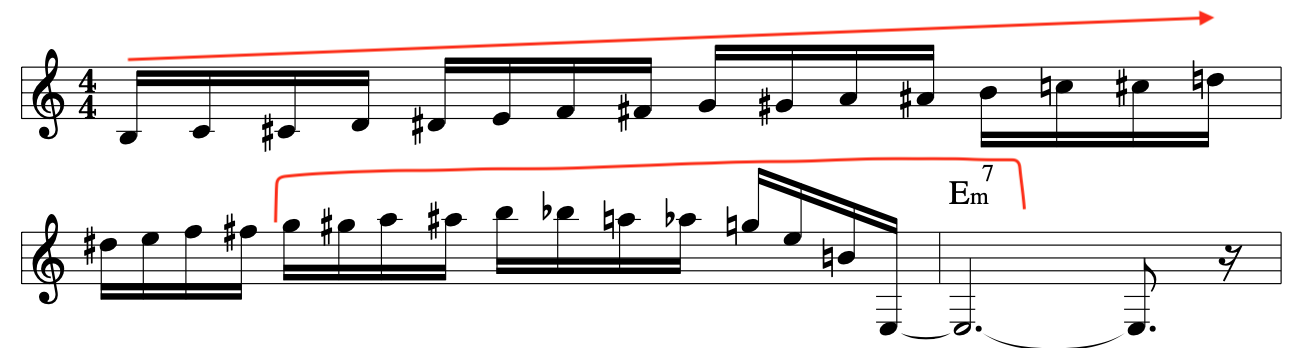
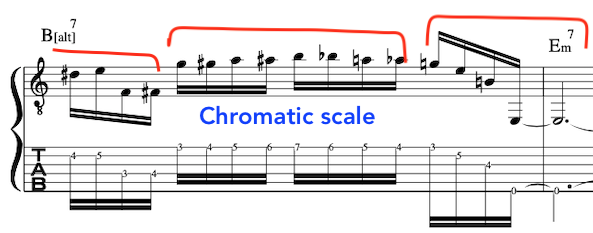
Now, let’s employ our music theory and place the intervallic notes in order. Here we find that we have the exploitation of the chromatic scale.

pat-martinochromatic-scale-guitar-lesson

This clever approach is really effective because in the second bar beats 2 and 3 we have a literal chromatic scale that then anticipates the coming minor tonic chord of Em with an Em arpeggio.

pat-martino-intervallic-improvisation-example

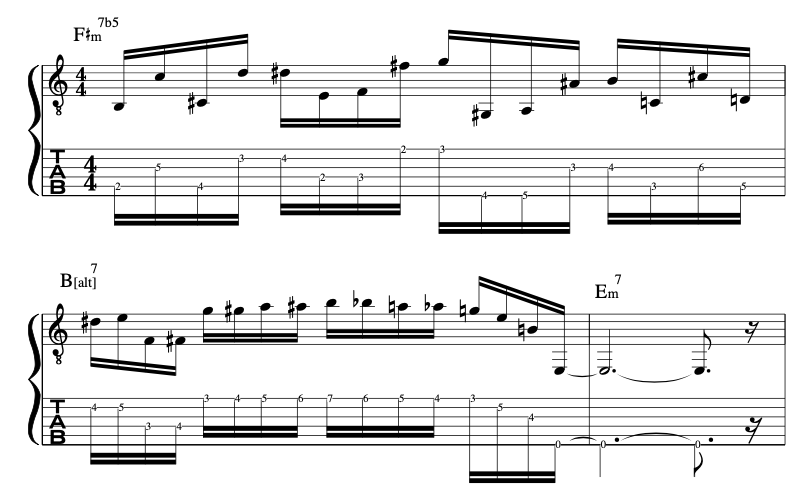
Full Example:

pat-martino-intervallic-improvisation-example

This was just a quick look at the creative thought process and unique approach of Pat Martino, resulting in the application of this material into a minor iim7b5 V7 i improvised line to hear how they work and sound.

This approach to scales and improvising [and composing] with them is highly original and extremely useful when there is a need to bust out of cliches and seek colour and creativity in our playing.

3/4 Re Harmonisation-Jazz/Fusion Triads/Bass

yt_logo_rgb_light

CLICK SUBSCRIBE!

jazz-fusion-reharmonisation-triads-example

Hi Guys,

Today we will have a look at re harmonising with extra dominant substitutions and a chord ii variant…..

jazz-fusion-reharmonisation-triads-example

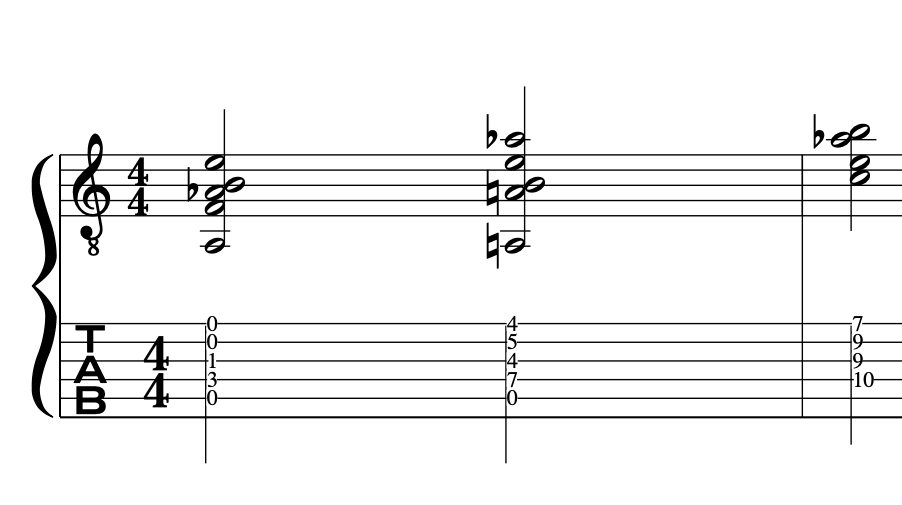
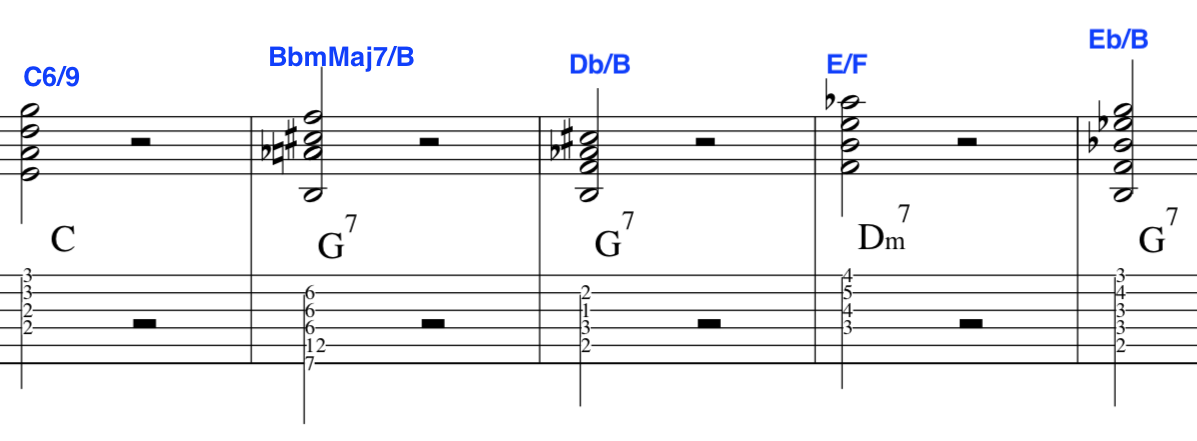
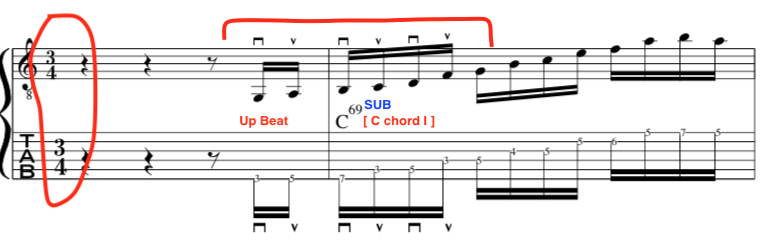
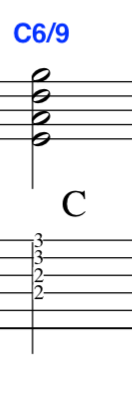
The first bar employs a C6/9 in place of the basic tonic chord of C major.

Also, note that this has a 3/4 time signature and starts with an up beat.

jazz-fusion-reharmonisation-triads-example

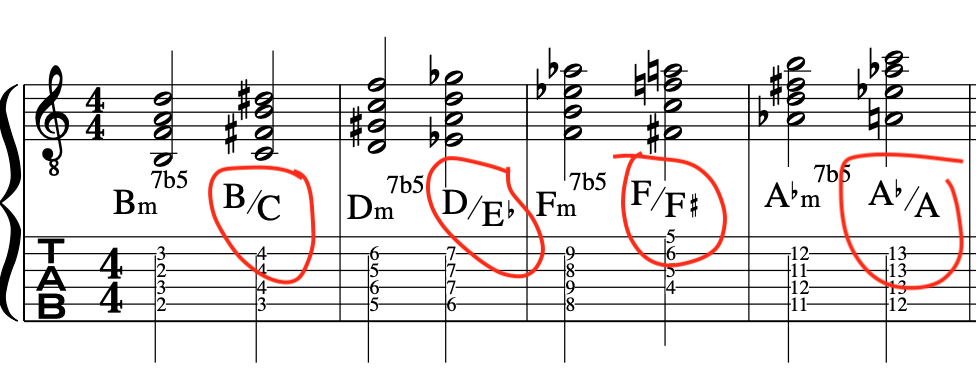
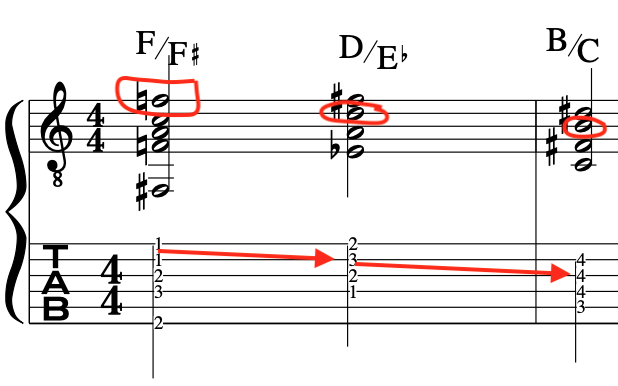
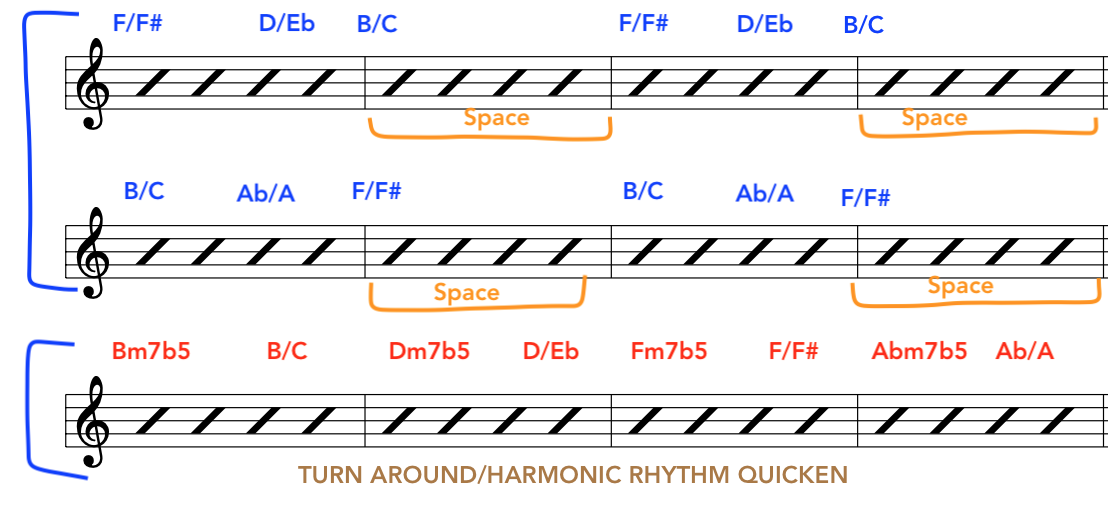
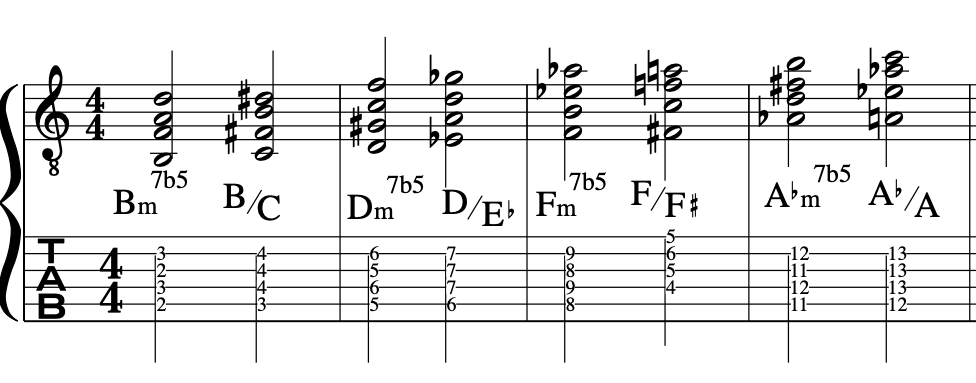
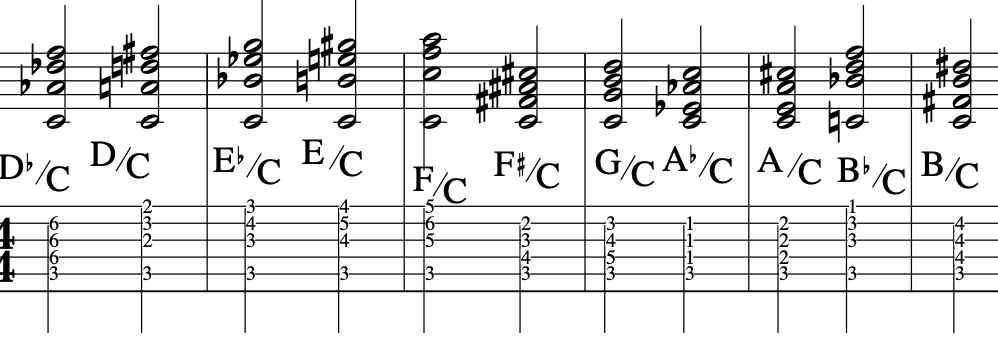
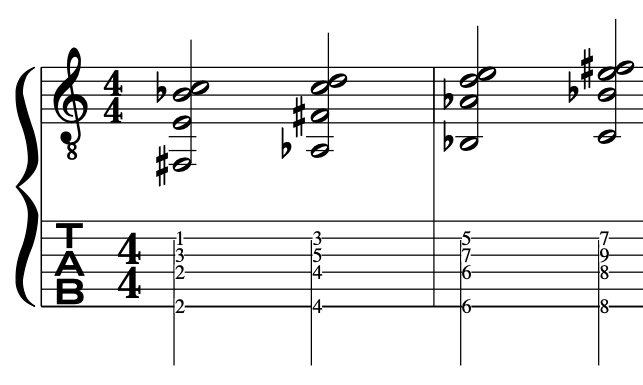
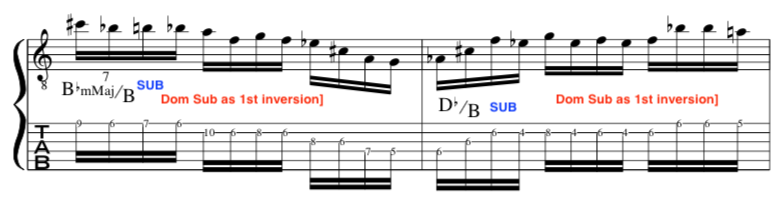
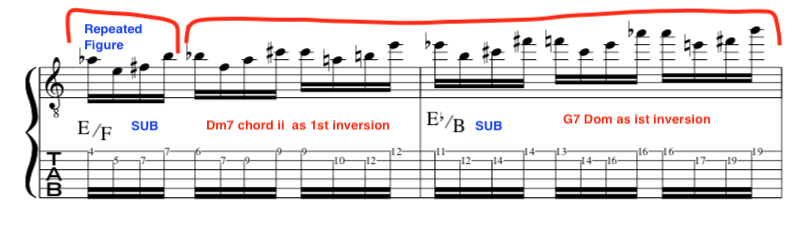
The next two bars alter the Dominant chord of G7. This is achieved by thinking of G as a 1st inversion and changing the harmony on top.

jazz-fusion-reharmonisation-triads-example

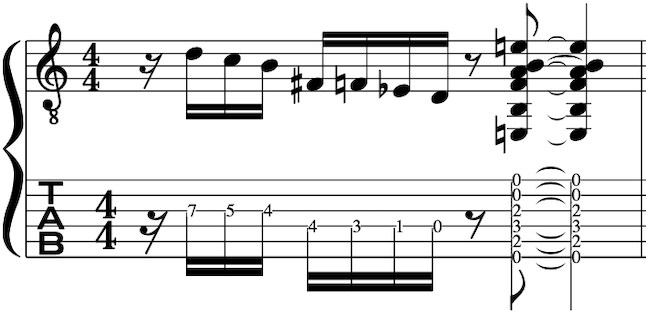
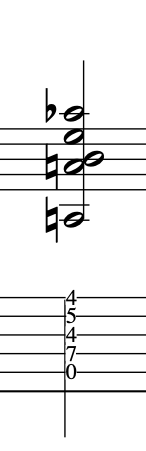
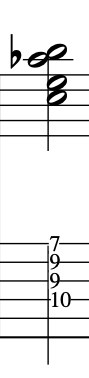
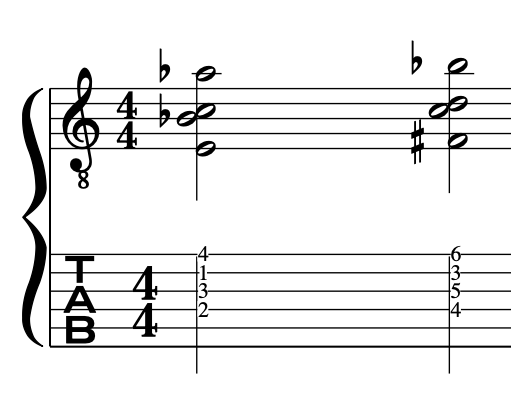
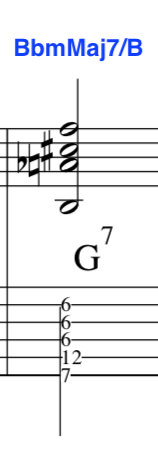
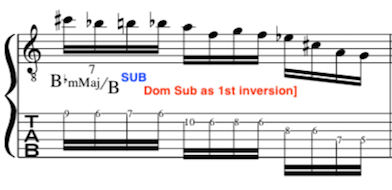
The BbmMaj7/B has the flattened 3rd like a #9 a flattened 5th [altered] but has the 9th and the 7th of G7. The first 4 notes of the improvised line establishes the BbmMaj7/B harmony whilst the next eight notes employ the A whole tone scale.

jazz-fusion-reharmonisation-triads-example

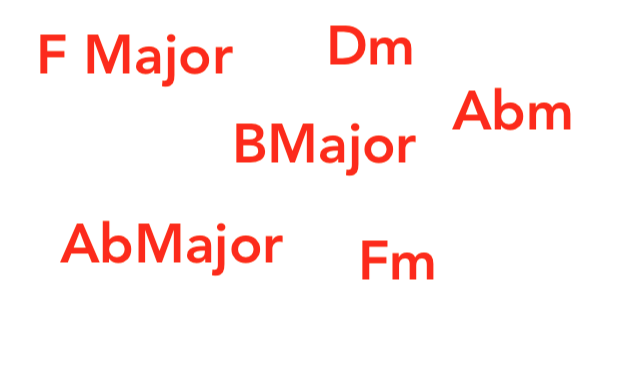
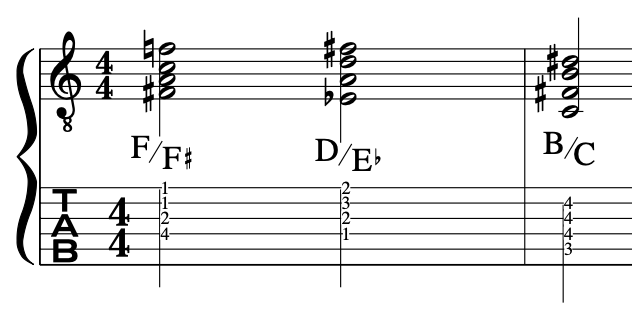
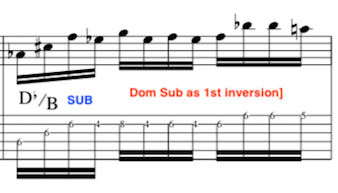
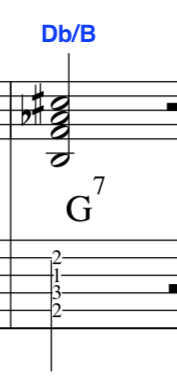
The next substitution is a Db chord over the B bass establishing the flattened 5th and a flattened 9th. But, what is really happening is that we are taking a triad a tritone away form the dominant chord G7 and superimposing that on the B [as a 1st inversion] bass note.

jazz-fusion-reharmonisation-triads-example

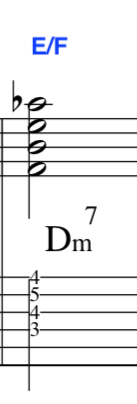
Next, we use a chord ii substitution. Again, thinking of F as the bass [1st inversion] we play an E triad over the top. This has the raised 6th and the flattened 5th as a sort of m7b5/Dorian mix.

jazz-fusion-reharmonisation-triads-example

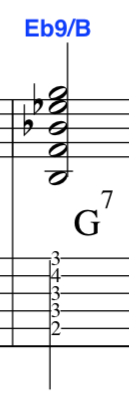
The final Dominant substitution employs another triad from G altered. This time we use the Eb triad over the B [as 1st inversion] bass. [This has an added 9th acting as the 7th note of G]

jazz-fusion-reharmonisation-triads-example

Improvised line over the top,

jazz-fusion-reharmonisation-triads-example

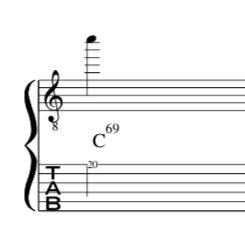
Finally, we arrive back to C6/9

jazz-fusion-reharmonisation-triads-example

LICK PDF DOWNLOAD:

CHORDS PDF:

IF THIS LESSON WAS OF USE TO YOU THEN PLEASE SUBSCRIBE TO US BELOW ON YOUTUBE, THANKS

King Crimson/Fripp Whole Tone Scale 2nd Part

yt_logo_rgb_light CLICK SUBSCRIBE!

King Crimson/Fripp Whole Tone Scale

Please watch video above for a detailed analysis:

King Crimson/Fripp Whole Tone Scale TAB/Notation FREE Download:

This King Crimson/Robert Fripp whole tone Scale guitar Line employs strict alternate picking starting on a downstroke.

PART 1:

King-Crimson-Fripp-Whole-tone-scale
King Crimson/Fripp Whole Tone Scale

PART 2:

King-Crimson-Fripp-Whole-tone-scale
King Crimson/Fripp Whole Tone Scale

PART 3:

King-Crimson-Fripp-Whole-tone-scale
King Crimson/Fripp Whole Tone Scale

3 Key Points:

This is the main “Motif” of the line starting on a down stroke with strict alternate picking

King-Crimson-Fripp-Whole-tone-scale
Fripp/Crimson whole tone scale guitar less and example

I am counting with Konokol but you might want to count in western classical tradition e,g 1 and 2 and 3 and or 1 2 3 4 5 6 etc.

King-Crimson-Fripp-Konokol
Fripp/Crimson Konokol

The linking part is based upon a whole tone scale in steps and string skipping turn around lead in to the next part:

King-Crimson-Fripp-Whole-tone-scale
Fripp/King Crimson whole tone scale guitar less and example

IF THIS LESSON WAS OF VALUE TO YOU THEN PLEASE SUBSCRIBE TO US ON YOUTUBE BELOW, THANKS!