12 tone diatonicism? Alban Berg: guitar 12 tone serialist composing?

CLICK SUBSCRIBE!

Hi Guys,

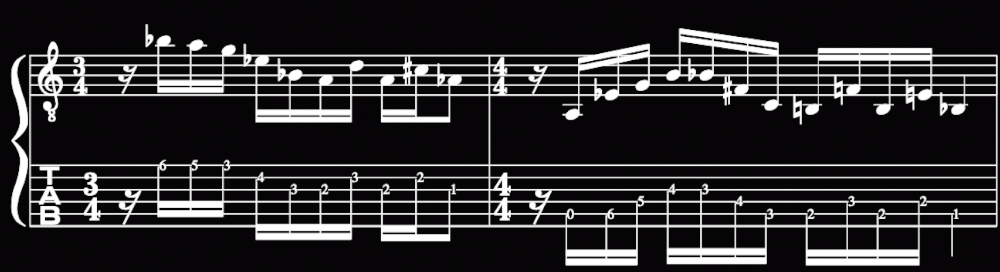
Today, a quick look at exploiting the thinking of serialist composer Alban Berg and his unique tone row formations.

alban-berg-diatonic-12-tone-serialism-technique

What makes this unusual and tonal and ironically diatonic in this context is that one half contains the white notes and the other the black notes.

What you notice is that there are two “Hexatonic” scales here:

alban-berg-diatonic-12-tone-serialism-technique

This creates an interesting harmonic shift that can be exploited easily from a compositional perspective.

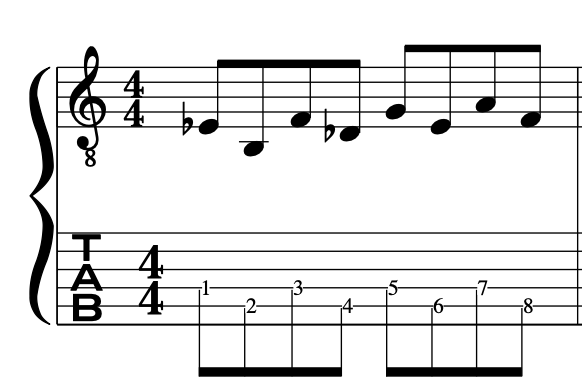
Okay, let’s take a tone row from this hexatonic setup:

alban-berg-diatonic-12-tone-row-technique

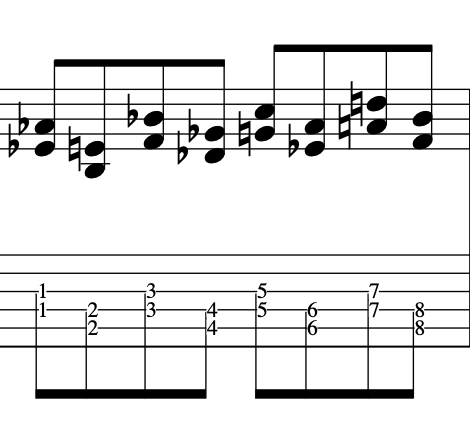
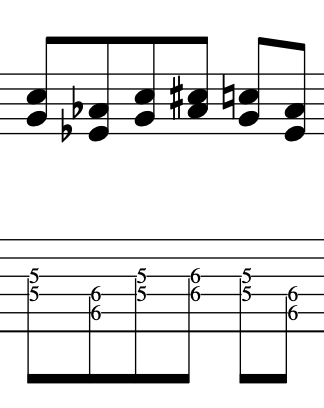
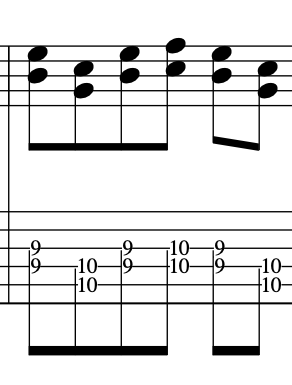
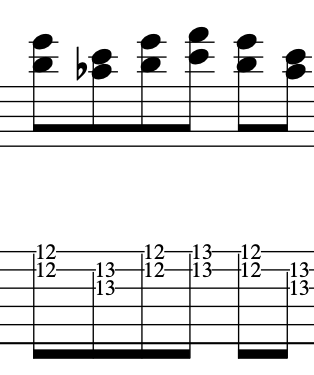
Now, let’s create some chords form this. I am going to employ tri-chords [three note] chords because they work well with chordal guitar picking:

alban-berg-diatonic-12-tone-serialism-tri-chords

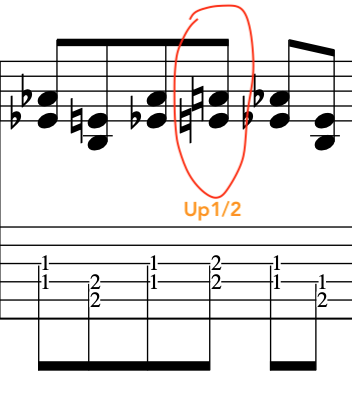
Using these chords as a basis for my composition I will add open guitar strings and and a few fretted notes and re arrange the chord voicing’s, eventually, moving away from 12 tone.

Here are the chords I chose:

alban-berg-diatonic-12-tone-serialism-technique
alban-berg-diatonic-12-tone-serialism-chords-guitar

Lastly, a little turn around/cadence:

12-tone-guitar-technique-serialism

Now, let’s exploit another 12 tone row in this context:

alban-berg-diatonic-12-tone-serialism-guitar-how-to

This time I will employ strumming as the main guitar technique for this part of the composition.

So, as usual let’s make some tri-chords:

alban-berg-diatonic-12-tone-serialism-chords-guitar
alban-berg-diatonic-12-tone-serialism-tri-chords

Finally, here we see a snippet from Berg’s “Lyric Suite”.

alban-berg-lyric-suite

PDF DOWNLOAD:

CLICK SUBSCRIBE!

E Pedal Note Rhythm Guitar Alternate Time Signatures

CLICK SUBSCRIBE!

Hi Guys,

Today, a response video to my previous blog in regards to employing a pedal note.

This is just an open E string that can be plucked as the basis for holding time.

john-mclaughlin-pedal-note-guitar-technique-diagram

We can use simple quarter notes as our base and syncopate chords between them or play chords on different beats.

john-mclaughlin-pedal-note-guitar-technique-diagram

We can also double this with 8th notes

john-mclaughlin-pedal-note-guitar-technique-diagram

And of course taking it further with 16th notes:

john-mclaughlin-pedal-note-guitar-technique-diagram

To make this more interesting we can play on the off-beat:

john-mclaughlin-pedal-note-guitar-technique-diagram

And finally, “Mix” the Pedal note rhythms for rhythmic drive:

john-mclaughlin-pedal-note-guitar-technique-diagram

This is all good and well and extremely useful, but there is more………..

What makes this really useful is that we can play odd time signatures or uncommon time signatures along with alternate time signatures.

For this I am going to employ Indian “‘Teen Taal” and then break it up.

john-mclaughlin-pedal-note-guitar-technique-diagram

So, above we see the 16 beat cycle with the accented red numbers 1 5 9 13

Next, count this and accent those numbers and get a feel for the repeated cycle.

Now we will break this up:

john-mclaughlin-pedal-note-guitar-technique-diagram

We will only count up to 11 and then create a loop with our E pedal holding time in quarter notes. Remember the accents on 1 and 5 and 9.

This now gives us 11/4

john-mclaughlin-pedal-note-guitar-technique-diagram

From here we can develop and create our own patterns in 11/4 with the E pedal note holding time and our accents of 5 and 9 which tell us where we are in the bar or beat cycle.

Lastly, let’s mix two different time signatures together.

john-mclaughlin-pedal-note-guitar-technique-diagram

Here we have a group of 5 and a group of 7. Also, notice the rhythm in the bass with the E Pedal note.

From here you can create and develop easily what you want as this concept works really for the guitar and alternate time signatures and uncommon time signatures.

FREE PDF DOWNLOAD:

CLICK SUBSCRIBE!

John McLaughlin Rhythm Guitar Riffs/Strumming Techniques

CLICK SUBSCRIBE!

John McLaughlin rhythm guitar techniques and riffs lesson

Hi Guys,

Today, we will look at some of John McLaughlin’s rhythmic guitar concepts.

Here’s how John makes interesting rhythmic riffs by employing a bar of 7 to a bar of 8:

john-mcluahglin-rhythm-guitar-lesson-tab

This could also be counted as: 15/16 to 16/16 [in groups of 3 to groups of 4 in the next bar]:

john-mcluahglin-rhythm-guitar-lesson-tab

OR: Groups of 4 with the last being a 3 grouping [or one note missing in a 4/4 bar]

john-mcluahglin-rhythm-guitar-lesson-tab

The chords I have employed are from Shakti’s composition “Face to Face”.

john-mcluahglin-rhythm-guitar-face-to-face-chords

In order to turn this around I employ a simple piece of descending bass scale:

john-mcluahglin-rhythm-guitar-lesson-tab

2 Bar Sequence:

john-mcluahglin-rhythm-guitar-face-to-face-chords

Here is a variation with the bass scale played in the treble and the first chord being a quartal voicing for Em:

john-mcluahglin-rhythm-guitar-lesson-tab

In this next example we employ 2 simple chords of A Major and D Major: The key is in the open strings that are played in between these chords at a fast tempo.

john-mcluahglin-rhythm-guitar-lesson-tab

The key to executing this=”Down Up” alternate strumming all the way:

Lastly, we will finish with another of John’s alternate strumming favourites which employs the open strings concept once again: [“Down Up”] etc- all the way.

john-mcluahglin-rhythm-guitar-lesson-tab

PDF DOWNLOAD: