Modern Jazz Fusion Chords:How to create them from scales

CLICK SUBSCRIBE!

Hi Guys,

Today, a look at how to create colourful and interesting jazz/fusion chords:

Because, we are dealing with jazz/fusion we will manipulate a scale in modal form. This will be C Mixolydian:

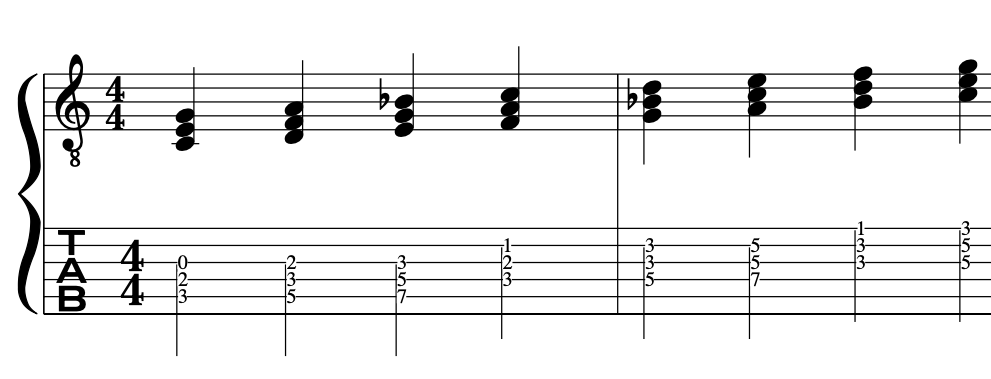
Now, let’s add one note above each note of the mode and create 3rds. [Here we can hear the mode in double stops].

Now, we will add another note a 5th above the root and create triads.

jazz-fusion-chords-lesson

We have now harmonised the Mixolydian mode.

As you will hear it doesn’t sound very jazzy or have a fusion-esque sound.

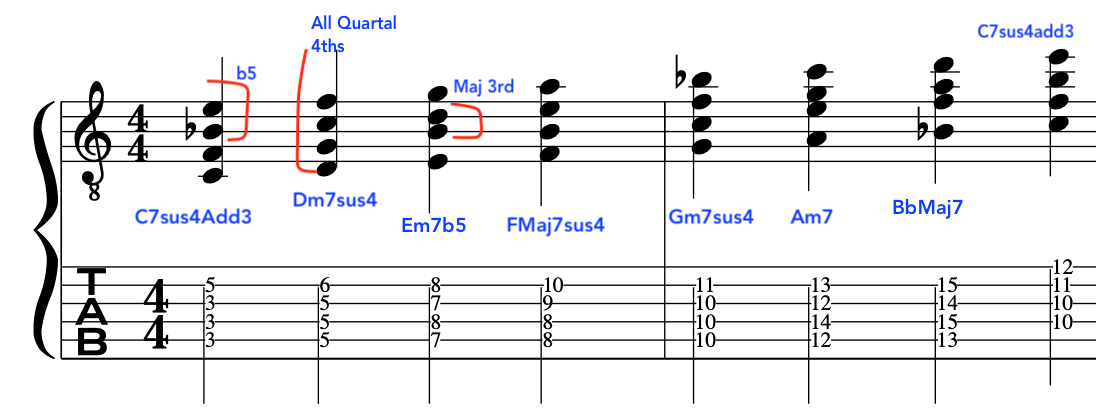
Well, we will add another note and manipulate the chord “Voicing’s”. Let’s exploit 4ths, flattened 5ths and Major 3rds.

Ascending Chord Scale:

jazz-fusion-chords-lesson

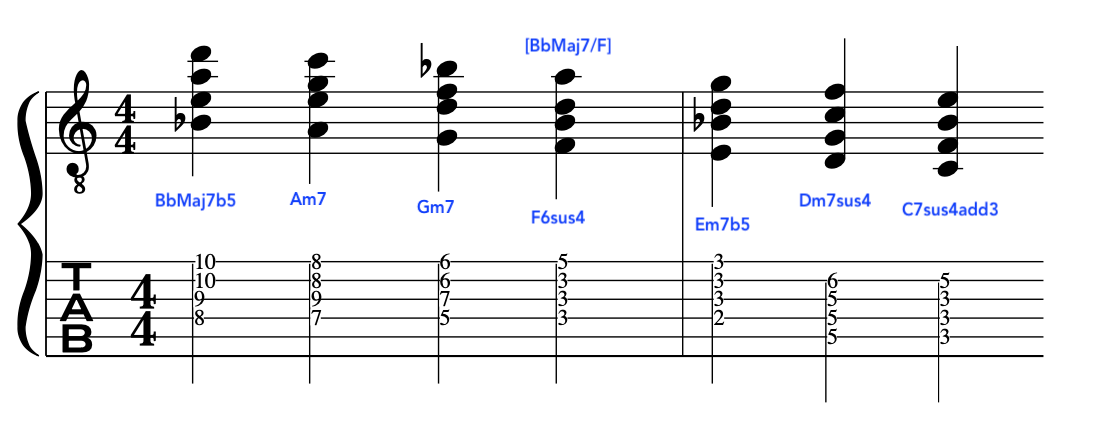
Descending chord scale:

jazz-fusion-chords-lesson

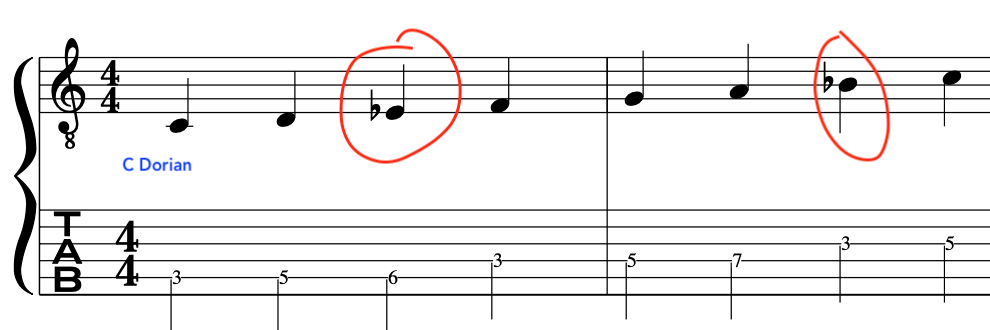
Now, we will apply this to the C Dorian Mode which has another flat note, this being Eb.

jazz-fusion-chords-lesson

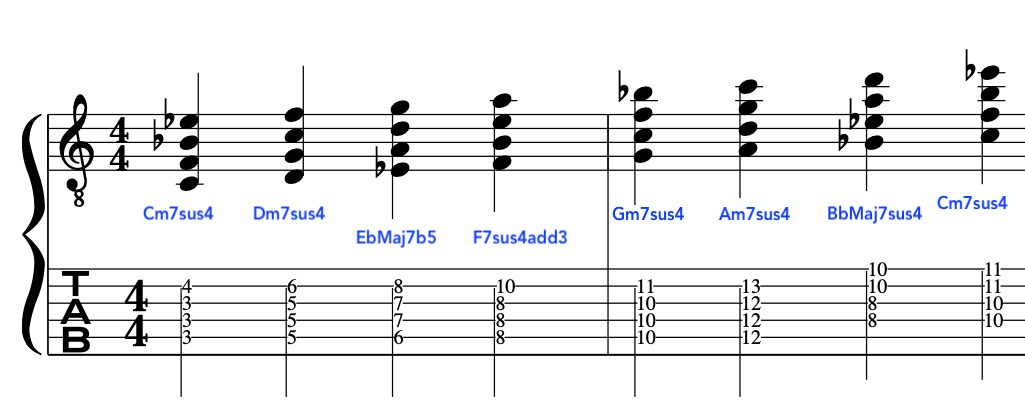
C Dorian Chord Scale : Harmonisation idea:

jazz-fusion-chords-lesson

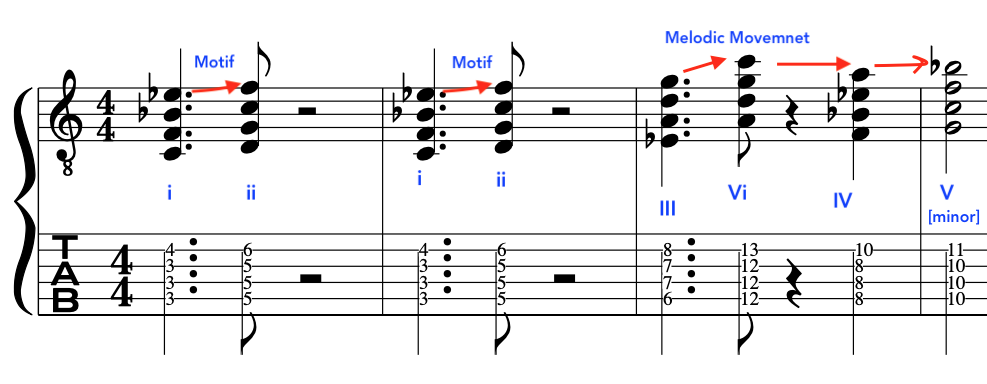
Now, let’s play these chords in a sequence and make a bit of music from them:

EXAMPLE: Notice-Motifs and melodic movement from the chord voicings:

jazz-fusion-chords-lesson

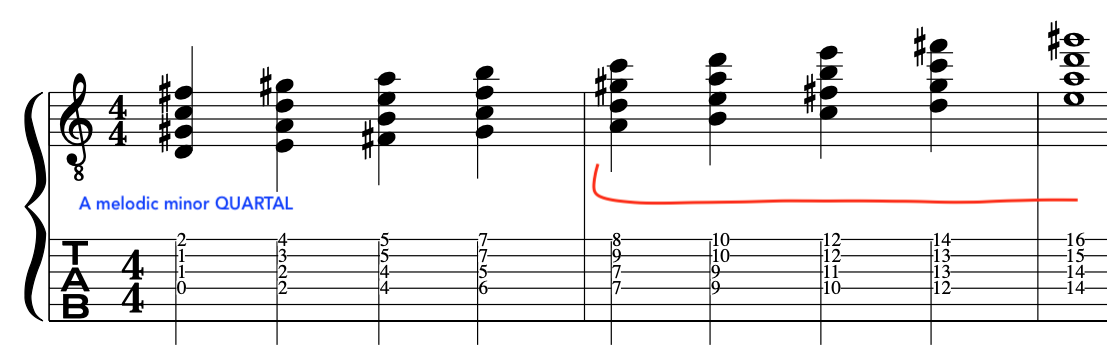
Finally, to really get that “Fusion” exoticism let’s now exploit the melodic minor scale:

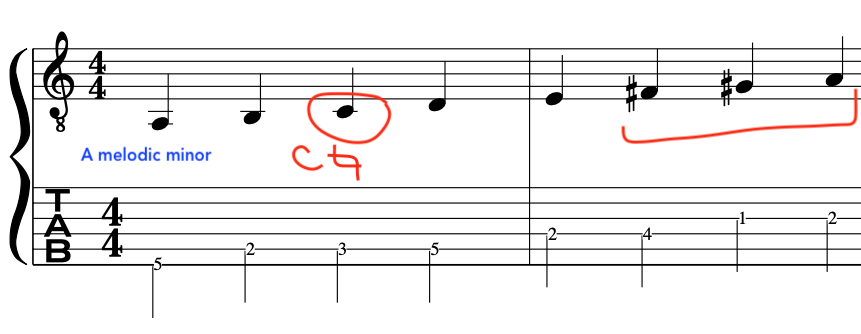
Below, we have the A melodic minor scale: Notice it’s just like the A Major scale but with the 3rd flattened: [In this case C natural]

jazz-fusion-chords-lesson

Again, we will try out some ideas to harmonise the scale with some interesting chord voicing’s:

jazz-fusion-chords-lesson

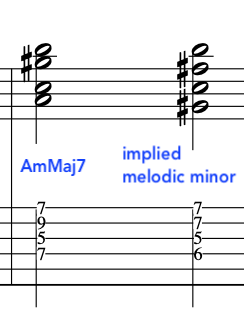
Here is a really nice set of chords built from from the scale.

jazz-fusion-guitar-chords-lesson-melodic-minor

From here it’s a good idea to play re-harmonised chords from chord scales in sequences like:

ii V7 I

Vi ii V I

iii Vi ii V7 I

This was just a basic look at how to create interesting chords from scales and modes and how to create interesting and unique voicing’s.

At the end of the day it really comes down to your own ears and imagination and sense of creativity. But, this is how easy it is to create chords from scales and then put them into sequences for composition and re-harmonisation.

Polytonality:For Concerto/Orchestral Writing

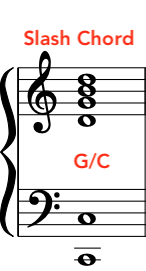
Modern Jazz Fusion Chords part 2. Steely Dan, Dan Chord and Slash Chords

CLICK SUBSCRIBE!

Polytonality: For Concerto/OrchestralWriting lesson

Hi Guys

Today, a quick look at composing with Polytonality for orchestral and concerto writing.

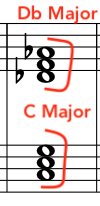
Polytonality is the use of two or more keys at the same time:

poly-tonality-orchestral-composing-chords-example

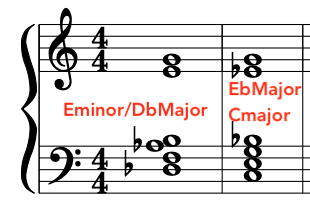
In this first example we have 4 bars of Polytonality with Eminor/DbMajor and EbMajor/CMajor

poly-tonality-orchestral-composing-chords-example

This then resolves itself with a “Tonal” diatonic cadence of B7/D# to Em:

Polytonality-Orchestral Example

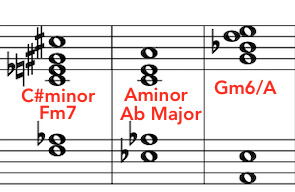
This example explores “Implication”. In this case it is implying the melodic minor but avoiding the cliche by employing the richness of Polytonality:

polytonality-orchestral-composing-chords-example

From here, we will again employ diatonic harmony for a cadence.

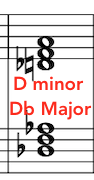
To complete this short orchestral example we will go back into Polytonality with another melodic minor implication by employing Dminor/DbMajor:

polytonality-orchestral-composing-chords-example

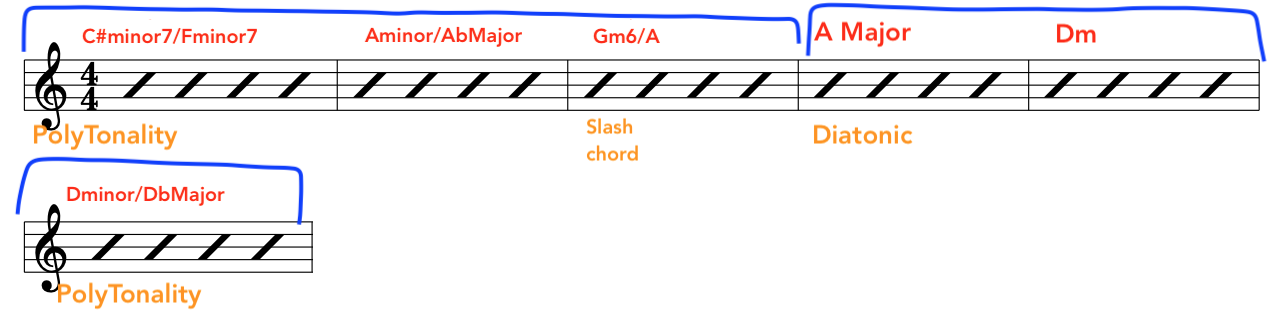
Here is the chart:

poly-tonality-orchestral-composing-example

Polytonality-Orchestral Example

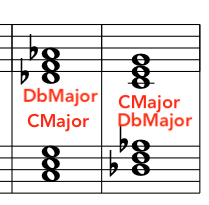
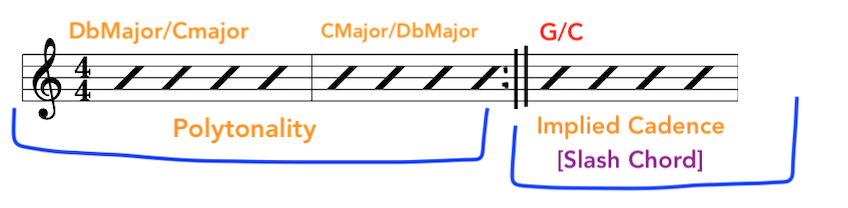
In this final example we will just “Reverse” the chords. This time it is DbMajor/Cmajor which is then played the other way around with CMajor/DbMajor.

polytonality-orchestral-composing-chords-example

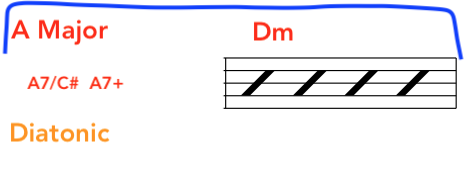
finally, we will employ a slash chord for an “Implied” cadence: This will also lighten the harmony:

Here is the Chart:

polytonality-orchestral-composing-example

FREE PDF DOWNLOAD:

Modern Jazz Fusion Chords part 2. Steely Dan, Dan Chord and Slash Chords

Al Di Meola Arpeggio Guitar Picking Part

yt_logo_rgb_light

CLICK SUBSCRIBE!

Al Di Meola Arpeggio Guitar Picking Part 2

PLEASE WATCH VIDEO ABOVE FOR DETAILED ANALYSIS:

Hi Guys,

Today we will look at Al Di Meola’s approach to picking chordal arpeggios. He terms it “Chordal Picking”.

I have composed a short riff based on “Meeting of the Spirits” performed by the guitar trio.

This is deliberate in order to show how the picking patterns can be the same but interpreted differently.

In this case it is 3/4 :

al-di-meola-arpeggio-guitarpicking-lesson

Or 6/8 [or 12 3 1 2 3]

al-di-meola-arpeggio-guitarpicking-lesson

What remains the same is the picking pattern which is “Down Down Down Up Up Up”

al-di-meola-arpeggio-guitarpicking-lesson

The next part deliberately employs a different time signature of 2/4

This is just to show how easy it is to fit alternate time signatures with these chordal picking patterns:

al-di-meola-arpeggio-guitarpicking-lesson

It might sound or look complex in words and notation, but, in reality it is quite natural to play, compose with and perform.

The next part employs “Dampening”. This is just simply resting my palm on the guitar strings and plucking the rhythm.

In this case the picking pattern is our old friend “Down Down Up”

al-di-meola-arpeggio-guitarpicking-lesson

For the strumming part please watch video at the top of the page as it is easier to show visually than with diagrams or notation.

Lastly, we finish with the “Down Down Up”pattern once again:

al-di-meola-arpeggio-guitarpicking-lesson

IF THESE EXAMPLES WERE OF USE TO YOU THEN PLEASE SUBSCRIBE TO US BELOW ON YOUTUBE, THANKS!