Understanding Triads and Slash Chords in Music Theory

The 12 Major Triads/Slash chords music lesson in theory and practice:

Hi Guys,

Today, a look at altering harmony and cadences with triads, slash and altered chords.

To begin with let’s take a pedestrian V to I cadence,
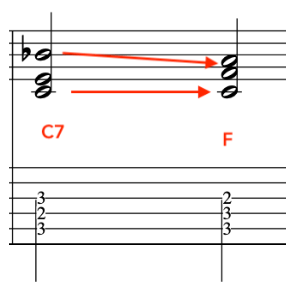
Now, let’s add some colour to it.
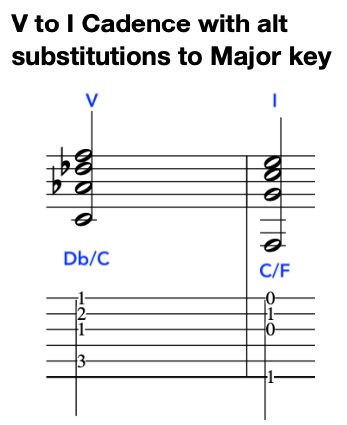
A musical notation diagram showing a V to I cadence with altered substitutions to the Major key, including the slash chords Db/C and C/F for music theory lesson
Illustration of a V to I cadence with altered substitutions, showcasing the Db/C and C/F slash chords.

Here, we can see the slash chord of Db/C resolving to C/F:

The Db/C harmony creates a powerful dominant chord of Csus/b9/b13
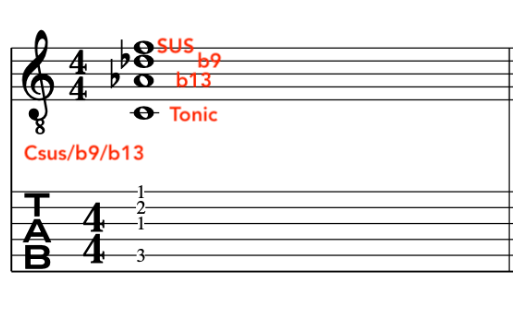
Musical notation for Csus/b9/b13 chord with tablature for guitar. Example of slash chord Db/C
Musical notation illustrating the Csus/b9/b13 chord, showcasing its structure and components.

With this in mind let’s now apply this and cadence to the minor key [FmMaj7]
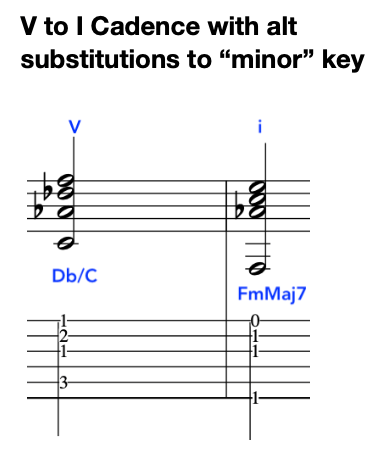
Musical sheet displaying a V to I cadence with altered substitutions for the minor key, featuring Db/C and FmMaj7 slash chords.
V to I cadence illustrating altered slash chord substitutions in a minor key.

Straight away, we can see and hear how easy it is to manipulate and alter the harmony with slash chords.

They also possess a unique flavour and colour that really shines out on the guitar due to the Major triads being very bright. This way they naturally cut through and resonate.

In this example, we will take a simple triad of F Major 1st inversion [F/A]

From this, we will add melodic notes/movement in the top and bottom to extend the harmony, and, finish with a 7sus4 cadence of F/G to Cmaj7#11
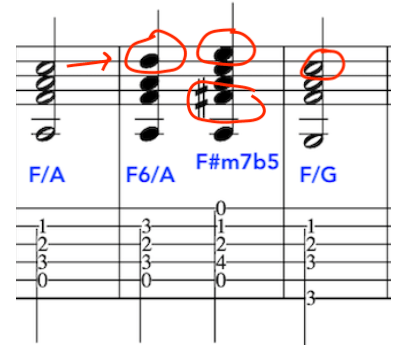
Music sheet showing chord substitution notations for F Major 1st inversion (F/A), F6/A, F#m7b5, and F/G with finger placement.
Visual representation of F Major triad variations, including F/A, F6/A, F#m7b5, and F/G, showcasing chord extensions.

Let’s now add this to a complete chord sequence:
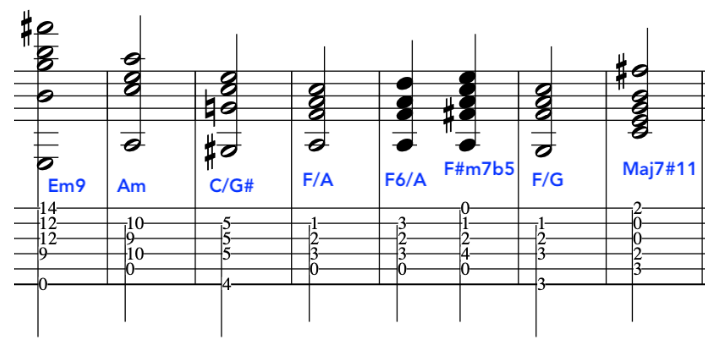
A music sheet displaying harmonization techniques with chord notations including Em9, Am, C/G#, F/A, F6/A, F#m7b5, F/G, and Maj7#11.
Chord sequence demonstrating triads and harmonization techniques.

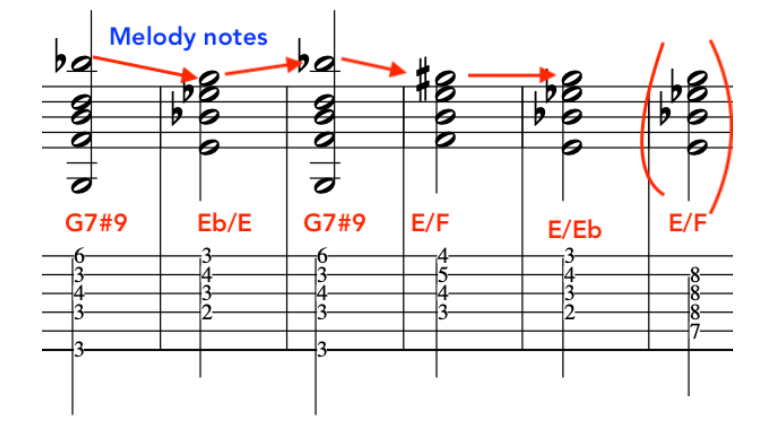
We will now take the simple melody below,
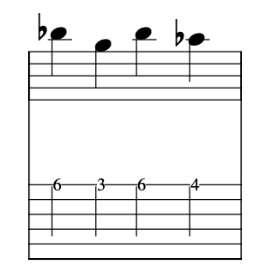
To exploit this, we will employ altered and slash chords starting with G7#9 moving to Eb/E
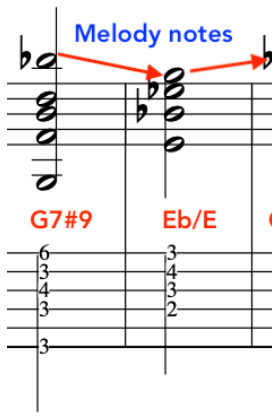
Sheet music illustrating melody notes with annotations for G7#9 and Eb/E chords.
Melody harmonization using the G7#9 and Eb/E slash chords.

We will now repeat this, but, add a chord of E/F in between to harmonise the Ab note:
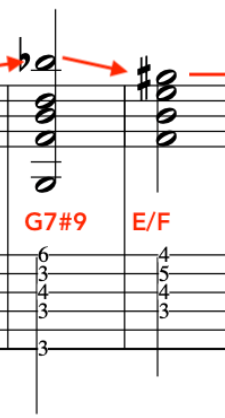
Sheet music showing G7#9 and E/F slash chord for jazz fusion reharmonisation

Finally, resolving back to the Eb/E slash chord
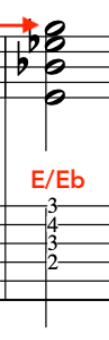
Chord diagram showing E/Eb slash chord and diminished harmony with fingering positions on the guitar.
Chord diagram for E/Eb, illustrating finger placements for guitarists.

FULL HARMONISATION EXAMPLE:

Musical notation displaying John McLaughlin guitar melody notes and chords G7#9, Eb/E, and E/F, highlighting the harmonic structure, slash chord and how to re harmonise a melody in jazz fusion music.
John McLaughlin Guitar Harmonization with slash chords and altered chords

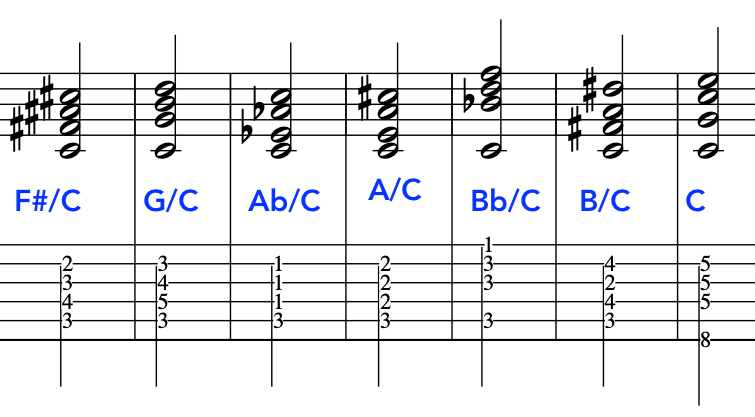
In this exercise we will play all 12 Major Triads over a single C [as root] Bass note.
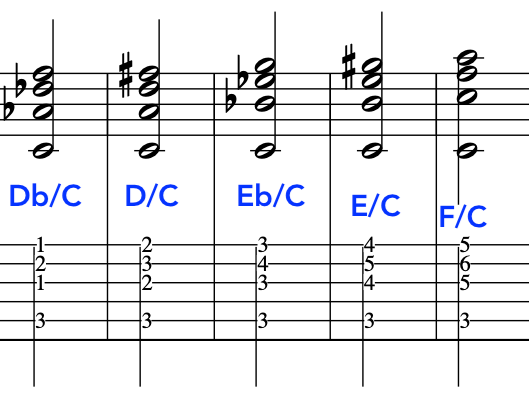
Musical notation showing a progression of slash chord triads: Db/C, D/C, Eb/C, E/C, and F/C over a single bass note.
Chord progression visual for 12 Major Triads over a C bass note, illustrating various slash chords.
A musical sheet displaying the 12 Major Triads over a C bass note, highlighting various slash chord combinations.
An illustration displaying the progression of 12 Major Triads over a C bass note, highlighting various chord combinations.

Jazz Guitar Alternate Picking Exercises: ii V7 i [Double Time]

Modern Jazz Fusion Chords part 2. Steely Dan, Dan Chord and Slash Chords

CLICK SUBSCRIBE!

Jazz Guitar Alternate Picking Exercises: ii v7 I [Double Time]

Hi Guys,

Today, we will look at some alternate picking guitar technique exercises for jazz improvisation when double timing

We will exploit ii V7 I’s as a basis for honing our alternate picking skills whilst employing 4 note tetrachord groupings.

In the first exercise it’s a good idea to accent the third note in each four note grouping. We are also starting on a downstroke:

jazz-guitar-alternate-picking-lesson-exercies

Here is the same exercise but with a variation in the second bar:

jazz-guitar-alternate-picking-lesson-exercies

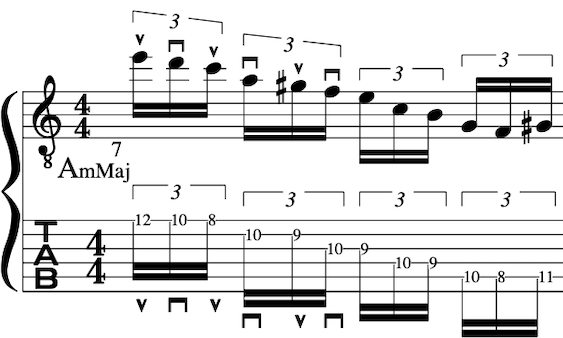
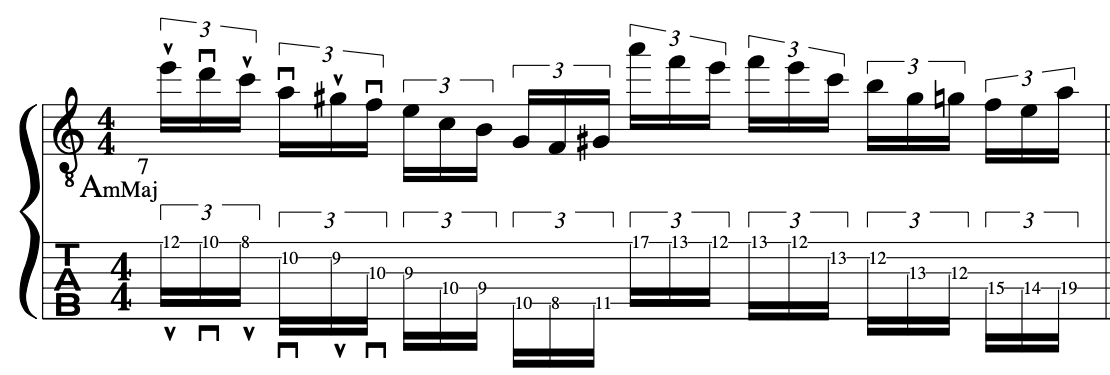
The next exercise will employ groups of 6 notes called sextuplets: As an exercise we will start with an “Upstroke” this time. This will be played over an AmMaj7 pad:

First Part:

jazz-guitar-alternate-picking-lesson-exercies-sextuplets

2nd Part:

jazz-guitar-alternate-picking-lesson-exercies-sextuplets

Full Exercise/Line:

jazz-guitar-alternate-picking-lesson-exercies-sextuplets

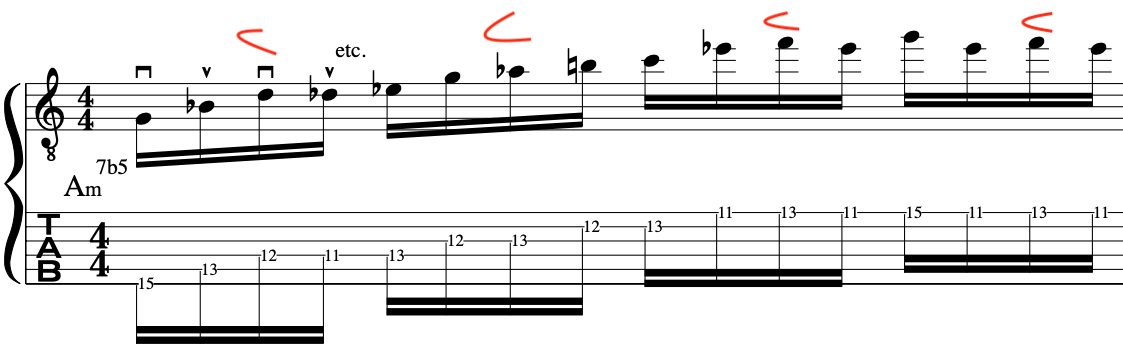
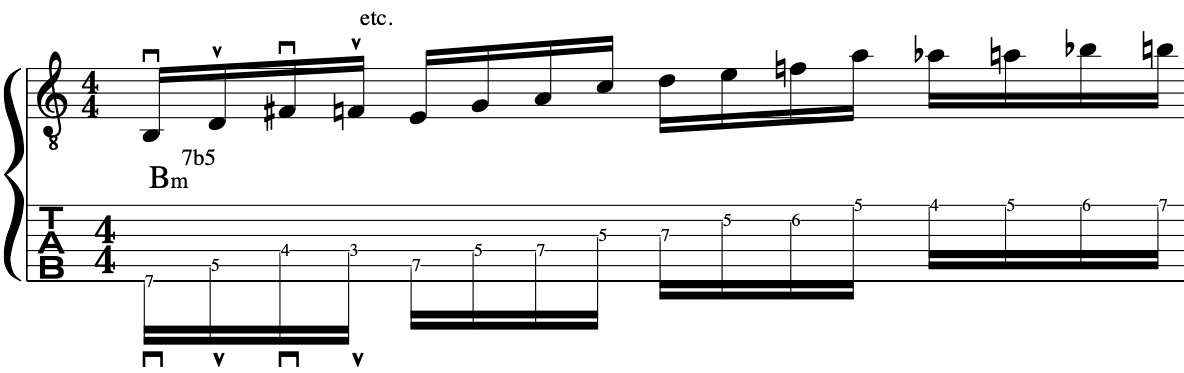
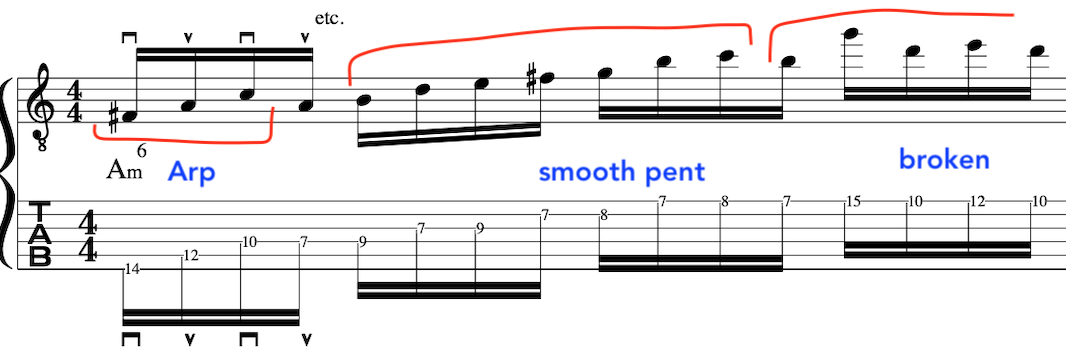
The following exercise uses some chromatic movement that smoothly connects to pentatonic movement starting on a downstroke:

jazz-guitar-alternate-picking-lesson-exercies

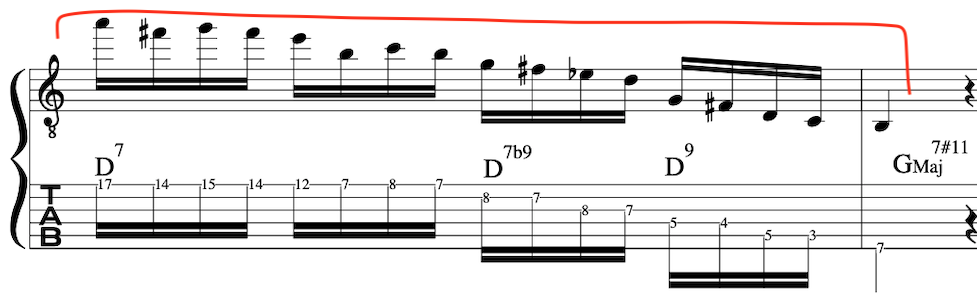
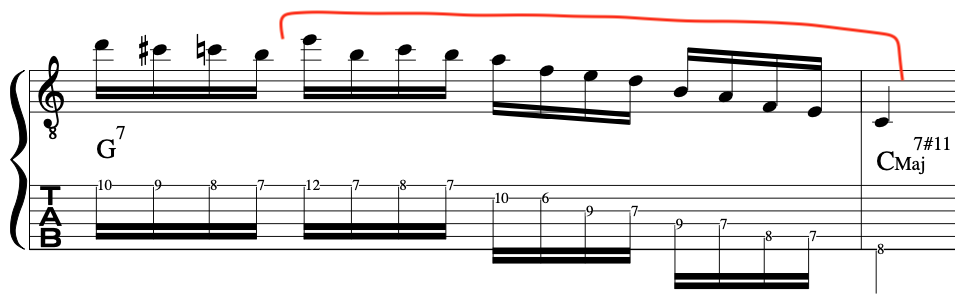
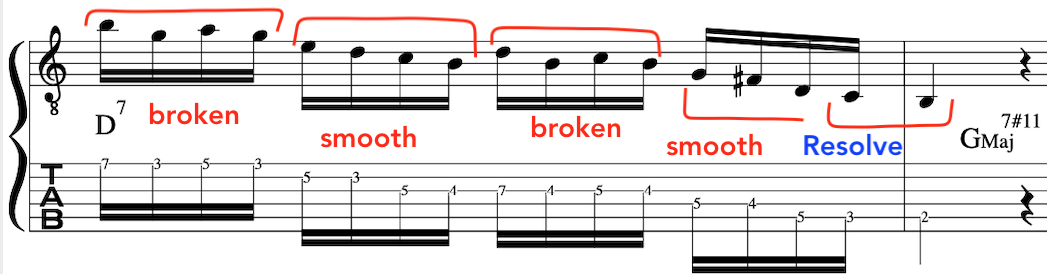
In our final exercise we will join together some of these principles.

jazz-guitar-alternate-picking-lesson-exercies-double-time

This was just a brief look at how to create alternate picking guitar exercises for improvisation through chord changes by applying simple patterns/fingerings that work naturally.

This was only around 140 bpm. But, this is essential before moving onto much quicker tempos with the alternate picking guitar technique.

With the 4 note “Tetrachord” groupings you will get fluidity through the changes. They will give you stability. They can then be broken up to create anticipation and syncopation-which will in turn create the natural expression of musical phrasing.

Modern Jazz Fusion Chords part 2. Steely Dan, Dan Chord and Slash Chords

A Natural Minor Scale/Chords/Arpeggios:

Modern Jazz Fusion Chords part 2. Steely Dan, Dan Chord and Slash Chords

CLICK SUBSCRIBE!

A Natural Minor Scale/Arpeggio:Basics

Hi Guys,

Today a quick look at the Chords,Scale and Arpeggios of the A natural minor scale.

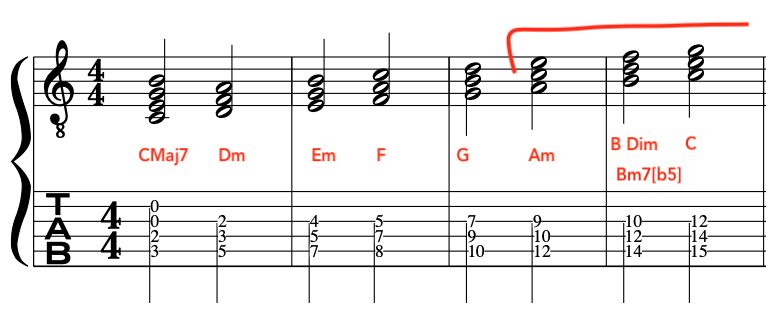
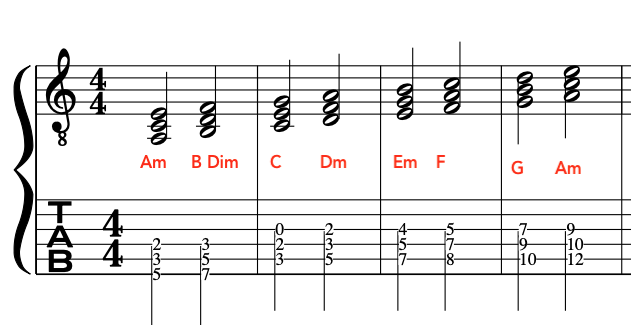
To begin with this scale is exactly the same as the C Major scale but starting on the 6th degree:

c-major-chords-of-scale-diagram

a-minor-natural-chords-of-scale-diagram

Next we will play through and exploit and “Colour” the arpeggios of the scale:

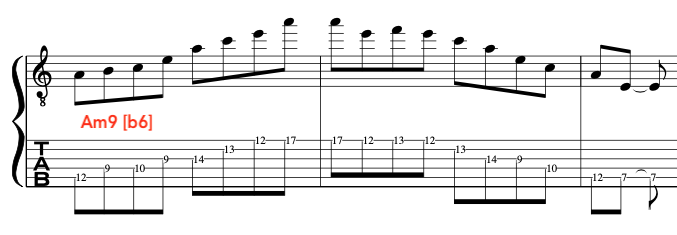
a-minor-arpeggio-diagram

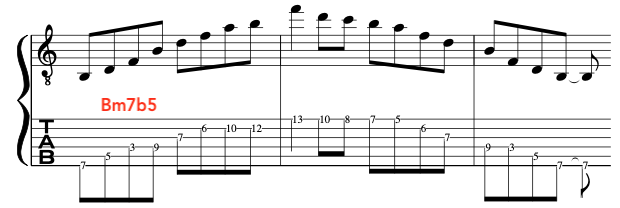
b-dim-arpeggio-diagram

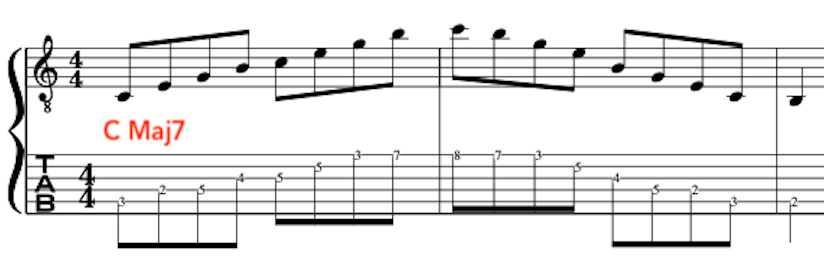
c-major-arpeggio-diagram

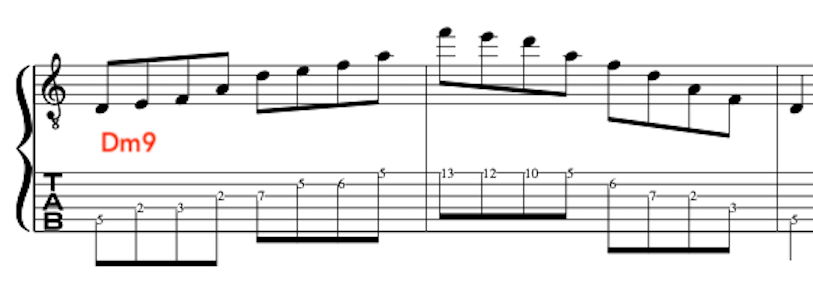
d-minor-arpeggio-diagram

e-minor-arpeggio-diagram

f-major-arpeggio-diagram

g-major-arpeggio-diagram

We will now descend in broken chords in groups of 4 notes.

arpeggios-c-major-scale

Here are a few examples of playing a different arpeggio over a different chord of the scale:

arpeggios-c-major-scale-superimpositions

Here is a basic way of breaking up the scale by employing triplets:

First we will do this on one string:

a-minor-scale-triplets-example

Now we will cross all 6 strings:

a-minor-scale-triplets-example

This time we will employ 16th’s in 4 note groupings of “Tetrachords” creating a double time smooth pentatonic line.

tetrachords-a-natural-minor-scale-example-pentatonic

We can change the Dominant [minor] chord in the A natural minor scale and make it Major:

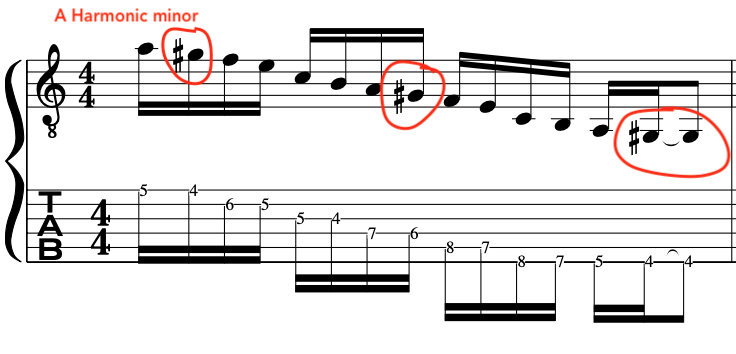
With this in mind we realise that the G natural is now a G# and so we can employ the A Harmonic minor scale to play over it.

Here is a simple 2 finger fingering:

a-harmonic-minor-scale-dominat-chord-example

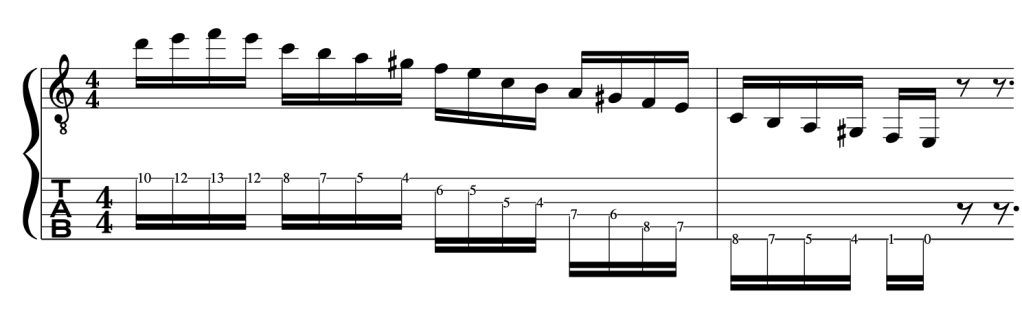
Now, let’s extend this:

a-harmonic-minor-scale-dominat-chord-example

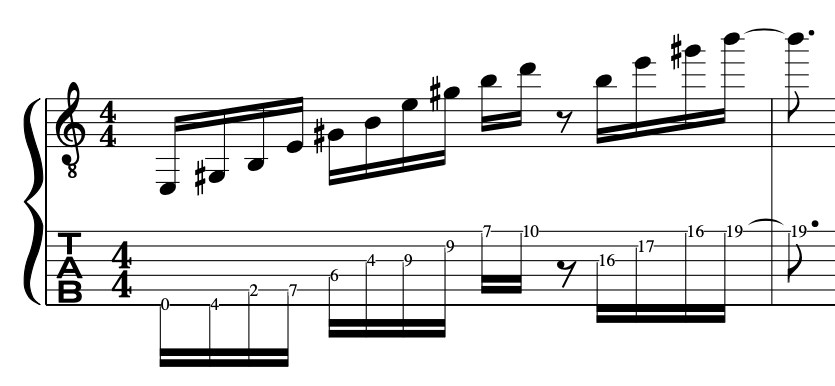
We could also use the E7 Arpeggio:

e7-dominant-arpeggios-example

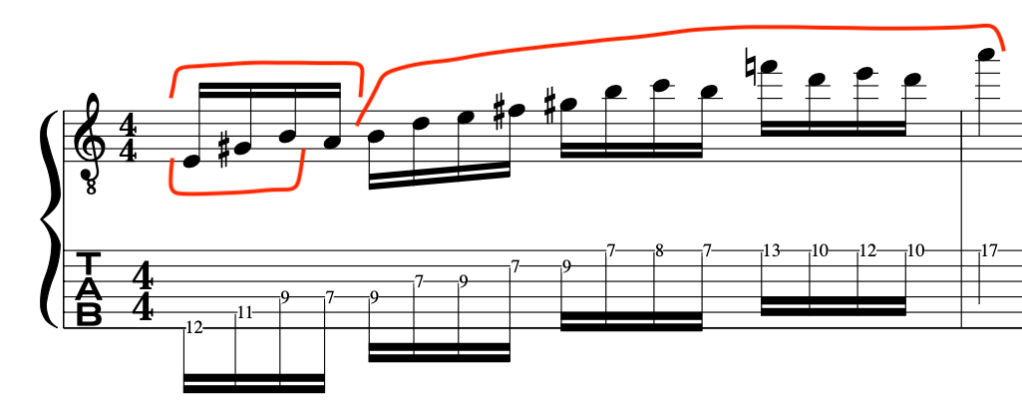
Finally, we have a lick with an arpeggio [that also implies a triad pair] going to a pentatonic phrase:

E-dominat-chord-guitar-lick

PDF DOWNLOAD:

Modern Jazz Fusion Chords part 2. Steely Dan, Dan Chord and Slash Chords

CLICK SUBSCRIBE!