Improve Your Guitar Skills with Alternate Picking Techniques

Alternate Picking Guitar Technique Lesson

Hi Guys,

Today, a few alternate picking guitar exercises.

These differ slightly as they incorporate alternate picking to chord and back to alternate picking technique.

Adding a chord [or chords] can throw some players off when alternate picking, so these exercises can be really helpful.

All of these little exercises are around the 140 bpm metronome marking.

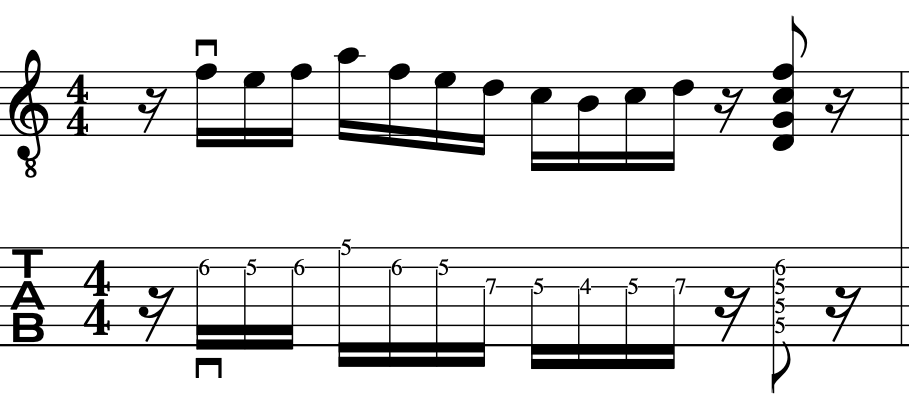
In this primer exercise we will have two sets of 16th notes that then accent a D quartal chord.

This exercise starts on a Downstroke and accents the 3rd note in each 4 note grouping.

Sheet music with notes on a staff, featuring a clef, and measures containing various rhythmic patterns and symbols for alternate picking guitar technique.

By accenting these pitches it will make picking the exercise much smoother, due to the the last 2 notes in each 4 note grouping being prepared for and hence plucked in a deliberate fashion.
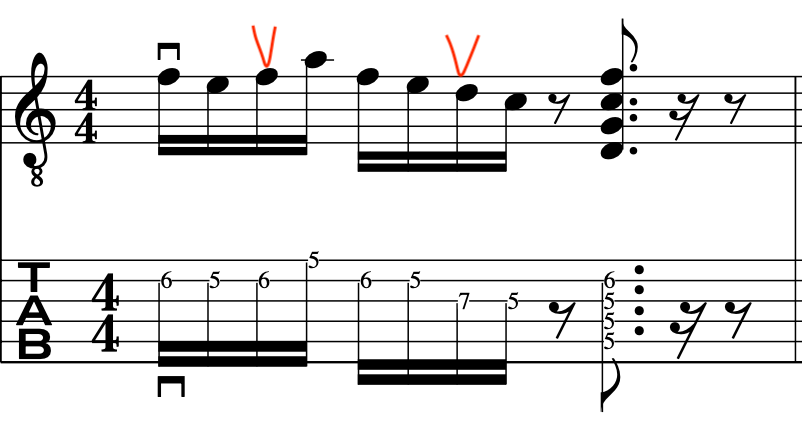
Sheet music showing a 4/4 time signature alternate picking guitar technique featuring a melody line with notes and guitar tablature below.
Musical notation for a guitar exercise focusing on alternate picking with accents.

This time we will extend the previous exercise, but, start in the bar on the 2nd semiquaver.

Again, these simple concepts will affect how you pick. So, this is set as if it is for a riff or hook that is doubled up with another instrument, hence, creating a much more compositional approach.
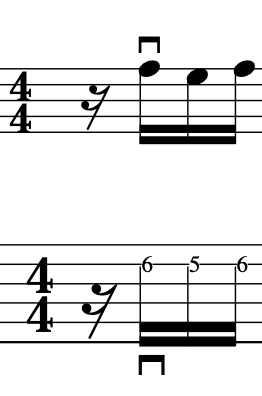
Sheet music with two measures in 4/4 time signature, featuring dotted quarter notes and half notes for alternate picking guitar technique.
Sheet music for alternate picking guitar exercise focusing on chord integration.
Musical notation for alternate picking guitar technique exercise on a staff in 4/4 time with notes for guitar, including standard notation and tablature. How to alternate pick easily.
Musical notation and tablature for Exercise 3, showcasing alternate picking techniques for guitar.

This time we will ascend and descend.

This exercise demonstrates the different amount of notes per string.

But, real music dosen’t work that way as we have – Melodies/Vamps/Hooks/Riff/Unison Instruments-this means, there maybe 1 note on one string and 4 notes on the next string and then 2 notes on the next string and then 3 notes etc.

This exercise is tailor made for the above, as, it employs the two main music devices being that of an arpeggio and scale.

Here is the first part.
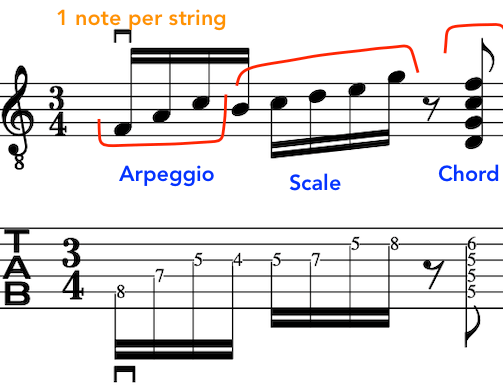
Musical notation showing an alternate picking guitar exercise with arpeggio, scale, and chord, with a guitar tablature notation underneath.
Guitar alternate picking exercise showing arpeggio, scale, and chord for varied note patterns.

The second part, starts on an Upstroke, because, we finished the last phrase on a downstroke as we plucked the chord.
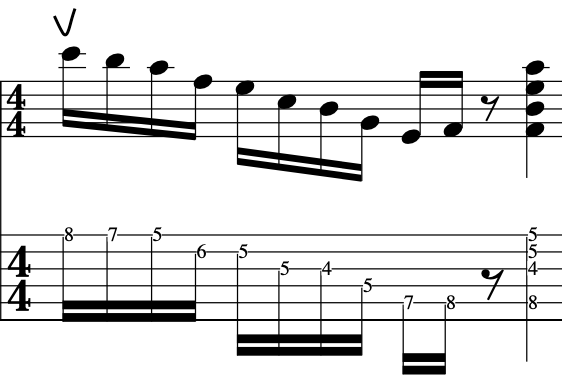
Musical notation showing a series of alternate picking guitar technique notes in 4/4 time signature, including both treble and bass clef sections, indicating a melodic sequence and finger positions.
Sheet music for Exercise 3, illustrating descending guitar patterns for alternate picking.

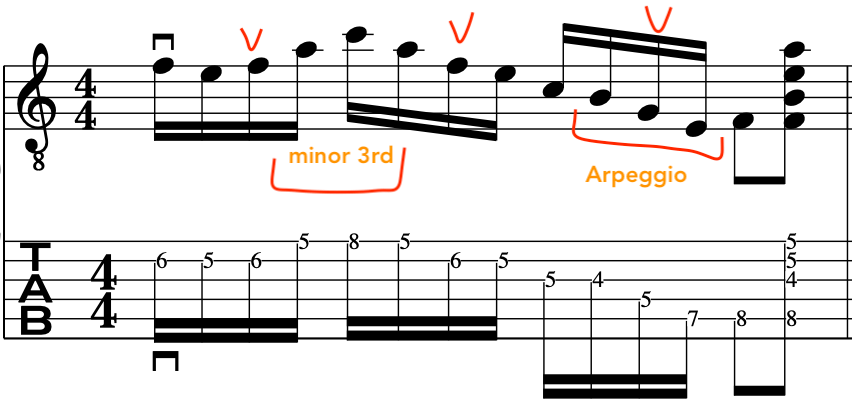
This exercise involves crossing over to the 1st string and back again, with different amounts per string.

So, to begin with let’s break this down into a simple 2 string exercise:

As before, notice the accents on the 3rd note in each 4 note grouping:
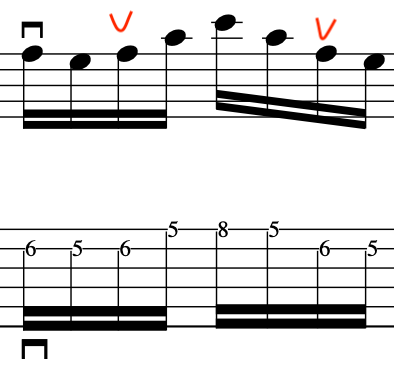
Musical notation sheet showing alternate picking guitar technique a series of notes and symbols, including two sections of tablature indicating finger placements on a stringed instrument.
Detailed notation for a guitar exercise focusing on alternate picking with accents on specific notes.
Sheet music showing alternate picking guitar technique in a series of notes in 4/4 time signature with labels for a minor third and arpeggio.
Musical notation and tablature for a guitar alternate picking technique exercise, highlighting a minor third and arpeggio.

These exercises are just a few ideas that are really useful when working on alternate picking guitar technique.

This is because many hooks and vamps and compositional devices don’t work on 3 note per string picking.

The great improvisers like John McLaughlin, Don Mock and Pat Martino play long fluid phrases along with weaving in and out of chords, chromaticism and implied harmony [double stops/Octaves]. So, being able to pluck odd and even groupings [or any amount of notes per string] with embellishments and chords is essential.

Hopefully, these exercises will be of some help with that.

Right Hand: Alternate Picking Guitar Technique

Please watch video above for detailed info:

Hi Guys,

Today, a quick look at the “Right Hand” aspect of alternate picking guitar technique:

This is not cast in stone, but, to serve as a useful reference/guide to anyone that might be having problems.

alternate-picking-right[hand-guitar-technique-diagram

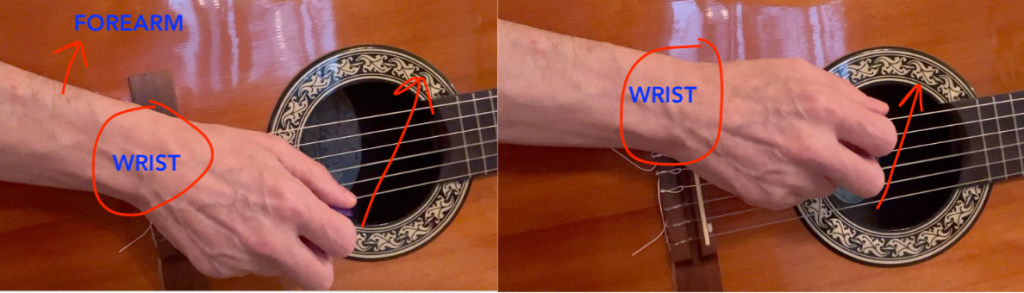
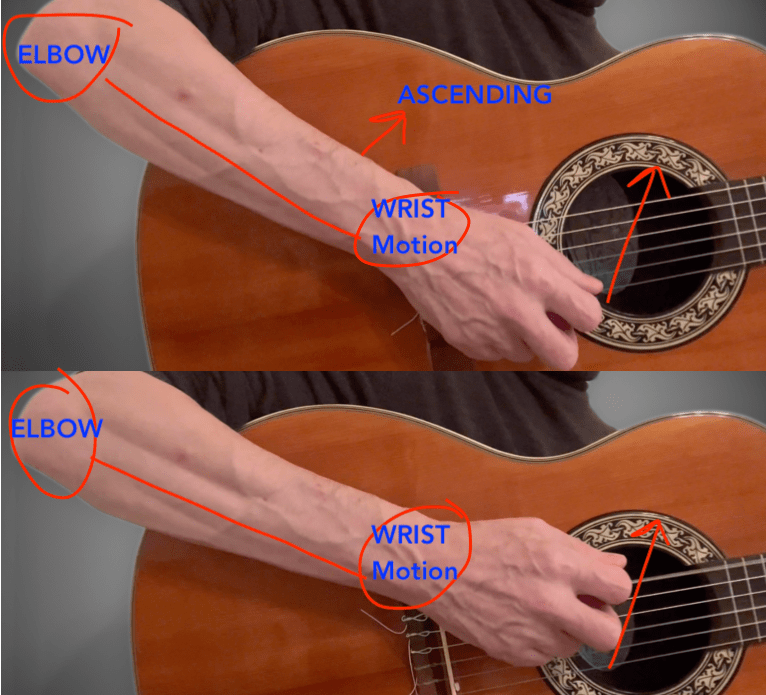
Picking works best for the jazz/fusion [McLaughlin] style when picking from the wrist. Having said this, there is relative movement from the elbow to the wrist as the forearm follows through.

This becomes one motion that connects the music/phrase [we are playing] together as we alternate strictly down/up or up/down aligned with the strings we wish to pluck.

alternate-picking-right[hand-guitar-technique-diagram

The Fripp style is more for “Pre-learnt” playing 100-152 Bpm [Yes, there will be some improvisation] But, the McLaughlin style is really geared towards “In the moment” improvisation around the 130-200 bpm. With Al di Meola being a combination of both [Think “Hotel Splendido” to “Cielo et Terra”.

This in turn means that each are approached in a slightly different manner, but this would be a whole blog in itself. So, for the sake of time I am addressing the all round basic concepts for the Right Hand in this post.

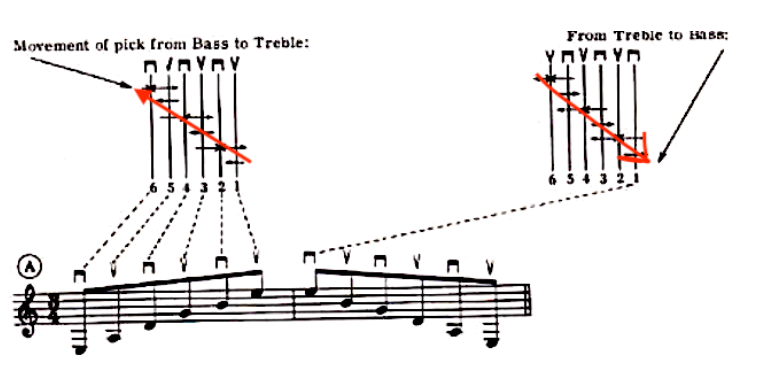
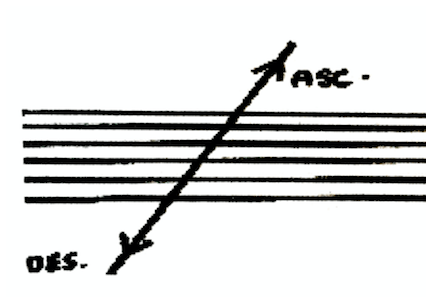
When crossing strings I like to follow a straight line as is taught in Ivor Mairants brilliant book “Perfect Pick Technique”.

Below, is the diagram that demonstrates this.

alternate-picking-right[hand-guitar-technique-diagram

This is extremely useful as it means that we are aligned with the string we wish to pluck at the moment we wish to pluck it and the forearm wrist and pick are in line and ready to pluck.

Feeling, and knowing this gives us confidence for ascending and descending naturally without any interrupting from unnecessary nervous or tense movements.

alternate-picking-right[hand-guitar-technique-diagram

alternate-picking-right[hand-guitar-technique-diagram

alternate-picking-right[hand-guitar-technique-diagram

alternate-picking-right[hand-guitar-technique-diagram

alternate-picking-right[hand-guitar-technique-diagram

alternate-picking-right[hand-guitar-technique-diagram

As you can see from the 6 diagram alignments above, the wrist and forearm follow naturally as they cross the six guitar strings.

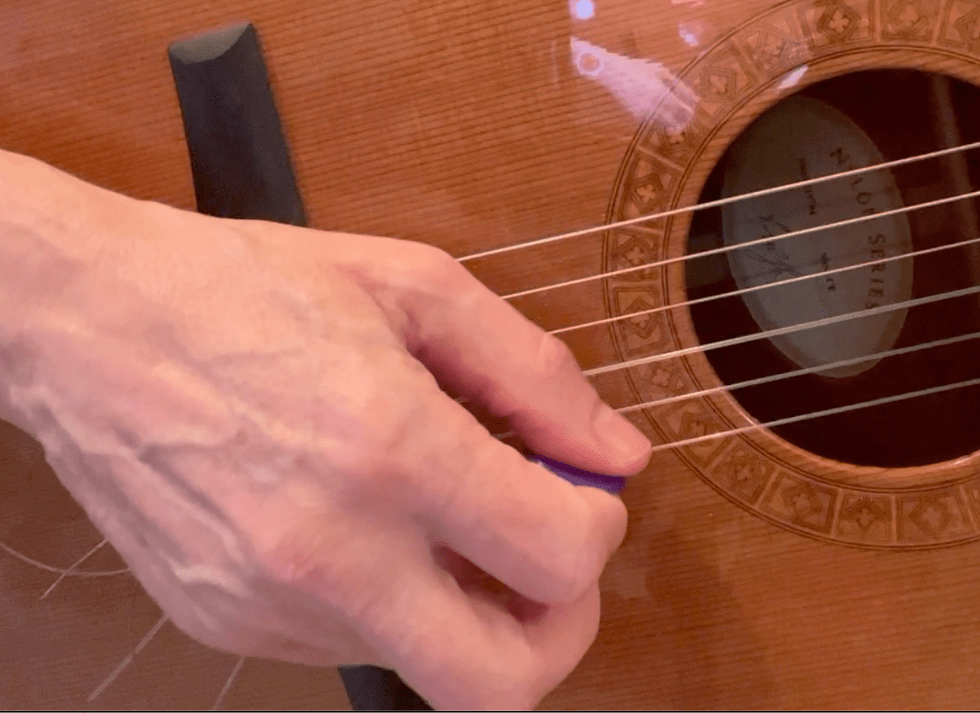
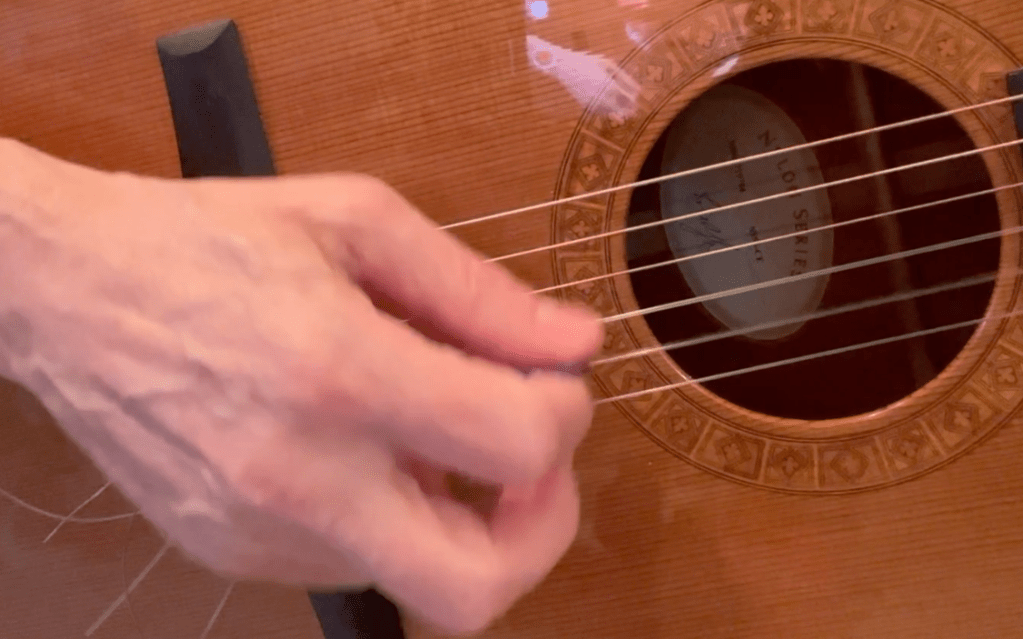
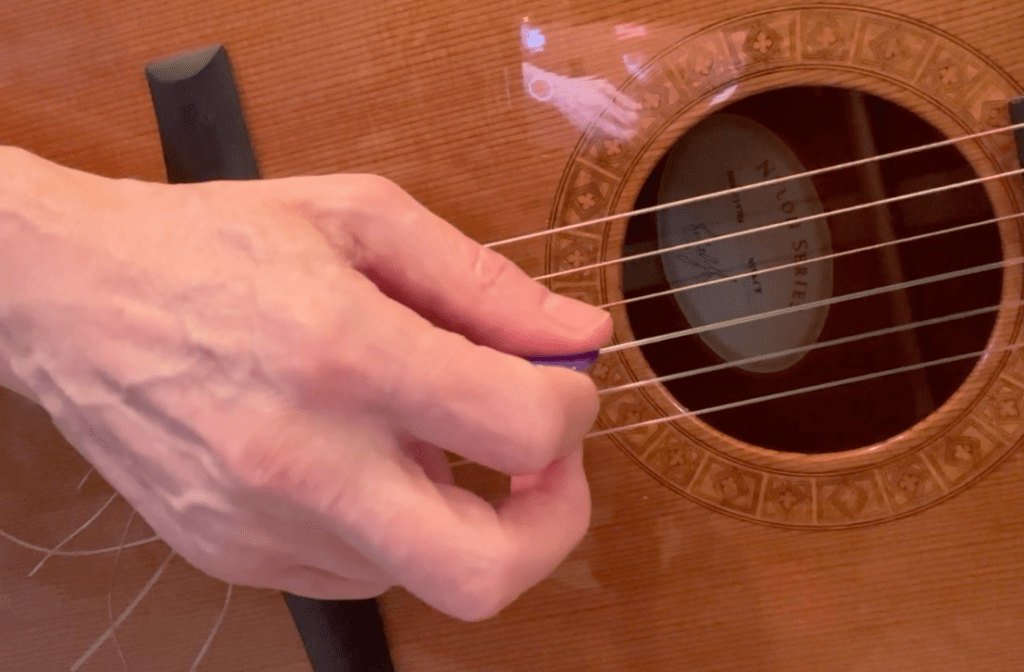
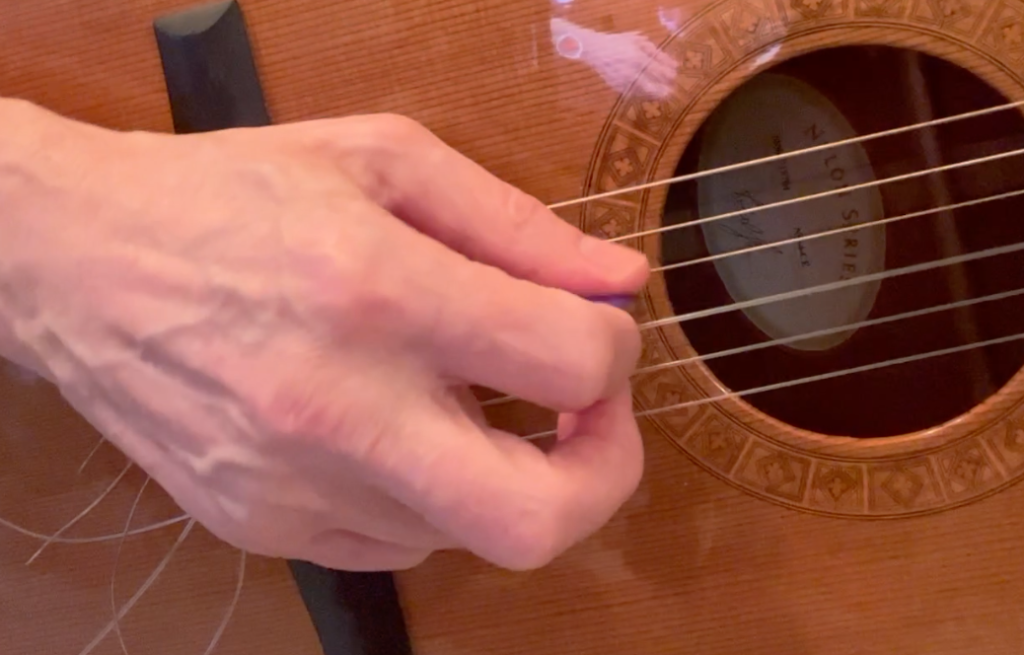
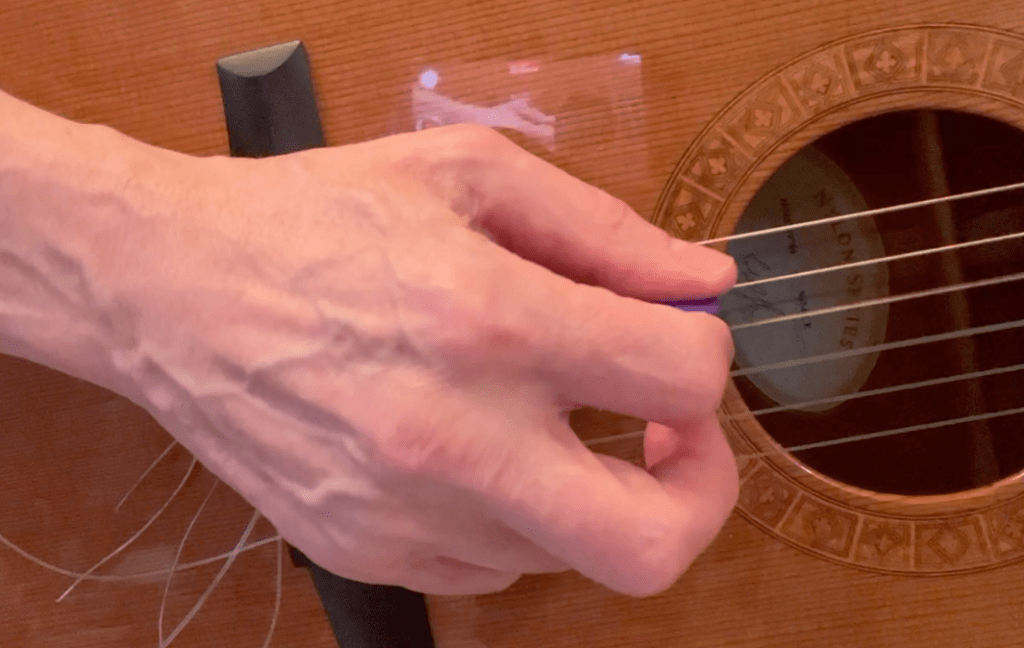
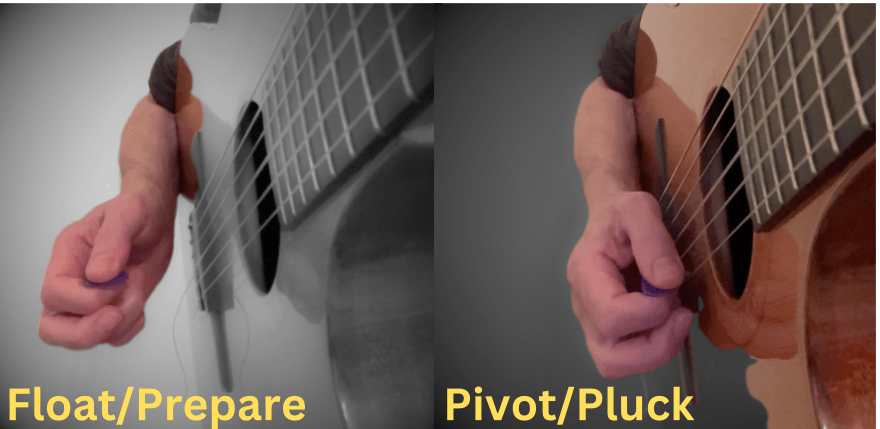
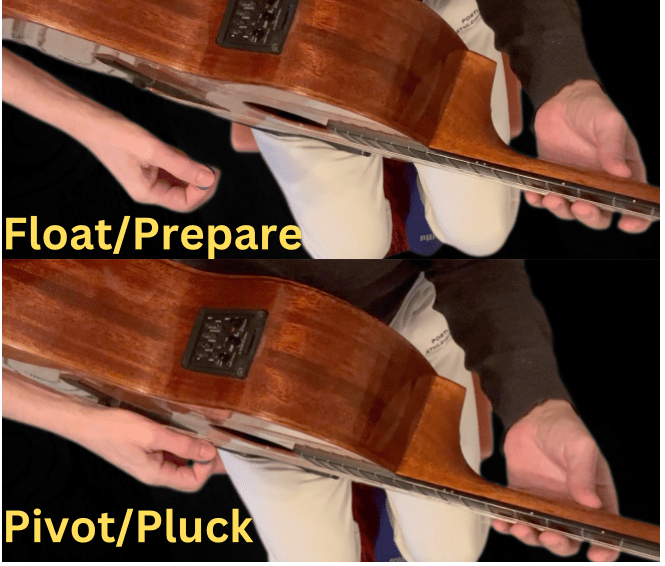
Floating, is literally as it sounds and means floating with the right hand above and not resting whilst plucking the strings.

Pivoting, on the other hand means resting on [generally] the bridge of the guitar and plucking.

I like to be in a floating position and then pivot on either the first note and then float or……float and pivot on the “Down” strokes:

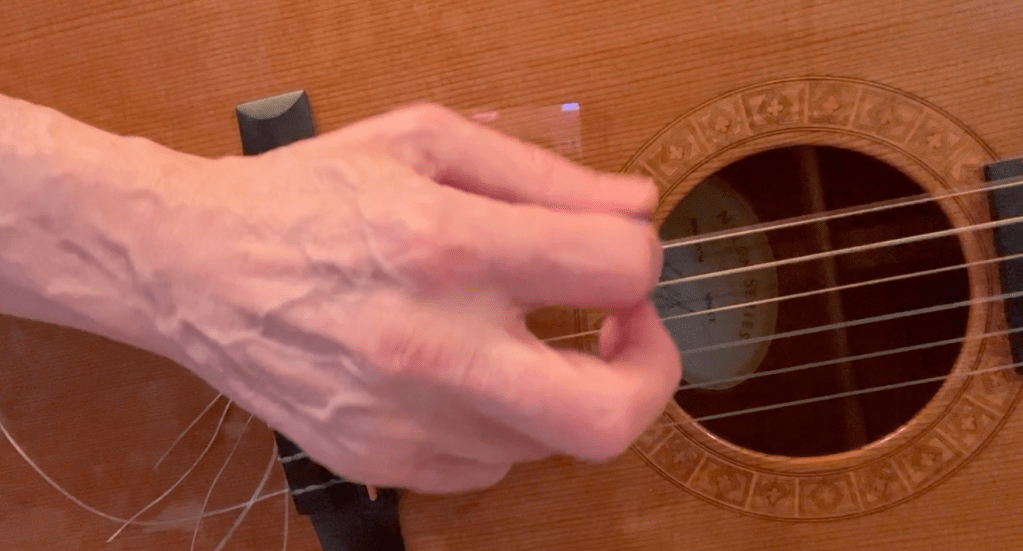
[Please not that the floating is overly emphasised in the photo’s as it is the only way I found to show it].

alternate-picking-right[hand-guitar-technique-diagram

From Above:

alternate-picking-right[hand-guitar-technique-diagram

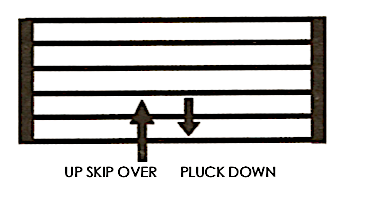
Always, remember with Alternate Picking we are either picking:

“Up” skip over pluck down.

alternate-picking-right[hand-guitar-technique-diagram

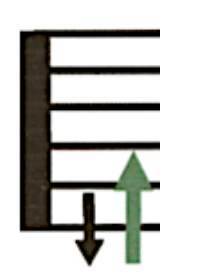
Or:

“Down” skip over pluck up.

alternate-picking-right[hand-guitar-technique-diagram

Simple as this is it’s essential to take into account so that you don’t get confused or do two of the same stroke.

IN CONCLUSION:

In conclusion, this was just a brief examination of good solid alternate picking right hand technique. Much of it depends on what you wish to play. Many just wish to play guitar fast, which, ironically defeats the task.

To play at fast tempos one needs to be able to articulate phrases slowly, and, for the prog or jazz fusion improviser this means 8th note to 16th note to 32nd note. Forms of double timing. Because, from that the musical phrasing emerges and so does the speed.

In summation I would say that alternate picking technique is really a simple technique to play complex music and not a complex technique to play simple music.

Shakti “Joy” Alternate Picking guitar raga exercise

yt_logo_rgb_light CLICK SUBSCRIBE!

Shakti “Joy” Alternate Picking guitar Raga exercise: Harmonic Minor Groups of 7

PLEASE WATCH VIDEO ABOVE FOR DETAILED EXPLANATION:

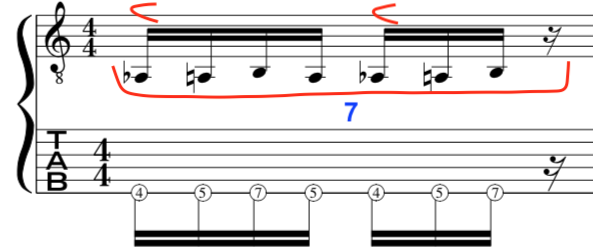
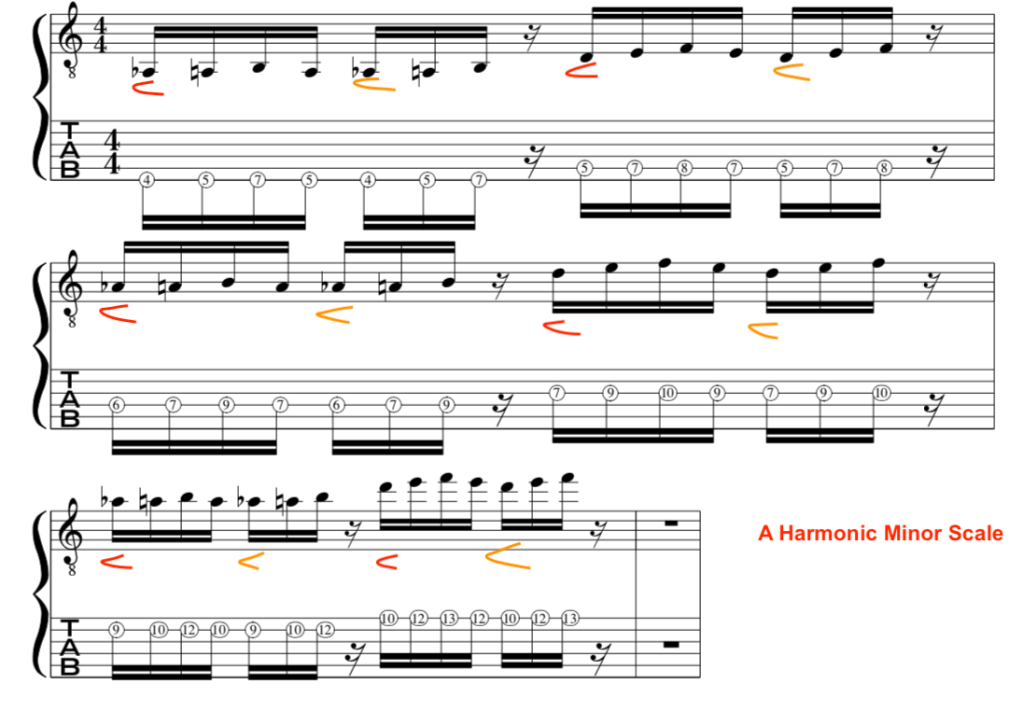
This is an A Harmonic Minor group of of 7 notes in a repeated pattern:

Shakti, Joy, guitar, alternate picking, exercise, John Mclaughlin, tab, music, notation
Shakti “Joy” Alternate Picking guitar Raga exercise: Harmonic Minor Groups of 7

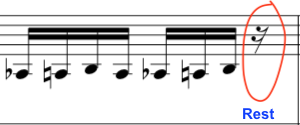
The key to this exercise is to first of all acknowledge the rest:

Shakti, Joy, guitar, alternate picking, exercise, John Mclaughlin, tab, music, notation
Shakti “Joy” Alternate Picking guitar Raga exercise: Harmonic Minor Groups of 7

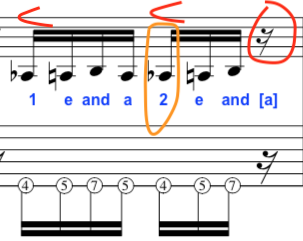
This is essential in order to get the time: Once you have this it is essential to “Accent” the first note of each grouping.

Shakti, Joy, guitar, alternate picking, exercise, John Mclaughlin, tab, music, notation
Shakti “Joy” Alternate Picking guitar Raga exercise: Harmonic Minor Groups of 7

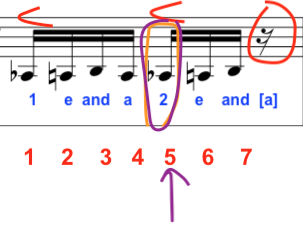
In order to get the rhythm tight you will need to accent the first note of the 2nd group louder.

Shakti, Joy, guitar, alternate picking, exercise, John Mclaughlin, tab, music, notation
Shakti “Joy” Alternate Picking guitar Raga exercise: Harmonic Minor Groups of 7

Here is the exercise for PDF Download:

Here is the Tab/Notation: Alternate Picking Ascending:

Shakti, Joy, guitar, alternate picking, exercise, John Mclaughlin, tab, harmonic minor, music, notation
Shakti “Joy” Alternate Picking guitar Raga exercise: Harmonic Minor Groups of 7

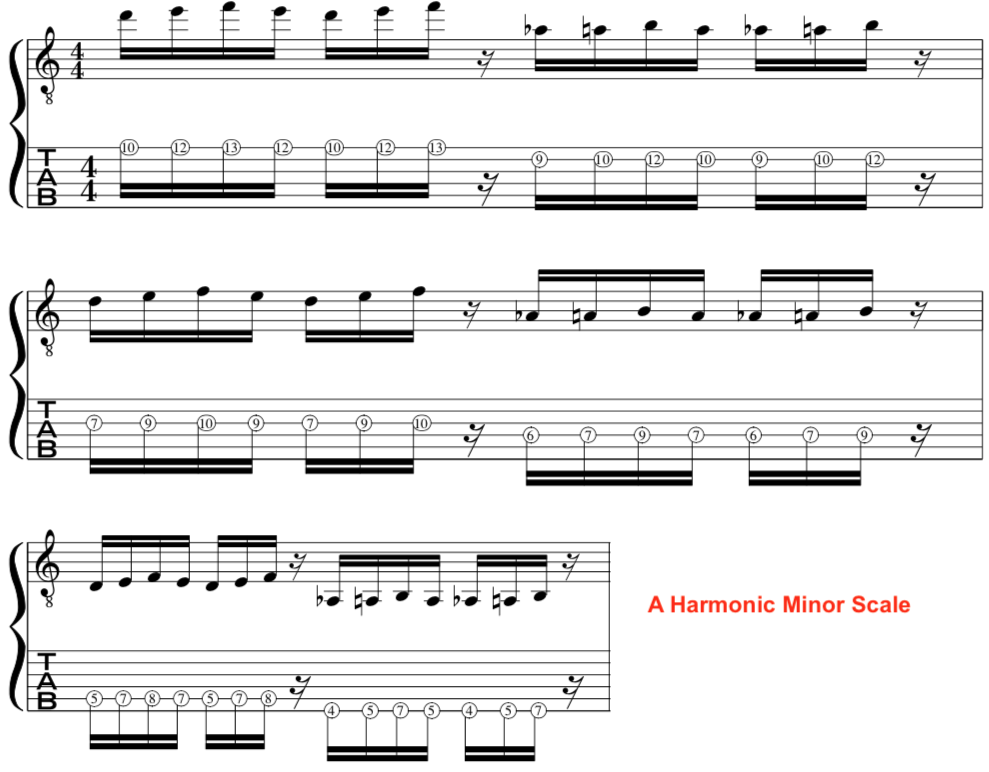
Alternate Picking Descending:

Shakti, Joy, guitar, alternate picking, exercise, John Mclaughlin, harmonic, minor, scale, tab, music, notation
Shakti “Joy” Alternate Picking guitar Raga exercise: Harmonic Minor Groups of 7

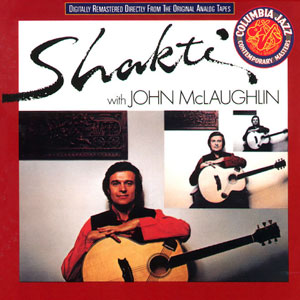
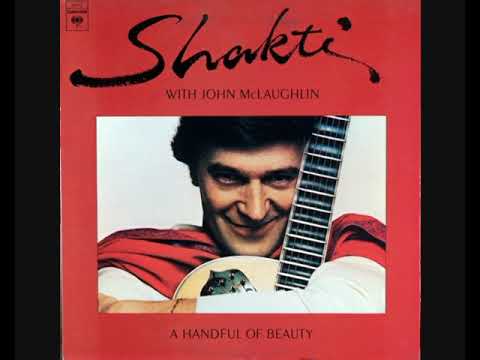
CLASSIC “SHAKTI” ALBUMS:

ABOUT “SKAKTI”: [Wiki]

Shakti were a fusion band formed by English guitarist John McLaughlin, Indian violin player L. Shankar, percussionists Zakir Hussain (on tabla) and T. H. “Vikku” Vinayakram (on Ghatam)[1] in 1974. The band played acoustic fusion music which combined Indian music with elements of jazz. The band’s Hindi name means, in English, “creative intelligence, beauty, and power.”[2]

In addition to fusing American and Indian music, Shakti also represented a fusion of the Hindustani and Carnatic music traditions, since Hussain is from the north region of India while the other Indian members are from the South.

The group came together in 1974, after the dissolution of the first incarnation of the Mahavishnu Orchestra, and toured fairly extensively during the period 1975-1977; it made only sporadic appearances (with personnel changes) thereafter.

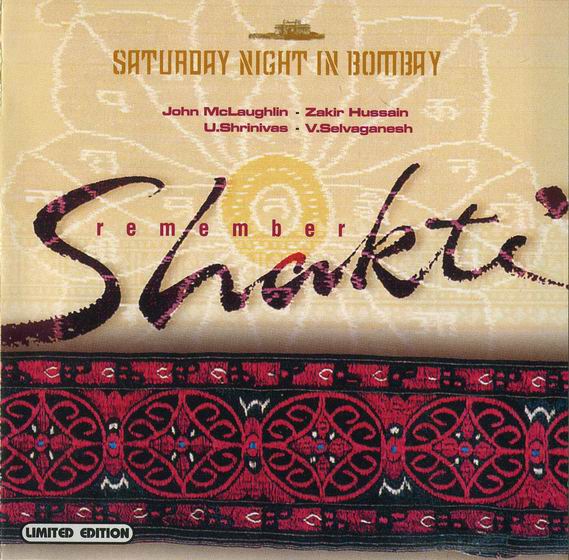
After 1977 the albums which L. Shankar recorded with Z. Hussain and T. H. “Vikku” Vinayakram stayed close to the music made popular by Shakti. Some twenty years later McLaughlin and Hussain put together another band with the same concept, called Remember Shakti, including V. Selvaganesh (son of T. H. “Vikku” Vinayakram ), mandolin player U. Shrinivas and eventually Shankar Mahadevan.

Two concerts at the Montreux Jazz Festival (July 6, 1976 and July 8, 1977) are included among the 17 CDs of the box set Montreux Concerts by John McLaughlin.

IF THIS LESSON WAS OF VALUE TO YOU THEN PLEASE SUBSCRIBE TO US ON YOUTUBE BELOW, THANKS!