Understanding Triads and Slash Chords in Music Theory

The 12 Major Triads/Slash chords music lesson in theory and practice:

Hi Guys,

Today, a look at altering harmony and cadences with triads, slash and altered chords.

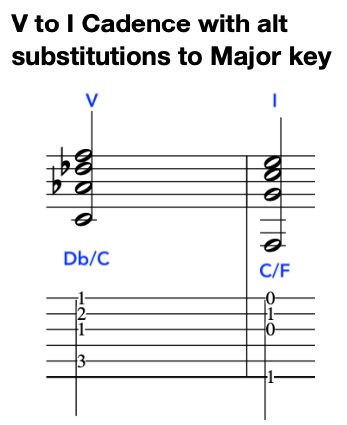
To begin with let’s take a pedestrian V to I cadence,

Now, let’s add some colour to it.

A musical notation diagram showing a V to I cadence with altered substitutions to the Major key, including the slash chords Db/C and C/F for music theory lesson
Illustration of a V to I cadence with altered substitutions, showcasing the Db/C and C/F slash chords.

Here, we can see the slash chord of Db/C resolving to C/F:

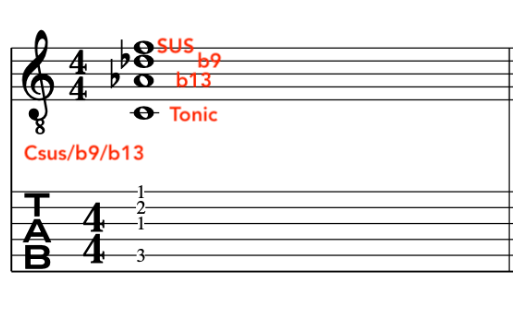
The Db/C harmony creates a powerful dominant chord of Csus/b9/b13

Musical notation for Csus/b9/b13 chord with tablature for guitar. Example of slash chord Db/C
Musical notation illustrating the Csus/b9/b13 chord, showcasing its structure and components.

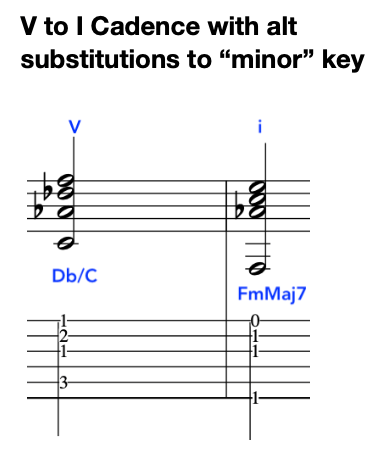
With this in mind let’s now apply this and cadence to the minor key [FmMaj7]

Musical sheet displaying a V to I cadence with altered substitutions for the minor key, featuring Db/C and FmMaj7 slash chords.
V to I cadence illustrating altered slash chord substitutions in a minor key.

Straight away, we can see and hear how easy it is to manipulate and alter the harmony with slash chords.

They also possess a unique flavour and colour that really shines out on the guitar due to the Major triads being very bright. This way they naturally cut through and resonate.

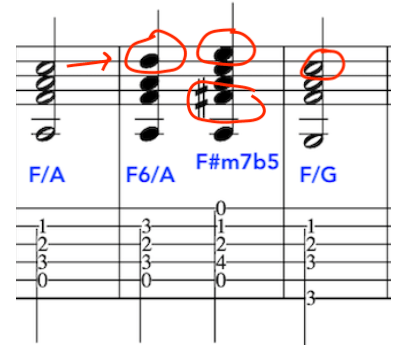
In this example, we will take a simple triad of F Major 1st inversion [F/A]

From this, we will add melodic notes/movement in the top and bottom to extend the harmony, and, finish with a 7sus4 cadence of F/G to Cmaj7#11

Music sheet showing chord substitution notations for F Major 1st inversion (F/A), F6/A, F#m7b5, and F/G with finger placement.
Visual representation of F Major triad variations, including F/A, F6/A, F#m7b5, and F/G, showcasing chord extensions.

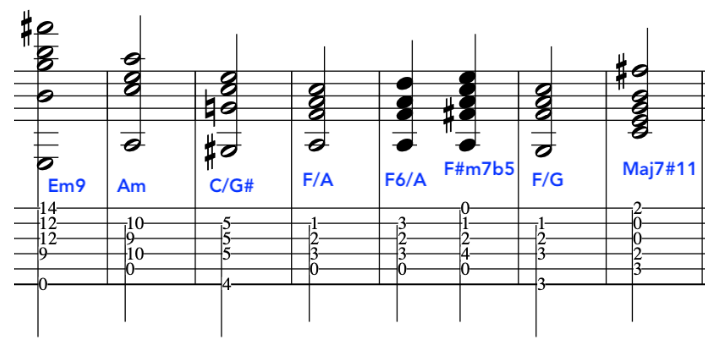
Let’s now add this to a complete chord sequence:

A music sheet displaying harmonization techniques with chord notations including Em9, Am, C/G#, F/A, F6/A, F#m7b5, F/G, and Maj7#11.
Chord sequence demonstrating triads and harmonization techniques.

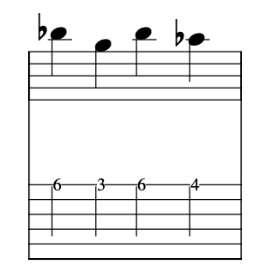
We will now take the simple melody below,

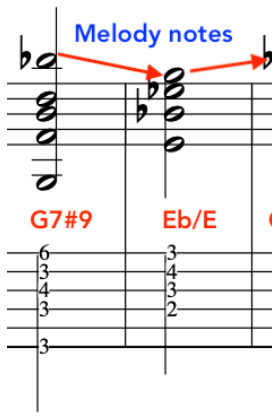
To exploit this, we will employ altered and slash chords starting with G7#9 moving to Eb/E

Sheet music illustrating melody notes with annotations for G7#9 and Eb/E chords.
Melody harmonization using the G7#9 and Eb/E slash chords.

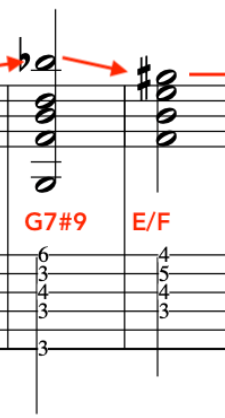
We will now repeat this, but, add a chord of E/F in between to harmonise the Ab note:

Sheet music showing G7#9 and E/F slash chord for jazz fusion reharmonisation

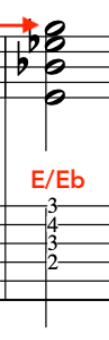
Finally, resolving back to the Eb/E slash chord

Chord diagram showing E/Eb slash chord and diminished harmony with fingering positions on the guitar.
Chord diagram for E/Eb, illustrating finger placements for guitarists.

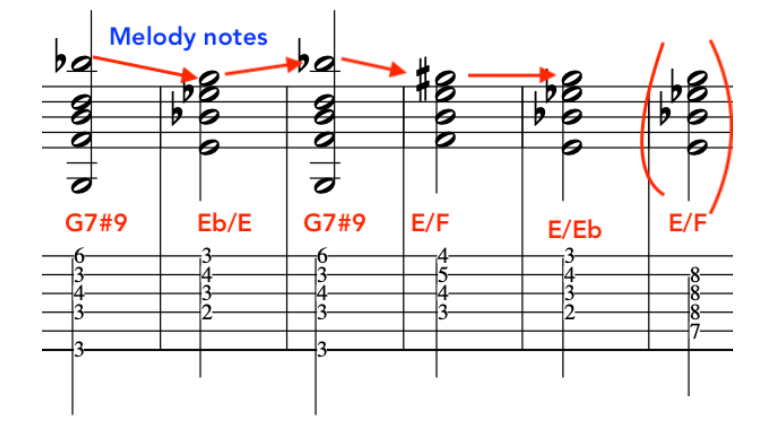
FULL HARMONISATION EXAMPLE:

Musical notation displaying John McLaughlin guitar melody notes and chords G7#9, Eb/E, and E/F, highlighting the harmonic structure, slash chord and how to re harmonise a melody in jazz fusion music.
John McLaughlin Guitar Harmonization with slash chords and altered chords

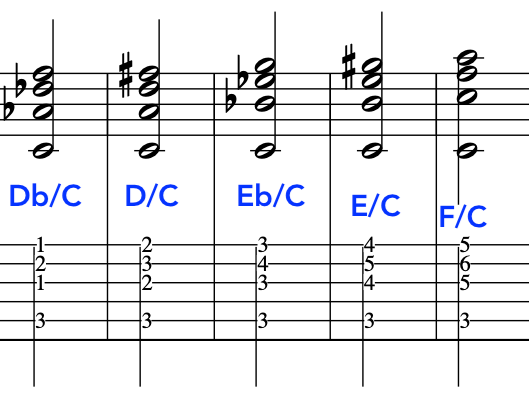
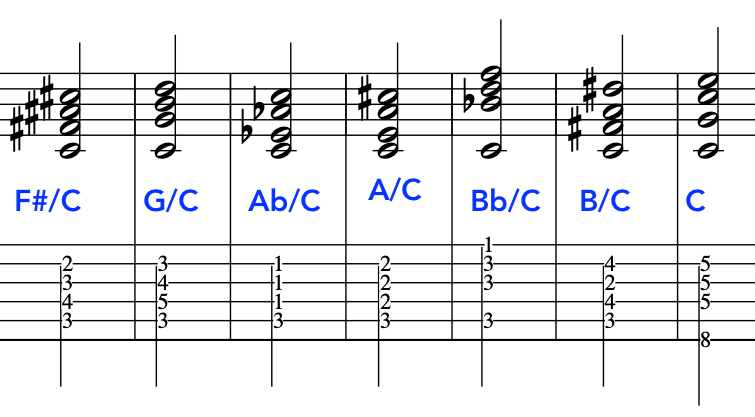
In this exercise we will play all 12 Major Triads over a single C [as root] Bass note.

Musical notation showing a progression of slash chord triads: Db/C, D/C, Eb/C, E/C, and F/C over a single bass note.
Chord progression visual for 12 Major Triads over a C bass note, illustrating various slash chords.
A musical sheet displaying the 12 Major Triads over a C bass note, highlighting various slash chord combinations.
An illustration displaying the progression of 12 Major Triads over a C bass note, highlighting various chord combinations.

Quick Tips for Jazz Guitar Turnarounds: Martino,Mock,McLaughlin

Hi Guys,

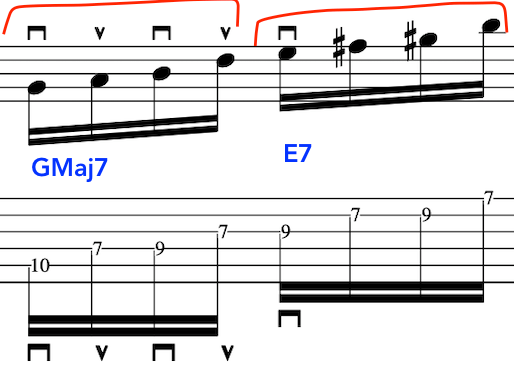
Today, a look at playing through a Vi ii V7 I Turn around/Cadence at a quick pace/tempo.

This is in the style of Don Mock, Pat Martino and John McLaughlin. So, this employs the alternate picking guitar technique.

A jazz chord turnaround and cadence featuring Gmaj7, E7, Am7, D7, Gmaj, Gm7, C7, and Fmaj7 in 4/4 time.
Musical notation and tab showing GMaj7 and E7 jazz turnaround chords with corresponding notes and finger placements for guitar.

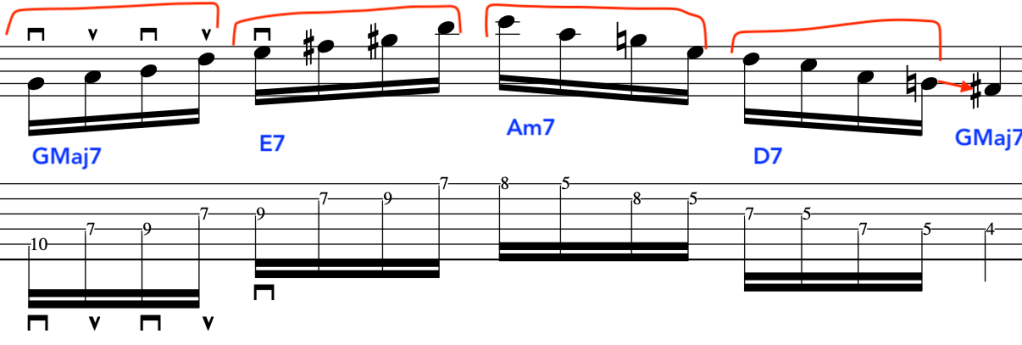
Starting, on a down stroke with alternate picking, we can see how easy it is to connect these simple pentatonic’s together through the two chord changes.

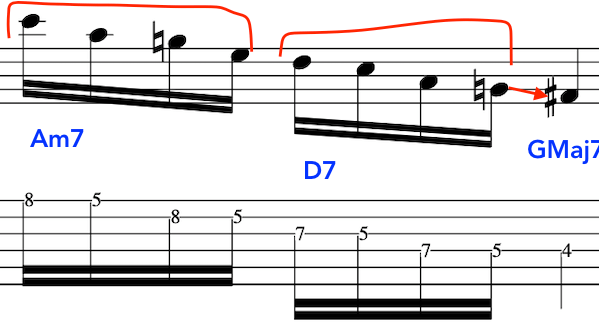
Now, let’s connect the pentatonic’s over the next two chords in the same manner. [Notice the G to F# resolution for Gmaj7]

Musical notation and tablature showing jazz ii V7 I chords Am7, D7, and Gmaj7 with highlighted notes and guitar finger placements.

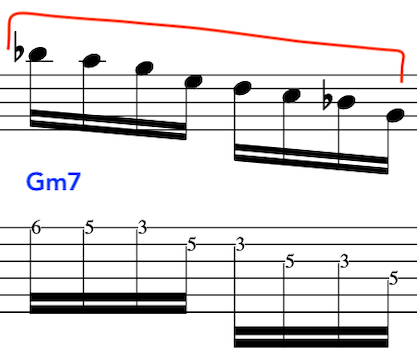
Having completed our Turnaround, let’s cadence this to a new key: This will be F Major.

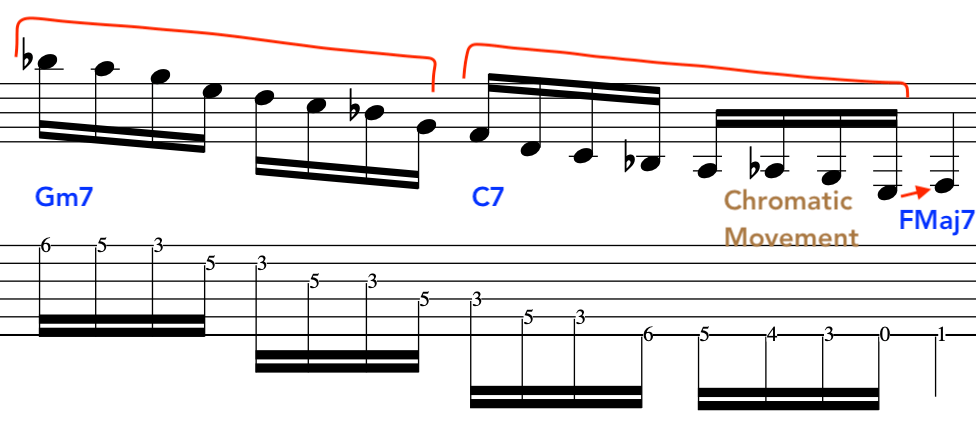
To do this, we will make the G Major 7th chord, minor, to G minor 7th.

Musical notation and tab for the Gm7 chord featuring pentatonic scale connections for jazz improvisation

From here, we will carry this pentatonic scale/line along and play it over the next chord.

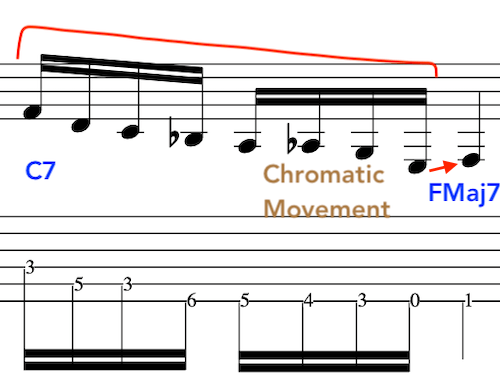
This will be the Dominant chord of C7 [or chord V leading to/of the new key F Major].

Notice: the use of a few chromatic notes to fill out the pentatonic scale/line.

Sheet music showing a chord progression with annotations for C7 and Fmaj7, highlighting chromatic jazz improvisational movement.

Full Turnaround/Cadence:

Sheet music and tablature  displaying chord progression for jazz Vi ii V7 I Gmaj7, E7, Am7, D7, and Gmaj7, with annotations and notes for guitar performance.
Sheet music showing a chord progression for jazz with ii V7 I with Gm7, C7, and FMaj7, highlighting chromatic scale movement and alternate picking guitar techniques.

This, was just a quick look at how easy it is to connect long lines together through very quick chord changes, especially, at the guitar with alternate picking technique.

It’s amazing the amount of chords we can play through fluently and quickly with this simple pentatonic four note [tetrachord] approach when improvising.

This short blog/lesson was just touching the surface. But, it does still give quite a comprehensive view of what can be achieved with this approach.

It’s a good idea to apply this method to any quick chord changes that you can find [e,g “Giant Steps”] and try this.

Master “McLaughlin” style Hexatonic Guitar Techniques for Smooth Playing

Modern Jazz Fusion Chords part 2. Steely Dan, Dan Chord and Slash Chords

CLICK SUBSCRIBE!

hexatonic-guitar-exercises-alternate-picking-examples

Hi Guys,

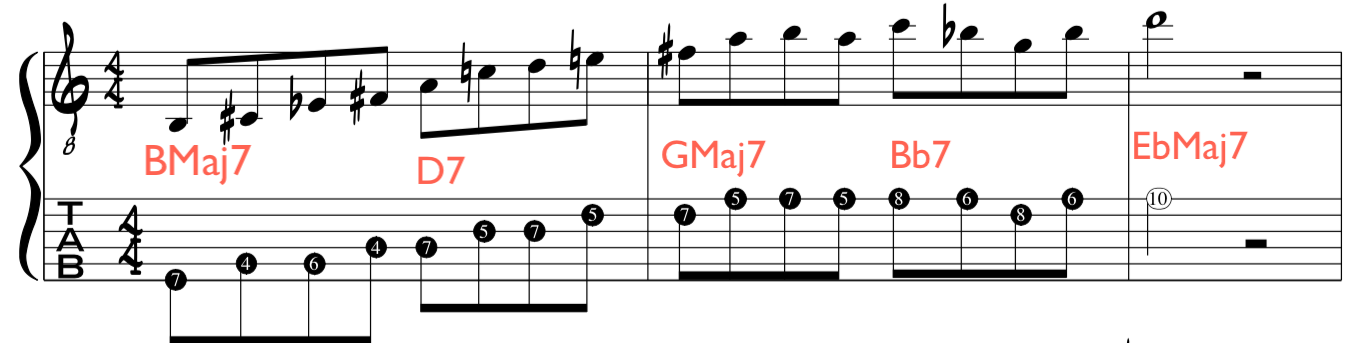
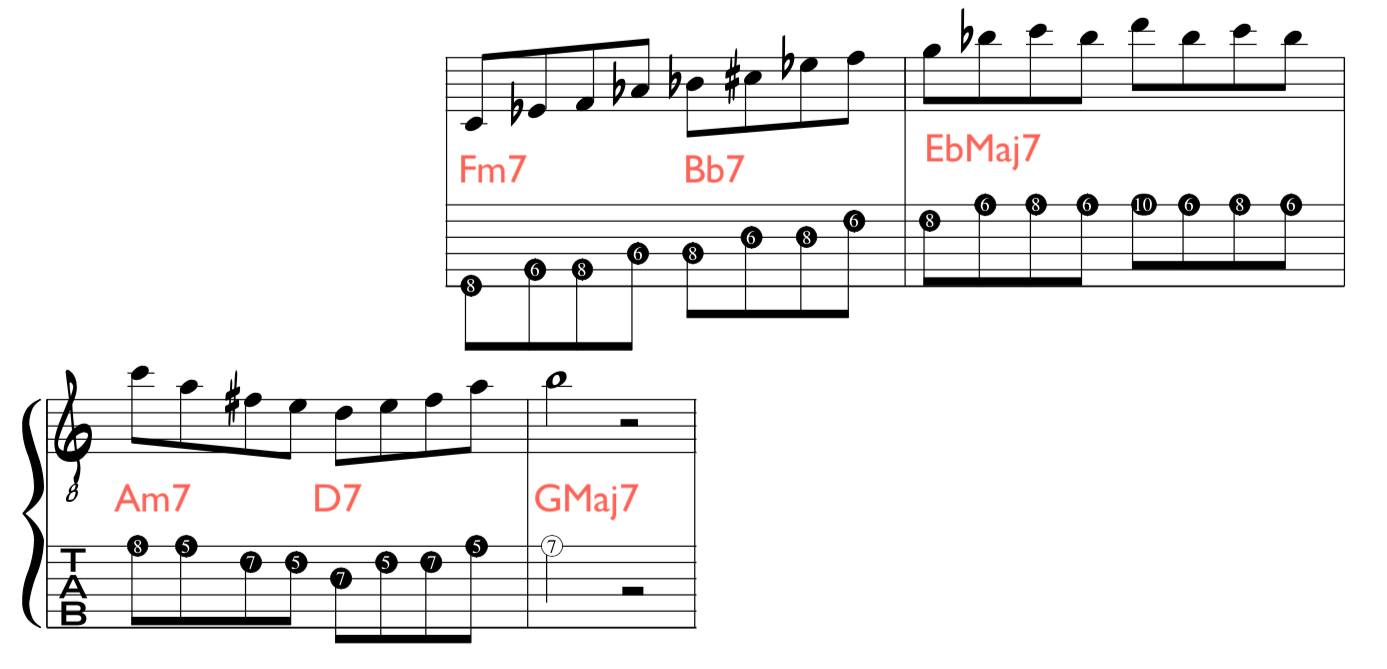
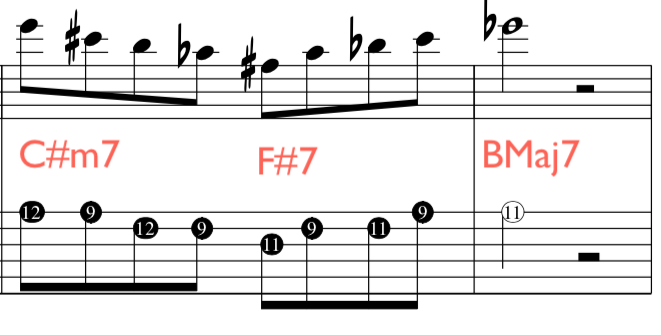
Today a quick look at connecting “Hexatonic” groupings together with strict alternate picking guitar technique.

The key is to glide or slide or let the fretting hand fall naturally into each position. This way the connections are made smoothly.

If the fretting hand panics, or releases from the position then it will fall apart: So connecting SMOOTHLY from each 6 grouping to the next= The Key

hexatonic-guitar-exercises-alternate-picking-examples

Because we have the 2 extra notes Hexatonics work well at a slower tempo’s like 100 to 120 Bpm for Fusion double timing:

Here is the first Exercise/Example: This starts on a down stroke with strict alternate picking:

hexatonic-guitar-exercises-alternate-picking-examples

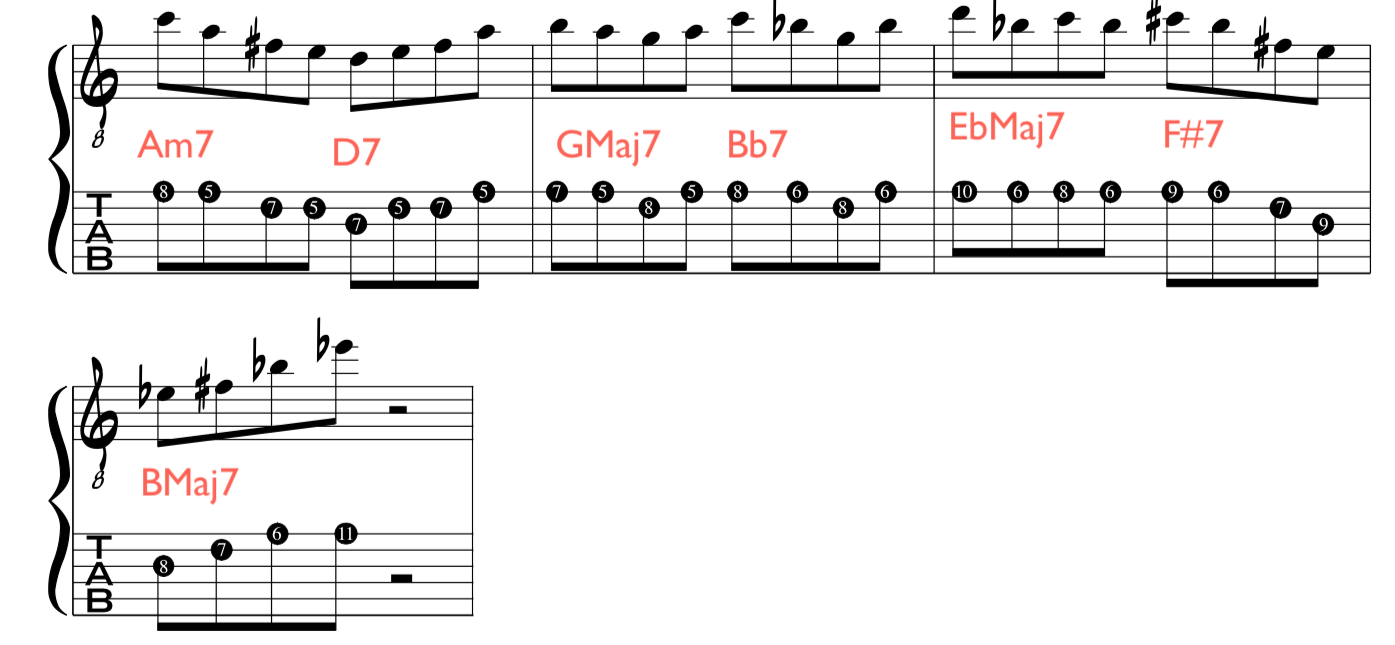
Notice, that in the second bar we have an arpeggio/triad figure:

hexatonic-guitar-exercises-alternate-picking-examples

This arpeggio can throw your alternate picking because it breaks up the scale momentum. So, you have to prepare for it and be aware that there is a quick change of movement in the fretting hand as you cross the strings.

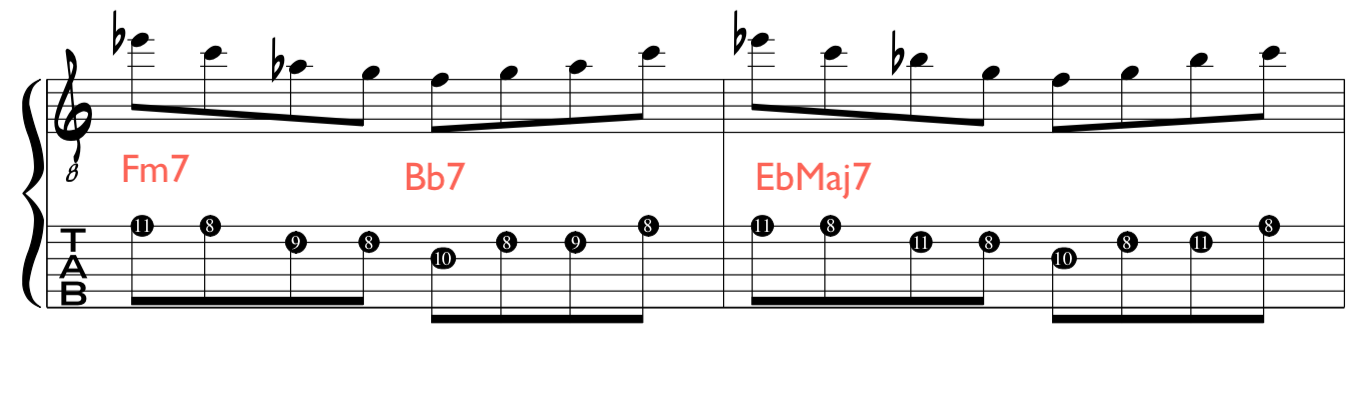
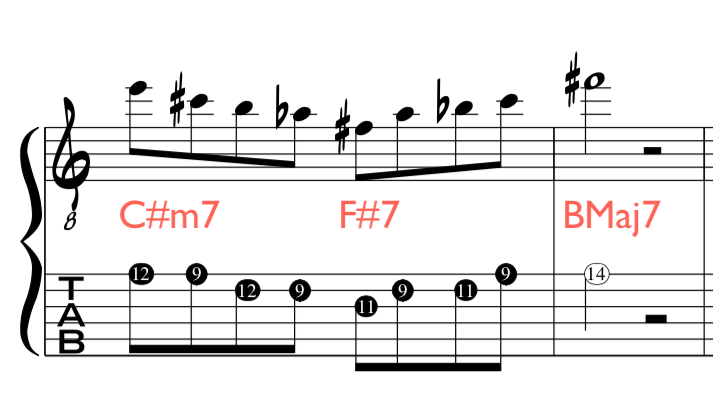
Here, we have an ascending exercise that connects together easily and naturally.

Again, it starts on a downstroke with strict alternate picking.

hexatonic-guitar-exercises-alternate-picking-examples

Here is the same exercise, but, with a VARIATION at the end:

Finally, we have an example that employs the downstroke and the upstroke:

Here is the first part starting on a downstroke:

hexatonic-guitar-exercises-alternate-picking-examples

Next, we have a rest and then start the next part on an upstroke to complete the exercise:

hexatonic-guitar-exercises-alternate-picking-examples

FREE PDF DOWNLOAD:

Modern Jazz Fusion Chords part 2. Steely Dan, Dan Chord and Slash Chords

CLICK SUBSCRIBE!