How to play Shakti Indian Guitar Scales

Hi Guys,

Today, a quick look at the first of a few Shakti Indian guitar scales for tabla and guitar improvisation.

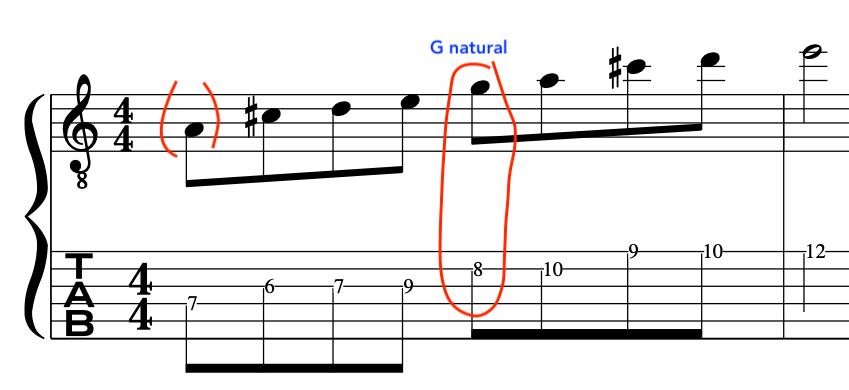
The first one that we will look at today is the A Mixolydian Mode exploited in a pentatonic form.

Here, is the basic scale ascending. The G natural gives the unique flavour and colour as it possesses the dominant sound, but, in a non resolving from.

how_to_play_shakti_indian_guitar_scales_lesson

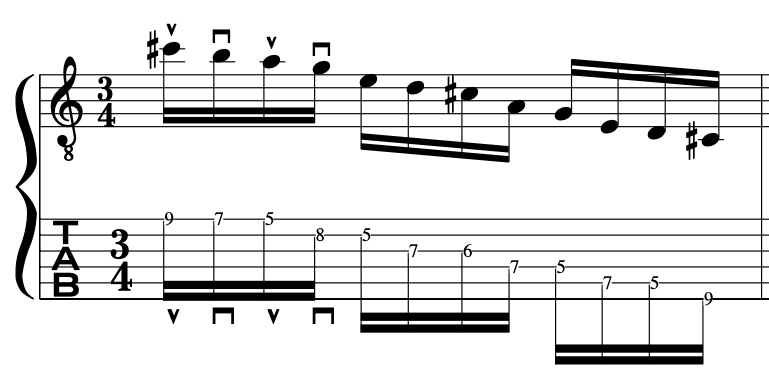
In this first exercise we will descend with the A mixolydian mode and employ imitation with the pentatonic form.

This example exploits strict alternate picking guitar technique. And, it works really well for two reasons:

A] It start on an “Up stroke”

B] It starts in the bar and on the “Off” beat

This creates a nice, smooth phrasing and is easy to copy and repeat down the octave.

how_to_play_shakti_indian_guitar_scales_lesson

As you can see below, it is repeated, and copied down an octave starting on the upstroke and on the off beat:

how_to_play_shakti_indian_guitar_scales_lesson

Finally, a variation/implication of this is played, due to the guitar running out of notes to fully copy it.

how_to_play_shakti_indian_guitar_scales_lesson

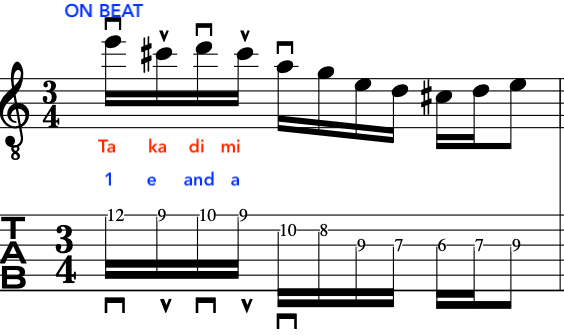
In this next example we will vary what we have just played in the example above.

But,

with two differences,

A] We will start on a “Down” stroke

B] We will play “On” the beat.

how_to_play_shakti_indian_guitar_scales_lesson

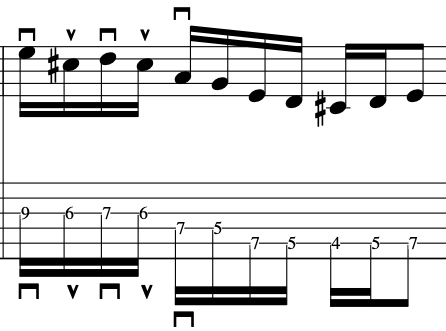
As with the previous example, we will now imitate what we have just played and copy it exactly down an octave:

how_to_play_shakti_indian_guitar_scales_lesson

Here, is another form/fingering of the scale in descent: Notice that this is starting on an “Up” stroke.

how_to_play_shakti_indian_guitar_scales_lesson

And finally, an ascending form/sequence starting on a “Down” stroke.

how_to_play_shakti_indian_guitar_scales_lesson

McLaughlin: Rhythm Guitar Revisited: Part 2

CLICK SUBSCRIBE!

Hi Guys,

Today, the second part of the John McLaughlin style rhythmic guitar essentials.

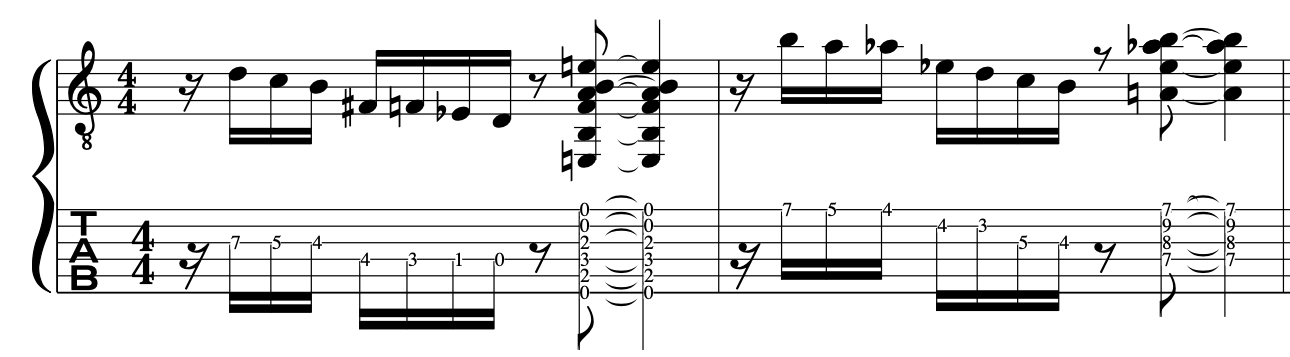
If we look at a composition like “Face to Face” by Shakti, we will find interesting rhythmic strumming patterns:

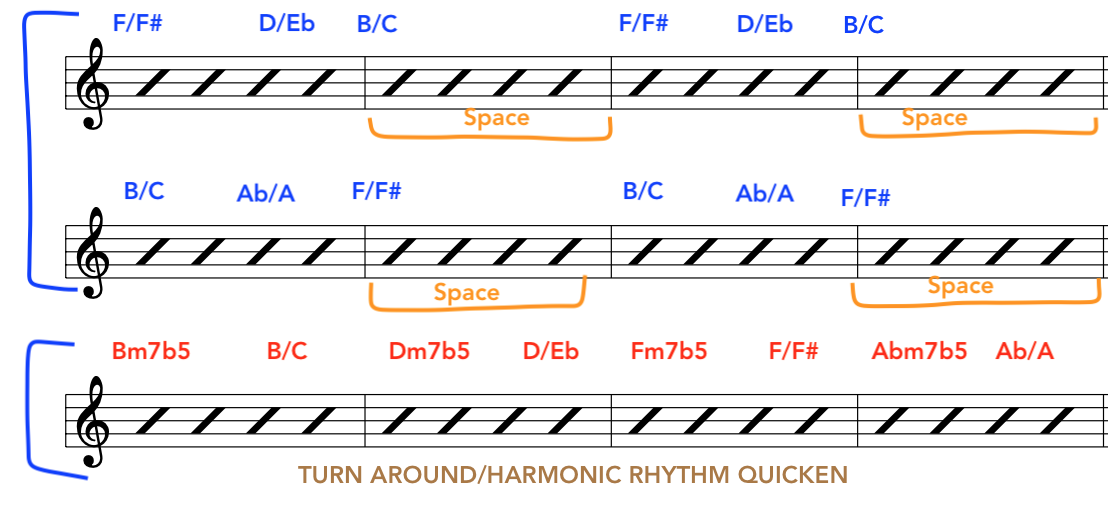
It’s unique how John creates interesting rhythmic riffs with just a couple of chords by employing a bar of 7 to a bar of 8:

shakti-face-to-face-rhythm-guitar-lesson

You may wish to count this in different ways. For Example, you could count this as: 15/16 to 16/16 [in groups of 3 to groups of 4 in the next bar]:

shakti-face-to-face-rhythm-guitar-lesson

And, also, Groups of 4 with the last being a grouping of 3 [or one note removed in a bar of 4/4 time]

shakti-face-to-face-rhythm-guitar-lesson

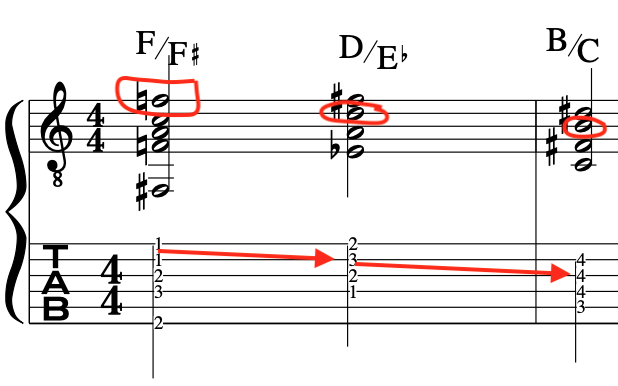
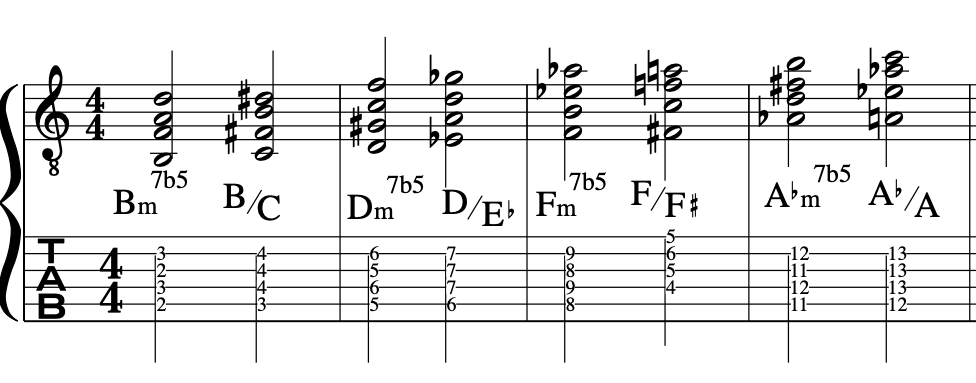
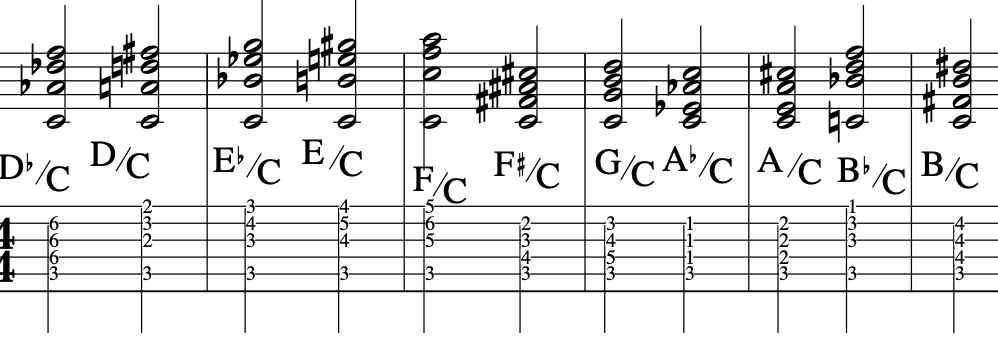
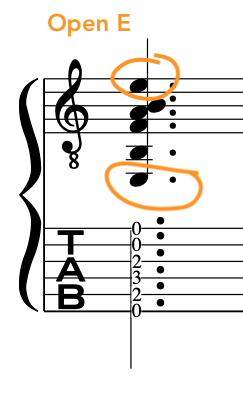
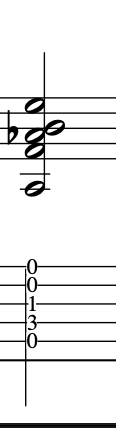
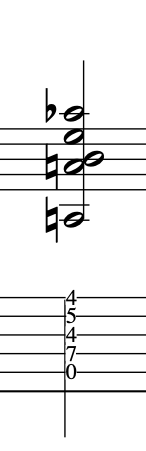
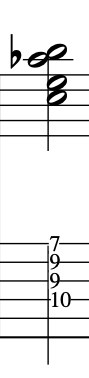
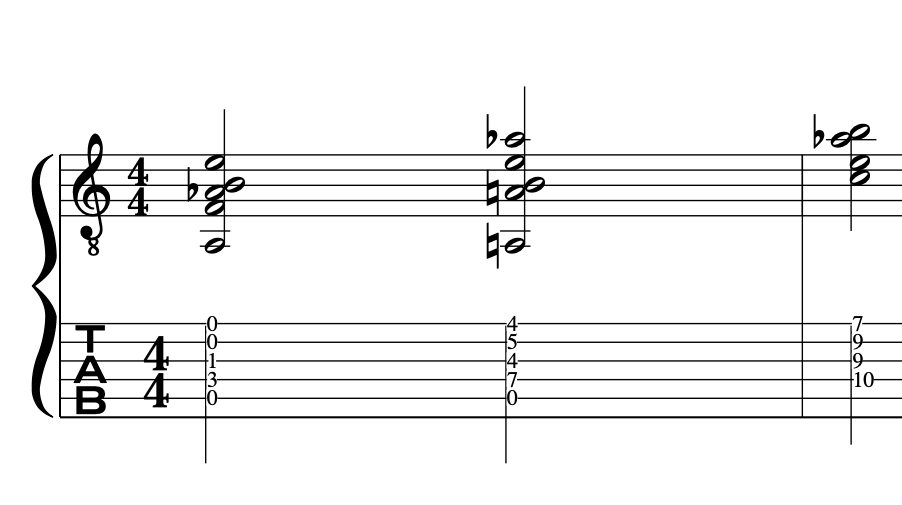
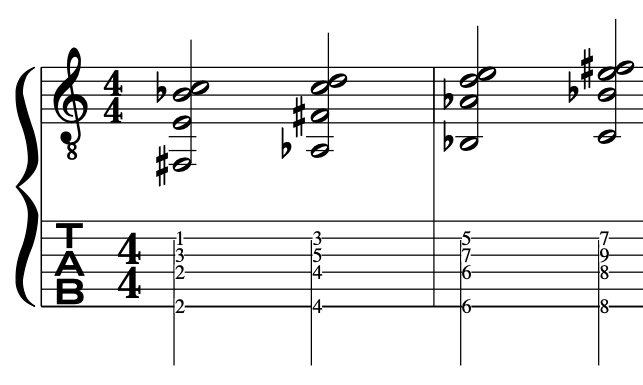
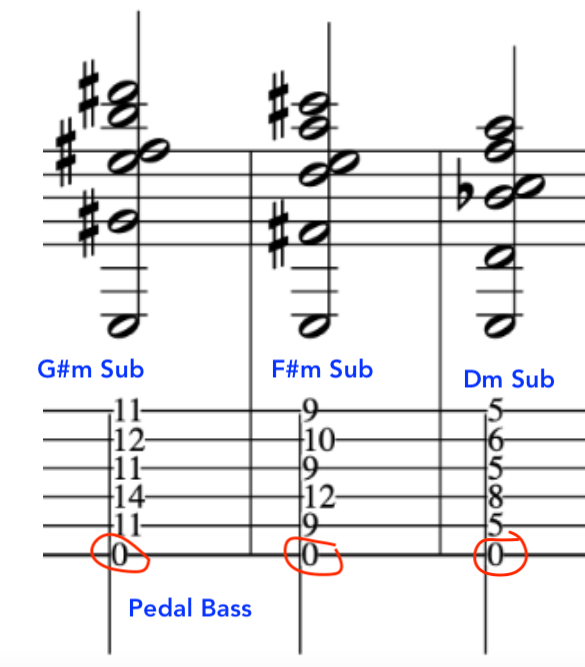
Here, are the two chords that I have used.

These being similar to McLaughlin’s “Face to Face” composition with Shakti.

shakti-face-to-face-rhythm-guitar-lesson

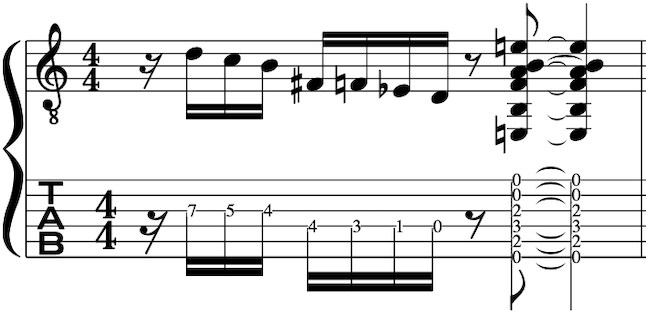
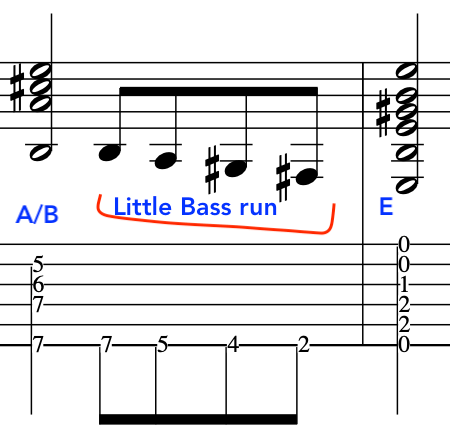
To complete this vamp I employ a little “Turn around” in the bass with a 4 note descending scale motif.

shakti-face-to-face-rhythm-guitar-lesson

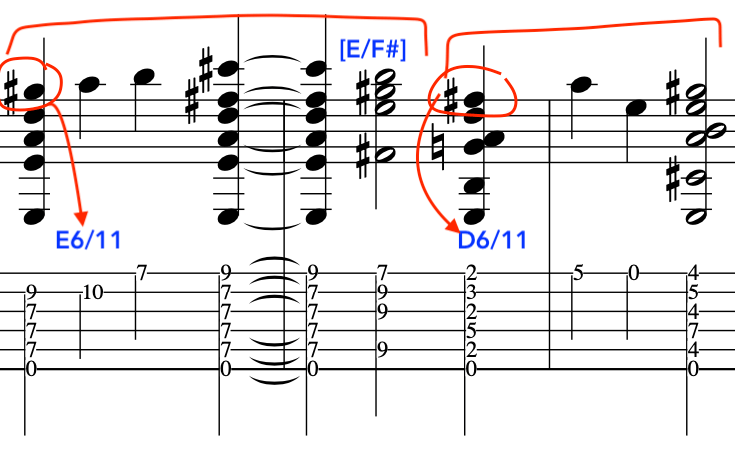
Here, is the full 2 Bar Sequence with the turn around motif:

shakti-face-to-face-rhythm-guitar-lesson

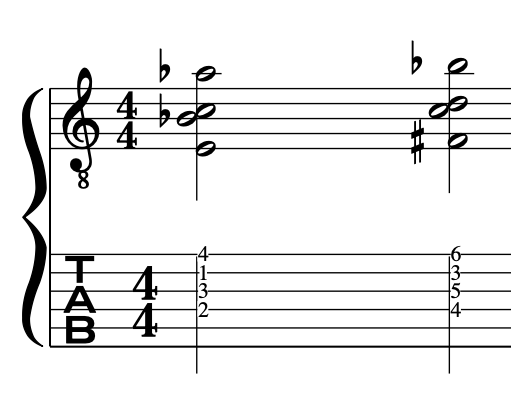
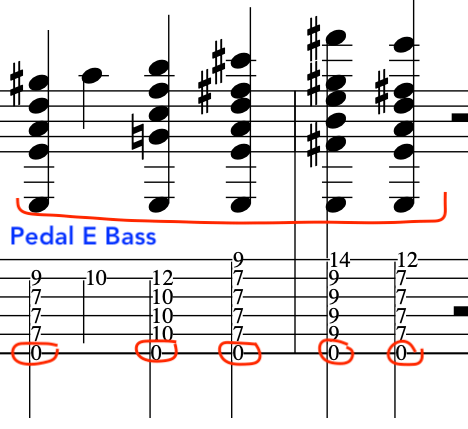
In this variation we have the previous bass scale notes played in the treble on the first string of the guitar.

We also have changed the first chord with a “Quartal” E minor voicing.

shakti-face-to-face-rhythm-guitar-lesson

John McLaughlin sometimes strums quickly between two chords and the open strings. Here are a couple of examples.

Firstly, we can see how John exploits 2 simple chords of A Major and D Major between the open strings:

john-mclaughlin-strumming-guitar-lesson

[This is strummed at a very quick pace by alternate strumming “Down Up“] etc

To finish, we will look at one last alternate strumming McLaughlin favourite.

This again follows the same principle with the quick “Down Up” fast wrist movement in the strumming hand.

john-mclaughlin-strumming-guitar-lesson

Shakti “Joy” Alternate Picking guitar raga exercise

yt_logo_rgb_light CLICK SUBSCRIBE!

Shakti “Joy” Alternate Picking guitar Raga exercise: Harmonic Minor Groups of 7

PLEASE WATCH VIDEO ABOVE FOR DETAILED EXPLANATION:

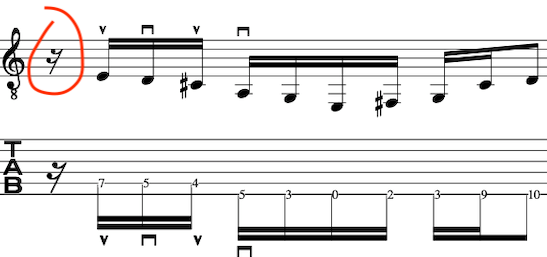
This is an A Harmonic Minor group of of 7 notes in a repeated pattern:

Shakti, Joy, guitar, alternate picking, exercise, John Mclaughlin, tab, music, notation
Shakti “Joy” Alternate Picking guitar Raga exercise: Harmonic Minor Groups of 7

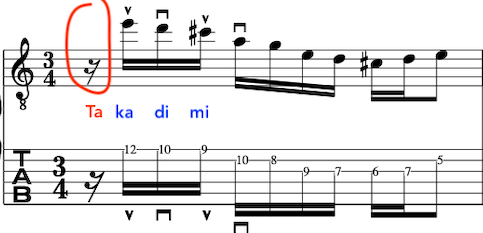
The key to this exercise is to first of all acknowledge the rest:

Shakti, Joy, guitar, alternate picking, exercise, John Mclaughlin, tab, music, notation
Shakti “Joy” Alternate Picking guitar Raga exercise: Harmonic Minor Groups of 7

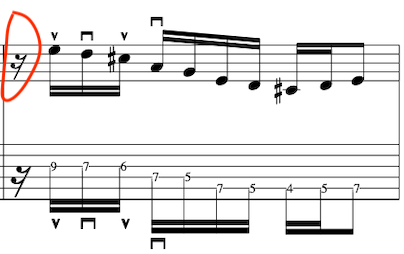
This is essential in order to get the time: Once you have this it is essential to “Accent” the first note of each grouping.

Shakti, Joy, guitar, alternate picking, exercise, John Mclaughlin, tab, music, notation
Shakti “Joy” Alternate Picking guitar Raga exercise: Harmonic Minor Groups of 7

In order to get the rhythm tight you will need to accent the first note of the 2nd group louder.

Shakti, Joy, guitar, alternate picking, exercise, John Mclaughlin, tab, music, notation
Shakti “Joy” Alternate Picking guitar Raga exercise: Harmonic Minor Groups of 7

Here is the exercise for PDF Download:

Here is the Tab/Notation: Alternate Picking Ascending:

Shakti, Joy, guitar, alternate picking, exercise, John Mclaughlin, tab, harmonic minor, music, notation
Shakti “Joy” Alternate Picking guitar Raga exercise: Harmonic Minor Groups of 7

Alternate Picking Descending:

Shakti, Joy, guitar, alternate picking, exercise, John Mclaughlin, harmonic, minor, scale, tab, music, notation
Shakti “Joy” Alternate Picking guitar Raga exercise: Harmonic Minor Groups of 7

CLASSIC “SHAKTI” ALBUMS:

ABOUT “SKAKTI”: [Wiki]

Shakti were a fusion band formed by English guitarist John McLaughlin, Indian violin player L. Shankar, percussionists Zakir Hussain (on tabla) and T. H. “Vikku” Vinayakram (on Ghatam)[1] in 1974. The band played acoustic fusion music which combined Indian music with elements of jazz. The band’s Hindi name means, in English, “creative intelligence, beauty, and power.”[2]

In addition to fusing American and Indian music, Shakti also represented a fusion of the Hindustani and Carnatic music traditions, since Hussain is from the north region of India while the other Indian members are from the South.

The group came together in 1974, after the dissolution of the first incarnation of the Mahavishnu Orchestra, and toured fairly extensively during the period 1975-1977; it made only sporadic appearances (with personnel changes) thereafter.

After 1977 the albums which L. Shankar recorded with Z. Hussain and T. H. “Vikku” Vinayakram stayed close to the music made popular by Shakti. Some twenty years later McLaughlin and Hussain put together another band with the same concept, called Remember Shakti, including V. Selvaganesh (son of T. H. “Vikku” Vinayakram ), mandolin player U. Shrinivas and eventually Shankar Mahadevan.

Two concerts at the Montreux Jazz Festival (July 6, 1976 and July 8, 1977) are included among the 17 CDs of the box set Montreux Concerts by John McLaughlin.

IF THIS LESSON WAS OF VALUE TO YOU THEN PLEASE SUBSCRIBE TO US ON YOUTUBE BELOW, THANKS!